Poinsettia Latex, Oral Irritation, and Low-Severity Gastrointestinal Toxicosis
Is Poinsettia Poisonous to Dogs, Cats, Horses, and Livestock?
Yes—Poinsettia, Euphorbia pulcherrima, is poisonous in the practical veterinary sense that its milky latex and chewed plant tissues can irritate the mouth, esophagus, stomach, intestines, skin, and eyes. Dogs and cats may develop lip licking, repeated swallowing, drooling, nausea, vomiting, appetite loss, abdominal discomfort, or diarrhea. Fresh sap can also cause localized redness, itching, swelling, conjunctival irritation, and continued oral exposure when an animal grooms contaminated fur.
Poinsettia is nevertheless a low-systemic-toxicity plant compared with true lilies, yew, oleander, sago palm, autumn crocus, or other holiday plants capable of causing severe organ injury or death after relatively small exposures. Most animals that take one brief exploratory bite develop no signs or only short-lived oral or gastrointestinal irritation. No validated safe number of leaves, bracts, stems, flowers, or roots has been established, and a large ingestion, concentrated extract, severe oral reaction, eye exposure, allergy, or mixed exposure involving pesticides, fertilizer, floral preservatives, ribbon, wire, foil, candles, or another plant requires a separate risk assessment.
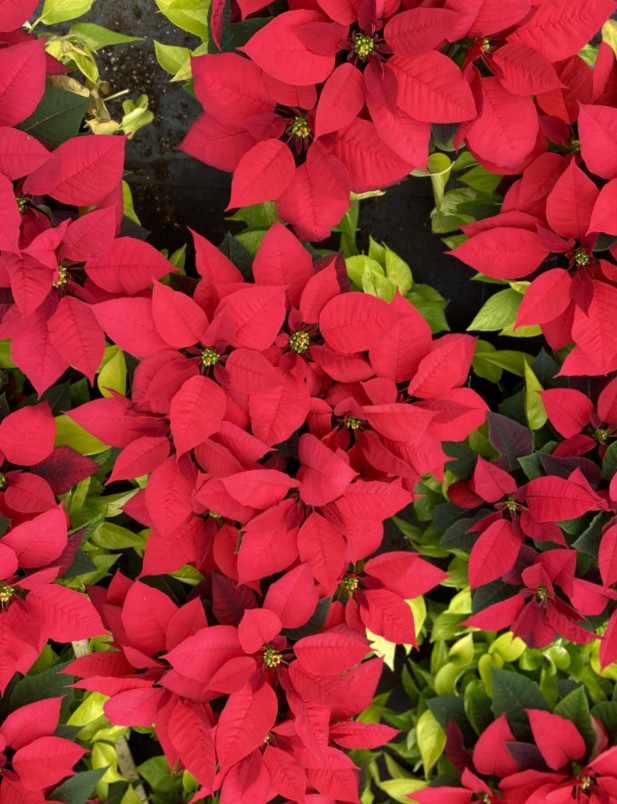
The colorful red, pink, cream, white, marbled, or speckled structures are bracts—modified leaves surrounding the small central flowers—not harmless petals. Bracts, green leaves, stems, latex, flowers, roots, fresh cuttings, wilted material, and dried decorations should all remain inaccessible. No cultivar or bract color has been demonstrated to be reliably nontoxic to animals.
Profound ataxia, seizures, coma, persistent arrhythmia, jaundice, kidney failure, severe hypocalcemia, progressive paralysis, or rapid unexplained collapse is not the expected result of an uncomplicated poinsettia nibble. Those findings demand investigation for another poisonous plant, pesticide, medication, cannabis product, toxic food, foreign body, metabolic emergency, or incorrect plant identification.
About this guide: This page provides general pet-poisoning information and cannot diagnose or treat an individual animal. For any suspected exposure, contact a veterinarian or animal poison-control service immediately. Do not induce vomiting, give medication, or attempt home decontamination unless directed by a veterinary professional.
Poinsettia
Euphorbia pulcherrima Willd. ex Klotzsch
The accepted botanical name was published by Johann Friedrich Klotzsch in 1834 from a name attributed to Carl Ludwig Willdenow. The author construction “Willd. ex Klotzsch” indicates that Willdenow originated or used the name but Klotzsch validly published it.
Important taxonomic and historical search names include:
- Poinsettia pulcherrima (Willd. ex Klotzsch) Graham, the accepted species transferred to the former genus Poinsettia
- Euphorbia poinsettii Raf., an earlier competing name discussed in the nomenclatural history of the species
- Euphorbia poinsettiana Buist ex Graham, an older provisional synonym
- Euphorbia fastuosa Sessé & Moc.
- Euphorbia erithrophylla Bertol.
- Euphorbia coccinea Raf., published provisionally
- Pleuradena coccinea Raf.
- Poinsettia ignescens Van Geert
- Poinsettia mirabilis Van Geert
- Poinsettia variabilis Van Geert
Historical horticultural names include Poinsettia pulcherrima var. albida, var. major, var. plena, var. plenissima, and several rose- or carmine-bracted forms. These old varietal names do not make modern red, pink, white, cream, marbled, or double-bracted cultivars separate toxicological species.
“Wild Poinsettia” is not a dependable synonym. That common name is frequently applied to Euphorbia heterophylla, Euphorbia cyathophora, and other spurges whose chemistry and clinical risk require their own assessment.
<p>Euphorbiaceae — Spurge Family</p>
Poinsettia; Christmas Poinsettia; Christmas Star; Christmas Flower; Christmas Eve Flower; Mexican Flameleaf; Mexican Flame Flower; Painted Leaf; Lobster Flower; Winter Rose; Nochebuena; Flor de Nochebuena; Flor de Pascua; Pascua; Estrella de Navidad; Cuetlaxochitl; Cuetlaxōchitl
Historical and botanical search names include Poinsettia pulcherrima, Euphorbia poinsettii, Euphorbia poinsettiana, Euphorbia fastuosa, Euphorbia erithrophylla, Euphorbia coccinea, Pleuradena coccinea, Poinsettia ignescens, Poinsettia mirabilis, and Poinsettia variabilis.
Wild Poinsettia, Fire-on-the-Mountain, Painted Euphorbia, Mexican Fireplant, and Painted Spurge may refer to Euphorbia heterophylla or Euphorbia cyathophora rather than Euphorbia pulcherrima. These names should not be treated as proof that two plants are the same species.
Poinsettia is also unrelated to Christmas Cactus and Thanksgiving Cactus in the cactus family. It is not a true lily, and it does not produce the acute kidney failure associated with Lilium or Hemerocallis exposure in cats. The complete plant, its milky latex, leaf arrangement, colored bracts, central cyathia, nursery label, and growth form should be used for identification.
Low Systemic Toxicity Does Not Mean a Non-Irritating Plant
Poinsettia occupies an unusual place in toxic-plant discussions because two oversimplified claims circulate simultaneously. One portrays the plant as lethally poisonous after a single leaf, while the other declares it completely harmless. Neither description is accurate. Euphorbia pulcherrima has low acute systemic toxicity under ordinary exposure conditions, but its milky latex and chewed tissues can produce genuine oral, gastrointestinal, dermal, and ocular irritation.
The best-supported natural companion-animal syndrome is local irritation followed by hypersalivation, nausea, vomiting, diarrhea, appetite loss, and abdominal discomfort. Severe oral and esophageal irritation is possible after a substantial exposure, but profound neurologic, cardiovascular, hepatic, renal, or hematologic poisoning is not the expected course after one limited ornamental-plant ingestion. The clinical risk therefore depends more on the amount, degree of crushing, duration of contact, patient size, individual sensitivity, and associated holiday materials than on the popular reputation of the plant.
No single compound has been proven to account for every natural poinsettia reaction. The latex is a chemically complex plant secretion containing triterpenes, sterols, proteins, enzymes, resins, and other constituents. Direct exact-species studies establish several components, but the relative contribution of each substance to vomiting, dermatitis, conjunctival irritation, or allergy in an individual animal remains incompletely defined.
Milky Latex as the Principal Exposure Medium
Breaking a leaf, colored bract, stem, petiole, root, or reproductive structure releases a white latex characteristic of many members of Euphorbiaceae. Latex is not a single purified toxin. It is an emulsion through which the plant transports or stores multiple lipid-soluble compounds, proteins, enzymes, and defensive substances.
Chewing ruptures latex-bearing tissues and spreads the secretion across the lips, tongue, gums, pharynx, esophagus, and gastrointestinal tract. Sap may also coat paws, facial hair, feathers, bedding, collars, pruning tools, and a person’s skin. An animal can therefore receive a second oral exposure while grooming after the original plant contact has ended.
The amount of visible sap is not a dependable measurement of dose. A small crushed stem can release conspicuous latex, while an animal may swallow several bracts with relatively little residue left at the scene. Risk assessment should consider the greatest amount that could have been chewed or swallowed, not only the quantity of white fluid observed.
Exact-Species Triterpenes and Sterols
Direct chemical investigation of the latex, stems, bracts, and flowers of Euphorbia pulcherrima identified germanicol, β-amyrin, and pseudotaraxasterol in extracts from all of those tissues. The latex yielded the sterol pulcherrol, while stem material yielded octacosanol and β-sitosterol. This work is important because it demonstrates that the colorful bracts and flowers are chemically active plant tissues rather than inert decorative structures.
Later analysis of poinsettia latex found esters of β-amyrin and germanicol among the principal nonpolar constituents, with cycloartenol prominent among the free alcohols. Comparative analysis of latex from different varieties also detected sitosterol, β-amyrin, germanicol, cycloartenol, β-amyrin acetate, and germanicol acetate. The examined varieties showed broadly similar triterpene profiles, but that limited sample does not prove that every modern cultivar, tissue, growth stage, or growing condition contains identical concentrations.
Leaf investigations have isolated additional triterpenoids with cytotoxic activity in laboratory systems. Cytotoxicity toward cultured cells establishes biological activity under experimental conditions; it does not demonstrate that a pet chewing one leaf will experience systemic cellular destruction. Digestion, dilution, protein binding, metabolism, tissue penetration, and elimination separate an in vitro assay from natural oral exposure.
Pulcherrol and Other Named Constituents
Pulcherrol was identified from poinsettia latex during the direct tissue study and is one of the compounds historically associated with the species’ phytochemical literature. Its identification helps characterize the latex, but pulcherrol has not been shown to function as a stand-alone veterinary poison that predicts the severity of a dog or cat exposure.
The same distinction applies to β-amyrin, germanicol, pseudotaraxasterol, cycloartenol, β-sitosterol, and related triterpenes or sterols. A plant’s full chemical inventory is not identical to its clinically important toxic-principle list. These compounds confirm that poinsettia latex is chemically complex, but natural poisoning cannot be reconstructed simply by counting every isolated molecule as an independent toxin.
Euphorbain P and Latex Protease Activity
Euphorbain p is a serine protease isolated directly from Euphorbia pulcherrima latex. The purified multichain enzyme was reported to have a molecular mass of approximately 74,000 and maximum activity near neutral pH. Its presence establishes that poinsettia latex contains an active proteolytic protein rather than only oily triterpenes and sterols.
Proteases in plant latex can participate in defensive activity and may plausibly contribute to local tissue irritation after sap contacts mucous membranes. However, no controlled veterinary trial has established the amount of euphorbain p delivered by a leaf, the amount remaining active after digestion, or the proportion of natural poinsettia symptoms attributable specifically to this enzyme. It should therefore be described as a confirmed latex constituent and plausible irritant contributor, not as a proven sole toxin.
The Diterpene-Ester Evidence Boundary
Veterinary and medical summaries frequently attribute poinsettia irritation to diterpenoid euphorbol esters, sometimes describing them as detergent-like compounds acting on mucous membranes and skin. Irritant and tumor-promoting diterpene esters are well established in several other Euphorbia species, making the proposed toxin class biologically plausible within the genus.
The exact-species analytical literature cited for this page prominently documents triterpenes, sterols, triterpenol esters, and a serine protease. It does not provide a complete, quantitative, tissue-by-tissue inventory of named irritant diterpene esters across modern poinsettia cultivars. The responsible latex mixture should not be reduced to an unsupported list of specific euphorbol esters merely because the plant belongs to Euphorbia.
This evidence boundary does not make the clinical irritation imaginary. It means that the observed oral, gastrointestinal, skin, and eye effects are better described as effects of the plant’s complex latex and sap-bearing tissues unless a particular compound has been measured directly. Related-species chemistry may explain plausible mechanisms, but it must not be represented as exact-species quantification.
How Oral and Gastrointestinal Irritation Develops
Chewing spreads latex and crushed tissue across the oral mucosa. Lip licking, repeated swallowing, drooling, mouth pawing, gagging, or abrupt refusal to continue eating may be the first signs. Irritated pharyngeal or esophageal tissue can make swallowing uncomfortable even after the plant material has left the mouth.
Once swallowed, the plant mixture contacts the stomach and intestine. Local irritation can activate nausea and vomiting, increase intestinal secretion and motility, and produce soft stool or diarrhea. Repeated vomiting causes further exposure of the esophagus to plant material and gastric acid, which can prolong discomfort and occasionally produce superficial bleeding.
Fluid loss, rather than systemic organ toxicity, may become the most important secondary problem in a patient that vomits or has diarrhea repeatedly. Dehydration, electrolyte disturbance, weakness, reduced urine output, and poor circulation can develop even when the original plant has low intrinsic systemic toxicity. Small animals and patients with kidney, cardiac, endocrine, or gastrointestinal disease may deteriorate more quickly.
Skin Irritation, Sensitization, and Allergy
Fresh latex may cause localized redness, itching, burning, papules, swelling, or dermatitis where it contacts the skin. Repeated handling can increase exposure, and sap trapped beneath a collar, harness, bandage, dense coat, or grooming residue may remain against the skin for an extended period.
Human occupational and clinical reports demonstrate that poinsettia can cause allergic contact dermatitis and immediate hypersensitivity in susceptible individuals. Reported reactions include chronic hand dermatitis in a florist, rhinitis and asthma associated with poinsettia latex, and a systemic reaction in a person with latex allergy. These cases establish that allergy is possible, but they do not show that every person or animal exposed to poinsettia sap becomes sensitized.
Natural-rubber-latex cross-reactivity has been investigated because poinsettia and rubber-tree latex can share protein allergens. A history of human latex allergy is relevant when people handle the plant or an animal contaminated with sap. Comparable veterinary cross-reactivity has not been quantified adequately, so it should not be used to predict that a dog or cat will develop anaphylaxis.
Eye Exposure and Genus-Level Caution
Latex or plant fragments may produce tearing, blinking, squinting, conjunctival redness, eyelid swelling, discomfort, and rubbing. The exact experimental poinsettia study did not produce ocular damage when latex was placed in rabbit eyes, supporting lower ocular toxicity than the severe keratoconjunctivitis associated with some other spurges.
That result does not justify leaving visible sap or debris in an animal’s eye. Exposure concentration, retained particles, corneal abrasion, individual sensitivity, and the identity of the plant all affect outcome. Other Euphorbia species can cause substantial ocular inflammation, and a holiday plant may have been misidentified.
Prompt irrigation remains appropriate. Continued squinting, cloudiness, discharge, marked redness, inability to open the eye, or apparent visual impairment requires veterinary examination even when the owner is confident the plant was a poinsettia.
Leaves, Colored Bracts, Stems, Flowers, and Roots
Green leaves, colored bracts, petioles, stems, central flower clusters, latex, roots, and fresh cuttings should all be treated as potential irritant exposures. Direct chemistry has been conducted on latex, stems, bracts, flowers, and leaves. No controlled comparison establishes one tissue as uniformly and predictably the most toxic across all cultivars and growth conditions.
The red or otherwise colored bracts are modified leaves. They are not petals and should not be assumed safer than ordinary green foliage. The small central reproductive units are cyathia, specialized Euphorbia inflorescences that may contain yellow nectar glands and tiny flowers.
Roots and lower stems may be reached when a dog overturns the pot or an animal digs in discarded material. The practical risk from a root ball may include soil, fertilizer, pesticide granules, mold, plastic, stones, and a large mass of fibrous material in addition to poinsettia latex.
Fresh, Wilted, and Dried Material
Freshly broken tissue creates the greatest immediate opportunity for wet latex to contact the mouth, eyes, skin, and coat. Pruning or accidental stem breakage can place numerous sap-bearing surfaces within reach at one time.
Wilting and drying do not prove that all biologically active compounds have disappeared. Dried bracts and leaves may contain less transferable wet latex but can still be swallowed, irritate the gastrointestinal tract, or carry pesticides, glitter, dyes, preservatives, and dust. Brittle stems and decorative materials may also create mechanical injury.
Dried poinsettia wreaths, pressed specimens, potpourri, craft material, table decorations, and discarded holiday plants should remain inaccessible. Drying must not be represented as a dependable detoxification method for animal use.
Cultivars, Bract Colors, and Commercial Treatments
Modern poinsettias are sold with red, pink, white, cream, salmon, marbled, speckled, curled, elongated, or double-appearing bracts. These variations alter appearance but do not create a recognized pet-safe cultivar. A white-bracted or miniature poinsettia remains Euphorbia pulcherrima unless the label identifies another species.
Some holiday plants are treated with glitter, decorative paint, flocking, wax, leaf shine, growth regulators, pesticides, fungicides, or fertilizer. These products can change the exposure and may explain signs that are more severe or different from ordinary poinsettia irritation. Preserve product labels and report any visible coating or odor.
Colored bracts are sometimes mistaken for artificially dyed flowers. Their color is normally produced by plant pigments and developmental responses, although commercial decorations may add external products. The natural color itself is not a separate toxin.
Concentrated Extracts Versus Intact Plant Material
A methanol extract, tincture, laboratory fraction, traditional preparation, or homemade concentrate is not equivalent to chewing one intact bract. Extraction changes which compounds are recovered and can deliver a larger chemical amount in a smaller volume.
In one rat study, a poinsettia methanol extract produced an estimated acute median lethal dose of approximately 3,808 mg/kg under the study conditions. That result describes a concentrated experimental preparation, not a toxic dose for fresh leaves in dogs or cats. It must not be converted into home calculations or used to declare that an animal can safely consume an equivalent mass of ornamental plant.
Traditional remedies, teas, powders, tinctures, soaps, skin preparations, and experimental plant products may also contain alcohol, oils, solvents, sweeteners, additional herbs, preservatives, or medication. The exact product and ingredient list are essential to risk assessment.
Experimental Oral Toxicology and the Fatality Myth
Controlled testing in Sprague Dawley rats found an acute oral LD50 greater than 25 g/kg for every poinsettia part tested. Exaggerated oral dosing over five days, totaling as much as 125 g/kg, did not produce gross or microscopic pathology, and a five-day total-diet study produced no gross pathology. Latex applied to the rat buccal cavity did not create local toxicity under those experimental conditions.
Repeated skin exposure caused mild irritation, while rabbit testing identified photosensitivity under the study conditions. Latex placed in rabbit eyes did not produce ocular damage. These findings strongly contradict the claim that trivial poinsettia contact is routinely lethal, but they do not establish perfect safety in every species, every route, or every individual.
A large human poison-center analysis evaluated 22,793 poinsettia exposures. No fatalities were recorded, 92.4% of exposed people developed no poinsettia-related toxicity, and 96.1% were not treated in a healthcare facility. These data help correct the fatality myth but cannot substitute for dog, cat, horse, rabbit, or bird dose-response research.
Veterinary Exposure Evidence
Veterinary poison services continue to receive poinsettia calls because the plant is common, seasonally concentrated inside homes, and accessible to curious animals. Most reported dog and cat cases involve mild gastrointestinal effects. A reviewed Italian series included four dogs and eight cats, with hypersalivation, vomiting, diarrhea, and swelling among the most frequently reported findings.
A Burmese kitten reportedly developed severe oral and esophageal irritation after ingesting a large leaf. That case demonstrates that low overall systemic toxicity does not exclude a clinically important local injury in an individual animal. It should not be generalized into a claim that every leaf causes severe esophagitis.
No validated fatal natural dose has been established for small animals, and reviewed veterinary literature has not identified death as the expected outcome of poinsettia ingestion. Severe or fatal illness occurring beside a chewed poinsettia therefore requires investigation for another plant, chemical, foreign material, underlying disease, or inaccurate exposure history.
Toxic-Dose and Evidence Limitations
No dependable toxic dose exists for Poinsettia in dogs, cats, horses, cattle, sheep, goats, rabbits, guinea pigs, birds, or other domestic animals. There is no scientifically supported rule stating that one leaf is fatal, that a certain number of bracts is safe, or that an animal must consume a particular percentage of body weight before symptoms can occur.
Risk depends on plant mass, tissue, latex release, animal size, chewing behavior, repeated access, preexisting disease, allergy, and accompanying products. The rat toxicity studies show a wide margin against acute systemic lethality, but species differences and local irritation prevent those experimental quantities from becoming owner-facing safety thresholds.
The most defensible conclusion is that a brief nibble is unlikely to cause life-threatening poinsettia toxicosis, yet every meaningful or symptomatic exposure deserves accurate identification and proportionate assessment. Treatment should follow the patient’s actual findings rather than the plant’s exaggerated reputation or the opposite assumption that “low toxicity” means no care is ever needed.
Expected Onset and Typical Severity
Oral signs can begin soon after a leaf, colored bract, stem, or root is bitten because latex contacts the lips and mouth immediately. Lip licking, repeated swallowing, drooling, mouth pawing, gagging, or abrupt refusal to continue chewing may appear before gastrointestinal signs develop.
Nausea, vomiting, appetite loss, abdominal discomfort, and diarrhea may develop over the following hours as plant material reaches the stomach and intestine. A precise onset range has not been established for every animal species, cultivar, plant part, and exposure size. Repeated access may also make the true exposure time difficult to determine.
Most limited exposures cause no signs or mild, self-limiting irritation. The severity should increase concern when vomiting is repeated, swallowing is painful, the animal cannot retain water, swelling progresses, substantial material is missing, or a pesticide, fertilizer, coating, floral decoration, or foreign object may have been swallowed with the plant.
Early Oral and Throat Findings
Early findings may include salivation, foamy drool, lip smacking, repeated tongue movement, face rubbing, mouth pawing, head shaking, gagging, coughing, or vocalization. Dogs may chew once and stop abruptly. Cats may retreat, hide, or groom the mouth and paws without producing dramatic drool.
The lips, gums, tongue, and visible oral mucosa may appear mildly reddened or tender. Severe blistering, extensive ulceration, or marked tongue enlargement is not expected after every exposure. Persistent pain, continuous drooling, repeated attempts to swallow, regurgitation, or refusal of all food and water may indicate more substantial stomatitis, pharyngitis, esophagitis, retained plant material, or another caustic exposure.
Poinsettia does not cause the needle-like calcium-oxalate injury characteristic of Dieffenbachia, Philodendron, Pothos, Peace Lily, and other aroids. Severe immediate oral swelling after a suspected poinsettia bite should therefore prompt confirmation of the plant and consideration of an allergy, another species, or a mixed exposure.
Nausea, Vomiting, and Abdominal Discomfort
Vomiting is one of the most frequently reported effects in symptomatic dogs and cats. Vomit may contain recognizable red or green plant fragments, foam, food, bile, mucus, or occasionally a small streak of fresh blood after forceful retching. Visible plant material supports the exposure history but does not show that the stomach has emptied completely.
Abdominal discomfort may appear as restlessness, repeated stretching, a hunched posture, guarding, reluctance to lie down, prayer position, vocalization, or resistance to abdominal handling. Appetite loss can continue after vomiting stops because nausea, oral irritation, esophageal discomfort, or gastritis remains.
Repeated vomiting increases the risk of dehydration, electrolyte disturbance, esophageal inflammation, aspiration, and weakness. A patient that cannot retain water or becomes progressively quiet should not be managed as a trivial exposure merely because poinsettia is considered a low-toxicity plant.
Diarrhea and Fluid Loss
Stool may become soft, loose, watery, mucus-covered, or occasionally blood-streaked after significant intestinal irritation. Frequent diarrhea adds to the fluid and electrolyte loss caused by vomiting. Small animals, very young or elderly patients, and animals with kidney, cardiac, endocrine, or gastrointestinal disease may become dehydrated more rapidly.
Repeated fresh blood, dark coffee-ground vomit, black tar-like stool, marked abdominal pain, pale gums, or collapse is not the expected mild course. Those findings require examination for substantial mucosal injury, a foreign body, gastrointestinal ulceration, coagulopathy, medication exposure, infection, pancreatitis, or another toxin.
Severe Oral or Esophageal Irritation
Severe local injury is uncommon but possible after a larger ingestion. One Burmese kitten described in veterinary literature developed severe oral and esophageal irritation after consuming a large leaf. This case supports careful assessment of persistent drooling, dysphagia, regurgitation, painful swallowing, and continued food refusal.
Esophageal irritation may not be visible during a simple mouth examination. An animal may stretch the neck, swallow repeatedly, approach food and back away, cry while swallowing, regurgitate soon after eating, or cough when offered water. These signs may justify imaging, sedated oral examination, or endoscopy depending on severity and duration.
Forceful home vomiting can send latex and plant fragments back through already irritated tissue. Oral medication and forced water can also be aspirated when swallowing is painful or abnormal.
Skin and Coat Exposure
Fresh sap may cause localized redness, itching, burning, tenderness, papules, or swelling. Areas with thin hair, damaged skin, or prolonged contact beneath a collar or harness may be more affected. Dogs and cats may lick, scratch, rub, or chew the exposed area.
Direct irritation may begin promptly, while allergic contact dermatitis can be delayed. Repeated prior exposure may increase the reaction in a sensitized individual. Sap remaining on the coat creates continued oral exposure during grooming and can be transferred to human skin, furniture, bedding, or grooming equipment.
Spreading redness, blistering, open lesions, severe itching, facial involvement, skin pain, or signs of secondary infection require veterinary evaluation. Not every rash after holiday decorating is caused by poinsettia; adhesives, glitter, cleaning products, flea medication, insects, food allergy, and other plants remain possible.
Eye Exposure
Eye contact may cause tearing, blinking, squinting, conjunctival redness, eyelid swelling, discomfort, light sensitivity, or rubbing. Latex and small plant particles may remain beneath the eyelids even when the external eye appears clean.
Prompt irrigation is appropriate. Continued squinting, inability to open the eye, cloudiness, discharge, marked swelling, apparent visual impairment, or pain after rinsing requires veterinary examination. Fluorescein staining may be needed to identify a corneal abrasion or ulcer.
Experimental poinsettia latex did not damage rabbit eyes under the published study conditions, but that finding does not exclude mechanical injury, individual hypersensitivity, contamination, or misidentification with a more caustic Euphorbia species.
Allergy, Facial Swelling, and Respiratory Signs
Human medical literature documents allergic contact dermatitis, rhinitis, asthma, and systemic reactions to poinsettia latex in susceptible people. Comparable reactions are not established as the routine veterinary presentation, but rapidly increasing swelling, hives, respiratory noise, weakness, vomiting with collapse, or impaired breathing must be treated as an emergency regardless of frequency.
Coughing may also result from throat irritation, aspirated vomit, an oral foreign body, floral powder, pesticide spray, or another plant. Continued coughing, rapid breathing, fever, nasal discharge, or renewed lethargy after vomiting may indicate aspiration pneumonia.
Open-mouth breathing in a cat, blue-gray gums, noisy inspiration, neck extension, inability to swallow saliva, or collapse requires immediate care. An owner-administered antihistamine must not delay oxygen, airway assessment, and treatment of shock when those findings are present.
Dogs
Dogs commonly investigate poinsettias by biting leaves, carrying a fallen stem, overturning the pot, pulling decorative foil, or raiding discarded holiday plants. Expected signs are drooling, vomiting, appetite loss, diarrhea, mild abdominal discomfort, and transient depression.
The complete scene matters. Foil, plastic sleeves, ribbon, wire, hooks, candles, artificial snow, glitter, soil, fertilizer, and plant labels may create a greater hazard than the poinsettia itself. Persistent vomiting, abdominal enlargement, repeated unproductive retching, pain, or reduced stool raises concern for a foreign body or gastric dilatation rather than uncomplicated latex irritation.
Cats
Cats may chew leaf tips or colored bracts, bat at a moving stem, climb into a decorative arrangement, drink from a plant saucer, or groom sap from the paws and coat. Signs may be subtle and include quiet drooling, lip licking, hiding, vomiting, refusal of food, reduced grooming, or decreased activity.
Persistent food refusal is especially important in cats. A cat that remains anorexic after the expected brief irritant period requires reassessment for oral pain, esophagitis, nausea, foreign material, pancreatitis, kidney disease, or another toxin. Prolonged inadequate intake can produce serious secondary metabolic disease.
Poinsettia does not produce the characteristic acute renal failure caused by true lilies and daylilies. A cat with rising kidney values, marked thirst, altered urination, or progressive renal failure needs investigation for Lilium, Hemerocallis, medication, antifreeze, urinary disease, or another cause.
Horses
Horses are unlikely to encounter poinsettia as ordinary pasture forage but may reach discarded holiday plants, greenhouse material, landscaping in warm climates, floral displays, or trimmings placed near a stall or paddock. Salivation, feed refusal, oral discomfort, colic, diarrhea, coughing, or depression may follow substantial ingestion.
Horses cannot vomit. Household emetics must never be given. A horse with painful swallowing, persistent salivation, respiratory noise, significant colic, repeated diarrhea, weakness, or reduced drinking requires large-animal veterinary assessment and should not be drenched while swallowing is abnormal.
Cattle, Sheep, and Goats
Livestock exposure is most likely when discarded potted plants, greenhouse waste, landscape clippings, or holiday decorations are placed within reach. Curious goats may browse unfamiliar material, while cattle or sheep may consume it when mixed with more desirable forage.
Expected concerns are local oral irritation, salivation, feed refusal, gastrointestinal disturbance, and the consequences of reduced intake or diarrhea. There is no validated poinsettia toxic dose or well-defined natural outbreak syndrome for these species. Marked neurologic disease, sudden death, severe photosensitization, arrhythmia, or widespread herd illness requires investigation for other plants, chemicals, feed contamination, and metabolic disease.
Rabbits and Guinea Pigs
Rabbits and guinea pigs cannot vomit. Oral discomfort, salivation, appetite reduction, diarrhea, reduced fecal production, abdominal pain, tooth grinding, hiding, or weakness may be more important than an absent vomiting response.
Even a low-systemic-toxicity plant can become clinically important when pain or nausea interrupts normal feeding. Reduced intake and fecal output can progress to gastrointestinal stasis. Poinsettia should not be offered as forage, enrichment, bedding, nesting material, or a chew plant.
Birds
Pet birds may shred bracts and leaves without appearing to swallow a large amount. Latex and plant fragments can contact the beak, oral cavity, eyes, feet, feathers, and gastrointestinal tract. Beak wiping, excessive salivation, regurgitation, diarrhea, food refusal, weakness, altered balance, respiratory change, or unusual quietness requires avian veterinary guidance.
A small bird can receive a substantial exposure relative to body size. Sap on feathers may be ingested repeatedly during preening, and decorative glitter, paint, wire, clips, and artificial snow may add separate hazards.
Severe or Atypical Findings
Seizures, profound ataxia, persistent arrhythmia, marked bradycardia, severe hypotension, jaundice, acute kidney failure, hypocalcemic tremors, progressive paralysis, coma, or rapid unexplained collapse is not the expected uncomplicated poinsettia syndrome. These findings may coexist with a poinsettia exposure, but the plant should not become the automatic explanation.
Important alternatives include true lilies, yew, oleander, sago palm, autumn crocus, mistletoe products, medications, nicotine, cannabis, xylitol, chocolate, rodenticide, pesticides, toxic mushrooms, antifreeze, foreign-body obstruction, hypoglycemia, and cardiovascular or neurologic disease.
Incorrect identification is particularly important when the plant was described only as a “Christmas flower,” “painted leaf,” or “wild poinsettia.” Preserve the complete plant and all accompanying decorations rather than relying on one detached red leaf.
Duration and Prognosis
Most uncomplicated oral and gastrointestinal exposures improve within several hours to one or two days after access ends, vomiting is controlled, hydration remains adequate, and appetite returns. Mild mouth discomfort may resolve before appetite fully normalizes.
Dermatitis or allergic inflammation may persist after gastrointestinal signs have resolved. Esophagitis, corneal injury, aspiration, severe dehydration, a foreign body, or a mixed chemical exposure can prolong recovery and change prognosis.
The prognosis is generally good to excellent for a limited poinsettia ingestion producing mild drooling, vomiting, diarrhea, or transient appetite loss. The prognosis becomes dependent on the complication when the animal develops airway compromise, aspiration pneumonia, significant gastrointestinal bleeding, obstruction, prolonged anorexia, or severe signs caused by another toxicant.
Plant Identity
Poinsettia, Euphorbia pulcherrima, is a latex-producing shrub in Euphorbiaceae. Commercial plants are usually sold as compact, densely branched holiday ornamentals, but wild or landscape-grown plants in suitable climates can become much larger woody shrubs or small trees.
The plant is identified by its alternate leaves, branching stems, colored terminal bracts, small central cyathia, and white latex released when tissue is broken. Red-bracted cultivars are most familiar, but pink, white, cream, salmon, marbled, speckled, curled, and double-appearing forms remain the same species unless the plant label establishes otherwise.
Accepted Taxonomy and Naming History
The accepted name is Euphorbia pulcherrima Willd. ex Klotzsch. Klotzsch validly published the name in 1834 from material associated with earlier botanical collection and cultivation. The epithet pulcherrima means very beautiful or most beautiful.
The species was later placed in the segregate genus Poinsettia as Poinsettia pulcherrima. Modern botanical treatment places it within Euphorbia. The common name Poinsettia became associated with Joel Roberts Poinsett, while Nochebuena, Flor de Nochebuena, and the Nahuatl-derived Cuetlaxochitl preserve different cultural naming traditions.
Euphorbia poinsettii Raf. is an earlier competing name discussed in the nomenclatural history. Modern botanical authorities nevertheless accept Euphorbia pulcherrima. Historical literature may also appear under Euphorbia fastuosa, Euphorbia erithrophylla, or Poinsettia pulcherrima.
Native Range and Habitat
Poinsettia is native from Mexico through Guatemala and grows principally in seasonally dry tropical environments. Wild plants may occur in ravines, rocky slopes, woodland margins, disturbed sites, and seasonally dry vegetation where they develop as perennial woody shrubs.
Its cultivated distribution is now worldwide. In colder regions, exposure occurs mainly from indoor potted plants, greenhouses, floral shops, schools, churches, offices, shopping displays, holiday events, and discarded seasonal decorations. In frost-free climates, animals may also encounter established landscape shrubs and pruning debris.
Wild Plants Versus Commercial Potted Forms
Wild poinsettias are often taller, more open, and more woody than compact retail plants. Commercial growth regulation, pinching, selection, and greenhouse production create the dense flowering display familiar during the winter holiday season.
Small retail size does not indicate a different toxicological species. Miniature poinsettias, standard potted forms, cut stems, and large landscape shrubs all contain latex-bearing tissues. A compact plant may nevertheless create a substantial exposure when a dog overturns the entire pot or a cat repeatedly chews several stems.
Leaves, Bracts, and True Flowers
The ordinary foliage consists of green leaves that are generally broad and ovate, sometimes with teeth or shallow lobes. Near the stem tips, modified leaves develop conspicuous color and form the decorative display. These structures are bracts, not flower petals.
The true flowers are highly reduced and arranged within small cup-like structures called cyathia. They appear in clusters at the center of the colored bracts and may include yellow-green glands and small reproductive structures. Bracts and cyathia should both remain inaccessible because direct chemical studies have examined bract and flower material as active plant tissues.
Milky Latex
White latex appears when a bract, leaf, stem, petiole, flower structure, or root is broken. It can adhere to fingers, gloves, fur, feathers, fabric, carpet, collars, tools, and furniture. The sap should be washed away rather than allowed to dry on exposed skin or remain available for grooming.
Latex is not evidence that the plant is a rubber tree, nor does its presence alone predict severe poisoning. Many spurges produce latex with widely differing chemistry and irritancy. Exact species identification remains important because some other Euphorbia species are much more caustic than poinsettia.
Common-Name Confusion
Wild Poinsettia commonly refers to Euphorbia heterophylla, Euphorbia cyathophora, or another spurge rather than Euphorbia pulcherrima. Fire-on-the-Mountain, Painted Spurge, and Painted Euphorbia are similarly ambiguous. A red or orange patch near the top of an outdoor weed does not establish that the plant is the familiar holiday poinsettia.
Christmas Cactus and Thanksgiving Cactus are Schlumbergera species in Cactaceae. They have flattened segmented stems and tubular flowers rather than poinsettia bracts and milky latex. Their toxicology should not be inferred from the Poinsettia page.
Christmas Lily may refer to true Lilium species or other unrelated plants. True lilies are dramatically more dangerous to cats because very small exposures can cause acute kidney failure. Holly, mistletoe, yew, amaryllis, cyclamen, and Jerusalem Cherry are also different holiday plants with separate toxins and treatment priorities.
Which Parts Should Be Considered Poisonous?
Green leaves, colored bracts, petioles, stems, latex, cyathia, flowers, roots, cuttings, wilted material, and dried decorations should remain inaccessible. No part has been established as a pet-safe chew or forage material.
This precaution does not mean that every tissue contains a lethal dose. It reflects direct chemistry across several plant parts, the absence of a validated safe intake, and the practical difficulty of knowing how much latex or tissue an animal swallowed. Foliage and bracts are the most common household exposure sources because they are abundant and accessible.
Holiday Exposure Settings
Animals may encounter poinsettias on floors, tables, windowsills, stair landings, fireplace hearths, church displays, office lobbies, retail counters, school stages, parade decorations, gift baskets, and holiday photo sets. Fallen bracts and leaves may remain accessible after the main plant has been moved.
Cats may climb to a plant considered out of reach, while dogs may pull hanging fabric, electrical cords, tablecloths, or decorations that bring the plant down. Rabbits and guinea pigs may reach low displays during supervised indoor exercise. Birds may be allowed to perch on or near decorative plants.
Decorative Foil, Plastic Sleeves, and Foreign Material
Retail pots are frequently wrapped in metallic foil, plastic film, fabric, baskets, ribbon, or decorative paper. Dogs and cats may swallow these materials together with leaves. Foil and plastic do not become safe because they are thin; they can lodge in the stomach or intestine, bunch together, or carry fertilizer-contaminated water.
Wire stakes, clips, hooks, artificial berries, ornaments, candles, floral foam, glue, staples, and ribbon create puncture, choking, entanglement, and obstruction hazards. Missing foreign material changes the case from a simple plant exposure to a possible surgical emergency.
Potting Soil, Fertilizer, and Plant Treatments
An overturned poinsettia may expose the animal to potting mix, fertilizer pellets, systemic insecticide, fungicide, mold, perlite, bark, plastic tags, stones, and standing water. The potting product may be more clinically important than the plant.
Owners should preserve fertilizer and pesticide labels and report recent treatments. A plant purchased directly from a greenhouse or retail display may have residues not visible on the foliage. Glitter, artificial snow, paint, leaf shine, wax, and decorative sprays also require identification.
Floral Arrangements and Mixed Holiday Plants
Cut poinsettia stems may appear in wreaths, garlands, centerpieces, bouquets, funeral displays, church arrangements, and mixed holiday planters. These products may also contain lilies, yew, holly, mistletoe, eucalyptus, amaryllis, ivy, pine, cedar, artificial snow, floral preservative, and mechanical decorations.
Floral water can contain plant sap, preservatives, fertilizer, bacteria, mold, and compounds released by every species in the container. The complete arrangement should be preserved after an exposure rather than discarding all but the poinsettia fragment.
Fresh, Wilted, and Dried Material
Freshly broken tissue transfers wet latex most readily. Wilted material may still contain chemically active plant components and may be easier for an animal to swallow as a folded mass. Drying reduces moisture but does not prove complete detoxification.
Dried leaves, bracts, stems, wreaths, pressed specimens, potpourri, craft material, and discarded plants should remain inaccessible. Brittle pieces can irritate the mouth or gastrointestinal tract, and decorative coatings may persist after the plant itself has dried.
Traditional Remedies and Concentrated Preparations
Poinsettia has a history of traditional and experimental use, but ornamental plant material should not be converted into a pet remedy. Latex, teas, tinctures, powders, extracts, soaps, poultices, and homemade preparations can deliver a concentrated or chemically altered exposure.
An extract’s toxicity depends on the plant part, solvent, concentration, contaminating ingredients, and volume. Experimental extract doses cannot be converted into safe household recipes. Preserve the exact preparation and ingredient information if any product was given to an animal.
Plant Identification
Photographs should include the whole plant, branching pattern, green leaves, colored bracts, central cyathia, broken stem with latex, pot, and nursery label. One detached red leaf is not enough to distinguish poinsettia from every red-leaved ornamental or holiday decoration.
When the plant was growing outdoors or called Wild Poinsettia, preserve the roots, mature stems, leaves from different positions, flowers, fruit, and photographs of the growth habit. Botanical confirmation may alter the expected toxin class and treatment.
Diagnosis
There is no routine blood, urine, or saliva test that proves poinsettia exposure. Diagnosis relies on reliable plant identification, the amount and plant part involved, the timing, the presence of latex, compatible oral or gastrointestinal findings, and exclusion of other toxins and diseases.
Plant material in vomit supports ingestion but does not establish that poinsettia caused every abnormality. A patient with severe neurologic, cardiovascular, renal, hepatic, hematologic, or respiratory disease requires a broader diagnostic investigation.
Veterinary Evaluation
The veterinarian may assess the lips, oral cavity, tongue, pharynx, hydration, abdominal comfort, temperature, heart rate, pulse quality, blood pressure, respiratory pattern, skin, eyes, gait, and mental status. Persistent dysphagia or regurgitation may require sedated examination, imaging, or endoscopy.
Repeated vomiting or diarrhea may justify a complete blood count, electrolytes, glucose, serum chemistry, acid-base assessment, and urinalysis. These tests measure complications and competing diagnoses rather than detecting one definitive poinsettia toxin.
Persistent coughing or abnormal breathing may require oxygen measurement and chest imaging. Abdominal pain, ongoing vomiting, missing foil, ribbon, plastic, wire, or plant mass may justify radiographs, ultrasound, or endoscopy.
Differential Diagnosis
Other causes of salivation and vomiting include dietary indiscretion, spoiled food, pancreatitis, infection, parasites, medication, foreign-body obstruction, household chemicals, and numerous ornamental plants. Marked oral pain may result from calcium-oxalate plants, corrosive cleaners, electrical injury, bones, sticks, string, caterpillar hairs, or another foreign body.
Acute kidney injury in a cat raises concern for true lilies, antifreeze, medications, or urinary disease rather than ordinary poinsettia exposure. Bradycardia and arrhythmia suggest cardiac glycosides, medications, electrolyte disease, or primary cardiac illness. Seizures and profound ataxia require investigation for pesticides, cannabis, mushrooms, xylitol, medications, hypoglycemia, and neurologic disease.
Prognosis
The prognosis is generally good to excellent after a limited ingestion causing mild drooling, vomiting, diarrhea, or appetite loss. Most animals recover as exposure ends, nausea is controlled, hydration remains adequate, and normal eating resumes.
Persistent esophagitis, severe dehydration, aspiration pneumonia, eye injury, allergic airway compromise, gastrointestinal obstruction, or a mixed chemical exposure changes the prognosis. In those situations, outcome depends on the complication rather than the low systemic toxicity of the poinsettia plant alone.
Prevention
Place poinsettias in rooms or displays inaccessible to climbing cats, curious dogs, small herbivores, birds, horses, and livestock. Remove fallen leaves and bracts promptly and prevent animals from drinking plant-saucer or floral water.
Wear gloves when pruning or handling broken stems, wash exposed skin and tools, and clean sap from animal equipment. Discard plants and cuttings directly into a closed container rather than leaving them beside a door, fence, barn, compost pile, or open trash bag.
Inspect mixed holiday arrangements for lilies, yew, holly, mistletoe, amaryllis, cyclamen, wire, ribbon, foam, candles, artificial snow, and preservatives. Preventing the entire mixed exposure is more useful than focusing on poinsettia alone.
Immediate Response
- Stop further exposure: Move the animal away from the plant, fallen bracts, cut stems, roots, potting material, floral water, decorations, or concentrated preparation.
- Preserve the complete plant: Save green leaves, colored bracts, stems, central flowers, roots, nursery tags, photographs, vomited fragments, and the original pot.
- Estimate the maximum amount: Report the greatest amount that could be missing rather than only the bite that was witnessed.
- Record the timing: Note the earliest and latest possible access and when drooling, vomiting, diarrhea, coughing, swelling, skin irritation, or eye discomfort began.
- Record the patient’s information: Provide species, weight, age, medications, medical conditions, allergy history, and current symptoms.
- Contact a professional when needed: Obtain veterinary or animal poison-control guidance when the amount is substantial or unknown, concentrated material or another toxicant was involved, or any significant sign develops.
A normal animal after one brief nibble may need only professional risk assessment and observation, but the decision changes when several stems are missing, the animal is very small, swallowing is painful, vomiting repeats, or the pot contained pesticide or fertilizer. Early scene preservation prevents a low-toxicity plant from obscuring a more serious mixed exposure.
Identify the Complete Exposure
- Confirm the plant: Distinguish true Poinsettia from Wild Poinsettia, Painted Spurge, Christmas Cactus, Christmas Lily, holly, mistletoe, yew, amaryllis, and other holiday plants.
- Inspect the pot: Check for missing soil, fertilizer pellets, insecticide, fungicide, plastic tags, stones, mold, and standing water.
- Inspect decorations: Determine whether foil, ribbon, wire, hooks, staples, foam, candles, ornaments, glitter, flocking, artificial snow, or plastic is missing.
- Inspect mixed arrangements: Identify every plant and cut flower in a wreath, centerpiece, bouquet, or planter.
- Preserve chemical labels: Save pesticide, fertilizer, leaf-shine, paint, preservative, cleaning-product, and decorative-spray packaging.
- Report other accessible toxins: Medications, cannabis, nicotine, chocolate, xylitol, rodenticide, mushrooms, and spoiled food may explain atypical signs.
The clinical plan for one chewed bract differs from the plan for a dog that swallowed floral wire, a cat exposed to a true lily in the same arrangement, or an animal that drank fertilizer-containing saucer water. Do not discard the scene until every component has been identified.
Remove Loose Plant Material
- Wear gloves: Poinsettia latex can irritate or sensitize human skin.
- Remove visible pieces: Carefully take loose leaves, bracts, or stems from the lips and front of the mouth when this can be done without being bitten or pushing material backward.
- Avoid blind finger sweeps: Do not reach deeply into the throat or attempt to hook out material that cannot be seen clearly.
- Wipe accessible residue: A damp cloth may be used on the lips and front of the mouth of a fully alert animal.
- Rinse only when safe: A gentle mouth rinse is appropriate only when the animal is conscious, breathing normally, swallowing normally, and capable of protecting the airway.
- Stop if coughing or gagging begins: Difficulty handling a rinse makes further oral decontamination unsafe without veterinary help.
Removing loose material limits continued contact but does not reverse irritation already affecting the esophagus, stomach, or intestine. Repeated forceful handling can worsen stress and aspiration risk. Persistent gagging, dysphagia, regurgitation, or throat pain warrants examination for retained material and esophageal injury.
Do Not Induce Vomiting at Home
- Do not give hydrogen peroxide automatically: Poinsettia commonly causes spontaneous vomiting, and additional emesis may worsen oral and esophageal irritation.
- Never give peroxide to a cat: Hydrogen peroxide can cause substantial feline gastric and esophageal injury.
- Never use household emetics: Salt, mustard, dish soap, oil, ipecac, manual gagging, and fingers in the throat are unsafe.
- Do not induce vomiting after symptoms begin: Drooling, vomiting, coughing, weakness, swelling, abnormal breathing, dysphagia, sedation, tremors, or collapse makes emesis unsafe.
- Do not induce vomiting after foreign-material ingestion: Wire, hooks, plastic, ribbon, long stems, candles, glass, or other objects may cause additional injury while returning through the esophagus.
- Reserve emesis for professional selection: A veterinarian may consider controlled emesis in a dog only when the timing, material, airway status, neurologic status, and expected benefit support it.
Most brief poinsettia ingestions do not justify the added injury risk of routine household vomiting. Once an animal is symptomatic, stabilizing hydration, swallowing, breathing, and comfort is more important than forcing additional material through irritated tissue.
Activated Charcoal
- Do not administer charcoal at home: Its benefit after an ordinary intact poinsettia nibble is uncertain and often limited.
- Never force charcoal: A drooling, vomiting, coughing, weak, sedated, ataxic, or poorly swallowing animal can aspirate it.
- Do not use household charcoal: Fireplace ash, burned food, barbecue briquettes, and homemade carbon are not medical activated charcoal.
- Avoid cathartic products: Sorbitol-containing charcoal can worsen diarrhea, dehydration, and electrolyte disturbance.
- Allow case-specific veterinary use: A veterinarian may consider charcoal when another absorbable toxin, concentrated preparation, pesticide, or medication was involved.
Activated charcoal does not remove sap from the mouth, reverse dermatitis, treat eye exposure, or correct dehydration. The airway risk can exceed its benefit in a patient already vomiting from a low-systemic-toxicity plant.
Do Not Give Household Remedies or Improvised Medication
- Do not give milk or dairy: Milk, yogurt, cream, cheese, and ice cream do not neutralize poinsettia latex.
- Do not give oils or fatty products: Cooking oil, mineral oil, butter, and similar products do not bind the irritants and may be aspirated.
- Do not give bread or forced food: Food cannot detoxify the plant and may trigger vomiting in a nauseated animal.
- Do not give antacids or anti-diarrheal drugs automatically: Human products may contain inappropriate ingredients, obscure deterioration, or be unsafe for the species.
- Do not give pain medication: Ibuprofen, naproxen, acetaminophen, aspirin, and similar drugs can create a second poisoning emergency.
- Do not give leftover veterinary medication: Antiemetics, antibiotics, sedatives, gastrointestinal drugs, corticosteroids, and other prescriptions require patient-specific selection.
No household antidote neutralizes poinsettia’s complete latex mixture. Adding oral products to a nauseated or poorly swallowing animal can increase vomiting and aspiration risk. Veterinary treatment is selected according to the actual lesion and complication.
Food and Water
- Do not force food: A nauseated, vomiting, coughing, weak, or painfully swallowing animal may aspirate.
- Do not force water: Syringed or poured water cannot correct significant dehydration and may enter the lungs.
- Offer small amounts cautiously: Water may remain available in limited amounts when the animal is fully alert, swallowing normally, and not vomiting repeatedly.
- Prevent rapid drinking: Gulping a large volume may trigger more vomiting.
- Remove saucer and floral water: It may contain sap, fertilizer, preservatives, bacteria, mold, or toxins from another plant.
- Follow veterinary feeding guidance: Food may be reintroduced according to nausea, hydration, oral comfort, species, and medical history.
Continued food refusal deserves earlier reassessment in cats, rabbits, guinea pigs, birds, very young animals, and patients with chronic disease. Assisted feeding should not begin until nausea, swallowing safety, esophageal pain, and obstruction have been considered.
Skin and Coat Exposure
- Wear gloves: Protect your own hands and avoid touching your face or eyes during cleanup.
- Remove plant debris: Lift visible leaves and bracts from the coat without crushing them further.
- Wash contaminated areas: Use lukewarm water and a mild pet-safe shampoo to remove latex from fur and skin.
- Rinse thoroughly: Dense coats, skin folds, paw pads, collars, and harness contact areas may retain sap.
- Prevent grooming: Stop the animal from licking contaminated fur until washing is complete.
- Clean equipment: Wash collars, harnesses, bedding, carriers, grooming tools, clothing, and pruning equipment.
- Monitor for delayed dermatitis: Redness, itching, papules, swelling, crusting, or blistering may appear after the initial cleanup.
Do not apply bleach, solvents, alcohol, essential oils, concentrated detergent, human rash cream, topical anesthetic, or an unidentified household product. Severe itching, facial involvement, open lesions, spreading redness, pain, or infection requires veterinary treatment.
Eye Exposure
- Begin irrigation promptly: Flush the eye with sterile saline or clean lukewarm water for approximately 15 to 20 minutes.
- Flush gently: Allow fluid to pass across the ocular surface and beneath the eyelids without high pressure.
- Prevent rubbing: Stop the animal from scratching the eye or rubbing it against furniture, carpet, bedding, or the ground.
- Do not scrape the eye: Do not use tweezers, cotton swabs, cloth, or fingernails on the ocular surface.
- Do not apply human eye medication: Redness drops, topical anesthetics, steroid drops, ointments, and leftover prescriptions may worsen injury or obscure examination findings.
- Obtain examination for persistent signs: Continued squinting, redness, cloudiness, discharge, swelling, apparent vision change, or inability to open the eye requires veterinary care.
Rinsing reduces retained sap but cannot rule out a corneal abrasion, ulcer, or particle beneath an eyelid. A veterinarian may use magnification, eyelid eversion, fluorescein stain, tear testing, and ocular-pressure measurement according to the findings.
Vomiting, Diarrhea, and Oral Pain
- Count episodes: Record every vomiting and diarrhea event and whether the frequency is increasing or decreasing.
- Inspect recovered material: Note leaves, bracts, roots, soil, foil, ribbon, plastic, wire, foam, blood, or dark material.
- Save representative fragments: Place plant or foreign material in a sealed disposable container for identification.
- Watch hydration: Tacky gums, reduced urination, sunken eyes, worsening weakness, or inability to retain water requires care.
- Watch swallowing: Persistent drooling, regurgitation, repeated neck stretching, or pain when eating may indicate esophageal injury.
- Watch for aspiration: Coughing, rapid breathing, fever, nasal discharge, or renewed lethargy after vomiting may indicate lung injury.
- Watch for obstruction: Persistent vomiting, abdominal enlargement, pain, straining, or reduced stool may reflect swallowed decorations or plant mass.
One brief vomiting episode in an alert animal is different from progressive gastroenteritis. Repeated fluid loss may require prescription anti-nausea medication, fluid therapy, electrolyte correction, and assessment for esophagitis or foreign material.
Recognize an Emergency
- Breathing difficulty: Rapid, noisy, labored, open-mouth, gasping, or weak breathing requires immediate transportation.
- Progressive swelling: Rapid enlargement of the lips, muzzle, tongue, throat, face, or eyelids requires urgent assessment.
- Abnormal swallowing: Inability to swallow saliva, persistent choking, or coughing whenever water is offered indicates significant airway or esophageal involvement.
- Repeated fluid loss: Continued vomiting or diarrhea with inability to retain water, severe weakness, or reduced urination requires examination.
- Significant bleeding: Repeated blood, clots, coffee-ground material, black stool, pale gums, or collapse requires urgent care.
- Severe neurologic signs: Tremors, seizures, profound incoordination, stupor, or coma is not a routine mild poinsettia reaction.
- Possible obstruction: Severe abdominal pain, enlargement, repeated unproductive retching, or missing wire, ribbon, foil, plastic, or foam requires emergency assessment.
- Abnormal gum color: Pale, gray, blue, yellow, or very dark-red gums indicate a potentially serious complication or different toxicant.
Do not delay transportation while attempting multiple home remedies. Airway obstruction, aspiration, anaphylaxis, shock, foreign-body obstruction, and serious mixed exposures cannot be treated safely at home.
Safe Transportation
- Keep the animal quiet: Limit excitement, exertion, jumping, and struggling.
- Prevent falls: Use a padded carrier, crate, stretcher, rigid board, or blanket when weakness or incoordination is present.
- Do not compress the neck: Remove a tight collar when facial or throat swelling is suspected and use a harness or carrier when practical.
- Do not muzzle a vomiting or respiratory patient: A muzzle can trap vomit and interfere with breathing.
- Allow the easiest breathing position: Do not force a distressed animal onto its side when it breathes more comfortably upright.
- Maintain a comfortable temperature: Avoid overheating a nauseated or respiratory patient.
- Call ahead: Report the suspected plant, symptoms, foreign material, chemicals, and estimated arrival time.
Veterinary Examination
- Assess hydration and circulation: Gum moisture, pulse quality, heart rate, blood pressure, body weight, capillary refill, and urine output help measure fluid loss.
- Inspect the mouth and throat: Persistent drooling, dysphagia, coughing, regurgitation, or vocal change may require a detailed or sedated examination.
- Evaluate the esophagus: Painful swallowing or continued regurgitation may justify imaging or endoscopy.
- Assess the abdomen: Persistent pain, distention, vomiting, or missing decorative material may require radiographs or ultrasound.
- Examine the eyes and skin: Fluorescein staining, eyelid examination, dermal assessment, and decontamination may be needed.
- Assess the lungs: Coughing or abnormal breathing after vomiting may require oxygen measurement and chest imaging.
- Investigate atypical signs: Severe neurologic, cardiovascular, renal, hepatic, or hematologic abnormalities require a broader toxicologic and medical workup.
No routine assay confirms poinsettia poisoning. Laboratory testing is selected to measure dehydration, electrolyte disturbance, bleeding, organ perfusion, and competing diagnoses. Plant identification and a complete exposure history remain central.
Veterinary Treatment
Veterinarian-selected anti-nausea medication may reduce continued vomiting, discomfort, fluid loss, and aspiration risk. Intravenous or subcutaneous fluids may be selected according to dehydration, circulation, electrolyte values, vomiting, diarrhea, species, and underlying disease. Significant oral, esophageal, abdominal, skin, or eye pain may require appropriate analgesia.
Gastrointestinal mucosal protection or acid suppression may be considered when persistent esophageal or gastric irritation, hematemesis, or ulceration is suspected or documented. These medications are selected after evaluating swallowing and the location of injury. There is no specific antidote that neutralizes the entire poinsettia latex mixture.
Dermal treatment begins with complete decontamination. A veterinarian may use topical therapy, anti-inflammatory medication, antihistamines, analgesia, or antibiotics according to whether the reaction is irritant, allergic, excoriated, or infected. Antihistamines do not neutralize the plant and must not substitute for airway treatment during rapidly progressive swelling.
Eye treatment may include continued irrigation, removal of retained material, pain control, corneal protection, and medication selected after fluorescein examination. Steroid-containing eye medication is inappropriate when corneal ulceration has not been excluded.
Oxygen, injectable emergency medication, intravenous access, airway examination, intubation, ventilation, or treatment of shock may be necessary during anaphylaxis, severe laryngeal swelling, aspiration, or respiratory compromise. Endoscopy or surgery may be needed when foil, ribbon, wire, plastic, foam, hooks, or a large plant mass obstructs or injures the gastrointestinal tract.
Horses and Livestock
- Remove the source: Prevent further access to potted plants, greenhouse waste, landscape shrubs, clippings, and discarded holiday displays.
- Do not attempt vomiting: Horses and ruminants must never receive household emetics.
- Do not drench a symptomatic animal: Salivation, coughing, weakness, depression, or abnormal swallowing increases aspiration risk.
- Check the group: Other animals may have reached the same material and may develop signs at different times.
- Preserve samples: Retain complete plant material, feed, potting products, chemical labels, and photographs of the exposure area.
- Obtain large-animal veterinary guidance: Oral examination, fluid support, colic care, diarrhea management, and respiratory assessment may be required.
No validated livestock toxic dose permits a discarded poinsettia to be treated as safe feed. Severe neurologic disease, sudden death, widespread herd illness, photosensitization, or major cardiovascular abnormalities requires investigation for more dangerous plants, feed contamination, pesticides, and metabolic disease.
Rabbits, Guinea Pigs, and Birds
- Do not attempt vomiting: Rabbits and guinea pigs cannot vomit, and household emesis is unsafe for birds.
- Monitor eating closely: Reduced intake can become clinically important even when systemic plant toxicity is low.
- Monitor fecal output: Reduced or absent feces, diarrhea, abdominal pain, or abnormal posture requires species-experienced veterinary guidance.
- Prevent grooming or preening: Remove sap from fur, feet, feathers, and beak-accessible surfaces.
- Watch respiratory effort: Small species can deteriorate quickly after aspiration, swelling, or airway contamination.
- Keep the plant out of enrichment areas: Do not use poinsettia as forage, nesting material, bedding, perching foliage, or a chew plant.
Monitoring and Recovery
- Monitor vomiting and diarrhea: Episodes should decrease rather than become more frequent, painful, or bloody.
- Monitor hydration: Normal drinking, urination, gum moisture, and activity should return.
- Monitor eating: Continued refusal may indicate nausea, oral pain, esophagitis, obstruction, or another illness.
- Monitor swallowing: Regurgitation, neck stretching, coughing with water, or repeated salivation requires reassessment.
- Monitor the skin: Delayed redness, itching, papules, swelling, or blisters may emerge after gastrointestinal signs resolve.
- Monitor the eyes: Squinting, cloudiness, discharge, or rubbing should improve rather than progress.
- Watch for aspiration: Coughing, fever, rapid breathing, nasal discharge, or renewed lethargy may develop after vomiting.
- Report atypical progression: Tremors, seizures, collapse, jaundice, altered urination, or breathing difficulty requires immediate reassessment.
Recovery means that the animal can retain water, resume appropriate eating, urinate and defecate normally, breathe comfortably, and return to ordinary behavior. The absence of vomiting alone does not prove that esophageal pain, dermatitis, eye injury, aspiration, or a foreign body has resolved.
Prevention and Prognosis
- Keep the entire display inaccessible: Account for the plant, fallen leaves, saucer water, foil, ribbon, wire, candles, and accompanying flowers.
- Secure cut and discarded material: Place stems, roots, bracts, soil, and old plants directly into a closed container.
- Use gloves during handling: Wash hands, tools, clothing, and contaminated animal equipment after contact with latex.
- Inspect mixed holiday arrangements: True lilies, yew, mistletoe, holly, amaryllis, cyclamen, and foreign material may be more dangerous than poinsettia.
- Typical prognosis: Most limited poinsettia exposures have a good-to-excellent prognosis.
- Complicated prognosis: Airway swelling, aspiration, severe dehydration, esophagitis, eye injury, obstruction, or another toxicant requires more intensive treatment.
Frequently Asked Questions About Poinsettia and Animal Poisoning
Is Poinsettia poisonous to dogs?
Yes, but it has low systemic toxicity compared with many genuinely life-threatening holiday plants. Dogs that chew Euphorbia pulcherrima may develop lip licking, drooling, nausea, vomiting, appetite loss, abdominal discomfort, or diarrhea because latex and crushed plant tissue irritate the mouth and gastrointestinal tract.
Repeated vomiting, inability to retain water, painful swallowing, progressive facial swelling, coughing, abnormal breathing, substantial blood, weakness, or collapse requires veterinary examination. Foil, ribbon, wire, fertilizer, pesticide, potting material, and other plants in the display may create greater danger than the poinsettia itself.
Is Poinsettia poisonous to cats?
Yes. Cats may drool, lick the lips, vomit, refuse food, hide, stop grooming, develop diarrhea, or appear unusually quiet after chewing leaves or bracts or grooming sap from the coat. Most cases are mild, but a large leaf ingestion has been associated with severe oral and esophageal irritation in a kitten.
Persistent food refusal, regurgitation, painful swallowing, open-mouth breathing, progressive swelling, severe weakness, or collapse requires prompt care. Poinsettia does not cause the characteristic acute kidney failure associated with true lilies and daylilies, but a mixed holiday arrangement may contain both plants.
Is Poinsettia poisonous to horses and livestock?
Poinsettia should not be offered to horses, cattle, sheep, goats, or other livestock. Substantial ingestion may cause oral irritation, salivation, feed refusal, colic, diarrhea, or depression. Natural dose-response information for these species is limited.
Exposure is most likely through discarded holiday plants, greenhouse waste, warm-climate landscaping, or floral material thrown into an enclosure. Horses and ruminants should never receive household emetics, and a salivating, coughing, weak, or poorly swallowing animal should not be drenched because of aspiration risk.
Is Poinsettia dangerous to rabbits, guinea pigs, or pet birds?
It should remain inaccessible. Rabbits and guinea pigs cannot vomit, so appetite loss, salivation, abdominal discomfort, diarrhea, reduced fecal production, weakness, or abnormal posture may be the important findings. Interruption of normal eating can contribute to gastrointestinal stasis even when the plant has low systemic toxicity.
Birds may shred bracts and leaves, coating the beak, mouth, eyes, feet, and feathers with latex. Regurgitation, diarrhea, food refusal, weakness, altered balance, respiratory change, or unusual quietness requires avian veterinary guidance.
Is Poinsettia really a deadly Christmas plant?
No. The belief that a single leaf routinely kills a child or pet is not supported by experimental toxicology, poison-center data, or the usual veterinary clinical pattern. Controlled rat studies found very low acute systemic toxicity even at exaggerated experimental exposures, and a human poison-center analysis of 22,793 cases recorded no fatalities.
That does not make the plant completely harmless. Latex can irritate the mouth, gastrointestinal tract, skin, and eyes, and an individual animal can develop substantial vomiting, esophageal irritation, allergy, aspiration, or complications from swallowed decorations. The accurate description is low systemic toxicity with real irritant potential.
Can one Poinsettia leaf poison a dog or cat?
One average leaf or bract is unlikely to cause life-threatening systemic poisoning in most dogs or cats, but no scientifically validated safe number exists. A brief bite may cause no signs, while a small animal that thoroughly chews and swallows the tissue may drool or vomit.
Risk depends on animal size, plant mass, degree of crushing, latex release, repeated access, individual sensitivity, and accompanying products. One large leaf caused severe oral and esophageal irritation in a reported kitten, illustrating that local injury can be important even when systemic lethality is unlikely.
Which parts of Poinsettia are poisonous?
Green leaves, colored bracts, petioles, stems, latex, central cyathia, flowers, roots, fresh cuttings, wilted tissue, and dried decorations should all remain inaccessible. Direct chemical research has examined latex, stems, bracts, flowers, and leaves.
No controlled comparison establishes one plant part as uniformly the most toxic across all cultivars. Leaves and colored bracts are the most frequent household exposure because they are abundant, accessible, and easily chewed.
Are the red parts of a Poinsettia flowers or leaves?
They are bracts—modified leaves that surround the small central reproductive structures. The true flowers are highly reduced and occur within cup-like structures called cyathia.
Bracts should not be treated as harmless petals. Direct chemical investigation has included bract tissue, and chewing can release the same type of milky latex produced by other broken poinsettia tissues.
Are white, pink, marbled, or miniature Poinsettias safer than red ones?
No pet-safe bract color or commercial cultivar has been established. Red, pink, white, cream, salmon, marbled, speckled, curled, double-appearing, and miniature forms are generally cultivars of Euphorbia pulcherrima.
Color and plant size affect appearance rather than eliminating latex-bearing tissues. External glitter, paint, flocking, wax, pesticide, or decorative spray may add a separate exposure that should be identified.
How quickly do Poinsettia symptoms begin?
Lip licking, drooling, repeated swallowing, mouth pawing, gagging, or coughing may begin soon after fresh tissue is chewed. Nausea, vomiting, abdominal discomfort, appetite loss, and diarrhea may develop during the following hours.
No precise onset period applies to every animal or exposure. Repeated access, concentrated extracts, fertilizer, pesticide, foreign material, or another plant can produce a different timeline.
Can Poinsettia sap irritate a pet’s skin?
Yes. Fresh latex may cause localized redness, itching, burning, papules, tenderness, or swelling. Sap trapped beneath a collar, harness, dense coat, or skin fold may prolong contact.
Wash contaminated fur with lukewarm water and mild pet-safe shampoo while wearing gloves, prevent grooming until the sap is removed, and clean contaminated bedding and equipment. Delayed, spreading, blistering, painful, facial, or infected skin lesions require veterinary examination.
Can Poinsettia damage a pet’s eyes?
Latex and plant particles may cause tearing, blinking, squinting, redness, eyelid swelling, discomfort, and rubbing. Experimental poinsettia testing did not produce rabbit-eye damage under the study conditions, suggesting lower ocular toxicity than some other spurges, but retained sap and mechanical abrasion still require attention.
Flush the eye promptly with sterile saline or clean lukewarm water. Continued squinting, cloudiness, discharge, inability to open the eye, marked swelling, or apparent visual impairment requires veterinary examination.
Can Poinsettia cause an allergic reaction?
Yes, although allergy is not the ordinary outcome. Human case reports document allergic contact dermatitis, rhinitis, asthma, and systemic reactions to poinsettia latex in susceptible people. Cross-reactivity with natural-rubber-latex allergens has also been investigated.
The frequency and clinical importance of comparable allergy in pets are not well established. Rapidly progressive facial or throat swelling, hives, breathing difficulty, weakness, vomiting with collapse, or reduced responsiveness requires immediate emergency care rather than home treatment with an owner-selected antihistamine.
Should a person with a natural-rubber-latex allergy handle Poinsettia?
Extra caution is appropriate. Medical literature has described poinsettia reactions in people with latex sensitization and identified cross-reactive allergenic proteins. Gloves should be worn when handling broken stems or washing a sap-contaminated animal.
Anyone who develops hives, facial swelling, wheezing, throat symptoms, dizziness, or breathing difficulty should seek human medical care. An animal contaminated with sap can transfer it to a person’s skin, clothing, furniture, or grooming tools.
Is dried or wilted Poinsettia still poisonous?
Drying reduces wet latex transfer but does not establish that all active compounds have been destroyed. Wilted or dried bracts, leaves, stems, wreaths, pressed specimens, potpourri, and craft material should remain inaccessible.
Dried material may still irritate the gastrointestinal tract or carry glitter, paint, pesticide, preservative, and dust. Brittle stems and decorations can also create mechanical injury or obstruction.
Is water from a Poinsettia pot or holiday arrangement dangerous?
It can be. Pot saucer or floral water may contain latex, fertilizer, pesticide, preservative, bacteria, mold, potting-soil runoff, and compounds released by other plants. The risk cannot be judged from Poinsettia alone when the container holds a mixed arrangement.
Prevent access and preserve the fertilizer, preservative, or pesticide labels after an exposure. Repeated vomiting, diarrhea, weakness, tremors, or atypical signs may be caused by an added product rather than the plant.
Are the foil wrapper and potting soil more dangerous than Poinsettia?
They can be. Foil, plastic sleeves, ribbon, wire, hooks, foam, stones, and plant tags may cause choking or gastrointestinal obstruction. Potting mix may contain fertilizer, systemic insecticide, fungicide, mold, bark, or other material.
A dog that overturns the pot has a mixed exposure until every missing item is accounted for. Persistent vomiting, abdominal enlargement, pain, repeated unproductive retching, or reduced stool requires assessment for obstruction.
Which chemicals have been identified directly in Poinsettia?
Exact-species studies have identified germanicol, β-amyrin, pseudotaraxasterol, pulcherrol, cycloartenol, β-sitosterol, β-amyrin and germanicol esters, additional leaf triterpenoids, and the latex serine protease euphorbain p. Different tissues and analytical methods produced different constituent lists.
Identification of a compound does not prove that it is solely responsible for vomiting or dermatitis. Natural poinsettia exposure involves a complex latex and plant-tissue mixture, and the clinical contribution of each constituent has not been quantified fully.
Have irritant euphorbol esters been quantified directly in Poinsettia?
Veterinary summaries commonly attribute poinsettia irritation to diterpenoid euphorbol esters and steroids. Irritant diterpene esters are well established in several members of Euphorbia, making the proposed mechanism plausible.
The exact-species analytical literature used for this page prominently documents triterpenes, sterols, triterpenol esters, and a serine protease, but does not provide a complete quantitative inventory of named irritant diterpene esters across every poinsettia tissue and cultivar. The safest wording is therefore that the complex latex is irritant rather than pretending that one named ester has been proven to explain every case.
What is euphorbain p?
Euphorbain p is a serine protease isolated directly from Poinsettia latex. It is a biologically active protein enzyme and one confirmed component of the plant’s defensive secretion.
Its discovery does not establish a pet toxic dose or prove that it is the sole cause of oral irritation. The amount released by a leaf, activity after digestion, tissue penetration, and contribution to natural veterinary disease remain incompletely defined.
What do the rat toxicity studies actually show?
Controlled testing found an acute oral LD50 greater than 25 g/kg for the plant parts tested. Exaggerated repeated dosing totaling as much as 125 g/kg over five days produced no gross or microscopic pathology, and a total-diet study produced no gross pathology.
These findings strongly contradict the claim that one leaf is routinely fatal. They do not prove a safe number of leaves for dogs, cats, horses, rabbits, or birds, and they do not eliminate local oral irritation, allergy, foreign-body complications, or species differences.
Does the methanol-extract study prove fresh Poinsettia is dangerous?
No. A methanol extract is a concentrated laboratory preparation that recovers a different chemical fraction from the material released during one ordinary bite. One rat study estimated an acute median lethal dose of approximately 3,808 mg/kg for its extract under the experimental conditions.
That number must not be converted into a fresh-leaf dose or owner-facing calculation. It demonstrates that concentrated preparations require their own assessment rather than proving that an intact ornamental bract has equivalent toxicity.
Is there a known toxic dose of Poinsettia for pets?
No validated toxic dose has been established for dogs, cats, horses, cattle, sheep, goats, rabbits, guinea pigs, or birds. There is no dependable number of leaves, bracts, stem pieces, or bites that guarantees either illness or safety.
The practical risk assessment uses the animal’s size, greatest possible amount, plant part, latex exposure, symptoms, repeated access, underlying disease, and associated products. A small nibble is unlikely to cause life-threatening systemic poisoning, but an actively symptomatic animal still requires appropriate care.
Should vomiting be induced after a Poinsettia exposure?
Do not induce vomiting at home. Hydrogen peroxide, salt, mustard, dish soap, oil, ipecac, manual gagging, and fingers in the throat can cause additional injury. Poinsettia frequently causes spontaneous vomiting, and forced emesis can worsen esophageal irritation and aspiration risk.
Never attempt household emesis in cats, horses, rabbits, guinea pigs, birds, or an animal that is already drooling, vomiting, coughing, weak, swollen, neurologically abnormal, breathing abnormally, or swallowing poorly. A veterinarian may consider controlled emesis in a suitable dog only after evaluating the complete exposure.
Does activated charcoal help after Poinsettia ingestion?
Activated charcoal is not routinely necessary after a small intact-plant ingestion, and its benefit for poinsettia’s local irritant effects is uncertain. It cannot remove sap from the mouth, wash the skin, irrigate an eye, or reverse esophageal irritation.
Do not give it at home. Aspiration can cause severe lung injury, particularly in an animal that is drooling, vomiting, coughing, weak, sedated, or swallowing poorly. A veterinarian may consider charcoal when a concentrated preparation or another absorbable toxin was involved.
Is there an antidote for Poinsettia poisoning?
No specific antidote neutralizes the complete poinsettia latex mixture. Treatment is directed toward the patient’s actual findings and may include mouth or skin decontamination, eye irrigation, anti-nausea medication, fluid therapy, electrolyte correction, pain control, gastrointestinal protection, allergy treatment, oxygen, airway support, or removal of foreign material.
Persistent or severe signs require diagnostic reassessment because uncomplicated poinsettia exposure may not explain them fully.
Is there a blood or urine test for Poinsettia poisoning?
No routine clinical assay confirms exposure to the plant’s complete latex mixture. Diagnosis depends on plant identification, amount, timing, compatible signs, and exclusion of other toxins and diseases.
Blood tests, electrolytes, serum chemistry, urinalysis, blood pressure, chest imaging, abdominal imaging, endoscopy, ocular examination, or other diagnostics may still be important for measuring dehydration, bleeding, aspiration, obstruction, organ function, and competing diagnoses.
Which severe signs are not typical of uncomplicated Poinsettia ingestion?
Seizures, profound ataxia, coma, persistent arrhythmia, marked bradycardia, severe hypotension, jaundice, acute kidney failure, severe hypocalcemia, progressive paralysis, or rapid unexplained collapse is not the expected course after one limited poinsettia exposure.
These findings require investigation for another poisonous plant, pesticide, medication, cannabis, xylitol, toxic food, mushroom, antifreeze, foreign-body complication, metabolic emergency, cardiovascular disease, or incorrect identification.
What signs require immediate emergency care?
Rapidly increasing facial or throat swelling, abnormal breathing, inability to swallow saliva, repeated vomiting with inability to retain water, severe weakness, collapse, reduced responsiveness, pale or blue-gray gums, substantial bleeding, severe abdominal enlargement, repeated unproductive retching, tremors, or seizures requires immediate veterinary care.
Do not delay transportation while attempting home remedies. Bring the complete plant, photographs, nursery labels, potting products, chemical containers, decorations, vomited fragments, and estimated exposure amount.
How long does Poinsettia poisoning last?
Most uncomplicated oral and gastrointestinal cases improve within several hours to one or two days after exposure ends, vomiting is controlled, hydration remains adequate, and appetite returns. Mild mouth discomfort may outlast the first vomiting episode.
Dermatitis, esophagitis, eye injury, aspiration, prolonged anorexia, or a gastrointestinal foreign body can extend recovery. Failure to improve as expected should prompt reassessment rather than continued home treatment.
What is the prognosis after Poinsettia exposure?
The prognosis is generally good to excellent after a limited ingestion causing mild drooling, vomiting, diarrhea, or temporary appetite loss. Fatal systemic poisoning is not the expected natural presentation.
The outlook depends on the complication when the animal develops severe dehydration, aspiration pneumonia, significant esophagitis, allergic airway compromise, eye injury, obstruction, or exposure to a more dangerous plant or chemical in the same display.
Is Poinsettia safer than lilies, yew, holly, or mistletoe?
Poinsettia generally has much lower systemic toxicity than true lilies in cats, yew in many animal species, or several other high-risk holiday plants. That comparison should not be used to declare every plant called holly or mistletoe equivalent, because those common names cover different species and products.
A mixed holiday arrangement should be assessed according to its most dangerous component. Preserve every plant, berry, bulb, flower, stem, and label rather than assuming the visible poinsettia caused the exposure.
Is Poinsettia the same as Wild Poinsettia?
Not necessarily. Wild Poinsettia commonly refers to Euphorbia heterophylla, Euphorbia cyathophora, or another outdoor spurge. These plants may share latex production and some family-level characteristics but remain separate species.
When an animal ate an outdoor plant, preserve the whole specimen, roots, flowers, fruit, leaves from different positions, and photographs of its growth habit. Do not apply the low-severity ornamental Poinsettia prognosis automatically until identification is reliable.
Is Poinsettia the same as Christmas Cactus?
No. Christmas Cactus and Thanksgiving Cactus are usually Schlumbergera species in Cactaceae. They have flattened segmented green stems and showy tubular flowers rather than woody poinsettia stems, colored bracts, central cyathia, and milky latex.
The shared holiday setting does not make the plants botanically or toxicologically equivalent. Identification should use the entire plant rather than the sales label alone.