Rubrum Lily True-Lily Nephrotoxicity, Feline Acute Kidney Injury, Pollen Grooming, and Vase-Water Exposure
Is Rubrum Lily Poisonous to Dogs, Cats, Horses, and Livestock?
Yes—Rubrum Lily, Lilium speciosum ‘Rubrum’, historically called Lilium speciosum var. rubrum, is extremely poisonous to cats and can cause acute kidney injury after even a credible small exposure. This is a true lily in the genus Lilium. The exact feline nephrotoxin remains unidentified, but available research supports a water-soluble toxic fraction that damages the proximal tubules of the feline kidney. Chewing a leaf or flower, swallowing pollen during grooming, or drinking contaminated vase water can all create a medical emergency.
Every part of Rubrum Lily should be treated as dangerous to cats, including leaves, stems, fragrant flowers, recurved tepals, anthers, pollen, buds, seed structures, bulbs, roots, sap, plant fragments, fallen pollen, and water from cut-flower arrangements. Removing the pollen-bearing anthers does not make the rest of the flower safe. A cat may appear normal immediately after exposure, vomit once and seem better, or urinate normally early in the course while kidney injury is still developing.
Dogs may develop drooling, vomiting, diarrhea, or temporary appetite loss after chewing Rubrum Lily, but they are not expected to develop the same feline proximal tubular necrosis. Comparable true-lily nephrotoxicity has not been established in horses, cattle, sheep, goats, pigs, rabbits, guinea pigs, birds, or ordinary livestock species. That does not make the plant harmless to nonfeline animals; bulbs, fibrous plant material, bouquet debris, pesticide residue, and mistaken “lily” identification can still create veterinary concerns.
About this guide: This page provides general pet-poisoning information and cannot diagnose or treat an individual animal. For any suspected exposure, contact a veterinarian or animal poison-control service immediately. Do not induce vomiting, give medication, or attempt home decontamination unless directed by a veterinary professional.
Rubrum Lily
Lilium speciosum Thunb.
- Familiar horticultural and florist form: Lilium speciosum ‘Rubrum’.
- Important historical designation: Lilium speciosum var. rubrum Lem.
- Current taxonomic treatment places Lilium speciosum var. rubrum as a synonym under Lilium speciosum var. speciosum.
- Other related names and historical forms of Lilium speciosum may appear in bulb, florist, and horticultural references, but the public poisoning page should preserve “Rubrum Lily” because that is the owner-facing, florist-facing, and poison-control search term.
Liliaceae — True Lily Family
Rubrum Lily; Rubrum Japanese Lily; Red Japanese Lily; Red Japanese Show Lily; Japanese Show Lily; Japanese Lily; Showy Lily; Speciosum Lily; Spotted Lily; Rose Red Lily of Japan; Rubrum Speciosum Lily; Lilium speciosum ‘Rubrum’; Lilium speciosum var. rubrum; Lilium speciosum var. speciosum
“Japanese Show Lily” can refer broadly to Lilium speciosum, including white, pink, red, spotted, and cultivated forms. “Rubrum” identifies the strongly pink to raspberry-red or crimson-spotted horticultural form historically classified as Lilium speciosum var. rubrum. Florists, bulb sellers, and older gardening books may use different naming levels for the same dangerous true-lily material.
“Red Lily” is ambiguous and may refer to Lilium philadelphicum or several unrelated red-flowered plants. “Fire Lily” may refer to Gloriosa, Hippeastrum, Clivia, Cyrtanthus, Scadoxus, or other plants with very different toxins. “Stargazer,” “Tiger Lily,” “Easter Lily,” “Asiatic Lily,” “Oriental Lily,” and “Daylily” are not exact synonyms for Rubrum Lily, but true Lilium lilies and Hemerocallis daylilies all require the same emergency feline response.
The Unidentified True-Lily Nephrotoxin
The exact feline nephrotoxin in Rubrum Lily and other true Lilium species remains unidentified. It should therefore be described as an unidentified water-soluble toxic compound, toxic fraction, or toxic mixture rather than assigned a speculative chemical name. The toxin should not be called an oxalate, cardiac glycoside, colchicine alkaloid, pesticide, essential oil, pollen protein, saponin, or named alkaloid unless new evidence supports that claim.
Research performed with Easter Lily, Lilium longiflorum, demonstrated nephrotoxic activity in aqueous extracts of both leaves and flowers, with the water-soluble flower fraction producing especially severe effects in experimental cats. That research is not a Rubrum-specific dose trial, but it is directly relevant because Rubrum Lily is a true Lilium lily and feline true-lily toxicosis is managed at the genus-risk level. The absence of a controlled Lilium speciosum ‘Rubrum’ cat-dose study does not create a safety exception.
The principal target is the proximal renal tubular epithelium. These highly active kidney cells normally recover water, glucose, amino acids, bicarbonate, phosphorus, electrolytes, and other useful substances from fluid filtered through the kidneys. Lily exposure causes cellular swelling, mitochondrial disruption, degeneration, detachment, and necrosis. The glomeruli, which perform the initial filtration of blood, are not the primary site of the characteristic toxic injury.
How Proximal Tubular Necrosis Causes Kidney Failure
As damaged proximal tubular cells detach and enter the nephron, cellular debris and proteinaceous casts accumulate within the tubules. The kidneys progressively lose the ability to concentrate urine, reclaim filtered nutrients, control fluid and electrolyte balance, and eliminate metabolic waste. Early injury may produce glucosuria despite normal blood glucose, proteinuria, poorly concentrated urine, casts, and tubular epithelial cells before conventional blood kidney values fully declare the severity.
Severe tubular destruction can eventually reduce urine production dramatically or stop it altogether. This change from polyuric acute kidney injury to oliguria or anuria is one of the most important turning points in prognosis. A cat that cannot produce adequate urine cannot safely eliminate water, potassium, phosphorus, acids, and uremic waste.
Experimental lesions from true-lily exposure have included widespread proximal tubular necrosis, loss of apical microvilli, swollen mitochondria with disrupted internal structure, megamitochondria, lipid accumulation, renal congestion, interstitial edema, and tubules filled with exfoliated cellular debris. Degeneration of pancreatic acinar cells has also been observed experimentally, although acute kidney injury remains the defining clinical syndrome.
Every Part of Rubrum Lily Is Dangerous to Cats
Every part of Rubrum Lily should be treated as dangerous to cats. This includes leaves, stems, fragrant flowers, recurved tepals, anthers, pollen, unopened buds, seed capsules, bulbs, roots, sap, fallen fragments, dried plant material, and pieces left in bouquets or garden waste. Removing the pollen-bearing anthers does not make the remaining flower, leaves, stem, bulb, or vase water safe.
Pollen creates a particularly easy-to-miss route of exposure. Rubrum Lily flowers are often downward- or outward-facing, strongly recurved, and fitted with prominent anthers. A cat may brush against a flower and collect pollen on its whiskers, face, chest, paws, tail, or coat without biting the plant. The toxin can then be swallowed during normal grooming.
Pollen that falls onto furniture, counters, bedding, floors, windowsills, clothing, carriers, grooming tools, or another pet’s coat may create a secondary exposure. Dry brushing can spread pollen across a larger area. Damp blotting or wiping is preferred when visible loose pollen can be removed without delaying veterinary care.
Vase Water, Cut Flowers, and Florist Exposure
Water from a vase containing cut Rubrum Lilies may contain pollen, sap, dissolved plant material, floral preservative, and fragments released from the stems and flowers. The demonstrated water solubility of the toxic lily fraction supports treating vase water as a genuine poisoning risk. A cat does not need to chew the bouquet if it drinks from the vase or grooms water and pollen from its paws.
Replacing the water, trimming stems, or removing the lilies after exposure does not erase the ingestion that already occurred. Spilled vase water should be cleaned immediately, and the vase, counter, table, floor, nearby furniture, and any contaminated pet bowl should be washed after a lily bouquet is removed. Water remaining after lilies have been discarded should not be offered to animals or poured into an accessible pet bowl, planter tray, or floor drain area where animals drink.
Mixed bouquets create a special problem because owners may not recognize every stem. Florists may substitute one Oriental, Asiatic, Japanese show, Stargazer, Easter, tiger, or hybrid lily for another according to availability. The safest policy in a cat household is to reject arrangements containing any true Lilium or Hemerocallis daylily rather than relying on exact cultivar identification.
No Reliable Safe Dose
No reliable toxic or safe dose has been established for Rubrum Lily. Severe illness has followed apparently small true-lily exposures, so any credible chewing, pollen ingestion, or vase-water consumption warrants immediate veterinary assessment. This does not mean that every trace exposure inevitably produces renal failure; published studies include many promptly treated cats that remained normal or had only brief signs.
The emergency arises because the absorbed dose and individual susceptibility cannot be determined before renal injury develops. Bite marks, missing petal tips, a damaged leaf, visible pollen on the coat, a tipped vase, pollen in the cat’s fur, vomited plant fragments, or uncertain access all justify professional assessment. A cat may appear normal while the clinically important window for decontamination and renal support is passing.
The phrase “small exposure” should be used as a safety warning, not as a precise dose statement. Owners should not count leaves, weigh pollen, or wait to see whether the cat becomes sick. Early treatment is protective because it occurs before the cat declares whether it will become the severe case.
Strong Feline Species Specificity
The nephrotoxic syndrome is strongly species-specific. Cats develop severe proximal tubular injury, while dogs may experience drooling, vomiting, diarrhea, or temporary appetite loss without the same expected renal necrosis. Comparable true-lily nephrotoxicity has not been established in horses, cattle, sheep, goats, pigs, rabbits, guinea pigs, birds, or ordinary livestock species.
The reason cats are extraordinarily sensitive remains unresolved. The toxic material may be absorbed, transported, metabolized, concentrated, or handled by feline renal tubular cells differently than in other species. The absence of the same syndrome in dogs and common livestock does not mean that Rubrum Lily contains no dangerous toxin; it means the characteristic biochemical interaction producing proximal tubular necrosis appears strongly dependent on feline physiology.
Nonfeline animals are not risk-free. Dogs may develop gastrointestinal signs, bulbs may create choking or obstruction risk, fibrous stems can irritate the gastrointestinal tract, and bouquet preservatives, pesticides, fertilizers, moldy water, ribbons, wires, skewers, floral foam, or mistaken “lily” identification can introduce separate hazards. Severe renal disease in a dog, horse, cow, goat, rabbit, bird, or other nonfeline animal after a supposed Rubrum Lily exposure should prompt investigation for another toxin or illness.
True Lilies, Daylilies, and Dangerous Lily-Name Confusion
Rubrum Lily is a true lily in the genus Lilium. Daylilies are in the genus Hemerocallis, not Lilium, but they can cause the same acute kidney-injury syndrome in cats and require the same emergency response. For cat households, the practical exclusion list is all true lilies and all daylilies.
Many unrelated plants carry “lily” in their common names and should not be treated as interchangeable. Peace lily and calla lily are aroids containing insoluble calcium oxalate crystals and primarily cause immediate oral pain, drooling, and irritation. Lily-of-the-valley contains cardiac glycosides. Gloriosa or flame lily contains colchicine-related compounds. Peruvian lily generally causes mild gastrointestinal irritation. Autumn crocus, amaryllis relatives, bog asphodel, and other lily-named plants have their own toxicologic profiles.
The name alone is not sufficient. The genus Lilium on a florist, nursery, or bulb label identifies a true lily and should trigger the feline kidney-poisoning response. When the plant identity is unclear, photographs, complete stems, flowers, leaves, bulbs, labels, and packaging should be brought to the veterinarian.
Onset and Early Progression
A cat may appear completely normal immediately after contact with Rubrum Lily. This symptom-free period is not reassuring because the toxic material can be absorbed and begin damaging the proximal renal tubules before conventional kidney values rise or any change in urination becomes visible. Treatment is most protective when it begins before clinical kidney failure develops.
Early signs usually appear within several hours and may include drooling, lip licking, vomiting, appetite loss, depression, hiding, lethargy, and reduced interest in normal activity. Some cats vomit once or twice and then appear temporarily improved. That apparent recovery can be misleading because gastrointestinal signs may subside while renal tubular injury continues.
The timing depends on plant part, amount swallowed, pollen burden, vase-water access, whether the cat groomed contaminated fur, stomach contents, hydration, age, baseline kidney reserve, concurrent illness, and how quickly veterinary care begins. A cat that looks normal, vomits only once, drinks once, or urinates once is not cleared after credible exposure.
Early Gastrointestinal Phase
Drooling, lip licking, nausea, vomiting, appetite loss, hiding, quiet behavior, and lethargy are often the first visible signs. Repeated vomiting can produce abdominal discomfort and dehydration. Affected cats may sit hunched, resist handling, refuse food, or show little interest in drinking. Others begin drinking more as the kidneys lose their ability to conserve water.
Vomited plant material can help confirm exposure but does not prove that all toxin has been removed. The unidentified toxic fraction may already have dissolved, been absorbed, or moved beyond the stomach. Spontaneous vomiting is not a substitute for veterinary decontamination decisions, baseline testing, fluid planning, and serial monitoring.
Pancreatic-cell injury has been documented experimentally and may contribute to abdominal pain or laboratory abnormalities in some cats. Its clinical importance varies, and the signs overlap heavily with those of gastrointestinal irritation, dehydration, and uremia. Renal function, hydration, electrolytes, and urine output remain the primary monitoring priorities.
Polyuric Renal Phase
During the early renal phase, often within approximately 12–30 hours, a cat may produce unusually large quantities of dilute urine and drink more than normal. This polyuric stage reflects impaired tubular reabsorption and urine concentration rather than successful elimination of the toxin. Litter clumps may become larger or more numerous even while kidney injury is worsening.
Urinalysis may reveal poorly concentrated urine, glucose despite a normal blood-glucose concentration, protein, epithelial cells, granular casts, and other evidence of proximal tubular damage. Blood creatinine, urea nitrogen, phosphorus, potassium, and acid-base abnormalities may remain normal initially and rise later. One normal blood panel obtained soon after exposure does not rule out developing toxicosis.
Polyuria can worsen dehydration because the injured kidneys cannot conserve water. Increased thirst may be a sign of renal tubular dysfunction, not a sign that the cat has solved the problem by drinking. Hydration, body weight, blood pressure, electrolytes, urine concentration, urine sediment, kidney values, and urine volume must be interpreted together.
Oliguria, Anuria, and Uremic Deterioration
Continued tubular necrosis can lead to oliguria, meaning severely reduced urine production, or anuria, meaning essentially no urine production. This deterioration may occur within approximately 24–48 hours in serious cases. A cat may produce only tiny urine clumps, make repeated trips to the litter box without producing urine, strain repeatedly, or stop urinating altogether.
An oliguric or anuric cat cannot eliminate fluid, potassium, phosphorus, acids, and metabolic waste adequately. Uremia may then cause persistent vomiting, complete appetite loss, profound depression, weakness, dehydration, oral ulceration, abnormal breath odor, gastrointestinal bleeding, hypothermia, tremors, disorientation, seizures, coma, and death.
Excessive fluid administration without accurate urine-output monitoring can cause fluid overload, hypertension, edema, pleural effusion, pulmonary edema, and respiratory complications. This is why fluid therapy for lily poisoning must be adjusted to the patient’s urine production and cardiovascular status rather than continued blindly at a high rate.
Dogs and Other Nonfeline Animals
Dogs may develop drooling, vomiting, diarrhea, or temporary appetite loss after eating Rubrum Lily but are not expected to develop the feline nephrotoxic syndrome. Kidney abnormalities in a dog after a supposed lily exposure should prompt investigation for dehydration, grapes or raisins, medications, ethylene glycol, leptospirosis, urinary obstruction, infection, another plant, or a different nephrotoxin.
Horses, cattle, sheep, goats, pigs, rabbits, guinea pigs, birds, reptiles, and other nonfeline animals are not expected to develop the characteristic feline proximal tubular necrosis after confirmed true-lily exposure. However, bulbs, stems, fibrous leaves, floral foam, plant ties, bouquet preservatives, pesticides, or mixed plant material may still cause gastrointestinal irritation, choking, obstruction, aspiration, or other species-specific problems.
Severe illness in a nonfeline animal after eating something called “Rubrum Lily,” “Japanese Lily,” “Fire Lily,” or “Red Lily” should raise concern for mistaken identification. Gloriosa lily, lily-of-the-valley, autumn crocus, bog asphodel, amaryllis relatives, and many other lily-named plants can produce very different syndromes.
Signs That Suggest Another or Additional Diagnosis
Seizures without preceding renal or systemic deterioration, immediate severe mouth pain, marked heart rhythm abnormalities in a dog, profound diarrhea in livestock, sudden paralysis, jaundice, severe hypocalcemia, or illness beginning many hours later without any compatible lily exposure should broaden the differential diagnosis. A chewed flower does not prove every sign is from Rubrum Lily.
In cats, differentials for acute kidney injury include ethylene glycol, grapes or raisins, nonsteroidal anti-inflammatory drugs, aminoglycoside antibiotics, cholecalciferol, hypotension, pyelonephritis, leptospirosis, urinary obstruction, ureteral obstruction, severe dehydration, shock, sepsis, toxins, anesthesia-related hypotension, and other nephrotoxins. Repeated litter-box visits with little urine can also result from urethral obstruction, especially in a male cat. Both lily toxicosis and urinary obstruction are emergencies.
Plant differentials matter as well. Peace lily and calla lily cause insoluble-oxalate oral irritation. Lily-of-the-valley causes cardiac glycoside poisoning. Gloriosa lily and autumn crocus can cause colchicine-like multiorgan toxicity. Peruvian lily is generally a milder gastrointestinal irritant. Bog asphodel is a ruminant renal toxin. Correct plant identification helps avoid the wrong monitoring plan.
Prognosis by Stage
Not every exposed cat progresses to kidney failure. Many cats receiving prompt decontamination, renal monitoring, and fluid support remain clinically normal or experience only short-lived gastrointestinal signs. The reason every exposure is handled urgently is that the cats destined to develop severe acute kidney injury cannot be identified reliably during the early symptom-free or vomiting stage.
The prognosis is excellent for many cats treated promptly before serious kidney injury develops. It becomes guarded when creatinine and phosphorus rise markedly, urine concentration remains poor, electrolyte abnormalities worsen, or clinical signs persist. The prognosis worsens substantially when urine output falls, hyperkalemia develops, fluid overload occurs, or the cat presents after prolonged illness.
A cat that recovers without persistent azotemia may return to normal life. Cats with residual kidney injury may require continued monitoring, hydration support, renal nutrition, blood-pressure assessment, urinalysis, and chronic kidney-disease management. Follow-up should not be skipped simply because the cat looked better at discharge.
The Rubrum Name Is a Historical Horticultural Designation
Rubrum Lily has long been published and sold as Lilium speciosum var. rubrum. Current Kew taxonomy places that historical name within the accepted Lilium speciosum var. speciosum, while horticultural sources continue to use the familiar Rubrum designation for the deeply pink, raspberry, rose, or crimson-spotted selection.
For a public pet-poisoning page, preserving the title Rubrum Lily is useful because it matches florist, nursery, poison-control, bulb-catalog, and owner search terminology. The scientific field should nevertheless explain that the modern accepted species is Lilium speciosum and that var. rubrum is no longer maintained as a separate accepted botanical variety.
This taxonomic update does not reduce the emergency risk. Rubrum Lily is still true Lilium material. For cats, the name change is a record-keeping issue, not a toxicologic downgrade.
Rubrum Lily and Japanese Show Lily
Japanese Show Lily is the principal broad common name for Lilium speciosum. Rubrum Lily is the pink to crimson-flowered horticultural form historically separated as var. rubrum. Both names can therefore appear on the same plant in nursery, florist, poison-control, and horticultural references.
The overlap should be stated clearly because an owner may be told that the bouquet contained Japanese show lilies while the bulb label says Rubrum. The two labels do not indicate different toxic mechanisms. Both describe true Lilium material that must be excluded from homes with cats.
Rubrum forms may also be sold near other Lilium speciosum forms such as album or white-flowered Japanese show lilies. Flower color does not determine feline safety. A white, pink, red, spotted, or hybrid true lily remains dangerous to cats.
Native Range and Horticultural Use
Lilium speciosum is native to parts of East Asia, with current accepted-variety treatment emphasizing Japan for Lilium speciosum var. speciosum. The species has been cultivated internationally for its late flowering season, fragrance, recurved flowers, and ornamental color range. Rubrum selections are especially valued for their raspberry-pink to crimson spotting and dramatic late-summer display.
Rubrum forms are grown in ornamental beds, perennial borders, cutting gardens, cottage gardens, containers, and bulb collections. Their long stems and fragrant flowers are also used in bouquets, wedding arrangements, funeral displays, religious decorations, sympathy flowers, and late-summer floral designs.
Indoor cut flowers create the greatest feline exposure because cats share the same enclosed environment with the stems, fallen pollen, vase water, dropped tepals, anthers, and contaminated furniture. Outdoor garden plants remain dangerous to free-roaming cats, particularly during flowering, bulb planting, bulb lifting, division, and cleanup after frost.
How to Recognize Rubrum Lily
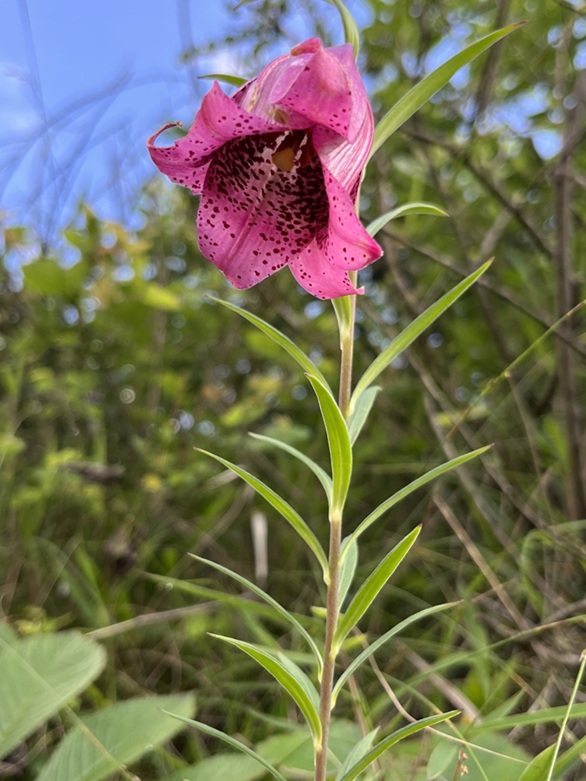
Rubrum Lily grows from a scaly true-lily bulb and produces an upright leafy stem commonly reaching approximately 3–5 feet, though height varies with cultivar, bulb size, soil, climate, and growing conditions. The leaves are narrow, smooth-edged, and arranged alternately or spirally along the stem rather than emerging only from the base.
The flowers are usually downward- or outward-facing and strongly recurved, giving them a Turk’s-cap-like appearance. Their tepals are typically white along the margins and strongly flushed with raspberry pink, rose, or crimson toward the center, with numerous dark crimson or purplish spots and raised papillae.
Prominent stamens extend from the recurved flower and carry pollen-bearing anthers that may shed orange-brown, reddish, or rust-colored pollen. The flowers are strongly fragrant and generally open in late summer or early autumn, later than many Asiatic lilies and some trumpet lilies.
Identification should use the whole plant, not one fallen petal. Useful photographs include the full stem, leaf arrangement, flower orientation, recurved tepals, spotting, anthers, pollen color, buds, bulb package, florist invoice, and any nursery label. Exact cultivar identification is useful for records, but feline treatment should not wait for cultivar confirmation once a true lily is suspected.
Rubrum Lily Versus Stargazer Lily
Stargazer is an Oriental hybrid bred partly from Lilium speciosum. It commonly has large upward-facing flowers with white margins, deep pink centers, prominent spotting, and a strong fragrance. Rubrum Lily usually holds its flowers downward or outward and has more strongly recurved tepals.
Both are true lilies and both are dangerous to cats. The orientation of the flower, cultivar name, or hybrid ancestry does not alter the need for immediate treatment after a credible exposure. A cat exposed to Stargazer, Rubrum, Oriental hybrid, Japanese show lily, or an uncertain pink spotted Lilium should be treated as a true-lily emergency.
Rubrum Lily Versus Tiger Lily
Tiger Lily, usually Lilium lancifolium, has orange recurved flowers with dark spots and often produces small dark bulbils in the leaf axils. Rubrum Lily has white-edged pink to crimson flowers and does not normally display the same conspicuous stem bulbils.
Tiger Lily and Rubrum Lily are separate accepted horticultural plants, but both belong to Lilium and cause the same potentially fatal feline renal syndrome. Correct identification is useful for the plant record, not for deciding whether treatment is necessary.
Rubrum Lily Versus Red Lily
Red Lily on another PAWS page refers to Lilium philadelphicum, a North American native species with upright orange-red flowers. Rubrum Lily is the East Asian Lilium speciosum horticultural form with pendulous or outward-facing, recurved, heavily spotted pink to crimson flowers.
The pages address different species, morphology, range, and exposure settings. Red Lily is more likely to be encountered as a native wildflower, prairie plant, woodland-margin plant, or garden species. Rubrum Lily is particularly important in cultivated beds, bulb commerce, florist bouquets, and fragrant cut-flower arrangements. Both remain nephrotoxic to cats.
Rubrum Lily Versus Non-Nephrotoxic “Lilies”
Peace lily and calla lily contain insoluble calcium oxalate crystals that cause immediate oral pain, drooling, pawing, and swelling rather than the characteristic true-lily renal syndrome. Peruvian lily may cause mild gastrointestinal upset but is not recognized as a cause of feline renal tubular necrosis.
Lily-of-the-valley contains cardiac glycosides, while gloriosa or flame lily contains colchicine-related alkaloids. Those plants can be dangerous to several animal species but require different monitoring and treatment. Autumn crocus, amaryllis, clivia, fire lily, and bog asphodel are additional examples of lily-named plants that are not the same as Rubrum Lily.
The name alone is therefore not sufficient. The genus Lilium on a nursery, florist, or bulb label identifies a true lily and should trigger the feline kidney-poisoning response. When the label is missing, the safest approach is to treat uncertain showy florist lilies as dangerous to cats until a reliable identification is made.
Cut Flowers, Bouquets, and Pollen Exposure
A cat does not need to chew a whole leaf or flower. Pollen can fall naturally as the anthers mature or be scattered when a bouquet is moved. A cat passing beneath the arrangement may collect pollen on its whiskers, face, chest, tail, paws, or coat and swallow it later during grooming.
Removing the anthers after bringing the flowers inside is not an adequate safety measure. Pollen may already have fallen, and the leaves, stems, tepals, buds, bulbs, and vase water remain dangerous. A bouquet that once contained Rubrum Lilies should be treated as contaminated even after the obvious lily stems are removed.
Mixed bouquets are especially problematic because a cat owner may not recognize every stem. Florists may also substitute one Oriental lily for another according to availability. The safest policy in a cat household is to reject arrangements containing any true lily or daylily rather than relying on exact cultivar identification or partial flower removal.
Vase Water
Vase water can collect pollen, sap, plant fragments, dissolved plant material, and compounds released from cut stems. Cats may be attracted to a tall vase or bouquet water even when a fresh bowl is available. Some cats also step in spilled water and groom the residue from their paws.
Replacing the water or trimming the stems does not make the arrangement safe. Spilled water should be cleaned immediately, and the container, counter, floor, rug, table, and nearby furnishings should be washed after a lily bouquet is removed.
If a cat drank from a vase that contained Rubrum Lilies, the exposure should be reported as credible lily ingestion. The absence of bite marks on leaves or flowers does not clear the cat.
Bulbs, Garden Debris, and Outdoor Exposure
The bulbs, basal roots, discarded scales, divided offsets, dried stems, and frost-killed flower remains should all be kept away from cats. Dogs may dig up and chew bulbs more readily than cats, while cats may investigate loose scales during planting, storage, or cleanup.
Garden debris should be collected into a closed container rather than placed in an accessible compost pile. Wilted stems and dried flowers remain identifiable as plant material and should not be assumed to have lost their toxic potential. Garden gloves, pruning tools, tables, clothing, and containers may also carry pollen or sap after lily handling.
Outdoor cats should not have access to Rubrum Lily beds. The risk is highest during flowering, but bulbs and plant fragments can be present during planting, transplanting, division, storage, and disposal. A cat household should not treat outdoor lilies as safe merely because the flowers are not indoors.
Why Cats Are Uniquely Susceptible
The reason cats are extraordinarily sensitive remains unresolved. The toxic material may be absorbed, metabolized, transported, concentrated, or handled by feline renal tubular cells differently than in other species. No single metabolic pathway has been proven to explain the entire syndrome.
The absence of the same syndrome in dogs, rats, rabbits, and common livestock does not mean that the plant contains no toxin. It means that the characteristic biochemical interaction producing proximal tubular necrosis appears strongly dependent on feline physiology. Until the toxin and mechanism are fully identified, the safest feline recommendation remains immediate care after credible exposure.
This feline specificity also explains why dog-oriented or livestock-oriented plant lists may understate the cat danger. A dog that vomits after chewing Rubrum Lily is usually managed as a gastrointestinal case, while a cat with the same exposure is managed as a kidney emergency even before kidney values rise.
The Kidney Injury
The proximal tubule performs much of the kidney’s energy-intensive reabsorption. Damage to its epithelial cells produces early glucosuria and proteinuria, loss of urine-concentrating ability, electrolyte disturbances, and increasing waste products in the blood. Urine findings may therefore become abnormal before a single early creatinine value looks alarming.
Polyuria may initially worsen dehydration because the injured kidneys cannot retain water. As tubular destruction and obstruction advance, urine production may fall. Oliguria and anuria indicate a much more serious stage because fluid and metabolic waste can no longer be eliminated adequately.
Fluid therapy is protective early because it supports hydration, perfusion, and monitoring during the active injury window. It is not a chemical antidote. Once urine output falls, fluid administration becomes more dangerous and must be guided by measurement rather than optimism.
Pancreatic Findings
Experimental true-lily poisoning has also produced degeneration of pancreatic acinar cells. The exact clinical contribution is uncertain because vomiting, appetite loss, depression, and abdominal discomfort occur with both renal and pancreatic disease.
Pancreatic involvement should be considered when abdominal pain or compatible laboratory findings are present, but it does not replace renal monitoring as the central priority after Rubrum Lily exposure. Kidney values, urine concentration, urine sediment, urine output, hydration, potassium, phosphorus, acid-base status, and blood pressure remain the main medical tracking points.
Diagnosis Does Not Require Seeing the Cat Eat the Plant
Witnessed chewing or recognizable fragments in vomit provides powerful evidence, but many cases are discovered only after pollen is found on the cat, a leaf is damaged, a vase is tipped, bouquet water is missing, or vomiting and kidney abnormalities develop. A cat may groom away the evidence before the owner notices the exposure.
Diagnosis combines environmental history with plant identification, clinical signs, urine concentration, urinalysis, serial blood chemistry, hydration assessment, and urine-output measurement. Early glucosuria in a cat with normal blood glucose, proteinuria, casts, renal tubular epithelial cells, and poorly concentrated urine can support proximal tubular injury.
There is no routinely available blood or urine test that directly identifies the unknown lily toxin. A normal initial creatinine value does not clear the cat because conventional kidney markers may rise after tubular damage is already underway. Baseline testing is useful because it gives the veterinarian something to compare with the next 24–72 hours.
Important Differential Diagnoses
Other causes of acute kidney injury include ethylene glycol, grapes or raisins, nonsteroidal anti-inflammatory drugs, aminoglycoside antibiotics, cholecalciferol, anesthesia-related hypotension, ureteral obstruction, urethral obstruction, pyelonephritis, leptospirosis, severe dehydration, shock, sepsis, and other nephrotoxins.
Repeated litter-box visits with little urine can also result from urethral obstruction, especially in a male cat. Both conditions are emergencies, and an owner should not delay because the exact cause is uncertain. A cat with lily exposure and poor urine output needs urgent evaluation, not home interpretation.
Plant-name differentials include peace lily, calla lily, lily-of-the-valley, gloriosa lily, autumn crocus, bog asphodel, Peruvian lily, amaryllis, clivia, fire lily, and other lily-named plants. These plants may be toxic, but they do not all produce the same feline renal syndrome.
Published Outcome Data
Older descriptions focused heavily on cats presented after kidney failure had already developed and therefore created an impression that nearly every lily exposure was fatal. More recent exposure studies show that the outcome is often excellent when cats receive prompt veterinary care. The correct public message is not panic without hope; it is urgent treatment before the window closes.
In a study of 57 exposed cats from 48 households, most cats received prompt veterinary treatment. Many remained asymptomatic or experienced only brief signs, while a smaller group developed renal insufficiency or fatal renal failure. This kind of real-world evidence supports both sides of the message: prompt treatment often works, but severe outcomes still occur.
Another series included 25 cats evaluated within 48 hours after known Lilium or Hemerocallis ingestion. All survived to discharge after receiving various combinations of gastrointestinal decontamination, intravenous fluid therapy, supportive care, and monitoring. Those results support an excellent prognosis when treatment begins early.
A newer 112-cat study found acute kidney injury in both hospitalized and outpatient groups, but many injuries remained stable or improved. Survival was 100% in the hospitalized group and 87.5% among the smaller veterinarian-managed outpatient group. These results broaden treatment discussion but do not make unattended home observation safe.
Inpatient and Outpatient Care
Hospitalization with intravenous fluids, serial blood testing, urinalysis, body-weight assessment, blood-pressure monitoring, and urine-output monitoring remains the most controlled approach, particularly when the amount or timing is uncertain or the cat already has signs. It allows the clinician to detect early kidney injury, adjust fluids, control vomiting, monitor potassium and phosphorus, and respond quickly if urine output changes.
Outpatient treatment may be considered by a veterinarian in selected circumstances when hospitalization is impossible or declined. It still requires professional decontamination decisions, prescribed fluid treatment, scheduled rechecks, repeat kidney values, repeat urinalysis when indicated, and clear instructions for immediate escalation.
The outpatient study does not establish that an owner can rinse the cat, provide water, and watch at home. The outpatient cats were veterinary patients receiving active treatment and monitoring. A cat exposed to Rubrum Lily should not be managed as a wait-and-see case without professional involvement.
Oliguria, Anuria, and Dialysis
Oliguria and anuria have historically carried a grave prognosis. Fluid administration must be adjusted carefully because an anuric cat cannot excrete the administered volume and can develop dangerous fluid overload. Hyperkalemia, metabolic acidosis, uremia, hypertension, pulmonary edema, and neurologic deterioration may follow.
Hemodialysis, continuous renal-replacement therapy, or peritoneal dialysis may support the cat while the kidneys recover, but access is limited and treatment is intensive. Renal-replacement therapy can help control potassium, acids, fluid balance, and uremic waste when the kidneys cannot do so.
A 2023 case described recovery from suspected oligo-anuric lily-associated acute kidney injury after intensive treatment and furosemide administration. That single case is encouraging, but it does not establish furosemide as a dependable cure. The authors acknowledged that urine production may have resumed naturally, and diuretics can increase urine volume without restoring glomerular filtration or reversing tubular injury.
Prognosis
The prognosis is excellent for many cats treated promptly before serious kidney injury develops. Early vomiting does not necessarily indicate a poor outcome, and prompt veterinary care can prevent progression in a large proportion of exposed cats. This is why the page should frame emergency treatment as protective, not as proof that every exposure is automatically fatal.
The prognosis becomes guarded when creatinine and phosphorus rise markedly, urine concentration remains poor, hyperkalemia develops, or the cat presents after prolonged illness. Anuria, severe fluid overload, uncontrolled uremia, neurologic complications, severe hyperkalemia, and inability to obtain renal replacement therapy worsen the outlook substantially.
A cat that recovers without persistent azotemia may return to normal life. Cats with residual kidney injury may require continued monitoring, hydration support, renal nutrition, blood-pressure assessment, repeat urinalysis, and chronic kidney-disease management. Follow-up planning is part of recovery, not an optional extra.
Prevention
Rubrum Lilies should not be grown, displayed, stored, or brought into a home shared with cats. Placement on a high shelf is inadequate because pollen falls, vase water spills, and cats can climb or knock over arrangements. Anther removal is also inadequate because pollen may already have fallen and the rest of the plant remains toxic.
Ask florists to prepare explicitly lily-free bouquets and to avoid substitutions from the genera Lilium and Hemerocallis. Check mixed arrangements before bringing them indoors, including gifts, wedding flowers, sympathy flowers, funeral flowers, holiday flowers, and religious displays. If the florist cannot confirm that the arrangement is lily-free, do not bring it into a cat household.
Outdoor bulbs, stems, pollen, and garden waste should be inaccessible to cats. Clean pruning tools, gloves, tables, floors, counters, clothing, and transport containers after handling lilies, particularly before touching or feeding a cat. Discard lilies in a sealed container inaccessible to animals.
Immediate Steps After Exposure
Proceed to veterinary care immediately. Do not wait for vomiting, appetite loss, increased thirst, abnormal urination, reduced urination, or elevated kidney values. A cat can appear normal while renal injury is developing, and early treatment is most protective before kidney failure becomes obvious.
- Prevent grooming: Place the cat in a carrier or otherwise prevent it from licking pollen from its coat while transportation is arranged.
- Remove loose pollen when practical: If this does not delay departure and the cat permits safe handling, gently blot visible pollen from the coat with a damp disposable cloth. Avoid brushing dry pollen across a larger area.
- Remove the entire plant source: Secure flowers, stems, leaves, bulbs, fallen pollen, vase water, plant fragments, and bouquet debris where no animal can reach them.
- Bring identification evidence: Take the plant, florist label, bulb package, bouquet photographs, vase-water details, and any vomited plant material to the clinic in a sealed container.
- Report every possible route: Tell the veterinarian whether the cat chewed a leaf or flower, contacted pollen, groomed its coat, drank vase water, walked through spilled water, or had access for an unknown period.
- Include timing: Estimate when the bouquet entered the home, when the cat was last normal, when vomiting began, and when abnormal drinking or urination was noticed.
Do Not Attempt Unsupervised Home Treatment
Home treatment can waste the period when veterinary decontamination and renal support are most useful. Rubrum Lily poisoning has no known household antidote. The correct response is immediate veterinary involvement, not trying to neutralize the toxin at home.
- Do not give hydrogen peroxide: Home peroxide can cause severe stomach and esophageal inflammation, prolonged vomiting, aspiration, and additional illness in cats.
- Do not force vomiting manually: Salt, mustard, dish soap, detergent, gagging, fingers, or objects in the throat are dangerous and do not provide controlled decontamination.
- Do not administer activated charcoal yourself: A vomiting, depressed, weak, or poorly swallowing cat can inhale charcoal into the lungs.
- Do not force food, milk, oil, broth, or water: None neutralizes the unidentified toxin, and forced material may cause aspiration or interfere with veterinary decontamination.
- Do not give human or leftover veterinary medication: Pain relievers, anti-nausea drugs, diuretics, kidney supplements, antacids, antibiotics, herbal products, and electrolyte products can be toxic or complicate treatment.
- Do not rely on one normal urination or blood test: Urine production and kidney values may remain normal during the early stage of tubular injury.
- Do not assume anther removal made the bouquet safe: Leaves, stems, flowers, sap, pollen already shed, and vase water remain dangerous.
Emergency Findings Requiring Immediate Examination
- Any credible cat exposure: Chewing, pollen grooming, vase-water drinking, walking through pollen, or uncertain interaction with Rubrum Lily warrants immediate veterinary assessment.
- Vomiting or appetite loss: These may be the first visible signs, but kidney injury can continue after gastrointestinal symptoms improve.
- Changes in thirst or urine: Increased drinking and large dilute urine volumes can indicate early tubular failure, while reduced or absent urine indicates severe progression.
- Weakness or profound depression: Marked lethargy, hiding, inability to stand, hypothermia, or collapse requires emergency stabilization.
- Neurologic or uremic signs: Tremors, disorientation, seizures, oral ulcers, abnormal breath odor, gastrointestinal bleeding, or coma indicates advanced systemic illness.
- Known kidney disease: Cats with chronic kidney disease, dehydration, advanced age, concurrent nephrotoxic medication, or recent anesthesia may have less renal reserve.
- Uncertain lily identity: When the plant might be another Lilium, Hemerocallis, Stargazer, tiger lily, Easter lily, Oriental lily, or unknown florist lily, treat it as dangerous to cats until proven otherwise.
Veterinary Decontamination
A veterinarian may induce vomiting when the exposure was recent and the cat remains alert, neurologically normal, breathing normally, and capable of protecting its airway. Appropriate feline emetic medication is used rather than hydrogen peroxide. Gastric lavage may be considered in selected circumstances when a clinically important ingestion occurred and safe emesis is not possible.
Activated charcoal may be administered after the airway and vomiting risk have been assessed. The degree to which charcoal binds the unknown lily toxin is not fully established, but it remains part of many early decontamination protocols. It should not be given at home because aspiration can be fatal.
The mouth, coat, paws, and contaminated skin may be cleaned to remove pollen and prevent additional grooming exposure. Sedation may be needed if a heavily contaminated or stressed cat cannot be cleaned safely while awake. Plant fragments recovered during decontamination may help confirm exposure but do not eliminate the need for renal monitoring.
Veterinary Treatment
Baseline blood count, serum chemistry, electrolytes, urinalysis, body weight, hydration assessment, blood pressure, and urine-production assessment help establish the cat’s starting condition. Important early and serial measurements include creatinine, urea nitrogen, phosphorus, potassium, calcium, glucose, total protein, acid-base status when indicated, urine specific gravity, urine glucose, urine protein, casts, sediment, and body weight.
Repeat creatinine, urea nitrogen, phosphorus, potassium, urine concentration, and urine-output assessment are needed because early results may be normal. A normal initial creatinine should never be treated as proof that the cat is safe. Urinalysis can be especially helpful when it shows poorly concentrated urine, glucosuria with normal blood glucose, proteinuria, casts, or tubular epithelial cells.
Intravenous isotonic fluids are commonly administered for approximately 48–72 hours to correct dehydration, maintain renal perfusion, support the patient during the active injury window, and allow close monitoring. Fluid rates must be individualized and adjusted to body weight, hydration, cardiovascular condition, blood pressure, lung sounds, electrolyte values, and measured urine production rather than continued mechanically at a fixed high rate.
Veterinary antiemetic treatment can control vomiting and improve comfort. Electrolyte abnormalities, acid-base disturbances, hypertension, hypothermia, nausea, oral ulceration, gastrointestinal ulceration, and nutritional needs are addressed according to measured findings. Pancreatic markers or abdominal assessment may be considered when abdominal pain or compatible signs are present, but renal monitoring remains central.
Oliguric or Anuric Acute Kidney Injury
An oliguric or anuric patient requires especially careful fluid management. Hyperkalemia, acid-base disturbances, hypertension, nausea, gastrointestinal ulceration, uremia, and fluid overload are treated according to measured findings. Excessive fluid administration cannot force a severely damaged kidney to produce urine and may cause pulmonary edema.
Accurate urine-output measurement may require hospitalization, body-weight tracking, urinary catheterization, closed collection, litter-box measurement, or other clinic-directed monitoring. Observing that a cat urinated once at home does not establish adequate ongoing kidney function.
Renal replacement treatment, including hemodialysis, continuous renal-replacement therapy, or peritoneal dialysis, may be considered when severe azotemia, hyperkalemia, fluid overload, oliguria, or anuria cannot be managed medically. Diuretics may be considered by the attending veterinarian in selected patients but are not an antidote and do not guarantee restoration of kidney filtration.
Inpatient and Outpatient Planning
Hospitalization remains the most controlled approach for meaningful Rubrum Lily exposure because it allows intravenous fluids, repeated testing, urine-output assessment, blood-pressure monitoring, and rapid response if the cat deteriorates. It is especially important when the amount is unknown, the exposure was not recent, vomiting has begun, kidney values are abnormal, urine findings are suspicious, or the cat has reduced renal reserve.
Veterinarian-managed outpatient treatment may be considered in selected cases when hospitalization is impossible or declined. Outpatient care still means professional assessment, decontamination decisions, prescribed fluid treatment when appropriate, scheduled rechecks, repeat blood and urine testing, and clear emergency return criteria. It does not mean home observation after wiping the cat and offering water.
Owners should understand the tradeoff clearly. Many outpatient cats can do well, but available evidence supports better survival in hospitalized cats, and outpatient groups are smaller and more selected. The safer default for a cat with credible true-lily exposure remains prompt veterinary examination and active monitoring.
Recovery and Prognosis
Many cats treated promptly remain clinically normal or recover fully after brief gastrointestinal signs. Continued monitoring through the risk period is necessary even when the cat appears well and the initial kidney values are normal. The purpose of early treatment is to keep the cat from reaching the severe renal-failure stage.
The prognosis becomes more guarded once substantial acute kidney injury develops and worsens considerably when urine production falls. Cats that remain polyuric or maintain adequate urine output generally have a better outlook than cats that become oliguric or anuric. Severe hyperkalemia, fluid overload, uncontrolled uremia, seizures, and delayed presentation worsen the outlook.
- Monitor kidney values: Creatinine, urea nitrogen, phosphorus, potassium, and acid-base status may change after early normal results.
- Monitor urine: Urine concentration, glucosuria, proteinuria, casts, sediment, urine volume, and litter-box output can all matter.
- Monitor hydration and fluid balance: Body weight, lung sounds, blood pressure, edema, respiratory effort, and urine output guide safe fluid therapy.
- Monitor appetite and vomiting: Persistent nausea, vomiting, or anorexia can worsen dehydration and delay recovery.
- Plan follow-up: Surviving cats may need repeat bloodwork, urinalysis, blood-pressure checks, and assessment for chronic kidney impairment.
After discharge, repeat blood chemistry, urinalysis, hydration assessment, and blood-pressure evaluation may be recommended. Persistent azotemia, persistent poor urine concentration, hypertension, weight loss, or recurrent dehydration can indicate residual kidney damage requiring longer-term management.
Frequently Asked Questions About Rubrum Lily and Animal Poisoning
What is the correct scientific name for Rubrum Lily?
The accepted species is Lilium speciosum Thunb. The name Lilium speciosum var. rubrum Lem. is a historical botanical designation now treated as a synonym under Lilium speciosum var. speciosum. Nurseries and horticultural references may also write the familiar red selection as Lilium speciosum ‘Rubrum’. All of these names identify true lily material that is highly dangerous to cats.
Are Rubrum Lily and Japanese Show Lily the same plant?
Rubrum Lily is the deeply pink to crimson-spotted horticultural form of the species broadly called Japanese Show Lily, Lilium speciosum. A florist may use Japanese Show Lily while a bulb supplier uses Rubrum. The difference in naming does not indicate a difference in feline toxicity; both labels identify nephrotoxic true-lily material.
Which parts of Rubrum Lily are poisonous to cats?
Every part should be treated as dangerous, including leaves, stems, flowers, tepals, anthers, pollen, buds, seed structures, bulbs, roots, sap, and small fragments. The water in a vase can collect pollen, sap, and dissolved plant material. Removing the pollen-bearing anthers does not make the remainder of the plant safe.
Can pollen alone cause Rubrum Lily poisoning?
Yes. A cat can brush against a downward-facing flower, collect pollen on its face, paws, tail, or coat, and then swallow it during grooming. The exact minimum toxic amount is unknown, so visible pollen contact is treated as a credible exposure. Prevent grooming, gently remove loose pollen when this will not delay care, and proceed to a veterinarian immediately.
Is water from a vase containing Rubrum Lilies dangerous?
Yes. Vase water may contain pollen, sap, plant fragments, and water-soluble toxic material released from cut flowers and stems. A cat does not need to chew the bouquet if it drinks from the vase. Replacing the water or removing the lilies afterward does not erase an exposure that has already occurred.
How much Rubrum Lily can cause kidney failure?
No reliable safe dose has been established. Severe illness has followed apparently small true-lily exposures, and poison authorities warn that limited leaf, flower, pollen, or vase-water ingestion may be medically important. Not every exposed cat develops renal failure, particularly with prompt treatment, but the absorbed dose and individual susceptibility cannot be determined safely at home.
How soon do signs appear after exposure?
Drooling, vomiting, appetite loss, depression, and lethargy may begin within a few hours. Polyuria and increased thirst can develop during approximately the first 12–30 hours as the kidneys lose concentrating ability. Severe cases may progress to reduced or absent urine production within roughly 24–48 hours, with worsening renal failure over the following days.
If the cat vomited the plant, is the danger over?
No. Vomiting may remove some material but does not prove that all toxin was expelled before absorption. Cats can appear better after the early gastrointestinal stage while renal tubular injury continues. Veterinary decontamination decisions, baseline testing, fluid treatment, and serial kidney monitoring remain important after spontaneous vomiting.
Can lily poisoning be diagnosed without seeing the cat eat the flower?
Yes. Witnessed ingestion and plant fragments in vomit are useful but are not required. Veterinarians combine evidence such as damaged flowers, pollen on the coat, access to vase water, plant identification, early gastrointestinal signs, urine concentration, glucosuria, proteinuria, casts, rising kidney values, and changes in urine production. No routine test directly detects the unidentified lily toxin.
Is Rubrum Lily also kidney-toxic to dogs, horses, or livestock?
The characteristic proximal tubular necrosis is established in cats and is not expected in dogs, horses, or ordinary livestock species. Dogs may develop vomiting, diarrhea, or appetite loss after chewing the plant. Other animals can also experience gastrointestinal irritation, choking, or obstruction from bulbs and fibrous plant material, but severe renal disease in a nonfeline patient should prompt investigation for another toxin or illness.
Should hydrogen peroxide be given after a cat eats Rubrum Lily?
No. Hydrogen peroxide can cause severe gastric and esophageal inflammation, prolonged vomiting, bleeding, and aspiration in cats. A veterinarian may induce vomiting with an appropriate prescription emetic after assessing timing, neurologic condition, airway safety, and current signs. Home emesis can create an additional medical emergency while delaying renal-protective treatment.
Will activated charcoal prevent kidney failure?
Activated charcoal is not an antidote, and the extent to which it binds the unidentified lily toxin is not fully established. A veterinarian may administer charcoal as part of early decontamination after assessing vomiting and airway risk. It should not be given at home because a nauseated, weak, or poorly swallowing cat can aspirate charcoal into the lungs.
Why are cats commonly hospitalized for 48–72 hours?
Kidney injury and laboratory abnormalities may develop after the cat’s initial examination, so one normal creatinine result is insufficient. Hospitalization allows controlled intravenous fluids, repeated kidney and electrolyte testing, urinalysis, body-weight checks, blood-pressure monitoring, and measurement of urine production throughout the principal risk period. Fluid therapy must be adjusted carefully rather than given blindly, particularly if urine output begins to fall.
Can Rubrum Lily exposure ever be treated as an outpatient?
A recent retrospective study found favorable outcomes in many veterinarian-managed outpatient cats, but survival remained higher among hospitalized cats and the evidence should not be treated as a home-care guideline. Outpatient management still involves professional assessment, decontamination decisions, prescribed fluid treatment, scheduled blood and urine rechecks, and immediate escalation if abnormalities develop. It does not mean that an exposed cat can simply be watched at home.
What happens if the cat stops producing urine?
Oliguria or anuria means the kidneys can no longer eliminate fluid, potassium, acids, phosphorus, and metabolic waste adequately. Fluid overload, hyperkalemia, hypertension, uremia, neurologic complications, and death can follow. The prognosis becomes grave, and dialysis may be required to support the cat while the kidneys recover. Diuretics may increase urine production in selected cases but are not a reliable antidote.
What is the prognosis after Rubrum Lily exposure?
The prognosis is often excellent when treatment begins promptly before serious kidney injury develops. Published treated groups include many cats that remained normal or had only brief signs, and one 25-cat series reported complete survival to discharge. The outlook becomes substantially worse after severe azotemia, oliguria, anuria, hyperkalemia, fluid overload, or delayed presentation. Immediate veterinary care is protective rather than evidence that every exposure is inevitably fatal.
How can Rubrum Lily poisoning be prevented?
Do not bring Rubrum Lilies, Japanese Show Lilies, or any other true Lilium or Hemerocallis flowers into a cat household. Ask florists for a completely lily-free arrangement and warn them not to make lily substitutions. Outdoor bulbs and plants should be inaccessible to cats, and pollen, vase water, pruning debris, tools, clothing, and surfaces should be cleaned carefully after lily handling.
Which early tests are most useful after Rubrum Lily exposure?
Baseline blood chemistry and urinalysis are important, but early normal creatinine and urea nitrogen do not rule out developing injury. Urine specific gravity, urine glucose with normal blood glucose, urine protein, casts, tubular epithelial cells, phosphorus, potassium, hydration, body weight, blood pressure, and documented urine production help establish risk and guide monitoring. Serial testing during the first 48–72 hours is more useful than one early panel.
Why is urine-output monitoring so important?
Urine output tells the veterinarian whether the cat remains polyuric, is producing an adequate amount of urine, or is progressing toward oliguria or anuria. That distinction changes fluid safety, electrolyte management, prognosis, and referral decisions. Continuing aggressive fluids in a cat that is not producing urine can cause dangerous fluid overload, while a cat maintaining urine output generally has a better chance of recovery.
What findings suggest proximal tubular injury?
Glucosuria despite normal blood glucose, proteinuria, granular casts, renal tubular epithelial cells, poorly concentrated urine, polyuria, polydipsia, rising creatinine, rising urea nitrogen, hyperphosphatemia, potassium changes, and worsening dehydration can support proximal tubular injury. No single finding is perfect by itself. The pattern over time is more informative than one isolated value.
Has Lilium speciosum ‘Rubrum’ itself been tested in controlled cat studies?
Most controlled toxicology has used Easter Lily, Lilium longiflorum, and many clinical reports involve mixed true-lily or daylily exposures. Rubrum Lily is a true Lilium, so it is managed as part of the feline true-lily nephrotoxicity group. The evidence is strong enough for emergency treatment but should be described as true-lily group evidence rather than a Rubrum-specific dose trial.
What evidence supports a water-soluble lily toxin?
Experimental Easter-lily work found nephrotoxic and pancreotoxic activity in aqueous leaf and flower extracts, with the aqueous flower fraction producing the most severe effects. That supports concern for vase water, sap, pollen-contaminated moisture, and cut-flower exposure. It does not yet identify the exact molecule responsible for feline renal tubular necrosis.
Why is the exact lily toxin still such an important research gap?
Without identifying the toxin, veterinarians cannot measure absorbed dose, confirm exposure with a routine blood test, determine which plant parts contain the highest risk across all lilies, or explain exactly why cats are uniquely vulnerable. Current treatment remains intentionally conservative because the early window is narrow, the toxin is unidentified, and severe disease can become difficult to reverse once urine output falls.
How should furosemide evidence be interpreted?
A published case described recovery of a cat with suspected oligo-anuric lily-associated acute kidney injury after intensive care and furosemide administration. That is encouraging but does not make furosemide an antidote or a substitute for dialysis when renal replacement therapy is needed. Diuretics may increase urine volume in selected patients, but they do not prove restoration of glomerular filtration or reversal of tubular necrosis.
Which differentials matter most when a cat has acute kidney injury after a lily exposure?
Differentials include ethylene glycol, grapes or raisins, NSAIDs, aminoglycosides, cholecalciferol, hypotension, urinary obstruction, ureteral obstruction, pyelonephritis, leptospirosis, severe dehydration, sepsis, shock, and other nephrotoxins. Plant confusion also matters because peace lily, calla lily, lily-of-the-valley, gloriosa lily, autumn crocus, and Peruvian lily do not produce the same classic true-lily renal syndrome.
What are the biggest evidence gaps in true-lily poisoning?
The largest gaps are identification of the proximate nephrotoxin, explanation of feline species specificity, validated dose-response data, species-level comparison across Lilium and Hemerocallis, pollen and vase-water quantification, direct testing of common florist cultivars, and prospective treatment comparisons. Current clinical practice remains conservative because available evidence shows the syndrome is real, potentially fatal, and most treatable before advanced renal failure develops.