Easter Lily Poisoning and Acute Kidney Failure in Cats
Is Easter Lily Poisonous to Cats, Dogs, Horses, and Other Animals?
Yes—Easter Lily, Lilium longiflorum, is a potentially fatal kidney poison for cats. A cat can be placed at risk by chewing a leaf, petal, stem, or bulb; licking pollen from the coat; or drinking water from a vase containing the plant. Early vomiting, drooling, appetite loss, and lethargy may be followed by dehydration, abnormal urination, acute kidney injury, inability to produce urine, seizures from severe uremia, coma, and death. Dogs may develop gastrointestinal upset after chewing the plant, but they are not expected to develop the characteristic feline kidney-failure syndrome.
About this guide: This page provides general pet-poisoning information and cannot diagnose or treat an individual animal. For any suspected exposure, contact a veterinarian or animal poison-control service immediately. Do not induce vomiting, give medication, or attempt home decontamination unless directed by a veterinary professional.
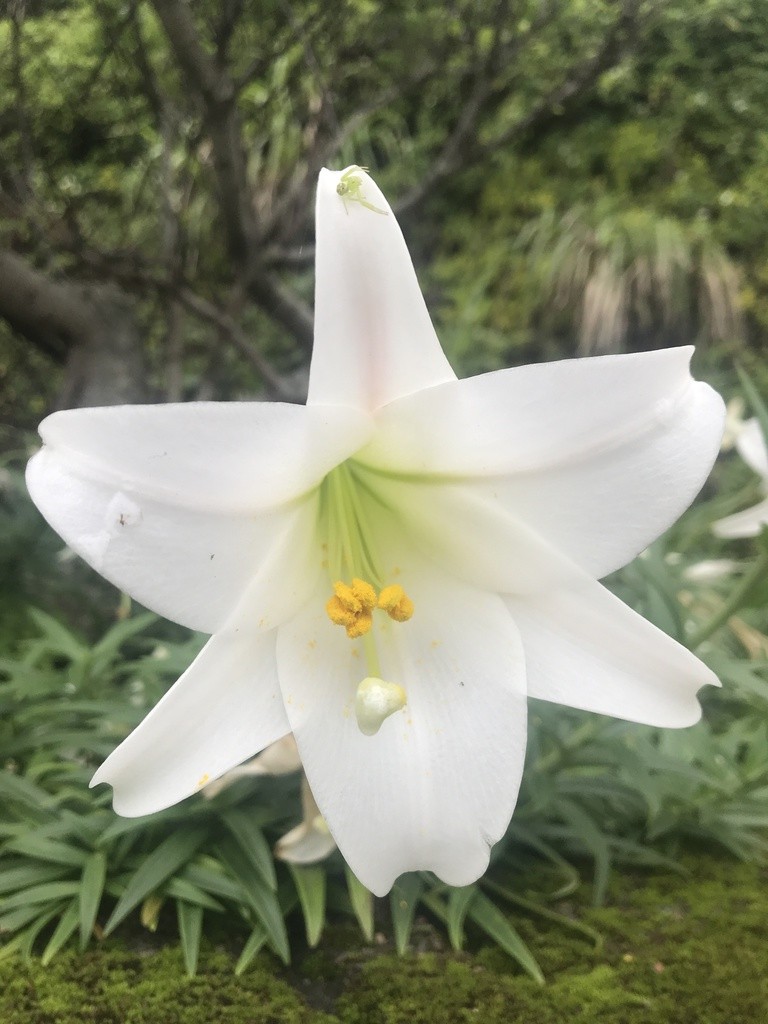
Easter Lily
Lilium longiflorum Thunb.
Accepted infraspecific taxa include Lilium longiflorum var. longiflorum and Lilium longiflorum var. scabrum Masam.
Historical botanical names associated with cultivated Easter Lilies include Lilium harrisii, Lilium eximium, and Lilium liukiu. Lilium formosanum, the Taiwan Lily or Formosa Lily, is a closely related but separately accepted species.
Liliaceae
Easter Lily, Easter Trumpet Lily, Trumpet Lily, White Trumpet Lily, White Easter Lily, Bermuda Lily, Bermuda Easter Lily, November Lily, Long-flowered Lily, Longiflorum Lily, Ryukyu Lily, Japanese Trumpet Lily, Teppō-yuri, Teppo Yuri, Teppouyuri, Lilium longiflorum, Lilium harrisii, Lilium eximium, Lilium liukiu
Commercial Easter Lily cultivars and selections include ‘Nellie White,’ ‘Ace,’ ‘White American,’ and ‘White Heaven.’ Cultivar name, plant size, flower number, fragrance, or the removal of visible anthers does not make an Easter Lily safe for cats.
“Trumpet Lily” is also used for other Lilium species and hybrids. An unidentified trumpet-shaped lily in a cat household should therefore be treated as potentially nephrotoxic until it is reliably identified.
Christmas Lily and November Lily may be used regionally for Lilium longiflorum, but “Christmas Rose” and “Lenten Rose” refer to unrelated Helleborus species. Easter Lily is not a hellebore.
An Unidentified Water-Soluble Nephrotoxin
Easter Lily contains a potent feline nephrotoxic principle whose precise chemical identity remains unknown. The hazard is not explained by insoluble calcium oxalate crystals, cardiac glycosides, colchicine, or the irritant compounds associated with hellebores. The defining toxic effect is rapid injury to renal tubular cells in susceptible cats.
The toxin appears to be water-soluble. This characteristic is consistent with toxicity from fresh plant tissue and with the recognized danger of water from a vase containing cut lilies. The absence of a fully identified molecule does not make the syndrome speculative: the clinical disease, laboratory changes, renal lesions, and species susceptibility have been repeatedly documented.
Experimental Evidence from Easter Lily Leaves and Flowers
In the 2004 study “A Comprehensive Study of Easter Lily Poisoning in Cats,” Wilson K. Rumbeiha, Jayaraj A. Francis, Scott D. Fitzgerald, Muraleedharan G. Nair, Kate Holan, Kwasi A. Bugyei, and Heather Simmons separated Easter Lily leaf and flower material into aqueous and organic fractions. Only the aqueous extracts produced the characteristic nephrotoxic and pancreotoxic effects in the experimental cats.
The investigators further separated the aqueous flower extract and found that one subfraction contained most of the toxic activity. Exposed cats developed vomiting, depression, excessive thirst and urination, azotemia, glucosuria, proteinuria, and poorly concentrated urine. The work narrowed the toxin to a water-soluble fraction but did not identify a single definitive compound that could be used as an antidote target or routine diagnostic marker.
Proximal Renal Tubular Necrosis
The principal lesion is acute injury and necrosis of the proximal convoluted tubules. These tubular cells normally reclaim water, glucose, electrolytes, amino acids, and other filtered substances. When they are damaged, the kidneys lose concentrating and reabsorptive ability, allowing glucose and protein to appear in urine and causing the cat to produce excessive amounts of poorly concentrated urine during the early renal phase.
As tubular injury advances, filtration and urine production may fall. Waste products, phosphorus, potassium, acids, and fluid can accumulate in the body. This progression explains why an exposed cat may initially urinate more than normal but later produce very little urine or none at all.
Rumbeiha and colleagues also found swollen mitochondria, abnormally enlarged mitochondria, cellular edema, and lipid accumulation in renal tubular cells. These ultrastructural changes support a direct cellular-energy and tubular-injury process rather than simple dehydration alone.
Pancreatic Findings and Their Clinical Meaning
Experimental Easter Lily exposure also produced degeneration of pancreatic acinar cells. This finding is scientifically important because it shows that the toxic fraction may affect more than one cell population. However, acute kidney injury remains the dominant and best-established clinical emergency in naturally exposed cats.
Vomiting and appetite loss after lily exposure should not automatically be diagnosed as pancreatitis. They can arise from the initial toxic response, dehydration, developing azotemia, uremic gastritis, or another substance in a mixed bouquet. Pancreatic testing or imaging may be considered when the clinical findings support it, but documented Easter Lily exposure must still be managed primarily as a renal emergency.
Every Part of the Plant Is Treated as Dangerous
Leaves, petals, complete flowers, stems, pollen, anthers, buds, bulbs, roots, and other plant tissues should all be considered dangerous to cats. Toxicity is not limited to the bulb or to a particular stage of flowering.
Pollen creates an indirect ingestion route. A cat may brush against an open flower, acquire yellow or orange pollen on its face, shoulders, flank, paws, or tail, and later swallow it while grooming. Removing the pollen-bearing anthers after the flowers open does not make the remaining plant safe because nephrotoxic material remains throughout the plant.
Water from a vase containing Easter Lilies is also treated as hazardous. It may contain dissolved plant constituents, pollen, sap, or fragments released from submerged stems and fallen floral material. Floral preservatives, bacteria, other flowers, and decorative materials can add secondary hazards, but the presence of the lily itself is enough to justify emergency evaluation of an exposed cat.
Why Cats Are Uniquely Susceptible
Cats are the species in which the characteristic, potentially fatal acute-kidney-injury syndrome has been established. The reason for this extreme susceptibility remains uncertain. Possible explanations include feline differences in toxin metabolism, cellular transport, detoxification, renal handling, or sensitivity of proximal tubular cells, but no single explanation has been confirmed.
Dogs that chew Easter Lily may vomit, drool, lose appetite, or develop diarrhea, particularly after swallowing a substantial amount of plant material. Dogs are not expected to develop the same selective acute renal tubular necrosis documented in cats. The plant is likewise not recognized as a characteristic nephrotoxin for horses.
Published species-specific evidence for rabbits, guinea pigs, hamsters, other rodents, birds, reptiles, and most livestock is limited. The feline syndrome should not be invented for these animals, but ingestion still warrants identification of the plant and veterinary advice because small animals may be harmed by gastrointestinal illness, dehydration, bulbs, potting products, pesticides, or other flowers in the arrangement.
No Safe Feline Dose Has Been Established
No dependable safe amount of Easter Lily leaf, petal, pollen, bulb, or vase water has been established for cats. Severe poisoning has followed exposures that appeared minor, and the quantity actually swallowed is often impossible to reconstruct after pollen grooming or unsupervised access to a bouquet.
Not every cat exposed to a lily develops the same degree of renal injury. Differences in the amount ingested, plant part, freshness, individual susceptibility, time to decontamination, hydration, preexisting kidney function, and treatment may alter the outcome. That variability cannot be used to justify watching a cat at home.
Primary liver failure, direct cardiac-glycoside arrhythmias, immediate calcium-oxalate mouth swelling, and the profound hypocalcemia of soluble-oxalate poisoning are not the expected Easter Lily syndrome. Those findings suggest another plant, a mixed exposure, severe secondary illness, or an unrelated disease.
Early Gastrointestinal and Behavioral Signs
Early signs can begin within several hours of ingestion but may be absent or easy to miss. Vomiting is common and may occur once or repeatedly. Drooling, lip licking, nausea, hiding, reduced activity, depression, appetite loss, and reluctance to drink may accompany it.
These signs may appear mild compared with the seriousness of the exposure. A cat can vomit, seem temporarily more comfortable, and still be developing renal tubular injury. Waiting for persistent illness or obvious kidney failure sacrifices the period in which decontamination and renal-protective treatment are most likely to help.
Developing Tubular Injury and Polyuria
During the next stage, the injured kidneys may lose their ability to conserve water and concentrate urine. The cat may drink more, visit the litter box frequently, pass larger volumes of dilute urine, or urinate outside the box. Continued vomiting and increased urinary water loss can produce substantial dehydration.
Owners may not recognize increased urination in a multi-cat home, an outdoor cat, or a household using absorbent litter. Progressive lethargy, tacky gums, reduced skin elasticity, sunken eyes, weakness, and continued appetite loss may be the more visible evidence of dehydration and renal dysfunction.
Laboratory and Urine Abnormalities
Initial kidney values may still be within their reference ranges when an exposed cat first arrives at the clinic. Serial testing is therefore more informative than one early blood sample.
As injury develops, creatinine, blood urea nitrogen, phosphorus, and sometimes potassium may rise. Urinalysis may reveal poorly concentrated urine, glucose despite a normal blood glucose concentration, protein, casts, or other evidence of tubular damage. Acid-base and electrolyte abnormalities can become clinically important as kidney function declines.
No routine blood or urine test identifies Easter Lily toxin itself. Laboratory testing measures the effect on the patient and helps the veterinarian determine whether kidney injury is developing, stabilizing, or progressing.
Oliguric or Anuric Acute Kidney Failure
Severe tubular injury can cause oliguria, meaning abnormally low urine production, or anuria, meaning no effective urine production. A litter box with little or no urine after earlier vomiting or excessive urination is an especially grave warning sign.
As filtration fails, the cat may become profoundly weak, nauseated, dehydrated or fluid overloaded, mentally dull, recumbent, hypothermic, or unresponsive. The breath may develop a uremic odor, and ulcers can occur in the mouth or gastrointestinal tract. Vomiting may become persistent, and black stool or blood in vomit may accompany severe uremic gastrointestinal injury.
Oliguria and anuria also permit potassium, acids, fluid, and metabolic waste to accumulate. Hyperkalemia can produce dangerous weakness and cardiac conduction abnormalities. Fluid overload can cause tissue swelling, lung fluid, rapid breathing, respiratory distress, and worsening oxygenation.
Neurologic Signs in Advanced Uremia
Tremors, disorientation, abnormal behavior, muscle twitching, seizures, stupor, and coma are uncommon early findings. When they occur after lily exposure, they generally indicate severe uremia, major electrolyte or acid-base derangement, profound hypertension, hypoxia, or another complication of advanced kidney failure.
A seizure should not be interpreted as a routine direct neurologic effect of the plant. It is an emergency requiring immediate stabilization and investigation of the cat’s renal, metabolic, cardiovascular, and neurologic status.
Clinical Course Without Treatment
Untreated feline Easter Lily exposure can progress from apparently minor gastrointestinal signs to measurable kidney injury within one to three days. Severe renal failure and death may occur over the following several days.
The course is not reliably linear. Early vomiting may stop, urination may initially increase, and the cat may seem quieter rather than dramatically ill. The apparent pause can mislead an owner into believing that the plant has been expelled when tubular damage is continuing.
Dogs and Other Animal Species
Dogs may develop drooling, vomiting, appetite loss, abdominal discomfort, or diarrhea after chewing Easter Lily, especially after a large ingestion. The severe feline proximal-tubular-necrosis syndrome is not expected in dogs.
Horses and livestock are not recognized as characteristically susceptible to Easter Lily nephrotoxicity. Nevertheless, repeated vomiting in a dog, significant colic or feed refusal in a grazing animal, or exposure to a mixed ornamental planting requires evaluation for another toxic plant, pesticide, fertilizer, bulb, foreign material, or unrelated disease.
Published Easter Lily case evidence for rabbits, rodents, pet birds, reptiles, and other exotic animals is limited. Appetite loss and dehydration can become serious quickly in these species, so an exposure should not be dismissed merely because feline renal failure has not been documented in that animal.
Signs Suggesting Another or Mixed Exposure
Immediate burning of the mouth, marked tongue swelling, and difficulty swallowing are more characteristic of calcium-oxalate plants such as Peace Lily or Calla Lily. Slow or irregular heart rhythm suggests Lily-of-the-valley or another cardiac glycoside. Severe salivation, weakness, and gastrointestinal irritation may occur with hellebores, while rapidly progressive multiple-organ failure can follow Gloriosa Lily exposure.
Mixed bouquets can contain more than one hazardous plant. Ribbon, string, floral wire, wooden picks, foam, preservative solution, pesticides, and broken vase material can also cause illness independently of the Easter Lily.
Plant Identity
Easter Lily is a bulb-forming true lily with upright green stems, narrow glossy leaves, and large white trumpet-shaped flowers. The flowers usually face outward or slightly upward and often have a pale green throat. Six prominent pollen-bearing anthers project from the center of each open flower and may shed yellow, orange, or brownish pollen.
The species is native from islands of southern Japan through the Ryukyu region and Taiwan to parts of the northern Philippines. Commercial plants are commonly forced into bloom for the spring Easter market even though plants grown outdoors may flower later in the normal growing season.
For animal-safety purposes, a potted Easter Lily, a cut stem in a bouquet, a garden plant, a discarded bulb, and a spent or wilted floral stem should all be treated as the same feline hazard.
Easter Lily Is Not Hellebore
Easter Lily is Lilium longiflorum in the family Liliaceae. Christmas Rose and Lenten Rose are names for Helleborus species in the family Ranunculaceae. The plants are botanically unrelated and produce different poisoning syndromes.
Hellebores are low-growing plants with divided or leathery leaves and open, rose-like flowers. Their toxins primarily cause gastrointestinal irritation and, depending on species and exposure, cardiovascular or neurologic abnormalities. They do not explain the selective feline renal tubular necrosis associated with Easter Lily.
A record labeled “Easter Lily or Christmas Rose” should never be treated as a single plant identity. Correct identification determines whether the central emergency is feline kidney protection, cardiac monitoring, oral irritation, or another treatment pathway.
Common Household and Holiday Exposures
Easter Lilies are sold as potted seasonal gifts and are frequently displayed on counters, tables, windowsills, mantels, hospital reception desks, nursing-home common areas, church altars, funeral displays, offices, schools, hotels, and event stages. A cat may encounter the plant when a gift is delivered, guests bring flowers, a holiday display is moved temporarily, or a spent plant is placed near a doorway or trash container.
High placement is not dependable protection. Cats can jump onto counters, tables, shelves, mantels, windowsills, pianos, altars, and cabinets. Flowers and leaves may extend beyond the edge of the surface, pollen can fall below the arrangement, and petals may drop after the owner believes the plant is inaccessible.
Outdoor exposures occur when a potted plant is moved to a porch or patio, planted in a garden after flowering, discarded beside a compost area, or left near a garage or potting bench. Bulbs dug by a cat or exposed during garden work remain part of the risk.
Pollen, Coat Contamination, and Grooming
A cat does not need to bite the plant in front of an owner. Brushing past an open flower can transfer visible or microscopic pollen to the face, whiskers, ears, back, chest, legs, paws, or tail.
The ingestion occurs later when the cat licks the contaminated coat. A few yellow marks on white or light-colored fur may be obvious, while pollen can be difficult to see on dark, patterned, or long-haired coats.
Cutting off the anthers may reduce visible pollen shedding but does not make the flower, leaves, stems, or vase water safe. Pollen may already have fallen onto nearby surfaces, and the remainder of the plant still contains nephrotoxic material.
Vase Water and Mixed Bouquets
Water from a vase containing Easter Lilies must be treated as a feline exposure. Submerged stems can release plant material into the water, and pollen or fallen petals may enter it. A cat may drink from the vase even when it has shown no interest in chewing the flowers.
Floral preservatives can cause separate gastrointestinal effects, but they do not replace the lily as the principal emergency. Changing the water or rinsing the vase does not make an arrangement safe while a true lily remains present.
An unidentified bouquet deserves careful examination for other Lilium species and for daylilies in Hemerocallis. Asiatic, Oriental, Tiger, Stargazer, Japanese Show, Rubrum, Casa Blanca, and other true lilies can produce the same feline kidney emergency.
Look-Alikes and Other Plants Called Lily
Peace Lily, Spathiphyllum species, and Calla Lily, Zantedeschia species, are aroids. They contain insoluble calcium oxalate raphides and usually cause immediate oral pain, drooling, pawing at the mouth, swelling, vomiting, and difficulty swallowing. They do not produce the characteristic true-lily acute kidney failure syndrome.
Lily-of-the-valley, Convallaria majalis, contains cardiac glycosides and can cause vomiting, weakness, low heart rate, and dangerous arrhythmias. Gloriosa or Flame Lily, Gloriosa superba, contains colchicine-related toxins and may cause severe gastrointestinal and multiple-organ injury.
Peruvian Lily, Alstroemeria species, is more often associated with mild gastrointestinal effects. However, a common-name identification from a florist receipt or casual description is not sufficiently reliable when a cat may have contacted a white trumpet-shaped flower.
Daylilies, Hemerocallis species, are not true lilies botanically, but they can cause the same acute renal-failure syndrome in cats. Pet-safety instructions should therefore say “lilies and daylilies in the genera Lilium and Hemerocallis.”
Dogs, Horses, Livestock, and Exotic Pets
Easter Lily is primarily a feline renal emergency. Dogs may develop gastrointestinal irritation after chewing plant material but are not expected to experience the same acute renal tubular necrosis. ASPCA plant classifications list Lilium species as toxic to cats but not as a characteristic poison for dogs or horses.
That species difference does not make a mixed exposure harmless. A dog that swallows a bulb, ribbon, floral foam, wire, fertilizer, pesticide, or a large volume of preservative-containing vase water may require treatment for those hazards. Repeated vomiting, abdominal distention, significant diarrhea, weakness, or inability to retain water warrants veterinary examination.
Published Easter Lily toxicology is insufficient to define a plant-specific syndrome or safe amount for rabbits, guinea pigs, hamsters, gerbils, birds, reptiles, and most livestock. Because small herbivores and birds can deteriorate rapidly after appetite loss or dehydration, veterinary advice remains appropriate after confirmed ingestion.
How Exposure Is Diagnosed
There is no routine test that detects the unidentified lily toxin in blood or urine. Diagnosis depends on identifying the plant, documenting access, finding bite damage or missing plant parts, observing pollen on the coat, recovering fragments from vomit, or recognizing a compatible acute-kidney-injury pattern after possible bouquet exposure.
Useful evidence includes the entire plant, florist label, pot label, delivery receipt, photographs of flowers and leaves, the bouquet ingredient list, damaged stems, pollen marks, vomited fragments, and information about whether the cat could reach the vase water.
The veterinarian may obtain baseline blood chemistry, a complete blood count, urinalysis, urine specific gravity, blood pressure, body weight, and urine-output measurements. Serial creatinine, blood urea nitrogen, phosphorus, potassium, glucose, acid-base status, and urinalysis findings help reveal injury that was not measurable at initial presentation.
Other causes of acute kidney injury may need to be considered when lily exposure is uncertain. These include ethylene glycol, nonsteroidal anti-inflammatory drugs, certain antibiotics, grapes or raisins in dogs rather than cats, severe dehydration, urinary obstruction, infection, shock, and other nephrotoxic plants or chemicals.
Treatment Evidence and Outcome
Early treatment combines prompt professional decontamination when appropriate with hospitalization, intravenous fluid support, urine-output monitoring, anti-nausea treatment, serial renal testing, and correction of electrolyte or acid-base abnormalities. There is no plant-specific antidote.
A retrospective study published by Justin Lam, Rebecka Hess, and Erica Reineke evaluated 112 cats treated after lily exposure. Acute kidney injury was recorded in 46.9% of inpatient cats and 43.8% of outpatient cats. Survival was 100% among the 96 hospitalized cats and 86.5% among the 16 cats managed as outpatients.
The study was retrospective and treatment assignment was not randomized, so it does not establish that outpatient management is equivalent for an individual cat. It does demonstrate that renal injury may occur despite treatment and that survival can be excellent when exposed cats receive timely veterinary care, particularly inpatient monitoring and support.
Once a cat becomes oliguric or anuric, the prognosis becomes more guarded and referral-level treatment may be needed. In a 2023 case report, An To, Claudia Davila, Sarah Stroope, and Rebecca Walton described a young cat with severe azotemia, hyperkalemia, and oligo-anuric kidney injury after lily exposure that recovered following intensive medical management that included furosemide. The cat left the hospital after four days and had no persistent azotemia or hyperkalemia at recheck.
That successful report shows that recovery from advanced injury is possible. It remains a single case and does not establish furosemide as an antidote or guarantee recovery from anuria. Hemodialysis or another renal-replacement method remains an important consideration when urine production cannot be restored or when severe uremia, hyperkalemia, acid-base disturbance, or fluid overload cannot be controlled medically.
Prevention in Cat Households
The safest policy is not to bring Easter Lilies or any Lilium or Hemerocallis plant into a home with cats. A closed room, high shelf, removed anthers, covered vase, or temporary supervision cannot eliminate fallen pollen, dropped petals, vase-water access, or human error.
Tell florists, friends, relatives, churches, funeral homes, hospitals, and event organizers that arrangements entering a cat household must contain no true lilies or daylilies. “No lilies” should be written directly on floral orders because a request for “pet-friendly flowers” may be interpreted inconsistently.
After an Easter Lily has entered the home, remove the complete plant, vase water, fallen pollen, petals, leaves, stem pieces, bulbs, and potting debris. Clean contacted surfaces and inspect the cat’s coat before allowing grooming. Do not simply move the arrangement outdoors where an indoor-outdoor cat or neighborhood cat can reach it.
Immediate Steps After Easter Lily Exposure
- Treat every feline exposure as an emergency. A chewed leaf, missing petal, pollen on the coat, access to vase water, or uncertain contact with a bouquet containing Easter Lily is enough to justify immediate veterinary evaluation. Do not wait for vomiting or abnormal kidney values.
- Remove the cat from the exposure area. Secure the potted plant, cut flowers, vase, fallen petals, pollen, stems, bulbs, potting material, and floral debris so the cat and other animals cannot make further contact.
- Prevent grooming. Pollen or sap on the coat can be swallowed during grooming. Use an Elizabethan collar, towel, carrier, or direct supervision when this can be done safely without delaying departure.
- Remove only loose material at the front of the mouth. If the cat is calm and breathing normally, take away a visible petal or leaf fragment that can be lifted out easily. Do not force the mouth open, scrape the tongue, probe the throat, or flush water toward the airway.
- Preserve identification evidence. Bring the plant, nursery label, florist tag, bouquet list, clear photographs, damaged plant material, or vomited fragments. Keep the evidence isolated from the cat during transport.
- Call while leaving for the clinic. Contact the veterinarian, emergency veterinary hospital, or animal poison-control service and report the plant name, plant part, possible amount, time of exposure, pollen contact, vase-water access, vomiting, medications, and known kidney disease.
Pollen on the Coat, Paws, or Face
Prevent licking immediately. If visible pollen can be removed without delaying emergency transport or causing a prolonged struggle, gently wipe it away with a damp disposable cloth while wearing gloves. Avoid dry brushing, which can spread pollen through the coat or into the air.
A careful bath with lukewarm water and a mild cat-safe cleanser may be recommended when contamination is extensive. Bathing must not delay veterinary treatment, chill the cat, or create a restraint struggle that increases stress and injury. Veterinary staff can perform controlled coat decontamination when immediate home bathing is not practical.
Clean the carrier, collar, harness, towel, bedding, floor, furniture, and other surfaces that may hold pollen. A cat returned to a contaminated carrier or blanket can be re-exposed during grooming.
Do Not Attempt Unsupervised Home Treatment
- Do not give hydrogen peroxide. Hydrogen peroxide is not a safe routine emetic for cats and can cause severe gastric irritation, ulceration, aspiration, and delay in obtaining the treatment most likely to protect the kidneys.
- Do not use salt, mustard, syrup of ipecac, manual gagging, or forceful mouth flushing. These methods can cause sodium poisoning, gastrointestinal injury, aspiration, airway trauma, or worsening stress without providing dependable decontamination.
- Do not administer activated charcoal at home. Charcoal can be aspirated by a vomiting, sedated, weak, or poorly restrained cat. Its benefit for the unidentified lily toxin has not been directly quantified, and its use must be selected and administered professionally.
- Do not force milk, oil, food, water, electrolyte solution, or supplements. None is an antidote. Forced oral intake can trigger vomiting or aspiration and does not replace intravenous renal support.
- Do not give human medication or leftover veterinary prescriptions. Pain relievers, anti-nausea medication, diuretics, antibiotics, antacids, potassium products, and other drugs can worsen kidney injury, alter electrolytes, mask progression, or interfere with professional treatment.
- Do not attempt home fluid therapy for a new lily exposure. Fluid selection and volume must be based on hydration, circulation, kidney values, body weight, continuing losses, and measured urine production. Excess fluid can become dangerous when the kidneys are producing little or no urine.
- Do not watch the cat at home because it appears normal. Kidney values may initially be normal, and a temporary improvement after vomiting does not exclude continuing tubular injury.
When Emergency Examination Is Required
Any credible Easter Lily exposure in a cat warrants immediate examination. The following findings indicate that injury may already be developing or progressing:
- Early toxic signs: Vomiting, drooling, nausea, hiding, depression, appetite loss, reduced activity, or reluctance to drink after access to the plant, pollen, or vase water.
- Developing kidney signs: Increased thirst, large volumes of dilute urine, frequent litter-box visits, dehydration, continued vomiting, weakness, or rising kidney values.
- Oliguria or anuria: Very small urine clumps, no observed urine, repeated straining without production, or a sudden reduction in urine after an earlier polyuric phase.
- Advanced uremic signs: Severe weakness, recumbency, mouth ulcers, uremic breath, blood in vomit, black stool, tremors, seizures, mental dullness, collapse, or coma.
- Fluid or electrolyte complications: Facial or limb swelling, rapid weight gain, rapid or difficult breathing, abnormal heart rate, profound weakness, or worsening respiratory effort.
- Mixed exposure concerns: Access to another flower, fertilizer, pesticide, preservative solution, ribbon, string, floral wire, foam, wooden picks, broken glass, or potting material.
Veterinary Assessment and Baseline Testing
The veterinarian will assess the reliability and timing of the exposure, the plant identity, possible amount ingested, pollen or vase-water contact, vomiting, hydration, body weight, circulation, mental status, urine production, preexisting kidney disease, and medications that may affect renal function.
Baseline testing commonly includes serum chemistry, electrolytes, phosphorus, glucose, a complete blood count, urinalysis, urine specific gravity, and blood-pressure measurement. An early normal creatinine concentration does not clear the cat because tubular injury can precede measurable azotemia.
Serial blood and urine evaluation through the high-risk period helps detect changing creatinine, blood urea nitrogen, phosphorus, potassium, glucose, urine concentration, protein, glucose, casts, and acid-base status. Body weight and accurately measured urine output are essential for guiding fluid therapy and recognizing oliguria, anuria, or fluid overload.
Professional Gastrointestinal and Coat Decontamination
When ingestion was recent and the cat is alert, neurologically appropriate, breathing normally, and able to protect the airway, the veterinarian may induce vomiting with a clinic-administered feline emetic. Cat-appropriate alpha-2 agonists such as dexmedetomidine or xylazine may be considered under monitoring, with reversal and anti-nausea treatment selected according to the patient’s response.
Emesis is inappropriate when the cat is collapsed, severely depressed, having seizures, unable to swallow normally, experiencing respiratory compromise, repeatedly vomiting, or otherwise unable to protect the airway. Treatment should never be delayed solely because the exact ingestion time is unknown.
A veterinarian may administer a single dose of activated charcoal after emesis or when poison-control guidance supports it. The unknown toxin is water-soluble, but direct proof of charcoal binding and improved clinical outcome is limited. Repeated charcoal dosing has no established routine role and can worsen dehydration, electrolyte loss, or aspiration risk.
Gastric lavage is not routine. It may be considered in an anesthetized, intubated patient after a substantial recent ingestion when emesis is unsuccessful or contraindicated and the expected benefit outweighs the procedural and aspiration risks.
Pollen-contaminated fur may be washed carefully to prevent continued ingestion. Staff should also inspect the mouth, paws, face, carrier, and bedding for retained plant material or pollen.
Intravenous Fluids and Renal Protection
Intravenous crystalloid therapy is central to early treatment. Fluids support renal perfusion, replace dehydration and vomiting losses, and maintain circulation while the kidneys are at risk. Treatment commonly requires hospitalization through the period in which renal injury may emerge, often approximately two to three days after a significant or uncertain exposure.
Fluid therapy must be individualized rather than prescribed as one fixed volume for every cat. The veterinarian calculates replacement and continuing needs from physical examination, body weight, perfusion, laboratory results, vomiting, urine production, cardiovascular status, and concurrent disease.
Traditional recommendations for high-rate “fluid diuresis” must be balanced against the danger of fluid overload. Once urine production falls, continued administration beyond the cat’s ability to excrete fluid can cause edema, pleural or pulmonary fluid accumulation, respiratory distress, hypertension, and further complications.
Repeated body weights, intake-and-output records, lung assessment, respiratory rate, blood pressure, hydration, and urine measurements guide adjustments. A urinary catheter or other closed urine-collection method may be used when precise output measurement is medically necessary.
Nausea, Vomiting, and Gastrointestinal Protection
Veterinarian-selected antiemetics such as maropitant or ondansetron may be used to control nausea and vomiting after decontamination decisions have been made. These medications improve comfort and reduce additional fluid loss but do not neutralize the nephrotoxin.
Sucralfate may be considered when uremia causes painful esophagitis, hematemesis, oral or gastric ulceration, or documented mucosal injury. It forms a protective barrier rather than reversing kidney damage and can interfere with the absorption of other medications, so administration may need to be separated from food and other drugs.
Acid suppression with a proton-pump inhibitor or H2-receptor antagonist is not required for every exposed cat. It may be selected when there is evidence of uremic gastritis, esophagitis, gastrointestinal bleeding, or another acid-related complication.
Food should be reintroduced according to nausea control, swallowing ability, hydration, electrolyte status, and renal condition. Force-feeding a vomiting, sedated, severely nauseated, or neurologically abnormal cat is unsafe. A feeding tube may be considered during prolonged hospitalization when nutritional support is needed and the patient is stable enough for placement.
Management of Established Acute Kidney Injury
Once acute kidney injury is documented, treatment is directed by the cat’s urine production, hydration, blood pressure, electrolyte and acid-base status, degree of azotemia, gastrointestinal complications, and evidence of fluid overload.
Potassium abnormalities require close monitoring. Hyperkalemia can develop when urine production falls and may require emergency membrane stabilization, intracellular potassium shifting, and definitive renal support. Hypokalemia can also occur during a polyuric phase and may require veterinarian-calculated supplementation.
Phosphorus, calcium, sodium, glucose, bicarbonate, and blood pressure may also require serial assessment and correction. Medication choices and fluid composition must be adjusted as renal function and urine production change.
After dehydration, poor perfusion, and urinary obstruction have been addressed, a veterinarian may consider a monitored diuretic trial such as furosemide in an oliguric or anuric patient. A response can make fluid and electrolyte management easier, but furosemide does not repair necrotic tubules, remove the toxin, or guarantee recovery.
Mannitol or another diuretic strategy may occasionally be considered by an emergency or internal-medicine specialist. Such treatment can be dangerous in a fluid-overloaded or truly anuric patient and must never be given without direct urine-output, cardiovascular, electrolyte, and hydration monitoring.
Dialysis and Referral-Level Care
Hemodialysis or another renal-replacement technique should be considered when anuria persists or when severe hyperkalemia, metabolic acidosis, uremia, fluid overload, or other abnormalities cannot be controlled safely with medical treatment.
Dialysis does not function as a proven lily-specific antidote after the toxin has entered renal cells. It supports the patient by controlling water, electrolytes, acids, and metabolic waste while the kidneys are given time to recover.
Peritoneal dialysis may be considered where hemodialysis is unavailable, although patient selection, infection risk, technical demands, and effectiveness differ. Early consultation with a referral center can prevent loss of time if the cat’s urine output or laboratory values begin deteriorating.
Interpretation of the Reported Furosemide Recovery
A 2023 case report described a young cat that presented after lily exposure with vomiting, lethargy, severe azotemia, marked hyperkalemia, and oligo-anuric kidney injury. Intensive treatment included management of hyperkalemia and furosemide administration. The cat’s azotemia and hyperkalemia resolved, and no persistent abnormality was found at follow-up.
The case demonstrates that advanced lily-associated kidney injury is not invariably fatal and that carefully selected medical treatment may restore urine production in an individual patient. It does not establish a predictable response, replace dialysis when dialysis is indicated, or support giving a diuretic before dehydration and perfusion have been corrected.
Dogs, Horses, and Other Animals
Dogs that chew Easter Lily may need treatment for vomiting, diarrhea, dehydration, a swallowed bulb, foreign material, fertilizer, pesticide, or another plant in the arrangement. They are not expected to develop the distinctive feline acute renal tubular-necrosis syndrome.
Horses and livestock are not recognized as characteristically susceptible to Easter Lily nephrotoxicity. If several animals become ill after ornamental clippings or discarded holiday plants enter a paddock, the complete plant mixture, pesticides, fertilizer, and feed source should be investigated rather than assuming Easter Lily is the only exposure.
Species-specific evidence for rabbits, rodents, birds, reptiles, and other exotic pets is limited. Veterinary examination is appropriate when ingestion is confirmed or when appetite loss, abnormal droppings, vomiting or regurgitation, weakness, dehydration, or behavioral changes develop.
Prognosis and Recovery
The prognosis is best when the cat reaches veterinary care before kidney injury becomes measurable. Cats treated promptly with professional decontamination when appropriate, intravenous fluids, and serial monitoring frequently survive without permanent renal dysfunction.
Prognosis becomes more guarded when treatment is delayed, creatinine and phosphorus rise, vomiting and dehydration persist, or urine production falls. Anuria, refractory hyperkalemia, severe uremia, fluid overload, seizures, or the need for renal-replacement therapy indicates critical illness.
Improvement is shown by stable or falling kidney values, normal hydration, controlled nausea, voluntary eating, appropriate urine production, stable electrolytes, and freedom from fluid overload after intravenous fluids are reduced. Follow-up bloodwork and urinalysis may be recommended after discharge to confirm continuing renal recovery.
Prevent recurrence by removing every Easter Lily, true lily, daylily, pollen deposit, fallen petal, and contaminated vase from the cat’s environment. Any future suspected exposure must be treated as a new emergency.
Frequently Asked Questions About Easter Lily Poisoning in Cats
Can one small bite of an Easter Lily poison a cat?
Yes. No safe feline amount has been established, and severe kidney injury has followed exposures that appeared minor. One chewed leaf edge, petal, or other credible ingestion should be treated as a veterinary emergency rather than measured against the cat’s body size at home.
Is Easter Lily pollen dangerous if the cat did not chew the flower?
Yes. Pollen transferred to the coat or paws may be swallowed during grooming. Prevent licking, preserve the plant identity, remove visible pollen gently when this will not delay transport, and obtain immediate veterinary care. Cutting off the anthers does not make the remaining plant safe.
Can water from an Easter Lily vase cause kidney failure?
Vase water containing Easter Lilies is treated as hazardous to cats because it may contain water-soluble plant material, pollen, sap, or fragments from submerged stems and flowers. A cat that drinks or may have drunk the water needs prompt veterinary evaluation even when no plant damage is visible.
What if the cat only sniffed the Easter Lily?
Smelling a flower without physical contact is not the same as ingesting it. The problem is that close investigation can place pollen on the nose, whiskers, face, chest, or paws, after which the cat grooms. Inspect the cat and surrounding surfaces carefully. Any visible pollen, licking, chewing, missing plant material, or uncertainty about contact warrants emergency veterinary guidance.
Why can an exposed cat seem normal at first?
The toxin can injure renal tubular cells before routine blood tests show increased kidney values. Early vomiting may stop, and the cat may temporarily appear comfortable while kidney damage continues. A normal appearance or normal initial creatinine concentration does not make home observation safe.
How soon do Easter Lily symptoms begin?
Vomiting, drooling, appetite loss, and lethargy may begin within several hours. Increased thirst, increased urination, and dehydration may develop as tubular injury progresses. Severe kidney failure with reduced or absent urine production can develop over the next one to three days.
Should I make my cat vomit after Easter Lily exposure?
No home vomiting method is appropriate. Hydrogen peroxide can seriously injure a cat’s stomach and may be aspirated. A veterinarian may induce vomiting with a cat-appropriate clinic medication when the exposure was recent and the cat can protect its airway, but transport should not be delayed for home treatment.
Does activated charcoal cure Easter Lily poisoning?
No. Activated charcoal is not an antidote and cannot repair injured renal tubules. A veterinarian may administer a dose as part of early decontamination, but direct evidence of binding the unidentified toxin is limited. Charcoal should not be given at home because aspiration and dehydration can cause additional harm.
How long does a cat need treatment after Easter Lily exposure?
Treatment is individualized, but exposed cats commonly require hospitalization and monitoring through the period when kidney injury can emerge, often approximately 48 to 72 hours. A longer stay is necessary when kidney values rise, vomiting persists, electrolyte abnormalities develop, or urine production decreases.
Can a cat recover after it stops producing urine?
Recovery is possible but prognosis is guarded. Oliguria or anuria indicates severe acute kidney injury and may require intensive electrolyte management, carefully restricted fluids, a monitored diuretic trial, and hemodialysis or another renal-replacement method. A reported cat recovered from oligo-anuric injury with intensive medical treatment including furosemide, but one successful case does not predict the outcome for every cat.
Can Easter Lily cause kidney failure in dogs?
Dogs are not expected to develop the characteristic feline kidney-failure syndrome. They may experience vomiting, drooling, appetite loss, abdominal discomfort, or diarrhea after chewing the plant. A large ingestion, repeated vomiting, swallowed bulb, or exposure to fertilizer, pesticide, floral foam, ribbon, or another bouquet plant still warrants veterinary advice.
Is Easter Lily the same as Peace Lily, Calla Lily, or Daylily?
No. Easter Lily is the true lily Lilium longiflorum. Peace Lily and Calla Lily are calcium-oxalate aroids that mainly cause immediate mouth irritation. Daylilies belong to Hemerocallis and are not true lilies botanically, but they can cause the same life-threatening feline kidney injury as Lilium species.
Is Easter Lily another name for Christmas Rose or Lenten Rose?
No. Christmas Rose and Lenten Rose are Helleborus species with a different appearance, family, toxins, and poisoning syndrome. Easter Lily is Lilium longiflorum, and its defining animal emergency is acute renal tubular injury in cats.
Are wilted, dried, or discarded Easter Lilies still dangerous?
Yes. Wilted flowers, dropped petals, dried pollen, cut stems, bulbs, and discarded plants should remain inaccessible to cats. Drying or aging should not be assumed to destroy the unidentified toxin, and discarded plant material may become more accessible than the original display.
What flowers should be excluded from arrangements sent to cat owners?
Exclude every Lilium species and hybrid and every Hemerocallis daylily. This includes Easter, Asiatic, Oriental, Tiger, Stargazer, Japanese Show, Rubrum, Casa Blanca, and other true lilies. The florist should be told explicitly that no true lilies or daylilies may be included, including as unopened buds or greenery.