Tiger Lily Feline Acute Kidney Injury, Pollen and Vase-Water Exposure, Bulbil Identification, True-Lily and Daylily Confusion, Early IV Fluids, and Dialysis Boundaries
Is Tiger Lily Poisonous to Dogs, Cats, Horses, and Livestock?
Yes—for cats. Tiger Lily, Lilium lancifolium Thunb., formerly and still commonly listed as Lilium tigrinum Ker Gawl., is a true lily capable of causing fatal acute kidney injury after even a very small feline exposure. A cat may be poisoned by chewing a leaf, stem, petal, tepal, bulb, root, or stem bulbil, by licking pollen from its coat or paws, by playing with fallen bulbils or petals, or by drinking water from a vase containing cut Tiger Lilies. Any credible cat exposure is an immediate veterinary emergency, even when the cat appears normal.
The nephrotoxic compound has not been chemically identified, but the true-lily syndrome in cats targets the renal tubular epithelium, especially the proximal tubules. Early vomiting, drooling, reduced appetite, and depression may begin within the first several hours, then the cat may appear temporarily improved while kidney injury continues. Increased thirst and urination, dehydration, glucosuria, proteinuria, poorly concentrated urine, rising kidney values, oliguria, anuria, uremia, electrolyte disturbance, fluid overload, seizures, coma, and death may follow if treatment is delayed or kidney injury becomes severe.
Dogs and horses are not known to develop the same Tiger Lily renal-failure syndrome; dogs may develop mild gastrointestinal upset after chewing plant material, and Tiger Lily is listed as non-toxic to horses. That species difference never provides reassurance for a cat. Columbia Lily, orange daylily or Ditch Lily, Asiatic lilies, Easter lilies, Rubrum lilies, Stargazer lilies, Japanese Show lilies, and other Lilium or Hemerocallis plants must also be treated as cat kidney emergencies, while Peace Lily, Calla Lily, Lily-of-the-Valley, Gloriosa Lily, and Peruvian Lily are different plants with different toxins and treatment priorities.
About this guide: This page provides general pet-poisoning information and cannot diagnose or treat an individual animal. For any suspected exposure, contact a veterinarian or animal poison-control service immediately. Do not induce vomiting, give medication, or attempt home decontamination unless directed by a veterinary professional.
Tiger Lily
Lilium lancifolium Thunb.
Historical synonyms include:
- Lilium tigrinum Ker Gawl.
- Lilium leopoldii Baker
- Lilium lishmannii T.Moore
Historical varieties, forms, and horticultural names include:
- Lilium lancifolium var. fortunei (Standish) V.A.Matthews
- Lilium lancifolium var. splendens (Van Houtte) V.A.Matthews
- Lilium lancifolium var. densum W.Bull
- Lilium lancifolium var. flaviflorum Makino
- Lilium tigrinum var. erectum G.F.Wilson
- Lilium tigrinum var. plenescens Waugh
- Lilium tigrinum var. splendens Van Houtte
- Lilium tigrinum fortunei Standish ex Vertumnus
Important related cat-emergency true-lily and daylily names:
- Lilium longiflorum Thunb. — Easter Lily; true lily with the same recognized feline acute kidney injury syndrome
- Lilium speciosum Thunb. and related Rubrum forms — true lilies with the same recognized feline acute kidney injury syndrome
- Lilium ‘Stargazer’ and other Oriental hybrids — true-lily hybrids with the same recognized feline acute kidney injury syndrome
- Lilium columbianum Leichtlin — Columbia Lily or Columbia Tiger Lily; separate western North American true lily, not an exact synonym of Tiger Lily
- Lilium bulbiferum L. — Orange Lily or Fire Lily in some horticultural use; separate orange true lily sometimes confused with Tiger Lily
- Hemerocallis fulva (L.) L. — Orange Daylily, Ditch Lily, or Tiger Daylily; not a true lily, but causes the same feline renal-emergency syndrome
Important non-synonym confusion names:
- Spathiphyllum species — Peace Lily; separate Araceae plants causing insoluble-calcium-oxalate oral irritation, not true-lily feline renal toxicosis
- Zantedeschia species — Calla Lily; separate Araceae plants causing insoluble-calcium-oxalate oral irritation, not true-lily feline renal toxicosis
- Alstroemeria species — Peruvian Lily or Lily of the Incas; separate plants usually associated with mild gastrointestinal irritation
- Convallaria majalis L. — Lily-of-the-Valley; separate cardiac-glycoside plant, not a true lily
- Gloriosa superba L. — Gloriosa Lily, Flame Lily, or Climbing Lily; separate colchicine-containing plant, not a true lily
- Colchicum autumnale L. — Autumn Crocus or Meadow Saffron; separate colchicine-containing plant sometimes confused through common-name or flower-shape language
Liliaceae
Commonly called the True Lily Family.
Tiger Lily; Tiger-Lily; True Tiger Lily; Asian Tiger Lily; Asiatic Tiger Lily; Tiger Asiatic Lily; Lancifolium Lily; Tigrinum Lily; Spotted Tiger Lily; Orange Tiger Lily; Bulbil Tiger Lily; Devil Lily; Lilium lancifolium; Lilium tigrinum; Lilium leopoldii; Lilium lishmannii; Lilium lancifolium var. fortunei; Lilium tigrinum var. splendens
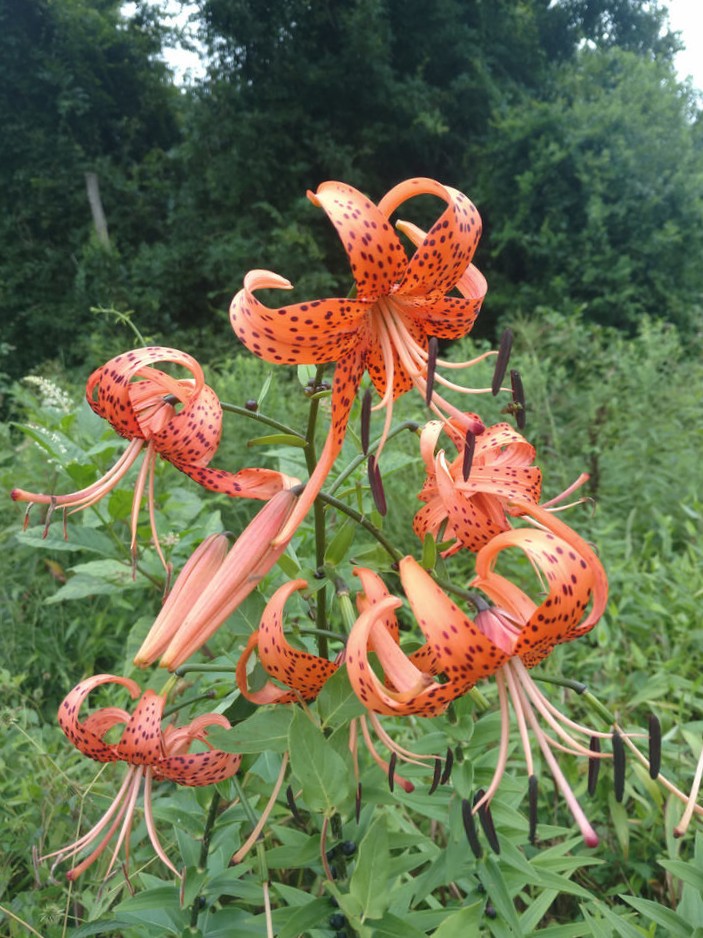
“Tiger Lily” is often used loosely for orange, spotted, recurved, or daylily-like flowers. The plant on this page is the true lily Lilium lancifolium, best recognized by its upright leafy stem, bright orange strongly recurved dark-spotted flowers, and small dark bulbils in the leaf axils. Older labels and poison-control references may still use Lilium tigrinum, which identifies the same cat-emergency plant.
“Columbia Lily” properly refers to Lilium columbianum, a separate western North American true lily. “Ditch Lily” and “Tiger Daylily” usually refer to orange daylily, Hemerocallis fulva, not Tiger Lily. These distinctions matter for identification, but they do not reduce the emergency for a cat because both true lilies and daylilies can cause fatal acute kidney injury. Peace Lily, Calla Lily, Peruvian Lily, Lily-of-the-Valley, Gloriosa Lily, and Autumn Crocus are separate plants with different toxic mechanisms and should not be treated as botanical synonyms.
The Feline Nephrotoxin Remains Unidentified
The toxic principle in Tiger Lily remains unidentified. No specific alkaloid, glycoside, oxalate, protein, essential oil, steroidal saponin, cardiac glycoside, colchicine-like alkaloid, or other named molecule has been conclusively isolated and shown to reproduce the full feline syndrome. The safest and most accurate toxin statement is that Lilium lancifolium contains an unidentified feline nephrotoxin capable of causing rapidly progressive acute kidney injury.
This uncertainty should not be mistaken for weak evidence. Tiger Lily belongs to the same true-lily group repeatedly documented to poison cats. Clinical cases, experimental pathology, poison-control records, and veterinary toxicology references consistently support a severe feline renal tubular syndrome after exposure to Lilium species, including Tiger Lily or its older name Lilium tigrinum.
The unknown-toxin status is one reason home triage is unsafe. Owners cannot calculate a safe dose, neutralize the plant with a home product, or rely on a normal early appearance. Every credible feline exposure must be treated as potentially life-threatening.
The Toxic Fraction Appears Water-Soluble
Experimental work with Easter Lily, another true Lilium, showed that toxic activity was present in aqueous leaf and flower extracts, while the precise nephrotoxic compound still was not identified. That finding is not exact-species proof that every chemical detail is identical in Tiger Lily, but it is highly relevant true-lily evidence and explains several practical exposure routes.
Vase water is a credible source because cut stems, leaves, flowers, pollen, and plant sap can release water-soluble toxic material into the container. A cat that drinks from a vase containing Tiger Lily should be treated as exposed even if the plant itself appears untouched.
The water-soluble finding also helps explain why rinsing a pollen-contaminated coat may reduce continued grooming exposure but does not replace veterinary treatment. The cat may already have swallowed an unknown amount before the owner notices pollen or plant residue.
Every Plant Part Must Be Treated as Dangerous to Cats
Leaves, stems, tepals, petals, pollen, anthers, flower buds, open flowers, bulbs, bulb scales, basal roots, stem bulbils, sap, trimmed stems, dried flowers, fallen petals, and plant debris should all be treated as dangerous to cats. No plant part has been proven safe. Removing pollen-bearing anthers does not make the remaining leaves, stems, buds, flowers, bulbils, bulbs, or vase water safe.
Stem bulbils deserve special emphasis on the Tiger Lily page because they are a major identification feature and a real exposure pathway. These small dark purple-brown to black propagules form where leaves meet the stem, detach readily when mature, and may fall onto soil, patios, floors, windowsills, potting benches, bags, garden buckets, or indoor surfaces. A cat may bat, chew, or swallow a fallen bulbil without ever touching the flower.
Dried petals, dead stems, discarded bulbs, stored bulb scales, spent flowers, and old pollen should not be assumed harmless. The toxin has not been identified, and no household drying, wilting, storage, refrigeration, composting, or bouquet-aging process has been shown to detoxify Tiger Lily for cats.
Pollen Exposure Is a Real Ingestion Route
Pollen is one of the easiest exposures to miss. A cat may brush against an open Tiger Lily flower, collect yellow-orange, orange-brown, rust, or dark pollen on its face, whiskers, chest, paws, or coat, and later ingest the pollen while grooming. Pollen may also fall onto tables, counters, bedding, floors, wrapping paper, clothing, shoes, furniture, or other pets.
A bouquet may show no obvious bite marks even though the cat has received a meaningful exposure. Likewise, visible pollen on the coat may represent only part of the exposure because some pollen may already have been swallowed. Treatment decisions should not depend on counting grains or judging whether the plant looks damaged.
Owners should prevent grooming immediately, remove loose visible pollen quickly when this does not delay transport, and proceed to veterinary care. Extended bathing of a frightened or uncooperative cat at home can waste critical time and may increase stress or aspiration risk if the cat is vomiting.
Renal Tubular Epithelial Injury
The principal target is the renal tubular epithelium, especially the proximal convoluted tubules. These cells normally reclaim water, glucose, amino acids, bicarbonate, phosphorus, electrolytes, and other filtered substances from the forming urine. Lily exposure damages these cells, producing swelling, mitochondrial injury, degeneration, detachment, and acute tubular necrosis.
Early tubular dysfunction can cause loss of urine-concentrating ability, glucosuria despite normal blood glucose, proteinuria, casts, increased thirst, increased urination, and dehydration. These urine changes may appear before creatinine and blood urea nitrogen become dramatically abnormal. One normal early blood chemistry panel cannot rule out poisoning.
As tubular injury progresses, urine production may decrease sharply. Oliguria means abnormally low urine output, while anuria means essentially absent urine production. These stages carry a much worse prognosis because nitrogenous waste, potassium, phosphorus, acids, and excess fluid can accumulate rapidly.
Mitochondrial Injury, Basement Membranes, and Potential Regeneration
Experimental lily pathology supports severe cellular metabolic injury in the kidney tubules. Swollen and structurally abnormal mitochondria, tubular epithelial degeneration, necrosis, proteinaceous casts, and sloughed cellular debris help explain why kidney function can deteriorate quickly after the early gastrointestinal phase.
The tubular basement membrane may remain intact in some affected cats, creating the possibility of regeneration if the cat can be supported long enough. This is a critical distinction. The disease can be fatal, but early and intensive treatment can allow damaged tubular lining to recover in some cats.
The potential for regeneration is not a reason to observe at home. It is the reason prompt decontamination, IV fluids, urine-output monitoring, electrolyte control, and, in selected advanced cases, dialysis or renal-replacement support can matter.
Pancreatic Acinar Degeneration Has Been Documented Experimentally
Experimental true-lily poisoning has also produced degeneration of pancreatic acinar cells. The clinical importance varies, and kidney injury remains the dominant life-threatening syndrome in naturally exposed cats. Pancreatic findings should not replace the renal-emergency framing of the page.
Vomiting, abdominal discomfort, appetite loss, and lethargy after Tiger Lily exposure can therefore reflect gastrointestinal irritation, uremia, dehydration, pancreatic involvement, or combinations of those processes. A veterinarian may investigate additional abdominal disease when signs are severe or the clinical course is not typical.
Why Cats Are Uniquely Susceptible
Cats are dramatically more susceptible than common domestic animals. Dogs may chew Tiger Lily and develop minor gastrointestinal upset, but they are not known to develop the characteristic feline acute renal tubular necrosis. Tiger Lily is also listed as non-toxic to horses. This species difference is consistent across major veterinary poison-control references.
The reason cats are uniquely susceptible has not been fully resolved. Species differences in absorption, renal tubular uptake, metabolism, detoxification, mitochondrial vulnerability, or elimination may be involved, but no single pathway has been proved. No breed, age, sex, coat type, body size, or indoor/outdoor status provides reliable protection.
The response of a dog, horse, rabbit, bird, or another cat in the home cannot be used to judge one exposed cat’s safety. Each cat’s exposure route and dose may differ, and each cat requires individual veterinary evaluation.
Oliguria, Anuria, and Dialysis Boundaries
Oliguric and anuric Tiger Lily cases are high-risk. A cat that no longer produces enough urine cannot safely clear potassium, acid, phosphorus, uremic waste, or excess fluid. High-rate fluids that were appropriate earlier can become dangerous once urine production falls because pulmonary edema, pleural effusion, hypertension, or other fluid-overload complications may develop.
Diuretics such as furosemide or mannitol may be considered by a veterinarian in selected cases, but they do not reverse dead tubular cells and do not reliably restore urine production. A response in one cat does not establish a home remedy or a substitute for renal-replacement therapy.
Hemodialysis, continuous renal-replacement therapy, or peritoneal dialysis may control uremia, potassium, acid-base balance, and fluid overload while the kidneys attempt to recover. Access is limited, treatment is intensive and expensive, and survival is not guaranteed, especially after established anuria. Referral should be discussed early when urine output is falling.
No Safe Feline Dose
No safe feline dose has been established. Small leaf fragments, petal pieces, pollen exposure, vase water, bulbils, bulb scales, or uncertain unsupervised contact may be enough to create a life-threatening risk. Owners often cannot determine how much was swallowed, how much pollen was groomed, or whether vase water was consumed.
The correct safety threshold is therefore exposure-based rather than dose-based. If the cat had credible access to Tiger Lily, another true lily, or a daylily, veterinary treatment should begin before clinical signs or abnormal kidney values prove that injury is underway.
Early Gastrointestinal Phase
Early clinical signs often begin within approximately 0–12 hours after exposure. Vomiting is common and may occur once or repeatedly. Excessive salivation, lip licking, reduced appetite, hiding, reduced activity, depression, and lethargy may accompany it. Some cats show only one subtle sign, and some remain outwardly normal during the earliest period.
The absence of vomiting does not clear the exposure. A cat may lick pollen, drink vase water, chew a tiny leaf edge, swallow a fallen bulbil, or groom plant dust from the coat and still appear normal for several hours. The emergency is defined by credible exposure, not by waiting for illness.
Owners should also remember that early vomiting may remove little or no plant material. Finding no leaf fragments in vomit does not prove that no toxin was absorbed.
The Deceptive Improvement Period
A dangerous feature of true-lily poisoning is temporary improvement. A cat may vomit early, then stop vomiting and appear more comfortable while renal tubular injury continues. This apparent recovery is one of the reasons owners delay care until kidney injury is already established.
Veterinary treatment should not be canceled because the cat acts better, eats a small amount, grooms, sleeps normally, or urinates once. The kidney injury can be developing before the cat looks critically ill and before a single early creatinine value rises.
Polyuric Tubular-Injury Phase
During approximately the next 12–30 hours, damaged proximal tubules may lose their ability to concentrate urine and reabsorb filtered substances. The cat may drink more, urinate larger volumes, produce unusually large litter-box clumps, and become dehydrated despite increased water intake. Weakness, continuing appetite loss, vomiting, and lethargy may become more pronounced.
Urinalysis may reveal poorly concentrated urine, glucosuria despite normal blood glucose, proteinuria, casts, and other evidence of tubular injury. These urine abnormalities can appear before dramatic increases in blood urea nitrogen or creatinine. Serial testing is substantially more informative than one early normal test.
Oliguria, Anuria, and Advanced Uremia
As acute kidney injury advances over approximately 24–72 hours, urine production may decrease. Owners may notice very small litter-box clumps, repeated visits to the litter box with little urine, or no urine at all. Oliguria and anuria indicate severe renal dysfunction and carry a much more guarded to poor prognosis.
Advanced uremia causes persistent vomiting, complete food refusal, profound depression, weakness, dehydration, oral ulceration, foul or ammonia-like breath, abdominal discomfort, hypothermia, and recumbency. The cat may become poorly responsive or unable to maintain normal posture.
Potassium, phosphorus, acids, and excess fluid may accumulate as urine production fails. Hyperkalemia, acidosis, hypertension, pulmonary edema, pleural effusion, neurologic abnormalities, abnormal heart rhythm, and death may follow if renal replacement or medical support cannot control the complications.
Seizures and Neurologic Signs
Seizures are not usually the first or defining sign of Tiger Lily poisoning. When they occur, they are generally associated with severe uremia, electrolyte disturbance, acid-base abnormalities, hypertension, fluid overload, profound systemic illness, or complications of advanced acute kidney injury.
Tremors, disorientation, collapse, recumbency, abnormal awareness, or seizures after known or suspected Tiger Lily exposure indicate a severe case or a complication. These signs should not be managed as a simple stomach upset or a separate isolated neurologic event.
Timeline to Kidney Failure and Death
Untreated cats may develop fatal kidney failure within approximately three days, although death may occur later depending on exposure amount, residual urine production, dehydration, and complications. A cat still appearing stable several hours after contact is not out of danger.
Cats that survive severe acute injury may recover fully, retain chronic kidney impairment, or require prolonged renal support. Follow-up bloodwork, urinalysis, urine-concentrating assessment, blood-pressure measurement, hydration monitoring, and long-term kidney management may be needed after discharge.
Dogs
Dogs may develop vomiting, diarrhea, drooling, or appetite loss after chewing Tiger Lily plant material. They are not known to develop the characteristic feline renal tubular necrosis after ordinary Tiger Lily exposure.
Serious illness in a dog after eating a plant called Tiger Lily should prompt confirmation of the plant and investigation for pesticides, fertilizer, intestinal obstruction, another toxic ornamental, another “lily,” medication ingestion, pancreatitis, infection, or unrelated disease. Lily-of-the-Valley, Gloriosa Lily, Autumn Crocus, and chemically treated bulbs or clippings can create different and more severe risks.
Horses, Livestock, Rabbits, Birds, and Other Animals
Tiger Lily is listed as non-toxic to horses, and the feline renal syndrome has not been established as the expected outcome in horses, livestock, rabbits, birds, reptiles, or other non-cat species. Nonspecific stomach upset or oral irritation may occur if an animal chews plant material, but the cat-specific acute kidney failure syndrome should not be transferred automatically to other species.
That boundary does not make Tiger Lily appropriate forage, cage greenery, livestock browse, poultry greens, rabbit enrichment, or compostable animal access. Significant illness in any non-cat after exposure should prompt identification of the exact plant, review of chemicals and mixed clippings, and investigation for other toxic plants or unrelated disease.
Signs That Suggest a Different “Lily” or Co-Exposure
Immediate severe mouth burning, pawing at the mouth, drooling, and tongue swelling suggest a calcium-oxalate aroid such as Peace Lily or Calla Lily rather than true-lily renal toxicosis. Slow or irregular heart rhythm, collapse, or pronounced cardiovascular signs may suggest Lily-of-the-Valley. Severe bloody gastrointestinal illness, shock, bone-marrow suppression risk, or multiorgan disease may suggest Gloriosa Lily or Autumn Crocus.
Those distinctions matter, but uncertainty should not delay emergency care for a cat. If the plant could be a true lily or daylily, treatment should proceed as a potential renal emergency while identification is clarified.
Lilium lancifolium Is the Accepted Name
The accepted botanical name for Tiger Lily is Lilium lancifolium Thunb. The older name Lilium tigrinum remains common in gardens, flower catalogs, older books, veterinary references, poison-control databases, and nursery trade language. Both names identify the same true lily for cat-safety purposes.
Because emergency plant labels often use older names, the page should preserve both. A florist receipt, nursery tag, bulb package, garden label, or online listing reading Lilium tigrinum should trigger the same feline emergency response as one reading Lilium lancifolium.
Native Range and Naturalization
Tiger Lily is native across portions of eastern Asia, including China, Korea, Japan, Tibet, the Russian Far East, Sakhalin, and the Kuril Islands. It has been cultivated widely and has escaped gardens in parts of Europe and eastern North America.
Outdoor exposure may occur in perennial borders, cutting gardens, cottage gardens, abandoned gardens, roadsides, woodland margins, drainage areas, farmyards, cemeteries, old home sites, potting areas, and places where fallen bulbils have allowed colonies to persist.
Indoor exposure is especially important when cut stems or garden flowers are brought inside. A cat sharing a closed environment with a Tiger Lily bouquet may encounter fallen pollen, vase water, dropped petals, trimmed stems, or bulbils and plant debris carried in from the garden.
How to Identify Tiger Lily
Tiger Lily is an upright bulbous perennial commonly reaching approximately 2–6 feet tall. A single leafy stem rises from a scaly underground bulb and carries numerous narrow, lance-shaped green leaves along much of its length. The stem is not a daylily-style leafless scape rising from a basal fan.
The flowers form near the top of the stem and face outward or downward. Each flower has six bright orange tepals that curve strongly backward, exposing long projecting stamens and a prominent style. Dark purple, brown, or nearly black spots cover the inner surface of the orange tepals.
The combination of upright leafy stem, strongly recurved orange spotted tepals, projecting stamens, and dark bulbils in the leaf axils is the strongest field pattern. Flower color alone is not enough because several true lilies and daylilies have orange or spotted flowers.
Stem Bulbils Are a Major Identification and Exposure Feature
Tiger Lily commonly develops small dark purple-brown to black bulbils where the leaves join the stem. These structures resemble miniature bulbs and detach readily when mature. They can fall to the ground, root, and produce clonal plants, allowing Tiger Lily to spread beyond its original planting.
Bulbils are living plant tissue and must be treated as dangerous to cats. A cat may bat one across a floor, chew it on a patio, swallow it from garden soil, or encounter it during bulb division, pruning, weeding, potting, or bouquet handling. Bulbils may also be tracked indoors on shoes, plant trays, garden tools, bags, or fallen stems.
Because bulbils can persist after the flowers are gone, a Tiger Lily exposure may occur outside the obvious bloom period. Removing only the flowers does not remove bulbs, stems, bulbils, leaves, pollen, or contaminated debris.
Columbia Lily Is a Different True Lily
Columbia Lily is Lilium columbianum, a separate true lily native to western North America. It may also be called Columbia Tiger Lily and can have orange to yellow-orange spotted flowers, which creates common-name confusion with Tiger Lily.
Columbia Lily generally lacks the conspicuous dark stem bulbils characteristic of Lilium lancifolium. Its range, habitat, and growth details differ from the Asian Tiger Lily, and it is more likely to be encountered in western North American native habitat, native gardens, or wildflower contexts.
The distinction matters botanically but not for immediate feline triage. Both are true lilies in Lilium and must be treated as capable of causing acute kidney injury in cats.
Ditch Lily and Tiger Daylily Are Daylilies, Not Tiger Lily
Ditch Lily and Tiger Daylily usually refer to orange daylily, Hemerocallis fulva. Daylilies grow as clumps of arching strap-shaped leaves from the ground and produce flowers on largely leafless scapes. Tiger Lily produces a leafy upright stem from a scaly bulb and often carries dark bulbils in the leaf axils.
Daylilies are not true lilies in the genus Lilium, yet they cause the same potentially fatal feline acute kidney injury. Correcting the name does not reduce the emergency. A cat exposed to either Lilium or Hemerocallis should receive immediate veterinary care.
Other Orange or Spotted “Tiger Lilies”
The name Tiger Lily may also be applied to Lilium bulbiferum, orange Asiatic lily hybrids, native orange true lilies, and orange-spotted garden lilies. Some of these are separate accepted species or hybrids, and some lack the classic dark stem bulbils of Lilium lancifolium.
When a cat is involved, uncertainty should be handled conservatively. Any orange lily with six tepals, prominent stamens, a leafy stem, a scaly bulb, or a florist or nursery label suggesting Lilium should be treated as a true-lily exposure until a reliable botanical identification proves otherwise.
Every Exposure Route Matters
Cats may bite a leaf, chew a flower, play with a fallen bulbil, dig up a bulb, lick pollen from anthers, groom pollen from the coat, drink vase water, chew a cut stem, or contact discarded plant material during garden cleanup. A tiny exposure can be clinically significant.
Pollen may be visible as yellow, orange, brown, or rust-colored dust on the face, whiskers, paws, chest, or coat. The cat may have no symptoms when residue is first noticed. Some pollen may already have been swallowed before the owner sees it.
Removing visible pollen helps reduce continued grooming exposure, but it does not replace emergency treatment. The exposure amount is usually unknown, and the most useful treatment window occurs before the cat looks severely ill.
The Toxin and Exact Mechanism Remain Unknown
No specific compound has been conclusively isolated and shown to reproduce the full Tiger Lily feline syndrome. The toxic material appears to be distributed throughout true-lily plant tissue and can enter vase water, but its precise identity, metabolism, and reason for feline selectivity remain unresolved.
The best-established pathological effect is acute injury to renal tubular epithelial cells, especially the proximal convoluted tubules. Tubular degeneration and necrosis impair water conservation, glucose and protein reabsorption, electrolyte regulation, acid-base balance, and metabolic-waste elimination.
This uncertainty is not evidence that the danger is theoretical. Tiger Lily nephrotoxicity is supported by veterinary clinical reports, experimental pathology with true lilies, poison-control records, and repeated documentation of fatal feline acute kidney injury.
Why Cats Are Uniquely Vulnerable
Cats are the only common domestic species consistently known to develop the characteristic renal syndrome after true-lily ingestion. The metabolic, cellular, renal-transport, or detoxification feature responsible for this exceptional susceptibility has not been determined.
A dog or horse can chew part of the same plant without kidney failure while a cat exposed to a very small amount becomes critically ill. The response of another species provides no reassurance for a cat.
Susceptibility should also not be judged by the cat’s size, age, breed, indoor status, or previous apparent tolerance. No reliable safe exposure has been established.
Diagnosis Does Not Require Plant Fragments
Diagnosis is usually presumptive and based on known or possible exposure to a renal-toxic lily, compatible clinical signs, serial evidence of kidney injury, and exclusion of other renal diseases. Witnessing the cat chew the plant or finding fragments in vomit can strengthen the history, but neither is required before treatment begins.
Useful evidence includes photographs of the whole plant, flowers, leaves, stem, bulbils, bulbs, bouquet label, florist receipt, nursery tag, pollen on the coat, fallen anthers, and the vase or water source. The plant should be transported securely so no cat can contact it again.
Initial evaluation commonly includes physical examination, body weight, hydration assessment, complete blood count, serum chemistry, electrolytes, urinalysis, urine specific gravity, blood pressure, and urine-output measurement. Baseline results may be normal and serve as the comparison for serial monitoring.
Early Normal Bloodwork Does Not Rule Out Poisoning
Creatinine and blood urea nitrogen may remain normal during the earliest stage even though tubular injury has begun. Urine abnormalities may appear first because damaged proximal tubules lose concentrating and reabsorptive functions before filtration falls enough to make serum values dramatic.
Serial creatinine, blood urea nitrogen, phosphorus, potassium, urine concentration, glucosuria, proteinuria, casts, hydration, blood pressure, body weight, and urine-output monitoring are needed over the first 48–72 hours. One normal early chemistry panel should never be used to justify home observation after meaningful exposure.
Important Differential Diagnoses
Easter lilies, Asiatic lilies, Oriental lilies, Stargazer lilies, Rubrum lilies, Japanese Show lilies, Wood lilies, Red lilies, and other Lilium species and hybrids produce the same cat renal-emergency concern. Daylilies in Hemerocallis must also be included even though they are not botanical true lilies.
Peace Lily, Calla Lily, Dumb Cane, Pothos, and Philodendron contain insoluble calcium oxalate and cause immediate mouth pain rather than delayed renal tubular failure. Lily-of-the-Valley contains cardiac glycosides, while Gloriosa Lily and Autumn Crocus contain colchicine-related toxicants. Peruvian Lily is usually associated with mild gastrointestinal upset and is not recognized as a cause of feline renal tubular necrosis.
Ethylene glycol, grapes or raisins, nonsteroidal anti-inflammatory drugs, certain antibiotics, severe dehydration, urinary obstruction, pyelonephritis, shock, sepsis, renal infarction, congenital kidney disease, and other nephrotoxins or renal diseases can overlap with lily-associated laboratory findings and must be considered when the history is unclear.
Veterinary Treatment
There is no specific antidote. Treatment is designed to remove plant material before more toxin is absorbed, maintain renal perfusion, support urine production, correct dehydration and electrolyte disturbance, and monitor closely while tubular injury is still preventable or reversible.
When exposure was recent and the cat is alert, stable, and able to protect its airway, the veterinarian may induce vomiting with a feline-appropriate medication. Activated charcoal may also be considered as part of professional decontamination, although the extent to which charcoal binds the unidentified toxin is uncertain. Neither procedure should be attempted by the owner.
Intravenous fluid therapy commonly continues for approximately 48–72 hours, with adjustment based on body weight, hydration, cardiovascular status, electrolytes, kidney values, urine concentration, and measured urine output. Fluids require close monitoring because excessive administration can be dangerous once urine production declines.
Antiemetic medication, nutritional support, gastrointestinal protection for uremic gastritis, correction of potassium, phosphorus, and acid-base abnormalities, and blood-pressure management may also be required. A urinary catheter or other measured collection method may be needed when urine output is a major concern.
Oliguria, Anuria, and Dialysis
Oliguric or anuric cats require intensive reassessment. Continued high-rate fluids can become dangerous when the body cannot eliminate administered volume. Pulmonary edema, pleural effusion, hypertension, and worsening respiratory effort may occur if fluid therapy is not adjusted to urine output.
Hemodialysis, continuous renal-replacement therapy, or peritoneal dialysis may be considered when severe uremia, high potassium, acidosis, fluid overload, oliguria, or anuria cannot be controlled medically. These treatments support the cat while renal tubular basement membranes and surviving cells attempt to recover.
Dialysis availability is limited and does not guarantee survival. The prognosis is much better when treatment begins before oliguria or anuria develops.
Prognosis
The prognosis is excellent when exposure is recognized promptly, decontamination is performed appropriately, and intravenous treatment begins before significant acute kidney injury develops. Recent clinical studies support very favorable outcomes in many treated cats, especially when urine production remains adequate.
Normal initial kidney values do not eliminate the need for treatment. Tubular injury may already be developing before creatinine or blood urea nitrogen rises.
The prognosis becomes guarded once azotemia develops and poor when the cat becomes persistently oliguric or anuric. Some surviving cats recover substantial kidney function, while others may be left with chronic kidney impairment requiring long-term monitoring.
Prevention
The safest policy is to keep all Lilium and Hemerocallis plants out of any home, workplace, garden, porch, bouquet, compost, trash container, or floral arrangement accessible to cats. Moving a bouquet to a high shelf is not sufficient because pollen, petals, bulbils, leaves, and vase water can fall or spill.
Ask florists to prepare explicitly cat-safe arrangements without true lilies or daylilies. Check mixed bouquets carefully because unopened buds can be hidden among other flowers and foliage, and substitution among lily types is common in floral commerce.
Remove outdoor Tiger Lilies if cats use the property. Dig up bulbs, collect bulbils, remove fallen plant debris, and dispose of all material in sealed containers inaccessible to animals. Cutting only the flowering stems does not eliminate underground bulbs or fallen propagules.
Immediate Steps After Any Possible Feline Exposure
Treat the exposure as an emergency. Contact an emergency veterinarian or animal poison-control service immediately and proceed to veterinary care. Do not wait for symptoms, for the regular clinic to reopen, for the cat to vomit, or for urination to change.
- Prevent additional contact: Remove the cat from the plant, bouquet, garden bed, fallen petals, bulbils, bulbs, pollen, vase water, potting area, and trash or compost containing plant material.
- Secure other cats: Every cat with possible access to the same plant, pollen, vase water, or garden material needs individual assessment.
- Stop grooming: Prevent the cat from licking pollen or plant residue from its coat or paws. An Elizabethan collar or gentle restraint may help during transport when it can be used safely.
- Remove visible pollen without delaying departure: Gently wipe or rinse contaminated fur with lukewarm water when this can be done quickly and safely. Do not scrub pollen deeper into the coat or allow the cat to groom during cleaning.
- Preserve identification evidence: Take the complete plant, bouquet label, florist information, photographs, fallen pollen, petals, bulbils, bulb scales, or vomited fragments to the veterinary facility in a secure container.
- Report every route of exposure: Include possible access to vase water, pollen on the coat, missing leaves or petals, chewed bulbils, outdoor plants, recently divided bulbs, discarded stems, and the earliest possible exposure time.
Do Not Attempt Unsupervised Home Treatment
- Do not give hydrogen peroxide: Hydrogen peroxide can cause severe gastric and esophageal irritation, prolonged vomiting, and aspiration and is especially inappropriate as an owner-administered feline emetic.
- Do not use salt, mustard, syrup of ipecac, oil, dish soap, detergent, or manual gagging: These methods are dangerous and may create an additional poisoning or airway emergency.
- Do not administer activated charcoal yourself: Safe use depends on timing, neurologic status, vomiting, swallowing ability, airway protection, and the veterinarian’s decontamination plan. A cat that aspirates charcoal may develop life-threatening lung injury.
- Do not force food, milk, water, broth, oil, or oral fluids: Oral material does not neutralize the lily toxin and may trigger vomiting or aspiration.
- Do not give human or leftover pet medication: Pain relievers, diuretics, antiemetics, antibiotics, stomach medications, supplements, kidney products, and sedatives can complicate treatment or create additional toxicity.
- Do not rely on normal appearance, normal drinking, or one normal urination event: Kidney injury may be developing before the cat looks sick or laboratory abnormalities appear.
- Do not assume it is too late: Delayed treatment worsens prognosis, but an exposed cat should still be evaluated immediately even when the timeline is uncertain.
Veterinary Treatment Before Kidney Failure
The veterinarian may induce vomiting with a feline-appropriate medication when exposure was recent and the cat is alert, stable, and able to protect its airway. Plant fragments may or may not be recovered. The absence of visible lily material does not prove that no toxin was absorbed.
Veterinary-administered activated charcoal may be considered after the airway and swallowing reflex are assessed. An antiemetic may be used afterward to control continuing vomiting. Charcoal is not an antidote and should never delay IV fluids and monitoring.
Baseline bloodwork and urinalysis are obtained, but treatment should not be withheld merely because the first creatinine and blood urea nitrogen values are normal. Baseline values document the starting point. Serial testing is needed over the following days.
Intravenous fluid therapy commonly continues for approximately 48–72 hours. The veterinarian will monitor body weight, hydration, cardiovascular status, electrolytes, kidney values, urine concentration, blood pressure, and urine production so the fluid rate can be adjusted safely.
When Acute Kidney Injury Has Developed
Azotemic cats require intensive management of hydration, nausea, nutrition, phosphorus, potassium, acid-base abnormalities, blood pressure, and urine output. Treatment becomes more difficult once urine production decreases.
A urinary catheter or other collection method may be used to measure output accurately. Continued high-rate fluids can become dangerous in an oliguric or anuric cat because the body cannot eliminate the administered volume.
Hemodialysis, continuous renal-replacement therapy, or peritoneal dialysis may be considered when severe uremia, high potassium, fluid overload, acidosis, oliguria, or anuria cannot be controlled medically. These treatments support the cat while the renal tubular basement membranes and surviving cells attempt to recover.
Emergency Warning Signs After Known or Suspected Exposure
- Vomiting has started: Vomiting may be the first visible sign, but waiting for it wastes treatment time.
- The cat is quiet, hiding, or refusing food: Subtle behavior change can be an early sign of systemic illness.
- Thirst or urination increases: Polyuria and polydipsia can indicate early tubular dysfunction and dehydration.
- Urine output decreases: Small litter clumps, no clumps, or no witnessed urination after lily exposure is a severe warning.
- Weakness or depression worsens: Progressive systemic illness may reflect advancing kidney injury or dehydration.
- Oral ulcers, bad breath, tremors, seizures, or collapse develop: These signs suggest advanced uremia or serious complications.
- Another cat had access: Household cats may have different exposure routes, and a normal-looking cat may still be at risk.
Dogs, Horses, Livestock, Birds, Rabbits, and Other Non-Cat Exposures
Dogs that chew Tiger Lily may develop minor vomiting or diarrhea but are not known to develop the characteristic feline renal syndrome. Tiger Lily is also listed as non-toxic to horses. Comparable kidney toxicity has not been established as the expected outcome in livestock, birds, rabbits, or other non-cat species.
Do not use that species boundary to dismiss serious illness. A non-cat with severe vomiting, diarrhea, weakness, tremors, collapse, kidney abnormalities, or neurologic signs should be evaluated for another plant, pesticide, herbicide, fertilizer, medication, antifreeze, grapes or raisins, urinary obstruction, infection, dehydration, foreign material, or unrelated disease.
Do not place Tiger Lily clippings, bulbs, bulbils, spent flowers, bouquet material, or vase water in dog yards, horse paddocks, goat pens, poultry runs, rabbit areas, aviaries, livestock feed areas, or accessible compost. Non-cat safety listings are not permission to feed ornamental plant waste.
Recovery and Prognosis
Cats treated promptly before kidney injury develops often recover completely. Early hospitalization with decontamination, intravenous fluids, serial testing, and urine-output monitoring has a far better outcome than observation at home.
The prognosis becomes guarded after significant azotemia develops and poor when urine production falls severely or stops. Some surviving cats recover substantial kidney function, while others may be left with chronic kidney impairment.
- Continue follow-up after discharge: Kidney values, urinalysis, hydration, appetite, urine output, and blood pressure may need rechecking.
- Monitor litter-box output closely: Reduced urine production after discharge requires immediate reassessment.
- Prevent repeat exposure: Remove all true lilies and daylilies from the home, garden, workplace, trash, compost, and floral arrangements accessible to cats.
- Warn household members and florists: A single bouquet, garden stem, fallen bulbil, or vase of water can create a fatal emergency.
Frequently Asked Questions About Tiger Lily Poisoning
Is Lilium tigrinum still the accepted scientific name?
No. The accepted name is Lilium lancifolium Thunb. Lilium tigrinum Ker Gawl. is a botanical synonym that remains common in horticultural, nursery, florist, veterinary, and poison-control references. Both names identify the same Tiger Lily and the same potentially fatal feline kidney risk.
What is the toxin in Tiger Lily?
The toxin remains unidentified. No specific chemical has been conclusively isolated and shown to produce the complete feline syndrome. What is firmly established is that the toxic process damages renal tubular epithelial cells and can cause rapidly progressive acute kidney injury in cats.
Which parts of Tiger Lily are poisonous to cats?
Every part must be considered dangerous, including leaves, stems, flowers, tepals, pollen, anthers, buds, bulbs, bulb scales, roots, stem bulbils, sap, and plant fragments. Water from a vase containing lilies can also expose a cat. Dried pollen, fallen petals, dead stems, stored bulbs, and discarded plant material should not be assumed safe.
Can a small amount of pollen really poison a cat?
Yes. A cat can brush against a flower, collect pollen on its coat, and swallow it later while grooming. A few visible pollen grains may represent a larger exposure than the owner realizes, and no safe quantity has been established. Pollen contact requires immediate veterinary advice and usually emergency evaluation.
Are Tiger Lily bulbils poisonous to cats?
Yes. The dark bulbils that form in Tiger Lily leaf axils are living plant tissue and should be treated as dangerous. They can fall onto soil, patios, potting benches, floors, or windowsills and may be batted, chewed, or swallowed by a cat. Their small size makes them easy to overlook during cleanup.
Is lily vase water dangerous?
Yes. The toxic material can enter water holding cut lilies. Drinking from a vase must be treated as a credible exposure even when the cat did not bite a leaf or flower. Floral preservatives, bacteria, and other bouquet material may create additional concerns, but the lily exposure alone is enough to make the situation urgent.
How soon do symptoms begin?
Vomiting, drooling, appetite loss, lethargy, and depression may begin within approximately 0–12 hours. Increased urination, increased thirst, and dehydration can develop during the next 12–30 hours. Severe acute kidney injury with reduced or absent urine production may occur within approximately 24–72 hours.
Can a cat seem better before kidney failure develops?
Yes. Early vomiting may stop and the cat may temporarily appear more comfortable while renal tubular injury continues. This apparent improvement is dangerous because it can convince an owner that treatment is unnecessary. A suspected exposure remains an emergency even when symptoms disappear.
Is finding lily material in vomit necessary for diagnosis?
No. Diagnosis is usually based on possible exposure, plant identification, clinical signs, serial kidney values, urinalysis, hydration, and urine-output monitoring. Plant fragments can strengthen the history, but their absence does not exclude exposure or justify delaying treatment.
Can the first kidney blood test be normal?
Yes. Creatinine and blood urea nitrogen may remain normal during the earliest stage even though tubular injury has begun. Urine abnormalities may appear first, and repeat bloodwork and urinalysis during the next 48–72 hours are necessary to determine whether acute kidney injury is developing.
Should hydrogen peroxide be used to make a cat vomit?
No. Hydrogen peroxide can severely irritate a cat’s stomach and esophagus and can be aspirated into the lungs. Veterinary professionals have safer feline-specific emetic options and can evaluate airway protection, vomiting risk, charcoal use, baseline testing, and IV-fluid treatment at the same visit.
Will activated charcoal neutralize Tiger Lily toxin?
No. Activated charcoal is not an antidote. A veterinarian may administer it as part of early decontamination in selected cases, but the degree to which it binds the unidentified toxin is uncertain. It should not be given at home because aspiration can be fatal, especially in a vomiting, weak, or poorly swallowing cat.
Why are intravenous fluids given for 48–72 hours?
Fluids correct dehydration, support circulating volume and kidney perfusion, and allow close monitoring during the period when renal injury may develop. They do not directly neutralize the toxin. The rate must be adjusted to body weight, hydration, cardiovascular status, electrolytes, kidney values, and measured urine output.
Does every exposed cat require hospitalization?
Hospitalization with intravenous fluids and monitoring remains the safest conventional approach for meaningful exposure. Recent evidence suggests that veterinarian-managed outpatient treatment may be successful in selected cases, but that is not the same as unmonitored home observation. Cats with uncertain dose, pollen exposure, vase-water exposure, vomiting, dehydration, abnormal tests, or unreliable monitoring are poor candidates for casual observation.
Can a cat recover after kidney injury develops?
Yes, especially when urine production remains adequate. Damaged tubular cells may regenerate if the tubular basement membrane and surviving cells remain capable of repair and the cat can be supported through the acute phase. Prognosis becomes substantially worse after persistent oliguria or anuria develops.
Can dialysis save a cat with lily poisoning?
Hemodialysis, continuous renal-replacement therapy, or peritoneal dialysis can control fluid, potassium, acid-base balance, and uremic waste while the kidneys attempt to recover. Availability is limited, treatment is intensive, and survival is not guaranteed, particularly after established anuria or severe systemic instability.
Are Tiger Lilies poisonous to dogs and horses?
Tiger Lily is not classified as toxic to dogs or horses, and the characteristic renal-failure syndrome is known primarily in cats. Dogs may experience minor gastrointestinal upset after chewing plant material. Any significant illness in a dog, horse, livestock animal, bird, rabbit, or other non-cat should be evaluated for a different plant, chemical, medication, foreign material, infection, or medical cause.
Is Columbia Lily another name for Tiger Lily?
No. Columbia Lily is Lilium columbianum, a separate true lily native to western North America. Its orange spotted flowers can resemble Tiger Lily, but it generally lacks Tiger Lily’s conspicuous dark stem bulbils. Both belong to Lilium and must be treated as dangerously nephrotoxic to cats.
Is Ditch Lily the same plant as Tiger Lily?
No. Ditch Lily normally refers to orange daylily, Hemerocallis fulva. Daylilies grow as basal clumps with flowers on largely leafless stalks, while Tiger Lily has a tall leafy stem with dark bulbils in the leaf axils. Both can cause acute kidney failure in cats, so the naming correction does not reduce the emergency.
Is Tiger Lily the same as Peace Lily or Calla Lily?
No. Peace Lily and Calla Lily are aroids containing insoluble calcium oxalate crystals. They cause immediate mouth pain, drooling, pawing, and swelling rather than the characteristic true-lily kidney-failure syndrome. They can still require veterinary advice, but their toxicology is different from Lilium and Hemerocallis poisoning.
What should I do if pollen is on my cat?
Prevent grooming, contact a veterinarian immediately, and wipe visible loose pollen away with a damp cloth if this can be done without delaying transport. Extensive cleaning may need to be performed at the clinic, especially when the cat is uncooperative, stressed, vomiting, or difficult to restrain safely.
What should I bring to the veterinary hospital?
Bring the plant, bouquet label, florist receipt, nursery tag, photographs of the whole plant, remaining flowers, fallen petals, pollen, bulbils, bulb scales, vase water information, or safely contained vomited fragments. Report whether the cat chewed the plant, licked pollen, drank vase water, played with bulbils, dug near bulbs, or was found with pollen on its coat.
What is the prognosis after Tiger Lily exposure?
The prognosis is excellent when treatment begins promptly before kidney injury develops and urine production remains adequate. It becomes guarded after azotemia appears and poor after persistent oliguria or anuria develops. Waiting for reduced urination or obvious illness can allow the most useful treatment window to pass.
How can Tiger Lily poisoning be prevented?
Do not bring Tiger Lilies, other true lilies, or daylilies into a household with cats. Ask florists for lily-free arrangements, remove outdoor lilies from cat-accessible gardens, dig bulbs completely, collect fallen bulbils, clean pollen with damp disposable material, and dispose of all plant material in sealed containers inaccessible to animals.