Water Dropwort Oenanthotoxin Poisoning, Hemlock Water-Dropwort Roots, GABA-Blocking Seizures, Rhabdomyolysis, and Deadly Apiaceae Look-Alikes
Is Water Dropwort Poisonous to Dogs, Cats, Horses, and Livestock?
Some water dropworts are lethally poisonous to dogs, cats, horses, cattle, sheep, goats, pigs, camelids, poultry, and other animals—especially Hemlock Water-Dropwort, Oenanthe crocata. Water dropwort is a genus-level common name for Oenanthe species in the carrot family, Apiaceae. The genus is not toxicologically uniform: Oenanthe crocata is one of the most dangerous wetland plants in Europe, Oenanthe fistulosa has yielded oenanthotoxin and related GABA-blocking polyacetylenes, and cultivated Oenanthe javanica is used as an edible water celery, seri, minari, or Japanese parsley in several cuisines. Because these plants and their relatives can be difficult to identify, an unknown wild water dropwort should be treated as potentially deadly until proven otherwise.
The principal toxin in Hemlock Water-Dropwort is oenanthotoxin, historically spelled enanthotoxin, together with structurally related polyacetylenes. Oenanthotoxin is not coniine and not an alkaloid. It is a highly unsaturated C17 polyacetylene that suppresses inhibitory GABA signaling in the nervous system. Loss of GABA restraint allows uncontrolled neuronal firing, which can cause sudden salivation, vomiting in species capable of vomiting, dilated pupils, anxiety, tremors, collapse, violent recurrent generalized seizures, opisthotonos, respiratory failure, hyperthermia, lactic acidosis, rhabdomyolysis, cardiac abnormalities, acute kidney injury, coma, and death.
The fleshy finger-like roots of O. crocata are the highest-risk exposure because they can resemble parsnips, carrots, edible tubers, sticks, or “dead man’s fingers,” and they may be exposed by ditch clearing, dredging, erosion, flooding, excavation, livestock trampling, storms, or beach wash-up. A dog may carry or chew a washed-up root; cattle may eat exposed roots after ditch work; a horse may ingest roots near wet pasture margins; pigs may root them out; and people may accidentally place the plant where animals can reach it. A suspected root ingestion, unidentified wetland umbellifer ingestion, or any tremor or seizure after exposure is an immediate life-threatening emergency.
About this guide: This page provides general pet-poisoning information and cannot diagnose or treat an individual animal. For any suspected exposure, contact a veterinarian or animal poison-control service immediately. Do not induce vomiting, give medication, or attempt home decontamination unless directed by a veterinary professional.
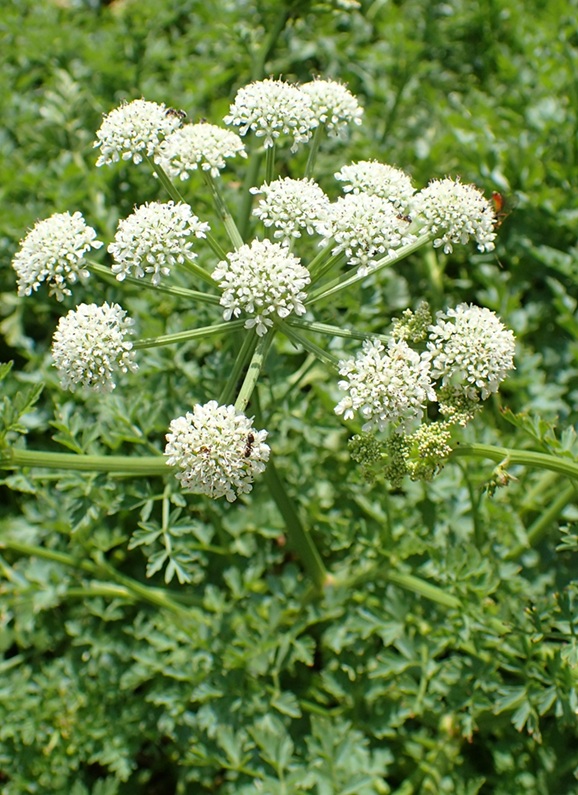
Water dropwort
Oenanthe spp., especially Oenanthe crocata L.
Accepted Oenanthe species of veterinary, toxicological, forage, wetland, or search relevance include:
- Oenanthe aquatica (L.) Poir.
- Oenanthe crocata L.
- Oenanthe fistulosa L.
- Oenanthe fluviatilis (Bab.) Coleman
- Oenanthe javanica (Blume) DC.
- Oenanthe javanica subsp. javanica
- Oenanthe lachenalii C.C.Gmel.
- Oenanthe peucedanifolia Pollich
- Oenanthe pimpinelloides L.
- Oenanthe sarmentosa C.Presl ex DC.
- Oenanthe silaifolia M.Bieb.
Important synonyms, spelling cautions, and taxonomic notes:
- Oenanthe laciniata (Blume) Zoll. — synonym associated with Oenanthe javanica subsp. javanica
- Oenanthe stolonifera Wall. ex DC. — synonym associated with Oenanthe javanica subsp. javanica
- Oenanthe javanica subsp. stolonifera (Wall. ex DC.) Murata — synonym associated with Oenanthe javanica subsp. javanica
- Oenanthe peucidanifolia — common misspelling of Oenanthe peucedanifolia
- Oenanthe apiifolia Brot. — historical synonym associated with Oenanthe crocata
- Phellandrium plinii Bubani — historical synonym associated with Oenanthe crocata
- Selinum fistulosum (L.) E.H.L.Krause — synonym of Oenanthe fistulosa
Important non-synonym confusion names:
- Cicuta spp. — true water hemlocks; contain cicutoxin and related convulsant polyacetylenes, not oenanthotoxin as the principal named toxin
- Conium maculatum L. — poison hemlock; contains coniine-type piperidine alkaloids and is not botanically identical to Hemlock Water-Dropwort
- Aethusa cynapium L. — fool’s parsley; separate Apiaceae plant and common foraging confusion risk
- Apium graveolens L. — celery; edible cultivated Apiaceae plant, not a synonym for wild Oenanthe crocata
- Petroselinum crispum (Mill.) Fuss — parsley; edible cultivated Apiaceae plant, not water dropwort
- Pastinaca sativa L. — wild or cultivated parsnip; separate Apiaceae plant often involved in mistaken-root comparisons
- Cryptotaenia japonica Hassk. — mitsuba or Japanese wild parsley; not the same plant as Oenanthe javanica
Apiaceae — Carrot, Parsley, Celery, or Umbellifer Family
Apiaceae was formerly and is still commonly called Umbelliferae. That family placement is important because many dangerous look-alikes share hollow or grooved stems, divided leaves, compound umbels of small white flowers, aromatic foliage, and edible-plant common names such as parsley, celery, carrot, parsnip, fennel, or water celery. Water dropwort poisoning must be separated from poison hemlock, true water hemlock, fool’s parsley, wild parsnip, and edible cultivated Apiaceae plants by botanical identification, not by common name or smell.
Water Dropwort; Water-Dropwort; Water Parsley; Water Celery; Water Lovage; Oenanthe; Oenanthe Water Dropwort.
Oenanthe crocata: Hemlock Water-Dropwort; Hemlock Water Dropwort; Dead Man’s Fingers; Dead Men’s Fingers; Five-Fingered Root; Fivefinger Root; Water Hemlock; Horsebane; Dead Tongue; Water Lovage; Yellow Water Dropwort; Saffron Water-Dropwort.
Oenanthe aquatica: Fine-Leaved Water-Dropwort; Fine-Leafed Water Dropwort; Fineleaf Water-Dropwort; Water Fennel; Horsebane.
Oenanthe fistulosa: Tubular Water-Dropwort; Tubular Water Dropwort; Common Water-Dropwort.
Oenanthe fluviatilis: River Water-Dropwort; River Water Dropwort.
Oenanthe javanica: Java Water-Dropwort; Java Water Dropwort; Water Celery; Chinese Celery; Japanese Parsley; Japanese Flat-Leaf Parsley; Seri; Minari; Vietnamese Parsley; Stolon Water-Dropwort.
Oenanthe lachenalii: Parsley Water-Dropwort; Parsley Water Dropwort.
Oenanthe pimpinelloides: Corky-Fruited Water-Dropwort; Corky-Fruited Water Dropwort; Meadow Parsley.
Oenanthe sarmentosa: Pacific Water Parsley; Water Parsley.
Oenanthe silaifolia: Narrow-Leaved Water-Dropwort; Narrow-Leafed Water Dropwort.
“Water hemlock” is ambiguous and more often refers in North America to Cicuta species, which contain cicutoxin rather than oenanthotoxin. “Poison hemlock” refers to Conium maculatum and contains coniine-type piperidine alkaloids. Chinese celery, Japanese parsley, seri, and minari generally refer to cultivated Oenanthe javanica, an edible species; those names must not be used as synonyms for poisonous Oenanthe crocata. “Water celery” and “water parsley” are common-name traps and should never replace scientific identification during a poisoning emergency.
Water Dropwort Is a Genus-Level Name, Not One Uniform Toxin Profile
Water dropwort covers Oenanthe, a genus of wetland plants in Apiaceae. The genus should not be reduced to one toxin statement applied equally to every species. The most dangerous and best-documented species is Hemlock Water-Dropwort, Oenanthe crocata. Its principal toxin is oenanthotoxin, historically spelled enanthotoxin, together with structurally related convulsant polyacetylenes. The roots of Oenanthe fistulosa have also yielded oenanthotoxin, dihydrooenanthotoxin, and related compounds capable of inhibiting GABAergic responses.
That evidence does not prove that every Oenanthe species has the same toxin concentration, tissue distribution, or clinical potency as O. crocata. Some species have been studied for essential oils, phenolics, flavonoids, or other secondary metabolites rather than fatal oenanthotoxin poisoning. Oenanthe javanica, Java water dropwort, water celery, seri, or minari, is cultivated as a food plant in several Asian cuisines. The correct toxicology standard is species-specific: never downplay O. crocata, but do not automatically assign its exact lethal root syndrome to every species without evidence.
For animal safety, that scientific boundary does not make unidentified wild water dropwort safe. The plants are difficult for non-specialists to identify, grow in wet habitats with many dangerous look-alikes, and may be confused with edible celery, parsley, parsnip, water celery, or wild greens. An animal that ingests an unidentified Oenanthe root, wetland umbellifer root, or plant fragment should be treated as a possible lethal poisoning until identified by a qualified person.
Oenanthotoxin Is a Convulsant Polyacetylene
Oenanthotoxin is a highly unsaturated C17 polyacetylene. It is not an alkaloid. It should not be confused with coniine, the piperidine alkaloid associated with poison hemlock, Conium maculatum. It is structurally and toxicologically closer to cicutoxin, the principal convulsant in true water hemlocks of the genus Cicuta, but Oenanthe and Cicuta remain separate plant genera.
The long carbon chain of oenanthotoxin contains alternating double and triple bonds and acts on the nervous system by suppressing inhibitory signaling. This chemistry explains why the syndrome looks like catastrophic seizure poisoning rather than the ascending paralysis more typical of poison hemlock, the oral raphide irritation of aroids, or the cardiac-glycoside syndrome of foxglove, oleander, or lily of the valley.
Laboratory work on oenanthotoxin and related compounds supports GABAergic inhibition as the key mechanism. Several oenanthotoxin analogues differ in polarity, receptor effects, and potency. Poisoning can therefore involve a mixture of structurally related polyacetylenes rather than one molecule in isolation, especially when roots contain multiple analogues.
Loss of GABA Inhibition Causes the Violent Neurologic Syndrome
GABA, gamma-aminobutyric acid, is one of the brain’s principal inhibitory neurotransmitters. When GABA activates GABAA receptor-associated chloride channels, neuronal firing is restrained. Oenanthotoxin and related polyacetylenes interfere with this inhibitory system. Once that restraint is removed, neurons can fire excessively and synchronously.
The clinical result is tremor, muscular rigidity, exaggerated reflexes, jaw or facial spasms, falling, paddling, opisthotonos, generalized tonic-clonic seizures, and status epilepticus. The animal may partially relax between convulsions and then begin seizing again. This is not a mild stomach upset and not a wait-and-see exposure. Once tremors or seizures appear, the emergency has already reached the nervous system.
Each convulsion increases oxygen demand, glucose use, heat production, muscular pressure, and lactic acid production. Prolonged or repeated seizures rapidly produce hypoxia, hyperthermia, metabolic acidosis, traumatic injury, aspiration risk, cardiovascular instability, and exhaustion. Death may occur during the early neurologic crisis before delayed organ complications can even be measured.
Roots, Dead Man’s Fingers, and Washed-Up Fragments
The fleshy tuberous roots of Oenanthe crocata are the highest-risk plant part. They form clusters of pale, fingerlike structures that inspired the names Dead Man’s Fingers, Dead Men’s Fingers, and Five-Fingered Root. They may resemble parsnips, carrots, dahlia tubers, edible roots, sticks, or pale vegetable scraps. Cutting or breaking them may release a yellow, brownish, oily, or saffron-colored fluid, but sap color should never be used as a home identification test.
Root exposure can deliver a large toxin dose in only a few bites. Ditch clearance, bank cutting, dredging, flooding, storms, erosion, excavation, machinery, and trampling can expose roots and place them directly in front of animals. Cattle may eat them after ditch work. Horses may encounter them at wet pasture margins. Dogs may pick up roots from riverbanks, estuaries, marsh edges, or beaches. Pigs may root them out. A root with no attached leaves or flowers can still be dangerous.
Historical warnings that one root, a walnut-sized piece, or a small percentage of body weight may kill an animal should be treated as danger signals, not modern dose thresholds. Root size, toxin concentration, season, site, animal species, body weight, chewing, stomach contents, and absorption vary. A smaller amount can still be lethal, and an animal that looks normal immediately after eating a root is not safe.
Leaves, Stems, Flowers, Fruits, Sap, and Conserved Material
Roots receive the strongest warning, but other plant parts should not be treated as safe. Stems, leaves, flowers, fruits, and sap may contain toxic material, and chopped vegetation can defeat selective avoidance. Standing foliage may be less attractive than exposed roots in some grazing situations, but that does not justify feeding or handling it casually.
Drying, wilting, uprooting, cutting, freezing, or storm wash-up should not be regarded as dependable detoxification. Polyacetylene toxins can remain clinically relevant after the plant has been detached from the colony. Conserved green chop, dredged material, compost piles, hay contamination, or plant fragments mixed with other forage should be isolated, not fed out slowly.
Floods and storms create a special dog hazard. A root washed from a ditch or riverbank may arrive on a path, river edge, estuary, or beach looking like a chew object. Dogs that normally ignore wetland vegetation may carry or chew these roots because they look like sticks or edible scraps.
Rhabdomyolysis, Kidney Injury, and Secondary Organ Damage
Oenanthotoxin is best understood first as a convulsant neurotoxin. Kidney injury often develops secondarily. Sustained seizures cause skeletal muscle to contract violently and repeatedly. Muscle-cell membranes fail, releasing creatine kinase, myoglobin, potassium, phosphorus, and other intracellular contents into the bloodstream. This is rhabdomyolysis.
Myoglobin can darken the urine and damage renal tubules, especially when the animal is dehydrated, acidotic, hypotensive, overheated, or poorly oxygenated. Acute kidney injury after water dropwort poisoning is therefore usually a consequence of massive muscle injury, shock, hypoxia, dehydration, or heat injury rather than a separate first-hit renal toxin.
Cardiac abnormalities can also arise secondarily. Potassium shifts, acidosis, hypoxia, hyperthermia, catecholamine surge, direct neurologic effects, and myocardial oxygen demand can produce fast, slow, or irregular rhythms. Even after seizures appear controlled, survivors may require serial monitoring of temperature, oxygenation, acid-base status, lactate, creatine kinase, electrolytes, kidney values, urine output, blood pressure, and heart rhythm.
Coniine Does Not Explain Hemlock Water-Dropwort Poisoning
Poison hemlock, Conium maculatum, contains coniine and related piperidine alkaloids that interfere with nicotinic acetylcholine receptors. That syndrome often emphasizes neuromuscular weakness, tremors, respiratory paralysis, and congenital deformities after certain pregnancy exposures. Hemlock Water-Dropwort, Oenanthe crocata, instead produces a violent oenanthotoxin convulsion syndrome.
The shared word “hemlock” is dangerous. A convulsing animal after wetland-root ingestion may have Oenanthe or Cicuta poisoning. An animal with progressive neuromuscular paralysis after eating a spotted-stem pasture weed may have Conium poisoning. Emergency seizure control and airway protection should not wait for botanical certainty, but the public page must not mix the toxins.
True Water Hemlock Is Also Different
True water hemlocks belong to Cicuta. They contain cicutoxin and related polyacetylenes. Cicuta and Oenanthe both grow in wet areas, both may expose animals through roots, and both can cause rapid status epilepticus and death. Their clinical emergencies overlap enough that either exposure should trigger immediate veterinary action.
In North America, the phrase “water hemlock” usually means Cicuta. In Britain and Ireland, “water hemlock” may be used loosely for Oenanthe crocata. That common-name difference can lead owners to the wrong page. Scientific identification, photographs, roots, leaves, flowers, fruits, and site context are all important after stabilization begins.
Edible Oenanthe javanica Does Not Make Wild Water Dropwort Safe
Oenanthe javanica is a genuine cultivated food species known as Java water dropwort, water celery, Chinese celery, Japanese parsley, seri, minari, and Vietnamese parsley. Its existence is the reason this page cannot honestly state that every Oenanthe species is equally deadly. It is also the reason common names are unsafe. “Water celery” may point to an edible crop in one context and a deadly look-alike mistake in another.
Animals should not be allowed to forage wild water dropwort because one species is cultivated for human food. Cultivated food plants have a known source and identity. Wild wetland Apiaceae plants may include Oenanthe crocata, Cicuta, Conium, Aethusa, wild parsnip, water parsnip, water hemlock, or other confusing species. Dogs, horses, cattle, goats, pigs, and rabbits cannot perform that botanical separation safely.
No Reliable Safe Dose Exists
No reliable safe dose exists for Oenanthe crocata roots in dogs, cats, horses, cattle, sheep, goats, pigs, camelids, poultry, rabbits, birds, reptiles, or people. The amount that causes signs or death depends on species, body size, plant part, toxin concentration, season, site, amount chewed, stomach contents, route of exposure, delay to seizure control, and the animal’s ability to oxygenate and regulate temperature during convulsions.
Because the syndrome can move rapidly from normal behavior to collapse and recurrent seizures, absence of signs immediately after ingestion provides no meaningful reassurance. A credible root ingestion or unidentified water dropwort ingestion warrants emergency contact even before symptoms appear.
Early Signs Can Progress Extremely Fast
Severe Hemlock Water-Dropwort poisoning is an acute neurologic emergency. Signs may begin within minutes, although some cases have a longer delay approaching an hour or more depending on the amount eaten, plant part, stomach contents, chewing, and absorption. A root exposure can move from apparently normal behavior to collapse and recurrent generalized seizures before help arrives.
Early signs may include sudden salivation, frothing, nausea, vomiting in species capable of vomiting, diarrhea, abdominal discomfort, anxiety, restlessness, staring, confusion, dilated pupils, trembling, muscle twitching, and loss of coordination. An animal may look frightened, hyperalert, disoriented, or unable to respond normally. These signs may be brief because severe muscular rigidity and seizures can follow rapidly.
Absence of vomiting does not reduce concern. Horses, rabbits, guinea pigs, rats, and several other species cannot vomit. Dogs and cats may vomit, but a dog that has not yet vomited after chewing a root may still develop seizures. Waiting for vomiting is unsafe.
Tremors, Rigidity, and Recurrent Generalized Seizures
The characteristic neurologic phase consists of tremors, facial or jaw spasms, muscular rigidity, exaggerated reflexes, falling, paddling, opisthotonos, and repeated generalized tonic-clonic seizures. The animal may partially relax between convulsions and then begin seizing again. Consciousness and normal breathing may not return between episodes.
Uncontrolled seizure activity can become status epilepticus. This is immediately life-threatening. Seizures may be violent enough to injure the animal’s head, limbs, spine, tongue, eyes, or surrounding people. A convulsing horse, cow, goat, pig, or large dog can seriously injure handlers attempting restraint.
Repeated seizures create a cascade of secondary damage: oxygen depletion, lactic acidosis, hyperthermia, glucose depletion, traumatic injury, aspiration, cerebral swelling, rhabdomyolysis, cardiovascular instability, respiratory arrest, and kidney injury. The seizure itself becomes a cause of death even if the ingested root is no longer in the stomach.
Respiratory and Cardiovascular Signs
Respiratory compromise may develop from impaired central respiratory control, sustained muscular contraction, exhaustion, aspiration of vomit or saliva, pulmonary edema, sedative or anesthetic treatment required to stop seizures, or terminal collapse. Warning signs include shallow breathing, irregular breathing, prolonged pauses, open-mouth breathing, cyanosis, weak respiratory effort, or inability to maintain oxygenation.
Cardiovascular abnormalities may include rapid heart rate, slow heart rate, irregular rhythm, weak pulses, poor perfusion, hypertension followed by hypotension, collapse, or cardiac arrest. These abnormalities may reflect hypoxia, acidosis, hyperkalemia, hyperthermia, severe muscle injury, neurologic storm, or direct physiologic stress from the convulsive crisis.
Rhabdomyolysis, Dark Urine, and Kidney Injury
Prolonged muscular activity damages skeletal muscle. Creatine kinase, myoglobin, potassium, phosphorus, and other intracellular substances enter the bloodstream. Myoglobin can discolor urine red-brown and contribute to acute kidney injury, especially when the animal is dehydrated, acidotic, overheated, or hypotensive.
Kidney failure is therefore an important delayed complication in survivors. It should not be misdescribed as the plant acting first as a direct kidney poison. The immediate crisis is neurologic seizure poisoning; kidney injury develops commonly from rhabdomyolysis, shock, hypoxia, heat injury, and poor perfusion.
Even when convulsions stop, the animal may not be out of danger. Muscle enzymes, kidney values, urine output, electrolytes, temperature, acid-base status, and heart rhythm may worsen later. Continued monitoring is part of treatment, not an optional precaution.
Dogs and Cats
Dogs are at particular risk along rivers, ditches, marshes, estuaries, wet parks, and beaches where roots have been exposed or washed up. A dog may pick up a root as if it were a stick, chew it as if it were a vegetable, or swallow pieces before the owner recognizes the danger. Early signs may include drooling, vomiting, restlessness, staring, dilated pupils, abnormal gait, tremors, collapse, seizures, overheating, dark urine, abnormal breathing, and respiratory failure.
Cat cases are less commonly documented, probably because cats are less likely to chew a large wetland root. Lack of case reports does not mean resistance. Oenanthotoxin targets mammalian inhibitory neurotransmission. A cat that chews a confirmed or suspected poisonous water dropwort species, especially a root, needs the same emergency approach: rapid veterinary contact, seizure watch, no home decontamination, and careful plant identification after stabilization begins.
Horses
Horses may develop hypersalivation, dilated pupils, anxiety, ataxia, tremors, violent convulsions, recumbency, respiratory distress, hyperthermia, muscle injury, and sudden death. Horses cannot vomit, so plant material may remain available for absorption unless a veterinarian can safely retrieve or manage stomach contents after airway and neurologic stabilization.
Modern analytically confirmed fatal equine cases demonstrate that Oenanthe crocata can kill horses rapidly. A horse may be found dead near recently eaten roots or disturbed wet ground. Do not walk, chase, trailer, drench, or force oral medication into a horse that is trembling, uncoordinated, weak, salivating, or neurologic unless a veterinarian directs movement or treatment.
Cattle, Sheep, Goats, Pigs, and Camelids
Cattle are repeatedly represented in field reports because ditch clearing and wet-pasture grazing expose them to roots. Early signs may include heavy salivation, dilated pupils, anxiety, and respiratory difficulty, followed rapidly by collapse and intermittent whole-body convulsions. Some cattle die so quickly that they are found beside disturbed banks or exposed tubers.
Sheep, goats, pigs, camelids, and other livestock are also at risk when exposed to roots, wetland margins, green chop, dredged material, or contaminated vegetation. Goats and pigs may investigate roots more aggressively than expected. Pigs may root up tubers. Sheep and goats may browse wet margins during forage shortage. Camelids may show weakness, salivation, tremors, collapse, or seizures but should not be assumed resistant because species-specific reports are sparse.
A group exposure does not mean every animal consumed the same dose. One cow may pull and swallow several roots while another only smells the plant. One goat may chew the fragment while the rest avoid it. All animals sharing the exposure site or feed source should be removed, assessed, and monitored.
Birds, Poultry, Rabbits, Guinea Pigs, Reptiles, and Other Animals
Poultry and waterfowl may encounter plant fragments, seeds, or roots around wet margins, dredged areas, and flood debris. Rabbits and guinea pigs should not be offered any wild water dropwort or wetland Apiaceae as forage. They cannot vomit, and neurologic or gastrointestinal signs may progress before an owner recognizes the plant. Birds may show weakness, tremors, collapse, abnormal posture, regurgitation, or seizure-like activity after a serious exposure.
Reptiles and tortoises should not be allowed to browse unidentified water plants or wetland umbellifers. Safe doses are not established, and reptile signs may be subtle until severe. Any abnormal swallowing, weakness, tremor, collapse, abnormal respiration, or seizure after suspected exposure requires species-appropriate veterinary guidance.
Death and Delayed Complications
Death can occur during an early seizure, from respiratory arrest, from aspiration, or later from complications such as severe metabolic acidosis, hyperthermia, cerebral edema, pulmonary edema, rhabdomyolysis, kidney failure, refractory dysrhythmia, or shock. Animals that survive the first hours with seizure control and intensive support may recover, but survival past an arbitrary four- or six-hour point does not guarantee a good outcome.
The prognosis is worse with recurrent seizures, prolonged hypoxia, severe acidosis, high temperature, aspiration, extensive muscle injury, kidney injury, low urine output, unstable heart rhythm, persistent hypotension, or delayed treatment. Continued observation is necessary even after the animal appears neurologically improved.
Water Dropwort Is a Genus, Not One Plant
Oenanthe is a genus of wetland herbs in Apiaceae, the carrot family. Most grow in marshes, wet meadows, ditches, shallow water, floodplains, pond margins, estuaries, or beside streams and rivers. Their divided leaves, hollow or grooved stems, aromatic foliage, and compound umbels of small white flowers can resemble celery, parsley, carrot, parsnip, fennel, water parsnip, or other members of the same family.
This resemblance creates one of the most dangerous identification problems in wild-plant foraging and animal exposure. A common name such as water parsley, water celery, water lovage, or water dropwort may describe an edible cultivated species, a lethal species, or a plant in another genus. A scientific name matters, but even a scientific name must be tied to the actual plant in front of the animal, not guessed from smell, habitat, or one leaf.
The page should therefore do two things at the same time: treat unidentified water dropwort ingestion as an emergency, and avoid claiming that every accepted Oenanthe species has the exact same toxin burden as Oenanthe crocata. That balance is more accurate and more useful than a broad panic statement or a broad safety statement.
The Species Behind Most Fatal Poisonings
Hemlock Water-Dropwort, Oenanthe crocata, is the species most strongly associated with fatal oenanthotoxin poisoning in western Europe. It is a robust perennial or helophyte that grows along ditches, streams, rivers, wet grassland, marshes, lake margins, and damp woodland. Mature plants can form dense colonies and may reach roughly 1.5 meters in height in favorable conditions.
The plant has hairless, hollow, grooved stems and divided green leaves that may smell pleasantly of parsley or celery. White flowers occur in compound umbels. These familiar Apiaceae traits are precisely what make the plant dangerous: it looks and smells enough like edible relatives that roots or leaves may be mistaken for parsnip, celery, parsley, water celery, or wild greens.
The most dangerous feature is underground. O. crocata produces clusters of swollen pale tuberous roots, often described as Dead Man’s Fingers. They may look like small parsnips, carrots, dahlia tubers, or edible roots. Exposed roots should be treated as hazardous material, not as forage, not as dog toys, and not as ordinary compost.
Not Every Listed Species Has the Same Risk
Oenanthe fistulosa, Tubular Water-Dropwort, has direct chemical importance because oenanthotoxin, dihydrooenanthotoxin, and other polyacetylenes have been isolated from its roots. This proves that potent GABA-inhibiting chemistry is not limited to O. crocata. It does not prove that every Oenanthe species has the same concentration, tissue distribution, or field-poisoning record.
Oenanthe javanica creates the opposite problem. It is cultivated and eaten as water celery, Chinese celery, Japanese parsley, seri, minari, and Vietnamese parsley. Its edible status must be acknowledged because otherwise the page would be botanically misleading. At the same time, its edible status must never be turned into permission to forage, feed, or identify wild water dropwort casually. A supermarket or cultivated crop with known identity is not equivalent to an unknown ditch plant.
Fine-Leaved Water-Dropwort, River Water-Dropwort, Parsley Water-Dropwort, Corky-Fruited Water-Dropwort, Pacific Water Parsley, Narrow-Leaved Water-Dropwort, and related species have their own morphology, ranges, ecology, and chemical evidence. Some have been studied for non-oenanthotoxin constituents. Some may have conflicting historical palatability or food-use reports. Where direct poisoning evidence is weak, the correct public position is uncertainty and avoidance, not automatic equality with O. crocata and not casual safety.
Where Exposures Occur
Serious livestock incidents often follow wetland disturbance. Ditch dredging, bank cutting, flood erosion, excavation, drainage work, machinery, trampling, and water-level changes can pull roots from the soil and place them at grazing height. The fresh roots may be more appealing than the standing foliage, and cattle may eat them even when they usually avoid the plant.
Drought creates another pattern. When ordinary grass becomes sparse or low in quality, cattle, horses, sheep, goats, and camelids may move toward damp ditch margins where water dropwort remains green. Hungry, newly moved, or forage-deprived animals are at higher risk. Cut vegetation mixed into green chop or other feed removes the animal’s ability to avoid the plant selectively.
Floods and storms can carry detached roots far from the original colony. Tubers may end up on riverbanks, estuaries, walking paths, or beaches. Dogs may pick them up as sticks, chew objects, or food-like roots. A root with no attached leaf or flower can still contain enough toxin to matter.
Why the Roots Are So Dangerous
The root cluster stores carbohydrates for perennial regrowth and can contain a high concentration of oenanthotoxin. Its bulk allows an animal to consume a large toxic load quickly. A cow may pull up a root cluster after ditch clearance. A dog may chew a washed-up tuber. A horse may graze disturbed wet ground. A pig may root through a ditch margin. A goat may investigate dredged plants dumped near a fence.
The often repeated warning that one root or a walnut-sized piece can kill a cow expresses a real field danger, but it is not a calibrated modern dose. Root size, toxin concentration, season, site, animal weight, chewing, stomach contents, and absorption vary. Some animals may die after a seemingly small amount, while another animal in the same group survives because it ate less or absorbed less.
Root handling is also a people-safety issue. Workers clearing ditches should not toss roots into paddocks, roadside verges, compost piles, or waterways where dogs or livestock can reach them. Gloves reduce skin contact but do not manage ingestion risk. Tools, boots, buckets, and machinery can move fragments into animal areas.
Oenanthotoxin and Loss of GABA Inhibition
The central nervous system constantly balances excitation with inhibition. GABA is one of its major inhibitory neurotransmitters. When GABA activates GABAA receptor-associated channels, neurons become less likely to fire excessively. Oenanthotoxin and related polyacetylenes interfere with this protective restraint.
The result is catastrophic neuronal overactivity. Tremors become generalized convulsions. Seizures become repeated or continuous. Muscles contract violently. Breathing may fail. Temperature rises. Acid accumulates. Oxygen demand exceeds supply. Muscles break down. The kidneys, heart, lungs, and brain then become secondary victims of the seizure crisis.
This mechanism is why quiet, low-stimulation handling matters. Noise, bright light, unnecessary movement, chasing, walking, trailering, and rough restraint can worsen a toxin-driven neurologic emergency. The animal needs rapid veterinary seizure control and airway support, not exercise or home observation.
Conium, Cicuta, and Common-Name Confusion
Poison hemlock is Conium maculatum. It contains coniine-type piperidine alkaloids and produces a different neuromuscular syndrome from oenanthotoxin poisoning. True water hemlocks belong to Cicuta. They contain cicutoxin and related convulsant polyacetylenes. Hemlock Water-Dropwort is Oenanthe crocata and contains oenanthotoxin.
All three can be deadly, all three can be confused by common name, and all three may grow in or near damp habitats or pastures. The shared word “hemlock” is not enough. Treatment priorities may overlap during a seizure emergency, but the public page must keep the plants and toxins separate so owners do not confuse a paralytic Conium risk with a convulsant Oenanthe or Cicuta risk.
Human Poisoning Shows the Foraging Hazard
Human cases repeatedly involve roots mistaken for wild parsnip, celery, edible tubers, or another foraged plant. Multiple case reports have described adults eating O. crocata roots and developing vomiting, prolonged convulsions, severe metabolic acidosis, rhabdomyolysis, cardiac dysrhythmias, and death. These cases matter for animal pages because the same misidentification puts pets and livestock at risk when roots are exposed or discarded.
Portion size and root chemistry can produce dramatically different outcomes among individuals sharing the same mistaken meal. One person may vomit and survive with observation while another develops severe poisoning. The same uneven exposure can occur in a herd: one cow eats roots and dies, another eats leaves and recovers, and another avoids the plant entirely.
Analytically Confirmed Horse Fatality
A modern equine investigation documented fatal poisoning of an Arabian horse after Oenanthe crocata exposure, with oenanthotoxin and a metabolite identified in biological and plant samples by chromatographic and high-resolution mass-spectrometric methods. This type of analytical confirmation is important because many older livestock reports relied on plant access and compatible signs.
The case proves that horses can absorb the toxin and die rapidly after eating the species. It does not provide a safe plant weight for any horse. Equine exposure should be treated as an emergency whenever roots or unidentified water dropwort are credibly involved.
Cattle and Herd Exposure
Cattle are repeatedly involved because wet pasture management puts them in direct contact with roots. Ditch work, drought, flood erosion, and poor forage availability are classic risk settings. A cow may show salivation and dilated pupils before collapsing into whole-body convulsions. Death can occur quickly.
Affected cattle are dangerous to handle. A convulsing cow can injure or kill people attempting restraint or transport. Field stabilization and professional sedation may be needed before movement. Survivors require monitoring for aspiration, traumatic injuries, hyperthermia, rhabdomyolysis, kidney dysfunction, prolonged recumbency, and diarrhea during recovery.
Every animal in the group should be considered exposed until the site and feed source are controlled. Individual consumption varies dramatically. The fact that one animal looks normal does not prove the roots were harmless or that other animals are safe.
Dogs and Riverbank or Beach Roots
Dogs are most likely to encounter roots along rivers, ditches, estuaries, wet parks, and beaches. The root may look like a stick, a vegetable, or something interesting to carry. A dog may chew only part of a tuber and still receive a dangerous dose. The owner may first see drooling, vomiting, distress, wide pupils, staggering, tremors, or collapse.
A dog suspected of chewing Hemlock Water-Dropwort root should not be made to vomit at home. Tremors and seizures can begin abruptly, and aspiration can be fatal. A veterinarian may consider emesis only in an alert, neurologically normal dog after a very recent exposure and after judging airway risk.
Cats and Other Pets
Published cat cases are sparse, probably because cats are less likely than dogs to chew large wetland roots. That does not make cats resistant. The toxin acts on mammalian inhibitory neurotransmission. A cat that chews or swallows a suspected poisonous Oenanthe species needs urgent veterinary guidance.
Rabbits, guinea pigs, birds, reptiles, tortoises, poultry, and other animals should not receive wild water dropwort as forage, browse, greens, enrichment, or enclosure vegetation. Safe doses are not established, and species-specific poisoning literature is thin. The risk is too high to experiment.
Diagnosis
Diagnosis begins with the combination of wetland exposure and abrupt convulsive illness. Tell the veterinarian about ditch clearing, flooding, bank erosion, beach walking, dredged plants, cut green feed, roots found in the mouth, or roots found near the animal. Several toxic plants and chemicals can cause seizures, so the presence of a white-flowered umbellifer nearby is not enough by itself.
A useful plant sample includes roots, lower stems, leaves, flowers, and fruits when available. Photographs should show the whole growth site, stem, leaf divisions, flower umbels, fruits, root cluster, and disturbed ditch or bank. Do not uproot additional plants during an emergency if doing so delays care or risks human exposure.
Veterinary testing may include blood gases, lactate, glucose, electrolytes, creatine kinase, kidney and liver values, complete blood count, urinalysis, coagulation testing, electrocardiography, blood pressure, temperature, and oxygenation. Oenanthotoxin or related compounds can be identified by specialized chromatography and mass spectrometry in plant material, stomach contents, tissues, or biological samples, but that testing is not usually fast enough to guide the first emergency treatment decisions.
Important Differential Diagnoses
Other causes of sudden seizures include Cicuta species, strychnine, metaldehyde slug bait, tremorgenic mycotoxins, organochlorine or organophosphate pesticides, certain pyrethroids, bromethalin, isoniazid, nicotine, toxic algae, salt poisoning, hypoglycemia, severe electrolyte disturbances, heat injury, head trauma, encephalitis, and primary epilepsy.
Poison hemlock can cause drooling, tremors, weakness, paralysis, and respiratory failure, but its coniine-related neuromuscular syndrome is not identical to the recurrent GABA-antagonist convulsions typical of oenanthotoxin. Plant identification and neurologic examination help refine the differential, but emergency seizure control and airway support must not wait for botanical certainty.
Veterinary Stabilization and Treatment
There is no specific antidote to oenanthotoxin. Immediate priorities are protection from injury, rapid control of seizures, airway management, oxygenation, ventilation when required, correction of hypoglycemia or major electrolyte abnormalities, temperature control, and cardiovascular stabilization. The first goal is to stop the seizure crisis before it destroys muscle, overheats the patient, and deprives the brain and lungs of oxygen.
Veterinarians may begin with rapidly acting anticonvulsants and escalate to barbiturates, anesthetic infusions, or inhalant anesthesia when seizures remain refractory. The dose required to suppress toxin-driven status epilepticus may depress breathing, so endotracheal intubation and mechanical ventilation may be necessary. Anticonvulsant selection and dose must be species-specific and continuously monitored.
Decontamination is considered only after the patient is neurologically stable and the airway is protected. A veterinarian may induce vomiting in a suitable alert dog after a very recent exposure. Emesis is unsafe once tremors, confusion, weakness, or seizures begin. Horses cannot vomit. Gastric lavage, retrieval of root material, and activated charcoal require professional judgment because aspiration can be fatal.
Intravenous fluids support circulation and kidney perfusion, but fluid therapy must be adjusted to cardiovascular status, electrolyte balance, urine output, temperature, and degree of muscle injury. Hyperthermia requires controlled cooling. Severe acidosis may require targeted correction after ventilation, perfusion, and seizure activity are addressed. Vasopressors, antiarrhythmics, and other critical-care drugs are selected according to measured abnormalities.
Prognosis and Prevention
Prognosis is guarded to poor once generalized seizures develop. Rapid seizure control, preserved oxygenation, normalizing lactate and temperature, maintained urine production, and stable cardiac rhythm improve the outlook. Recurrent seizures, prolonged hypoxia, severe acidosis, aspiration, cerebral edema, extensive rhabdomyolysis, kidney failure, refractory hypotension, and delayed treatment worsen it.
Prevention is far more effective than treatment. Survey wet pastures, drainage channels, riverbanks, pond margins, estuaries, marshes, flood-prone ground, and dog-walking routes before animals have access. Inspect especially before and after ditch clearance, dredging, excavation, flooding, storms, or erosion. Exposed roots should be removed or isolated as hazardous material. Never throw pulled plants or dredged roots into paddocks, accessible compost piles, roadside verges, waterways, kennels, poultry yards, goat pens, or anywhere dogs can carry them.
Never forage, transplant, eat, or feed a plant because it has been called water parsley, water celery, Japanese parsley, minari, seri, or water dropwort. Cultivated Oenanthe javanica is a legitimate edible crop, but that fact offers no protection against mistaken identification involving Oenanthe crocata, Cicuta, Conium, or another dangerous member of Apiaceae.
Immediate Steps After Exposure
Call a veterinarian, emergency veterinary hospital, or animal poison-control service immediately. Treat ingestion of Hemlock Water-Dropwort root, an unidentified water dropwort, or a similar wetland umbellifer as a life-threatening emergency even when the animal still looks normal. Signs can begin suddenly and progress to recurrent seizures, respiratory failure, and death.
- Prevent additional ingestion only when safe: Remove other animals from the area and isolate exposed roots, plants, dredged material, cut vegetation, contaminated feed, or beach wash-up. Do not struggle with an animal that is becoming agitated, trembling, poorly coordinated, or neurologic.
- Preserve evidence without delaying care: Photograph the plant, root cluster, site, ditch, bank, beach, or feed source when safe. Save plant fragments already available, but do not uproot additional plants during an emergency.
- Report exposure circumstances: Tell the veterinarian whether roots, stems, leaves, flowers, fruits, green chop, ditch-clearing debris, flood debris, or beach-washed roots were involved and when the animal was last seen normal.
- Reduce stimulation: Keep the environment quiet, dim, and calm while arranging emergency care. Noise, touch, bright light, chasing, and unnecessary movement may intensify seizure activity.
- Protect people first: Stay away from the mouth, legs, hooves, horns, and violently moving body. A convulsing dog, horse, cow, pig, or goat can seriously injure handlers.
Do Not Attempt Unsupervised Home Treatment
- Do not induce vomiting yourself: Tremors and seizures can begin abruptly, creating extreme aspiration risk. Horses, rabbits, guinea pigs, rats, and several other species cannot vomit.
- Do not force activated charcoal, water, milk, oil, food, or cathartics: A neurologically impaired animal may inhale material into the lungs.
- Do not give human or leftover veterinary seizure medication: Drug choice depends on species, route, airway status, cardiovascular condition, and seizure intensity.
- Do not put hands or objects in the mouth during a seizure: Animals do not swallow their tongues, and severe bite or crushing injuries can occur.
- Do not restrain the limbs forcefully: Move hard or sharp objects away when possible, but forceful restraint can injure both the animal and the handler.
- Do not walk, chase, exercise, or unnecessarily transport a neurologic animal: Muscular exertion worsens heat production, oxygen demand, acidosis, and rhabdomyolysis.
- Do not delay care while identifying the exact species: Stabilization takes priority over botanical confirmation.
During a Seizure
Stay clear of the mouth, limbs, hooves, horns, and body. Do not try to hold the tongue. Do not give anything by mouth. Do not place a spoon, stick, towel, syringe, hand, or medication in the mouth. Move furniture, tools, buckets, fencing debris, children, other animals, and sharp objects away if it can be done without direct restraint.
Time the seizure. Record when convulsions begin, whether the animal regains awareness between episodes, how many seizures occur, whether breathing becomes abnormal, and whether urine becomes dark. This information helps the veterinarian judge severity and treatment response.
Do not transport an actively convulsing large animal without veterinary direction. Field stabilization or professional sedation may be necessary before safe movement. A convulsing horse or cow can kill a person during loading or transport.
When Emergency Examination Is Required
- Every credible Oenanthe crocata root ingestion: The animal may deteriorate before visible signs are established.
- Any unidentified water dropwort or wetland umbellifer ingestion: The look-alike group contains several deadly plants.
- Hypersalivation or vomiting: These may be early signs before the neurologic phase.
- Dilated pupils, anxiety, or abnormal behavior: These may precede tremors and seizures.
- Tremors, twitching, rigidity, staggering, or collapse: Toxin absorption may already be affecting the nervous system.
- Any seizure: Recurrent convulsions can cause respiratory failure, hyperthermia, acidosis, rhabdomyolysis, kidney injury, and death.
- Abnormal breathing or blue-gray gums: Oxygenation and ventilation may be failing.
- Dark urine or overheating: Rhabdomyolysis and kidney injury may be developing.
- Livestock group exposure: Individual animals may have eaten different amounts, and additional cases can appear quickly.
Veterinary Stabilization
Veterinary treatment prioritizes rapid seizure control and airway protection. Oxygen, endotracheal intubation, assisted ventilation, intravenous anticonvulsants, barbiturates, anesthetic infusions, or inhalant anesthesia may be required for refractory convulsions. Continuous monitoring of temperature, heart rhythm, oxygenation, blood pressure, glucose, electrolytes, blood gases, lactate, and acid-base status guides treatment.
Decontamination is delayed until the patient is stable and can protect the airway. A veterinarian may induce vomiting in a suitable alert dog after a very recent exposure or retrieve stomach contents through a protected procedure. Horses cannot vomit. Activated charcoal or gastric lavage is used only when the potential benefit outweighs the risk of aspiration and recurrent seizures.
Plant identification is still important, but it should not delay stabilization. If material is available, staff may preserve roots, leaves, flowers, fruits, stomach contents, vomit, or feed for later identification or toxicologic testing. Specialized chromatography and mass spectrometry may support diagnosis, but emergency care begins before those results are available.
Treatment of Secondary Complications
Intravenous fluids and electrolyte management support circulation and renal perfusion. Controlled cooling may be required for hyperthermia. Severe acidosis, hypotension, dysrhythmias, aspiration, cerebral edema, trauma, and respiratory failure are treated according to measured clinical abnormalities.
Creatine kinase, kidney values, potassium, phosphorus, urine color, and urine output are monitored for rhabdomyolysis and acute kidney injury. Advanced renal support may be needed if kidney failure develops. Hemodialysis can manage kidney failure and some metabolic complications, but it should not be viewed as a proven antidote or dependable method of rapidly removing oenanthotoxin from the body.
Dogs, Cats, Horses, Livestock, and Small Animals
Dogs that chew a suspected root need emergency veterinary contact even if they are still walking. Do not induce vomiting at home. Keep the dog quiet, prevent further chewing, and prepare for rapid transport if safe. If tremors or seizures begin, protect the dog from injury without placing hands near the mouth.
Cats, rabbits, guinea pigs, birds, reptiles, and other small animals require the same urgency after credible exposure. Small size, difficulty recognizing early signs, inability to vomit in several species, and limited case data all argue against home observation.
Horses and livestock should be moved away from the source only if this can be done calmly and safely. Do not drive a trembling, staggering, or neurologic animal across a field. Do not drench. Do not force feed or water. Do not load a seizing horse or cow without professional direction. Field sedation and stabilization may be safer than immediate movement.
Recovery and Prognosis
The prognosis is guarded to poor once recurrent generalized seizures begin, but rapid seizure control and intensive respiratory and cardiovascular support can permit recovery. Animals that remain seizure-free, maintain oxygenation and urine production, and show improving temperature, lactate, acid-base status, electrolytes, and muscle enzymes have a better outlook.
Monitoring must continue after the animal appears neurologically normal because rhabdomyolysis, aspiration pneumonia, electrolyte disturbance, dysrhythmia, trauma, and kidney injury may become evident later. The exposure site should remain closed until all exposed roots, fragments, dredged plants, and contaminated feed have been removed safely.
Prevention After the Incident
Survey wet pastures, drainage channels, stream banks, pond margins, estuaries, flood-prone ground, and dog-walking routes. Inspect especially before and after ditch clearance, dredging, excavation, bank cutting, flooding, storm wash-up, or erosion. Exposed roots should be treated as hazardous material and kept away from livestock, pets, children, and wildlife rehabilitation animals.
Do not throw pulled plants, dredged roots, or wetland vegetation into paddocks, compost piles, kennels, goat pens, poultry yards, rabbit areas, tortoise enclosures, or waterways. Clean tools, boots, buckets, trailers, machinery, and gloves before returning to animal areas. Never feed or forage wild plants called water parsley, water celery, seri, minari, Japanese parsley, or water dropwort unless the species and source are professionally confirmed safe.
Frequently Asked Questions About Water Dropwort and Animal Poisoning
Are all water dropwort species equally poisonous?
No. Hemlock Water-Dropwort, Oenanthe crocata, is responsible for the best-documented fatal oenanthotoxin poisonings, and oenanthotoxin has also been isolated from Oenanthe fistulosa. Java Water-Dropwort, Oenanthe javanica, is cultivated as a vegetable. Other species have incomplete or different chemical evidence, so their risk should not be exaggerated or dismissed without exact identification.
Which water dropwort is considered the most dangerous?
Oenanthe crocata, Hemlock Water-Dropwort, is the principal lethal species. Its fleshy tuberous roots can contain a dangerous concentration of oenanthotoxin and have caused human, cattle, and horse deaths. The roots are especially dangerous because they can resemble edible parsnips, carrots, tubers, or sticks.
Is Hemlock Water-Dropwort the same as Poison Hemlock?
No. Hemlock Water-Dropwort is Oenanthe crocata and contains oenanthotoxin. Poison Hemlock is Conium maculatum and contains coniine-related piperidine alkaloids. Both can be deadly, but they are botanically and chemically different, and the common word “hemlock” should not be used as the identification.
Is Hemlock Water-Dropwort the same as Water Hemlock?
Not usually in North America. True water hemlocks belong to Cicuta and contain cicutoxin. Hemlock Water-Dropwort belongs to Oenanthe and contains oenanthotoxin. Both groups grow in wet habitats, both can expose animals through roots, and both can cause rapid seizures and death, but they are different plants.
What does oenanthotoxin do to the nervous system?
Oenanthotoxin suppresses GABA-mediated inhibition in the central nervous system. Without enough inhibitory restraint, neurons fire excessively and synchronously. This can produce tremors, muscular rigidity, recurrent generalized seizures, status epilepticus, respiratory failure, hyperthermia, acidosis, muscle breakdown, kidney injury, and death.
Is oenanthotoxin an alkaloid?
No. Oenanthotoxin is a highly unsaturated C17 polyacetylene, not an alkaloid. It should not be confused with coniine from poison hemlock. Its closest practical comparison is cicutoxin from true water hemlocks, because both produce dangerous convulsant syndromes through disruption of inhibitory nervous-system signaling.
Which part of Hemlock Water-Dropwort is most poisonous?
The fleshy tuberous roots are usually the greatest hazard. They form pale finger-like clusters called Dead Man’s Fingers and may look like parsnips, carrots, dahlia tubers, or edible roots. Leaves, stems, flowers, fruits, and sap should also be treated as unsafe, but root ingestion can deliver a large dose very quickly.
How quickly can Water Dropwort poisoning begin?
Signs can begin within minutes, although some cases have a delay approaching an hour or more. Root exposures can progress especially quickly because a large toxin dose may be swallowed in only a few bites. Emergency veterinary contact should happen immediately rather than waiting to see whether symptoms develop.
How much Hemlock Water-Dropwort can kill an animal?
No dependable universal dose exists. Historical sources repeat warnings that very small root amounts can be fatal, but toxin concentration, root size, season, site, species, body weight, chewing, and absorption vary. Those warnings should be read as proof of extreme danger, not as safe-versus-fatal thresholds.
Why can Water Dropwort poisoning cause kidney failure?
Prolonged seizures destroy skeletal muscle in a process called rhabdomyolysis. Myoglobin and other substances released from damaged muscle can injure the kidneys, especially when the animal is dehydrated, acidotic, overheated, or hypotensive. Kidney failure is usually a secondary complication of the convulsive crisis, not the first direct action of the plant.
Can roots remain dangerous after flooding or washing onto a beach?
Yes. Flooding, ditch clearance, erosion, and storms can detach toxic roots and carry them away from the original colony. Dogs may mistake the pale tubers for sticks or edible roots. Weathering, wilting, or separation from the parent plant does not prove the toxin has disappeared.
Is Chinese celery, Japanese parsley, seri, or minari poisonous?
Those names usually refer to cultivated Oenanthe javanica, an edible vegetable. They should not be used for Oenanthe crocata. Because poisonous water dropworts and other dangerous Apiaceae plants can look similar, wild plants should never be eaten or fed based only on common names such as water celery or water parsley.
Is Water Dropwort poisonous to dogs?
Yes, poisonous species such as Oenanthe crocata are life-threatening to dogs. Dogs may chew roots found along rivers, ditches, estuaries, wet parks, or beaches. Drooling, vomiting, dilated pupils, anxiety, staggering, tremors, collapse, abnormal breathing, or any seizure after a suspected root exposure requires emergency veterinary care.
Is Water Dropwort poisonous to cats?
A confirmed or suspected poisonous Oenanthe exposure should be treated as dangerous in cats. Published cat cases are sparse, probably because cats are less likely to chew large wetland roots, but oenanthotoxin targets mammalian nervous-system inhibition. Lack of case reports does not establish feline resistance.
Is Water Dropwort poisonous to horses?
Yes. Fatal equine poisoning by Oenanthe crocata has been analytically documented. Horses may develop salivation, dilated pupils, anxiety, ataxia, tremors, violent seizures, recumbency, respiratory distress, and sudden death. Horses cannot vomit, and they should not be drenched or forced to move when neurologic signs are present.
Is Water Dropwort poisonous to cattle?
Yes. Cattle are at high risk when ditch clearance, flooding, erosion, drought, or poor forage exposes roots. Signs may begin with salivation and dilated pupils and progress rapidly to respiratory difficulty, collapse, and whole-body convulsions. Remove the herd from the source and contact a veterinarian immediately.
Are sheep, goats, pigs, camelids, or poultry at risk?
Yes. These animals should not have access to suspected poisonous water dropwort, roots, dredged plants, or contaminated feed. Pigs and goats may investigate roots aggressively, and poultry may peck plant fragments. Species-specific case numbers may vary, but the toxin mechanism is serious enough that exposure should be treated as hazardous.
Can rabbits, guinea pigs, birds, reptiles, or tortoises eat Water Dropwort?
No. Water dropwort should not be offered as forage, browse, greens, enrichment, nesting material, or enclosure vegetation. Safe doses are not established, and unidentified wetland Apiaceae plants may be deadly. Tremors, weakness, abnormal droppings, collapse, respiratory change, food refusal, or seizure-like activity after exposure requires veterinary guidance.
Should I make my dog vomit after it chews a Water Dropwort root?
No. Tremors, confusion, and seizures can begin suddenly, making home-induced vomiting extremely dangerous. A veterinarian may consider emesis only in an alert, neurologically normal dog after evaluating timing and airway risk. Horses and several other species cannot vomit.
Should activated charcoal be given immediately?
Do not administer activated charcoal at home. Charcoal may be considered after veterinary stabilization, but a drooling, trembling, weak, vomiting, or seizing animal can inhale charcoal into the lungs. Airway protection and seizure control take priority over decontamination.
Is there an antidote for oenanthotoxin?
No specific antidote is available. Treatment relies on rapid seizure suppression, airway protection, oxygen and ventilation, cardiovascular support, temperature control, correction of metabolic abnormalities, and treatment of rhabdomyolysis and kidney injury. Outcome depends heavily on how quickly seizures and respiratory compromise are controlled.
What should I do if livestock are found near exposed Water Dropwort roots?
Remove unaffected animals from the area calmly, isolate the roots or contaminated material, and contact a veterinarian immediately. Do not drive, chase, drench, or load animals that are trembling, staggering, collapsed, or seizing unless a veterinarian directs it. Every animal in the group should be assessed or monitored because individual consumption may differ greatly.
Can Water Dropwort poisoning be survived?
Survival is possible with rapid seizure control, airway protection, oxygenation, temperature management, and intensive monitoring. The prognosis is guarded to poor once recurrent generalized seizures begin. Animals that maintain oxygenation, urine production, stable heart rhythm, and improving acid-base status have a better chance, but complications can appear after seizures stop.
How can Water Dropwort poisoning be prevented?
Inspect wet pastures, ditches, stream banks, pond margins, marshes, estuaries, and flood-prone ground before animals have access, especially after ditch clearance, dredging, excavation, floods, storms, or erosion. Remove exposed roots safely, provide adequate forage, and keep dogs from chewing unidentified roots along rivers or beaches. Never dispose of dredged plants or tubers where pets or livestock can reach them.