White Heads Furanocoumarin Photosensitization, Horse Eye Injury, Cattle Pulmonary Edema, and Wet-Meadow Apiaceae Risk
Is White Heads Poisonous to Dogs, Cats, Horses, and Livestock?
Yes—White Heads, Angelica capitellata, formerly Sphenosciadium capitellatum, should be considered poisonous to dogs, cats, horses, cattle, sheep, goats, camelids, pigs, rabbits, birds, reptiles, and other animals. The plant is better known as Ranger’s Buttons, Swamp Whiteheads, Woollyhead Parsnip, and Button Parsley. It is a western wet-meadow member of Apiaceae, the carrot family, but the words “parsnip” and “parsley” in its common names do not make it edible forage or a safe culinary herb.
White Heads contains confirmed furanocoumarins, including isoimperatorin, phellopterin, imperatorin, oxypeucedanin, isopimpinellin, and cnidilin. These light-activated compounds can cause primary photosensitization, meaning the damaging substance itself reaches the skin or eyes and becomes reactive when exposed to ultraviolet light. Experimentally exposed horses developed marked photophobia, excessive tearing, cloudy corneas, temporary blindness, and inflamed lesions on unpigmented skin. Skin lesions may heal sooner than the eyes; corneal cloudiness persisted for more than two months in the experimental horses.
Cattle can develop a separate, rapidly progressive syndrome dominated by respiratory distress and fatal pulmonary edema. Experimentally dosed calves developed severe breathing difficulty within hours after receiving ground green plant material, and some died within hours to days. The exact compound or mechanism responsible for that acute lung syndrome remains unresolved, so it should not be simplified into ordinary furanocoumarin sunburn. Because the plant can affect skin, eyes, and lungs in different ways, any meaningful ingestion, contaminated forage exposure, or sunlight-associated eye/skin reaction after access to White Heads warrants veterinary guidance.
About this guide: This page provides general pet-poisoning information and cannot diagnose or treat an individual animal. For any suspected exposure, contact a veterinarian or animal poison-control service immediately. Do not induce vomiting, give medication, or attempt home decontamination unless directed by a veterinary professional.
White Heads
Angelica capitellata (A.Gray) Spalik, Reduron & S.R.Downie
Formerly and still widely known in veterinary, toxicological, botanical, herbarium, and range literature as:
- Sphenosciadium capitellatum A.Gray
Important botanical synonyms and historical names include:
- Selinum capitellatum (A.Gray) Benth. & Hook.f. ex S.Watson
- Selinum capitellatum var. scabrum Munz
- Selinum eryngiifolium Greene
- Selinum validum Congdon
- Sphenosciadium capitellatum var. eryngiifolium (Greene) Jeps.
- Sphenosciadium capitellatum var. scabrum Jeps.
- Sphenosciadium capitellatum var. validum (Congdon) Jeps.
- Sphenosciadium eryngiifolium (Greene) J.M.Coult. & Rose
Important spelling and literature cautions:
- Sphenociadium capitellatum — misspelling used in the title of the 1970 veterinary poisoning paper; still important for literature searches
- Sphenosciadium capitellatum — correct former combination and the name under which most older poison-plant material appears
Important non-synonym confusion names:
- Heracleum maximum W.Bartram — cow parsnip; separate Apiaceae plant with its own furanocoumarin-contact concerns
- Pastinaca sativa L. — wild or cultivated parsnip; separate Apiaceae plant and common-name confusion risk
- Petroselinum crispum (Mill.) Fuss — culinary parsley; not White Heads
- Angelica archangelica L. — garden angelica; separate species and not interchangeable with Angelica capitellata
- Conium maculatum L. — poison hemlock; separate Apiaceae plant with coniine-type alkaloids
- Cicuta spp. — true water hemlocks; separate wetland Apiaceae plants with cicutoxin-type convulsants
- Oenanthe crocata L. — hemlock water-dropwort; separate Apiaceae plant with oenanthotoxin
- Hypericum perforatum L. — St. John’s wort; unrelated plant that can also cause primary photosensitization
Apiaceae — Carrot, Parsley, Celery, or Umbellifer Family
Apiaceae was formerly and is still commonly called Umbelliferae. The family placement matters because many Apiaceae plants share divided leaves, sheathing leaf bases, hollow or grooved stems, compound umbels, aromatic foliage, and misleading edible-sounding common names such as parsnip, parsley, celery, lovage, or angelica. White Heads should be identified by its accepted scientific name and distinctive dense round flower heads, not treated as safe because it belongs to the same family as edible carrots or parsley.
White Heads; Whiteheads; Swamp White Heads; Swamp Whiteheads; Gray’s Swamp Whiteheads; Grayswamp Whiteheads; Ranger’s Buttons; Rangers Buttons; Ranger’s Button; Ranger Button; Woollyhead Parsnip; Woolly-Head Parsnip; Woollyhead-Parsnip; Button Parsley; Button-Parsley; Mountain Whiteheads; Wet Meadow Whiteheads.
Historical and taxonomic search variations include Angelica capitellata, Sphenosciadium capitellatum, Sphenociadium capitellatum, Selinum capitellatum, Selinum eryngiifolium, Selinum validum, Sphenosciadium eryngiifolium, Sphenosciadium capitellatum var. eryngiifolium, Sphenosciadium capitellatum var. scabrum, and Sphenosciadium capitellatum var. validum.
White Heads and Ranger’s Buttons refer to the same species. “Parsnip,” “parsley,” and “angelica” in the common names do not mean the plant is edible parsnip, culinary parsley, garden angelica, or safe animal forage. During a poisoning event, use the scientific name, whole-plant photographs, dense spherical flower heads, divided leaves, wet-meadow habitat, and any available plant material rather than relying on a food-like common name.
Confirmed Furanocoumarins and Primary Photosensitization
White Heads contains confirmed furanocoumarins, a group of light-activated plant compounds common in many members of Apiaceae and Rutaceae. Chemical examination of roots collected under the former name Sphenosciadium capitellatum identified isoimperatorin, phellopterin, imperatorin, oxypeucedanin, isopimpinellin, and cnidilin. These are primarily linear or psoralen-type furanocoumarins whose structures allow them to become highly reactive after absorbing ultraviolet A radiation.
Furanocoumarins can reach tissue after ingestion, direct sap contact, contamination of the coat or muzzle, or contact with cut plant material. Before strong light exposure, an animal may show little visible tissue injury. After the compound absorbs ultraviolet energy, it enters an excited state and can damage cell membranes, proteins, and nucleic acids. Psoralen-type compounds can form light-dependent DNA adducts and cross-links with pyrimidine bases, interfering with replication and cell survival.
The resulting syndrome is primary photosensitization. It does not require liver failure or abnormal retention of the chlorophyll metabolite phylloerythrin. That distinction matters diagnostically because liver enzymes and bilirubin may remain normal despite severe skin or ocular injury. A horse with cloudy corneas and white-facial skin lesions after White Heads exposure should not automatically be diagnosed with hepatogenous photosensitization simply because the lesions are dramatic.
Why Skin Pigment, Hair, Wool, and Sunlight Matter
Phototoxic damage requires both a photodynamic compound and sufficient light. Hair, wool, dark pigment, shade, and physical cover can reduce the amount of ultraviolet light reaching the skin. The most severe lesions therefore tend to develop on white, lightly pigmented, sparsely haired, thin-skinned, or exposed areas such as the muzzle, eyelids, ears, lips, vulva, udder, teats, coronary bands, pasterns, and white facial or body markings.
Partial protection is not complete protection. A sufficiently high furanocoumarin burden combined with intense mountain sunlight, reflection from water, sparse coat, clipped hair, thin skin, or prolonged exposure can injure areas that are not perfectly white. Wet meadow, lake margin, streamside, and high-elevation habitats may intensify real-world risk because the animal may be exposed to strong sunlight after grazing or contact.
Sunlight can continue deepening injury after ingestion stops. Moving the animal into complete shade or indoors is not merely comfort care; it is a core part of stopping additional photochemical damage. Thin tree shade, an open-sided shelter, or a bright pen may not block enough ultraviolet light for a severely photosensitive animal.
Ocular Toxicity and Corneal Cloudiness
The eye is especially vulnerable because the cornea and conjunctiva are directly exposed to light and have limited pigment protection. Experimentally dosed horses developed intense photophobia, excessive tearing, corneal cloudiness, and functional blindness. The ocular reaction has been described as conjunctivokeratitis or phototoxic keratoconjunctivitis, but the exact distribution of the furanocoumarins within ocular tissues was not fully mapped.
Corneal edema and inflammation can scatter incoming light and block a clear image, making the animal appear blind even if the retina and optic nerve are not the primary targets. Ocular recovery may lag far behind skin recovery. In the experimental horses, skin lesions healed in about two weeks after dosing ended and light exposure was controlled, while corneal cloudiness persisted for more than two months.
That finding should be used carefully. It does not prove that every affected horse becomes permanently blind. It does prove that White Heads exposure can produce prolonged eye disease that needs real ophthalmic care. Corneal ulceration, secondary infection, vascularization, fibrosis, scarring, glaucoma, or self-trauma could worsen or prolong the outcome in a field case.
The Separate Acute Cattle Pulmonary Syndrome
White Heads also produces an acute and potentially fatal cattle syndrome that cannot presently be explained confidently by the identified furanocoumarins alone. Experimentally dosed calves developed severe respiratory distress and died with pulmonary congestion or edema. The rapid onset, prominent respiratory failure, and postmortem lung findings differ from ordinary photosensitization.
In the original feeding work, ground green aboveground material rather than an isolated root extract produced the cattle syndrome. Doses of approximately 10 to 16 grams of ground green plant per kilogram of body weight caused severe respiratory distress in the tested calves, with deaths occurring hours to days after dosing. Smaller tested amounts produced milder illness. Those data document toxicity in that experiment; they should not be converted into a safe field dose for cattle, horses, sheep, goats, dogs, cats, or other animals.
The responsible pulmonary toxin remains unresolved. Another plant constituent may be responsible, or lung injury may require a dose-related systemic effect, a combination of compounds, species-specific metabolism, or a separate mechanism. Until the mechanism is identified, the safe public wording is simple: cattle with respiratory signs after White Heads exposure need emergency stabilization, not routine photosensitization-only care.
Plant Parts and Concentration Uncertainty
Leaves, stems, flowers, fruits, sap, seeds, roots, and the thick root or caudex should all be considered unsafe. The roots are chemically important because multiple furanocoumarins were isolated from root extracts. The aboveground plant is veterinary-important because green aerial material produced cattle respiratory disease and horse photosensitization in experimental feeding work.
Toxin concentrations have not been mapped comprehensively by plant part, season, elevation, soil moisture, population, developmental stage, or plant age. White Heads grows across broad western mountain and foothill habitats with large differences in sunlight, temperature, moisture, elevation, and phenology. A plant cannot be declared safe because it is young, finished flowering, shaded, wilted, cut, dried, or collected from an area where poisoning has not previously been reported.
Mechanical cutting, mowing, brush clearing, haying, trail maintenance, or green-feed collection can mix the plant with more desirable forage and defeat normal avoidance. Cut material may also spread sap onto handlers, dogs, tack, tools, equipment, vehicles, and animal coats. Freshness and contact matter because furanocoumarins can act through ingestion and through plant-sap contamination followed by sunlight exposure.
Direct Contact and Human Handling Risk
Sap containing furanocoumarins can contaminate human skin, an animal’s muzzle, paws, coat, eyelids, or equipment. The skin may appear normal immediately after handling and then become red, swollen, blistered, painful, or hyperpigmented after ultraviolet exposure. This delayed pattern is classic for phytophotodermatitis and can mislead handlers who assume the plant was harmless because it did not burn on contact.
People removing the plant should wear gloves, long sleeves, eye protection when cutting, and sturdy footwear. Exposed skin, tools, buckets, trailer mats, grooming equipment, tack, and mower surfaces should be washed after contact. Contaminated skin should be protected from sunlight after washing. Children should not play with the button-shaped flower heads or hollow stems, and pets should not be allowed to chew uprooted material.
No Validated Safe Dose Exists
No validated safe dose has been established for White Heads in dogs, cats, horses, cattle, sheep, goats, pigs, camelids, rabbits, birds, reptiles, or people. Risk depends on plant part, amount, whether green aboveground material or roots were involved, sunlight intensity, animal species, coat and skin pigmentation, eye exposure, age, pregnancy, respiratory reserve, hydration, heat stress, and whether the plant was mixed into forage.
The practical rule is prevention. Do not feed or allow grazing of White Heads, do not discard cuttings into animal areas, and do not use “parsnip,” “parsley,” or “angelica” common names as evidence of safety. A credible ingestion or contact exposure should be managed by plant identification, light exclusion, and veterinary assessment.
Two Different Clinical Patterns Must Be Kept Separate
White Heads produces two clinically different poisoning patterns in the best-documented species. Horses are best documented as developing primary photosensitization with striking ocular involvement, while cattle can develop an acute respiratory syndrome dominated by pulmonary edema. These patterns should not be blended into one generic list because their timing, target organs, emergency priorities, and prognosis differ.
Photosensitization may not become obvious until the exposed animal enters strong sunlight. The acute cattle respiratory syndrome may begin within hours after ingestion of green plant material and can progress rapidly. A dog, cat, horse, cow, goat, sheep, rabbit, or other animal with uncertain exposure should therefore be evaluated according to actual signs rather than assumed to have only a mild skin reaction.
Photosensitization and Sunlight-Triggered Skin Injury
Early photosensitization signs include restlessness, avoidance of open areas, seeking deep shade, reluctance to move into daylight, face rubbing, rubbing against fences or walls, agitation when exposed to sun, and sensitivity over white or lightly pigmented skin. Animals may appear comfortable in a dark barn but become painful or distressed outdoors.
Skin lesions develop primarily on unpigmented, lightly haired, sparsely covered, or exposed areas. Redness and warmth may progress to swelling, pain, serum leakage, blistering, crusting, ulceration, necrosis, and sloughing. Common sites include the muzzle, eyelids, ears, lips, white facial markings, vulva, udder, teats, coronary bands, pasterns, and other white or thin-skinned regions.
Damaged skin may split, attract flies, become secondarily infected, or develop fly strike. Severe lesions may look like burns. The distribution on white or sparsely haired areas is an important clue, but the pattern is not unique to White Heads. Other primary photosensitizing plants and hepatogenous photosensitization can produce similar lesions.
Ocular Signs in Horses and Other Animals
Ocular signs may be more dramatic than the skin lesions. Affected horses may develop severe photophobia, continuous tearing, eyelid spasm, conjunctival redness and swelling, cloudy or blue-white corneas, corneal edema, reduced vision, and apparent blindness. An animal may collide with objects, hesitate at changes in footing, refuse to move, panic when approached, or resist leaving a dark stall.
These observable behaviors are better veterinary language than assuming the animal experiences one specific subjective visual sensation. The important point is that the cornea may become cloudy enough to block vision. Eye disease may continue long after the skin starts healing. In the experimental horse work, corneal cloudiness persisted for more than two months.
Eye signs should never be managed with leftover ophthalmic medication. Corneal ulceration, infection, intraocular inflammation, glaucoma, or trauma can accompany or mimic plant-associated eye disease. Corticosteroid-containing eye drops can worsen an infected or ulcerated cornea when used incorrectly.
Acute Respiratory Signs in Cattle
The acute cattle syndrome can begin within hours after ingestion. Initial signs may include reluctance to move, weakness, mild salivation, apparent abdominal discomfort, neck extension, rapid breathing, difficult breathing, noisy respiration, and increased effort. Respiratory distress may worsen quickly as pulmonary congestion or edema interferes with gas exchange.
Severely affected cattle may stand with the head and neck extended, breathe with the mouth open, stagger, become recumbent, collapse, or die. Terminal or postmortem findings in severe cases may include bloating, protrusion of the anus, pulmonary congestion, pulmonary edema, and bloody fluid from the nose or mouth. These signs indicate a major respiratory and circulatory emergency, not a mild phototoxic dermatitis.
An animal displaying breathing difficulty should not be driven, chased, handled repeatedly, loaded casually, or forced to walk to a distant facility. Minimal exertion may exceed the remaining pulmonary reserve and precipitate collapse. Field evaluation or carefully planned low-stress movement may be safer.
Dogs and Cats
Direct published dog and cat cases are limited, so the page should not pretend there is a large companion-animal case series. Potential signs after meaningful ingestion or sap exposure include vomiting, drooling, depression, weakness, facial or skin redness after sunlight exposure, squinting, tearing, eyelid swelling, cloudy eyes, photophobia, reluctance to go outside, and respiratory distress.
A dog may chew wet-meadow plants beside a stream, trail, lake margin, campsite, or mountain road. A cat may contact sap and then groom it from the paws or coat. Pets with white facial markings, thin hair, clipped coats, sparse pigmentation, or recent strong sunlight may be at higher visible risk for skin lesions.
Because the amount required to make companion animals ill is unknown and the cattle syndrome can be rapidly fatal, a credible substantial ingestion should not be watched casually at home. Abnormal breathing, weakness, vomiting, cloudy eyes, continuous tearing, apparent blindness, or rapidly reddening skin requires veterinary examination.
Horses, Mules, Donkeys, and Pack Animals
Horses are the best-documented photosensitive domestic species for this plant. Signs may include reluctance to leave shade, severe photophobia, tearing, corneal cloudiness, apparent blindness, facial rubbing, swollen eyelids, inflamed white nasal skin, painful white facial lesions, skin exudation, and distress in sunlight. A horse with impaired vision may become frightened and dangerous to handle.
Mules, donkeys, and pack animals using the same mountain meadows, wet trail margins, and campsites should be treated as potentially susceptible even if direct reports are sparse. White or lightly pigmented muzzle and facial areas deserve special attention. Animals should be moved calmly into complete shade or a dark, obstacle-free shelter while veterinary care is arranged.
Sheep, Goats, Camelids, Pigs, and Other Livestock
Direct species-specific evidence is thinner than for cattle and horses, but sheep, goats, camelids, and pigs should not be treated as safe. They may be exposed through wet meadows, streambanks, cut forage, brush piles, mechanically cleared vegetation, or hay contamination. Goats and pigs may investigate unfamiliar plants aggressively; camelids and sheep may graze wet margins when forage is limited.
Possible signs include photosensitive skin lesions on unpigmented areas, swollen eyelids, tearing, cloudy eyes, weakness, salivation, reduced appetite, reluctance to move, abdominal discomfort, and respiratory difficulty. Any group sharing a contaminated meadow or forage source should be inspected because individual consumption can differ greatly.
Rabbits, Guinea Pigs, Birds, Reptiles, and Other Small Animals
White Heads should not be offered as forage, browse, enrichment, bedding, enclosure greenery, nesting material, or “wild greens” for small animals. Safe doses are not established. Rabbits and guinea pigs may show food refusal, drooling, abnormal feces, lethargy, or painful skin/eye signs if exposed. Birds may peck flowers or foliage. Reptiles and tortoises may show subtle signs until illness is advanced.
For small animals, prolonged anorexia, eye pain, weakness, abnormal breathing, or lethargy after exposure deserves species-appropriate veterinary advice. The absence of published case numbers should not be used as a safety claim.
Expected Course and Prognosis Clues
In experimentally exposed horses, swollen red lesions on unpigmented nasal skin healed within about two weeks after dosing stopped and light exposure was controlled. Corneal cloudiness persisted for more than two months. That pattern supports a prognosis that may be favorable for skin with prompt protection but more prolonged and uncertain for eyes.
For cattle with respiratory distress, the outlook is much more guarded. Rapid onset, neck extension, open-mouth breathing, cyanosis, bloody nasal discharge, recumbency, collapse, or severe weakness indicates major pulmonary compromise. Early veterinary intervention and low-stress handling are essential, but advanced pulmonary edema can be fatal despite care.
White Heads and Ranger’s Buttons Are the Same Plant
White Heads is an alternate common-name page for the plant more widely called Ranger’s Buttons. Both names refer to Angelica capitellata, formerly classified as Sphenosciadium capitellatum. The former genus contained only this species, which explains why much of the veterinary, toxicological, and older botanical literature still uses Sphenosciadium.
The name White Heads describes the distinctive dense, nearly spherical clusters of small pale flowers. Ranger’s Buttons refers to the same button-like flower heads. Woollyhead Parsnip and Button Parsley are also established names, but the plant is neither an edible parsnip nor ordinary parsley. These food-like common names should not be used during animal poisoning decisions.
Taxonomic Change from Sphenosciadium to Angelica
Botanical work comparing morphology, fruit structure, and evolutionary relationships led to the former monotypic genus Sphenosciadium being included within Angelica. The accepted name is now Angelica capitellata, with the author citation reflecting Asa Gray’s original species description and the later transfer by Spalik, Reduron, and Downie.
This change does not invalidate older poisoning reports. The cattle and horse experiments published under Sphenosciadium capitellatum involved the same species now accepted as Angelica capitellata. Both names remain important for searches, veterinary records, herbarium labels, older range documents, toxicology papers, and owner identification.
The 1970 veterinary article title used the spelling “Sphenociadium capitellatum.” That misspelling is not the accepted botanical spelling, but it is still useful when searching PubMed, older JAVMA records, and secondary references.
How to Identify White Heads
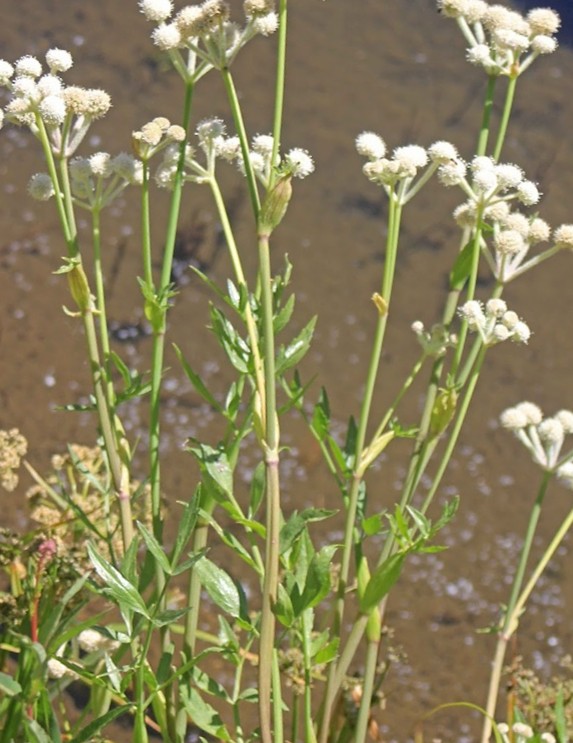
White Heads is a stout perennial herb growing from a thick root, taproot, or short underground caudex. Erect stems commonly reach about 1 to 1.5 meters and may approach 2 meters under favorable conditions. Stems and leaves are usually green, although some plants appear pale or nearly whitish. Lower stems are relatively smooth, while upper flowering portions may feel rough, hairy, or scabrous.
The leaves are large and pinnately or bipinnately divided. Leaflets may be widely spaced, lance-shaped, toothed, lobed, or further divided into narrow segments. Leaf stalks form broad sheathing bases around the stem, a useful Apiaceae feature. The foliage differs from the broad lobes of cow parsnip and from the finer architecture of several other wetland or meadow carrot-family plants.
The inflorescence is a compound umbel, but the terminal umbellets are unusually dense and nearly spherical. Tiny white or occasionally purple-tinged flowers and protruding stamens give each head a soft, woolly, button-like appearance. This rounded head structure is the most useful field distinction from related western plants whose small umbels remain open, flat, or only loosely rounded.
Native Range and Exposure Habitat
The species is native to the western United States and northwestern Mexico, including California, Oregon, Idaho, Nevada, and northern Baja California. It occurs primarily in temperate mountain and foothill environments. It is not a typical lowland houseplant problem; it is a wet-meadow, riparian, trail, and mountain-grazing hazard.
White Heads favors moist soil along creeks, streams, springs, lake margins, wet meadows, riparian corridors, boggy openings, subalpine drainage areas, and wet trail margins. Elevation records extend from lower montane sites to high mountain meadows, with regional variation. Livestock exposure is most likely where animals graze wet meadows or riparian pasture containing conspicuous stands.
Horses, pack animals, and trail dogs may encounter the plant beside streams, lake shores, campsites, pack stations, mountain roads, and damp trail margins. Cutting, mowing, weed trimming, ditch work, trail clearing, haying, or collecting green vegetation can mix the plant with more desirable forage and defeat normal avoidance.
Palatability and Seasonal Risk
White Heads is not generally described as preferred forage. Low palatability may explain why poisonings are uncommon despite the plant’s broad western distribution. Low palatability is not dependable protection when animals are hungry, pasture quality is poor, desirable forage is overgrazed, plants are cut into hay or green feed, or livestock are confined in a meadow containing dense growth.
The plant is most conspicuous while flowering during summer, when its round white flower heads stand out. Toxic exposure is not necessarily limited to flowering. Leaves and stems are present before bloom, roots persist between growing seasons, and dried or cut material may remain in forage. The absence of visible button-like heads does not prove a site or hay source is safe.
Mountain sunlight also matters. Furanocoumarin exposure followed by high-elevation sun, reflected light from water, sparse shade, or long daylight grazing can intensify photosensitization. A meadow that seems safe on a cloudy morning may still become risky when the animal later stands in strong afternoon sun.
Confirmed Furanocoumarins
A 1969 chemical investigation by Kuo-Hsiung Lee and Taito O. Soine examined roots of the plant under the name Sphenosciadium capitellatum. The researchers isolated isoimperatorin, phellopterin, imperatorin, oxypeucedanin, isopimpinellin, and a linear furanocoumarin identified as cnidilin.
These findings provide plant-specific chemical support for the photosensitization and ocular injury syndrome. Linear furanocoumarins absorb ultraviolet A light and can damage DNA, proteins, membranes, and supporting tissue after photoactivation. Cell injury then produces inflammation, edema, ulceration, necrosis, and pain in illuminated tissues.
The chemistry study examined root extracts rather than mapping every compound in every leaf, flower, stem, seed, or population. The veterinary feeding experiments used green aboveground plant material. It is therefore inaccurate to say only the roots are poisonous, and it is equally inaccurate to assign every cattle sign to one named furanocoumarin without direct proof.
Primary Photosensitization Rather Than Ordinary Sunburn
Ordinary sunburn results from excessive ultraviolet exposure alone. Photosensitization requires light plus a photodynamic substance within or on the tissue. An animal carrying a sufficient furanocoumarin burden may look acceptable in darkness and then develop severe injury after exposure to strong sunlight.
The reaction begins when ultraviolet light energizes the photodynamic molecules. Reactive oxygen species and direct molecular binding damage cells. Redness and swelling may progress to serum leakage, blistering, crusting, ulceration, necrosis, and sloughing. Hair and pigment absorb some of the light, so lesions often concentrate on white markings and sparsely haired areas.
This distribution is diagnostically useful. Sharply demarcated injury on white nasal skin, white pasterns, eyelids, unpigmented muzzle, udder, teats, or vulva strongly supports photosensitization rather than a generalized infectious dermatitis. It does not by itself prove White Heads, because several other plants and liver diseases can cause similar lesions.
Why the Eyes May Be More Severely Affected
The ocular surface receives direct light and has little physical protection. Phototoxic injury can inflame the conjunctiva and cornea, producing pain, eyelid spasm, excessive tearing, corneal edema, and opacity. When the cornea becomes cloudy, incoming light is scattered and vision may be severely impaired even if the retina and optic nerve are not the primary site of injury.
An affected horse may appear blind, panic in bright areas, collide with obstacles, or refuse to move. Photophobia itself becomes a safety issue because a frightened horse with impaired vision can injure itself and handlers. The animal should be placed in a dark or deeply shaded, obstacle-free enclosure and moved only with calm professional assistance when possible.
Corneal edema can resolve, but deep inflammation, ulceration, secondary infection, vascularization, or fibrosis may prolong or permanently reduce vision. This is why cloudy eyes after White Heads exposure require proper ophthalmic examination rather than borrowed eye drops or home ointments.
The 1970 Fowler, Berry, Bushnell, and Hinkley Study
The principal veterinary investigation was published in 1970 by Murray E. Fowler, L. Joe Berry, R. Bushnell, and H. S. Hinkley under the title “Sphenociadium capitellatum (Whiteheads) Toxicosis of Cattle and Horses.” Although the genus was misspelled in the title, the study concerned the species now accepted as Angelica capitellata.
The work combined observations from a repeatedly affected California meadow with controlled feeding experiments. It demonstrated that the plant could produce two different outcomes: acute respiratory disease in cattle and photosensitization with striking ocular injury in horses. That split is one of the most important facts for a modern veterinary page.
The Wolfin Meadow Cattle Losses
Wolfin Meadow in Tuolumne County, California, had a long history of cattle poisoning and was known locally as Poison Meadow. White Heads was abundant there but reportedly absent from nearby meadows that did not share the same history. The area had been fenced from routine grazing because of repeated losses.
During June 1966, cattle were allowed into the meadow during the day for about 30 days and removed at night without apparent illness. When they were later given unrestricted access, three animals died within several days. Six more died the following day even though the herd had been removed. In September, cattle broke through the fence and five more animals died.
One heifer developed respiratory distress, mild salivation, neck extension, weakness, and apparent abdominal tenderness before death. A mature cow that survived several days showed hind-limb incoordination, neck extension, and bulging eyes despite relatively normal respiration. Her nursing calf remained clinically normal. The field association alone did not identify a toxin, but the repeated location-specific losses and experimental administration of the plant strongly supported White Heads as the cause.
Experimental Cattle Dosing and the Unresolved Lung Mechanism
Calves were given ground green White Heads material through a stomach tube. Doses of about 10 to 16 grams per kilogram of body weight produced severe respiratory distress within two to four hours. Death followed about 4.5 to 60 hours after administration. Smaller doses produced milder signs in the tested calves.
These numbers document dose-related toxicity in that experiment, but they are not modern safe-use recommendations. Plant potency, preparation, age, pulmonary health, rumen fill, stress, temperature, and individual susceptibility can vary. A field exposure below an experimental dose could still be dangerous if conditions differ.
Terminal and postmortem observations included bloating, anal protrusion, bloody fluid from the nose or mouth, and marked pulmonary congestion or edema. The respiratory syndrome developed too rapidly to be explained simply as delayed photodermatitis. The responsible toxic principle remains unidentified, so treatment must focus on the actual respiratory emergency.
Experimental Horse Poisoning
Horses dosed with White Heads material developed pronounced photophobia, excessive tearing, cloudy corneas, blindness, and swollen red lesions on the unpigmented portions of the nose. The pattern was consistent with systemic primary photosensitization rather than simple local sap contact at one spot.
Once dosing ended and light exposure was controlled, the skin lesions healed within about two weeks. The corneas remained cloudy for more than two months. That prolonged ocular course is one of the most distinctive and clinically important findings associated with the plant.
The horses’ eventual ocular improvement argues against stating that permanent blindness is inevitable. Nevertheless, delayed light exclusion can deepen injury, and complications such as corneal ulceration, infection, fibrosis, or self-trauma can worsen the final outcome.
Dogs and Cats
Direct published companion-animal case details are sparse, and no reliable canine or feline toxic dose has been established. A dog or cat that chews a small fragment may not reproduce the severe cattle or horse syndromes, but that uncertainty should not be used as reassurance after a substantial ingestion or uncertain exposure.
Dogs may encounter the plant around mountain streams, lake margins, campsites, wet trail edges, or cut vegetation. Cats may contact sap and groom it from the coat or paws. Plant part, amount, sunlight intensity, skin pigmentation, coat coverage, body size, liver function, respiratory reserve, and individual metabolism may all influence outcome.
Pets should be moved indoors or into complete shade while veterinary advice is obtained. Squinting, tearing, red skin, clouded eyes, weakness, vomiting, rapid breathing, or collapse requires examination rather than home observation.
Horses, Cattle, and Other Grazing Animals
Horses and cattle are the best-documented domestic species. Horses require special attention to eyes, white skin, light exclusion, and safe handling of a visually impaired animal. Cattle require special attention to respiratory effort, pulmonary edema, and low-stress emergency handling.
Sheep, goats, camelids, pigs, and other livestock should not be allowed to graze dense stands or receive cut White Heads in forage. Direct species-specific reports may be limited, but the plant’s confirmed phototoxic chemistry and cattle respiratory syndrome are enough to justify avoidance. Goats and pigs may investigate cut or uprooted plants; camelids and sheep may graze wet meadows when forage is limited.
Group exposure matters. Animals sharing a meadow, cut forage source, or wet riparian pasture may have consumed different amounts. One normal animal does not prove the plant is safe for the rest of the group.
Human Handling Risk
People removing White Heads may contact furanocoumarin-containing sap on the hands, arms, face, or eyes. The skin can appear normal initially and then become red, swollen, blistered, painful, or darkly pigmented after ultraviolet exposure. This delayed reaction can occur after cutting, pulling, mowing, carrying, or playing with the plant.
Gloves, long sleeves, eye protection during cutting, and prompt washing reduce risk. Plant material should not be handled and then followed by direct sunlight without cleaning exposed skin. Children should not play with the round flower heads or hollow stems, and the plant should never be tasted because of the words parsnip, parsley, or angelica.
Diagnosis and Differentials
Diagnosis begins with plant identification and recognition of which syndrome is present. Useful photographs show the entire plant, divided leaves, sheathing leaf bases, stout stem, dense spherical flower heads, root area, wet-meadow habitat, and any cut forage or stomach contents. Plant material should be retained securely for botanical examination.
In a photosensitive animal, the veterinarian evaluates lesion distribution, eye pain, corneal clarity, corneal ulceration, vision, and the relationship between signs and sunlight. Liver enzymes, bilirubin, bile acids, and other tests may be used to distinguish primary furanocoumarin photosensitization from hepatogenous disease.
Differentials for photosensitization include spring parsley, bishop’s weed, wild parsnip, cow parsnip, giant hogweed, buckwheat, St. John’s wort, and hepatogenous photosensitization from liver disease, toxic plants, mycotoxins, or impaired biliary excretion. Differentials for acute respiratory distress in cattle include acute bovine pulmonary edema and emphysema, toxic-gas exposure, anaphylaxis, aspiration, severe pneumonia, cardiogenic pulmonary edema, nitrate or nitrite poisoning, cyanide poisoning, and other toxic plants.
Veterinary Treatment and Prognosis
The first therapeutic requirement for photosensitization is complete protection from ultraviolet light. Affected animals should be housed in a dark or deeply shaded, well-ventilated enclosure. Veterinary care may include pain control, anti-inflammatory treatment, fluid and nutritional support, gentle cleansing of exudative lesions, topical skin protectants, fly control, treatment of secondary infection, and repeated ophthalmic evaluation.
Eye treatment depends on corneal staining, ulceration, intraocular pressure, inflammation, infection, and vision. Veterinarian-selected topical antimicrobials, atropine, lubricants, anti-inflammatory medication, or other ophthalmic treatments may be required. Eye medication should never be borrowed from another animal.
Cattle or other animals with breathing difficulty require immediate low-stress stabilization. Oxygen, careful positioning, respiratory monitoring, temperature management, and case-specific treatment of pulmonary edema may be needed. Fluid therapy, sedation, anti-inflammatory medication, and diuretics must be selected cautiously because inappropriate treatment can worsen oxygenation or circulation. Prognosis is often favorable for early photosensitization with strict light exclusion, guarded for prolonged ocular disease, and guarded to poor for advanced pulmonary edema.
Prevention
Identify White Heads in wet meadows, riparian pastures, stream margins, springs, lake shores, pack-station areas, and mountain grazing routes before animals enter. Dense stands should be fenced or removed according to local land-management guidance. Avoid turning hungry animals into a meadow containing unfamiliar tall Apiaceae.
Inspect hay, cut green forage, mechanically cleared vegetation, and trail-maintenance debris for the plant’s divided leaves and dense round white flower heads. Do not feed sweepings or cuttings from stream banks and wet roadside areas. Plant material should be disposed of where livestock, pets, wildlife rehabilitation animals, and children cannot reach it.
Handlers should wear gloves, long sleeves, and eye protection when pulling or cutting the plant. Wash skin and equipment after contact and avoid direct sunlight until exposed areas have been cleaned. Keep trail dogs from chewing unidentified tall wetland plants, cut stems, or uprooted roots.
Immediate Steps After Exposure
Stop further ingestion and contact. Remove the animal from the plant, contaminated forage, cut vegetation, wet meadow, trail margin, campsite, streambank, or hay source. Prevent other animals from entering the same area. If multiple animals had access, treat it as a group exposure until every animal has been inspected.
- Move the animal out of sunlight: Place the animal indoors or in complete deep shade while veterinary help is arranged. Open shade may not block enough ultraviolet light for a severely photosensitive patient.
- Contact a veterinarian immediately: Report the species, estimated amount, plant part, time of exposure, current breathing, eye signs, skin color, sunlight exposure, and whether cattle, horses, or multiple animals are involved.
- Minimize exertion: Keep an animal with rapid, difficult, or noisy breathing calm and still. Do not chase, drive, or force it to walk to a distant handling area without veterinary direction.
- Preserve identification evidence safely: Photograph the complete plant, divided leaves, stems, sheathing leaf bases, round flower heads, wet-meadow location, and suspect forage. Save representative material in a closed container while wearing gloves.
- Protect handlers from sap and sunlight: Wear gloves and cover exposed skin. Wash hands, arms, tools, boots, and equipment after handling plant material.
Do Not Attempt Unsupervised Home Treatment
- Do not induce vomiting: Hydrogen peroxide and other home emetics can cause aspiration or gastrointestinal injury. Horses, rabbits, guinea pigs, rats, and several other species cannot vomit.
- Do not force water, food, oil, milk, or activated charcoal: Respiratory distress, weakness, poor coordination, or impaired swallowing increases the risk that material will enter the lungs.
- Do not administer corticosteroids or antihistamines automatically: Photosensitization is phototoxic rather than a simple allergy, and treatment depends on species, lesion severity, eye findings, and respiratory status.
- Do not give morphine, diuretics, sedatives, bronchodilators, or respiratory medication on your own: These drugs can alter breathing, blood pressure, hydration, and cardiovascular function and require veterinary monitoring.
- Do not apply human sunscreen, ointments, disinfectants, essential oils, wound sprays, or eye drops: Some products irritate damaged tissue, are toxic if licked, or can worsen corneal ulceration.
- Do not expose the animal to sunlight to see whether signs recur: Each additional exposure can reactivate photodynamic compounds and deepen tissue injury.
- Do not scrub necrotic or blistered skin: Damaged tissue needs veterinary wound management, not aggressive owner cleaning.
When Emergency Examination Is Especially Important
- Breathing difficulty: Neck extension, open-mouth breathing, rapid shallow breaths, heaving, blue-gray mucous membranes, bloody nasal discharge, or collapse may indicate pulmonary edema.
- Eye abnormalities: Severe squinting, continuous tearing, cloudy or blue-white corneas, apparent blindness, swollen eyelids, collision with objects, or refusal to leave shade requires urgent ophthalmic examination.
- Progressive skin injury: Rapid swelling, blistering, serum leakage, ulceration, sloughing, fly strike, or extensive pain requires professional wound management.
- Weakness or abdominal pain: Salivation, depression, incoordination, reluctance to move, abdominal tenderness, or recumbency may precede serious deterioration.
- Cattle exposure: Cattle can develop a rapidly progressive pulmonary syndrome; abnormal breathing after access to White Heads is an emergency.
- Group exposure: Every animal sharing a wet meadow or contaminated forage source should be inspected because individuals may have consumed different amounts.
- Small pets or exotics stop eating: Rabbits, guinea pigs, birds, reptiles, and small mammals may become seriously ill from anorexia, stress, eye pain, or respiratory compromise.
Skin and Eye Contact
Wear gloves while handling the animal or plant. Wash sap from exposed human skin promptly with soap and water and cover the area from sunlight. Plant material on an animal’s coat may be washed away carefully with mild soap and water when doing so will not delay emergency care or stress a breathless patient. Rinse thoroughly and prevent licking until residue is removed.
For direct eye contamination with sap, begin gentle irrigation with sterile saline or clean lukewarm water while arranging veterinary care, provided the animal can be handled safely. Do not rub the eye, scrape the surface, or attempt to remove material with fingers or instruments. Persistent tearing, cloudiness, pain, swelling, discharge, or visual difficulty requires an ophthalmic examination.
Veterinary Treatment for Photosensitization
Veterinary care for photosensitization may include complete light exclusion, pain relief, anti-inflammatory treatment, hydration and nutritional support, gentle skin cleansing, topical protectants, fly control, wound management, and treatment of secondary bacterial infection. Severe cases may require bandaging, prolonged stall or barn confinement, and repeated rechecks.
Eye treatment depends on corneal staining, corneal ulceration, intraocular pressure, inflammation, infection, and visual function. Veterinarian-selected topical antimicrobials, atropine, lubricants, anti-inflammatory medication, or other ophthalmic treatments may be required. Severe ocular inflammation may require repeated examinations over weeks or months.
Veterinary Treatment for Respiratory Disease
Animals with pulmonary edema or respiratory distress require low-stress stabilization. Oxygen, careful positioning, respiratory monitoring, temperature management, and cardiovascular assessment may be needed. Severely hypoxemic animals may require advanced airway or ventilatory support.
Fluid therapy must be selected cautiously because excessive intravenous fluid can worsen pulmonary edema. Diuretics, anti-inflammatory drugs, vasodilators, bronchodilators, sedation, or other respiratory treatments may be considered by the veterinarian according to cardiovascular status and the suspected mechanism, but no medication has been established as a specific antidote to White Heads poisoning.
Driving or forcing a severely dyspneic animal to walk can precipitate collapse and death. Field examination or carefully planned low-stress transport may be safer than routine herding to a distant handling facility.
Dogs, Cats, Horses, Livestock, and Small Animals
Dogs and cats should be moved indoors or into complete shade while the owner seeks veterinary guidance. Monitor for squinting, tearing, cloudy eyes, skin redness, vomiting, weakness, rapid breathing, collapse, or reluctance to go outside. Do not apply sunscreen or borrowed eye medication.
Horses should be placed in a dark, quiet, obstacle-free stall or deeply shaded area. A horse with photophobia or cloudy corneas may be functionally blind and dangerous to move. Use calm handling, avoid bright light, and protect the horse from collisions while veterinary care is arranged.
Cattle and other livestock with respiratory signs should be handled with minimal stress. Do not run, rope, chase, or drive breathless animals. Remove unaffected animals from the exposure area calmly and have the group inspected. Sheep, goats, camelids, pigs, rabbits, birds, and reptiles should not be assumed safe because species-specific dose information is limited.
Recovery and Prognosis
Skin lesions may begin healing within days once toxin exposure and ultraviolet light are eliminated, although extensive necrosis, infection, fly strike, or lesions over delicate structures can require weeks of care. In the experimental horse work, skin lesions healed in about two weeks, while corneal cloudiness persisted for more than two months.
Advanced respiratory disease carries a guarded to poor prognosis and can become fatal within hours to several days. Animals recovering from either syndrome should not return to sunlight or the exposure site until a veterinarian confirms that the phototoxic or respiratory risk has resolved.
Prevention After the Incident
Inspect wet mountain meadows, stream banks, lake margins, riparian pasture, campsites, trail edges, hay sources, and mechanically cleared vegetation for White Heads. Fence dense stands, remove plant material according to local land-management guidance, and avoid turning hungry animals into contaminated wet meadows.
Do not discard pulled plants, roots, stems, flower heads, or cut wetland vegetation where pets or livestock can reach them. Wash tools, boots, mower parts, buckets, trailers, gloves, and equipment after contact. Keep dogs from chewing unidentified tall Apiaceae plants or cut stems along wet trails and stream margins.
Frequently Asked Questions About White Heads and Animal Poisoning
Are White Heads and Ranger’s Buttons the same plant?
Yes. White Heads, Swamp Whiteheads, Ranger’s Buttons, Woollyhead Parsnip, and Button Parsley are common names for the same western wet-meadow plant. Its accepted scientific name is Angelica capitellata, although most older toxicology literature uses the former name Sphenosciadium capitellatum.
Why did the scientific name change?
Botanical analysis placed the former monotypic genus Sphenosciadium within Angelica. The accepted combination is now Angelica capitellata. The former name remains important because the original cattle and horse poisoning research was published under Sphenosciadium capitellatum, with the article title misspelled as “Sphenociadium.”
What toxins are confirmed in White Heads?
Roots have yielded the furanocoumarins isoimperatorin, phellopterin, imperatorin, oxypeucedanin, isopimpinellin, and cnidilin. These light-activated compounds strongly support the plant’s photosensitizing and ocular effects. The separate toxin or mechanism causing acute pulmonary edema in cattle remains unresolved.
How do furanocoumarins cause photosensitization?
Furanocoumarins absorb ultraviolet A light after reaching the skin or eyes. Once activated by light, they can damage membranes, proteins, and DNA, causing inflammation and cell death. Pigment, hair, and wool provide partial protection, so lesions are often worst on white, sparsely haired, or unpigmented areas.
Is White Heads photosensitization the same as sunburn?
No. Ordinary sunburn is caused by excessive ultraviolet exposure alone. Primary photosensitization requires a photodynamic substance plus light. An animal exposed to White Heads may appear better in darkness and then develop severe skin or eye injury after entering strong sunlight.
Which parts of White Heads are poisonous?
Leaves, stems, flowers, fruits, sap, roots, and cut plant material should all be treated as unsafe. Green aboveground material produced respiratory disease in experimental cattle and photosensitization in horses, while multiple furanocoumarins were isolated from the roots. No plant part has been established as safe animal forage.
How much White Heads can poison an animal?
No validated safe dose exists. In an older experiment, calves receiving 10 to 16 grams of ground green plant per kilogram of body weight developed severe respiratory distress and some died, while lower tested doses produced milder illness. Those data came from a small controlled study and should not be used as field safety thresholds.
How quickly can cattle become sick?
Experimentally dosed calves developed respiratory distress within about two to four hours, and deaths occurred about 4.5 to 60 hours after dosing. Neck extension, rapid or difficult breathing, weakness, salivation, abdominal discomfort, blue-gray gums, bloody nasal discharge, or collapse after exposure requires immediate veterinary care.
Why does White Heads affect horses’ eyes?
Phototoxic compounds can reach ocular tissues and become reactive when exposed to ultraviolet light. This can cause photophobia, conjunctival inflammation, corneal edema, cloudiness, and severe loss of vision. In experimentally affected horses, corneal cloudiness lasted more than two months after skin lesions healed.
Does White Heads always cause permanent blindness?
No. The experimental horses developed blindness with cloudy corneas, but their eyes gradually improved over a period longer than two months. Permanent impairment remains possible when severe inflammation leads to corneal ulceration, infection, vascularization, scarring, or other complications, so every cloudy or painful eye needs prompt veterinary care.
Is White Heads poisonous to dogs?
Yes. Direct dog case details are limited, but the plant contains confirmed phototoxic furanocoumarins and no safe canine dose is established. Dogs may encounter it beside streams, lakes, campsites, trails, or cut vegetation. Squinting, tearing, cloudy eyes, red skin, vomiting, weakness, rapid breathing, or collapse after exposure requires veterinary attention.
Is White Heads poisonous to cats?
Yes. Cats should be kept away from White Heads and plant sap. A cat may chew foliage or groom sap from the paws and coat. Food refusal, drooling, vomiting, red skin, squinting, tearing, cloudy eyes, weakness, or abnormal breathing after exposure should be discussed promptly with a veterinarian.
Is White Heads poisonous to horses?
Yes. Horses are the best-documented photosensitive species for this plant. Experimental horses developed intense photophobia, tearing, cloudy corneas, temporary blindness, and inflamed lesions on unpigmented nasal skin. Exposed horses should be moved into complete shade or a dark stall and examined, especially if eyes are painful or cloudy.
Is White Heads poisonous to cattle?
Yes. Cattle can develop a rapidly progressive respiratory syndrome with pulmonary edema after eating green plant material. Signs may include neck extension, labored breathing, weakness, abdominal discomfort, open-mouth breathing, bloody nasal discharge, recumbency, and death. A breathless animal should not be chased, driven, or forced to walk unnecessarily.
Are sheep, goats, camelids, or pigs at risk?
They should be treated as at risk even though direct species-specific reports are limited. These animals may be exposed through wet meadows, streambanks, cut forage, brush piles, or hay contamination. Photosensitive skin lesions, eye pain, weakness, salivation, reduced appetite, abdominal discomfort, or abnormal breathing after exposure warrants veterinary guidance.
Can rabbits, guinea pigs, birds, reptiles, or tortoises eat White Heads?
No. White Heads should not be offered as forage, browse, greens, enrichment, bedding, enclosure vegetation, or nesting material. Safe doses are not established, and small animals may become seriously ill from anorexia, eye pain, skin injury, weakness, or respiratory compromise after exposure.
Should an exposed animal be moved into shade?
Yes. Move the animal indoors or into complete deep shade while veterinary care is arranged. Ordinary tree shade or an open-sided shelter may allow enough scattered ultraviolet light to continue the reaction. Do not move a severely breathless animal farther than necessary without veterinary direction.
Should I induce vomiting after White Heads ingestion?
No. Do not induce vomiting unless a veterinarian specifically directs it. Hydrogen peroxide and other home emetics can cause aspiration or gastrointestinal injury, and horses, rabbits, guinea pigs, rats, and several other species cannot vomit. Breathing status and species matter more than home decontamination.
Should activated charcoal be given?
Do not give activated charcoal automatically. A weak, breathless, poorly coordinated, or distressed animal can aspirate charcoal into the lungs. Veterinary decontamination is considered only after the patient’s airway, breathing, neurologic condition, exposure timing, and species have been assessed.
Should Benadryl or steroids be given?
Do not give diphenhydramine, corticosteroids, or other medication without veterinary direction. White Heads photosensitization is phototoxic rather than a simple allergy, and the cattle respiratory syndrome is not solved by routine allergy medication. Drug choice depends on species, eyes, skin, breathing, hydration, and overall status.
Can a person develop a reaction while removing the plant?
Yes. Furanocoumarin-containing sap can remain on human skin and produce delayed redness, blistering, pain, or dark pigmentation after sunlight exposure. Wear gloves, long sleeves, and eye protection when cutting or pulling the plant, wash exposed skin and tools promptly, and protect contaminated skin from sunlight.
Is White Heads the same as edible parsnip or parsley?
No. Woollyhead Parsnip and Button Parsley are common names, not food-safety statements. White Heads is not culinary parsley and should not be treated as edible parsnip. Apiaceae contains edible crops and deadly poisonous plants, so identification by common name alone is unsafe.
How can White Heads poisoning be prevented?
Inspect wet mountain meadows, stream banks, lake margins, riparian pasture, campsites, trail edges, and cut forage before animals have access. Fence dense stands, avoid turning hungry livestock into contaminated meadows, keep dogs from chewing unidentified wetland plants, and never discard pulled plants or wetland cuttings where animals can reach them.