Wintercress Isothiocyanates, Horse Colic, Brassicaceae Glucosinolates, Hay Contamination, Nitrate Risk, and Field-Contaminant Hazards
Is Wintercress Poisonous to Dogs, Cats, Horses, and Livestock?
Yes—Wintercress, Barbarea orthoceras, is classified as poisonous to horses and should be treated as potentially irritating to dogs, cats, livestock, rabbits, guinea pigs, birds, reptiles, and other animals when eaten in meaningful quantities. This mustard-family plant contains a glucosinolate-myrosinase defense system that can generate pungent isothiocyanates and related hydrolysis products when the plant is chewed, crushed, mowed, frozen, wilted, ground, or digested. Horses are the species most clearly identified in direct veterinary poison-plant guidance, with gastrointestinal irritation and colic as the principal concerns. Small accidental tastes are unlikely to cause severe poisoning, but bulk consumption, piles of pulled weeds, contaminated hay, concentrated seed material, stressed plants, or field contamination can create a more serious exposure.
Exposed animals may salivate, refuse food, lick their lips, drool, vomit in species capable of vomiting, develop abdominal discomfort, pass soft stool or diarrhea, or show colic. Horses cannot vomit and may instead paw, look at the flank, stretch, lie down repeatedly, roll, sweat, develop abnormal manure, or show worsening abdominal pain. Ruminants eating substantial amounts of mustard-family weeds may also face separate hazards from nitrate accumulation, chronic glucosinolate effects, or environmental contaminants. Severe or persistent colic, repeated vomiting or diarrhea, abdominal swelling, difficult breathing, blue-gray or muddy mucous membranes, chocolate-brown blood, weakness, tremors, collapse, seizures, or illness affecting several animals should be treated as an emergency and investigated with plant, feed, water, and field-history evidence.
About this guide: This page provides general pet-poisoning information and cannot diagnose or treat an individual animal. For any suspected exposure, contact a veterinarian or animal poison-control service immediately. Do not induce vomiting, give medication, or attempt home decontamination unless directed by a veterinary professional.
Wintercress
Barbarea orthoceras Ledeb.
Important botanical synonyms include:
- Barbarea vulgaris var. orthoceras (Ledeb.) Regel
- Campe orthoceras (Ledeb.) A.Heller
- Barbarea americana Rydb.
- Barbarea apoiensis Nakai
- Barbarea cochlearifolia H.Boissieu
- Barbarea hondoensis Nakai
- Barbarea orthoceras var. dolichocarpa Fernald
- Barbarea orthoceras subsp. dolichocarpa (Fernald) Piper & Beattie
- Barbarea orthoceras var. formosana Kitam.
- Barbarea patens H.Boissieu
- Barbarea pinnatifida H.Boissieu
- Barbarea sibirica (Regel) Nakai
- Barbarea vulgaris var. pinnatifida Regel
- Barbarea vulgaris var. sibirica (Regel) Kom.
- Barbarea vulgaris lusus sibirica Regel
- Barbarea vulgaris var. tenella Regel
- Campe americana (Rydb.) Cockerell ex Daniels
- Campe orthoceras var. dolichocarpa (Fernald) Gilkey
- Sisymbrium japonicum H.Boissieu
Important non-synonym confusion names:
- Barbarea vulgaris W.T.Aiton — Yellow Rocket, Garden Yellowrocket, Common Wintercress, St. Barbara’s Herb; closely related but separate species
- Barbarea verna (Mill.) Asch. — Land Cress, Upland Cress, American Cress; separate species
- Nasturtium officinale W.T.Aiton — Watercress; separate aquatic Brassicaceae plant
- Cardamine species — Bittercress; separate genus commonly confused by common name
- Raphanus raphanistrum L. — Wild Radish; separate Brassicaceae weed with overlapping but non-identical forage hazards
- Sinapis arvensis L. — Charlock Mustard; separate Brassicaceae weed
- Brassica species and forage hybrids — crop brassicas; overlapping glucosinolate, nitrate, sulfur, goitrogenic, and hemolytic concerns but separate identities
Brassicaceae
The conserved alternate family name is Cruciferae.
Wintercress; Winter Cress; American Wintercress; American Winter-Cress; American Yellow Rocket; American Yellowrocket; American Rocket; Erectpod Wintercress; Erect-Pod Wintercress; Northern Wintercress; Northern Winter Cress; Upright-Pod Wintercress; Barbarea orthoceras; Barbarea americana.
Scientific and historical search names include Barbarea orthoceras, Barbarea vulgaris var. orthoceras, Campe orthoceras, Barbarea americana, Barbarea apoiensis, Barbarea cochlearifolia, Barbarea hondoensis, Barbarea patens, Barbarea pinnatifida, Barbarea sibirica, Barbarea vulgaris var. sibirica, and Sisymbrium japonicum.
Naming caution: Wintercress, Yellow Rocket, Bittercress, Common Cress, Indian Posey, Land Cress, St. Barbara’s Herb, Scurvy Cress, Upland Cress, Rocket Cress, Yellow Rocketcress, Garden Yellowrocket, and Herb Barbara have been used loosely across several cresses and yellow-flowered Brassicaceae plants. Yellow Rocket or Garden Wintercress usually refers to Barbarea vulgaris. Land Cress or Upland Cress usually refers to Barbarea verna. Watercress is Nasturtium officinale. Bittercress most commonly refers to Cardamine species. This page refers specifically to Wintercress, Barbarea orthoceras.
Glucosinolates and the Mustard-Oil Defense System
Wintercress belongs to Brassicaceae, the mustard family. Members of this family characteristically produce glucosinolates as part of a two-component chemical defense system. Glucosinolates are sulfur- and nitrogen-containing plant compounds, while myrosinases are enzymes capable of breaking them apart. In intact living tissue, the compounds and enzymes are largely separated in different cells or cellular compartments, so the plant is not simply filled with one preformed irritant at all times.
When an animal tears, chews, crushes, grinds, freezes, or otherwise damages the plant, cellular barriers fail and myrosinase contacts the glucosinolates. The enzyme removes the glucose portion and produces an unstable aglycone. That intermediate can then rearrange into active products that may include isothiocyanates, thiocyanates, nitriles, epithionitriles, oxazolidine-thione compounds, and related breakdown products. This is why a mild green rosette can release a sharper mustard-like character when it is chewed or chopped.
Isothiocyanates Are the Direct Species-Specific Veterinary Toxin Label
Isothiocyanates are the toxic principle identified for Barbarea orthoceras in direct veterinary poison-plant guidance. These pungent compounds are often called mustard oils because they produce the sharp odor, burning flavor, and mucous-membrane irritation associated with mustard-family plants. At sufficient concentration, they can irritate the lips, mouth, esophagus, stomach, forestomachs, and intestines.
The resulting injury is usually inflammatory and irritant rather than a deep corrosive burn. An exposed animal may salivate, refuse food, develop abdominal discomfort, and experience increased gastrointestinal motility, diarrhea, or colic. Horses are the species for which Wintercress toxicity is specifically listed, and gastrointestinal irritation and colic are the best-supported clinical conclusions for this exact species.
Exact B. orthoceras Chemistry Is Less Complete Than B. vulgaris Chemistry
The complete species-specific glucosinolate profile of B. orthoceras has not been characterized as thoroughly as that of the closely related Barbarea vulgaris. Research on B. vulgaris has identified chemotypes dominated by aromatic glucosinolates such as glucobarbarin and related stereoisomers, especially epiglucobarbarin. The genus is chemically interesting because different populations and plant types can carry different defensive profiles.
Those findings help explain the chemical defenses of Barbarea, but they should not be presented as proof that every population or plant part of B. orthoceras contains identical compounds in identical concentrations. The evidence-bound wording is that B. orthoceras is a Brassicaceae wintercress with isothiocyanate-associated veterinary toxicity, while much of the deeper glucobarbarin / epiglucobarbarin detail is comparative genus-level chemistry drawn mostly from B. vulgaris.
Why the Hydrolysis Product Can Vary
The final hydrolysis product depends on more than the plant’s name. Plant proteins, tissue type, maturity, pH, iron, moisture, temperature, microbial metabolism, gut environment, chewing intensity, and whether the material is fresh, wilted, frozen, chopped, or dried can shift the reaction toward isothiocyanates, nitriles, thiocyanates, epithionitriles, or other products. This is why two animals eating similar weights of related mustard-family plants may not develop identical signs.
Isothiocyanates are the most important practical irritants for the horse-colic warning, but other glucosinolate products matter when exposure becomes chronic or bulk dietary intake replaces ordinary forage. The page should therefore explain the mustard-family chemistry without inventing a fixed toxic dose or a single named Wintercress compound that has not been proven in this species.
Goitrogenic Glucosinolate Products
Thiocyanate and goitrin-related products can interfere with thyroid function when glucosinolate-containing feed forms a large or repeated part of the diet. Thiocyanate can compete with iodide uptake, while other products interfere with thyroid-hormone production. Chronic high intake may contribute to thyroid enlargement, reduced growth, poor reproductive performance, weak offspring, lower milk or egg production, or other production losses.
These are comparative high-intake glucosinolate effects, not the expected result of a horse or dog taking one small bite of Wintercress. They become relevant when mustard-family weeds or forage brassicas form a substantial part of the ration over time, especially when dietary iodine is marginal or feed formulation is already unbalanced.
Nitriles and Broader Organ Effects
Nitriles produced from certain glucosinolates can affect the liver, pancreas, kidneys, nervous system, or other tissues in experimental and livestock-feeding situations. Severe organ injury, however, has not been established as the usual clinical pattern of B. orthoceras poisoning. The recognized species-specific veterinary warning remains gastrointestinal irritation and colic.
Broader systemic effects require a large exposure, repeated feeding, unusual plant chemistry, a related but different Brassicaceae species, nitrate accumulation, pesticide exposure, metal contamination, infectious disease, or another concurrent hazard. When signs extend far beyond colic and diarrhea, the case should be investigated rather than assumed to be ordinary isothiocyanate irritation.
Nitrate Is a Separate Plant-Stress Hazard
Nitrate is a separate concern from glucosinolates. Plants absorb nitrate as a nutrient, but drought, heavy nitrogen fertilization, manure-rich soil, reduced sunlight, prolonged cloudy weather, frost, cool temperatures, herbicide stress, and rapid regrowth can permit nitrate to accumulate faster than the plant converts it into protein. Lower stems often contain more nitrate than leaves, although distribution varies by species and conditions.
In ruminants, microbes convert nitrate into nitrite. Under normal conditions, nitrite is converted onward to ammonia and microbial protein. When intake overwhelms that second conversion step, nitrite enters the bloodstream and oxidizes hemoglobin into methemoglobin, which cannot transport oxygen effectively. Blue-gray or muddy mucous membranes, chocolate-brown blood, rapid breathing, weakness, collapse, and pregnancy loss belong to this nitrate/nitrite syndrome, not ordinary mustard-oil irritation.
American Wintercress should not be labeled a proven exceptional nitrate accumulator without direct testing. Any stressed mustard-family weed dominating pasture or hay, however, warrants nitrate analysis when environmental conditions support accumulation. A visual inspection cannot determine nitrate concentration.
Pesticides, Metals, Fertilizer, and Site Contaminants
Pesticides, herbicides, metals, fertilizer residues, road runoff, industrial contaminants, sewage-amended soil, and other environmental chemicals must be separated from Wintercress’s natural glucosinolate chemistry. A plant growing beside a treated field, roadway, mine site, industrial drainage area, remediation site, ditch, or contaminated water source may carry an additional hazard. The syndrome then depends on the contaminant involved rather than on isothiocyanates alone.
This risk is site-specific. It should not imply that every Wintercress plant naturally concentrates pesticides or metals to dangerous levels. The correct conclusion is that growing-site history matters and that plant, feed, water, soil, pesticide-label, and field-treatment evidence should be retained when signs are severe, unusual, or shared by several animals.
Poisonous Plant Parts
All parts should be treated as potentially irritating when eaten in bulk. Leaves and stems are the portions most likely to be grazed, while flowers, green pods, and mature seeds may provide a more concentrated glucosinolate exposure. The distribution of glucosinolates among roots, foliage, flowers, and seeds of B. orthoceras has not been mapped sufficiently to declare one part universally harmless.
The practical exposure route matters as much as the plant part. A horse that takes one mouthful of bitter green material is different from a horse eating a pile of pulled weeds from a wagon, livestock receiving contaminated hay, or small animals eating chopped greens mixed into feed. Seed-containing material, pods, and dried fragments hidden in hay should be treated more cautiously than a single fresh leaf nibble.
Drying Does Not Create a Dependable Safety Rule
Drying does not create a dependable safety rule. Some volatile isothiocyanate may dissipate after plant tissue is cut and dried, but intact glucosinolate precursors, seeds, nitrate, metals, pesticide residues, and physically mixed contaminants may remain. Hay containing a substantial amount of Wintercress should therefore be identified and evaluated rather than diluted into clean hay and fed until signs appear.
Poisoning should not be described as occurring “most commonly” through hay without stronger case data, but hay is clearly one of the most plausible routes for repeated or bulk consumption. Cutting and baling remove many of the visual and taste cues that help an animal avoid a pungent living weed.
Most Supported Signs: Gastrointestinal Irritation and Horse Colic
The best-supported signs of Barbarea orthoceras poisoning are gastrointestinal irritation and colic in horses. Clinical severity depends on quantity eaten, plant part, whether the material was fresh or concentrated in hay, the animal’s size and health, whether the plant was stressed or treated, and whether nitrate or another contaminant is present.
A horse may initially salivate, stop eating, appear uncomfortable, and develop increased intestinal activity. Colic signs can include pawing, looking repeatedly at the flank, stretching, lying down, getting up repeatedly, rolling, kicking at the abdomen, sweating, standing in an abnormal posture, or becoming increasingly depressed. Frequent defecation, soft manure, or diarrhea may follow.
Horses cannot vomit. Vomiting should therefore not be listed as an expected equine sign even though it may occur in dogs, cats, pigs, people, and other species capable of emesis. Persistent equine abdominal pain, increasing heart rate, abdominal distention, reduced manure production, weakness, sweating, or collapse requires immediate examination.
Dogs and Cats
Dogs and cats that chew a small amount may develop mouth irritation, lip licking, drooling, nausea, vomiting, diarrhea, abdominal discomfort, appetite loss, or temporary depression. Direct published companion-animal cases involving B. orthoceras are sparse, so no reliable canine or feline toxic dose or complete syndrome has been established.
The risk increases when a small animal consumes a large pile of pulled plants, seed pods, concentrated plant material, compost containing the weed, or vegetation contaminated with pesticide, fertilizer, herbicide, road runoff, mold, or another plant. Repeated vomiting, inability to keep water down, abdominal distention, severe weakness, tremors, breathing difficulty, abnormal mucous-membrane color, collapse, or signs that do not match simple stomach irritation require veterinary examination.
Cattle, Sheep, Goats, and Other Ruminants
Cattle, sheep, goats, alpacas, llamas, and other ruminants consuming a substantial quantity may develop salivation, poor appetite, ruminal discomfort, reduced rumen contractions, bloat, diarrhea, reduced performance, or weakness. These findings are based largely on the known effects of mustard-family glucosinolates and related forage plants rather than a large series of confirmed B. orthoceras outbreaks.
Group exposure changes the level of concern. Several animals with diarrhea may suggest contaminated forage. Several animals with rapid breathing, blue-gray mucous membranes, tremors, collapse, or sudden death suggests nitrate, pesticide, water contamination, another toxic plant, or a broader feed-source problem. The entire ration and field history should be investigated.
Nitrate/Nitrite Signs
If stressed Wintercress or contaminated hay contains excessive nitrate, the presentation can be much more dramatic than ordinary isothiocyanate irritation. Affected ruminants may breathe rapidly, salivate, tremble, stagger, urinate frequently, become weak, or collapse. Mucous membranes may appear gray, blue, cyanotic, or muddy brown, and the blood may become chocolate brown because methemoglobin cannot carry oxygen normally.
Nitrate poisoning can progress to convulsions, coma, and death within hours. Pregnant animals surviving an acute episode may abort later because the fetus experienced oxygen deprivation. These signs do not prove that Wintercress itself contained a particular lethal nitrate concentration; feed, water, plant, or biological testing is required.
Chronic Glucosinolate and Thyroid-Related Signs
Chronic heavy intake of glucosinolate-rich feed can produce less immediate signs. Poor growth, reduced feed efficiency, reduced milk or egg production, thyroid enlargement, reproductive difficulty, weak young, or other evidence of disturbed thyroid function may appear when goitrogenic breakdown products form a substantial portion of the ration.
This is a chronic ration problem rather than the expected result of one pet nibble or one horse mouthful. It becomes relevant when mustard-family weeds, wintercresses, forage brassicas, or contaminated hay contribute significantly to the diet over time.
Pesticide, Metal, or Environmental-Contaminant Signs
Symptoms caused by pesticides, metals, or other environmental contaminants vary widely. Organophosphate or carbamate exposure may cause profuse salivation, diarrhea, muscle twitching, pinpoint pupils, respiratory distress, weakness, seizures, or collapse. Metals, herbicides, fertilizers, road runoff, industrial contaminants, or moldy feed can create different neurologic, renal, hepatic, respiratory, or gastrointestinal patterns.
A syndrome that extends well beyond uncomplicated colic and diarrhea should prompt investigation of the growing site and feed history. Plants collected from roadsides, treated rights-of-way, recently sprayed fields, mine sites, industrial drainage, or uncertain pasture margins should not be assumed to represent ordinary Wintercress exposure.
Horses, Ponies, and Donkeys
Horses, ponies, and donkeys are the animals for which Wintercress is most directly listed in veterinary poison-plant guidance. Signs may include salivation, appetite loss, abdominal pain, pawing, flank watching, stretching, repeated lying down, rolling, soft manure, diarrhea, reduced gut sounds, sweating, depression, or dehydration.
Severe colic must never be dismissed as a predictable minor effect of a weed. A horse with persistent pain, repeated rolling, abdominal distention, elevated heart rate, reduced manure, reflux, weakness, or worsening depression needs a full colic evaluation because impaction, gas colic, displacement, enterocolitis, sand, parasites, feed change, mycotoxins, cantharidin, or other plants may be involved.
Rabbits, Guinea Pigs, Birds, Reptiles, and Other Small Animals
Wintercress should not be offered as browse, cage greenery, bedding, poultry greens, tortoise forage, reptile enclosure décor, or enrichment. Rabbits and guinea pigs may show food refusal, soft stool, diarrhea, abdominal discomfort, reduced fecal output, dehydration, or secondary gut slowing. Because they cannot vomit normally, appetite and fecal output become especially important signs.
Birds may peck leaves, flowers, pods, or contaminated feed and may show reduced appetite, regurgitation, diarrhea, weakness, poor perching, or breathing difficulty if another contaminant is present. Reptiles and tortoises may show reduced appetite, abnormal stool, inactivity, dehydration, or weakness rather than obvious vomiting. Species-specific safe doses are not established.
Expected Course and Red Flags
Most limited exposures are expected to remain mild and improve after access ends. Serious intoxication is uncommon because the pungent or bitter taste discourages continued eating when safer forage is available. The risk increases when Wintercress dominates pasture, is hidden in hay, is piled in pulled vegetation, is mixed into feed, or is the only readily available forage.
Red flags include severe or persistent colic, repeated vomiting or diarrhea, abdominal swelling, dehydration, rapid or difficult breathing, blue-gray or muddy mucous membranes, chocolate-brown blood, tremors, weakness, collapse, seizures, abnormal urination, sudden death, pregnancy loss, or illness affecting multiple animals. These findings should trigger veterinary evaluation and testing rather than routine home observation.
Wintercress on This Page Means Barbarea orthoceras
The Wintercress covered on this page is Barbarea orthoceras, a native North American and Asian member of Brassicaceae. It is commonly called American Wintercress, American Yellow Rocket, American Rocket, Erectpod Wintercress, Northern Wintercress, or American Yellowrocket. The PAWS Plant Name field remains Wintercress, but exact scientific identification matters because several related plants share the same common-name pool.
The name wintercress is shared with several related species. Garden Yellow Rocket or Common Wintercress is usually Barbarea vulgaris, while Land Cress or Upland Cress is generally Barbarea verna. These plants resemble one another closely enough that older poison-plant summaries and common-name lists often combine them. For poisoning work, the common name should never replace a complete specimen, plant label, or botanical identification.
The Genus Contains More Than 22 Species
The legacy description placed approximately 22 species in Barbarea. Current Kew treatment recognizes more accepted species, including several natural hybrids. The genus is distributed primarily through temperate portions of the Northern Hemisphere, with species native to Europe, Asia, Africa, Australia, and North America.
Members of the genus are generally small biennial or perennial herbs with yellow four-petaled flowers, basal leaf rosettes, and elongated seed pods. Similar growth form does not establish identical chemistry or animal toxicity. Evidence from one Barbarea species must be labeled as comparative when applied to another.
Accepted Name and Botanical Synonyms
Barbarea orthoceras Ledeb. is the accepted name. The species has also appeared as Barbarea americana, Barbarea vulgaris var. orthoceras, Campe orthoceras, and several Asian or regional names now treated as synonyms.
This synonymy helps explain why older field guides may place American Wintercress beneath B. vulgaris or use the name American Yellow Rocket without distinguishing it from Garden Yellow Rocket. Modern identification retains B. orthoceras as a separate species, and the page should not collapse it into B. vulgaris merely because the older toxicology literature is heavier for Yellow Rocket.
Native Range
The species is native across a broad northern range extending from temperate Asia through Alaska and Canada and south into Baja California and parts of the western, northern, and northeastern United States. Asian records include areas of Siberia, Mongolia, northern China, Korea, Japan, and adjacent regions.
Within North America it occurs from Alaska and western Canada south through California, Nevada, Arizona, New Mexico, and Baja California, and east through the Rocky Mountains, northern Great Plains, Great Lakes region, and scattered northeastern locations. Its range and habitats make it relevant to trail horses, grazing livestock, dogs working or walking near wet meadows, and animals exposed through hay or field maintenance.
Habitat and Exposure Settings
American Wintercress favors moist meadows, wet grassland, stream banks, river margins, marshes, riparian woodland, open forest, rocky slopes, gravel bars, scree, lake shores, and alpine or subalpine habitats. It occurs from low elevations into lower alpine country depending on latitude.
These habitats place it within reach of trail horses, grazing livestock, working dogs, and pets exploring stream margins. Animals may also encounter it in hayfields, roadside cuttings, disturbed wet pasture, riparian turnout areas, or piles of vegetation removed during field maintenance. Exposure becomes more important when safe forage is scarce or when the plant is cut, baled, piled, or mixed into feed.
Growth Form and Identification
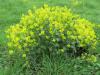
Barbarea orthoceras is usually a biennial or short-lived perennial growing from a stout taproot and simple crown. The plant often remains as a low basal rosette before producing one or more stiff, erect, angled stems. Mature flowering plants commonly reach approximately 20 to 60 centimeters, although favorable conditions can produce taller growth.
The basal leaves are long-stalked and usually lyrate-pinnatifid or pinnate. They have a relatively large oval terminal lobe and several smaller rounded lateral lobes. Margins range from nearly entire to irregularly round-toothed, and long hairs may occur along the lower petiole even though the plant is otherwise mostly smooth.
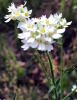
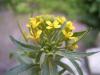
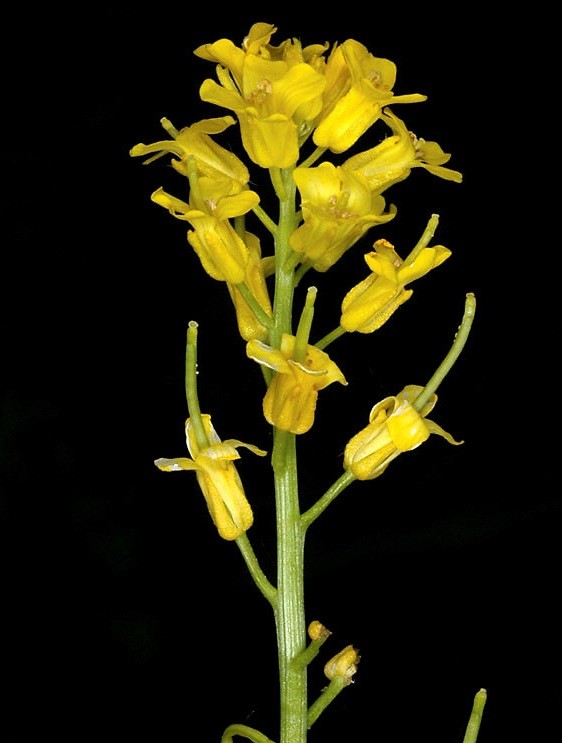
Stem leaves are alternate and become progressively smaller higher on the plant. Lower stem leaves may remain divided, while upper leaves become less lobed or simple and can have arrow-shaped or clasping bases. The flowers grow in compact terminal racemes. Each flower has four pale to bright yellow petals, four yellow-green sepals, and six stamens. Flowering can occur from spring through midsummer or later at high elevations.
The fruit is a narrow silique generally about 1.5 to 5 centimeters long. The pods are nearly straight, four-angled, and held erect or strongly ascending. The upright pods are reflected in the epithet orthoceras, meaning straight or upright horn.
How It Differs from Barbarea vulgaris
Barbarea orthoceras and B. vulgaris can be difficult to separate without mature flowers and fruits. American Wintercress is generally more strongly associated with native northern, western, mountain, and riparian habitats, while B. vulgaris is a Eurasian species widely introduced into fields, roadsides, pastures, and disturbed ground across North America.
American Wintercress commonly has short, thick or somewhat club-shaped flower stalks and erect or strongly ascending pods. Garden Yellow Rocket often develops somewhat different pedicels, leaf bases, and pod orientation. Regional floras, herbarium references, or a botanist should be consulted when animal poisoning or hay contamination depends on exact identification.
Yellow Rocket, Bittercress, and the Common-Name Problem
Yellow Rocket, Wintercress, Bittercress, Land Cress, Common Cress, Scurvy Cress, Upland Cress, Rocket Cress, St. Barbara’s Herb, and Herb Barbara have been used loosely across several plants. Most of the long legacy common-name list is associated more strongly with Barbarea vulgaris than with B. orthoceras.
Bittercress most commonly refers to plants in Cardamine. Land Cress, Upland Cress, Early Wintercress, and American Cress are commonly applied to Barbarea verna. Watercress is Nasturtium officinale. Indian Posey is itself ambiguous and has also been applied to unrelated aromatic plants. These naming overlaps are not merely academic. A plant identified as edible watercress or land cress may be chemically and botanically different from American Wintercress.
Why It Is Called Wintercress
Many Barbarea plants form green basal rosettes that persist through cool weather and resume growth early in spring. Historically, young leaves of some species were collected as bitter winter or early-spring greens when few other fresh vegetables were available.
Historical human food use does not establish unrestricted animal safety. People generally selected young growth, consumed limited portions, and sometimes cooked or prepared the leaves. A horse eating a wagonload of pulled weeds, or livestock receiving contaminated hay day after day, receives a completely different dose and exposure pattern.
The Glucosinolate-Myrosinase “Mustard-Oil” System
Glucosinolates and myrosinase function as a two-part defense. The intact compounds are stored apart from the enzyme. When an insect, animal, mower, or feed grinder damages the plant, myrosinase releases glucose from the glucosinolate and creates an unstable intermediate. The intermediate can rearrange into an isothiocyanate, nitrile, thiocyanate, epithionitrile, oxazolidine-thione, or related product.
Isothiocyanates are particularly effective deterrents because they are pungent, reactive, antimicrobial, and irritating to living tissue. The system explains why a relatively quiet green leaf can become sharply bitter or mustard-like when chewed. It also explains why chopped, ground, frozen, wilted, or crushed material can differ chemically from an intact standing plant.
What Is Known—and Not Known—About the Exact Chemistry
Direct veterinary poison-plant guidance identifies isothiocyanates as the toxic principle of B. orthoceras. That is consistent with the family’s established glucosinolate-myrosinase chemistry. However, a complete plant-part-by-plant-part profile of every glucosinolate in American Wintercress has not been developed sufficiently for a veterinary toxic-dose calculation.
Research on B. vulgaris has shown substantial chemical variation. Some populations are dominated by glucobarbarin, while others contain the stereoisomer epiglucobarbarin and different minor glucosinolates. Plant age, tissue, genotype, and insect damage also influence concentration. These related-species findings remain relevant because they demonstrate that Barbarea chemistry is not uniform. They must not be converted into a statement that every B. orthoceras plant contains one named glucosinolate at a fixed concentration.
The Hansen Horse Report
The historical poisoning account supplied with this record is important and should be preserved as comparative context:
“in one unusual case in which the animal ate large quantities of the plant from a wagon that was hauling the weed from a field (Hansen 1930). The symptoms suggested gluocosinolate poisoning, as in Brassica spp.”
The spelling “gluocosinolate” is retained because it appears in the supplied attributed wording. The underlying Canadian poisonous-plant reference identifies the plant in that report as Barbarea vulgaris, Yellow Rocket, rather than B. orthoceras. That correction does not make the report irrelevant. It demonstrates that a closely related wintercress can poison a horse when the animal is given access to an unnaturally large pile of vegetation. It also supports the practical conclusion that low palatability does not protect an animal faced with concentrated pulled weeds, wagon loads, or contaminated feed.
Species-Specific Veterinary Evidence
The strongest direct species-specific veterinary classification currently available lists Barbarea orthoceras as toxic to horses, names isothiocyanates as the toxic principle, and identifies gastrointestinal irritation and colic as the signs. Published case details, toxic doses, necropsy findings, and controlled feeding trials specifically involving B. orthoceras are sparse.
The page should therefore give full detail about mechanism, identification, comparative chemistry, and realistic exposure settings without inventing a lethal dose or claiming that every broad brassica syndrome has occurred after this exact species. The safest phrasing is direct for horse colic and cautious for other species and systemic syndromes.
Palatability and Forced Consumption
Wintercress can become bitter and pungent when chewed. Horses and other grazing animals may avoid it when grass and other desirable forage are abundant. That is one reason serious poisoning appears uncommon despite the plant’s broad range.
Avoidance fails when pasture is overgrazed, drought reduces competing forage, hungry animals enter a new field, weeds are cut into hay, or pulled plants are left in piles, wagons, paddocks, or accessible compost. A species that is rarely eaten voluntarily can become the bulk of the diet when the animal cannot select around it.
Contaminated Hay
Hay creates a realistic exposure because cutting and drying conceal the living plant’s appearance and distribute fragments through a bale. The animal cannot easily separate Wintercress leaves, pods, and stems from the surrounding forage. Horses and livestock may therefore consume a repeated dose that they would have rejected as standing green material.
Some volatile mustard oils may diminish during drying, but that does not establish that the bale is safe. Intact glucosinolate precursors and seeds may remain, while nitrate, metals, and pesticide residues are not removed by ordinary curing. A heavily contaminated bale should be withheld and tested rather than mixed with clean forage.
Nitrate Is a Separate Plant-Stress Hazard
Nitrate is a normal plant nutrient rather than an isothiocyanate. Nearly all plants contain some nitrate, but certain crops and weeds accumulate dangerous quantities when uptake from soil exceeds conversion into protein. Drought, heavy nitrogen fertilization, low light, prolonged cloudy weather, frost, cool temperatures, herbicide injury, and rapid regrowth after rain can increase risk.
Ruminants are particularly susceptible because rumen microbes convert nitrate into nitrite. Nitrite oxidizes iron in hemoglobin and produces methemoglobin, leaving the blood unable to transport adequate oxygen. American Wintercress should not be labeled a proven exceptional nitrate accumulator without direct testing. Any stressed mustard-family weed dominating pasture or hay, however, warrants nitrate analysis when environmental conditions support accumulation.
Pesticides and Other Environmental Contaminants
A plant can carry herbicide, insecticide, fungicide, fertilizer, road runoff, metals, or other contaminants because of where and how it grew. The contaminant may remain on the surface, enter roots and tissues, or be mixed physically with soil and dust. This risk is especially relevant to plants collected beside roads, drainage channels, industrial land, mining sites, treated rights-of-way, sewage-amended ground, remediation land, or fields with an uncertain spray history.
The environmental-contaminant discussion should not imply that every Wintercress plant naturally concentrates pesticides or metals to dangerous levels. The correct conclusion is that site history matters and that plant samples, feed samples, water samples, and field-treatment records should be retained when the clinical syndrome is more severe or unusual than ordinary gastrointestinal irritation.
Dogs and Cats
Direct published cases in dogs and cats are limited. A pet chewing a small amount is most likely to develop no signs or transient mouth and gastrointestinal irritation. Drooling, lip licking, vomiting, diarrhea, abdominal discomfort, appetite loss, and depression are plausible effects.
The exposure becomes more concerning when a small animal consumes a large pile of pulled plants, seed pods, concentrated plant material, compost containing the weed, or material contaminated with pesticide or fertilizer. Repeated vomiting, inability to keep water down, abdominal distention, severe weakness, tremors, breathing difficulty, abnormal mucous-membrane color, or collapse requires veterinary examination rather than routine home treatment.
Horses
Horses are the species specifically identified in the principal poison-plant listing for B. orthoceras. The most credible direct clinical concern is gastrointestinal irritation and colic after substantial consumption. Because horses cannot vomit, an irritated digestive tract presents as salivation, appetite loss, pawing, flank watching, stretching, repeated lying down, rolling, abnormal manure, diarrhea, or reduced gastrointestinal movement.
Severe colic must never be dismissed as a predictable minor effect of a weed. Feed should be inspected whenever several horses develop colic or diarrhea after a new hay delivery. An intact flowering or fruiting plant is much easier to identify than fragments pulled from manure or stomach contents.
Cattle, Sheep, Goats, and Other Livestock
Specific B. orthoceras livestock case series are lacking, but large dietary exposure to mustard-family glucosinolates can reduce feed intake, irritate the rumen and intestine, impair production, and contribute to thyroid effects. Pregnant, growing, or lactating animals may be more vulnerable to chronic ration imbalances.
When respiratory distress, blue or brown mucous membranes, tremors, or sudden collapse appears, nitrate toxicosis must be considered. When signs develop slowly as poor growth, reproductive problems, weak offspring, low milk production, or thyroid enlargement, chronic glucosinolate and iodine interactions may be relevant. Neither syndrome should be diagnosed from plant identity alone. The complete ration, water, fertilizer history, weather conditions, and laboratory feed analysis are required.
Small Mammals, Birds, Reptiles, and Exotics
Rabbits, guinea pigs, chinchillas, birds, reptiles, tortoises, and other exotics should not be fed Wintercress as browse, forage, cage greenery, bedding, or enrichment. Safe doses are not established, and small herbivores may develop secondary gastrointestinal problems after appetite loss or diarrhea.
Birds may selectively peck flowers or seed pods, while tortoises and herbivorous reptiles may eat field weeds when offered mixed greens. These exposures should be handled as potentially irritating Brassicaceae ingestion, with added attention to pesticide residues, fertilizer, herbicide-treated vegetation, roadside contamination, and other weeds mixed in the same material.
Diagnosis
Diagnosis begins with correct identification. A useful specimen includes the taproot, basal leaves, upper leaves, flowers, mature pods, and seeds. Photographs should show the entire plant, habitat, pod orientation, pasture density, hay contamination, and any field or roadside context.
For an uncomplicated horse case, the veterinarian evaluates heart rate, hydration, intestinal sounds, manure production, abdominal distention, pain, and the possibility of impaction, gas colic, enterocolitis, intestinal displacement, sand, parasites, cantharidin, mycotoxins, or another gastrointestinal disease. Dogs and cats with persistent vomiting may require blood chemistry, electrolytes, urinalysis, and abdominal imaging.
Livestock with systemic signs may require methemoglobin testing, blood gases, packed-cell volume, complete blood count, blood smear, thyroid assessment, liver and kidney values, and analysis of nitrate, sulfur, minerals, pesticides, or metals in the feed, water, soil, or plant material. Several affected animals should be treated as a feed-source or environmental investigation, not as isolated stomach upset.
Important Differential Diagnoses
Other yellow-flowered mustard-family weeds include Barbarea vulgaris, Barbarea verna, Wild Mustard, Tansy Mustard, Wormseed Mustard, Field Pennycress, Shepherd’s Purse, Wild Radish, and Wild Turnip. Their toxic compounds and documented livestock hazards are not identical.
Horse colic may result from feed change, impaction, sand, grain overload, intestinal displacement, parasites, enterocolitis, cantharidin, mycotoxins, or numerous unrelated plants. Nitrate poisoning can resemble cyanide exposure, severe respiratory disease, anaphylaxis, and cardiovascular collapse. Pesticides may produce salivation, tremors, diarrhea, weakness, respiratory distress, or seizures that are far more severe than uncomplicated isothiocyanate irritation.
Veterinary Treatment
There is no specific antidote to isothiocyanate irritation. Treatment is supportive and based on the species, quantity, timing, and clinical syndrome. The plant and suspect feed must be removed immediately.
Horses with colic may require analgesia, sedation, nasogastric evaluation, fluid therapy, rectal examination, ultrasound, and treatment directed toward gastrointestinal motility, gas, impaction, inflammation, or another diagnosed lesion. A horse should not be drenched by an owner. Dogs and cats may receive veterinarian-selected antiemetics, fluids, pain control, and gastrointestinal support when signs warrant them. Activated charcoal is not automatically helpful for a primarily irritating plant and carries an aspiration risk in a vomiting or depressed patient.
Confirmed nitrate toxicosis may require carefully calculated intravenous methylene blue and oxygen support. Methylene blue is not a general mustard antidote and can itself be harmful when the diagnosis or dose is wrong. Treatment of pesticide, metal, or other environmental contamination depends entirely on the agent involved. This is why feed labels, treatment records, plant samples, and growing-site history should accompany the animal to the veterinarian whenever possible.
Prognosis
The prognosis is generally excellent for an animal that consumes only a small amount and develops mild, self-limiting gastrointestinal irritation. Improvement should follow removal from the source and appropriate supportive care.
The prognosis becomes more guarded with severe or persistent colic, dehydration, bloat, prolonged vomiting or diarrhea, suspected nitrate toxicosis, respiratory distress, neurologic signs, pregnancy loss, or exposure to an unidentified pesticide, metal, or other contaminant. Fatalities directly attributed to B. orthoceras are not a recognized routine occurrence. That should not be converted into a promise that any quantity is safe, particularly when hay, concentrated seeds, plant stress, or environmental contamination changes the exposure.
Prevention
Maintain healthy pasture so Wintercress does not become the dominant available forage. Avoid turning hungry animals into a heavily infested field, and provide adequate safe hay during drought, overgrazing, early spring forage shortages, or pasture transition. Do not dump pulled Wintercress or other mustard-family weeds into paddocks, runs, livestock lots, poultry areas, reptile pens, or accessible compost piles.
Identify the plant before mowing or baling. Reject heavily contaminated hay and retain representative samples for botanical and chemical testing. Review fertilizer, drought, frost, herbicide, and regrowth conditions before feeding suspect forage. Test for nitrate when environmental risk is present rather than relying on plant color, smell, or taste. Do not collect animal feed from roadsides, treated rights-of-way, industrial drainage areas, remediation land, or other sites with uncertain contamination history.
Immediate Steps After Exposure
Stop further ingestion. Remove the animal from the Wintercress, pulled weeds, contaminated hay, green chop, silage, feed, compost, garden waste, field edge, or suspect pasture and prevent other animals from eating the same material. If several animals shared the source, isolate the whole batch or pasture access immediately.
- Contact a veterinarian or animal poison-control service: Report the animal’s species, weight, estimated quantity, time of exposure, current signs, and whether the plant was fresh, wilted, dried, frozen, mowed, baled, chopped, sprayed, or mixed into feed.
- Preserve a complete specimen: Save roots, basal leaves, upper leaves, flowers, pods, seeds, and representative hay or feed. Photograph the plant and growing location before the field is disturbed.
- Keep a horse with colic calm: Remove feed until the veterinarian provides instructions, prevent violent rolling when it can be done safely, and do not force the horse to walk continuously.
- Remove the shared feed source: When several animals have access, isolate the entire batch and retain samples before it is moved, discarded, or mixed with clean forage.
- Save field records: Preserve fertilizer, manure, herbicide, insecticide, fungicide, grazing-withholding, weather, frost, drought, and regrowth information for the field or hay source.
Do Not Attempt Unsupervised Home Treatment
- Do not induce vomiting: Hydrogen peroxide, salt, mustard, dish soap, and manual gagging can worsen gastrointestinal irritation or cause aspiration. Horses and ruminants cannot be managed through ordinary owner-induced vomiting.
- Do not force water or electrolyte solutions: A vomiting, bloated, painful, weak, or neurologically abnormal animal may inhale the liquid or deteriorate during restraint.
- Do not give activated charcoal automatically: Its benefit for isothiocyanate irritation is uncertain, and it can be dangerous when swallowing or gastrointestinal motility is impaired.
- Do not give Kapectolin, Kaopectate, bismuth, loperamide, sucralfate, antacids, probiotics, pain medication, or antidiarrheal medication without veterinary direction: These products do not treat severe colic, nitrate toxicosis, obstruction, pesticide exposure, or systemic contamination.
- Do not administer methylene blue yourself: It is a prescription emergency treatment for nitrate-associated methemoglobinemia, not a universal antidote for Wintercress.
- Do not administer thiamine, seizure medication, antibiotics, or anti-inflammatory medication without veterinary direction: Neurologic or systemic signs require diagnosis, not guesswork.
- Do not feed suspect hay to another animal as a test: Species susceptibility and individual intake differ, and the feed may contain nitrate or another contaminant in addition to Wintercress.
When Emergency Examination Is Especially Important
- Colic is severe or persistent: Repeated rolling, sweating, abdominal distention, rapid pulse, reduced manure, weakness, or unrelenting pain requires immediate equine examination.
- Vomiting or diarrhea is repeated: Inability to retain water, tacky gums, reduced urination, sunken eyes, weakness, or marked depression suggests dehydration.
- Breathing becomes rapid or difficult: Blue, gray, muddy, or chocolate-brown mucous membranes may indicate nitrate-associated methemoglobinemia.
- Neurologic signs develop: Tremors, incoordination, apparent blindness, head pressing, collapse, convulsions, or coma are not expected mild Wintercress signs and require investigation for nitrate, pesticide, sulfur-associated disease, or another toxin.
- Several animals are affected: A group outbreak strongly supports contaminated feed, water, pesticide exposure, nitrate accumulation, or an environmental condition requiring immediate control.
- The plants came from treated or contaminated ground: Preserve the pesticide label, field records, application date, and site history for the veterinarian.
- The animal is pregnant: Severe maternal illness or nitrate-associated oxygen deprivation may threaten pregnancy even if the dam survives.
Veterinary Evaluation and Treatment
Veterinary care may include physical examination, hydration assessment, pain control, antiemetics in species capable of vomiting, carefully selected fluids, gastrointestinal support, and monitoring of manure, intestinal sounds, rumen function, or abdominal distention. Horses with substantial colic require a complete colic evaluation rather than routine household treatment.
When nitrate is suspected, the veterinarian may evaluate blood color, methemoglobin, oxygenation, acid-base status, and the feed or water source. Confirmed or strongly suspected nitrite poisoning may require intravenous methylene blue and oxygen support. Pesticide, metal, or other contaminant exposure requires agent-specific treatment. Laboratory analysis of the plant, forage, water, soil, or pesticide record may be necessary when signs are severe, unusual, or shared by several animals.
Dogs and Cats
Dogs and cats with a small exposure and brief mild signs may only need professional triage, plant removal, and monitoring. Veterinary care becomes more important when vomiting repeats, diarrhea is significant, the animal cannot retain water, signs persist, the animal is very small or medically fragile, or the plant came from a treated field, roadside, compost pile, or contaminated area.
Do not assume Wintercress is safe because related plants have been used as human greens. A raw mustard-family weed from a field edge may carry glucosinolates, nitrate, herbicide residue, pesticide residue, fertilizer, mold, or other plant material. Bring photographs and any site or label information to the veterinarian.
Horses and Livestock
Horses, ponies, donkeys, cattle, sheep, goats, pigs, alpacas, llamas, poultry, and other livestock should be removed from the source and provided safe alternative feed and clean water. Do not drive, chase, or stress weak, neurologic, dyspneic, or colicky animals unless directed by a veterinarian. Group exposure should be handled as a feed-source or pasture emergency.
Hay, forage, and pasture samples should be saved before the material is discarded. If Wintercress is suspected in hay, inspect several areas of the bale, stack, feeder, and field because contamination may be uneven. If nitrate or another contaminant is suspected, laboratory testing is more reliable than appearance, odor, or the owner’s estimate of weed percentage.
Rabbits, Guinea Pigs, Birds, Reptiles, and Small Pets
Small animals should not be fed Wintercress as greens, browse, hay, bedding, cage décor, poultry greens, tortoise forage, or enrichment. If exposure occurs, remove the plant and call an appropriate veterinarian when the amount is meaningful or signs develop. Do not force food, water, oil, milk, charcoal, or household medication.
Rabbits and guinea pigs that stop eating, develop diarrhea, produce fewer fecal pellets, become weak, or show abdominal discomfort need prompt care. Birds with regurgitation, poor perching, diarrhea, weakness, or suspected pesticide exposure need avian guidance. Reptiles and tortoises may show reduced appetite, inactivity, abnormal stool, or dehydration rather than the dog-and-cat vomiting pattern.
Recovery and Prognosis
Most limited exposures causing only mild gastrointestinal irritation should resolve within several hours to a few days. Continued appetite loss, diarrhea, vomiting, or abdominal pain requires reassessment rather than repeated home remedies.
The prognosis remains favorable for uncomplicated cases but becomes guarded with severe colic, dehydration, bloat, methemoglobinemia, respiratory distress, collapse, seizures, pregnancy loss, or exposure to an unidentified environmental contaminant. Group exposures require continued observation even when only one or two animals initially appear sick.
Prevention After the Incident
Close the pasture, paddock, hay lot, or field edge until the plant and related hazards are identified. Maintain adequate safe forage so Wintercress does not become a major available food. Do not leave piles of pulled weeds, mowed green material, or old cress-rich hay where horses, livestock, dogs, poultry, rabbits, tortoises, or other animals can reach them.
Identify Wintercress before cutting hay, and reject heavily contaminated forage. Test stressed or heavily contaminated forage for nitrate when risk conditions exist. Preserve field-treatment records, follow all grazing restrictions, and avoid feeding plants collected from roadsides, treated rights-of-way, drainage ditches, industrial sites, or other potentially contaminated ground.
Frequently Asked Questions About Wintercress and Animal Poisoning
Is Barbarea orthoceras poisonous to horses?
Yes. Direct veterinary poison-plant guidance classifies American Wintercress, Barbarea orthoceras, as toxic to horses and identifies isothiocyanates, gastrointestinal irritation, and colic as the principal concerns. Serious cases appear uncommon, but substantial ingestion, pulled weed piles, or contaminated hay should not be dismissed as harmless.
Is Wintercress poisonous to dogs and cats?
Direct dog and cat case evidence is limited. A small bite is most likely to cause no signs or temporary mouth and gastrointestinal irritation, but larger ingestion may cause drooling, vomiting, diarrhea, abdominal pain, appetite loss, and depression. Concentrated plant material, repeated vomiting, abnormal gum color, or environmental contamination increases the concern.
Are American Wintercress and Yellow Rocket the same plant?
Not exactly. American Wintercress is Barbarea orthoceras. Yellow Rocket or Garden Wintercress usually refers to Barbarea vulgaris. The plants are closely related and can look similar, but they are separate accepted species with different native ranges and incomplete species-specific toxicity records.
Are Land Cress and Watercress alternate names for this plant?
No. Land Cress or Upland Cress usually refers to Barbarea verna. Watercress is Nasturtium officinale. Both are separate plants. Broad historical common-name lists often combine several cresses, so the scientific name is essential when an animal may have been poisoned.
How does Wintercress produce isothiocyanates?
The plant stores glucosinolates and myrosinase enzymes in separated cellular locations. Chewing, crushing, grinding, frost, wilting, or mowing breaks the cells and allows myrosinase to hydrolyze glucosinolates. The unstable products can rearrange into isothiocyanates, nitriles, thiocyanates, epithionitriles, and related defensive compounds.
What is known about the exact glucosinolates in Barbarea orthoceras?
The species is known to fit the mustard-family glucosinolate defense system, and isothiocyanates are the listed toxic principle for horses. Its complete plant-part-specific profile is not as well characterized as that of B. vulgaris. Glucobarbarin and epiglucobarbarin documented in B. vulgaris are useful genus-level comparisons, not proof of an identical profile in every American Wintercress plant.
What happened in the historical Hansen horse case?
The report concerned a horse that ate a large quantity of pulled Yellow Rocket from a wagon. The symptoms were interpreted as glucosinolate poisoning similar to that caused by Brassica plants. The identified plant was Barbarea vulgaris, not B. orthoceras, so the case is comparative rather than direct evidence for American Wintercress.
Why are severe Wintercress poisonings uncommon?
The plant becomes bitter and pungent when chewed, and animals commonly avoid eating large quantities when safer forage is available. Risk rises during drought, overgrazing, early spring forage shortages, hay contamination, or when pulled weeds are piled where an animal can consume them in bulk.
Can Wintercress in hay remain poisonous?
Yes. Some volatile mustard oil may decline during drying, but glucosinolate precursors, seeds, nitrate, metals, and pesticide residues can remain. A heavily contaminated bale should be withheld and tested rather than diluted into clean hay. Drying does not create a dependable safety rule.
Can Wintercress cause nitrate poisoning?
Potentially, when environmental conditions allow excessive nitrate accumulation. Drought, heavy nitrogen fertilizer, low light, frost, herbicide stress, and rapid regrowth are important risk factors. Direct analysis is required because plant identity, color, smell, and appearance cannot reveal the nitrate concentration.
What signs suggest nitrate rather than ordinary isothiocyanate irritation?
Ordinary Wintercress irritation is expected to cause gastrointestinal discomfort and colic. Rapid difficult breathing, profound weakness, tremors, collapse, blue or muddy mucous membranes, and chocolate-brown blood suggest methemoglobinemia from nitrate or nitrite and require emergency treatment.
Does Wintercress always store pesticides and heavy metals?
No. A plant may carry contaminants because of its growing site or treatment history, but every Wintercress plant should not be described as a toxic-metal or pesticide accumulator. Material from roadsides, industrial drainage, mining land, remediation areas, or recently sprayed fields deserves separate chemical investigation.
Should vomiting or activated charcoal be used after ingestion?
Do not induce vomiting or give charcoal at home. Hydrogen peroxide can worsen irritation or cause aspiration, while charcoal may offer limited benefit for a primarily irritant plant and can be dangerous in a vomiting, weak, colicky, or poorly swallowing animal. A veterinarian will decide whether any decontamination is appropriate.
Should methylene blue be given for Wintercress exposure?
Not unless a veterinarian diagnoses or strongly suspects nitrate-associated methemoglobinemia and selects the correct dose, route, and formulation. Methylene blue is not a general antidote for Wintercress or isothiocyanates. Incorrect use can be harmful and can delay the proper treatment for colic, pesticide exposure, or another condition.
Can Wintercress cause thyroid problems?
Chronic heavy intake of glucosinolate-rich feed can interfere with iodine handling and thyroid-hormone production, especially when iodine intake is marginal. This is a ration-level concern involving sustained high intake, not the expected result of one small bite. Poor growth, reduced production, reproductive problems, or thyroid enlargement requires feed and veterinary evaluation.
Is Wintercress poisonous to cattle, sheep, and goats?
Specific B. orthoceras livestock case series are limited, but substantial mustard-family weed intake can irritate the rumen and intestine, reduce feed intake, and contribute to chronic glucosinolate effects. If stressed plants contain excessive nitrate, ruminants can develop methemoglobinemia. Group illness should be handled as a feed, pasture, water, or field-contaminant investigation.
Is Wintercress safe for rabbits, guinea pigs, birds, or reptiles?
No. Wintercress should not be offered as browse, cage greenery, bedding, poultry greens, tortoise forage, reptile décor, or enrichment. Species-specific safe doses are not established. Small animals may develop food refusal, diarrhea, gut slowing, dehydration, or pesticide-related illness if the plant came from a field or roadside.
How do veterinarians diagnose Wintercress poisoning?
Diagnosis begins with plant identification, amount eaten, clinical signs, feed history, pasture composition, fertilizer and pesticide use, weather, water source, and whether one animal or a group is affected. Testing may include bloodwork, electrolytes, urinalysis, colic evaluation, methemoglobin, nitrate analysis, feed and water testing, pesticide investigation, or metal testing when the signs or site history justify it.
What differentials matter most?
Important differentials include Barbarea vulgaris, Barbarea verna, Wild Radish, Wild Mustard, Charlock Mustard, other Brassicaceae weeds, nitrate-accumulating plants, cyanide plants, pesticide exposure, toxic algae, salt poisoning, lead, cantharidin, mycotoxins, grain overload, impaction, infectious enteritis, parasites, sand colic, and foreign material in feed or hay.
Can an animal recover from Wintercress poisoning?
Yes. The prognosis is generally excellent after a limited exposure causing mild gastrointestinal signs. Recovery becomes more complicated when colic is severe, vomiting or diarrhea causes dehydration, the feed contains excessive nitrate, or the plant carries a pesticide, metal, or another environmental contaminant.
How can Wintercress poisoning be prevented?
Maintain adequate safe forage, identify Wintercress before cutting hay, and do not allow animals access to piles of pulled weeds. Test stressed or heavily contaminated forage for nitrate, preserve field-treatment records, observe grazing restrictions after pesticide use, and avoid feeding plants collected from roadsides, drainage ditches, treated rights-of-way, or other potentially contaminated ground.