Wisteria Seed Lectins, Severe Gastroenteritis, and Pod Exposure
Is Wisteria Poisonous to Dogs, Cats, Horses, and Livestock?
Yes—Wisteria, Wisteria species, is poisonous to dogs, cats, horses, livestock, rabbits, birds, and other animals. The greatest directly documented hazard is ingestion of the large bean-like seeds and their pods. Wisteria seeds contain biologically active lectins and other defensive compounds capable of producing severe gastrointestinal illness, including repeated vomiting, abdominal pain, diarrhea, and gastrointestinal bleeding.
Seed poisoning can begin rapidly. Documented human cases have developed vomiting and intense abdominal pain after ingesting only part of a seed or several seeds, with additional findings such as dizziness, sweating, pallor, confusion, breathing complaints, agitation, fainting, and prolonged weakness. Comparable controlled veterinary dose-response information is unavailable, so there is no safe number of seeds for a dog, cat, horse, bird, or other animal.
Leaves, flowers, stems, bark, roots, shoots, pods, and dried pruning material should also remain inaccessible. Direct evidence is strongest for seeds and pods, and exact toxin concentrations have not been established across every tissue or species. A bite of one leaflet is not equivalent to several crushed seeds, but the absence of a seed does not prove that an exposure is harmless.
Wisteria poisoning is usually dominated by gastrointestinal irritation rather than the liver failure, cardiac-glycoside syndrome, or rapidly fatal neurologic paralysis associated with some other ornamental legumes. Severe fluid loss, gastrointestinal hemorrhage, low blood pressure, aspiration, electrolyte disturbance, weakness, and collapse can nevertheless make seed poisoning life-threatening.
The genus includes Chinese, Japanese, American, Kentucky, and Silky Wisteria, along with naturalized hybrids and many cultivars. No species, native selection, flower color, double-flowered cultivar, sterile form, or seed-reduced cultivar has been proven safe for animals. Identification is especially important because Golden Chain Tree, Black Locust, Kentucky Coffeetree, and other pod-bearing plants contain different and sometimes more dangerous toxins.
About this guide: This page provides general pet-poisoning information and cannot diagnose or treat an individual animal. For any suspected exposure, contact a veterinarian or animal poison-control service immediately. Do not induce vomiting, give medication, or attempt home decontamination unless directed by a veterinary professional.
Wisteria
Wisteria spp.
The accepted genus is Wisteria Nutt., established by Thomas Nuttall in 1818. The spelling Wistaria is an old orthographic variant that remains common in historical horticultural, medical, and poisoning literature, but Wisteria is the accepted botanical spelling.
Current taxonomic treatment recognizes four accepted species:
- Wisteria brachybotrys Siebold & Zucc. — Silky Wisteria, native to Japan
- Wisteria floribunda (Willd.) DC. — Japanese Wisteria, native to Japan
- Wisteria frutescens (L.) Poir. — American Wisteria, native to eastern and central portions of the United States
- Wisteria sinensis (Sims) DC. — Chinese Wisteria, native to central and southern China
Kentucky Wisteria is currently treated as Wisteria frutescens subsp. macrostachya (Torr. & A.Gray) J.Compton & Schrire. The names Wisteria macrostachya and Wisteria frutescens var. macrostachya remain important in nursery labels, cultivar records, and older literature.
Wisteria venusta Rehder & E.H.Wilson is a synonym of Wisteria brachybotrys. Silky Wisteria may therefore appear under either name in horticultural records. White-flowered forms and cultivars do not represent a nontoxic species.
Chinese and Japanese Wisteria hybridize. The name Wisteria × formosa Rehder is used for their hybrid, although older sources and nurseries may use different combinations or continue labeling hybrid plants as either Wisteria sinensis or Wisteria floribunda. Genetic research found that most sampled naturalized Asian wisterias in the southeastern United States were hybrids, making identification from twining direction, leaflets, or flower clusters less reliable than those traits are in pure cultivated specimens.
Important historical genus names and combinations include Glycine, Kraunhia, Phaseoloides, Rehsonia, and Thyrsanthus. Historical combinations such as Glycine sinensis, Glycine floribunda, Kraunhia floribunda, Kraunhia sinensis, Rehsonia floribunda, and Rehsonia sinensis may appear in older botanical or chemical literature.
Commercial cultivars include ‘Amethyst Falls’, ‘Blue Moon’, ‘Aunt Dee’, ‘Clara Mack’, ‘Nivea’, ‘Prolific’, ‘Alba’, ‘Longissima’, ‘Multijuga’, ‘Macrobotrys’, ‘Royal Purple’, ‘Honbeni’, ‘Rosea’, ‘Shiro Noda’, ‘Black Dragon’, and many additional white, pink, lavender, violet, blue-purple, double-flowered, compact, repeat-blooming, and long-racemed selections. Cultivar identity does not establish absence of toxic seeds or other defensive compounds.
Fabaceae — Legume, Pea, or Bean Family
Wisteria; Wistaria; Wysteria; Chinese Wisteria; Japanese Wisteria; American Wisteria; Kentucky Wisteria; Silky Wisteria; Blue Wisteria; Purple Wisteria; White Wisteria; Pink Wisteria; Tree Wisteria; Garden Wisteria; Floribunda Wisteria; Long-Cluster Wisteria; Raceme Wisteria
Species and taxonomic names used in horticulture include Wisteria sinensis; Wisteria floribunda; Wisteria frutescens; Wisteria frutescens subsp. macrostachya; Wisteria macrostachya; Wisteria brachybotrys; Wisteria venusta; and Wisteria × formosa.
American Wisteria may also be called Atlantic Wisteria, Swamp Wisteria, Creek Wisteria, or Southern Wisteria. Kentucky Wisteria may be marketed separately even when classified botanically within Wisteria frutescens. Silky Wisteria may be labeled White Silky Wisteria or Japanese Silky Wisteria.
Blue Moon Wisteria, Amethyst Falls Wisteria, Aunt Dee Wisteria, Clara Mack Wisteria, Nivea Wisteria, Prolific Wisteria, Royal Purple Wisteria, Black Dragon Wisteria, Multijuga Wisteria, Macrobotrys Wisteria, Honbeni Wisteria, Rosea Wisteria, and Shiro Noda Wisteria are cultivar or trade names rather than separate toxin-free species.
Water Wisteria is usually Hygrophila difformis, an unrelated aquatic plant in Acanthaceae. Summer Wisteria may refer to Callerya reticulata or another related ornamental vine. Scarlet Wisteria commonly refers to Sesbania punicea, a toxic pod-bearing shrub unrelated to true Wisteria. These names must not be used interchangeably during a poisoning assessment.
Golden Wisteria may be used incorrectly for Golden Chain Tree, Laburnum species, whose seeds contain cytisine-type quinolizidine alkaloids. That look-alike can produce a more prominent neurologic and cardiovascular syndrome and requires exact identification.
The Strongest Toxicity Evidence Concerns Seeds and Pods
Wisteria seeds and pods have produced the clearest and most reproducible poisoning syndrome. The large seeds resemble beans and may appear edible to people, dogs, livestock, birds, and other animals. Crushing the seed coat exposes the biologically active cotyledon tissue more completely to digestion.
Documented human cases have followed ingestion of half of one raw Japanese Wisteria seed, one or several Chinese Wisteria seeds, and ten unidentified Wisteria seeds. Clinical findings have included intense abdominal pain, repeated vomiting, bloody vomiting, diarrhea, dizziness, sweating, pallor, confusion, breathing complaints, psychomotor agitation, fainting, and prolonged fatigue.
Human cases do not provide a validated veterinary dose, but they demonstrate that very small seed numbers can cause clinically important illness. No number of intact or chewed seeds can be declared safe for dogs, cats, horses, livestock, rabbits, birds, or other animals.
Wisteria Seed Lectins Are Directly Characterized
Lectins are carbohydrate-binding proteins produced by many legumes as storage, recognition, or defensive molecules. Wisteria seeds contain directly characterized legume lectins, including Wisteria floribunda agglutinin. This protein binds particular terminal carbohydrate structures and has become a widely used laboratory reagent in histology, glycobiology, cancer research, and neuroscience.
Researchers have purified more than one lectin fraction from Wisteria floribunda seeds. These proteins differ in carbohydrate-binding specificity, mitogenic activity, subunit structure, and other biochemical properties. The existence of a complex lectin mixture is more defensible than the claim that every Wisteria seed contains one uniform “lectin toxin.”
Lectins from other toxic legumes can bind intestinal epithelial cells, interfere with absorption, alter membrane function, stimulate immune and cellular responses, and produce gastrointestinal inflammation. Those mechanisms are biologically plausible for Wisteria seed poisoning, but a controlled study has not isolated one Wisteria lectin and proven that it alone reproduces the entire natural clinical syndrome.
Wisteria Floribunda Agglutinin Is Not Ricin
Wisteria floribunda agglutinin is sometimes called a toxalbumin in broad plant-poison summaries. That terminology can create false equivalence with ricin from Castor Bean or abrin from Rosary Pea. Ricin and abrin are ribosome-inactivating proteins with enzymatic toxin chains capable of causing severe systemic cellular injury.
The commonly used Wisteria floribunda agglutinin is primarily characterized as a carbohydrate-binding legume lectin. It does not have the same established enzymatic mechanism as ricin or abrin. Wisteria seed poisoning can be severe, but it should not be described automatically as ricin-like systemic toxalbumin poisoning.
The “Wisterin” or “Wistarin” Evidence Problem
Veterinary and gardening sources frequently list a second toxin called wisterin, wistarin, wistarine, or Wisteria glycoside. The spelling, chemical class, plant distribution, and proposed mechanism vary among sources. Some descriptions call it a glycoside, others a saponin, and others compare it loosely with cytisine.
Modern exact-species chemical and clinical literature does not provide a consistently characterized molecular structure, validated concentration, or poisoning mechanism for one substance matching all of those descriptions. The term should therefore be treated as an older or incompletely defined toxic-principle label rather than a confirmed single molecule.
This uncertainty does not make the plant safe. It means the clinical evidence for seed poisoning is stronger than the chemical precision of the traditional toxin name. Public guidance should emphasize the proven seed-and-pod hazard without inventing a detailed mechanism for an inadequately defined compound.
Canavanine in Wisteria Seed Biology
Wisteria belongs to a group of legumes associated with the nonprotein amino acid L-canavanine. Canavanine resembles arginine closely enough that biological systems may transport or incorporate it in place of arginine. Proteins containing canavanine may fold or function abnormally.
Canavanine also interacts with nitrogen metabolism, nitric-oxide pathways, immune function, and other cellular processes. In plants it serves as both a nitrogen reserve and a defensive compound concentrated particularly in seeds.
Its presence adds a plausible systemic component to Wisteria seed toxicity, especially after substantial exposure. The rapid vomiting and abdominal pain reported after half or one seed, however, should not be assigned solely to canavanine. Lectins, unidentified seed constituents, individual susceptibility, and direct gastrointestinal effects may all contribute.
Lectin Heat Sensitivity Does Not Make Home Preparation Safe
Many legume lectins can be altered by sufficient heat, moisture, and processing. The degree of inactivation depends on temperature, exposure time, seed hydration, protein structure, and whether heat reaches the entire seed. Dry roasting, brief cooking, fermentation, soaking, or ordinary drying cannot be assumed to eliminate every Wisteria seed constituent.
Canavanine and any incompletely characterized glycosides or saponin-like compounds may respond differently from lectins. A preparation that reduces one protein may leave other biologically active substances intact.
Wisteria seeds should never be boiled, roasted, ground, sprouted, fermented, or otherwise prepared as pet food or livestock feed. Cooking traditions involving selected flowers do not establish that seeds or pods are edible.
Flowers and Culinary Claims
Wisteria flowers have been used in limited regional culinary traditions after species selection and preparation. Reports of human flower consumption are often repeated without distinguishing species, hybrids, preparation methods, pesticides, individual sensitivity, or accidental inclusion of buds, stems, pods, and seeds.
Flowers contain volatile compounds, phenolics, and other plant metabolites, but direct evidence that the flower carries the same concentration of seed lectin is lacking. The absence of seed-level evidence does not make raw flowers an appropriate pet treat.
Animals may swallow the flower stalk, young pod, leaf, and insect or chemical residue together. Wisteria flowers should not be deliberately fed to dogs, cats, horses, livestock, rabbits, guinea pigs, birds, reptiles, or other animals.
Leaves, Shoots, Bark, Wood, and Roots
Older poisoning references and veterinary poison services consider the whole plant potentially toxic, but controlled tissue-by-tissue comparisons are sparse. Leaves, shoots, bark, woody stems, roots, flowers, and sap should remain inaccessible even though the strongest direct clinical evidence involves seeds.
Leaves and young shoots may contain lower concentrations or different mixtures than mature seeds. A limited exploratory leaf bite is therefore not automatically equivalent to seed ingestion, and risk should be calibrated rather than exaggerated.
Large quantities of pruned foliage, root crowns, fresh shoots, or bark may still cause gastrointestinal illness and expose the animal to pesticides, herbicides, fertilizer, mold, wire, plastic, and woody foreign material. Unknown naturalized hybrids further limit precise chemical prediction.
Seed Maturity and the Hard Seed Coat
Developing seeds are enclosed in green pods and become firmer as the pod matures. Dry seeds have a hard coat that can resist digestion if swallowed completely intact. Chewing, crushing, grinding, splitting, or prolonged retention exposes internal seed tissue and generally increases concern.
An intact seed recovered from vomit or feces may have released less material than a thoroughly chewed seed, but visual inspection cannot prove that every swallowed seed remained intact. Dogs may crack seeds with their molars, birds may remove the coat, and livestock may crush pods during mastication.
The hard seed coat should never be used as a reason to delay professional advice after a known ingestion. The number missing, evidence of chewing, animal size, time since access, and clinical signs remain central.
Pods Add Both Chemical and Mechanical Risk
Wisteria fruit is a legume pod containing several large seeds. Young pods are green and flexible, while mature pods become tan to brown, dry, and rigid. Japanese and Chinese Wisteria commonly produce velvety pods, whereas American Wisteria pods are generally smoother.
Dry pods split along their seams and can eject seeds away from the parent vine. A dog may therefore find seeds beneath a pergola, fence, tree, gutter, porch, or neighboring property even when no pod is immediately visible.
Fibrous pod pieces and hard seeds can irritate the mouth, pharynx, esophagus, stomach, or intestine. Large fragments, trellis wire, clips, plant ties, and pieces of a chewed support can create a foreign-body problem in addition to chemical poisoning.
Fresh, Wilted, and Dried Material
Fresh seeds and pods have produced documented poisoning. Wilting does not establish detoxification, and a seed remains chemically active after the surrounding vine or pod dries. Dormant-season pods may persist for months.
Dried pruning material, wreaths, seed crafts, botanical displays, bonsai trimmings, and herbarium specimens can retain seeds and pods. The hard seed does not become safe because it is old, dry, frozen, or weathered.
Dried leaves and stems may be less chemically concentrated than seeds but can still cause gastrointestinal irritation or carry mold, herbicide, pesticide, preservatives, wire, glue, paint, or decorative products.
Smoke and Burning Plant Material
Burning Wisteria vines, leaves, pods, treated wood, trellis material, or herbicide-contaminated debris produces a mixed smoke exposure rather than a simple ingestion. Smoke may contain particulates, combustion products, pesticide residues, and irritating plant compounds.
Coughing, eye irritation, wheezing, weakness, low oxygen, or abnormal breathing after burning debris should be evaluated as smoke inhalation. Do not burn Wisteria in an enclosed barn, greenhouse, home, bird room, or animal pen.
Species and Hybrid Differences
Exact comparative toxin concentrations are not available for all four accepted Wisteria species and their hybrids. The seed lectin literature is strongest for Wisteria floribunda, while human poisoning has also been reported after Wisteria sinensis seed ingestion.
American and Kentucky Wisteria produce similar legume pods and seeds and should not be presumed safe merely because they are native. Silky Wisteria and naturalized Asian hybrids should receive the same seed-and-pod precautions.
A sterile or low-seed cultivar may reduce the number of pods available but does not prove that leaves, flowers, roots, or the occasional seed lack biologically active compounds. Grafted plants may also produce shoots from a different rootstock.
Extracts and Concentrated Products
Laboratory extracts of Wisteria leaves, flowers, roots, and seeds contain phenolics, flavonoids, lectins, volatile compounds, and other metabolites with antioxidant, cytotoxic, antimicrobial, mitogenic, or binding activity. Those research findings do not establish a safe veterinary treatment or edible preparation.
Alcohol extracts, powders, teas, tinctures, ground seeds, herbal remedies, and homemade pesticides may concentrate selected constituents or add solvents. Preserve the exact product, recipe, ingredient list, concentration, and amount missing after exposure.
No Validated Veterinary Toxic Dose
No validated toxic dose exists for Wisteria seeds, pods, flowers, leaves, bark, or roots in dogs, cats, horses, cattle, sheep, goats, rabbits, guinea pigs, birds, or reptiles. Human seed counts cannot be converted directly into animal dosing thresholds.
Seed size, species, maturity, chewing, animal body size, stomach contents, individual susceptibility, and plant chemistry all influence severity. Half of one seed has produced symptoms in a child, but that observation does not prove that half a seed will affect every animal identically.
Every known seed ingestion or chewed pod with unaccounted-for seeds deserves prompt case-specific assessment. Limited leaf or flower contact can be evaluated proportionately, but no plant part should be declared universally safe.
Clinical Pattern and Expected Onset
Wisteria seed poisoning is primarily an acute gastrointestinal syndrome. Signs may begin within minutes to several hours after a seed is chewed and swallowed. Documented cases have developed symptoms as early as approximately fifteen to thirty minutes, but onset is not identical in every exposure.
Vomiting and abdominal pain are the most consistent findings. Diarrhea may follow, although some cases have severe vomiting with little diarrhea. Neurologic or circulatory findings such as dizziness, confusion, agitation, sweating, pallor, weakness, and fainting have occurred during more substantial human poisoning.
An animal that remains normal immediately after access is not necessarily safe. Seeds may still be present in the stomach, the amount missing may be underestimated, and early professional decontamination becomes less useful as time passes.
Salivation, Nausea, and Oral Behavior
Early nausea may appear as lip licking, drooling, repeated swallowing, gulping, grass eating, restlessness, hiding, or refusal of food. Dogs may paw at the mouth or carry a pod before chewing it. Cats may show quiet salivation or repeated tongue movements.
Marked immediate oral burning is not the defining Wisteria syndrome. Severe tongue swelling, extensive blistering, tissue sloughing, or inability to swallow raises concern for a calcium-oxalate plant, corrosive chemical, electrical injury, foreign body, or allergy in addition to Wisteria.
Vomiting
Vomiting may be sudden, repeated, and forceful. Material can include seeds, seed-coat fragments, fibrous pod pieces, leaves, flowers, food, foam, bile, soil, mulch, or blood.
Repeated vomiting causes dehydration, electrolyte loss, esophageal irritation, weakness, and aspiration risk. An animal unable to retain small amounts of water requires veterinary treatment rather than continued home observation.
Hematemesis and Gastrointestinal Bleeding
Bloody vomiting has been documented after Wisteria seed ingestion. Blood may appear as bright streaks, clots, red fluid, or dark coffee-ground material. Forceful retching can injure the esophagus or stomach, while direct gastrointestinal inflammation may also contribute.
Black tar-like stool, repeated bright blood, pale gums, weakness, collapse, or prolonged bleeding requires assessment of red-cell concentration, circulation, coagulation, gastrointestinal integrity, and other possible toxins. Blood should never be dismissed as an expected harmless effect.
Abdominal Pain
Abdominal pain can be severe. Dogs may assume a prayer posture, hunch, tremble, pant, guard the abdomen, vocalize, or resist lying down. Cats may crouch, hide, tense the abdomen, growl when handled, or refuse to jump.
Horses may paw, look at the flank, stretch, roll, sweat, or show repeated colic. Severe distention, repeated unproductive retching, absent fecal output, or focal persistent pain raises concern for obstruction, bloat, torsion, or a swallowed foreign object in addition to chemical irritation.
Diarrhea
Diarrhea may be soft, watery, mucus-covered, urgent, or bloody. Fluid loss can become important when diarrhea accompanies repeated vomiting.
Continued diarrhea can cause dehydration, low blood pressure, electrolyte abnormalities, weakness, and reduced kidney perfusion. Profuse or bloody diarrhea requires examination even when the animal appears mentally alert.
Depression and Weakness
Depression may result from pain, dehydration, low blood pressure, electrolyte loss, sleep disruption, or direct effects of absorbed seed constituents. Animals may become quiet, reluctant to stand, unsteady, or unusually sleepy.
Profound weakness, inability to rise, collapse, or reduced responsiveness is not mild gastrointestinal upset. Circulation, glucose, oxygenation, temperature, acid-base status, and competing toxins require urgent evaluation.
Dizziness, Incoordination, and Altered Behavior
Human cases have included dizziness, confusion, psychomotor agitation, and fainting. Animals cannot describe dizziness but may stagger, sway, appear disoriented, fall, pace abnormally, or respond inconsistently.
Significant incoordination is less typical than vomiting and abdominal pain and should broaden the differential diagnosis. Golden Chain Tree, Black Locust, pesticides, cannabis, mushrooms, nicotine, medications, hypoglycemia, and neurologic disease may produce overlapping signs.
Sweating, Pallor, and Circulatory Signs
Human patients have developed pallor, cold sweating, and syncope after seed ingestion. Veterinary equivalents may include pale gums, weak pulses, cool extremities, prolonged capillary refill, rapid heart rate, low blood pressure, and collapse.
Circulatory deterioration can follow severe gastrointestinal fluid loss but may also reflect pain, vasovagal responses, aspiration, another toxin, or underlying disease. A collapsing animal requires emergency stabilization.
Breathing Complaints
Hyperventilation and shortness of breath have been reported in human seed poisoning. In animals, rapid breathing may reflect pain, anxiety, dehydration, acidosis, aspiration, shock, or a separate toxin.
Coughing after vomiting, nasal discharge, fever, low oxygen, or increasing respiratory effort may indicate aspiration pneumonia. Open-mouth breathing in a cat, blue-gray gums, severe effort, or weak irregular respirations requires immediate care.
Fever and Temperature Changes
Temperature changes are not the most consistent Wisteria finding. Fever may develop with inflammation, aspiration, infection, or another illness, while hypothermia can accompany shock or severe weakness.
Abnormal temperature should be interpreted with the complete clinical picture rather than attributed automatically to seed lectins.
Dogs
Dogs are particularly likely to chew dry pods because the pods rattle, split, and resemble sticks or toys. Large flat seeds may be swallowed individually after pods open. Puppies may repeatedly raid a vine before gastrointestinal signs begin.
Expected findings include drooling, vomiting, abdominal pain, diarrhea, depression, weakness, and occasionally blood in vomit or stool. A dog may also swallow woody pod pieces, plant ties, wire, mulch, stones, herbicide-treated bark, or parts of a trellis.
Known seed ingestion or a chewed pod with missing seeds warrants prompt veterinary or poison-control guidance even if the dog remains normal. Repeated vomiting, blood, weakness, ataxia, collapse, or abnormal breathing requires immediate examination.
Cats
Cats may bat dry pods, chase ejected seeds, bite young foliage, climb through vines, or groom plant and pesticide residue from the coat. Indoor bonsai or forced-flowering Wisteria can create an exposure outside the ordinary garden season.
Signs may include quiet drooling, vomiting, diarrhea, hiding, food refusal, abdominal tenderness, depression, or weakness. Continued anorexia requires attention because prolonged inadequate intake can cause serious secondary metabolic disease in cats.
Horses
Horses may browse low vines, eat pruned foliage, investigate fallen pods, or consume plant material mixed with hay or brush. Horses cannot vomit, so colic, salivation, feed refusal, diarrhea, depression, weakness, and reduced gastrointestinal motility may dominate.
A horse with abnormal swallowing, severe colic, weakness, tremors, or respiratory distress should not be drenched. Golden Chain Tree, Black Locust, Yew, Oleander, and other ornamental material may be present in the same landscaping debris and can produce more severe neurologic or cardiovascular disease.
Cattle, Sheep, Goats, and Other Livestock
Livestock exposure is most likely when Wisteria trimmings, uprooted vines, pods, or brush are discarded into a pasture, pen, dry lot, or feed area. Goats may browse vines readily, while cattle and sheep may consume chopped or wilted material mixed with desirable forage.
Salivation, abdominal discomfort, diarrhea, feed refusal, depression, and weakness may occur. Severe group illness, seizures, marked arrhythmia, sudden death, jaundice, or progressive paralysis is not established as the usual Wisteria syndrome and requires identification of every plant and chemical in the material.
Rabbits and Guinea Pigs
Rabbits and guinea pigs cannot vomit. They may encounter leaves or flowers offered mistakenly as browse, fallen seeds during outdoor exercise, or dried pods used as natural enrichment.
Food refusal, salivation, tooth grinding, abdominal pain, diarrhea, reduced fecal output, hiding, weakness, or collapse requires prompt species-experienced care. Gastrointestinal stasis can become a serious secondary complication even when the original toxin primarily irritates the stomach and intestine.
Birds and Poultry
Companion birds may split pods and remove seed coats efficiently. Poultry may scratch beneath vines and consume ejected seeds, insects, mulch, pesticide granules, and plant fragments. Wild birds interacting with a seed does not establish safety for a companion bird.
Regurgitation, diarrhea, crop discomfort, food refusal, fluffed posture, weakness, altered balance, tremors, or respiratory change requires avian veterinary guidance. The pod, seed fragments, enclosure debris, and treatment products should accompany the bird.
Reptiles and Other Exotic Animals
Herbivorous reptiles, tortoises, small mammals, pigs, and other exotic animals may encounter Wisteria in outdoor enclosures, gathered forage, landscaping, bonsai displays, or garden debris. Species-specific evidence is extremely limited.
Food refusal, regurgitation, diarrhea, abdominal distention, abnormal feces, weakness, incoordination, or altered breathing requires an exotic-animal veterinarian. Limited reports cannot establish a safe seed or plant dose.
Severe or Atypical Findings
Persistent seizures, rigid paralysis, major cardiac conduction disturbance, jaundice, acute kidney failure, widespread hemorrhage, or progressive multiorgan failure is not the best-established uncomplicated Wisteria pattern. These findings should prompt immediate investigation of another plant, pesticide, medication, chemical, or medical disease.
Important alternatives include Golden Chain Tree, Black Locust, Rosary Pea, Castor Bean, Yew, Oleander, Sago Palm, Kentucky Coffeetree, nicotine, metaldehyde, organophosphate or carbamate pesticides, toxic mushrooms, cannabis, and xylitol.
Duration and Prognosis
Many documented human seed poisonings improved over approximately one to two days with supportive care, although fatigue and dizziness persisted for several additional days in one severe case. No exact recovery schedule applies to every animal.
The prognosis is generally favorable when exposure is recognized early, gastrointestinal losses are controlled, hydration and circulation remain stable, and aspiration or foreign-body complications do not develop. Severe dehydration, gastrointestinal bleeding, prolonged hypotension, aspiration pneumonia, major neurologic signs, or ingestion of another toxic plant worsens the outlook.
Plant Identity and Growth Form
Wisterias are long-lived deciduous woody vines in the legume family. They climb by twining their stems around trees, pergolas, fences, trellises, columns, gutters, railings, utility structures, and any other available support. Older trunks can become thick, heavy, and rope-like.
Plants may be trained as freestanding standards or “trees,” grown as bonsai, espaliered along walls, or allowed to climb into a canopy. A tree-form Wisteria remains a vine maintained through pruning and support rather than a separate botanical species.
Vigorous Asian Wisteria can spread by seed and vegetative growth, overwhelm shrubs and trees, and persist around old homesites long after cultivation ends. American Wisteria is generally less aggressive but still forms substantial woody growth and toxic pods.
Accepted Species and Native Ranges
Wisteria sinensis is native to central and southern China. It is one of the most widely cultivated and naturalized ornamental species and has escaped into woodland, roadsides, riparian areas, abandoned properties, and forest margins.
Wisteria floribunda is native to southern and south-central Japan. It is renowned for long hanging flower racemes and has also escaped cultivation in other regions.
Wisteria brachybotrys, Silky Wisteria, is native to Japan. Its older synonym Wisteria venusta remains common in horticulture.
Wisteria frutescens is native to the eastern and central United States, especially wet woodland, floodplain, swamp margins, streambanks, thickets, and river corridors. Kentucky Wisteria is classified within this species as subsp. macrostachya.
Naturalized Asian Hybrids
Chinese and Japanese Wisteria hybridize readily. Genetic research on naturalized southeastern United States populations found that most sampled vines were hybrids rather than pure representatives of either parent species.
Hybrid plants can combine intermediate or contradictory characteristics. A vine may twine in one expected direction while its leaflet number, pod hair, raceme length, or flowering sequence suggests the other parent. Identification based on one field character can therefore fail.
Hybrid uncertainty is relevant to poisoning because exact comparative seed chemistry is incomplete. A naturalized vine should be treated as potentially toxic regardless of whether it is identified confidently as Chinese, Japanese, or hybrid Wisteria.
Leaves and Leaflets
Wisteria leaves are alternate and pinnately compound, with multiple individual leaflets arranged along one central rachis. Leaflet number, size, hairiness, and shape vary among species, cultivars, shoots, and hybrids.
Chinese Wisteria often has fewer leaflets than Japanese Wisteria, but overlap occurs and hybrids weaken the distinction. American Wisteria commonly has glossy leaflets and a more restrained growth habit, while Silky Wisteria may have noticeably hairy young foliage.
Dogs and cats may bite individual leaflets without damaging the full compound leaf. Exposure estimates should include missing portions from attached leaves rather than counting only fragments found on the ground.
Flowers and Racemes
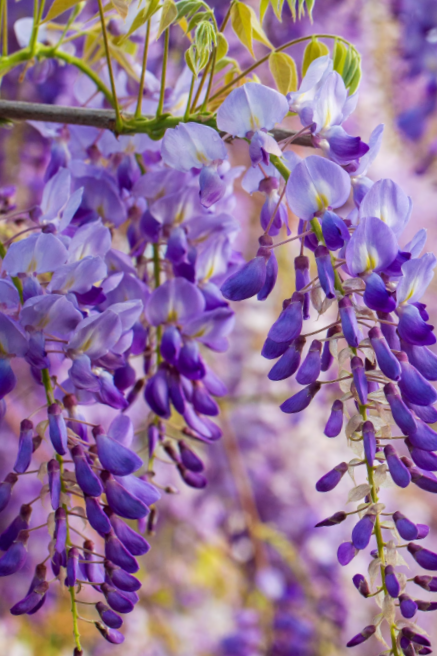
The familiar flowers are pea-shaped and grouped into hanging racemes. Colors include violet, lavender, blue-purple, mauve, pink, and white. Some cultivars are double-flowered or produce exceptionally long clusters.
Chinese Wisteria usually opens many flowers within a raceme at approximately the same time and often blooms before the leaves expand fully. Japanese Wisteria commonly opens flowers progressively from the top of the raceme downward and may bloom as leaves develop. These patterns are useful but not absolute in hybrids and cultivated selections.
American Wisteria generally flowers later, after foliage has developed, and has shorter, denser racemes. Silky Wisteria often has strongly fragrant, comparatively broad flowers in shorter clusters.
Fallen flowers can carpet patios, dog runs, lawns, ponds, gutters, and outdoor enclosures. A few flowers represent a different exposure from seeds, but piles of flowers should still be removed before animals eat them or encounter pesticide residue.
Pods and Seeds
After successful pollination, Wisteria develops flattened bean-like pods. Asian Wisteria pods are commonly velvety or hairy, while mature American Wisteria pods are generally smoother. Pod size, hairiness, and persistence vary among species and cultivars.
Each pod can contain several large flattened seeds. As pods mature, they dry, twist, split, and eject seeds. Seed dispersal may place the toxic material well beyond the vine’s visible canopy.
Pods may remain attached into autumn or winter. Dogs can pull them from low growth, children may collect them as pretend beans, birds may open them, and livestock may eat them in pruning debris or hay.
Seasonal Exposure Patterns
Spring and early summer bring young shoots, leaves, and abundant flowers. Pets may investigate fallen racemes or freshly pruned growth. Gardeners may also apply fertilizers, systemic insecticides, fungicides, or herbicides during this period.
Green pods develop after flowering. They may be partly hidden among foliage and can resemble edible pea or bean pods. A dog may chew several before the owner realizes fruit has formed.
Late summer through winter is the principal mature-seed period. Dry pods become conspicuous, rattle in wind, split, and scatter seeds beneath the vine. Dormant vines may still carry pods after the leaves fall.
Winter pruning creates woody debris containing overlooked pods. Seeds can remain in soil, gutters, roof valleys, patio cracks, leaf litter, storage bins, compost, and animal bedding after the visible pods are removed.
Twining Direction and Identification Limits
Pure Japanese Wisteria generally twines clockwise when viewed from above, while Chinese Wisteria generally twines counterclockwise. This well-known distinction can assist identification of cultivated plants.
American and Silky Wisteria have their own growth and floral characters, but twining direction alone does not identify toxin concentration. Naturalized hybrids may not conform neatly to a simple Chinese-versus-Japanese key.
Twining stems can tighten around trees, fencing, pipes, railings, and animal-enclosure wire. They can deform structures, trap limbs, create sharp broken supports, or pull trellises down when mature growth becomes heavy.
Old Homesites, Roadsides, and Naturalized Habitat
Wisteria often persists around abandoned houses, former gardens, cemeteries, farmsteads, old fences, parks, and woodland margins. Vines may spread into nearby trees and create large seed-producing colonies.
Dogs hiking through naturalized stands may encounter pods and seeds on trails or beneath trees. Horses and livestock may reach vines growing along fence lines, creek corridors, wooded pasture edges, or collapsed outbuildings.
Removal work can place normally elevated foliage and seed pods directly on the ground. Brush piles should be examined before animals gain access.
Wisteria and Golden Chain Tree
Golden Chain Tree, Laburnum species and hybrids, also belongs to Fabaceae and produces hanging flower clusters and bean-like pods. Its flowers are yellow rather than violet, blue, pink, or white.
Laburnum seeds contain cytisine-type quinolizidine alkaloids capable of causing vomiting, salivation, abdominal pain, agitation, weakness, tremors, seizures, cardiovascular abnormalities, respiratory failure, and death. A pod-bearing ornamental with yellow racemes should not be managed as ordinary Wisteria.
Wisteria and Black Locust
Black Locust, Robinia pseudoacacia, has pinnately compound leaves and hanging white flower clusters and produces flattened pods. It grows as a tree with paired spines near many leaf nodes rather than as a twining vine.
Black Locust bark, seeds, and other tissues contain toxic lectins and can cause severe gastrointestinal and systemic illness in livestock and companion animals. Exact identification matters because bark chewing and tree-pruning debris are common Black Locust exposures.
Wisteria and Kentucky Coffeetree
Kentucky Coffeetree, Gymnocladus dioicus, produces very large woody pods containing hard seeds surrounded by sticky pulp. It is an upright tree with enormous bipinnately compound leaves rather than a twining vine.
Its seeds and pulp contain toxic compounds capable of causing gastrointestinal and neurologic illness. Large pods and seeds can also obstruct the gastrointestinal tract. Do not assume that every brown legume pod beneath a landscape plant belongs to Wisteria.
Wisteria and Scarlet Wisteria
Scarlet Wisteria is usually Sesbania punicea, an unrelated but similarly pod-bearing member of Fabaceae. It is a shrub or small tree with orange-red pea-shaped flowers and long narrow pods.
Sesbania seeds can produce serious poisoning involving gastrointestinal, neurologic, and cardiovascular dysfunction. The common name Scarlet Wisteria is not evidence that the plant belongs to Wisteria.
Wisteria and Water Wisteria
Water Wisteria, Hygrophila difformis, is a soft aquatic or semiaquatic plant used in aquariums. It belongs to Acanthaceae and does not produce woody twining stems, hanging pea flowers, or bean-like pods.
An aquarium plant exposure should be assessed for fertilizer, algaecide, fish medication, contaminated water, and the actual aquatic species rather than assigned automatically to Wisteria seed toxicity.
Wisteria and Grape Vines
Wisteria and grape vines can both form large woody climbers over pergolas and fences. Grapes have palmately veined simple leaves, tendrils, and fleshy berries rather than pinnately compound leaves and legume pods.
Grapes and raisins can cause acute kidney injury in dogs through a different and unpredictable mechanism. An animal eating fruit beneath a mixed arbor may have both plant and food exposures.
Dogs and Pod-Seeking Behavior
Dogs are the companion animals most likely to chew Wisteria pods. Dry pods resemble sticks, crack audibly, and release large objects that roll or bounce. Some dogs repeatedly collect them as toys.
A dog may consume seeds after the pod has already opened, leaving no obvious plant evidence near the animal. Owners should inspect beneath the vine, inside the mouth, in vomit, and around favorite chewing locations.
Pruning creates access to leaves, bark, roots, pods, wire, ties, and pieces of trellis. A dog beside a collapsed arbor may have swallowed foreign material as well as plant tissue.
Cats and Climbing Exposure
Cats may climb Wisteria-covered pergolas, fences, and trees, bite young shoots, play with hanging pods, or chase seeds released onto a patio. Pollen, plant debris, herbicide, and pesticide may contaminate the paws and coat.
Bonsai Wisteria is especially accessible indoors. Its small pot does not indicate a less toxic plant, and bonsai displays may include fertilizer pellets, wire, moss, stones, fungicide, and systemic insecticide.
Horses and Equine Exposure
Horses may encounter Wisteria along fences, old barns, wooded pasture margins, farm entrances, gardens, or showground landscaping. Low shoots and fallen pruning material are more accessible than established canopy growth.
Pods and seeds may enter hay when vines grow into hedgerows or field margins. Horses cannot vomit, so colic, diarrhea, feed refusal, depression, and weakness may become the principal findings.
A mixed ornamental-pruning pile is particularly dangerous because Laburnum, Yew, Black Locust, Cherry Laurel, Oleander, Rhododendron, and other species may be present. Preserve the entire load rather than selecting one familiar vine.
Cattle, Sheep, Goats, Pigs, and Other Livestock
Goats may browse Wisteria foliage and bark readily, while cattle and sheep may consume wilted trimmings mixed with desirable vegetation. Pigs may root up crowns, chew pods, and crush seeds efficiently.
Livestock exposure is more likely after land clearing, storm damage, demolition of an old trellis, invasive-vine removal, or disposal of yard waste into a pasture. Animals should never be used to clean up an unidentified Wisteria infestation.
Group illness requires examination of all available plants, feed, water, pesticides, and debris. The first animal showing diarrhea may not have consumed the greatest amount.
Rabbits and Guinea Pigs
Wisteria leaves and flowers may be gathered accidentally with safe browse or offered because the vine belongs to the pea family. Membership in Fabaceae does not make a wild or ornamental legume edible.
Pods should not be used as rattles, chew toys, or enrichment. Seeds can be removed and eaten rapidly by small herbivores, and these animals cannot vomit.
Birds and Poultry
Parrots and other birds can split seed coats with their beaks and may receive a more complete internal-seed exposure than an animal swallowing a seed whole. Decorative pods and dried vines should not be placed in cages or aviaries.
Chickens, ducks, and other poultry may scratch through fallen pods, seeds, treated soil, and mulch beneath a vine. A vine overhanging a run can create repeated seasonal exposure.
Reptiles and Other Exotic Animals
Tortoises and herbivorous reptiles may sample low leaves or flowers in outdoor enclosures. Pigs, ferrets, rodents, and other exotic pets may open pods or dig around roots.
The lack of species-specific case reports is an evidence limitation, not proof of safety. Remove the entire plant and seek species-experienced guidance after seed ingestion or significant illness.
Nurseries, Garden Centers, and Greenhouses
Wisteria is sold as bare-root stock, grafted vines, container plants, standards, and bonsai. Dormant nursery plants may carry dry pods that are overlooked because no leaves or flowers are present.
Production plants may contain slow-release fertilizer, systemic insecticide, fungicide, herbicide, growth regulator, wire, bamboo stakes, plastic ties, grafting tape, and treated potting media. A chewed nursery plant is a mixed exposure until those products are identified.
Pruning, Training, and Trellis Work
Wisteria requires repeated pruning and training. Long shoots, leaves, flowers, pods, and seed-bearing branches may accumulate in large piles. Cut vines should be contained immediately rather than left on a lawn or beside a paddock.
Training systems use wire, hooks, screws, cable, chain, plastic ties, clips, and treated lumber. Dogs and livestock may swallow or become injured by these materials after a support collapses.
Thick vines can damage gutters, roofs, siding, fences, and trees. Mechanical injury, structural collapse, electrical contact, and entanglement may be more urgent than chemical poisoning during a major vine-removal incident.
Herbicide and Invasive-Vine Removal
Naturalized Asian Wisteria is often cut and treated with concentrated herbicide at the stump. Foliar sprays, basal-bark products, and cut-stem applications create chemical hazards in addition to the plant itself.
Wilted treated growth should not be fed or left in animal-accessible brush piles. Herbicide product, concentration, application date, treated area, and possible access should be recorded.
Seed Collection, Crafts, and Propagation
Gardeners may collect pods for propagation, seed exchanges, classroom projects, crafts, wreaths, jewelry, or decorative bowls. Dry pods can open unexpectedly and scatter seeds across floors and counters.
Seed-storage envelopes, jars, bags, propagation trays, and scarification tools should remain inaccessible. Sanding, nicking, soaking, or grinding seeds exposes internal material and increases handling risk.
Children and animals may mistake the seeds for beans, coins, candy, or game pieces. Label and secure all collections and vacuum the work area after opening pods.
Bonsai and Indoor Displays
Wisteria is grown as bonsai because old trunks, cascading flowers, and pods create a dramatic miniature tree form. Bonsai plants retain the same botanical tissues as full-sized vines.
Indoor displays place flowers, pods, seeds, moss, wire, fertilizer, stones, and pesticide within easy reach of cats, dogs, birds, and small mammals. Fallen material should be collected immediately.
Mixed Floral and Seasonal Displays
Wisteria racemes may be used in temporary floral displays, wedding decorations, photography settings, table arrangements, and garden-event installations. Cut stems may include leaves or immature pods.
Mixed displays can also contain lilies, foxglove, delphinium, hydrangea, ivy, yew, eucalyptus, floral preservative, wire, ribbon, foam, candles, and glass. Preserve the complete arrangement after exposure.
Diagnosis
No routine veterinary blood, urine, or stomach-content test confirms Wisteria ingestion or measures one definitive toxin. Diagnosis depends on plant identification, seed or pod evidence, maximum amount missing, timing, compatible gastrointestinal signs, and exclusion of look-alikes and foreign material.
Useful evidence includes intact compound leaves, flower racemes, green and dry pods, seeds, seed coats, bark, roots, nursery labels, cultivar tags, photographs, vomited material, feces, pruning debris, herbicide labels, and trellis components. Count seeds from every recovered pod.
Baseline laboratory evaluation after a significant exposure may include a complete blood count, packed-cell volume, total solids, electrolytes, glucose, kidney and liver values, acid-base status, lactate, urinalysis, and coagulation testing when gastrointestinal bleeding is present.
Imaging may be appropriate when hard seeds, woody pod fragments, wire, ties, stones, or support material are missing. Chest imaging may be needed after coughing, low oxygen, or respiratory deterioration following vomiting.
Differential Diagnosis
Golden Chain Tree and Black Locust are high-priority botanical differentials because they share compound leaves, pea-family flowers, and pods. Kentucky Coffeetree, Mescal Bean or Texas Mountain Laurel, Scarlet Wisteria, Lupine, and other legumes may also produce gastrointestinal or neurologic illness.
Castor Bean and Rosary Pea produce far more dangerous ribosome-inactivating toxins. Yew and Oleander can cause rapid cardiovascular collapse. Sago Palm can cause delayed liver failure, and grapes or raisins can cause kidney injury in dogs.
Vomiting and diarrhea also overlap with dietary indiscretion, foreign-body obstruction, pancreatitis, infection, spoiled food, mushrooms, pesticides, medication, cannabis, nicotine, and xylitol. A Wisteria vine in the yard does not prove that it caused every illness.
Veterinary Evaluation
The veterinarian may assess oral injury, hydration, abdominal pain, temperature, pulse quality, heart rate and rhythm, blood pressure, respiratory effort, oxygenation, neurologic status, urine production, and evidence of gastrointestinal bleeding.
Serial packed-cell volume, protein, electrolytes, glucose, acid-base measurements, kidney values, and blood pressure may be needed during repeated vomiting or diarrhea. Continued hematemesis or black stool may justify coagulation testing, abdominal imaging, endoscopy, or more intensive monitoring.
Weakness, agitation, collapse, or respiratory complaints require a broader toxicology evaluation rather than assumption that dehydration is the only cause. The complete plant and exposure scene should remain available for reidentification.
Prognosis
The prognosis is generally good after limited leaf or flower exposure and after seed ingestion treated before severe fluid loss or complications develop. Many documented human patients recovered with supportive care.
The outlook becomes more guarded with numerous chewed seeds, repeated hematemesis, profuse diarrhea, severe dehydration, persistent hypotension, altered awareness, aspiration pneumonia, or a swallowed foreign body. Exposure to a more dangerous pod-bearing look-alike changes the prognosis entirely.
Prevention
Remove pods before they mature whenever practical, especially over dog yards, patios, playgrounds, poultry runs, paddocks, and animal walkways. Collect fallen pods and seeds throughout autumn and winter rather than waiting for one annual cleanup.
Keep pruning debris, bonsai material, propagation seeds, nursery plants, and herbicide-treated vines in closed animal-proof areas. Do not use pods or vines as pet toys, cage decoration, forage, chew material, or livestock browse.
Support mature vines securely and inspect trellises, wires, pergolas, and fences for failure. Prevent animals from accessing debris during pruning, demolition, storm cleanup, and invasive-vine removal.
Choose pod-reduced cultivars or non-Wisteria alternatives where repeated seed access cannot be controlled, but do not represent sterility as proof that the remaining plant is edible. Native American Wisteria may reduce ecological invasion risk but should still be managed as a potentially poisonous pod-bearing plant.
Immediate Steps After Exposure
- Stop further access: Remove the animal from the vine, pods, seeds, pruning debris, nursery plant, bonsai, brush pile, or mixed landscaping material.
- Preserve the complete plant: Save leaves, flowers, green pods, dry pods, seeds, bark, roots, cultivar labels, photographs, and vomited fragments.
- Count seeds carefully: Open recovered pods, count remaining seeds, inspect the ground, and report the greatest number that could be missing.
- Record the timing: Note the earliest and latest possible access and when drooling, vomiting, diarrhea, pain, weakness, or behavioral changes began.
- Identify mixed hazards: Preserve herbicide, pesticide, fertilizer, mulch, wire, trellis pieces, ties, plastic, stones, and other plants.
- Contact a professional promptly: Known seed ingestion or a chewed pod with missing seeds deserves veterinary or animal poison-control assessment before signs develop.
Do not wait for vomiting after a confirmed seed ingestion. Clinical cases show that a small number of raw seeds can cause substantial illness, and the opportunity for safe professional decontamination decreases with time.
Confirm That the Plant Is Wisteria
- Look for compound leaves: Wisteria has multiple leaflets along one central rachis.
- Look for twining woody stems: Mature vines wrap around supports rather than forming an ordinary upright tree trunk without training.
- Preserve the flowers: Hanging violet, blue-purple, pink, or white pea-shaped racemes assist identification.
- Preserve the pods: Wisteria pods are flattened and bean-like; Asian species commonly have velvety pods.
- Check yellow-flowered plants: A yellow hanging raceme raises concern for Golden Chain Tree and cytisine poisoning.
- Do not rely on an application alone: Naturalized Asian hybrids and incomplete fragments can defeat photograph-based identification.
Remove Loose Material From the Mouth
- Wear gloves: Plant residue, pesticides, herbicides, and sharp pod fragments may be present.
- Remove only visible loose pieces: Carefully lift accessible seeds, pod fragments, leaves, or bark from the lips and front of the mouth.
- Avoid blind finger sweeps: Do not push a seed, pod, wire, or woody fragment deeper into the throat.
- Do not crush recovered seeds: Preserve them intact for counting and identification.
- Stop if the animal struggles: Abdominal pain and nausea can make even a gentle animal bite.
Do Not Induce Vomiting at Home
- Do not give hydrogen peroxide automatically: It can worsen vomiting, gastritis, esophageal injury, dehydration, and aspiration risk.
- Never give hydrogen peroxide to a cat: It can cause serious feline gastric and esophageal injury.
- Do not use salt, mustard, dish soap, oil, ipecac, or manual gagging: These methods can produce an additional poisoning or injury.
- Do not induce vomiting after symptoms begin: Repeated vomiting, blood, weakness, depression, abnormal breathing, ataxia, or poor swallowing makes emesis unsafe.
- Do not induce vomiting after foreign-material ingestion: Wire, trellis fragments, sharp pods, ties, plastic, and stones can damage the esophagus.
- Allow veterinarian-selected emesis only: A veterinarian may consider controlled emesis in a recently exposed, fully alert, asymptomatic dog after assessing the seed count, timing, airway, and foreign-body risk.
Activated Charcoal
- Do not give charcoal at home: A vomiting, weak, depressed, coughing, or poorly swallowing animal can aspirate it.
- Do not use barbecue charcoal or ash: Household charcoal products are not medical activated charcoal.
- Do not add an owner-selected cathartic: Diarrhea and dehydration may already be developing.
- Professional use is case-specific: A veterinarian may consider activated charcoal after a recent seed exposure when the airway and gastrointestinal condition permit it.
- Charcoal is not an antidote: It cannot reverse gastrointestinal injury, dehydration, bleeding, aspiration, or an obstructing pod fragment.
Do Not Give Food, Oil, Milk, or Other Home Remedies
- Do not give milk, yogurt, bread, eggs, or cheese: Food does not neutralize lectins, canavanine, or unidentified seed constituents.
- Do not give cooking oil or mineral oil: Oil may provoke vomiting or enter the lungs.
- Do not force food: Severe nausea, abdominal pain, or abnormal swallowing makes feeding unsafe.
- Do not give human antidiarrheal medication: Loperamide, bismuth products, and similar drugs may be inappropriate for the species or condition.
- Do not give human pain medication: Ibuprofen, naproxen, aspirin, and acetaminophen can cause additional poisoning.
- Do not give leftover veterinary drugs: Antiemetics, antibiotics, sedatives, steroids, and gastrointestinal medication require patient-specific selection.
Water and Hydration
- Do not syringe water: Forced fluid can enter the lungs and cannot correct significant dehydration.
- Offer only cautious access when safe: The animal must be fully alert, swallowing normally, and not vomiting repeatedly.
- Prevent rapid drinking: Gulping a large volume may trigger additional vomiting.
- Remove contaminated water: Bonsai trays, plant saucers, buckets, and floral containers may contain fertilizer, pesticide, or plant debris.
- Seek fluids professionally: Repeated vomiting or diarrhea often requires veterinarian-selected fluid therapy rather than continued oral attempts.
Skin, Coat, and Paw Exposure
- Remove visible plant material: Lift leaves, flowers, pod hairs, seeds, and soil from the coat.
- Wash stable animals gently: Use lukewarm water and mild pet-safe shampoo when herbicide or pesticide is not suspected.
- Prevent grooming: Plant and chemical residue on the paws or coat may be swallowed.
- Preserve product labels: Herbicide-treated vines require product-specific decontamination advice.
- Do not use solvents: Alcohol, petroleum products, bleach, essential oils, and concentrated detergents can create additional injury.
Eye Exposure
- Begin irrigation promptly: Flush the affected eye with sterile saline or clean lukewarm water for approximately 15 to 20 minutes.
- Use gentle pressure: Allow fluid to flow across the eye without forcing debris into the tissue.
- Prevent rubbing: Pod hairs, bark, soil, and self-trauma can damage the cornea.
- Do not use human redness drops: Topical anesthetics, steroid drops, and leftover prescriptions may worsen or conceal injury.
- Seek care for continuing signs: Squinting, cloudiness, discharge, swelling, or apparent visual change requires examination.
Recognize an Emergency
- Known seed ingestion: Do not wait for illness when one or more seeds may have been swallowed.
- Repeated vomiting: Inability to retain water can cause rapid dehydration and aspiration.
- Bloody vomit or stool: Gastrointestinal bleeding requires circulation, red-cell, and coagulation assessment.
- Severe abdominal pain: Persistent guarding, rolling, distention, or repeated unproductive retching requires immediate care.
- Weakness or collapse: Low blood pressure, electrolyte disturbance, blood loss, or another toxin may be present.
- Altered behavior or incoordination: Confusion, agitation, ataxia, tremors, or reduced responsiveness requires broader toxicologic evaluation.
- Abnormal breathing: Coughing after vomiting, rapid or labored breathing, blue-gray gums, or open-mouth breathing requires emergency care.
- Possible foreign body: Missing wire, ties, pod fragments, trellis material, stones, or plastic with persistent vomiting or pain requires imaging.
Safe Transportation
- Keep the animal quiet: Limit exertion, excitement, and unnecessary handling.
- Do not muzzle a vomiting animal: A muzzle can trap vomit and interfere with breathing.
- Use a secure carrier or crate: Weak or dizzy animals require protection from falls.
- Position for easy breathing: Do not force a respiratory patient flat when it breathes more comfortably upright.
- Bring the evidence: Transport seeds, pods, leaves, labels, photographs, vomit, and associated chemical products safely.
- Call ahead: Report the maximum missing seed count, current symptoms, and estimated arrival time.
Veterinary Decontamination
A veterinarian may induce vomiting in a carefully selected dog after a recent seed ingestion when the patient is fully alert, has no clinical signs, and has no important aspiration or foreign-body risk. Cats, horses, livestock, rabbits, guinea pigs, birds, and reptiles should not undergo routine vomiting induction.
Gastric lavage may be considered after a substantial recent exposure when the animal is anesthetized, intubated, and appropriately monitored. Hard seeds and fibrous pod material may be difficult to recover completely, and the risks must be weighed against the expected benefit.
Activated charcoal may be used when the airway is protected and gastrointestinal function permits it. There is no evidence that repeated charcoal should be administered mechanically in every Wisteria case.
Fluid and Electrolyte Treatment
Intravenous or other veterinarian-selected fluids may be required to replace vomiting and diarrhea losses, restore circulating volume, maintain kidney perfusion, and correct measured electrolyte or acid-base abnormalities.
Fluid treatment must be individualized in very young animals, birds, small mammals, and patients with heart, kidney, or respiratory disease. Persistent hypotension may require additional cardiovascular support after dehydration has been addressed.
Control of Vomiting and Gastrointestinal Injury
Veterinarian-selected anti-nausea medication can reduce repeated vomiting, fluid loss, esophageal injury, and aspiration risk. Gastrointestinal protectants and acid suppression may be considered when hematemesis, gastritis, or esophagitis is suspected.
Analgesia may be required for substantial abdominal pain. Human pain relievers are not appropriate substitutes. Persistent bleeding, severe pain, abdominal distention, or failure to improve may justify imaging or endoscopy.
Monitoring for Bleeding and Circulatory Complications
Repeated packed-cell volume, total solids, blood pressure, pulse quality, lactate, electrolytes, and coagulation values may be appropriate after hematemesis, bloody diarrhea, pallor, or collapse. Blood products may be required if clinically important hemorrhage develops.
Weakness and fainting-like episodes require evaluation of hydration, glucose, oxygenation, circulation, rhythm, and alternative toxicants rather than assumption that the animal is merely tired after vomiting.
Respiratory and Neurologic Support
Coughing or abnormal breathing after vomiting may require oxygen, chest imaging, suctioning, airway support, and monitoring for aspiration pneumonia. Antibiotics are not automatic after every aspiration event but may be selected when bacterial infection becomes likely.
Agitation, ataxia, tremors, seizures, or reduced awareness requires glucose measurement, electrolyte and acid-base assessment, temperature monitoring, and treatment with veterinarian-selected sedatives or anticonvulsants when indicated.
Horses and Livestock
- Remove the entire group from the source: Prevent continued browsing and isolate contaminated hay, brush, or pruning debris.
- Do not attempt vomiting: Horses and ruminants must never receive household emetics.
- Do not drench a symptomatic animal: Colic, weakness, salivation, or abnormal swallowing increases aspiration risk.
- Inspect the full debris pile: Golden Chain Tree, Yew, Black Locust, Oleander, and other poisonous plants may be mixed with Wisteria.
- Preserve representative material: Save leaves, flowers, pods, seeds, bark, feed, and photographs.
- Monitor every exposed animal: Intake may vary considerably within a herd or flock.
Large-animal treatment may include gastrointestinal examination, fluids, pain control, correction of electrolyte abnormalities, management of colic or diarrhea, activated charcoal when appropriate, and cardiovascular monitoring. Severe neurologic or cardiac signs should prompt immediate reconsideration of the botanical diagnosis.
Rabbits, Guinea Pigs, Birds, and Other Exotics
- Do not attempt vomiting: Household emesis is unsafe or physiologically impossible in these species.
- Seek immediate advice after seed ingestion: Small body size makes uncertain seed exposure important.
- Monitor eating and fecal production: Reduced intake or stool can become a secondary emergency.
- Prevent further chewing: Remove pods, seeds, cage decorations, and contaminated browse.
- Monitor breathing and balance: Weakness, regurgitation, tremors, abnormal posture, or respiratory change requires urgent care.
- Bring enclosure material: Substrate, fertilizer, pesticide, wire, and mixed plants may contribute to illness.
Monitoring and Recovery
- Monitor vomiting and diarrhea: Episodes should decrease rather than become more frequent or bloody.
- Monitor hydration: Gum moisture, urine production, strength, and interest in water should normalize.
- Monitor abdominal comfort: Guarding, distention, rolling, or persistent pain requires reassessment.
- Monitor awareness and gait: Weakness, dizziness-like behavior, ataxia, or collapse should not progress.
- Monitor breathing: Coughing, fever, rapid respiration, or renewed lethargy may indicate aspiration.
- Monitor fecal passage: Absent stool or recurrent vomiting may indicate a seed, pod, wire, or other foreign body.
Recovery means that vomiting and diarrhea have stopped, hydration and circulation remain stable, the animal eats and drinks appropriately, abdominal pain has resolved, gait and awareness are normal, and no respiratory or foreign-body complication is developing.
Prevention and Prognosis
- Remove mature pods: Prune and collect them before they dry and scatter seeds.
- Search beyond the vine: Seeds can be ejected into patios, gutters, lawns, animal pens, and neighboring areas.
- Contain pruning debris: Bag or otherwise secure all pod-bearing branches immediately.
- Secure propagation material: Store seed collections, bonsai tools, and nursery plants in animal-proof areas.
- Inspect support structures: Prevent collapse of trellises, wires, and heavy woody vines into animal areas.
- Typical prognosis: Early recognized exposures without major fluid loss, bleeding, aspiration, or obstruction usually have a favorable outcome.
- Guarded prognosis: Numerous crushed seeds, severe hematemesis, shock, aspiration pneumonia, major neurologic signs, or a more toxic look-alike requires intensive care.
Frequently Asked Questions About Wisteria and Animal Poisoning
Is Wisteria poisonous to dogs?
Yes. Dogs may develop drooling, repeated vomiting, severe abdominal pain, diarrhea, depression, weakness, and sometimes blood in vomit or stool after eating Wisteria. Seeds and pods are the most concerning directly documented parts because even very small seed exposures have caused substantial illness in people. A chewed pod with missing seeds requires immediate veterinary or animal poison-control guidance even when the dog initially appears normal.
Is Wisteria poisonous to cats?
Yes. Cats may vomit, develop diarrhea, hide, stop eating, become weak, or show abdominal discomfort after chewing the plant or playing with pods and seeds. Direct feline case literature is limited, so no safe seed or plant amount is established. Continued anorexia is especially important because prolonged inadequate intake can cause serious secondary metabolic disease in cats.
Is Wisteria poisonous to horses?
Wisteria should not be offered to horses or allowed to contaminate hay and pruning piles. Horses cannot vomit, so colic, feed refusal, diarrhea, depression, weakness, and reduced gastrointestinal motility may be more prominent than the repeated vomiting seen in people and dogs. Severe neurologic or cardiovascular findings require investigation for Golden Chain Tree, Black Locust, Yew, or another plant mixed with the Wisteria.
Is Wisteria poisonous to cattle, sheep, goats, and pigs?
All livestock should be prevented from eating Wisteria foliage, pods, seeds, bark, roots, or pruning debris. Goats and pigs may chew pods or crush seeds particularly effectively, while cattle and sheep may consume wilted material mixed with forage. Salivation, abdominal pain, diarrhea, feed refusal, depression, and weakness require veterinary assessment. Group illness should prompt identification of every plant and chemical in the debris.
Is Wisteria dangerous to rabbits, guinea pigs, birds, or reptiles?
It should remain inaccessible to these animals. Rabbits and guinea pigs cannot vomit and may develop food refusal, abdominal pain, diarrhea, reduced fecal production, and gastrointestinal stasis. Birds can split the hard seed coat with their beaks, potentially exposing the internal seed tissue efficiently. Limited species-specific evidence does not establish a safe amount for any exotic animal.
What part of Wisteria is most poisonous?
Seeds and pods carry the strongest direct poisoning evidence and should be treated as the greatest practical hazard. Wisteria seed ingestion has caused rapid severe vomiting, abdominal pain, hematemesis, diarrhea, dizziness, confusion, and collapse-like episodes in documented cases. Leaves, flowers, bark, roots, and stems are less precisely characterized but should still remain inaccessible. No tissue-by-tissue safe-dose comparison exists for domestic animals.
How many Wisteria seeds are poisonous?
No safe number has been established. In documented human cases, half of one raw Japanese Wisteria seed caused gastrointestinal symptoms in a child, while adults became ill after ingesting one or several seeds. Animal body size, species, seed maturity, chewing, and plant chemistry differ, so those observations cannot be converted into a universal pet dose. Any known swallowed seed deserves prompt professional assessment.
What toxins are present in Wisteria seeds?
Wisteria seeds contain directly characterized carbohydrate-binding lectins, including Wisteria floribunda agglutinin, and are associated with the nonprotein amino acid canavanine. Additional seed constituents may contribute to the clinical syndrome. The older toxin name wisterin or wistarin is repeated widely but is not consistently defined in modern exact-species chemistry. Wisteria seed poisoning is therefore best described as exposure to a biologically active seed mixture rather than one proven molecule.
What is Wisteria floribunda agglutinin?
Wisteria floribunda agglutinin is a lectin purified from Japanese Wisteria seeds. It binds particular carbohydrate structures and is widely used as a laboratory probe in glycobiology, histology, cancer research, and neuroscience. Its presence confirms that the seed contains active carbohydrate-binding proteins. A controlled study has not shown that this one purified lectin alone causes every symptom of natural Wisteria seed poisoning.
Is Wisteria lectin the same as ricin?
No. Ricin is a ribosome-inactivating protein from Castor Bean with an enzymatic toxin chain capable of severe systemic cellular injury. Wisteria floribunda agglutinin is characterized primarily as a carbohydrate-binding legume lectin. Wisteria seed poisoning can be severe, especially through fluid loss and gastrointestinal injury, but it should not be described automatically as ricin poisoning. A suspected Castor Bean exposure is a separate and potentially more dangerous emergency.
What is wisterin?
Wisterin, wistarin, and wistarine are older toxin names used inconsistently in plant-poisoning references. Some sources call the substance a glycoside, others a saponin-like compound, and others compare it with an alkaloid. Modern exact-species literature does not provide one consistently characterized molecule matching all of those descriptions. The uncertainty concerns the name and chemistry, not the reality of Wisteria seed poisoning.
Does Wisteria contain canavanine?
Wisteria is associated with canavanine-containing legumes, and canavanine is relevant particularly to seed chemistry. It resembles arginine and may be incorporated into proteins incorrectly, producing abnormal protein function. Its presence may contribute to toxicity, but the rapid gastrointestinal syndrome cannot be attributed confidently to canavanine alone. Lectins and other seed constituents remain important.
Can one Wisteria seed poison a dog?
One seed can be clinically important, particularly in a small dog or when the seed was crushed thoroughly. Human cases demonstrate that one or even part of one seed can produce significant symptoms, although dogs cannot be assumed to respond identically. The seed should be counted as potentially swallowed unless it is recovered intact. Do not wait for vomiting before obtaining guidance.
Is an intact swallowed Wisteria seed less dangerous?
An intact hard seed coat may reduce release of internal material compared with a crushed seed, but it does not guarantee safety. Chewing damage may be difficult to see, stomach and intestinal transit may alter the coat, and not every swallowed seed can be recovered. The hard seed may also contribute to obstruction in a very small animal. Professional assessment should use the maximum possible exposure rather than an assumption that the coat remained sealed.
Are Wisteria pods poisonous when the seeds are gone?
An empty pod is generally less concerning than a pod containing chewed seeds, but it is not an appropriate chew toy. Fibrous pod material may cause gastrointestinal irritation, choking, or foreign-body problems, and small seed remnants can remain inside. The pod may also carry pesticide, herbicide, mold, or decorative chemicals. Preserve it and verify whether every seed is accounted for.
Are Wisteria flowers poisonous?
Flowers are not supported by the same direct severe-poisoning evidence as seeds, but they should not be fed to animals. Culinary claims involve selected species, preparation traditions, and human use and do not establish raw veterinary safety. Fallen flowers may include stems, young pods, leaves, pesticides, and insects. A small flower exposure can be assessed proportionately, but intentional feeding is inappropriate.
Are Wisteria leaves poisonous?
Leaves are considered potentially toxic, although exact comparative concentrations and direct clinical evidence are much less complete than for seeds. One exploratory leaflet bite is not automatically equivalent to seed ingestion. Substantial foliage consumption, repeated vomiting, diarrhea, depression, or weakness still requires veterinary guidance. Pruned leaves may also carry herbicide, pesticide, or mixed poisonous plants.
Are Wisteria roots and bark poisonous?
Roots and bark should not be treated as safe chew material. Direct dose-response evidence is limited, but the whole plant is regarded as potentially toxic and concentrated extracts of several tissues are biologically active. Root and bark exposure also commonly includes soil, herbicide, fertilizer, wire, treated wood, and foreign material. Digging dogs and livestock should be prevented from accessing uprooted crowns and vines.
Is American Wisteria safer than Chinese or Japanese Wisteria?
American Wisteria is often preferred because it is native and generally less invasive, but native status does not establish edible or pet-safe seeds. It produces bean-like pods and seeds and should receive the same basic exposure precautions. Exact comparative veterinary toxin concentrations among all four accepted species are unavailable. No Wisteria species should be used as animal forage or pod enrichment.
Is Kentucky Wisteria poisonous?
Kentucky Wisteria is currently classified as Wisteria frutescens subsp. macrostachya. It should be treated as potentially poisonous, especially its pods and seeds. Cultivars such as ‘Blue Moon’ do not have a demonstrated toxin-free status. Reduced invasiveness or regional nativity does not prove veterinary safety.
Are sterile or seedless Wisteria cultivars safe?
Reduced seed production lowers the opportunity for seed poisoning but does not make the entire plant edible. A cultivar may occasionally produce pods, a grafted rootstock may flower separately, and leaves, bark, roots, and flowers remain incompletely characterized. Sterility is a reproductive trait rather than a toxicology test. Fallen plant material should still be removed from animal areas.
Are white or pink Wisteria cultivars safer?
No safety distinction has been established from flower color. White, pink, lavender, violet, blue-purple, and double-flowered cultivars remain members or hybrids of the same pod-producing genus. Flower pigmentation does not show whether seed lectins, canavanine, or other defensive constituents are absent. Use the same precautions for every color.
How quickly do Wisteria symptoms begin?
Symptoms after seed ingestion may begin within approximately fifteen to thirty minutes, but onset can also take several hours. Vomiting and abdominal pain are usually the earliest prominent findings. The timing depends on seed quantity, chewing, stomach contents, animal species, and individual susceptibility. A normal first hour does not exclude poisoning.
Can Wisteria cause bloody vomiting?
Yes. Hematemesis has been documented after Wisteria seed ingestion. Blood may result from direct gastrointestinal inflammation, forceful retching, or injury to the stomach or esophagus. Bright blood, coffee-ground material, black stool, pallor, weakness, or collapse requires immediate veterinary care. Serial red-cell, protein, circulation, and coagulation assessment may be needed.
Can Wisteria cause seizures?
Seizures are not the defining or most consistently documented Wisteria syndrome. Significant dizziness, confusion, agitation, weakness, and fainting-like episodes have occurred in human cases, but persistent seizures should broaden the diagnosis. Golden Chain Tree, Black Locust, pesticides, mushrooms, nicotine, medications, and other toxins may be more likely causes of prominent neurologic disease. Any seizure is an emergency.
Can Wisteria cause kidney or liver failure?
Primary kidney or liver failure is not the best-established ordinary Wisteria presentation. Severe dehydration, low blood pressure, gastrointestinal bleeding, aspiration, or another toxin can secondarily injure organs. Rising kidney or liver values should therefore be investigated rather than assigned automatically to a traditional “wisterin” mechanism. Identification of the exact plant remains essential.
Is Wisteria the same as Golden Chain Tree?
No. Golden Chain Tree belongs to Laburnum and has hanging yellow flowers, while Wisteria generally has violet, blue, pink, or white racemes. Laburnum seeds contain cytisine-type alkaloids that can produce vomiting, agitation, tremors, seizures, cardiovascular abnormalities, and respiratory failure. A yellow-flowered pod-bearing ornamental requires immediate exact identification and should not be managed as ordinary Wisteria.
Is Wisteria the same as Black Locust?
No. Black Locust is an upright tree with pinnately compound leaves, white flower clusters, flattened pods, and commonly paired spines near leaf nodes. It contains toxic lectins in bark, seeds, and other tissues and can cause serious gastrointestinal and systemic poisoning. Wisteria is a twining woody vine. Preserve the bark, stems, leaves, flowers, and pods when the identity is uncertain.
Is Water Wisteria poisonous in the same way?
Water Wisteria is usually Hygrophila difformis, an unrelated aquarium plant. It does not produce Wisteria’s woody twining vines, pea-shaped racemes, pods, or large seeds. An aquarium exposure should be assessed for the actual aquatic plant, fertilizer, algaecide, medication, and water chemistry. The shared common name does not establish shared toxins.
Are dried Wisteria pods still poisonous?
Yes. Drying does not make the seeds safe, and mature dry pods are the main source of scattered seeds. Pods can persist through winter, split suddenly, and eject seeds away from the vine. Dried material may also contain mold, herbicide, wire, glue, or preservatives. Collect pods before they open and continue searching for loose seeds afterward.
Does cooking make Wisteria seeds safe?
Wisteria seeds should never be prepared as food. Heat may alter some lectins, but the result depends on hydration, temperature, duration, and penetration into the seed. Canavanine and incompletely characterized seed compounds may respond differently. Boiling, roasting, soaking, sprouting, fermenting, or grinding does not provide a validated animal-safe preparation.
Should vomiting be induced after Wisteria seed ingestion?
Do not induce vomiting at home. Hydrogen peroxide, salt, mustard, dish soap, oil, ipecac, and manual gagging can worsen gastrointestinal injury or cause aspiration. A veterinarian may consider controlled emesis in a recently exposed, fully alert, asymptomatic dog after reviewing the seed count and foreign-body risk. Cats, horses, livestock, rabbits, guinea pigs, birds, reptiles, and symptomatic animals should not receive household emetics.
Does activated charcoal help?
A veterinarian may consider activated charcoal after a recent seed exposure when the animal can protect its airway and gastrointestinal function permits treatment. It should not be forced at home into an animal that is vomiting, weak, depressed, coughing, or swallowing abnormally. Charcoal cannot reverse established dehydration, bleeding, aspiration, or obstruction. Its use is part of case-specific professional care rather than a universal antidote.
Is there an antidote for Wisteria poisoning?
No specific antidote has been established. Treatment focuses on early professional decontamination when appropriate, control of vomiting, fluid and electrolyte replacement, pain management, gastrointestinal protection, blood-pressure support, and monitoring for bleeding, aspiration, and foreign material. Severe neurologic or cardiovascular abnormalities require investigation for a look-alike or mixed exposure. Most uncomplicated cases recover with timely supportive care.
Is there a blood or urine test for Wisteria poisoning?
No routine clinical assay confirms Wisteria ingestion or measures one definitive toxin. Diagnosis relies on seed and pod evidence, plant identification, exposure timing, compatible gastrointestinal signs, and exclusion of other plants and chemicals. Blood and urine testing can measure dehydration, electrolyte loss, glucose, kidney and liver function, blood loss, and complications. Imaging may be needed when seeds, pod fragments, wire, or trellis material are missing.
Which signs require immediate emergency care?
Known seed ingestion, a chewed pod with missing seeds, repeated vomiting, bloody vomit or stool, severe abdominal pain, inability to retain water, pale gums, weakness, collapse, altered awareness, tremors, or abnormal breathing requires immediate care. Coughing after vomiting may indicate aspiration. Bring the vine, pods, seeds, labels, photographs, vomited material, and every associated chemical or foreign object.
How long does Wisteria poisoning last?
Many uncomplicated cases improve during the first one to two days with appropriate supportive care, but no exact animal recovery period is established. Severe dehydration, gastrointestinal bleeding, aspiration, or foreign-body complications can extend treatment. Fatigue and dizziness persisted for several additional days in one documented human case. Continued vomiting, weakness, abdominal pain, or coughing requires reassessment.
What is the prognosis after Wisteria exposure?
The prognosis is generally good after a limited exposure treated before severe fluid loss or complications develop. It becomes more guarded after numerous crushed seeds, persistent hematemesis, profuse diarrhea, hypotension, aspiration pneumonia, or swallowed wire and woody material. Severe neurologic or cardiovascular disease may indicate a different pod-bearing plant and should be prognosed according to the confirmed toxin.
How can Wisteria poisoning be prevented?
Remove pods before they dry, collect fallen pods and seeds throughout autumn and winter, and search beyond the vine because seeds may be ejected several feet away. Keep pruning debris, bonsai plants, propagation seeds, nursery stock, and herbicide-treated vines outside animal access. Never use pods as toys or seeds as craft material around pets. Native, sterile, white-flowered, and compact cultivars still require appropriate precautions.