Brunfelsia Neurotoxicity, Tremors, Strychnine-Like Seizures, Seasonal Leaf Toxicity, Berries, Seeds, and Species-Name Confusion
Is Yesterday, Today, Tomorrow Poisonous to Dogs, Cats, Horses, and Livestock?
Yes—Yesterday, Today, Tomorrow identified on this page as Brunfelsia uniflora is poisonous to dogs, cats, horses, livestock, donkeys, sheep, goats, cattle, rabbits, guinea pigs, birds, reptiles, and other animals. This is a serious neurotoxic Brunfelsia, not a harmless flowering shrub. Direct experimental poisoning has confirmed severe diarrhea and convulsions in sheep and donkeys after eating flowering-season B. uniflora leaves, and direct mouse work with B. uniflora leaf fractions showed neurologic toxicity from alkaloid-, flavonoid-, and saponin-rich extracts. Related Brunfelsia species contain neuroactive compounds such as brunfelsamidine and hopeanine and have caused severe canine poisoning, prolonged seizures, and death.
Exposure may begin with drooling, vomiting, diarrhea, coughing, gagging, sneezing, anxiety, restlessness, vocalization, hypersensitivity, or lethargy, then progress to facial twitching, tremors, ataxia, rigidity, paddling, opisthotonus, disorientation, abnormal temperature, repeated tonic-clonic seizures, respiratory distress, collapse, coma, and death. Berries, seedpods, seeds, roots, and flowering-season foliage deserve especially urgent handling, but all parts of a Brunfelsia should be treated as toxic. Because the common name Yesterday, Today, Tomorrow is also widely applied to Brunfelsia pauciflora and Brunfelsia australis, any shrub sold or identified under that name should be treated as potentially dangerous until a veterinarian, toxicologist, or botanist has identified the plant.
About this guide: This page provides general pet-poisoning information and cannot diagnose or treat an individual animal. For any suspected exposure, contact a veterinarian or animal poison-control service immediately. Do not induce vomiting, give medication, or attempt home decontamination unless directed by a veterinary professional.
Yesterday, Today, Tomorrow
Brunfelsia uniflora (Pohl) D.Don
Important botanical synonyms and historical names include:
- Franciscea uniflora Pohl
- Brunfelsia hopeana (Hook.) Benth.
- Brunfelsia hopeana var. pubescens Benth.
- Brunfelsia mutabilis (H.Jacq.) Vilm.
- Brunfelsia uniflora var. pubescens (Benth.) R.E.D.Baker
- Brunfelsia uniflora f. typica Hassl.
- Franciscea hopeana Hook.
- Franciscea mutabilis H.Jacq.
- Martia opifera Lacerda ex J.A.Schmidt
Important non-synonym confusion names:
- Brunfelsia pauciflora (Cham. & Schltdl.) Benth. — the species most often sold horticulturally as Yesterday, Today, Tomorrow, Morning-Noon-and-Night, Kiss-Me-Quick, Brazil Raintree, Franciscan Rain Tree, or Brunfelsia calycina material
- Brunfelsia australis Benth. — Paraguay Jasmine or Yesterday, Today, Tomorrow in Australia, the United States, and other markets; separate accepted species with published canine poisoning reports
- Brunfelsia americana L. — Lady-of-the-Night in many references; separate Caribbean species with long-tubed fragrant flowers
- Brunfelsia grandiflora D.Don — medicinal Brunfelsia species from which brunfelsamidine was isolated; not the accepted name for this page
- Brunfelsia bonodora and older Australian names — historical names associated in later treatments with B. australis or related material, not automatic synonyms of B. uniflora
The common name Yesterday, Today, Tomorrow does not identify one species reliably. This page retains the PAWS page title while treating Brunfelsia uniflora as the controlling scientific name for this record.
Solanaceae
Commonly called the Nightshade family.
Yesterday, Today, Tomorrow; Yesterday-Today-and-Tomorrow; Yesterday Today and Tomorrow; Manacá; Manaca; Manacá-de-Cheiro; Manaca-de-Cheiro; Manacá-de-Jardim; Manaca-de-Jardim; Manacá-de-Jardim-Anão; Perfume Lady; Vegetable Mercury; Mercury Plant; Brunfelsia; Brunfelsia uniflora; Brunfelsia hopeana; Brunfelsia mutabilis; Franciscea uniflora; Franciscea hopeana.
Scientific and historical search names include Brunfelsia uniflora (Pohl) D.Don, Franciscea uniflora Pohl, Brunfelsia hopeana (Hook.) Benth., Brunfelsia hopeana var. pubescens, Brunfelsia mutabilis, Brunfelsia uniflora var. pubescens, Franciscea hopeana, Franciscea mutabilis, and Martia opifera.
Naming caution: Morning-Noon-and-Night, Kiss-Me-Quick, Brazil Raintree, Franciscan Rain Tree, the misspelling Fransiscan Rain Tree, and Yesterday, Today, Tomorrow are more strongly associated with Brunfelsia pauciflora in many horticultural references. Yesterday, Today, Tomorrow is also widely applied to Brunfelsia australis, especially in Australia and the United States. Lady-of-the-Night is used for several fragrant Brunfelsia species, especially Brunfelsia americana, and also for unrelated night-blooming plants. A nursery label using only the common name does not establish the species.
A Complex Brunfelsia Neurotoxin Mixture
The toxic chemistry of Brunfelsia uniflora is more complex than a two-compound list. Brunfelsamidine and hopeanine are the best-known Brunfelsia neurotoxins, but neither has been established as the only active principle in this particular species. Direct research on B. uniflora leaves has confirmed alkaloid-, flavonoid-, and saponin-rich fractions, all of which produced neurologic effects in experimental mice. The complete poisoning syndrome is therefore likely generated by several compounds whose concentrations vary among species, plant parts, growth stages, seasons, and preparations.
This matters because a page that says only “brunfelsamidine and hopeanine” is incomplete, while a page that calls the plant a simple tropane-alkaloid nightshade is also misleading. Brunfelsia poisoning most consistently presents as a gastrointestinal and central-nervous-system syndrome dominated by vomiting or diarrhea followed by hypersensitivity, tremors, rigidity, ataxia, opisthotonus, repeated seizures, altered temperature, respiratory compromise, and collapse. The precise chemical balance may differ between B. uniflora, B. pauciflora, B. australis, B. americana, B. grandiflora, and unidentified nursery material.
Brunfelsamidine
Brunfelsamidine is a small pyrrole carboxamidine compound first isolated from the medicinal species Brunfelsia grandiflora. Experimental administration produced excitement, tonic-clonic seizures, and death. Its clinical pattern closely resembles the intense central nervous system excitation seen in poisoned dogs and livestock, including anxiety, hypersensitivity, facial twitching, tremors, rigidity, paddling, opisthotonus, stimulus-triggered seizure activity, and repeated generalized convulsions.
Brunfelsamidine is therefore regarded as a likely major convulsant within the genus. The evidence boundary is important: it was isolated from B. grandiflora, not fully quantified across every B. uniflora plant part, season, and population. It should be discussed as an important genus-level neurotoxin that fits the syndrome, not as the only proven toxin in this specific PAWS page species.
Hopeanine
Hopeanine is another neuroactive substance discussed in Brunfelsia toxicology. Experimental descriptions associate it with decreased activity, depression, hypersensitivity, paralysis, and seizures. Its depressant and paralytic effects may help explain why some Brunfelsia patients alternate between agitation and profound lethargy or develop progressive weakness, recumbency, inability to right, respiratory compromise, and coma after an initially excited phase.
The simultaneous presence of stimulant and depressant principles could contribute to the variable and sometimes contradictory neurologic presentation among poisoned animals. One dog may appear anxious, hypersensitive, and tremoring. Another may become quiet, weak, depressed, or unable to stand. A single patient can move through both patterns during the same poisoning episode.
Direct B. uniflora Leaf Extract Evidence
A 2018 species-specific experiment separated B. uniflora leaf material into alkaloid-, flavonoid-, and saponin-rich fractions. Swiss mice received one of these extracts as a single 5 g/kg dose. The alkaloid fraction produced severe piloerection, vocalization, muscle tremors, and seizures beginning approximately ten minutes after administration. The flavonoid fraction produced similar but somewhat less intense signs beginning approximately 57 minutes after administration.
The saponin-rich fraction caused severe neurologic signs beginning approximately ten minutes after dosing, and all five mice receiving that fraction died within 10–20 minutes. The researchers found no corresponding gross or microscopic lesions and concluded that B. uniflora saponins induced acute neurologic toxicity and death under their experimental conditions. This does not prove that one natural leaf nibble equals a concentrated extract dose, but it does prove that species-specific toxicity is not limited to brunfelsamidine or other alkaloids.
Saponins as a Species-Specific Contributor
Saponins contain a fat-compatible triterpenoid or steroid-like portion joined to one or more sugars. They can interact with sterols, proteins, and phospholipids in cellular membranes, altering permeability or causing membrane damage. Certain saponins can also affect calcium- and potassium-dependent ion channels in neurons and muscle.
These actions provide plausible mechanisms for tremors, weakness, suppression or disruption of electrical activity, respiratory failure, and sudden death after concentrated exposure. The Carvalho mouse experiment makes saponins especially important for this page because it directly involved B. uniflora leaves. The saponin warning should remain evidence-bounded: saponins are directly implicated in high-dose extract toxicity, but a natural animal exposure still depends on plant part, amount, season, chewing, digestion, and individual susceptibility.
Flavonoids, Alkaloids, Coumarins, and Other Constituents
The flavonoid-rich and alkaloid-rich fractions also caused neurologic signs in mice, which supports a multi-constituent model. Flavonoids are often discussed for antioxidant or anti-inflammatory properties in other contexts, but that does not make every flavonoid-rich plant fraction harmless. In B. uniflora extract testing, the flavonoid-rich fraction was still biologically active enough to produce piloerection, vocalization, and seizures.
Scopoletin, a coumarin found in Brunfelsia species, has smooth-muscle-relaxing and hypotensive activity. It is not considered the principal cause of the strychnine-like seizure syndrome, but it may contribute to gastrointestinal effects, vascular changes, weakness, or low blood pressure. Other coumarins, alkaloids, terpenes, fatty acids, volatile compounds, phenolics, and salicylic-acid derivatives have been identified within the genus, but presence in one species or extract does not prove that each is clinically important in B. uniflora poisoning.
Not an Ordinary Tropane-Alkaloid Nightshade Syndrome
The proposal that Brunfelsia poisoning is caused primarily by ordinary Solanaceae tropane alkaloids is not supported by the clinical pattern or available chemical evidence. Deadly nightshade and jimsonweed produce a recognizable anticholinergic syndrome dominated by dry mucous membranes, dilated pupils, tachycardia, urinary retention, decreased gut motility, agitation, and delirium.
Brunfelsia poisoning more commonly combines gastrointestinal irritation with tremors, rigidity, hypersensitivity, paddling, opisthotonus, ataxia, recurrent tonic-clonic seizures, and prolonged neurologic recovery. Dilated pupils or cardiovascular findings may occur in some Brunfelsia cases, but the family relationship alone does not make every Brunfelsia chemically equivalent to Atropa or Datura. The page should therefore discuss Solanaceae carefully without importing the wrong nightshade syndrome.
All Plant Parts Should Be Treated as Toxic
All portions of a Brunfelsia should be treated as toxic. Experimental work with the plant historically called Brunfelsia calycina var. floribunda found fruit, leaves, stems, and branches toxic, although fruit was more potent. Direct livestock studies show that B. uniflora leaves alone can cause severe convulsions. Berries, seedpods, seeds, roots, and fallen fruit remain especially concerning because dogs may actively seek, chew, or swallow them and because reproductive tissues can contain concentrated defensive chemicals.
Pruning debris, exposed roots, mulch beneath the shrub, fallen fruit, old seedpods, flowers, leaves, and cut stems should not be left where dogs, cats, horses, livestock, poultry, rabbits, tortoises, or other animals can access them. Dried or wilted material should not be assumed safe, especially when plant fragments are hidden in yard waste, compost, hay, bedding, or animal runs.
Seasonal Potency and Flowering-Season Risk
Toxic potency can change with season and plant development. Flowering B. uniflora leaves collected at the beginning of the rainy season caused diarrhea and severe convulsions in sheep and donkeys at 5–10 g/kg, whereas leaves collected after flowering near the end of the rainy season caused no signs at tested doses of 10–20 g/kg. This does not establish a safe season. It establishes that the plant’s toxicity can vary dramatically.
Flowering, new growth, rainfall, plant stress, reproductive allocation, and local climate may all influence toxin concentration or availability. The exact responsible compound shift was not measured in the seasonal livestock work. Owners should not deliberately allow browsing during a season that appears less toxic. Individual plants, climates, growth stages, and animal susceptibility differ, and previous uneventful browsing does not make the same shrub safe later.
Stability of the Toxic Principle in Comparative Brunfelsia Work
Comparative work on Brunfelsia pauciflora-associated material found that the active toxic principle was water-soluble and highly stable. An aqueous preparation stored at approximately 4°C retained its ability to reproduce the syndrome and cause death for four months. That finding should not be overextended into a precise B. uniflora storage rule, but it supports practical caution with discarded plant material and old extracts.
The important field conclusion is simple: do not assume that dried berries, old seedpods, stored cuttings, soaked plant material, herbal extracts, or decaying shrub debris are harmless. A Brunfelsia exposure remains a poisoning concern because the plant’s toxic activity is not limited to a fresh, beautiful flower on the shrub.
Early Gastrointestinal and Upper-Airway Signs
Clinical signs commonly begin within approximately two hours, although onset depends on plant part, amount, chewing, animal species, toxin concentration, season, and whether berries or seeds were involved. Gastrointestinal effects often appear first. Dogs and cats may drool, lick their lips, cough, gag, retch, vomit, or develop diarrhea. Horses, ruminants, and donkeys may show salivation, feed refusal, colic-like discomfort, diarrhea, rumen or gut disturbance, anxiety, or depression.
Seeds, berry tissue, seedpods, root fragments, leaves, and plant debris may be visible in vomit or feces and can provide the most important diagnostic clue when no one witnessed the ingestion. Persistent sneezing and coughing have been described in dogs, possibly reflecting oral, pharyngeal, nasal, or upper-airway irritation after chewing fruit or plant material. Vomiting or diarrhea should not reassure the owner that the toxin has been cleared because neurologic signs can follow after the initial stomach signs.
Behavioral and Sensory Changes
Early behavioral changes may include anxiety, nervousness, restlessness, unexplained vocalization, pacing, staring, agitation, increased sensitivity to sound or touch, or an inability to settle. Some animals become quiet, withdrawn, or lethargic instead. Others alternate between agitation and depression as the neurotoxic syndrome evolves.
Hypersensitivity is especially important. A dog or livestock patient may worsen with handling, noise, bright light, transport, or rough restraint. Tremors or seizures can be triggered or intensified by stimulation. A low-stimulation environment is not a substitute for emergency care, but it is an important safety measure while arranging transport.
Tremors, Rigidity, Ataxia, and Opisthotonus
Neurologic excitation can progress rapidly. Fine facial twitching, trembling, whole-body muscle tremors, shivering, a wide-based stance, loss of coordination, proprioceptive deficits, staggering, paddling, involuntary limb extension, muscle rigidity, extensor posturing, and opisthotonus may develop. A severely affected animal may be unable to stand or right itself after falling.
These signs can resemble strychnine, metaldehyde, tremorgenic mycotoxins, pyrethroids, methylxanthines, amphetamines, nicotine, organochlorines, and other convulsant exposures. The flower color or common name alone is not enough for diagnosis. Plant material recovered from vomit or feces, access history, nursery labels, photographs, and exclusion of other convulsants are essential.
Tonic-Clonic Seizures and Status Epilepticus
Tonic-clonic seizures are the defining severe manifestation. They may occur as isolated episodes, recur at intervals for hours, or progress into status epilepticus. Some animals remain hypersensitive between episodes and can be triggered into renewed tremors or seizures by noise, handling, light, movement, touch, or transport.
Persistent muscular activity increases oxygen demand and the risk of aspiration, exhaustion, acid-base disturbance, muscle injury, respiratory failure, and death. Repeated seizures are not a “wait and see” situation. Brunfelsia poisoning can require aggressive seizure control, airway protection, anesthesia, ventilation, temperature control, and several days of monitoring.
Temperature Abnormalities
Body temperature may rise because of continuous tremors and convulsions. Hyperthermia exceeding 40°C has been documented in Brunfelsia poisoning. Heat generated by sustained muscle activity can worsen brain injury, muscle damage, oxygen demand, shock, and seizure severity.
Hypothermia may instead occur during prolonged depression, shock, anesthesia, collapse, or recovery. Both extremes require controlled veterinary management rather than unsupervised ice baths, cold-water immersion, heating pads, or aggressive home temperature treatment. Overcooling or overheating can create additional injury.
Respiratory and Cardiovascular Signs
Respiration and heart rate may increase during anxiety, tremors, and seizures. Tachypnea, panting, labored breathing, weak breathing, irregular breathing, respiratory exhaustion, and aspiration pneumonia can occur. Abnormal breathing may reflect hyperthermia, aspiration, seizure activity, sedative treatment, shock, airway obstruction, or failure of respiratory muscles.
Some reports describe cardiovascular abnormalities, including changes in heart rate, blood pressure, and rhythm, but the most reproducible Brunfelsia syndrome remains gastrointestinal and neurologic. Bradycardia, hypertension, premature ventricular complexes, or other findings in individual cases should prompt full cardiovascular assessment while still treating seizures, temperature, and airway protection as central priorities.
Dogs
Dogs are the most frequently documented companion-animal patients. Puppies and young dogs may chew mulch, fallen fruit, berries, seedpods, roots, stems, leaves, or pruning debris and may return repeatedly to the same shrub. A dog may initially present with vomiting, diarrhea, coughing, gagging, sneezing, drooling, or restlessness before tremors and seizures appear.
Vomiting or diarrhea followed by anxiety, twitching, tremors, rigidity, ataxia, paddling, opisthotonus, or seizures should trigger immediate investigation for Brunfelsia. Waiting to see whether spontaneous vomiting resolves the problem can allow a treatable early exposure to progress into status epilepticus. Severe canine cases may need anesthesia, lavage, charcoal after airway protection, anticonvulsants, fluid therapy, temperature management, and prolonged monitoring.
Cats
Published feline case detail is limited, but poison-control authorities classify Brunfelsia as toxic to cats. Cats may nibble foliage, bat at fruit, chew flowers, investigate potting soil, or swallow plant material while grooming contaminated paws or fur. Their small body size makes berry or seed-rich exposure particularly concerning.
The expected syndrome includes drooling, vomiting, diarrhea, lethargy, incoordination, tremors, hypersensitivity, and seizures. Cats should not be made to vomit at home. A cat that has access to Brunfelsia and develops unexplained gastrointestinal signs followed by tremors, staggering, abnormal awareness, or seizure activity needs immediate veterinary care.
Horses, Ponies, and Donkeys
Brunfelsia is classified as toxic to horses, although detailed equine case reports are less common than canine reports. Horses may encounter landscape clippings, ornamental shrubs along paddocks, discarded roots, flowers, leaves, or plant material mixed with forage. Because horses cannot vomit, early signs may include salivation, feed refusal, diarrhea, colic-like behavior, anxiety, sweating, ataxia, muscle tremors, rigidity, and seizures.
Direct B. uniflora livestock work documented a prolonged neurologic course in a donkey after flowering-season leaf exposure. The donkey developed diarrhea, sweating, ataxia, broad-based stance, reluctance to move, involuntary neck movements, continuous chewing, anxiety, and recurrent seizures. The seizures occurred at approximately one-hour intervals, lasted around five minutes, and stopped approximately 80 hours after ingestion.
Sheep, Goats, Cattle, and Other Livestock
Direct B. uniflora experiments confirm toxicity in sheep and donkeys, and field reports from northeastern Brazil identified neurologic disease in donkeys, cattle, sheep, and goats at the beginning of the rainy season when manacá was flowering. Animals may develop diarrhea, sweating, anxiety, involuntary movements, continuous chewing, ataxia, recumbency, tremors, and repeated convulsions.
Removal from invaded areas may permit recovery when exposure is limited and neurologic signs are controlled, but animals already convulsing require immediate protection from trauma and veterinary stabilization. Group exposure should be treated as a pasture or ornamental-access emergency. The entire herd or flock should be removed from the shrub, and plant samples should be preserved before the site is cleared.
Rabbits, Guinea Pigs, Birds, Reptiles, and Small Animals
Brunfelsia should not be offered as browse, cage greenery, bedding, bird perches, poultry greens, tortoise forage, reptile décor, or enrichment. Safe doses are not established. Rabbits and guinea pigs may develop reduced appetite, soft stool, diarrhea, reduced fecal output, abdominal discomfort, weakness, tremors, or secondary gut slowing after exposure.
Birds may peck flowers, fruit, seeds, or leaves and may show regurgitation, diarrhea, weakness, poor perching, tremors, altered awareness, or seizures. Reptiles and tortoises may show reduced appetite, abnormal stool, inactivity, weakness, tremors, or abnormal breathing rather than the dog-and-cat vomiting pattern. Small body size makes a seed, berry, or leaf fragment more concerning than it may appear to an owner.
Prolonged Course and Delayed Complications
Clinical signs may persist for several days, and occasional seizure episodes can remain as a longer-term complication. Recovery over several weeks was documented in a Siberian husky after repeated convulsions from a related Brunfelsia species. Other animals have died within hours despite treatment.
The absence of major necropsy lesions is common and does not exclude fatal neurotoxicosis. Functional disruption of neurotransmission, ion-channel behavior, neuromuscular control, and respiration can kill without leaving a single distinctive structural lesion visible at necropsy. A patient should remain monitored until it can stand, swallow, regulate temperature, breathe normally, eat, drink, and remain seizure-free without continuous medication.
Yesterday, Today, Tomorrow on This Page Means Brunfelsia uniflora
This record retains the established PAWS title Yesterday, Today, Tomorrow and the scientific name Brunfelsia uniflora. The species is a genuine color-changing Brunfelsia, but the title is shared with several related ornamental shrubs. That common-name overlap is one of the most important practical safety issues on the page.
Brunfelsia pauciflora and Brunfelsia australis are more commonly sold under the Yesterday, Today, Tomorrow name in the United States, Australia, and other English-speaking markets. A pet owner reporting exposure to “Yesterday, Today, Tomorrow” may therefore be describing any of several species. This naming confusion does not reduce the need for emergency treatment. Severe gastrointestinal and neurologic poisoning has been documented across multiple Brunfelsia species, and every plant sold under this common name should be treated as potentially dangerous.
Accepted Taxonomy
The accepted scientific name is Brunfelsia uniflora (Pohl) D.Don. Johann Baptist Emanuel Pohl originally described the species as Franciscea uniflora in 1826, and David Don transferred it to Brunfelsia in 1829. Current major botanical treatments retain B. uniflora as an accepted species in Solanaceae.
Important synonyms include Brunfelsia hopeana, Brunfelsia mutabilis, Franciscea hopeana, Franciscea mutabilis, and Franciscea uniflora. Older medicinal, ethnobotanical, horticultural, and toxicological literature frequently uses B. hopeana or Franciscea names, so those names matter for research and label interpretation even though they are not the current accepted name.
Native and Introduced Range
Brunfelsia uniflora is native from Monos Island in Trinidad through Venezuela, the Venezuelan Antilles, Guyana, much of Brazil, and northwestern Argentina. It occurs across a broad portion of tropical South America rather than being restricted to one small region of Brazil.
The species has been introduced into Assam and other parts of India, Kenya, Tanzania, Uganda, Mauritius, and Réunion. It is cultivated elsewhere as a fragrant flowering shrub or container plant. Outside its native range, the most likely animal exposures come from gardens, patios, greenhouses, nursery stock, houseplant collections, and landscape waste rather than wild forage.
Growth Form and Habitat
Manacá is a slender, twiggy evergreen or semi-evergreen shrub, usually approximately one-half to three meters tall but occasionally larger. It may form a compact crown with knobby or nodose branches. In cultivation it may be pruned into a patio shrub, container plant, hedge, courtyard ornamental, or flowering specimen.
Wild populations grow principally in tropical and subtropical vegetation, including seasonally dry forest, woodland edges, thickets, scrub, and other partly shaded habitats. Cultivated plants are used in gardens, patios, greenhouses, and large containers. Dogs, cats, horses, livestock, poultry, tortoises, and small mammals are most often exposed when the plant is placed within reach, when fruit falls to the ground, or when clippings and roots are discarded carelessly.
Leaves
The leaves are simple, alternate, and often glossy. Their shape ranges from elliptic and lance-shaped to obovate, meaning the blade may be wider toward the tip than near the base. Typical leaves measure approximately 2.5–8 centimeters long and 1–4 centimeters wide. The margins are entire and may be slightly wavy.
Leaf surfaces range from hairless to sparsely hairy, and the texture varies from thinly leathery to membranous. Direct experimental research confirms that the leaves themselves can be acutely toxic. The page should not describe leaves and stems as harmless merely because berries are frequently more concentrated or more tempting in other Brunfelsia species.
Flowers
The species name uniflora reflects the usual production of a single terminal flower on each new shoot. A flower may occasionally be accompanied by a very short stalk and small bracts, but the inflorescence is normally one-flowered. This helps separate B. uniflora from some more cluster-flowering horticultural Yesterday, Today, Tomorrow plants.
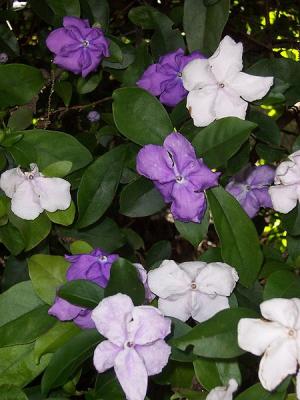
The corolla consists of a narrow tube opening into five broad rounded lobes. Flowers may open purple or lilac with a pale throat and then fade to white or yellowish white. White-flowered plants or blooms that change from white toward cream are also encountered. This color change can place purple, lavender, pale, white, and yellowish flowers on one shrub at the same time, producing the Yesterday, Today, Tomorrow effect. The flowers can be sweetly fragrant, particularly during evening or night.
Fruit, Berries, Seedpods, and Seeds
Brunfelsia fruits are berry-like structures containing multiple seeds. Their color changes as they mature, and old fruits or seedpods may become brown or dark. Fallen fruit can be especially attractive to dogs because it sits at ground level, mixes with mulch, and may be chewed before the owner notices it.
Small round plant material in vomit or feces can resemble mulch, pebbles, seeds, or food and should be saved for botanical examination. Berries and seeds are especially concerning in canine cases involving related Brunfelsia species, but direct B. uniflora livestock work shows that leaves alone can also be dangerous. The safe rule is to preserve every plant part and treat the entire shrub as toxic.
How Brunfelsia uniflora Differs from Brunfelsia pauciflora
B. uniflora usually bears one terminal flower per new shoot and has comparatively smaller leaves. Its more species-specific common names include manacá and manacá-de-cheiro. It is a valid color-changing Brunfelsia but is not the species most consistently meant by the English nursery name Yesterday, Today, Tomorrow.
B. pauciflora commonly produces clusters containing several large pansy-like flowers. It is the species most strongly associated with the horticultural names Yesterday, Today, Tomorrow, Morning-Noon-and-Night, Kiss-Me-Quick, Brazil Raintree, and Franciscan Rain Tree. The plant historically studied as Brunfelsia calycina var. floribunda is now treated within B. pauciflora. That taxonomic correction matters when assigning old dog cases to species.
How It Differs from Brunfelsia australis
Brunfelsia australis is accepted as a separate species native from southern Brazil to northeastern Argentina. It is also widely sold as Yesterday, Today, Tomorrow or Paraguay Jasmine. Its fragrant flowers commonly open deep violet or blue-purple and fade through lavender to white.
Veterinary poisoning reports involving Australian plants and a later American beagle case concerned B. australis, not B. uniflora. Those cases still matter because a pet owner using the common name may be describing B. australis. The treatment posture remains similar: remove access, preserve plant material, control seizures professionally, and investigate the entire environment.
Lady-of-the-Night Is Also Ambiguous
Lady-of-the-Night is particularly associated with Brunfelsia americana, a Caribbean species whose long-tubed flowers become strongly fragrant at night. The same common name is also used for unrelated night-blooming plants.
A label containing only Lady-of-the-Night cannot identify a poisoning source reliably. In an emergency, the veterinarian needs photographs of leaves, flowers, fruit, seedpods, the whole plant, the nursery tag, and any recovered plant material rather than a common name alone.
The Nightshade Family Does Not Have One Universal Toxin
Solanaceae includes deadly nightshade, jimsonweed, tobacco, mandrake, potatoes, tomatoes, peppers, eggplants, petunias, and Brunfelsia. The family contains numerous toxin classes with very different mechanisms. Tropane alkaloids such as atropine and scopolamine produce anticholinergic poisoning. Nicotine activates nicotinic acetylcholine receptors. Potato glycoalkaloids disrupt membranes and neurologic function.
Brunfelsia poisoning instead produces a distinctive gastrointestinal and convulsant syndrome. Membership in Solanaceae does not prove that B. uniflora contains a clinically important dose of the same tropanes found in Datura or Atropa. This page should therefore compare the nightshade family only to prevent wrong assumptions, not to import the wrong toxin mechanism.
Brunfelsamidine
H. A. Lloyd, H. M. Fales, M. E. Goldman, R. M. Jerina, and colleagues published “Brunfelsamidine: a novel convulsant from the medicinal plant Brunfelsia grandiflora” in Tetrahedron Letters, volume 26, pages 2623–2624, in 1985. Brunfelsamidine is pyrrole-3-carboxamidine, a small nitrogen-containing compound.
Experimental exposure produced excitement, tonic-clonic seizures, and death. The compound was isolated from B. grandiflora, not directly quantified from B. uniflora. Its clinical effects nevertheless correspond closely with the severe excitation and repeated seizures documented across the genus, which is why it remains an important comparative toxin on this page.
Hopeanine
Hopeanine is another neuroactive substance discussed in Brunfelsia toxicology. Experimental descriptions associate it with decreased activity, hypersensitivity, paralysis, and seizures. Its depressant and paralytic effects may contribute to the shift from anxiety and tremors to weakness, recumbency, inability to right, and coma.
Its exact concentration and contribution in naturally poisoned B. uniflora animals remain undetermined. The page should discuss hopeanine as part of the Brunfelsia toxicology framework without pretending that every clinical sign in every species has been mapped to that compound alone.
Scopoletin
Scopoletin is a coumarin found in several Brunfelsia species. It has smooth-muscle-relaxing and hypotensive properties and has contributed to the genus’s history in traditional medicine.
Scopoletin is not considered the principal convulsant. It may contribute to vascular, smooth-muscle, gastrointestinal, or depressant effects within the complete plant mixture. It belongs in the deeper chemistry discussion, not as the headline toxin.
Reported Brunfelsia Constituents
Laboratory and phytochemical investigations across the genus have reported aesculetin, alpha-ionone, alpha-terpineol, benzyl benzoate, benzyl salicylate, beta-bisabolene, beta-cyclocitral, brunfelsene, beta-damascenone, beta-eudesmol, beta-safranal, brunfelsamidine, elemol, 2-ethylfuran, farnesol, farnesyl derivatives, geraniol, geranyl compounds, hopeanine, ionones, isobutyl salicylate, lavandulal, limonene, linalool, linoleic acid, linolenic acid, manaceine, manacine, mandragorine, methylfurans, methylanisoles, myrcene, myristic acid, n-decane, n-heneicosane, n-heptadecane, n-heptane, n-hexadecane, nerolidol, n-nonadecane, nonanes, n-octane, n-pentacosane, n-pentadecane, neophytadiene, n-tricosane, ocimene, pentadecanoic acid, palmitic acid, pinoresinols, salicylic-acid esters, scopoletin, scopolin, and terpinolene.
This list represents findings from different species, tissues, extracts, and analytical studies. It should not be interpreted as proof that every listed compound occurs at a toxic concentration in every B. uniflora leaf, fruit, flower, root, or stem. It is useful because it shows why Brunfelsia toxicology cannot be responsibly reduced to one named alkaloid.
Carvalho and Colleagues’ Direct Brunfelsia uniflora Study
Ciro José Sousa de Carvalho, Marília Martins Melo, Ana Flávia Ribeiro Machado Michell, Bruno Benetti Junta Torres, Franklin Riet-Correa, Roberto Maurício Carvalho Guedes, Vany Perpetua Ferraz, Benito Soto-Blanco, and Silvana Maria Medeiros de Sousa Silva published “Different leaf extracts from Brunfelsia uniflora in mice” in Ciência Rural, volume 48, article e20170246, in 2018.
Twenty Swiss mice were divided into groups receiving alkaloid-, flavonoid-, or saponin-rich leaf extracts or saline. Each extract was administered once at 5 g/kg. The alkaloid fraction produced severe piloerection, vocalization, muscle tremors, and seizures beginning approximately ten minutes after administration. The flavonoid fraction produced moderate seizures, piloerection, and vocalization beginning approximately 57 minutes after dosing.
The saponin-rich fraction caused severe signs beginning approximately ten minutes after administration. All five mice in that group died within 10–20 minutes. The investigators considered cardiorespiratory arrest the most likely immediate cause of the sudden deaths. No corresponding gross or microscopic lesions were found. Kidney values did not support renal injury. The work established directly that B. uniflora leaves contain alkaloids, flavonoids, and saponins and that toxicity is not limited to the alkaloid fraction.
Saponins May Be an Important Species-Specific Contributor
The Carvalho experiment identified a strong chromatographic saponin signal and a lethal effect from the saponin-rich fraction. The researchers proposed that membrane interaction and effects on calcium- and potassium-dependent channels could help explain the neurologic syndrome.
The experiment used concentrated fractions at a high standardized dose. It does not prove that one ordinary garden leaf contains a uniformly lethal saponin dose, but it provides direct evidence that saponins deserve inclusion in the species-specific toxicology.
Mello and Colleagues’ Sheep and Donkey Study
Gustavo W. Mello, Franklin Riet-Correa, Márcia C. S. Batista, Ciro J. S. Carvalho, Ana C. Dias, Franklin L. Franklin, Silvana M. M. S. Silva, and Alexandre Dias published “Poisoning by Brunfelsia uniflora in sheep and donkeys” in the Journal of Veterinary Diagnostic Investigation, volume 30, pages 476–478, in 2018.
The study followed reports from farmers in Piauí, northeastern Brazil, who observed neurologic disease in donkeys, cattle, sheep, and goats at the beginning of the rainy season when manacá was flowering. Two sheep and one donkey given 10 g/kg of fresh flowering leaves collected in November developed severe convulsions and diarrhea. One sheep was euthanized and examined, but no significant gross or microscopic lesions were identified. The other sheep and the donkey recovered.
A donkey given 5 g/kg of the flowering-season leaves developed diarrhea and recovered. Four sheep and one donkey given 10–20 g/kg of leaves collected in April, after flowering near the end of the rainy season, developed no clinical signs. The results confirmed that B. uniflora can poison livestock and supported the farmers’ observation that toxicity was greatest during flowering at the beginning of the rainy season.
The Donkey’s Prolonged Neurologic Course
The donkey receiving 10 g/kg of flowering leaves developed diarrhea approximately one hour after ingestion. After roughly three hours and 25 minutes, it became sweaty and ataxic.
Neurologic disease progressed to a broad-based stance, reluctance to move, involuntary neck movements, continuous chewing, anxiety, and recurrent seizures. The seizures occurred at approximately one-hour intervals and lasted around five minutes.
The seizures stopped approximately 80 hours after ingestion, and the remaining signs gradually regressed without specific antidotal treatment. This case demonstrates that an animal may survive but require several days for the neurologic syndrome to resolve.
Seasonal Toxicity Does Not Establish a Safe Season
The difference between November and April foliage indicates major seasonal variation in toxic concentration or availability. Flowering, new growth, rainfall, plant stress, and shifting allocation of defensive chemicals may all contribute.
The exact responsible compound was not measured in the seasonal study. It is therefore not known whether brunfelsamidine, hopeanine, saponins, another constituent, or a combination changed most dramatically. Owners should not deliberately allow browsing during an apparently less toxic season. Individual plants, climates, growth stages, and animal susceptibility differ.
Spainhour, Fiske, Flory, and Reagor’s 1990 Investigation
Charles B. Spainhour, Jr., Robert A. Fiske, Wayne Flory, and John C. Reagor published “A toxicological investigation of the garden shrub Brunfelsia calcyina var. floribunda (yesterday-today-and-tomorrow) in three species” in the Journal of Veterinary Diagnostic Investigation, volume 2, pages 3–8, in 1990. The plant studied is now associated taxonomically with Brunfelsia pauciflora, not B. uniflora.
“In January 1989, a case of acute death of an 11-wk-old intact female Schipperkee was submitted to the Texas Veterinary Medical Diagnostic Laboratory. The local veterinarian reported that the client presented the dog to him with a complaint of an acute onset of anxiety, persistent sneezing, vomiting, moderate to severe whole body muscle tremors, and pyrexia (40.7 C). The physical status of the animal progressively worsened over a 2-hr period, culminating in a state of severe disorientation, staggering, ataxia, proprioceptive deficits, an inability to right itself, and seizures. The vomitus and loose stool contained numerous small dark brown seeds and intact medium green spherical, firm seed pods. The vaccination history was current and there was known, suspected, or possible exposure to any heavy metal, insecticide, pesticide, herbicide, or methylxanthine. The remarked that the puppy was seen eating mulch around bushesin the owner’s back yard approximately 2 hr prior to the first noted presentation of clinical signs. Treatment by the local veterinarian included Valium, prednisolone, and activated charcoal. hematoxylin and eosin (HE) by standard methods.
The published paper states that there was no known, suspected, or possible exposure to heavy metal, insecticide, pesticide, herbicide, or methylxanthine. The quotation above preserves the supplied passage, including its transcription omissions.
“There are only 2 reports in the literature of the intoxication of a canine by Brunfelsia spp. All of these reports originate from Australia and involve Brunfelsia australis (formerly known as Brunfelsia bonodora). Although Brunfelsia calcyina is known to grow in New South Wales, it does not set fruit in that climate, and its toxicity has not been definitively established. This paper reports the first intoxication of a canine with Brunfelsia calcyina and is the first documented intoxication of Brunfelsia spp. in the Western Hemisphere. In the Australian reports, 1 dog showed clinical signs of gastric and buccal irritation, nystagmus, salivation, vomition, nervous irritation, extensor rigidity, and opisthotonous, but recovered with treatment in 2 days. Another dog died within 10 hours after ingestion of berries after exhibiting vomition, dementia, and severe hematuria. An experimental dog fed 5.4 g/kg of body weight of minced Brunfelsia showed depression, antisocial behavior, vomition, diarrhea, reluctance to stand, decreased motor activity, generalized fine muscle tremors, polyuria, involuntary rhythmic limb extension, convulsions, and opisthotonous. The animal was euthanized at 40 hours post dosing. Gross necropsy revealed only edema and hyperemia of the terminal ileum. Histopathologic findings were not specific.”
The study found that preparations of fruit, leaves, stems, and branches were all toxic to mice and rats, but unequally so. Fruit was the most potent tested material. Clinical signs resembled those produced by a spinal convulsant. The active material was water soluble and highly stable. An aqueous preparation stored at approximately 4°C retained its ability to reproduce the syndrome and cause death for four months.
Why Necropsy Can Be Unrevealing
Spainhour and colleagues found no distinctive gross or microscopic lesion explaining the severe neurologic disease. Apart from limited intestinal congestion or edema in some experimental animals, pathology was nonspecific.
The direct B. uniflora sheep, donkey, and mouse experiments similarly produced severe signs with few or no explanatory lesions. Functional disruption of neurotransmission and ion-channel activity can kill without leaving a unique structural lesion visible at necropsy.
The Siberian Husky Case
M. I. Banton, P. L. Jowett, K. R. Renegar, and colleagues published “Brunfelsia pauciflora (‘yesterday, today and tomorrow’) poisoning in a dog” in Veterinary and Human Toxicology, volume 31, pages 496–497, in 1989. A six-year-old female Siberian husky was presented with salivation, coughing, gagging, dilated pupils, muscular contractions, horizontal involuntary eye movement, and tonic-clonic convulsions after eating B. pauciflora seeds.
Supportive treatment included activated charcoal, intravenous fluids, anticonvulsants, corticosteroids, and ophthalmic care. The convulsions stopped on the fifth day, and the dog had recovered completely by approximately three weeks. The case involved B. pauciflora, not B. uniflora. It remains directly relevant to the common title and demonstrates that prolonged seizure activity can be followed by complete recovery.
The Australian Dog Reports
E. J. McBarron and W. de Sarem reported poisoning after dogs ate fruit of the plant then called Brunfelsia bonodora. Later taxonomic treatment associated that name with B. australis. One dog developed oral and gastric irritation, nystagmus, salivation, vomiting, nervous excitation, extensor rigidity, and opisthotonus but recovered with supportive treatment over approximately two days.
Another dog developed vomiting, dementia-like behavior, and severe hematuria and died within approximately ten hours after eating berries. These cases show why berries and fruit should remain prominent in the risk discussion even though the exact page species is B. uniflora.
Singh and Colleagues’ Four-Dog Series
Manu Singh and colleagues published “Brunfelsia spp. (Yesterday, today, tomorrow) toxicity in four dogs” in the Australian Veterinary Journal, volume 86, pages 214–218, in 2008. The dogs developed combinations of vomiting, diarrhea, anxiety, muscle tremors, opisthotonus, and seizures. Plant material in the feces was necessary for diagnosis in all four cases.
All four dogs recovered after combinations of general anesthesia, gastric lavage, enema, diazepam, phenobarbitone, and propofol sedation. The report demonstrates that aggressive supportive care can succeed even after significant neurologic disease. It also reinforces the importance of fecal and vomit examination because owners may not witness the original ingestion.
ASPCA Animal Poison Control Center Review of 42 Dogs
Safdar A. Khan reviewed 38 Brunfelsia exposure incidents involving 42 dogs reported to the ASPCA Animal Poison Control Center from November 2001 through November 2006. The plants included B. calycina var. floribunda, B. australis, B. pauciflora, B. americana, B. latifolia, and unidentified Brunfelsia species. No case in that dataset was assigned specifically to B. uniflora.
Known amounts included two leaves in one dog and 15, 20, or 30 seeds in three others. Evidence of chewed plants was found in 25 incidents, and six exposures were directly witnessed. Outcomes were available for 19 dogs. Thirteen recovered with supportive care, two died, one was euthanized, two developed occasional continuing seizures, and one remained lethargic at follow-up. The review confirms that most recognized cases involve the gastrointestinal tract and central nervous system and that outcomes range from full recovery to death.
The 2012 Brunfelsia australis Beagle Case
Robert Clipsham published “Brunfelsia australis (Yesterday, Today, and Tomorrow Tree) and Solanum Poisoning in a Dog” in the Journal of the American Animal Hospital Association in 2012. A 2.5-year-old female beagle initially presented after eating green potato skins, but progressive gastrointestinal, neurologic, and cardiovascular abnormalities were too severe to be explained by the small reported potato exposure.
Further investigation found holes containing chewed roots beneath a B. australis shrub. The dog developed abdominal pain, vomiting, salivation, dilated pupils, bradycardia, hypertension, premature ventricular contractions, diarrhea with blood, disorientation, and neuromuscular abnormalities. The dog recovered with intensive supportive care and was discharged approximately 48 hours after onset. The report emphasizes the need to inspect the animal’s environment when the original suspected toxin does not explain the clinical course.
Dogs
Dogs are the most frequently documented companion-animal patients. Puppies and young dogs may chew mulch, fallen fruit, seedpods, roots, stems, or leaves and may return repeatedly to the shrub. The plant may also be encountered in patios, tropical landscapes, greenhouses, outdoor planters, and discarded pruning debris.
Vomiting or diarrhea followed by anxiety, twitching, tremors, rigidity, ataxia, or seizures should trigger immediate investigation for Brunfelsia. Waiting to see whether spontaneous vomiting resolves the problem can allow a treatable early exposure to progress into status epilepticus. Every owner should be told to save vomited seeds or fecal plant fragments instead of cleaning them away before the veterinarian can see them.
Cats
Published feline cases are limited, but poison-control authorities classify Brunfelsia as toxic to cats. Cats may nibble foliage, bat at fruit, chew flowers, or swallow plant material while grooming contaminated paws. Indoor cats may be exposed if cut branches, potted shrubs, or flowers are brought inside.
The expected syndrome includes drooling, vomiting, diarrhea, lethargy, incoordination, tremors, and seizures. Their small body size makes a seed-rich exposure particularly concerning. Cats should not be treated with hydrogen peroxide, forced charcoal, essential oils, or leftover sedatives at home.
Horses
Brunfelsia is classified as toxic to horses, although detailed equine case reports are less common than canine reports. Horses may encounter landscape clippings, ornamental shrubs growing along paddocks, or plant material mixed with forage. Because horses cannot vomit, early signs may include salivation, feed refusal, diarrhea, colic-like behavior, anxiety, sweating, ataxia, muscle tremors, rigidity, and seizures.
A horse with tremors or seizures after access to a Brunfelsia shrub needs emergency veterinary care, not routine colic observation. Handling should minimize stimulation and trauma. Drenching, forced walking, and unsupervised sedative use are unsafe.
Sheep, Goats, Cattle, and Donkeys
Direct B. uniflora experiments confirm toxicity in sheep and donkeys. Field reports from Piauí also identify disease in cattle and goats during the beginning of the rainy season. Donkeys were reported to be affected particularly often.
Animals may develop diarrhea, sweating, anxiety, involuntary movements, continuous chewing, ataxia, recumbency, and repeated convulsions. Removal from invaded areas may permit recovery, but animals already convulsing require immediate protection from trauma and veterinary stabilization. Groups should be removed from flowering or fruiting shrubs, and samples should be saved before plants are cut down or moved.
Diagnosis
Diagnosis depends on access history, botanical identification, rapid onset of gastrointestinal and neurologic signs, and plant material recovered from vomit or feces. Photograph the entire shrub, flowers of every visible color, leaves, fruit, seedpods, stems, roots, nursery label, and landscape location. Preserve vomited seeds and fecal plant material in a sealed container.
Veterinary testing may include blood glucose, electrolytes, calcium, magnesium, complete blood count, kidney and liver values, creatine kinase, acid-base status, urinalysis, body temperature, blood pressure, oxygenation, and electrocardiography. Routine laboratory values and necropsy findings may remain largely normal. A lack of major bloodwork abnormalities does not rule out severe Brunfelsia neurotoxicosis.
Important Differential Diagnoses
Strychnine poisoning is the classic clinical comparison because both conditions can cause hypersensitivity, rigidity, extensor posturing, opisthotonus, and stimulus-triggered seizures. Other differentials include metaldehyde slug bait, tremorgenic mold toxins, methylxanthines, amphetamines, cocaine, nicotine, organochlorine insecticides, pyrethroids, lead, mycotoxins, blue-green algae, serotonin syndrome, hypoglycemia, hypocalcemia, hepatic encephalopathy, canine distemper, meningitis, rabies where relevant, heatstroke, and primary epilepsy.
Solanine and chaconine from green potatoes can overlap with gastrointestinal, neurologic, and cardiovascular signs. The full environment and all available toxins must be investigated. A pet that chewed roots beneath a Brunfelsia shrub may also have had access to potting soil, fertilizer, mushrooms, pesticides, mulch, irrigation runoff, or other plants.
Veterinary Treatment
There is no specific Brunfelsia antidote. Treatment focuses on preventing further absorption, controlling seizures and muscle activity, maintaining the airway, correcting temperature and fluid abnormalities, supporting respiration and circulation, and protecting the patient during a potentially prolonged recovery.
Seizures and severe tremors must be controlled before oral decontamination is attempted. A convulsing or heavily sedated animal cannot protect its airway and can inhale vomit, charcoal, lavage fluid, or plant material. Veterinary seizure control may involve benzodiazepines, barbiturates, propofol, methocarbamol, inhalant anesthesia, or combinations selected according to the pattern and response. Diazepam alone has produced inconsistent control in some reports.
Refractory status epilepticus may require endotracheal intubation, mechanical ventilation, continuous intravenous anesthesia, repeated blood-gas and electrolyte testing, electrocardiography, blood pressure monitoring, temperature control, and intensive nursing. Animals with aspiration pneumonia, rhabdomyolysis, dehydration, electrolyte disturbance, or prolonged recumbency need additional supportive care.
Professional Decontamination
A veterinarian may induce vomiting after a very recent ingestion only if the dog or cat remains neurologically normal, has no tremors or altered swallowing, and can protect its airway. Once tremors, altered awareness, weakness, or seizures begin, emesis becomes dangerous and stabilization takes priority.
Activated charcoal may be selected professionally, particularly after berry or seed ingestion. Repeated dosing and cathartics require careful attention to hydration, sodium concentration, diarrhea, gastrointestinal motility, and aspiration risk. Gastric or enterogastric lavage may be considered after substantial seed or fruit exposure under anesthesia with a protected airway. Plant fragments may also be removed from the colon by professionally selected methods in unusual severe cases.
Temperature and Environmental Control
Tremors and seizures can produce dangerous hyperthermia. Veterinary cooling may use fans, cool intravenous fluids, controlled wetting, and monitoring to avoid overshooting into hypothermia. Cooling should stop as the temperature approaches the normal range.
Depressed, anesthetized, or exhausted patients can become hypothermic and may require controlled warming. Direct skin contact with ice, very hot heating pads, cold-water immersion, or unmonitored home temperature treatment can cause additional injury. A quiet, darkened environment reduces stimulation and may decrease renewed tremors or seizures in a hypersensitive patient.
Prognosis
The prognosis depends on plant part, dose, season, onset of treatment, ability to control seizures, body temperature, aspiration, duration of respiratory compromise, and severity of neuromuscular activity. Animals with limited exposure and early treatment can recover fully. Documented recovery periods range from approximately two days to several weeks.
Repeated uncontrolled seizures, extreme hyperthermia, aspiration pneumonia, respiratory failure, coma, severe muscle injury, prolonged hypoxia, and delayed treatment worsen the prognosis. Fatal cases may leave few explanatory lesions at necropsy, so a “clean” necropsy does not prove the plant was uninvolved.
Prevention
Do not plant Brunfelsia where dogs, cats, horses, livestock, poultry, rabbits, tortoises, or small children can reach foliage, flowers, fallen fruit, seedpods, roots, or pruning debris. Remove berries and seedpods before they fall. Collect every pruning fragment and place it in a secure disposal container rather than open compost or animal-accessible yard waste.
Keep livestock away from manacá during flowering at the beginning of the rainy season, when direct experiments found the greatest toxicity. Seasonal variation does not make the plant safe at other times. Retain the nursery label, but confirm the plant botanically because B. uniflora, B. pauciflora, and B. australis are frequently sold under the same common name.
Immediate Steps After Exposure
Remove access immediately. Prevent continued chewing and collect fallen berries, seedpods, seeds, leaves, flowers, roots, mulch, soil, and pruning debris. Keep other animals away from the same shrub, compost, yard waste, hay, stall bedding, paddock edge, or container plant.
- Contact a veterinarian or animal poison-control service: Report the animal’s species, weight, plant part, estimated amount, time of exposure, season or flowering status, and current gastrointestinal or neurologic signs.
- Treat berries and seeds as especially urgent: Dogs may swallow many seeds before the exposure is recognized, and neurologic deterioration can begin within hours.
- Preserve plant evidence: Bring photographs, a secured plant sample, nursery label, berries, seedpods, roots, leaves, vomited seeds, and fecal plant material to the veterinary facility.
- Keep the animal quiet: Reduce noise, bright light, handling, walking, transport stress, and other stimulation that may trigger or worsen tremors and seizures.
- Prevent trauma: Keep a tremoring or seizuring animal away from stairs, pools, sharp objects, hard edges, and other animals while arranging emergency care.
Do Not Attempt Unsupervised Home Treatment
- Do not induce vomiting with hydrogen peroxide: Brunfelsia poisoning can progress rapidly to tremors, altered swallowing, or seizures, creating a serious aspiration risk.
- Do not give apomorphine or another emetic yourself: These are veterinarian-selected medications and are inappropriate once neurologic signs develop.
- Do not force activated charcoal: A vomiting, tremoring, disoriented, sedated, or poorly swallowing animal can inhale charcoal into the lungs.
- Do not give sorbitol, magnesium sulfate, sodium sulfate, mineral oil, or another cathartic: Diarrhea, dehydration, electrolyte disturbance, and aspiration can worsen the clinical condition.
- Do not administer human sedatives, muscle relaxants, or seizure medication: Incorrect drugs or doses can cause respiratory failure, worsen temperature abnormalities, or interfere with emergency treatment.
- Do not force food, milk, water, broth, oil, or electrolyte solution: Gagging, vomiting, altered awareness, and neuromuscular dysfunction greatly increase aspiration risk.
- Do not attempt aggressive cooling or heating without guidance: Ice, cold-water immersion, alcohol baths, or unmonitored heating pads can cause shock, burns, hypothermia, or dangerous temperature overshoot.
When Emergency Examination Is Required
- Berries, seedpods, seeds, roots, or unknown plant parts may have been swallowed: Reproductive material and roots have been important in severe Brunfelsia cases.
- Vomiting or diarrhea begins: Gastrointestinal signs may precede rapid neurologic deterioration.
- The animal becomes anxious, hypersensitive, or disoriented: Unexplained agitation, staring, vocalization, or inability to settle may be an early central nervous system sign.
- Twitching, tremors, rigidity, or staggering develops: These signs can progress into repeated tonic-clonic seizures.
- The animal cannot stand or right itself: Severe ataxia and proprioceptive dysfunction indicate significant neurotoxicosis.
- Body temperature becomes abnormal: Heavy panting, hot skin, persistent shivering, or cold extremities requires controlled veterinary treatment.
- Any seizure occurs: Recurrent seizures may continue for days and can cause aspiration, hyperthermia, respiratory failure, and death.
- Breathing becomes rapid, weak, noisy, or irregular: Respiratory change may reflect seizure activity, aspiration, exhaustion, shock, or neuromuscular failure.
Veterinary Stabilization
Seizure control, airway protection, oxygenation, and temperature management take priority over gastrointestinal decontamination in a symptomatic animal. An actively convulsing patient may require rapid intravenous or inhaled anesthesia and endotracheal intubation.
The veterinarian may use benzodiazepines, barbiturates, propofol, methocarbamol, inhalant anesthesia, or another protocol selected according to the character and persistence of the tremors or seizures. Continuous medication may be necessary for status epilepticus. Severely affected animals may require oxygen, assisted ventilation, blood-gas monitoring, electrocardiography, blood-pressure measurement, intravenous fluids, glucose and electrolyte testing, creatine kinase monitoring, and treatment for aspiration pneumonia or muscle injury.
Veterinary Decontamination
Veterinary-induced vomiting may be considered after a recent ingestion only when the patient remains alert, neurologically normal, and able to swallow and protect the airway. It is inappropriate in a vomiting, tremoring, weak, disoriented, sedated, seizuring, or poorly swallowing animal.
Activated charcoal may be administered after the airway has been evaluated or protected. Repeat doses may be considered after substantial berry or seed ingestion, but diarrhea, sodium imbalance, dehydration, aspiration risk, and gastrointestinal motility must be monitored. Gastric or enterogastric lavage may be considered after a large exposure under general anesthesia with an endotracheal tube protecting the airway.
Temperature and Supportive Care
Continuous tremors and seizures can cause severe hyperthermia. Controlled veterinary cooling should stop as the temperature approaches the normal range to prevent rebound hypothermia. Depressed, anesthetized, or exhausted animals may instead need controlled warming. Body temperature should be measured repeatedly rather than estimated by touch.
Intravenous fluids support hydration and electrolyte balance but must be adjusted to the patient’s vomiting, diarrhea, urine output, temperature, cardiovascular condition, and laboratory results. Patients with prolonged seizures may need monitoring for aspiration pneumonia, acid-base abnormalities, muscle injury, kidney stress, and oxygenation problems.
Dogs and Cats
Dogs and cats with a known or suspected exposure should be triaged urgently, especially if berries, seeds, roots, or a substantial amount of foliage were involved. Do not wait for tremors or seizures if the exposure was credible. Bring plant material, labels, vomit, and stool samples if possible.
Cats and small dogs are at higher dose-per-body-weight risk from a small amount of plant material. Neither species should receive home peroxide, forced charcoal, sedatives, muscle relaxants, essential oils, or leftover seizure medication. Treatment decisions should be made after the veterinarian evaluates airway protection, neurologic status, hydration, and timing.
Horses and Livestock
Horses, donkeys, cattle, sheep, goats, alpacas, llamas, pigs, poultry, and other livestock should be removed from the plant source and provided safe feed and water. Do not force walking, chasing, or stressful handling in tremoring, seizuring, weak, recumbent, or overheated animals. Protect convulsing animals from trauma while veterinary care is arranged.
Group exposure requires immediate pasture or pen control. Save leaves, flowers, fruit, roots, clippings, hay, and location photographs before clearing the site. In tropical or subtropical settings, flowering at the beginning of the rainy season deserves particular concern because direct B. uniflora experiments found greater toxicity during that period.
Rabbits, Guinea Pigs, Birds, Reptiles, and Small Pets
Small animals should not be fed Brunfelsia as greens, browse, flowers, bedding, poultry greens, tortoise forage, bird enrichment, or reptile enclosure décor. If exposure occurs, remove the plant and call an appropriate veterinarian. Do not force food, water, oil, milk, charcoal, or household medication.
Rabbits and guinea pigs that stop eating, develop diarrhea, produce fewer fecal pellets, become weak, or show tremors need prompt care. Birds with regurgitation, poor perching, diarrhea, weakness, altered awareness, or tremors need avian guidance. Reptiles and tortoises may show reduced appetite, inactivity, abnormal stool, weakness, abnormal breathing, or neurologic signs rather than the dog-and-cat vomiting pattern.
Recovery and Prognosis
Clinical signs may continue for several hours to several days. Occasional seizures or lethargy can persist after the most dramatic episode appears to have ended. Animals should remain monitored until they can stand, walk, swallow, regulate body temperature, breathe normally, eat, drink, and remain seizure-free without continuous medication.
Complete recovery is possible even after severe poisoning, but it may take days or weeks. Uncontrolled seizures, extreme hyperthermia, aspiration, coma, prolonged respiratory compromise, and delayed treatment make the prognosis guarded to grave.
Prevention After the Incident
Remove Brunfelsia from animal-accessible areas whenever practical. At minimum, fence the shrub, remove fallen fruit and seedpods daily, collect every pruning fragment, and prevent dogs from digging or chewing roots beneath the plant. Keep container plants out of pet areas and do not bring cut branches indoors where cats or dogs can chew them.
Dispose of plant material in a secure container rather than animal-accessible compost or yard waste. Keep livestock away from manacá during flowering and remove animals from invaded areas when neurologic disease appears. Retain the nursery label, but confirm the botanical species because B. uniflora, B. pauciflora, and B. australis are frequently sold under the same common name.
Frequently Asked Questions About Yesterday, Today, Tomorrow and Animal Poisoning
Is Brunfelsia uniflora the usual Yesterday, Today, Tomorrow plant?
It is one color-changing Brunfelsia sold or described under that name, but Brunfelsia pauciflora and Brunfelsia australis are more commonly labeled Yesterday, Today, Tomorrow in many horticultural markets. All should be treated as poisonous. The common name alone is not reliable enough for emergency identification.
What is the more specific common name for Brunfelsia uniflora?
Manacá and manacá-de-cheiro are the most useful species-specific common names. The latter refers to the plant’s fragrant flowers. The PAWS page title remains Yesterday, Today, Tomorrow because that is the owner-facing name most likely to be searched, but the scientific name is what anchors the page.
Which parts of Yesterday, Today, Tomorrow are poisonous?
Leaves, stems, roots, flowers, berries, seedpods, and seeds should all be considered poisonous. Fruit and seeds are especially concerning in dogs, while direct experiments confirm that flowering B. uniflora leaves can cause severe poisoning in sheep and donkeys. Pruning debris, fallen fruit, and roots under the shrub should also be kept away from animals.
Are brunfelsamidine and hopeanine the only toxins?
No. They are important Brunfelsia neuroactive compounds, but direct B. uniflora research found toxic alkaloid-, flavonoid-, and saponin-rich leaf fractions. The complete syndrome probably involves several compounds, and the active mix may vary by species, plant part, season, growth stage, and preparation.
What did the Brunfelsia uniflora mouse study find?
Alkaloid-, flavonoid-, and saponin-rich leaf extracts all caused neurologic signs at a single 5 g/kg experimental dose. The saponin-rich fraction was especially severe: all mice receiving that fraction died within 10–20 minutes. This shows that B. uniflora toxicity is not limited to alkaloids, but it does not mean every natural leaf nibble equals a concentrated extract exposure.
Is Brunfelsia uniflora more poisonous while flowering?
Direct sheep-and-donkey work found severe toxicity from leaves collected during flowering at the beginning of the rainy season, while higher doses of leaves collected after flowering caused no signs in that study. Toxicity clearly can vary seasonally, but no season should be considered reliably safe because plant chemistry, weather, growth stage, and animal susceptibility differ.
What symptoms should appear first?
Drooling, vomiting, diarrhea, coughing, gagging, sneezing, anxiety, restlessness, hypersensitivity, or lethargy may appear before obvious neurologic disease. Tremors, facial twitching, ataxia, rigidity, disorientation, paddling, opisthotonus, or seizures indicate a severe emergency requiring immediate veterinary care.
How long can Brunfelsia seizures continue?
Seizures may recur for several days. A directly poisoned donkey had recurring seizures until approximately 80 hours after ingestion, and a Siberian husky’s convulsions stopped on the fifth day after exposure to a related Brunfelsia species. Full recovery may take days to weeks even when the animal survives the initial crisis.
Why can necropsy findings be normal after fatal poisoning?
The toxins can cause severe functional disruption of neurotransmission, ion-channel activity, respiration, and muscle control without producing one distinctive visible lesion. Fatal and experimental cases have shown few or nonspecific gross and microscopic changes. A lack of major lesions does not rule out fatal Brunfelsia neurotoxicosis.
Should vomiting be induced after an animal eats Brunfelsia?
Do not induce vomiting at home. Neurologic signs can develop rapidly, and hydrogen peroxide or other emetics can be aspirated. A veterinarian may induce vomiting only if the patient remains alert, stable, neurologically normal, and able to protect its airway after a recent exposure.
Should activated charcoal be given?
Only under veterinary supervision. Activated charcoal may be useful after berry or seed ingestion, but a vomiting, tremoring, sedated, disoriented, or poorly swallowing animal can inhale charcoal into the lungs. Charcoal must never delay seizure control, airway protection, or emergency transport.
Is there a specific antidote?
No specific Brunfelsia antidote has been established. Treatment centers on rapid seizure control, airway protection, professional decontamination when safe, temperature management, intravenous fluids, respiratory support, and intensive monitoring. Severe cases may require anesthesia and assisted ventilation.
Can dogs recover from severe Brunfelsia poisoning?
Yes. Multiple dogs with vomiting, tremors, opisthotonus, and repeated seizures have recovered after aggressive veterinary treatment. Deaths also occur, especially when exposure is not recognized promptly, berries or seeds are involved, or seizures cannot be controlled. Early recognition and intensive care improve the chance of recovery.
Is Yesterday, Today, Tomorrow poisonous to cats?
Yes. Published feline details are limited, but Brunfelsia is classified as toxic to cats. Cats may develop drooling, vomiting, diarrhea, lethargy, incoordination, tremors, and seizures. Their small body size makes seed or berry exposure especially concerning, and cats should not be made to vomit at home.
Is Yesterday, Today, Tomorrow poisonous to horses and livestock?
Yes. Direct experiments produced severe diarrhea and convulsions in sheep and donkeys after they ate flowering B. uniflora leaves. Field reports also implicated donkeys, cattle, sheep, and goats during the flowering period at the beginning of the rainy season. Horses and livestock should not have access to Brunfelsia shrubs, clippings, roots, or fallen fruit.
Can donkeys be affected for several days?
Yes. In the direct B. uniflora study, a donkey that ate flowering-season leaves developed diarrhea, sweating, ataxia, involuntary movements, continuous chewing, anxiety, and recurrent seizures. The seizures stopped about 80 hours after ingestion, and the remaining signs gradually regressed. This illustrates why recovery may require prolonged monitoring.
Is the plant dangerous if it has no berries?
Yes. Berries and seeds are especially concerning, but leaves alone caused severe livestock poisoning in direct B. uniflora experiments, and comparative Brunfelsia work found leaves, stems, and branches toxic in addition to fruit. A berry-free shrub is not safe for browsing, chewing, or enclosure use.
Can dried Brunfelsia material remain dangerous?
It should be treated as dangerous. Comparative Brunfelsia work found water-soluble toxic activity that remained stable in stored aqueous preparation for months. Dried clippings, old seedpods, roots, mulch fragments, compost, and discarded shrub material should not be assumed harmless.
How is Brunfelsia different from deadly nightshade or jimsonweed?
All are in Solanaceae, but they do not share one universal toxin syndrome. Deadly nightshade and jimsonweed are classic anticholinergic plants. Brunfelsia more often causes gastrointestinal irritation followed by tremors, hypersensitivity, rigidity, opisthotonus, and repeated seizures. The family name alone should not be used to predict the mechanism.
What look-alikes or name-confusions matter?
The biggest issue is not a visual look-alike but a label problem. B. uniflora, B. pauciflora, and B. australis can all be sold or described as Yesterday, Today, Tomorrow. Lady-of-the-Night may refer to B. americana or unrelated night-blooming plants. Save the label and plant sample whenever poisoning is suspected.
How do veterinarians diagnose Brunfelsia poisoning?
Diagnosis depends on exposure history, botanical identification, rapid onset of gastrointestinal and neurologic signs, and plant material recovered from vomit or feces. Testing may include electrolytes, glucose, calcium, magnesium, kidney and liver values, creatine kinase, blood gases, urinalysis, body temperature, blood pressure, oxygenation, and electrocardiography. Normal routine tests do not rule it out.
What differentials matter most?
Important differentials include strychnine, metaldehyde slug bait, tremorgenic mycotoxins, methylxanthines, amphetamines, cocaine, nicotine, organochlorine insecticides, pyrethroids, lead, blue-green algae, serotonin syndrome, hypoglycemia, hypocalcemia, hepatic encephalopathy, canine distemper, meningitis, rabies where relevant, heatstroke, green potato glycoalkaloids, and primary epilepsy.
How can Brunfelsia poisoning be prevented?
Keep the shrub outside animal areas, remove fallen fruit and seeds, secure all pruning debris, and prevent livestock access during flowering. Do not use Brunfelsia as browse, bedding, cage décor, poultry greens, tortoise forage, or compost accessible to animals. Retain the nursery label and confirm the botanical species because several poisonous Brunfelsias share the same common name.