Grooming Nooses • Fabric Grooming Loop • Nylon Restraint • Table Safety • Grooming Arm Hardware • Noose Selection
Fabric Grooming Noose: Cheap, Common, Forgiving, and Easy to Misuse if You Stop Paying Attention
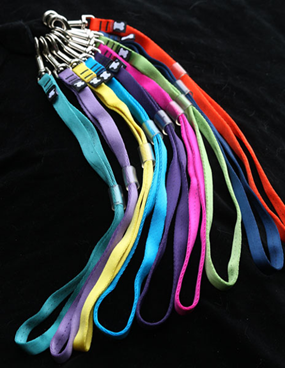
Due to its low cost and ease of use, the fabric grooming noose is by far the most common and frequently used grooming noose.
Although by design, I would not actually consider it to be a noose at all.
It is really a fabric loop with a stop. That is part of why it is so useful. It does not continue tightening around the animal’s neck in direct proportion to how much the dog resists.
That forgiving design is also why people get careless with it. If it is left slack, a dog can chew it in half in an instant. If a dog thrashes or backs out, the loop can slip. If somebody tries to use it as a solo waist restraint, things can get ugly fast.
This is basic equipment, but basic does not mean idiot-proof.
⚠️
Operator rule
A fabric grooming noose is a good everyday table loop. It is not my choice as a solo waist restraint, and it still needs proper fit, attention, and a removal plan when muzzles or difficult dogs are involved.
🗺️
Use This Page Like a Fabric Loop Reality Check
Fabric loops are common because they work, but they still have failure points.
🧵
What It Is
A nylon-style loop with a clasp and rubber stop, not a true tightening noose.
✅
Why It Is Common
Cheap, easy, familiar, forgiving, and useful for everyday table grooming.
🦷
Chew and Slip Risk
Left slack, dogs can chew it. Used loosely, dogs can slip it and back out.
⚠️
Waist Restraint Warning
I do not recommend using a fabric noose alone around the waist.
🧵
What a Fabric Grooming Noose Actually Is
It is called a noose, but the common fabric version is really a fixed loop with a stop.
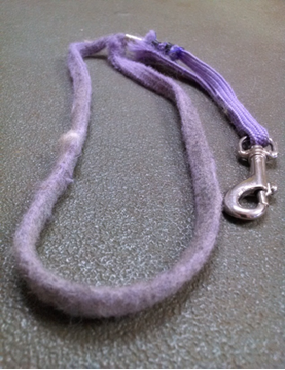
A fabric grooming noose is actually one long piece of fabric, typically nylon, with both ends run through a clasp and one end sewn over the other to secure it in place and form a loop.
The other end is then slid through a piece of flexible rubber tubing to act as a stop when the loop is over the animal’s head.
That construction is why I do not really consider it a true noose.
A true noose keeps tightening as resistance increases. The common fabric grooming loop does not behave that way. The rubber stop and fixed loop design give it a more forgiving limit.
That is a benefit when it is used correctly.
It is also why it should be understood for what it is: a head-positioning loop for normal grooming table use, not a magical all-purpose restraint strap.
🫁
The Benefit: It Does Not Keep Tightening Like a True Noose
This is the main reason fabric loops are forgiving for everyday grooming.
The benefit of this device is that it is not actually a noose, and as a result, it will not tighten around the animal’s neck in proportion to the amount of resistance the animal puts on it.
That matters.
Some dogs will test restraint. Some dogs will lean. Some dogs will pull. Some dogs will panic for a second and then settle. A restraint that keeps tightening every time the dog moves can make that moment worse.
A fabric loop is more forgiving than a true tightening noose because it does not automatically punish every bit of resistance with more throat pressure.
That does not mean it cannot be used badly. It means the design is more forgiving than cable-style true nooses when the dog is being groomed under normal table conditions.
📌
Important distinction
Fabric grooming loops are common because they are simple and forgiving. That does not make them safe when left slack, ignored, used around the waist incorrectly, or dragged over a muzzle during removal.
✅
Why Fabric Grooming Nooses Are Everywhere
They are cheap, simple, easy to replace, and good enough for a large percentage of normal table work.
Fabric grooming nooses are common because they are practical.
They are inexpensive. They are easy to understand. They attach quickly to standard grooming arms. They work well for normal head restraint on most cooperative dogs.
They are also easy to keep in quantity. A grooming room should have extras because loops get worn, dirty, chewed, misplaced, stretched, and retired.
This is not one of those grooming tools where I think the basic concept is over-engineered. The basic fabric loop is simple, and simple is usually good.
The problems start when groomers stop watching the dog because the tool feels too ordinary.
🦷
The Downside: Slack, Chewing, Slipping, and Backing Out
Most fabric loop problems come from poor fit, poor attention, or using the loop for the wrong job.
The downside to this type of noose is that if used improperly, meaning left slack, dogs can chew it in half in an instant.
Dogs that thrash about can also slip the noose and back out.
Both of these problems can usually be avoided by paying attention to what the dog is doing and how you utilize your tools.
A fabric loop should not be hanging loose enough for the dog to get a mouthful of it. It should not be so loose that the dog can reverse itself out of the restraint. It should not be treated like a decoration attached to the grooming arm.
Grooming restraint is active equipment. You still have to watch the dog.
⚠️
Chew warning
A slack fabric loop is basically an invitation for some dogs to start a private rope-chewing project. By the time you notice, the restraint may already be halfway dead.
🧶
The Hair-Buildup Problem
Fabric loops collect coat until they start looking like they came with their own sweater.
The last issue, and I do not know if it is really an issue at all, is that these types of nooses collect and trap hair.
So much so that after a few months of use, animal hair will become so entrapped in it that it will look like it is comfort coated with wool.
That may not be the end of the world, but it is a reminder that these are consumable grooming-room items.
Inspect them. Wash or replace them as needed. Retire the gross ones before they become part restraint, part biology project.
⚠️
Why I Do Not Like Fabric Nooses as Solo Waist Restraints
They are really designed for use over the head, not as the only thing holding the dog’s body.
These are really only designed for use over the head as they lack the ability to be adjusted for length and, as noted, will not continue to tighten as an animal resists.
What that means is that I would not recommend using them as a solo device around the waist.
The reason I say this is that on more than one occasion, I have seen a groomer slip it around the dog’s waist to hold them while they work around the face and neck.
The problem, and I have seen this, is that if the dog decides to escape by jumping off the table, this style of noose will not hold them as it will slip off the rear of the body.
Typically, the dog will jump, the loop will slip, catch a little over one knee, a hip, or a foot, then slip entirely, causing the dog to do an awkward front flip off the table and land on their face, back, or side.
That is not a cute grooming-room blooper. That is how a dog gets hurt.
⚠️
Waist strap rule
If you must use a waist strap, use one that either tightens in relation to resistance or one that can be adjusted snug and buckled around the dog’s waist.
🪢
Use a Real Waist Strap When the Body Needs Restraint
The goal is to prevent the ugly fall, not just pretend the dog is secured.
If you must use a waist strap, use one that either tightens in relation to resistance, meaning a true noose, or one that can be adjusted snug and buckled around the dog’s waist.
This way, if a dog decides to jump, only their front legs will make it off the table and their hindquarters will stay on the table, preventing an awkward and potentially injurious fall.
That does not mean you want the dog jumping at all.
It means the restraint should fail less badly if the dog makes a bad decision before you can stop it.
A fabric grooming loop around the body may look like it is doing something while the dog is standing still. The problem is what happens when the dog moves fast, twists, jumps, or reverses pressure.
Swipe left/right to see the full table.
| Body Restraint Setup | What Happens When the Dog Jumps | Operator Take |
|---|---|---|
| Fabric loop used alone around waist | Can slip rearward, catch briefly, then slide off. | Not my recommendation. |
| Snug adjustable waist strap | Better chance of keeping hindquarters on the table. | Better body restraint choice. |
| Grooming harness or belly support | Can provide support while discouraging sitting or dropping. | Useful when fit and comfort are correct. |
| Head loop only | Controls head area but does not secure the body. | Do not confuse head restraint with body restraint. |
🐕
The Muzzle Removal Problem
Any noose that has to slide off over the head can catch muzzle straps at the worst possible moment.
As with the cable noose, there are some shortcomings when dealing with animals that are muzzled.
It is not uncommon for these to catch the muzzle straps on the back of the head, especially if the animal is being difficult during removal, and take the muzzle off with it.
That is a real problem.
The dog was muzzled for a reason. If the loop catches the strap and drags the muzzle off while you are trying to remove the noose, you now have an unsecured, non-muzzled, irritated dog at the exact moment you wanted less excitement, not more.
This is one of the reasons quick-release nooses matter. Being able to unclip at the neck instead of sliding the whole loop backward over the head can make removal cleaner and safer around muzzles.
⚠️
Muzzle warning
Standard fabric loops can catch muzzle straps during removal. For muzzled dogs or fear biters, a quick-release noose is often the better tool.
🎯
Best Use for Fabric Grooming Nooses
Everyday head restraint for normal table work, with attention.
Fabric grooming nooses are best used as everyday head-positioning loops on a grooming table.
They are not my first choice for known chewers. They are not my first choice for muzzled dogs where removal needs to be clean. They are not my choice as a solo waist restraint.
They are the basic workhorse.
Used correctly, they are cheap, easy, forgiving, and useful. Used lazily, they become chew toys, slip hazards, muzzle-removal hazards, or false security around the dog’s waist.
Swipe left/right to see the full table.
| Situation | Fabric Noose Fit | Better Alternative When Needed |
|---|---|---|
| Normal cooperative dog | Good everyday choice. | None needed if fit and handling are correct. |
| Dog chews restraints | Poor choice if dog can reach slack. | Cable noose used with caution. |
| Muzzled dog or fear biter | Can catch muzzle straps during removal. | Quick-release grooming noose. |
| Waist/body restraint | Not recommended as a solo waist restraint. | Adjustable waist strap or grooming harness. |
| Long-term heavy use | Collects hair and wears over time. | Inspect, clean, rotate, and replace regularly. |
✅
My Operator Verdict on Fabric Grooming Nooses
Good everyday tool. Not a universal restraint answer.
My verdict is simple: fabric grooming nooses are the everyday workhorse.
They are low-cost, easy to use, common, and more forgiving than true tightening nooses. That is why every grooming room is going to have them.
But they still require attention.
Left slack, dogs can chew them in half. Used too loosely, dogs can slip them. Used around the waist by themselves, they can slide off the rear of the dog and contribute to an ugly fall. Removed over a muzzle, they can catch the straps and pull the muzzle off.
None of that means fabric loops are bad. It means they are basic equipment with basic rules.
Use them for what they are good at: everyday head restraint on normal grooming-table dogs.
Use something else when the dog, muzzle, body restraint need, or failure risk calls for something else.
⚠️
Final take
Fabric grooming nooses are useful because they are simple. They become dangerous when people confuse simple with automatic.
❓
Fabric Grooming Noose FAQ
Straight answers about fabric loops, chewing, slipping, waist use, hair buildup, and muzzle problems.
Is a fabric grooming noose really a noose?
Not in the same way a true tightening noose is. The common fabric version is more like a fixed fabric loop with a rubber stop.
Why are fabric grooming nooses so common?
They are inexpensive, easy to use, forgiving, and useful for everyday head restraint on normal grooming-table dogs.
What is the main benefit?
The main benefit is that the loop does not continue tightening around the animal’s neck in proportion to resistance the way a true noose can.
What is the main downside?
If left slack, dogs can chew it in half quickly. If used too loosely, dogs that thrash or back up can slip out of it.
Do fabric nooses collect hair?
Yes. Over time, fabric loops can trap enough coat that they start looking like they were comfort coated with wool.
Should a fabric noose be used as a waist strap?
I do not recommend it as a solo waist restraint. It can slip off the rear of the dog if the dog jumps, which can cause an awkward and potentially injurious fall.
What should be used for waist restraint instead?
Use a strap that either tightens in relation to resistance or one that can be adjusted snug and buckled around the dog’s waist.
What is the muzzle problem?
A fabric loop that must slide backward over the dog’s head can catch the muzzle straps and pull the muzzle off during removal.
What is the main lesson?
Fabric grooming nooses are good everyday loops, but they are not all-purpose restraints. Use the right restraint for the dog, the job, and the failure risk.
🐾
Bottom Line: Good Everyday Loop, Not a Do-Everything Strap
Fabric grooming nooses belong in every grooming room, but they still need judgment.
The fabric grooming noose is the most common grooming loop for a reason.
It is cheap, easy to use, forgiving, and useful for normal head restraint during table grooming.
But it can be chewed, slipped, packed with hair, used badly around the waist, and pulled into muzzle straps during removal.
That is the whole lesson.
Keep fabric loops in the grooming room. Use them often. Just do not pretend they are the answer to every restraint situation.