Grooming Nooses • Quick Release Noose • Muzzle-Safe Removal • Fear Biters • Waist Adjustment • Cat Grooming Restraint
Quick Release Grooming Nooses: The Must-Have Loop for Muzzles, Fear Biters, and Safer Removal
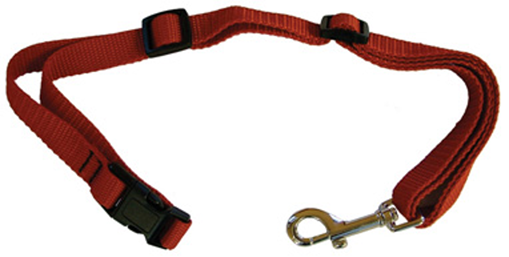
The quick release noose is another relatively common grooming accessory, and a must-have in my opinion.
The benefit to this type of noose is simple: you can release the dog’s head by unclipping it at the neck instead of sliding the whole loop back over the animal’s head.
That may not sound like much until you are dealing with a grooming guest that is aggressive, scared, muzzled, tired of your nonsense, or interested in removing parts of your hand.
Removal matters as much as restraint. A noose that holds the dog is only half useful. It also needs to come off cleanly when the dog is done cooperating.
This is one of the grooming noose styles I would want in every professional grooming room.
⚠️
Operator rule
Any noose that must slide over the head must also slide back off the head. Quick release nooses solve that problem by letting you unclip at the neck.
🗺️
Use This Page Like a Quick Release Noose Buying and Safety Check
This page explains why quick release nooses are one of the restraint tools I actually consider essential.
🔓
What It Is
A grooming noose that can be unclipped at the neck instead of dragged over the head.
✅
Why It Is a Must-Have
It makes removal safer around muzzles, fear biters, aggressive dogs, and difficult head handling.
🐕
Muzzle Problem
Standard loops can catch muzzle straps during removal. Quick release nooses avoid that mess.
🪢
Neck and Waist Adjustment
Sliding buckles make this style more useful around the neck or body than a basic fabric loop.
🐈
Cat Grooming Use
Cats need a different placement approach because a neck-only noose can go bad quickly.
✅
Operator Verdict
One of the noose styles I would want in every professional grooming room.
🔓
What a Quick Release Grooming Noose Is
It is a grooming loop built so the dog can be released at the neck instead of forcing the loop back over the head.
A quick release noose is a grooming loop with a clip or release point near the neck area.
Instead of sliding the noose backward over the dog’s head, ears, muzzle, collar area, or whatever else is happening around the face, you simply unclip it.
That is the feature that makes it valuable.
Grooming is not always about the calm dog standing politely on the table. A lot of the real equipment value shows up when the dog is scared, irritated, aggressive, muzzled, tired, wet, tangled, flexible, or done participating in the civilized world.
In those moments, the release method matters.
📌
The simple advantage
Standard loops have to slide off over the head. Quick release nooses unclip at the neck. That one difference solves a lot of grooming-room aggravation.
✅
Why I Consider It a Must-Have
This is one of those tools that earns its place by preventing problems during removal.
The benefit to this type of noose is that you can release the dog’s head by simply unclipping it at the neck as opposed to sliding it over the animal’s head.
This is a very useful feature when being finger conscious while dealing with a grooming guest that is aggressive or a fear biter.
Some dogs tolerate restraint but do not tolerate hands near the face. Some dogs are fine until the last five minutes. Some dogs were never fine, but the owner forgot to mention that their dog turns into a furry bear trap when someone touches the head.
With a standard loop, removal can put your hands right where the dog wants them.
With a quick release noose, you can unclip the loop without dragging it backward over the head and without turning removal into one last wrestling match.
🔓
The Release Is the Point
A restraint should be judged by how it comes off when the animal is done cooperating.
A restraint is not just judged by how it holds the dog.
It is judged by how cleanly and safely it comes off when the dog is done cooperating.
That is where quick release nooses shine.
Fabric loops are useful everyday tools, but they usually have to slide off over the head. Cable nooses can have the same removal issue, plus the added problem of true-noose tightening. Both can become annoying or unsafe when the dog is muzzled, agitated, tangled, or trying to defend itself from the person removing the restraint.
The quick release noose gives you a cleaner ending.
That may sound like a small feature until the dog is trying to bite, the muzzle is in the way, the ears are involved, the coat is tangled, or the dog has decided the groom is over and everyone else just missed the memo.
⚠️
Removal rule
The last thirty seconds of restraint removal can be where people get bitten. Do not ignore the release method.
🐕
Why Quick Release Nooses Work Well With Muzzles
The dog was muzzled for a reason. The noose should not be the thing that removes it.
This type of noose works well with muzzles because it will not catch and drag the muzzle off during removal like other nooses that must be slid backward over the dog’s head.
That is a big deal.
With standard nooses, the loop can catch the straps at the back of the muzzle. If the animal is being difficult during removal, the noose can pull the muzzle off right when you most need the muzzle to stay on.
Now you have an unsecured, non-muzzled, unhappy dog in front of you, and everyone gets to enjoy the consequences of that little equipment failure.
A quick release noose avoids that by unclipping at the neck instead of dragging the restraint backward over the muzzle straps.
📌
Muzzle-safe advantage
For muzzled dogs, fear biters, or dogs where face handling is risky, quick release nooses are usually much cleaner than any loop that must slide off over the head.
🖐️
Finger-Conscious Handling for Fear Biters
Some dogs do not give you a polite warning memo before they object to face handling.
When I say finger conscious, I mean exactly that.
There are dogs where you need to think about where your fingers are before you reach toward the head. Fear biters, aggressive dogs, head-shy dogs, and dogs that have simply reached the end of their patience can all make removal more dangerous than putting the noose on in the first place.
A standard loop may require you to slide the restraint up and back over the ears, muzzle, and head. That puts your hands close to the bite zone.
A quick release noose gives you a cleaner way to release the dog without turning your fingers into a customer-service offering.
It does not make dangerous dogs safe by magic. It just removes one unnecessary handling problem.
⚠️
Handling note
Quick release does not replace judgment, muzzles, staff training, or stopping the groom when the dog is unsafe. It just gives you a better release method.
🪢
Neck and Waist Adjustment
This style is more dual-purpose because the buckles allow better control over length and tightness.
Additionally, this type of grooming loop is more dual purpose.
It has sliding buckles that allow it to be adjusted for both length and tightness around the body, making it a suitable choice for use around the neck or waist.
That is a major advantage over basic fabric loops when body restraint or belly support matters.
A standard fabric loop is not something I like as a solo waist restraint because it can slip off the rear of the dog if the dog jumps. A quick release noose with proper adjustment gives the groomer a better way to set the fit around the body when that use is appropriate.
Adjustable still does not mean automatic.
The restraint needs to be snug enough to function, loose enough to avoid unnecessary pressure, and placed in a way that does not create a worse problem if the dog moves suddenly.
Swipe left/right to see the full table.
| Use | Why Quick Release Helps | Operator Warning |
|---|---|---|
| Neck restraint | Can be unclipped instead of slid over the head. | Fit still matters. Do not leave it sloppy. |
| Muzzled dog | Avoids dragging the noose over muzzle straps. | The dog was muzzled for a reason. Keep removal controlled. |
| Waist/body use | Sliding buckles allow better tightness and length adjustment. | Use proper fit. Do not confuse adjustable with foolproof. |
| Fear biter | Reduces hands-near-face removal problems. | Still use judgment, staff help, and appropriate safety equipment. |
🐈
Cat Grooming Use Case
Cats are not small dogs with different marketing. They are flexible little lawsuits with knives on the feet.
This type of noose also tends to work well with cats because it can be clipped around the neck and under one arm with relative ease.
Cat grooming is its own handling subject, but the basic point belongs here because noose placement on cats matters.
Cats can be considerably less understanding and every bit as aggressive as even the toughest dog when being groomed.
Add to that their increased flexibility and the additional weaponry they bring to the table, meaning claws, and a difficult cat can be a very trying experience.
Cats also tend to fare very poorly when a noose or any other object is placed only around their neck. They may continue to fight it and tangle themselves in it until they injure themselves.
For that reason, anytime a noose is placed on a cat, it should be placed more like a crossbody purse strap: around the neck and under one front leg, not simply around the neck.
That placement helps prevent the animal from choking itself if it fights the restraint.
⚠️
Cat restraint warning
Do not casually noose a cat around the neck and assume it will behave like a dog. Cat restraint needs correct placement, calm handling, and people who know what they are doing.
🎯
Best Uses for Quick Release Grooming Nooses
This is the noose style I reach for when removal over the head creates a problem.
Quick release nooses are useful in several situations where basic fabric loops or cable nooses create removal problems.
I like them for muzzled dogs, fear biters, questionable dogs, aggressive dogs, and dogs where I do not want to drag a loop backward over the head during removal.
I also like the dual-purpose adjustment. The sliding buckles make the loop more useful around the neck or body than a basic fabric loop that lacks the same adjustment control.
This is one of those tools that does not look dramatic, but it prevents the exact kind of stupid little equipment problem that can turn into a bite, a loose muzzle, or a wrestling match at the end of the groom.
Swipe left/right to see the full table.
| Situation | Quick Release Fit | Why It Helps |
|---|---|---|
| Muzzled dog | Excellent choice. | Avoids catching muzzle straps during removal. |
| Fear biter | Strong choice. | Reduces hands-near-face handling during release. |
| Aggressive or questionable dog | Useful when service is still appropriate. | Cleaner release method when removal needs control. |
| Waist or body support | Better than a basic fabric loop when adjusted correctly. | Sliding buckles help set length and tightness. |
| Cat grooming | Useful when placed around the neck and under one front leg. | Helps avoid neck-only choking and tangling problems. |
🛟
Use and Safety Notes
Quick release makes the noose better. It does not make poor handling safe.
A quick release noose should still be fitted correctly.
Do not leave it so loose the dog can chew it, back out, or tangle itself. Do not crank it so tight that the animal is uncomfortable, panicked, or fighting the restraint.
Inspect the clip, buckle, stitching, webbing, and attachment points. A quick release that does not release, a buckle that slips, or stitching that is halfway gone is not professional equipment. It is a future incident sitting quietly on the table.
Staff should know how the release works before the dog is on the table. The middle of a difficult groom is not the time to discover someone has never unclipped the thing before.
Also remember that quick release is not permission to continue with a dog that should not be groomed under normal conditions. Stop the service, change the handling plan, muzzle when appropriate, get help, reschedule, refer out, or decline the groom when the dog is unsafe.
✅
My Operator Verdict on Quick Release Grooming Nooses
This is one of the noose styles I consider essential.
My verdict is simple: quick release grooming nooses are a must-have.
The ability to release the dog’s head by unclipping at the neck instead of sliding the noose back over the head is a big deal.
It matters with muzzled dogs because it avoids catching and dragging the muzzle off during removal.
It matters with fear biters and aggressive dogs because it helps keep your fingers out of the worst part of the conversation.
It matters for body use because sliding buckles allow adjustment for length and tightness around the neck or waist.
It can also be useful with cats when placed correctly around the neck and under one front leg instead of only around the neck.
This is not a flashy grooming accessory, but it solves real grooming-room problems.
I would want quick release nooses in every professional grooming room.
⚠️
Final take
A quick release noose does not just restrain better. It ends better. That is why it earns its place.
❓
Quick Release Grooming Noose FAQ
Straight answers about release points, muzzles, fear biters, waist adjustment, and cat grooming use.
What is a quick release grooming noose?
It is a grooming loop that can be unclipped at the neck instead of being slid backward over the animal’s head.
Why do I consider it a must-have?
Because removal matters. Quick release nooses make it easier to release the dog without dragging the loop over the head, ears, muzzle, or straps.
Why is it useful with muzzles?
It will not catch and pull the muzzle off during removal the way standard nooses can when they must slide backward over the head.
Why is it useful with fear biters?
It reduces the amount of hands-near-face handling needed to remove the restraint, which matters when a dog is aggressive, scared, or reactive.
Can it be used around the waist?
Yes, many quick release nooses have sliding buckles that allow adjustment for length and tightness around the body, making them more useful than basic fabric loops for some waist or body restraint situations.
Does adjustable mean automatically safe?
No. It still needs correct fit, correct placement, good handling, and staff who understand how to use and release it.
Can quick release nooses work for cats?
They can be useful with cats when placed correctly around the neck and under one front leg, more like a crossbody purse strap, instead of only around the neck.
Why not put a noose only around a cat’s neck?
Cats often fight neck restraint and may tangle or injure themselves. Under-one-arm placement helps reduce choking risk.
What is the main lesson?
A good grooming noose should not only hold the animal. It should also come off safely when the animal is done cooperating.
🐾
Bottom Line: This Is One of the Nooses I Want in the Grooming Room
It solves removal problems that basic loops and cable nooses can create.
Quick release grooming nooses are common for a reason, and I consider them a must-have.
The ability to unclip at the neck instead of sliding the loop over the head makes them especially useful with muzzled dogs, fear biters, aggressive dogs, cats, and animals where removal needs to be clean and controlled.
The sliding buckles also make them more dual-purpose because they can be adjusted for length and tightness around the neck or waist.
They still require correct fit, inspection, staff training, and judgment.
But as grooming nooses go, this is one of the good ones.