Grooming Nooses • Suction Cup Noose • Tub Restraint • Wash Station Safety • Grooming Tub Anchor Points • Specialty Restraint
Suction Cup Grooming Nooses: Specialty Tub Restraint, Quick Fix, and Not a Substitute for a Real Anchor Point
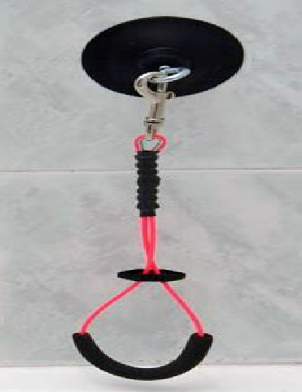
This is an odd item, and there really is no perfect section for it. Nooses, miscellaneous, tub restraint, quick-fix hardware — take your pick.
I am not going to cover the noose itself as much as the suction cup it attaches to, because that is where the real issue lives.
Like a wall-mount grooming arm, this is a specialty item. It is designed for a grooming shop using a home bathtub or some other built-in pet washing station that does not have preinstalled eyelets to attach a noose or loop to.
I understand why it exists. I just do not like treating a suction cup stuck to a wet wall as if it is the same thing as a real restraint anchor.
A suction cup noose looks like restraint hardware, but it is really an attachment gamble stuck to a wet wall.
⚠️
Operator rule
A suction cup grooming noose may be a temporary workaround. It is not my idea of a professional anchor plan for a grooming tub that will handle wet, twisting, thrashing dogs.
🗺️
Use This Page Like a Tub Restraint Reality Check
This page is less about the noose and more about whether a suction cup is a smart anchor point in a wet grooming tub.
🛁
What It Is
A noose or loop attached to a suction cup for tubs or wash stations without restraint eyelets.
🎯
Specialty Use
This belongs in home bathtubs, built-in wash stations, and odd setups without proper anchor points.
🧱
Anchor-Point Oops
Custom tubs should be planned with real restraint points before tile and backer board go up.
⚠️
Wet Wall Problem
Suction cups may resist straight pull, but dogs twist, slide, thrash, and pull sideways.
🛁
What a Suction Cup Grooming Noose Is
It is a grooming loop attached to a suction cup instead of a fixed tub eyelet, wall anchor, or grooming arm.
A suction cup grooming noose is basically a restraint loop attached to a suction cup that sticks to a smooth surface.
The noose part is not what makes it unusual. Grooming nooses are common. The suction cup attachment point is the unusual part.
The idea is simple enough: if the tub or wash station does not have a restraint eyelet, the suction cup gives you a temporary place to attach the loop.
That may make sense in a home bathtub, a temporary wash area, or a built-in pet washing station that was not originally designed like a professional grooming tub.
But the moment you are relying on that suction cup to restrain a wet dog that may weigh over 100 pounds and may decide it is done bathing, the conversation changes.
🎯
Why This Is a Specialty Item
Most real grooming tubs already have restraint points.
I say this is a specialty item because every prefabricated grooming tub I have seen, whether stainless steel, plastic, or fiberglass, came with preinstalled eyelets for use with nooses.
That means a suction cup noose is usually not solving a normal professional grooming tub problem.
It is usually solving a bathtub problem, a custom wash-station problem, or a “somebody forgot the anchor point” problem.
The only time I have seen these in use is when they were used with a custom-built walk-in tub that had a tile or otherwise smooth backsplash.
That is exactly the kind of setup where I start wondering why a real anchor point was not planned before the wall was finished.
📌
Specialty lane
This is not a normal first-choice restraint point for a professional tub. It is a workaround for smooth surfaces when better restraint points are missing.
🧱
The Custom Tub Anchor-Point Oops
If you are building the tub, build the restraint point into the wall.
When I saw suction cup nooses used with custom walk-in tubs, I wondered why, after so much effort and cost went into designing a custom tub, the designer or shop owner failed to frame the back wall for an anchor point.
A simple steel eye bolt or proper restraint anchor could have been planned before the backer board, tile, or finished splash went in.
Instead, the suction cup approach looked like a quick fix to an oops.
That is the part that bothers me.
If you are already building a custom wash station, the restraint points should be part of the design, not an afterthought stuck to the wall with suction.
Grooming tubs are not just pretty tile, drains, sprayers, and shampoo bottles. They need safe restraint points in the places where wet dogs will actually be handled.
⚠️
Build-out warning
Do not finish a custom tub wall and then discover you forgot where the dog is supposed to be safely restrained. Plan anchor points before the wall is closed.
⚠️
Why Suction Cups Make Me Nervous in Grooming Tubs
Wet walls, soap, hair, conditioner, and thrashing dogs are not the ideal environment for a suction-based restraint point.
Anyone who has used suction cups can attest to the fact that they have a hard time remaining both vertically and laterally secure when attached to a smooth surface.
Now attach an animal to it.
That animal may weigh over 100 pounds. That animal may be wet. That animal may be scared. That animal may be thrashing, twisting, backing up, lunging, or trying to pull the entire situation off the wall.
Sure, pulling a suction cup straight off may be somewhat difficult when everything is clean, dry, and perfectly positioned.
But dogs do not pull like lab equipment. They twist, thrash, slide, lunge, and change angles at the worst possible moment.
Suction cups also have a tendency to slide around the surface they are attached to, especially on a wet surface like what you find in a grooming tub.
That sliding matters because the restraint does not need to pop straight off to become a problem. It only needs to move enough to reduce control when the dog is already fighting the bath.
⚠️
Wet surface warning
A suction cup stuck to a wet tub wall is not the same thing as a fixed eyelet, framed wall anchor, or properly installed restraint point.
↔️
Straight Pull Is Not the Same as Sideways Pull
A suction cup may hold one kind of force better than another, but dogs do not care about clean engineering tests.
The problem with suction cup restraint is not only whether it can resist being pulled straight off the wall.
A dog in a tub may pull sideways. It may slide forward. It may spin. It may plant its feet and drop its weight. It may jump, twist, or slam against the end of the restraint.
That creates lateral force, vertical force, changing angles, and sudden jerks.
A suction cup may feel secure when you test it by hand. That does not mean I want to trust it as the primary restraint for a large wet dog that is trying to leave the county.
The failure does not have to be dramatic. It can slide. It can loosen. It can creep. It can slowly move until the dog has more room than you intended.
In a grooming tub, more room at the wrong moment is how a dog gets loose, falls, twists, bangs into the tub, or turns bath time into a rodeo with shampoo.
✅
When a Suction Cup Noose Might Make Sense
Narrow use case. Small margin for overconfidence.
I can see a suction cup grooming noose making sense in a narrow set of situations.
A home bathtub without eyelets. A temporary wash setup. A small, calm dog. A smooth, clean surface. A groomer or bather standing right there and not pretending the suction cup is a steel anchor buried in framing.
In that kind of low-risk setup, it may be better than nothing.
But “better than nothing” is not the same as “good professional design.”
I would still treat it as a helper, not a heavy-duty primary restraint point.
Swipe left/right to see the full table.
| Situation | Suction Cup Fit | Operator Take |
|---|---|---|
| Home bathtub | Possible narrow use. | Use with close supervision and realistic expectations. |
| Temporary wash station | Possible workaround. | Treat it as temporary, not a finished professional answer. |
| Small calm dog | More reasonable. | Still watch for sliding, loosening, and wet surface failure. |
| Custom professional tub | Poor first-choice plan. | Install real anchor points during construction. |
| Large or powerful dog | Not my preferred restraint point. | Use a real tub eyelet or properly installed anchor. |
🚫
When I Would Not Trust a Suction Cup Noose
The more the dog can test the restraint, the less I like the suction cup.
I would not trust a suction cup noose as my main restraint for a large dog, a powerful dog, a bath fighter, an aggressive dog, or any dog that is likely to thrash hard.
I would not use it as the planned restraint point in a professional tub when real eyelets or anchor points could have been installed.
I would not use it and then walk away, turn my back, or pretend the suction cup is doing the same job as a fixed piece of hardware.
The main issue is not that suction cups never work.
The issue is that when they fail, slide, loosen, or move, they will do it while attached to a wet animal in a slippery tub.
That is not the moment I want my restraint system making a surprise career change.
⚠️
Large dog warning
A dog over 100 pounds thrashing in a wet tub is not the correct test subject for a suction cup restraint point.
🔩
Better Tub Anchor Planning
The better answer is usually a real restraint point planned before the tub is finished.
A professional grooming tub should have proper restraint points.
That may mean factory-installed eyelets on a prefabricated grooming tub. It may mean planned wall blocking and a properly installed restraint anchor. It may mean a tub design that accounts for where dogs will stand, where the bather will stand, and where the restraint needs to attach.
The key is planning.
If the wall is being framed, blocked, tiled, waterproofed, and finished, that is the time to decide where the restraint points go.
Do not wait until the tub is beautiful and finished and then realize the only thing holding the dog is a suction cup stuck to wet tile.
That is not design. That is a patch.
📌
Build it right
Restraint points are part of the wash-station design. They should be planned with the same seriousness as drainage, waterproofing, water access, and staff movement.
✅
My Operator Verdict on Suction Cup Grooming Nooses
Useful only as a narrow workaround. Not a serious professional anchor plan.
My verdict is that suction cup grooming nooses are specialty workarounds.
They may make sense for a home bathtub, a temporary setup, or a smooth-surface wash station that lacks any better restraint option.
But in a professional grooming environment, I do not want to rely on a suction cup as the main restraint point for wet dogs, large dogs, powerful dogs, or dogs that may thrash.
Prefabricated grooming tubs usually come with eyelets. Custom tubs should be designed with restraint points before the wall is finished.
A suction cup may resist a straight pull for a while, but dogs pull sideways, twist, lunge, slide, and change angles. Wet surfaces make the whole thing less trustworthy.
For small, calm, temporary use, maybe.
For a professional grooming tub with real restraint needs, build the anchor correctly.
⚠️
Final take
A suction cup noose is a workaround for missing hardware. It should not become the professional plan when a real anchor point can be installed.
❓
Suction Cup Grooming Noose FAQ
Straight answers about tub restraint, suction cups, anchor points, custom tubs, and wet surface problems.
What is a suction cup grooming noose?
It is a grooming noose or loop attached to a suction cup that sticks to a smooth surface, usually in a tub or wash station.
Why is this a specialty item?
Most prefabricated grooming tubs already come with restraint eyelets. Suction cup nooses usually show up when a bathtub or custom wash station lacks proper anchor points.
Do I consider it a professional first-choice restraint point?
No. I see it more as a workaround than a proper professional anchor plan.
What is the custom tub problem?
If someone is building a custom walk-in tub, the wall should be planned and framed for proper restraint points before the finished wall goes up.
Why do suction cups make me nervous?
Grooming tubs are wet, slippery environments. Dogs pull, twist, slide, thrash, and change angles, and suction cups can move or loosen under those conditions.
Is straight pull the only issue?
No. Sideways pull, sliding, vertical force, sudden jerks, and changing angles all matter. Dogs do not pull in one neat direction.
When might one make sense?
It may make sense for a home bathtub, temporary setup, small calm dog, or low-risk wash situation where no better restraint point exists.
When would I not trust it?
I would not trust it as the main restraint for large dogs, powerful dogs, bath fighters, aggressive dogs, or professional tubs where proper anchors could be installed.
What is the main lesson?
Use suction cup nooses only as narrow workarounds. For real grooming tubs, plan and install real restraint points.
🐾
Bottom Line: Do Not Let a Suction Cup Replace Real Tub Planning
The suction cup may stick. That does not make it a proper professional anchor point.
Suction cup grooming nooses are odd little specialty tools.
They may help in a home bathtub, temporary wash station, or smooth-surface setup that lacks better restraint points.
But in a professional grooming tub, especially with large or difficult dogs, I want real restraint hardware.
Prefabricated grooming tubs usually include eyelets. Custom tubs should be planned with anchor points before the wall is finished.
A suction cup stuck to a wet wall may look convenient, but convenience is not the same thing as control.
My vote: workaround only, not a professional build-out plan.