Grooming Dryers • Stand Dryers • Fluff Dryers • Finish Dryers • Curly Coats • Hands-Free Drying • Grooming Room Production
Stand Grooming Dryers: Finish Drying, Fluff Work, Curly Coats, and the Wheel Problem Nobody Escapes
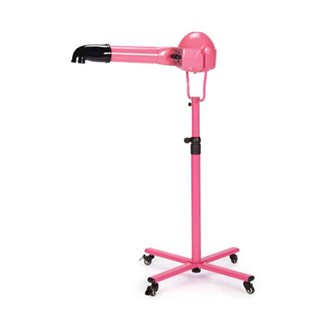
Stand dryers, also known as fluff dryers or finish dryers, are another necessity for a productive and profitable grooming shop.
Force dryers remove bulk water. Stand dryers finish the coat.
These dryers are used to complete the drying process, remove remaining moisture from the animal’s coat, and give the groomer controlled hands-free airflow while brushing, separating, straightening, and finishing the hair.
A stand dryer is especially important on curly coats. The combination of warm air and brushing can straighten the coat so the groomer can produce a uniform, crisp, professional finish on poodles and poodle mixes such as Cockapoos, Yorkipoos, Maltipoos, Shih-poos, and the rest of the curly-coated gang that shows every shortcut you took.
In my experience, a stand dryer is an absolute necessity for any grooming shop that wants finished dogs to look professionally groomed instead of mostly dry and vaguely hopeful.
⚠️
Operator rule
A stand dryer is not just a slower dryer. It is the finish tool that lets the groomer brush, straighten, separate, and control the coat while warm air stays where it is needed.
🗺️
Use This Page Like a Stand Dryer Buying and Use Check
Stand dryers are simple to understand, but they carry a lot of finish-quality and workflow weight in a grooming room.
🧍
Why Stand Dryers Matter
Stand dryers finish the drying process and give the groomer controlled hands-free airflow.
✂️
Curly Coat Finish
Warm air and brushing straighten curly coats so the haircut can be crisp, even, and professional.
👐
Hands-Free Control
The groomer can brush, separate, stretch, and manipulate coat while air stays on the work area.
🐕
Less Invasive Drying
Lower air velocity and noise can make stand dryers easier for some fearful or difficult dogs to tolerate.
🛞
The Wheel Problem
Dog hair eventually finds the wheels, bearings, and spindles, because apparently that is its life purpose.
✅
Operator Verdict
I consider a stand dryer an absolute necessity for any grooming shop doing professional finish work.
🖼️
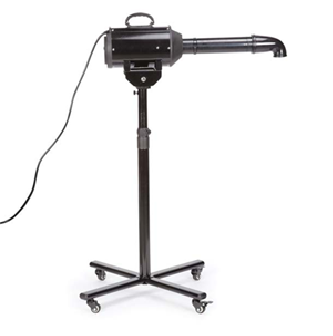
Stand Grooming Dryer Examples
These examples show the type of stand dryer used for hands-free finish drying, coat straightening, and fluff work.
🧍
Why Stand Dryers Matter in a Grooming Room
They finish what the force dryer starts.
Stand dryers are used to complete the drying process and remove all traces of moisture from the animal’s coat.
That matters because a damp coat does not cut the same way as a properly dried coat. Damp hair clumps, bends, curls back on itself, hides unevenness, and makes the finished groom look less precise.
A force dryer is excellent at removing bulk water, but it is not the ideal tool for every finishing job. The force dryer is the blast stage. The stand dryer is the controlled finish stage.
A good stand dryer lets the groomer work the coat while air stays on the exact area being brushed or finished. That changes the quality of the groom.
The difference between a dog that is dry enough to clip and a dog that is properly finish dried can be the difference between a haircut that looks crisp and a haircut that looks like it gave up halfway through.
📌
Main job
A stand dryer is the finish dryer. It helps remove final moisture, straighten coat, fluff coat, and give the groomer enough control to produce a clean final groom.
✂️
Curly Coats Are Where Stand Dryers Prove Their Value
Warm air plus brushing is what turns curly hair into a coat the groomer can cut cleanly.
Stand dryers commonly have a heating element that warms the exiting air.
This is exceptionally useful because the combination of warm air and brushing can straighten curly coats.
That allows the hair on breeds such as poodles and poodle mixes — Cockapoos, Yorkipoos, Maltipoos, Shih-poos, and similar coat types — to be completely straightened before the final haircut.
That straightened coat is what allows the groomer to provide a truly uniform, crisp, professional groom.
Without proper finish drying, curly coat can dry curled, waved, kinked, clumped, or uneven. Then the haircut follows that bad preparation, and the groomer is trying to cut a professional shape into a coat that was never properly set up.
The finished product is directly tied to the quality of the preparation work. A stand dryer is one of the main tools that makes that preparation possible.
⚠️
Coat prep warning
Curly-coated dogs expose lazy drying. If the coat is not properly dried and straightened, the haircut will show it.
👐
The Most Useful Feature: Hands-Free Controlled Airflow
The dryer holds the air position so the groomer can use both hands on the dog and coat.
The most useful feature of a stand dryer is that it allows a constant and often adjustable velocity and temperature of air to be applied to selected areas of the coat hands-free.
That frees the bather or groomer to brush, separate, stretch, lift, fluff, or otherwise manipulate the coat as needed while it dries.
That is a big deal.
Trying to hold a hose, control a dog, and brush a coat at the same time can turn grooming into a three-handed job performed by a two-handed person.
A stand dryer solves part of that problem. The dryer stays aimed. The groomer works the coat. The air keeps drying the area being brushed.
That is why stand dryers matter for finish quality. They let the groomer slow the process down just enough to do it correctly, without stopping the airflow every time both hands are needed.
📌
Operator translation
A stand dryer gives the groomer a third hand made of warm air. It is not glamorous, but it is extremely useful.
🐕
Stand Dryers Can Be Easier on Fearful or Difficult Dogs
Lower noise and lower air velocity can matter when the dog already hates the entire drying discussion.
Fearful or difficult-to-dry pets may find a stand dryer less invasive and disturbing than a force dryer.
That is because stand dryers usually operate with lower air velocity and lower noise than the big tub-side force dryers.
A force dryer can feel like a leaf blower having an emotional episode. Some dogs tolerate it fine. Some dogs do not.
A stand dryer can give the groomer a calmer way to continue drying while brushing and handling the coat.
This does not mean every nervous dog suddenly becomes cooperative because you rolled over a stand dryer. Dogs are still dogs, and some of them brought a full complaint department with them.
But the lower velocity and more controlled airflow can make the drying process less confrontational than blasting the dog with brute force.
🔥
Stand Dryers Do Not Need Brute Air Volume to Be Effective
Warm controlled air can be more useful than raw blasting power during finish work.
Since stand dryers commonly have a heating element, they do not need a tremendous volume of exiting air to be effective at their intended purpose.
The goal is not to rip water out of the coat at maximum violence. That is the force dryer’s job.
The stand dryer’s job is controlled drying, finish work, brushing support, coat straightening, and keeping air on a selected area while the groomer works.
Too much air during finish work can be counterproductive. It can blow coat everywhere, tangle hair, make brushing harder, stress the dog, and turn a careful coat-prep stage into a windstorm.
A good stand dryer gives the groomer enough air and enough heat to work the coat without turning every dog into a weather event.
⚠️
Heat reminder
Warm air is useful. Hot careless air is not. Even with a stand dryer, the groomer still needs to watch the dog, the coat, the skin, the drying distance, and the heat setting.
🛞
The Only Real Negative I Keep Running Into: Wheels
Dog hair eventually infiltrates everything, including your optimism.
The only negative I have consistently come across in using stand dryers is the wheels.
No matter how well they are constructed or how intricately they are designed, it seems inevitable that during the course of use — being rolled from one place to the next — dog hair will infiltrate the bearings or spindle of the wheel and cause it to lock up.
In all my years, I have yet to find a perfect workaround to prevent this or an easy way to clean the hair out once it tangles inside the wheel.
Basically, you have to accept that at some point the wheels may no longer turn.
Then you are forced to either lift the unit to move it or slide it across the floor on wheels that have chosen retirement.
This is not usually a reason to avoid stand dryers. It is just one of those grooming-room realities. Dog hair wins a lot of small battles.
📌
Wheel reality
The dryer may be excellent. The wheels will still eventually meet dog hair, and dog hair has never respected machinery.
💵
Current 2026 Market Snapshot
Stand dryer pricing still depends heavily on brand, heat control, airflow control, stand quality, and whether the unit is truly professional-grade.
Current stand grooming dryer prices vary widely.
Budget stand-style grooming dryers can still appear around the high $200s, while professional heated, variable-speed, stand-mounted dryers commonly sit closer to the mid-$600s and above depending on the model, features, and retailer.
That price spread makes sense because not every stand dryer is trying to do the same job.
A basic dryer may be enough for lighter use, small shops, or backup duty. A better professional dryer should give stronger build quality, better controls, more predictable heat, better airflow adjustment, better stand hardware, better parts support, and better daily-use durability.
Do not buy only by price. Buy by how well the dryer supports finish work, how easy it is to aim, how stable the stand is, how controllable the heat and airflow are, and whether the machine will survive being rolled through a room full of dog hair for years.
✅
Stand Dryer Buying Checklist
Before buying, make the dryer survive these questions.
- Does the dryer provide controlled hands-free airflow for finish drying?
- Does it have useful heat control, not just “warm enough to make everyone nervous”?
- Does it have adjustable air velocity for different coat types and dog tolerance levels?
- Is the stand stable enough to stay where aimed during real grooming use?
- Is the nozzle or dryer head easy to position over the table?
- Can the groomer brush, separate, and manipulate the coat comfortably while the dryer is aimed?
- Is the dryer quiet enough that nervous dogs and staff can tolerate it better than a force dryer?
- Is the electrical draw appropriate for the grooming room circuit?
- Are filters, heating elements, hoses, nozzles, switches, and replacement parts available?
- Are the wheels and base sturdy enough for daily grooming-room movement?
- Can the wheels be cleaned, replaced, or serviced when dog hair inevitably attacks them?
- Does this dryer improve coat finish, or is it just an expensive fan on a pole?
⚖️
Practical Stand Dryer Comparison
The right dryer depends on coat type, finish standards, shop volume, and how much control the groomer needs.
Swipe left/right to see the full table.
| Stand Dryer Feature | Why It Matters | What Goes Wrong When Ignored | Operator Take |
|---|---|---|---|
| Heat control | Warm air helps straighten and finish coat. | Too little heat slows drying; too much heat creates safety and comfort problems. | Heat should be useful, adjustable, and monitored. |
| Air velocity control | Different coats and dogs need different airflow levels. | Too much air blows coat everywhere; too little air wastes time. | Adjustable airflow is worth having. |
| Hands-free positioning | The groomer needs both hands to brush and manipulate coat. | Poor positioning makes the dryer fight the groomer instead of helping. | The stand and head should stay where they are aimed. |
| Noise level | Stand dryers are often used on dogs already tired of the drying process. | Extra noise increases stress and makes the room harder to work in. | Lower noise is one reason stand dryers help fearful dogs. |
| Wheels and base | The dryer has to move around the room. | Dog hair locks up wheels and turns movement into dragging or lifting. | Inspect wheel quality, but accept that dog hair eventually attacks. |
| Replacement parts | Dryers used daily need filters, parts, switches, nozzles, and service support. | A broken small part can turn the whole dryer into shop clutter. | Buy equipment with parts support, not mystery hardware. |
🚫
Common Stand Dryer Mistakes
Stand dryers are finish tools. Problems start when people treat them like decoration or backup air.
Swipe left/right to see the full table.
| Mistake | Why It Hurts | Better Move |
|---|---|---|
| Skipping the stand dryer and relying only on force drying | Force dryers remove water but do not provide the same controlled finish-drying workflow. | Use force drying for bulk water removal and stand drying for finish work. |
| Letting curly coats dry without proper brushing and warm air | The coat dries curled, uneven, or clumped, making the haircut less crisp. | Use warm hands-free air while brushing and straightening the coat. |
| Buying a weak stand that will not stay positioned | The groomer keeps fighting the dryer head instead of working the coat. | Check stand stability and positioning before buying. |
| Ignoring wheel quality | Dog hair eventually locks up the wheels and makes the dryer annoying to move. | Buy decent wheels and expect maintenance or eventual replacement. |
| Using too much heat | Heat can irritate skin, stress dogs, and create safety issues. | Monitor temperature and dog comfort while drying. |
| Treating the stand dryer as optional | Finish quality suffers, especially on curly, delicate, or styled coats. | Consider a stand dryer basic professional equipment. |
✅
My Operator Verdict on Stand Grooming Dryers
In my experience, a stand dryer is an absolute necessity for any grooming shop.
My verdict is simple: a stand dryer is basic professional grooming equipment.
It completes the drying process, removes remaining moisture, supports finish work, and gives the groomer controlled hands-free airflow while brushing and manipulating the coat.
It is especially important for poodles, poodle mixes, and other curly-coated dogs where warm air and brushing are needed to straighten the coat and produce a crisp, even haircut.
It is also less invasive than a big force dryer for many fearful or difficult dogs because the air velocity and noise are usually lower.
The only consistent negative I have found is the wheels. Dog hair eventually finds them, wraps itself into the moving parts, and turns the dryer into something you lift, drag, or shove around the room while saying words not printed in the employee handbook.
That wheel problem is annoying, but it does not change my recommendation.
A serious grooming shop should have a force dryer for bulk water removal and a stand dryer for finish work. Trying to skip the stand dryer is usually where coat quality starts paying the price.
⚠️
Final take
A stand dryer is not optional in a professional grooming room that cares about finish quality. Buy one with good controls, stable positioning, serviceable parts, and wheels you understand will eventually lose their war with dog hair.
❓
Stand Grooming Dryer FAQ
Straight answers about stand dryers, fluff dryers, finish drying, curly coats, heat, airflow, and wheel problems.
What is a stand grooming dryer?
A stand grooming dryer is a hands-free dryer used to finish drying, fluff, straighten, and work the coat while the groomer brushes or manipulates the hair.
Is a stand dryer the same as a fluff dryer?
Stand dryers are often called fluff dryers or finish dryers because they are commonly used for final coat preparation and finish work.
Why are stand dryers important for curly coats?
Warm air combined with brushing can straighten curly coats, making it easier to produce a clean, even, professional haircut.
Can a force dryer replace a stand dryer?
Not completely. A force dryer is excellent for blasting water out of the coat, but a stand dryer gives controlled hands-free airflow for finish drying and brushing.
Do stand dryers usually have heat?
Many stand dryers have heating elements because warm air is useful for straightening coat and finishing the drying process.
Are stand dryers better for fearful dogs?
They can be easier for some fearful or difficult dogs because the air velocity and noise are usually lower than a powerful force dryer.
What is the biggest stand dryer problem?
In my experience, the biggest recurring annoyance is the wheels. Dog hair eventually gets into the bearings or spindles and causes them to lock up.
Are stand dryers worth the money?
Yes, for a professional grooming shop. A stand dryer improves finish quality, supports curly coat prep, frees both hands, and helps produce a more professional groom.
What should I look for when buying one?
Look for stable positioning, useful heat control, adjustable airflow, manageable noise, durable stand hardware, serviceable parts, and wheels that can survive as long as possible in a room full of hair.
🐾
Bottom Line: Stand Dryers Are Finish Tools, and Finish Matters
A dog can be mostly dry and still not be groom-ready.
Stand dryers are necessary because they help turn a dry-enough coat into a properly finished coat.
They remove remaining moisture, provide hands-free controlled airflow, support brushing and coat manipulation, help straighten curly coats, and make professional finish work possible.
They are also less invasive than force dryers for some dogs because the airflow is usually lower velocity and the noise is usually less aggressive.
The wheels will probably annoy you eventually. Dog hair will find them. Dog hair finds everything.
That does not change the recommendation. A serious grooming room needs a stand dryer.