Grooming Dryers • Cage Dryers • Kennel Dryers • Multi-Cage Dryers • Heated Cage Dryers • Grooming Dryer Safety • Drying Workflow
Cage Grooming Dryers: Useful Production Tool, Dangerous Lazy Tool, and Not a Set-It-and-Forget-It Machine
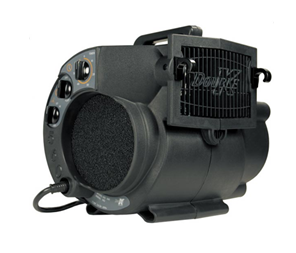
Cage dryers are one of the more controversial grooming systems, and for good reason.
Used properly by trained professionals who monitor the dogs closely, a cage dryer can be a cost-effective way to reduce hands-on drying labor and keep multiple dogs moving through the grooming process.
However — comma — when used improperly, or when mixed with complacency and the expectation that nothing can go wrong, cage dryers can severely injure or kill a dog.
That is the whole cage dryer conversation in one sentence. Useful tool. Serious risk. No room for lazy.
A cage dryer is not supposed to replace the groomer’s brain. It is supposed to support the drying workflow while staff remain awake, attentive, and responsible for every dog sitting in front of that airflow.
⚠️
Operator rule
A cage dryer is only as safe as the monitoring system around it. Heat, cage temperature, dog condition, airflow, cage visibility, and staff attention are not optional details.
🗺️
Use This Page Like a Cage Dryer Reality Check
Cage dryers can help production, but only when safety, sizing, visibility, heat, and workflow are handled like serious operating rules.
🏠
What Cage Dryers Do
Cage dryers use air volume more than air speed to move moisture while dogs wait in cages.
🔥
Heat and Visibility
Heated cage dryers require visible thermometers, staff attention, and cages that stay in plain sight.
📏
Sizing Matters
Bigger airflow is not automatically better when the dog is confined inside a cage.
✅
Proper Use
Cage dryers work best for short-coated dogs or for removing excess moisture before hand drying.
🔌
Single vs Multi-Cage
Front-hanging single cage units and hose-fed multi-cage systems have different headaches.
✅
Operator Verdict
Cage dryers can make money, but only when they are not used as the lazy substitute for proper drying.
🖼️
Cage Grooming Dryer Examples
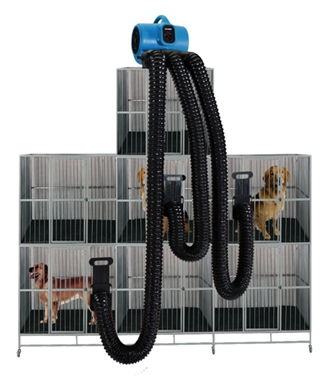
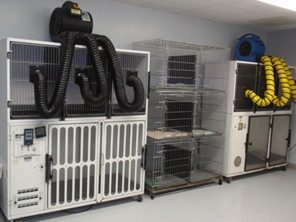
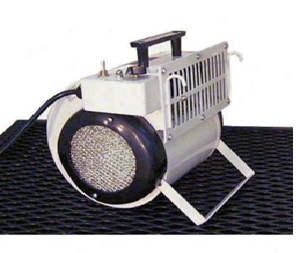
These examples show cage dryer designs used to move air into one or more grooming cages during the drying workflow.
🏠
What Cage Grooming Dryers Actually Do
Cage dryers use air volume more than air speed to reduce moisture while the dog waits.
Cage dryers, which may or may not have a heating element, use air volume rather than air speed to dry one or more dogs in cages.
They are not the same tool as a force dryer. A force dryer blasts water out of the coat with concentrated air. A cage dryer moves air through or around the cage so moisture can be reduced while the dog waits.
Used properly by trained professionals who monitor the dogs closely, a cage dryer can reduce the hands-on labor needed to dry multiple dogs at one time.
That can improve productivity. It can free the bather or groomer to work on another dog. It can keep the drying process moving instead of turning every dog into a one-at-a-time bottleneck.
But this is not magic. Cage drying is support drying. It is not a permission slip to stop paying attention.
📌
Main job
A cage dryer should reduce moisture and support workflow. It should not become the lazy total drying solution for every dog in the room.
🔥
The Safety Warning: Heated Cage Dryers Demand Real Monitoring
Heat plus confinement plus complacency is where cage dryers become dangerous.
I would never recommend using a cage dryer that has a heating element without highly visible cage thermometers and close monitoring of the dogs inside those cages.
The only way this works safely is if the people in the grooming room — groomers, bathers, assistants, whoever is responsible — are constantly attentive.
That means checking the dogs, checking the cage temperature, checking the surrounding area, watching body language, and making sure the cages are located where staff can see them.
The dogs cannot be tucked behind a wall, off in a back corner, or placed somewhere out of sight and out of mind while people pretend drying is happening safely because nobody has screamed yet.
One of the most common problems with heated versions is that they do not only heat the air passing through the cage. They can also heat the metal cage itself.
That metal can get hot enough to cause severe burns to unprotected skin such as bellies, pads, and private areas that come into contact with it.
That is not a small detail. That is the kind of detail that separates professional use from negligence wearing a grooming smock.
⚠️
Hard safety rule
No heated cage dryer should ever depend on memory, optimism, or “I will just be gone for a second.” Use visible thermometers, keep dogs visible, monitor constantly, and stop pretending heat is harmless because the dryer has a nice product photo.
📏
Bigger Airflow Is Not Automatically Better
We are drying a living animal in a confined space, not a wet towel on a fence post.
Another issue is that many groomers feel bigger is better and that higher air volume must mean a dog will dry faster.
In theory, more air can dry faster. That would be just fine if we were drying a non-living thing.
But oversized heated cage dryers can fail to allow enough cool fresh air to enter the cage. As a result, even an open wire grooming cage can become dangerous for a dog left unattended or negligently placed in that situation.
This is why manufacturer instructions and cage-size recommendations matter.
It is imperative that you purchase the properly sized unit for the dimensions of the grooming cages it will be used on.
The goal is not to stuff as much hot air into a cage as possible. The goal is controlled airflow, safe temperature, visible monitoring, and moisture reduction without turning the cage into a little metal bad-idea oven.
⚠️
Sizing warning
Do not oversize a heated cage dryer because the bigger number looks faster. The dog needs safe airflow, safe temperature, and fresh air exchange, not a forced-air punishment chamber.
🚫
What Cage Dryers Should Not Be Used For
Cage drying is not a replacement for proper coat preparation and finish drying.
Unless the dog is short-coated, such as a Beagle, Dachshund, Labrador, or similar coat type, a cage dryer should not be used as a total drying solution.
For breeds with delicate, long, or curly hair, a cage dryer will not properly separate and dry the hair into finish-groom-ready condition.
As a result, the finished groom can look poorly done.
The finished product is directly proportional to the quality of the preparation work that goes into it.
All too many times, cage drying gets used as the lazy solution to avoid the labor of hand drying dogs.
That is not a grooming system. That is cutting corners with warm air.
Long, curly, delicate, styled, or finish-sensitive coats usually need to be removed while still somewhat damp and then properly hand dried with a stand dryer while the groomer brushes and straightens the coat.
📌
Finish rule
Cage dryers can reduce moisture. They do not replace the stand dryer, brush, and groomer when coat finish matters.
✅
How I Would Actually Use Cage Dryers
Used properly, cage dryers can be a wonderful and profit-enhancing addition to a grooming shop.
Warnings aside, let us get into the positive.
Used properly, cage dryers can be a wonderful and profit-enhancing addition to a grooming shop.
In application, I recommend using them one of two ways.
First, for short-coated dogs. After most of the water has been removed with a force dryer, a cage dryer can be used to continue the drying process. This frees the groomer or bather to perform other tasks or to hand dry a more labor-intensive coat while the short-coated dog continues drying safely under supervision.
Second, for longer-coated or curly-coated dogs. The dog may be placed in a cage dryer on low heat or no heat to remove some excess moisture, but not to fully dry the dog.
Once the groomer or bather is ready, the dog is removed while still somewhat damp and hand dried using a stand dryer.
This keeps the drying process continuous and gradual without allowing the coat to dry in a curled, tangled, or unfinished state.
In most cases, it is dog out and dog in. A dog needing hand drying comes out of the cage dryer, and another dog goes in to wait its turn and lose excess moisture.
📌
Proper workflow
Force dryer first. Cage dryer only as controlled support. Stand dryer for finish work. That is a workflow. Throwing wet dogs in cages and hoping for the best is not.
🔌
Single Cage Units vs Multi-Cage Hose Systems
There are basically two common cage dryer setups, and each has its own annoyances.
There are basically two types of cage dryers.
The first type hangs on the front of a single grooming cage using hooks on the dryer.
The second type sits on top of the cage bank and uses hoses to deliver air to multiple cages at one time.
Both can be useful. Both can be misused. Both need monitoring. Both can become a nuisance in different ways.
Swipe left/right to see the full table.
| Cage Dryer Type | Main Advantage | Main Problem | Operator Take |
|---|---|---|---|
| Single cage dryer | Simple, portable, usually less maintenance, easy to move cage to cage. | Extends off the cage front, can block visibility, can get dropped, must be sized and monitored carefully. | Useful and straightforward when staff stay attentive. |
| Multi-cage hose system | Can dry or reduce moisture in multiple cages at one time. | Hoses dangle, tear, trip people, get stepped on, and plastic cage connections break. | Good production tool when layout, hose management, and monitoring are handled. |
🏠
Single Cage Dryer Units
Usually lighter, portable, and less of a maintenance hassle, but not risk-free.
The single cage units usually require less maintenance and are generally less of a hassle to deal with.
Most are lightweight and moderately portable, allowing them to be quickly moved from one cage to another as needed.
Many also provide airflow and temperature controls so the level of air and heat the pet receives can be adjusted.
Used properly and monitored closely, these units will do what they are supposed to do and can add productivity and profitability to a grooming salon.
The negative is that they extend off the front of the cage.
In a small or cramped grooming room, that can become a work-around nuisance. People bump into them. They get in the way. They can also block a clear view into the cage if they are too large or hung poorly.
That visibility issue matters. A smaller pet could be lying behind the dryer, suffering a heat-related illness, and not be easily seen.
Since these units must be physically removed and placed on another cage, it is also not uncommon for them to get dropped. Dropping them can break adjustment knobs, damage the housing, or destroy the heating element inside, which means repair if possible or trash if not.
⚠️
Single-unit warning
A front-hanging cage dryer must not block your view of the dog. If the machine hides the pet, the machine is now part of the safety problem.
🧵
Multi-Cage Hose Dryer Systems
They can dry multiple pets at once, but hoses bring their own little circus.
The multiple cage unit provides the obvious advantage of being capable of drying or reducing moisture in multiple pets at the same time.
Like the single cage unit, if operated properly and monitored with the safety of the pet first, it can greatly reduce the labor involved during the drying process.
These systems typically work by having a central unit, heated or unheated depending on the model, sitting on top of the cage bank. Hoses run from the unit to one or more cages.
The main issue I have come across with these systems is that the hoses can be annoying to deal with.
It is not uncommon for hoses to be left dangling onto the floor where they get stepped on, tripped over, kinked, or dragged around.
It is also not uncommon for hoses to get holes or tears during use, requiring repair or replacement.
The ends or connection points that affix them to cages are often plastic and can break. Then someone starts inventing a zip-tie engineering solution so the hose will continue to hang on the cage.
That does not mean the system is bad. It means hose management is part of the system, not an afterthought.
📌
Hose reality
Multi-cage dryers save labor when the hoses are managed. When the hoses are ignored, they become floor snakes with airflow.
💵
Current 2026 Market Snapshot
Cage dryer pricing still depends on single-cage versus multi-cage design, heated versus unheated airflow, blower power, hose kits, and commercial build quality.
Current cage dryer pricing still varies widely.
Single cage dryers and front-mounted cage units commonly sit around the low hundreds to roughly the $500 range depending on brand, airflow, heat controls, and retailer.
Multi-cage hose systems commonly cost more, especially when they include larger blower units, multiple hose attachments, cage-bank compatibility, and commercial accessories.
Larger commercial multi-cage systems can move into much higher price territory.
The important buying question is not only “what does it cost?” The better question is what the dryer does to labor, safety, visibility, heat control, workflow, hose management, and finish quality.
A cheap cage dryer used stupidly is expensive. An expensive cage dryer used lazily is still dangerous. Price does not replace supervision.
✅
Cage Dryer Buying Checklist
Before buying, make the dryer survive these questions.
- Is the dryer heated, unheated, or adjustable?
- Does the dryer match the cage size and cage style it will be used on?
- Does the manufacturer provide clear cage-size and use recommendations?
- Can cage thermometers be placed where staff can see them clearly?
- Will the dog remain visible while the dryer is attached or running?
- Can staff see the dog from normal work positions, not only by walking around a wall?
- Does the unit obstruct the front of the cage?
- If it uses hoses, where will the hoses hang, store, and route during use?
- Are hose ends, cage clips, knobs, filters, switches, and heating elements replaceable?
- What dogs will be excluded from heated cage drying because of age, health, stress, coat, or breed risk?
- Does the shop have a written monitoring rule, or is everyone relying on memory and vibes?
- Does this dryer improve workflow without tempting staff into lazy total drying?
🚫
Common Cage Dryer Mistakes
Most cage dryer problems begin with people treating a serious drying tool like a convenience appliance.
Swipe left/right to see the full table.
| Mistake | Why It Hurts | Better Move |
|---|---|---|
| Using heated cage dryers without thermometers | Staff cannot reliably know cage temperature by guessing from across the room. | Use visible thermometers and check them constantly. |
| Putting drying cages out of sight | Dogs can overheat, panic, collapse, or show distress without anyone noticing. | Keep drying cages in clear view of staff. |
| Assuming bigger airflow is always better | Oversized heated airflow can create dangerous cage conditions. | Match the dryer to the cage size and manufacturer guidance. |
| Using cage drying as the lazy total drying solution | Long, curly, delicate, or styled coats may dry poorly and finish badly. | Use cage drying to reduce moisture, then finish with stand drying and brushing. |
| Blocking the cage view with the dryer | A small dog can be hidden behind the unit while overheating or stressing. | Mount and size the unit so the dog stays visible. |
| Ignoring hose management | Multi-cage hoses get stepped on, torn, tripped over, and zip-tied back into service. | Plan hose routing, storage, inspection, and replacement. |
| Treating cage dryer safety as common sense | Common sense disappears when the room is busy, loud, wet, and behind schedule. | Use written rules, visible checks, and assigned responsibility. |
✅
My Operator Verdict on Cage Grooming Dryers
Cage dryers can be profitable, but they are not forgiving of lazy use.
My verdict is that cage dryers can be a wonderful and profit-enhancing addition to a grooming shop when used properly.
They can reduce hands-on drying labor, help short-coated dogs continue drying after force drying, and remove excess moisture from longer-coated dogs while they wait for proper hand drying.
But they are not harmless.
Heated cage dryers require visible thermometers, close monitoring, proper sizing, visible cage placement, and staff who do not treat confined dogs like laundry.
Cage dryers should not be used as the lazy way to avoid hand drying dogs that need coat separation, brushing, straightening, and finish work.
Single cage dryers are simpler and portable, but can block cage view and get damaged when moved around.
Multi-cage systems can reduce labor across several cages, but hoses, cage connections, trip hazards, tears, and plastic parts become part of the maintenance reality.
I like cage dryers as support tools. I do not like them as a substitute for staff attention.
⚠️
Final take
Cage dryers make sense when they are used to support the drying workflow under constant supervision. They become dangerous when heat, confinement, poor visibility, bad sizing, and complacency all get invited to the same party.
❓
Cage Grooming Dryer FAQ
Straight answers about cage dryers, heated drying, safety, visibility, short coats, curly coats, and multi-cage systems.
What is a cage grooming dryer?
A cage grooming dryer is a dryer used to move air through or around a grooming cage so a dog can continue drying or lose excess moisture while confined and monitored.
Are cage dryers safe?
They can be safe when properly sized, monitored, visible, temperature-controlled, and used by trained staff. They become dangerous when heat, confinement, poor visibility, and complacency are combined.
Should heated cage dryers have thermometers?
Yes. I would not use a heated cage dryer without highly visible cage thermometers and close staff monitoring.
Can a cage dryer fully dry every dog?
No. Cage dryers may fully dry some short-coated dogs, but they should not be used as the total drying solution for long, delicate, curly, or finish-sensitive coats.
What is the best use for cage dryers?
They work well for continuing the drying process on short-coated dogs after force drying, or for removing excess moisture from longer-coated dogs before stand drying.
Why is cage visibility so important?
Staff must be able to see the dog. A dog hidden behind a wall, behind a dryer, or in a poor viewing position can overheat, panic, collapse, or show distress without anyone noticing.
Is bigger airflow better?
Not automatically. Oversized heated airflow can create dangerous cage conditions. The dryer must be matched to the cage size and used according to manufacturer guidance.
What is the difference between single cage and multi-cage dryers?
Single cage dryers hang on one cage and are usually simpler and portable. Multi-cage systems sit on or near a cage bank and use hoses to deliver air to several cages.
What is the biggest cage dryer mistake?
Treating cage drying as a set-it-and-forget-it labor saver. Cage dryers require monitoring, especially when heat is involved.
🐾
Bottom Line: Cage Dryers Save Labor Only When They Stay Supervised
Useful tool. Real risk. No lazy use.
Cage dryers can help a grooming shop make more efficient use of drying time.
They can continue drying short-coated dogs, remove excess moisture from longer-coated dogs, and free staff to keep the workflow moving.
But they are not finish dryers for every dog, and they are not safe when heat and confinement are treated casually.
Use thermometers. Keep dogs visible. Size the dryer correctly. Follow manufacturer guidance. Watch the metal cage temperature. Do not block the view of smaller pets. Manage hoses. Inspect connections. Do not use cage drying as the lazy substitute for proper hand drying.
A cage dryer can be a profit tool. It can also be a lawsuit machine with a power cord if the shop gets stupid with it.