PAWS Pet Poison Plant Guide
Is Black Nightshade Poisonous to Dogs, Cats, Horses, and Livestock?
Yes, Black Nightshade, Solanum nigrum, should be considered poisonous to dogs, cats, horses, livestock, rabbits, poultry, and other animals. The plant contains steroidal glycoalkaloids, particularly solasonine and solamargine, that can injure gastrointestinal cell membranes and interfere with normal nervous-system signaling. Unripe green berries and immature green tissues generally present the greatest risk. Signs may include drooling, vomiting, diarrhea, abdominal pain, appetite loss, lethargy, weakness, incoordination, tremors, pupil changes, an abnormal heart rate, breathing difficulty, collapse, and potentially death after a major exposure.
About this guide: This page provides general pet-poisoning information and cannot diagnose or treat an individual animal. For any suspected exposure, contact a veterinarian or animal poison-control service immediately. Do not induce vomiting, give medication, or attempt home decontamination unless directed by a veterinary professional.
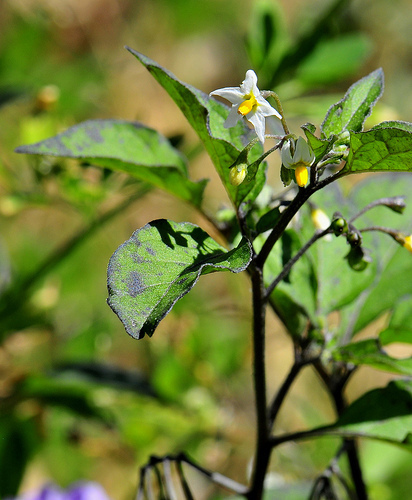
Black Nightshade
Solanum nigrum L.
Relevant botanical synonyms appearing in taxonomic literature include Solanum morella Desv. and Solanum humile Bernh. ex Willd.
The name Solanum nigrum is also used loosely for members of the broader black-nightshade complex, so North American plants may require separation from Solanum americanum, Solanum emulans, Solanum ptychanthum, and related taxa.
Older regional and infraspecific treatments:
Solanum schultesii Opiz
Solanum nigrum subsp. schultesii (Opiz) Wessely
Solanum schultesii and Solanum nigrum subsp. schultesii have been used for densely glandular-hairy plants now commonly included within or closely associated with the broad modern circumscription of Solanum nigrum.
Solanaceae
Black Nightshade, European Black Nightshade, Common Nightshade, Garden Nightshade, Blackberry Nightshade, Blackberry-Nightshade, Black-Berried Nightshade, Black-Fruited Nightshade, Hound’s Berry, Hound's Berry, Petty Morel, Poisonberry, Morel, Solanum nigrum, Solanum humile, Solanum morella, Solanum morella subsp. nigrum, Solanum schultesii, Solanum nigrum subsp. schultesii
“Deadly Nightshade” properly refers to Atropa belladonna, a separate and generally more dangerous plant containing atropine, hyoscyamine, and scopolamine. “American Black Nightshade” usually refers to Solanum americanum. “Eastern Black Nightshade” refers to Solanum emulans. “Wonderberry” or “Sunberry” most properly refers to Solanum retroflexum. “Bittersweet Nightshade” refers to Solanum dulcamara. “Solanum spp.” identifies the entire genus and is not an exact synonym for Solanum nigrum.
Solanum humile Salisb. and Solanum morella Desv. are superfluous historical names for Solanum nigrum. Solanum schultesii Opiz and Solanum nigrum subsp. schultesii (Opiz) Wessely occur in older regional treatments for densely glandular-hairy plants included within the broader Black Nightshade concept.
Steroidal Glycoalkaloids Are the Principal Toxic Constituents
The principal toxic constituents of Black Nightshade are steroidal glycoalkaloids. These compounds consist of a nitrogen-containing steroidal aglycone joined to one or more sugar chains. Their chemical structure allows them to interact with sterols in animal-cell membranes and, under some conditions, interfere with cholinesterase and other cellular functions.
In authenticated Solanum nigrum, the best-supported major glycoalkaloids are solasonine and solamargine. Both are derived from the steroidal alkaloid aglycone solasodine. The plant also produces numerous related glycosides, modified steroidal alkaloids, steroidal saponins, and other defensive metabolites.
The proportions of these compounds vary with plant organ, developmental stage, genetic population, environmental conditions, and fruit maturity. Black Nightshade poisoning should therefore not be reduced to one uniform compound at one predictable concentration.
Solasonine and Solamargine Are Not Chemically Interchangeable
Solasonine and solamargine share the aglycone solasodine but differ in their attached trisaccharide chains. Solasonine contains solatriose, while solamargine contains chacotriose. That sugar-chain difference affects membrane binding, biological activity, absorption, and toxicity.
Experimental membrane research found that solamargine disrupted phosphatidylcholine-and-cholesterol liposomes at concentrations where solasonine alone produced much less disruption. When the two naturally co-occurring glycoalkaloids were combined, their membrane-disrupting activity increased markedly.
This synergism is clinically important because an animal consumes a mixture rather than one purified compound. The combined effect of solasonine, solamargine, related alkaloids, saponins, and plant fibers may be greater than the effect predicted from one constituent in isolation.
Why Calling Every Nightshade Toxin “Solanine” Is Inaccurate
The word “solanine” is commonly used as a general label for nightshade toxicity, but it creates species-specific chemical confusion. α-Solanine and α-chaconine are most strongly associated with potatoes, Solanum tuberosum, particularly greened tubers, sprouts, and damaged potato tissue.
Black Nightshade has a different and much more diverse steroidal-alkaloid profile dominated by solasonine, solamargine, solasodine derivatives, and numerous related compounds. Older poison-plant references may use “solanine poisoning” broadly, but that terminology should not replace the directly documented chemistry of S. nigrum.
Chaconine should likewise not be listed as a confirmed principal Black Nightshade toxin merely because it occurs in potatoes and some other members of Solanum. Solanocapsine is associated more strongly with Jerusalem cherry and related ornamental nightshades than with authenticated S. nigrum.
Direct Research on Solasodine During Plant Development
Elsadig A. Eltayeb, Aliya S. Al-Ansari, and James G. Roddick studied changes in solasodine during the development of Solanum nigrum and Solanum incanum. Every tested organ produced solasodine, but the concentrations varied widely.
The smallest Black Nightshade leaves had the highest alkaloid concentration. As individual leaves expanded, the absolute amount of alkaloid could rise while its concentration declined because the compound became distributed through a larger tissue mass.
In the tested S. nigrum plants, roots contained higher solasodine concentrations than stems. This finding confirms that underground tissue is chemically active, but it does not prove that the root is always the most dangerous plant part under every field condition.
Small unripe fruits contained high solasodine concentrations. Both the concentration and the absolute amount per fruit declined as the berries matured. Fruit from older plants also tended to contain less alkaloid than comparable developmental stages from younger plants.
The Fruit Contains a Large and Changing Chemical Network
Wenwen Zhao, Tianyue Yan, Xiaobin Huang, and Yujie Zhang used liquid chromatography–tandem mass spectrometry and molecular networking to investigate fruits at different stages of maturity. Their analysis identified 114 steroidal glycoalkaloids rather than one or two isolated compounds.
During ripening, aglycones underwent reactions including hydroxylation and carboxylation, while sugar side chains underwent acylation and further glycosylation. These changes altered molecular weight, polarity, absorption, and metabolic behavior.
The investigators also identified 219 steroidal-alkaloid metabolites in a rat metabolism experiment. Metabolic pathways included deglycosylation, oxidation and reduction, sulfation, acetylation, and glucuronidation.
This research supports the observation that mature fruits are often less acutely toxic than immature green fruits. It does not establish that every ripe berry from every population is safe for every animal.
Ripe Berries Still Contain Steroidal Alkaloids
Research on ripe Solanum nigrum berries has continued to identify chemically active steroidal alkaloids. One investigation isolated four previously undescribed and six known steroidal alkaloids from the fruit, including hydroxylated derivatives of solamargine and solasonine.
A 2025 study isolated seven previously undescribed and four known steroidal alkaloids from ripe berries. Their identification confirms that maturity changes the chemical profile rather than eliminating all steroidal alkaloids.
Laboratory cytotoxic, anti-inflammatory, or antitumor activity of purified fruit compounds should not be converted into a prediction of natural animal poisoning. Those experiments use isolated substances and controlled concentrations rather than accidental ingestion of whole berries.
The relevant veterinary conclusion is narrower: ripe-looking berries cannot be declared universally toxin-free, particularly when species identification, cultivar, geographic population, and completeness of ripening are uncertain.
How the Glycoalkaloids Damage Cell Membranes
Steroidal glycoalkaloids interact with cholesterol and related sterols in cell membranes. Complex formation can alter membrane organization, increase permeability, disrupt ion gradients, and allow cellular contents to leak.
The gastrointestinal tract receives direct exposure after an animal chews or swallows the plant. Membrane disruption contributes to nausea, salivation, abdominal cramping, vomiting, diarrhea, inflammation, and fluid loss.
Solamargine’s chacotriose sugar chain appears particularly important to membrane activity. Structural modification of the sugar portion can sharply reduce or alter the compound’s biological effects.
Cell-membrane injury is therefore not produced by the steroidal aglycone alone. The intact glycoalkaloid, sugar-chain structure, coexisting compounds, membrane sterol content, concentration, and duration of contact all influence toxicity.
Cholinesterase Inhibition and Nervous-System Effects
Some steroidal glycoalkaloids inhibit acetylcholinesterase or related cholinesterases in laboratory systems. Cholinesterase normally breaks down acetylcholine after nerve transmission. Inhibition can allow acetylcholine signaling to persist abnormally.
This mechanism is biologically consistent with salivation, gastrointestinal hyperactivity, altered autonomic function, weakness, tremors, abnormal reflexes, and respiratory-muscle impairment.
However, natural Black Nightshade poisoning should not be described as identical to organophosphate poisoning. The strength of cholinesterase inhibition differs greatly among steroidal glycoalkaloids, and membrane disruption may be at least as important clinically.
A veterinarian must evaluate the whole syndrome rather than assuming that every drooling or trembling animal requires treatment as an organophosphate exposure.
Black Nightshade Is Not an Atropine Plant
True atropine, hyoscyamine, and scopolamine poisoning is characteristic of deadly nightshade, Atropa belladonna, and plants such as Datura, Brugmansia, and Hyoscyamus.
Those tropane alkaloids produce a classic antimuscarinic syndrome that may include dry mucous membranes, marked pupil dilation, rapid heart rate, urinary retention, reduced intestinal motility, overheating, agitation, delirium, seizures, and coma.
Atropine and scopolamine are not established as the defining toxins of authenticated Solanum nigrum. Black Nightshade can still cause altered pupils, confusion, weakness, behavioral changes, and abnormal heart rates through steroidal-glycoalkaloid toxicity.
An animal with profound dryness, extreme agitation, severe hyperthermia, urinary retention, and marked tachycardia may have eaten deadly nightshade, jimsonweed, another tropane-containing plant, or a medication rather than authenticated Black Nightshade.
Steroidal Saponins and Other Constituents
Black Nightshade also contains steroidal saponins and numerous other secondary metabolites. Saponins can interact with biological membranes and may add to gastrointestinal irritation, nausea, vomiting, diarrhea, and poor appetite.
The plant’s chemical complexity makes it difficult to assign every clinical sign to solasonine or solamargine alone. Whole-plant exposure can involve multiple glycoalkaloids, saponins, organic acids, phenolic compounds, fibers, and environmental contaminants.
Laboratory reports describing antimicrobial, anti-inflammatory, or antitumor effects of concentrated extracts do not establish that raw plant material is medicinal or safe for an animal.
Green Fruit and Young Tissue Usually Present Greater Risk
Unripe green berries generally contain higher concentrations of solasodine-related alkaloids than fully mature fruit. Young leaves and actively growing shoots can also contain substantial concentrations.
The term “green berry” refers to developmental immaturity rather than merely a naturally green-fruited species. Some related members of the Black Nightshade complex have mature berries that remain green, yellow-green, orange, or another color.
A berry’s external color cannot establish its identity, maturity, or chemical concentration. An animal exposure involving green or partly ripened fruit should receive particular caution, but dark fruit should not be assumed harmless.
Human Food Use Does Not Establish Animal Safety
Correctly identified and selected Black Nightshade forms have histories of human food use in parts of Africa, Asia, Europe, and elsewhere. Fully mature fruit may be eaten, and leaves from known food forms may undergo boiling or other traditional preparation.
That history depends on local taxonomic knowledge, selection of particular populations, complete fruit maturity, preparation, portion size, and human dietary experience. It does not establish a safe dose for dogs, cats, horses, cattle, sheep, goats, rabbits, poultry, pet birds, or reptiles.
An accidental animal exposure may involve a different member of the Black Nightshade complex, an immature plant, a chemically variable population, raw foliage, or a much larger amount relative to body size.
No part of the plant should be deliberately fed to an animal merely because certain humans eat selected forms after ripening or preparation.
Nitrate Is a Separate Potential Livestock Hazard
Black Nightshade can accumulate nitrate in vegetative tissue under some growing conditions. Exact-species agricultural research demonstrated that increasing nitrogen application substantially increased nitrate-nitrogen in the leaves.
Nitrate itself is less immediately damaging than nitrite. In ruminants, microorganisms in the forestomachs convert nitrate to nitrite. Nitrite oxidizes the iron in hemoglobin and produces methemoglobin, which cannot carry oxygen effectively.
The resulting syndrome is tissue hypoxia rather than ordinary glycoalkaloid poisoning. Animals may develop anxiety, rapid breathing, a rapid weak pulse, tremors, weakness, frequent urination, chocolate-brown blood or mucous membranes, cyanosis, seizures, collapse, and sudden death.
Nitrate accumulation is influenced by fertilization, drought, cool cloudy weather, rapid regrowth, shading, plant stress, herbicide injury, and other environmental conditions. The presence of Black Nightshade alone does not prove that nitrate concentrations are dangerous.
Glycoalkaloid and Nitrate Effects Can Overlap
A grazing animal may be exposed to steroidal glycoalkaloids, excessive nitrate, or both. Gastrointestinal signs, weakness, tremors, abnormal breathing, and collapse can occur in either syndrome.
Immediate severe respiratory distress with chocolate-brown blood or mucous membranes strongly raises concern for methemoglobinemia. A more gradual course dominated by vomiting or diarrhea, depression, incoordination, and neurologic weakness is more consistent with glycoalkaloid exposure.
Several animals becoming ill together after eating the same pasture, green chop, silage, or hay should trigger investigation of nitrate, pesticides, cyanogenic plants, ionophores, water contamination, and other shared hazards rather than automatic attribution to one plant toxin.
Fresh, Wilted, Dried, and Baled Material
Drying, wilting, mowing, ensiling, or baling should not be assumed to eliminate Black Nightshade glycoalkaloids. Chemical concentrations may change during processing, but no reliable farm or household method makes contaminated forage predictably safe.
Dried stems, leaves, and berries mixed through hay may be difficult for horses or livestock to recognize and avoid. Contamination can be uneven, allowing one animal to receive a substantially greater exposure than another eating from the same lot.
Hay, green chop, or silage containing Black Nightshade should be withheld until representative samples have been identified and evaluated.
All Raw Parts Should Remain Inaccessible
Young shoots, mature leaves, stems, flowers, roots, green berries, mature berries, seeds, sap, and dried material should all remain inaccessible to animals.
Developmental research demonstrates meaningful chemical variation among tissues and ages, but it does not establish a toxin-free organ. Roots, stems, leaves, and fruits all produced solasodine-related chemistry in the tested plants.
No dependable safe leaf count, berry count, plant weight, hay concentration, or amount per kilogram has been established for companion animals or livestock.
Onset May Be Delayed
Black Nightshade poisoning may not become obvious immediately. Gastrointestinal or neurologic signs can begin within several hours, and a delayed onset has been described after nightshade glycoalkaloid exposure.
No fixed six- or twelve-hour interval applies to every case. Onset depends on the plant part, amount, fruit maturity, glycoalkaloid concentration, chewing, stomach contents, animal species, gastrointestinal transit, and whether the material was fresh, dried, cooked, or processed.
A normal appearance shortly after exposure does not prove that the animal will remain well, especially after ingestion of numerous green berries, young shoots, an unknown amount, or contaminated forage.
Early Gastrointestinal Signs
Early signs commonly involve the digestive tract. Dogs and cats may lick their lips, swallow repeatedly, drool, gag, appear nauseated, refuse food, vomit, or develop abdominal discomfort and diarrhea.
Vomit may contain food, foam, bile, leaves, stems, flowers, green berries, or dark berries. Spontaneous vomiting may remove some material but does not prove that every berry or absorbed glycoalkaloid has been eliminated.
Diarrhea may range from soft stool to repeated watery output. Significant fluid loss can produce dehydration, weakness, electrolyte disturbance, reduced urine production, and worsening cardiovascular instability.
Abdominal Pain and Gastrointestinal Membrane Injury
Abdominal discomfort may appear as pacing, repeated stretching, a hunched posture, whining, guarding the abdomen, looking toward the flanks, kicking at the belly, or reluctance to be handled.
Glycoalkaloid interaction with cell-membrane sterols can increase gastrointestinal permeability and inflammation. Steroidal saponins and plant fibers may add further irritation.
Blood in vomit or stool is possible with substantial gastrointestinal injury but is not required for the diagnosis. Hemorrhage should also prompt evaluation for infection, medication injury, parasites, foreign material, clotting disease, or another toxin.
Drowsiness, Lethargy, and Behavioral Change
Lethargy and drowsiness may follow gastrointestinal illness. An affected animal may hide, sleep excessively, respond slowly, appear mentally dull, or behave differently from normal.
Weakness may arise from direct neural effects, dehydration, electrolyte losses, inadequate food intake, low blood pressure, or several mechanisms acting together.
Marked agitation, delirium, extreme dryness, hyperthermia, or frantic behavior is less characteristic of authenticated Solanum nigrum and should raise concern for deadly nightshade, jimsonweed, medication exposure, or another antimuscarinic toxin.
Incoordination and Muscle Weakness
Neurologic progression may include an unsteady gait, stumbling, swaying, reduced reflexes, muscle twitching, tremors, difficulty rising, or inability to stand.
An animal may appear weak before profound central nervous system depression becomes evident. Exercise or excitement may worsen stumbling and increase cardiovascular and respiratory demand.
A related-species canine case involving Solanum dulcamara produced weakness, ataxia, generalized tremors, respiratory depression, and central nervous system depression. The Labrador puppy recovered with decontamination and intensive supportive care. That case supports veterinary vigilance for the toxin class but is not an exact S. nigrum case.
Tremors, Seizures, and Severe Neurologic Depression
Muscle twitching and tremors can progress during a major exposure. Seizures, profound depression, stupor, coma, or collapse are possible in severe nightshade glycoalkaloid poisoning but are not expected after every exploratory taste.
Seizure-like movements can also occur during fainting, hypoglycemia, severe electrolyte disturbance, methemoglobinemia, shock, or exposure to another plant or pesticide.
Neurologic signs require evaluation of glucose, electrolytes, oxygenation, blood pressure, temperature, cardiac rhythm, acid-base status, and possible co-exposures.
Pupil and Visual Changes
Dilated pupils, reduced pupil responses, abnormal eye movements, apparent visual impairment, or disorientation may occur during severe neurologic or cardiovascular illness.
These findings do not prove that the plant contained atropine. Glycoalkaloid effects, cerebral hypoperfusion, weakness, hypoxia, or another toxin may alter visual behavior and pupil responses.
Marked pupil dilation accompanied by dry mucous membranes, rapid heart rate, urinary retention, overheating, and delirium makes deadly nightshade or another tropane-containing plant especially important.
Heart Rate and Blood-Pressure Abnormalities
Cardiovascular findings may include a slow heart rate, rapid heart rate, weak pulses, low blood pressure, or an irregular rhythm. Severe gastrointestinal fluid loss can compound the toxin’s direct effects.
A slow pulse may reflect altered autonomic signaling or systemic depression. Tachycardia may result from pain, dehydration, stress, hypotension, or another toxin.
Rhythm abnormalities may be intermittent. A brief home pulse check cannot exclude an evolving conduction abnormality, pulse deficit, or clinically important hypotension.
Respiratory Signs
Breathing may become rapid, shallow, labored, slow, or irregular as neuromuscular weakness, central nervous system depression, aspiration, cardiovascular compromise, or severe metabolic disturbance develops.
Coughing during or after vomiting, fever, nasal discharge, abnormal lung sounds, or worsening respiratory effort may indicate aspiration pneumonitis or pneumonia.
Blue-gray gums, open-mouth breathing, gasping, reduced responsiveness, or collapse requires immediate airway, oxygenation, and cardiovascular support.
Direct Exact-Species Human Evidence
A 2024 public-health investigation followed three adults and one child evaluated after frozen green beans were contaminated with authenticated Solanum nigrum. Only minor or no symptoms occurred during observation.
That incident shows that not every exposure causes severe systemic disease. It does not define a safe animal dose because the amount of Black Nightshade consumed was limited, the material had been processed and frozen, and actual berry or toxin ingestion was uncertain.
The case series supports proportionate risk communication: serious poisoning is possible, particularly with immature fruit or substantial raw material, but dramatic neurologic collapse is not the inevitable result of every small contamination.
Dogs
Dogs may eat berries from low branches, investigate pulled weeds, chew composted plants, or consume nightshade mixed with garden debris.
Expected signs include drooling, vomiting, diarrhea, abdominal pain, lethargy, weakness, incoordination, tremors, pupil abnormalities, an abnormal pulse, breathing changes, and collapse after a major exposure.
Small dogs, puppies, dehydrated animals, and patients with existing cardiac, neurologic, kidney, liver, or gastrointestinal disease may tolerate fluid loss and neurologic depression poorly.
Cats
Cats may nibble foliage, play with berries, or encounter pulled plants brought into a yard or household. A large plant mass is less likely than in a grazing animal, but a small cat receives a greater exposure per unit of body weight.
Possible signs include drooling, vomiting, diarrhea, hiding, food refusal, lethargy, weakness, an unsteady gait, tremors, abnormal pupils, or respiratory depression.
Continued food refusal deserves prompt attention because prolonged anorexia can create serious secondary metabolic complications in cats.
Horses
Horses cannot vomit. They may show salivation, feed refusal, colic, diarrhea, depression, weakness, sweating, incoordination, tremors, abnormal pupils, an irregular pulse, labored breathing, recumbency, or collapse.
Exposure is particularly concerning when Black Nightshade is incorporated into hay, green chop, silage, or harvested feed. Dried fragments may be harder to identify and avoid than standing plants.
Persistent colic, marked diarrhea, an abnormal pulse, worsening weakness, or neurologic signs requires immediate large-animal examination.
Cattle, Sheep, and Goats
Ruminants may develop glycoalkaloid illness, nitrate toxicosis, or a combination of the two. Possible glycoalkaloid signs include salivation, reduced appetite, diarrhea, abdominal discomfort, depression, weakness, incoordination, tremors, and collapse.
Several animals developing rapid respiratory distress, tremors, weakness, cyanosis, or sudden death after shared pasture or feed exposure makes nitrate, cyanide, or another acute herd-level toxin especially important.
Rumen microorganisms increase susceptibility to nitrate by converting it to nitrite. They do not guarantee protection from steroidal glycoalkaloids.
Rabbits and Guinea Pigs
Rabbits and guinea pigs cannot vomit. They may show drooling, appetite loss, diarrhea, abdominal discomfort, reduced fecal output, a hunched posture, tooth grinding, weakness, tremors, or collapse.
Reduced eating can produce gastrointestinal stasis, dehydration, altered intestinal flora, and metabolic deterioration even when direct neurologic signs remain limited.
Poultry and Pet Birds
Bird-specific evidence for authenticated Solanum nigrum remains limited. Poultry may encounter berries and low foliage while foraging or may receive plant material mixed into green feed.
Possible warning signs include reduced appetite, regurgitation, altered droppings, weakness, poor balance, tremors, reduced activity, abnormal breathing, or collapse.
No berry count or plant quantity has been established as safe for chickens, ducks, geese, turkeys, or pet birds.
Other Small and Exotic Animals
Published evidence involving hamsters, gerbils, other rodents, reptiles, and many exotic pets is sparse. Absence of case reports does not establish resistance.
No part should be offered as food, browse, bedding, nesting material, enclosure decoration, or enrichment.
Nitrate-Related Methemoglobinemia
Nitrate-related illness generally develops more rapidly than the typical delayed glycoalkaloid syndrome. Ruminants may suddenly become anxious, weak, or ataxic and develop rapid breathing, a rapid weak heartbeat, frequent urination, tremors, and collapse.
Mucous membranes and blood may become chocolate-brown, gray, or blue because methemoglobin cannot carry oxygen normally. Severe tissue hypoxia can lead to seizures and death within a short period.
Not every nitrate-poisoned animal displays an obvious brown color, and poor lighting can obscure the finding. Suspected forage and properly handled biological samples require testing.
Signs Suggesting Deadly Nightshade or Another Exposure
Severe dry mouth, marked hyperthermia, very rapid heart rate, urinary retention, decreased intestinal motility, extreme pupil dilation, agitation, hallucination-like behavior, or delirium is more compatible with tropane-alkaloid poisoning than with ordinary S. nigrum glycoalkaloid exposure.
Immediate chocolate-brown blood, cyanosis, and herd-level respiratory collapse suggest nitrate or another oxidant exposure. Profuse salivation with pinpoint pupils and muscle fasciculations may suggest an organophosphate or carbamate pesticide.
An unidentified nightshade or mixed garden exposure should never be diagnosed from berry color alone.
Expected Course and Prognosis
Mild gastrointestinal cases may begin improving within approximately one day after exposure stops, although appetite and energy can take longer to normalize.
No exact recovery interval applies to every animal. Continued absorption, dehydration, aspiration, neurologic depression, nitrate exposure, or a retained plant mass can prolong illness.
Repeated vomiting, continuing diarrhea, profound lethargy, tremors, abnormal pupils, an irregular pulse, breathing difficulty, seizures, collapse, or delayed worsening requires urgent veterinary care.
Accepted Identity and Relevant Scientific Synonyms
Black Nightshade is Solanum nigrum L., a non-spiny herbaceous member of Solanaceae and the type species of the large genus Solanum.
Solanum humile Salisb. and Solanum morella Desv. are superfluous historical names for S. nigrum. Solanum morella subsp. nigrum (L.) Rouy also appears in older taxonomic literature.
Solanum schultesii Opiz and Solanum nigrum subsp. schultesii (Opiz) Wessely have been used for densely glandular-hairy forms. Modern broad treatments commonly include these plants within S. nigrum, although some regional identification resources retain the older name.
Native and Introduced Range
Solanum nigrum is an Old World species native across broad portions of Europe, Asia, Macaronesia, and northern and eastern Africa. Human movement, agriculture, contaminated seed, nursery material, soil transport, and crop production have introduced it widely elsewhere.
It now occurs as a weed of cultivated and disturbed ground in many temperate, subtropical, and tropical regions.
Because the common name is applied loosely, a black nightshade encountered in North America, Australia, New Zealand, or another introduced region may belong to a related species rather than true S. nigrum.
The Black Nightshade Complex
Black Nightshade belongs to the morelloid clade, a group of non-spiny nightshades with relatively small flowers and berries. Members can be difficult to distinguish because leaf shape, hairiness, growth habit, flower number, fruit color, and calyx form vary within species.
True S. nigrum is hexaploid and native to the Old World. American Black Nightshade, Solanum americanum, and Eastern Black Nightshade, Solanum emulans, are separate species commonly encountered in North America.
An unidentified black-berried nightshade should be treated conservatively. Related species may contain overlapping steroidal glycoalkaloids, but their fruit chemistry, ripening patterns, food traditions, and documented toxicity are not identical.
Not the Same as Deadly Nightshade
Black Nightshade is not deadly nightshade, Atropa belladonna. The distinction is medically important because deadly nightshade contains atropine, hyoscyamine, and scopolamine and can produce a severe antimuscarinic syndrome.
Atropa belladonna generally bears individual glossy black berries seated in a large, spreading green calyx. Its flowers are relatively large, bell-shaped, and purple-brown or greenish-purple.
Solanum nigrum produces small white or greenish-white star-shaped flowers with a conspicuous cone of yellow anthers. Its berries occur in clusters and usually mature to dull black or purple-black.
The small calyx beneath a Black Nightshade berry does not form the broad leafy cup associated with deadly nightshade fruit.
American and Eastern Black Nightshade
American Black Nightshade, Solanum americanum, often has very shiny black mature berries, strongly reflexed fruiting pedicels, and small calyx lobes. True S. nigrum commonly has duller fruit and somewhat different hair, anther, and inflorescence characteristics.
Eastern Black Nightshade, Solanum emulans, is another North American species historically confused with both S. nigrum and S. americanum.
Reliable separation may require examination of stem hairs, inflorescence structure, anther length, fruit sheen, calyx lobes, pedicels, stone cells within berries, seeds, and geographic range.
Wonderberry and Other Misapplied Names
Wonderberry or sunberry most properly refers to Solanum retroflexum, a separate cultivated black-nightshade relative. The name should not be treated as an exact synonym of S. nigrum.
Bittersweet or climbing nightshade is Solanum dulcamara, a perennial vine with purple flowers and berries that commonly ripen from green through yellow and orange to red.
Petty Morel and Hound’s Berry are genuine historical common names for Black Nightshade. “Morel” in this context has no relationship to edible morel mushrooms.
How to Recognize Black Nightshade
Black Nightshade is an erect, spreading, or somewhat reclining annual or short-lived perennial herb commonly reaching approximately one to three feet in height. The branching stems may be green or purple-tinged and range from nearly hairless to variably hairy.
The leaves are alternate, simple, and ovate to broadly lance-shaped. Their margins may be smooth, wavy, toothed, or shallowly lobed. The plant lacks the strong prickles found on horse nettles and several other toxic Solanum species.
Small flowers occur in compact or slightly elongated clusters. Each flower usually has five white or greenish-white petals that spread or bend backward around five prominent yellow anthers.
The round berries are approximately pea-sized. They begin green and commonly mature to dull black or purple-black, although fruit color varies among forms and related species.
Where Dogs and Cats Encounter It
Dogs and cats may encounter Black Nightshade in vegetable gardens, flower beds, compost areas, farmyards, disturbed soil, greenhouse sites, orchards, vacant lots, fence lines, field margins, and beneath bird perches where seeds have been deposited.
Dogs may eat berries directly, carry pulled weeds, investigate garden cleanup piles, or consume plant material mixed with compost or crop waste.
Cats are less likely to consume a large plant mass but may nibble foliage, play with berries, or contact weeds carried indoors with vegetables or flowers.
Where Horses and Livestock Encounter It
Horses and livestock may encounter Black Nightshade in cultivated fields, overgrazed pasture, feedlots, irrigation areas, crop margins, hayfields, silage crops, green chop, and other disturbed agricultural ground.
Risk increases when desirable forage is scarce or when weeds are cut and incorporated into harvested feed. Animals may be unable to sort dried fragments from hay or chopped forage.
Several animals may receive different doses from the same contaminated lot because plant material is seldom distributed evenly.
Poultry, Rabbits, and Free-Ranging Animals
Free-ranging poultry may peck low berries or foliage. Rabbits and guinea pigs may investigate plants pulled and discarded into an enclosure. Wild and domestic birds may spread seeds after eating fruit.
No plant part should be used as browse, cage decoration, nesting material, bedding, or enrichment for an animal.
Poisonous Parts and Developmental Risk
Roots, stems, leaves, young shoots, flowers, green berries, mature berries, and seeds should all be treated as unsafe for animals.
Developmental research found the highest concentration in the smallest leaves and high concentrations in small unripe fruit. Root concentrations exceeded stem concentrations in the tested plants.
Ripening generally reduces solasodine-related concentration and changes the fruit’s chemical profile, but ripe berries retain diverse steroidal alkaloids. No mature-fruit quantity has been established as safe for animals.
Food Use and Processing
Selected Black Nightshade populations have a long history as human food. In some regions, fully ripe fruit is consumed and leaves are prepared through boiling or other established culinary methods.
Food use depends on accurate identification, local plant selection, developmental stage, preparation, and customary portion size. The Black Nightshade complex contains species and populations that are difficult to distinguish.
Cooking, boiling, drying, or discarding water should not be improvised as a way to prepare an unidentified plant for an animal. No household processing method has been validated as a dependable veterinary detoxification procedure.
Dried Material, Hay, Silage, and Green Chop
Drying should not be assumed to destroy steroidal glycoalkaloids. Hay containing visible Black Nightshade should be withheld until representative material has been identified and the lot assessed.
Green chop can create substantial exposure because many plants may be harvested together and delivered directly to livestock. Silage fermentation may change chemical composition but should not be assumed to eliminate the hazard.
Samples should be taken from several locations within the field, bale, feeder, stack, wagon, or silage source because contamination can be highly uneven.
Nitrate Accumulation
Black Nightshade leaves can accumulate nitrate, and exact-species research found increasing nitrate-nitrogen concentrations following nitrogen application.
Risk may increase with heavy fertilization, drought, cool cloudy weather, rapid regrowth, shading, nutrient imbalance, frost injury, herbicide stress, or interruption of normal plant growth.
Nitrate commonly accumulates in vegetative tissues, particularly stems and lower stalk material, rather than being restricted to berries.
Appearance cannot determine nitrate concentration. Suspect pasture, green chop, silage, or hay requires representative laboratory testing.
Diagnosis of Glycoalkaloid Poisoning
There is no routine clinic test that immediately confirms Black Nightshade glycoalkaloid poisoning or provides a treatment-guiding solasonine or solamargine concentration.
Diagnosis depends on accurate plant identification, the tissue and amount involved, maturity of the berries, timing, gastrointestinal and neurologic findings, blood pressure, cardiac rhythm, breathing, and exclusion of other toxicants and diseases.
Owners should preserve an entire plant showing roots, stems, leaves, flowers, green fruit, and mature fruit when possible. Photographs should document the plant before removal and show the fruit clusters and surrounding vegetation.
Differential Diagnoses
Important alternatives include deadly nightshade, American or Eastern Black Nightshade, bittersweet nightshade, jimsonweed, Jerusalem cherry, horse nettle, pesticides, medications, infectious gastroenteritis, foreign bodies, primary neurologic disease, and cardiac disease.
Several grazing animals with rapid respiratory distress require investigation of nitrate, cyanide, water contamination, fertilizer, oxidizing chemicals, and other shared feed hazards.
Specialized Chemical Analysis
Liquid chromatography and mass spectrometry can identify individual steroidal glycoalkaloids and their metabolites in research or specialized forensic laboratories.
Such testing is not routinely available rapidly enough to direct initial emergency care. Stabilization should not be delayed while waiting for chemical confirmation.
Diagnosis of Nitrate or Nitrite Toxicosis
Methemoglobinemia may be evaluated through blood color, co-oximetry or methemoglobin measurement, blood-gas testing, and laboratory analysis of forage, water, green chop, silage, or other suspected sources.
Blood and ocular fluid can be useful specimens in deceased animals when collected and stored appropriately. Sample handling matters because nitrate and nitrite concentrations may change after collection.
A chocolate-brown blood sample is highly suggestive but should be interpreted alongside exposure history and laboratory results.
Prognosis
The prognosis is generally good following limited exposure when gastrointestinal signs remain mild and neurologic, cardiovascular, and respiratory findings remain stable.
The outlook becomes more guarded with severe dehydration, prolonged diarrhea, profound depression, seizures, unstable rhythms, aspiration, respiratory failure, methemoglobinemia, shock, or collapse.
A related-species canine case demonstrates that recovery from severe neurologic nightshade intoxication is possible with prompt intensive supportive care.
Exposure Prevention
Remove Black Nightshade before fruit develops in animal-accessible areas. Wear gloves and collect the entire plant, including fallen berries and uprooted material.
Do not leave pulled weeds where berries may continue ripening or where animals can investigate them. Place plant waste in a closed disposal system.
Control weeds before mowing, baling, chopping, or ensiling rather than expecting animals to sort toxic fragments from harvested feed.
Inspect gardens, pasture, crop margins, compost sites, and forage sources regularly, particularly after soil disturbance, fertilization, irrigation changes, or bird activity.
Immediate Steps After Ingestion
- Stop further exposure: Remove the animal from the living plant, berries, pasture, garden, hay, green chop, silage, compost, pulled weeds, or unidentified nightshade material.
- Determine what may have been eaten: Green berries, young shoots, numerous leaves, contaminated forage, and unknown amounts require particular caution, but no raw part should be assumed safe.
- Remove only loose visible material: If the animal is calm and this can be done safely, remove pieces resting near the lips or front of the mouth. Do not reach blindly toward the throat.
- Keep the animal calm: Restrict running, exertion, excitement, and unnecessary handling because weakness, hypotension, neurologic dysfunction, or impaired oxygen transport may worsen with activity.
- Allow only voluntary water intake: An alert animal swallowing normally may have access to fresh water. Do not pour, spray, syringe, or force water, food, milk, oil, electrolyte products, or another substance into the mouth.
- Preserve identification evidence: Save the entire plant when possible, photographs, berries at different stages, hay or feed samples, fertilizer or herbicide information, and safely collected vomited material.
- Contact a veterinarian promptly: Do not wait through a possible delayed period after green-berry ingestion, an unknown amount, contaminated forage, or any symptomatic exposure.
After Skin or Coat Contact
Black Nightshade is principally an ingestion hazard. If crushed plant material or berry juice is present on the coat, prevent grooming and gently wash the affected area with lukewarm water and a mild species-appropriate cleanser.
Rinse thoroughly and clean contaminated collars, harnesses, bedding, towels, carriers, grooming tools, and work surfaces.
Persistent redness, pain, swelling, discharge, blistering, or repeated licking warrants veterinary guidance and investigation of another irritant or agricultural chemical.
Eye Exposure
If plant juice or loose debris entered an eye and no object appears embedded, begin gentle irrigation with sterile saline or clean lukewarm water when the animal tolerates this safely.
Do not rub the eye or use tweezers, cotton swabs, human redness-relief drops, topical anesthetics, leftover antibiotics, or corticosteroid-containing eye medication.
Continuing redness, tearing, squinting, cloudiness, eyelid spasm, swelling, or pawing at the face requires veterinary examination.
Do Not Attempt Unsupervised Home Treatment
- Do not induce vomiting: Hydrogen peroxide, salt, mustard, syrup of ipecac, detergent, oil, manual gagging, and fingers in the throat can cause gastrointestinal injury, repeated vomiting, aspiration, or dangerous delay.
- Never give hydrogen peroxide to a cat: It can cause severe esophageal and gastric inflammation, ulceration, and bleeding.
- Never attempt vomiting in a horse, rabbit, or guinea pig: These animals cannot vomit.
- Do not force mouth flushing: Water can enter the lungs when the animal is weak, vomiting, depressed, trembling, uncoordinated, or unable to swallow normally.
- Do not administer activated charcoal at home: A vomiting, neurologically depressed, trembling, seizing, or poorly swallowing animal can aspirate charcoal.
- Do not give milk, oil, bread, yogurt, or food as an antidote: These substances do not neutralize steroidal glycoalkaloids and may worsen vomiting or aspiration risk.
- Do not give owner-selected stomach or diarrhea medication: Antacids, sucralfate, bismuth products, loperamide, and leftover prescriptions do not neutralize the toxins and may complicate assessment.
- Do not give heart or neurologic medication: Atropine, physostigmine, neostigmine, antiarrhythmics, vasopressors, sedatives, anticonvulsants, or another drug may worsen the wrong abnormality.
- Do not give electrolyte products: Potassium, calcium, magnesium, salt mixtures, and sports drinks require measured laboratory guidance.
- Do not assume a black berry was fully ripe or correctly identified: Color alone cannot establish species, maturity, or safety.
When Emergency Examination Is Especially Important
- Numerous green berries or young shoots were eaten: Immature fruit and young tissues generally contain greater concentrations of solasodine-related alkaloids.
- The amount or species is uncertain: Deadly nightshade, bittersweet nightshade, jimsonweed, Jerusalem cherry, or another plant may require different treatment.
- Repeated vomiting or severe diarrhea develops: Fluid and electrolyte losses can worsen neurologic and cardiovascular instability.
- Blood appears in vomit or stool: Substantial gastrointestinal injury or another serious disease may be present.
- Marked drowsiness, confusion, or behavioral change occurs: These signs indicate central nervous system involvement or another toxin.
- Weakness, stumbling, tremors, or inability to stand develops: Progressive neurologic, circulatory, or metabolic dysfunction may be occurring.
- Pupils become abnormal or vision appears impaired: Significant neurologic dysfunction or a different nightshade species may be involved.
- The pulse is slow, rapid, weak, or irregular: Electrocardiographic and blood-pressure assessment is required.
- Breathing becomes rapid, shallow, labored, slow, or irregular: Respiratory depression, aspiration, shock, methemoglobinemia, or another emergency may be present.
- Gums or blood appear chocolate-brown, gray, or blue: Nitrate-related methemoglobinemia or another oxygen-delivery failure is strongly suspected.
- Seizures, collapse, or unresponsiveness occurs: These are immediately life-threatening findings.
- Several grazing animals are affected: Stop the pasture, hay, silage, green chop, water, or feed source and preserve representative samples.
Veterinary Assessment and Monitoring
The veterinarian will evaluate the plant identification, tissue and amount involved, fruit maturity, timing, gastrointestinal losses, hydration, neurologic function, pupil responses, heart rate and rhythm, blood pressure, breathing, temperature, and possible exposure to fertilizers, pesticides, or another poisonous plant.
An animal that remains normal after a minor uncertain exposure may still require observation during the expected onset period. Numerous green berries, an unknown amount, neurologic signs, repeated gastrointestinal illness, or contaminated livestock feed warrants more intensive monitoring.
Testing may include blood glucose, sodium, potassium, chloride, calcium, magnesium, kidney and liver values, packed cell volume, total solids, blood-gas or acid-base assessment, lactate, urinalysis, and additional measurements selected for the patient.
Electrocardiography, blood-pressure monitoring, oxygen assessment, and diagnostic imaging may be needed when cardiovascular, respiratory, neurologic, or severe abdominal signs are present.
Professional Gastrointestinal Decontamination
A veterinarian may consider medically induced vomiting after a meaningful recent ingestion when a dog or cat remains fully alert, neurologically normal, cardiovascularly stable, breathing normally, swallowing safely, and able to protect its airway.
Emesis is inappropriate when the patient is already vomiting repeatedly, depressed, weak, trembling, seizing, collapsed, breathing abnormally, or unable to swallow normally.
Horses, rabbits, and guinea pigs cannot vomit and must not undergo attempted emesis.
Gastric lavage is not routine and would be reserved for an exceptional major exposure under anesthesia with a protected airway.
Activated Charcoal
A veterinarian may consider activated charcoal after a recent substantial ingestion when the patient can protect its airway and gastrointestinal motility is adequate.
The expected benefit must be balanced against vomiting, neurologic depression, tremors, ileus, dehydration, and aspiration risk.
Repeated charcoal has not been established as mandatory treatment for Black Nightshade and may worsen dehydration or electrolyte disturbance. Cathartic-containing products require particular caution when diarrhea is already present.
Gastrointestinal Treatment
Veterinarian-selected antiemetics may be used after decontamination decisions have been completed. Injectable medication may be preferable when the animal cannot retain oral treatment.
Fluid therapy and electrolyte correction may be required after repeated vomiting or diarrhea. The route and amount depend on measured hydration, perfusion, kidney function, urine production, blood pressure, and continuing losses.
Gastrointestinal protectants may be selected when repeated vomiting has caused esophageal or gastric injury. They do not bind or neutralize steroidal glycoalkaloids.
Fluid and Electrolyte Support
Intravenous crystalloids are appropriate when clinically important dehydration, poor perfusion, hypotension, continuing gastrointestinal losses, or systemic illness is present.
Potassium, sodium, glucose, magnesium, calcium, and acid-base abnormalities should be corrected according to measured values rather than presumed from outward signs.
Fluid response, lung sounds, respiratory effort, blood pressure, urine output, and neurologic condition require reassessment during treatment.
Neurologic Treatment
Severe tremors may require veterinarian-selected muscle-relaxant or sedative treatment. True seizures require anticonvulsant medication, glucose and electrolyte assessment, oxygen, temperature management, and airway protection.
Excessive sedation can worsen respiratory depression and hypotension, so medication must be titrated to the patient’s condition.
Physostigmine or other cholinesterase-directed treatment should not be used automatically. Black Nightshade does not produce the same predictable antimuscarinic syndrome as deadly nightshade, and the wrong drug may worsen weakness, salivation, bradycardia, seizures, or respiratory compromise.
Cardiovascular Support
Blood pressure and electrocardiographic findings guide treatment. Dehydration and reduced circulating volume should be corrected with appropriate intravenous crystalloids when they contribute to hypotension.
A vasopressor or inotropic agent may be added when clinically important hypotension persists after appropriate volume correction and treatment of other abnormalities.
An abnormal heart rate or rhythm requires treatment directed by the actual ECG pattern. No antiarrhythmic or heart-rate medication is appropriate for every nightshade exposure.
Respiratory Support and Aspiration
Oxygen is appropriate for respiratory distress, hypoxemia, shock, seizures, aspiration, or severe neurologic depression.
An animal that cannot protect its airway or maintain adequate ventilation may require intubation and assisted ventilation.
Coughing, fever, worsening respiratory effort, hypoxemia, or abnormal lung sounds after vomiting may justify chest imaging and treatment directed at aspiration injury. Antibiotics are selected when bacterial pneumonia is suspected or documented rather than given automatically after every vomiting episode.
Nitrate and Nitrite Toxicosis
Rapid respiratory distress, chocolate-brown blood or mucous membranes, cyanosis, weakness, tremors, and herd-level collapse require immediate investigation for methemoglobinemia.
Veterinary treatment may include oxygen, low-stress handling, cardiovascular support, removal of the contaminated feed, and veterinarian-administered methylene blue when nitrate or nitrite toxicosis is strongly suspected or confirmed.
Methylene blue is not an owner-administered remedy. Selection and use depend on species, diagnosis, clinical severity, regulatory considerations in food-producing animals, and professional monitoring.
Treatment of nitrate toxicosis does not replace management of simultaneous gastrointestinal or glycoalkaloid effects when the plant exposure involved both hazards.
Horses and Livestock
Immediately remove every animal from the suspect pasture, hay, green chop, silage, feed, or garden waste. Do not continue feeding the material while waiting for laboratory confirmation.
Large-animal assessment may include cardiovascular and neurologic examination, gastrointestinal evaluation, fluid support, ECG, blood-pressure monitoring, forage testing, methemoglobin assessment, and treatment of colic or diarrhea.
Representative plant and feed samples should be collected from several locations. One clean handful does not exclude uneven contamination elsewhere.
Rabbits and Guinea Pigs
Do not force food or water into a weak, poorly swallowing, severely distended, or neurologically impaired animal.
Reduced appetite and fecal output may require treatment for gastrointestinal stasis, dehydration, pain, hypothermia, and altered intestinal motility.
Nutritional support begins only after obstruction, severe distension, and unsafe swallowing have been addressed.
Poultry, Pet Birds, and Other Exotic Animals
Small animals may require species-specific fluid support, oxygen, temperature management, nutritional care, and treatment of tremors or seizures.
Regurgitating, weak, poorly coordinated, or respiratory-compromised birds should not be force-fed.
Recovery and Prognosis
Animals with mild gastrointestinal illness and stable neurologic, cardiovascular, and respiratory findings generally have a good prognosis.
Improvement should include cessation of vomiting and diarrhea, return of normal coordination and awareness, comfortable breathing, stable blood pressure and rhythm, normal hydration, and restored appetite.
The prognosis becomes guarded with profound neurologic depression, seizures, unstable rhythms, respiratory failure, aspiration, shock, severe methemoglobinemia, or prolonged gastrointestinal fluid loss.
Delayed or worsening signs require continued veterinary observation rather than discharge based solely on an initially normal examination.
Frequently Asked Questions About Black Nightshade and Animal Poisoning
Is Black Nightshade poisonous to dogs and cats?
Yes. Solanum nigrum contains steroidal glycoalkaloids capable of causing drooling, vomiting, diarrhea, abdominal pain, appetite loss, lethargy, weakness, incoordination, tremors, abnormal pupil responses, cardiovascular changes, respiratory depression, collapse, and potentially death after a substantial exposure. Green berries and young tissues generally deserve the greatest concern, but no raw part should be declared safe.
What is the accepted scientific name?
The accepted name is Solanum nigrum L. The “L.” records Carl Linnaeus as the author who formally published the species name.
What scientific synonyms may appear in older literature?
Relevant historical names include Solanum humile Salisb., Solanum morella Desv., and Solanum morella subsp. nigrum (L.) Rouy. Solanum humile and S. morella are superfluous historical names rather than separate currently accepted species.
What are Solanum schultesii and Solanum nigrum subsp. schultesii?
These names have been used for densely glandular-hairy Black Nightshade forms. Modern broad treatments commonly include them within Solanum nigrum, although older floras and some regional weed references may retain Solanum schultesii Opiz or Solanum nigrum subsp. schultesii (Opiz) Wessely.
Is Black Nightshade the same as deadly nightshade?
No. Black Nightshade is Solanum nigrum and usually bears small clustered berries and white star-shaped flowers with yellow anthers. Deadly nightshade is Atropa belladonna, usually bears individual shiny berries and bell-shaped purple-brown flowers, and contains potent tropane alkaloids including atropine, hyoscyamine, and scopolamine.
Is American Black Nightshade the same species?
No. American Black Nightshade is Solanum americanum. It is a close relative in the Black Nightshade complex and can be difficult to distinguish from S. nigrum, but it is a separate species with its own geographic distribution and chemical variation.
What is Eastern Black Nightshade?
Eastern Black Nightshade is Solanum emulans, a North American species historically confused with S. nigrum and S. americanum. Accurate identification may require examination of hairs, anthers, fruit clusters, calyx lobes, seeds, and geographic range.
Is Wonderberry another name for Solanum nigrum?
The name has been applied loosely, but Wonderberry or Sunberry most properly refers to Solanum retroflexum. It should not be treated as an exact synonym of S. nigrum.
Is Bittersweet Nightshade the same plant?
No. Bittersweet or climbing nightshade is Solanum dulcamara, a perennial vine with purple flowers and berries that ripen from green through yellow and orange to red. It contains related steroidal glycoalkaloids and has caused documented poisoning in a dog, but it is not S. nigrum.
What are the principal Black Nightshade toxins?
The best-supported major compounds are solasonine and solamargine, both derived from the aglycone solasodine. The plant also contains numerous related steroidal glycoalkaloids, steroidal saponins, and other secondary metabolites.
Does Black Nightshade contain solanine?
The word solanine is often used loosely for nightshade toxicity, but α-solanine is associated most strongly with potatoes. Authenticated Solanum nigrum has a more diverse profile dominated by solasonine, solamargine, solasodine derivatives, and related compounds. “Solanine poisoning” is therefore an imprecise label for this species.
Does Black Nightshade contain atropine?
Atropine, hyoscyamine, and scopolamine are defining toxins of deadly nightshade and several other Solanaceae plants, not authenticated S. nigrum. Black Nightshade can still cause pupil changes, weakness, confusion, and abnormal heart rates through glycoalkaloid toxicity without atropine being its principal toxin.
How do solasonine and solamargine injure cells?
They interact with cholesterol and related sterols in cell membranes, changing membrane organization and permeability. Solamargine is especially membrane-active, and the naturally co-occurring combination with solasonine can act synergistically. This helps explain gastrointestinal inflammation, vomiting, diarrhea, leakage, and broader cellular dysfunction.
Do the toxins inhibit cholinesterase?
Some steroidal glycoalkaloids can inhibit acetylcholinesterase in laboratory systems, but the activity varies substantially with chemical structure. Cholinesterase disruption may contribute to salivation, weakness, tremors, and autonomic effects, but natural Black Nightshade poisoning is not identical to organophosphate poisoning.
Are green berries more poisonous than black berries?
Generally, yes. Developmental research found high solasodine concentrations in small unripe fruit, with both concentration and total amount per berry declining during maturation. That pattern does not make every dark berry safe because populations, related species, and completeness of ripening vary.
Can fully ripe berries still contain steroidal alkaloids?
Yes. Modern chemical studies have isolated numerous known and previously undescribed steroidal alkaloids from ripe S. nigrum berries. Ripening changes and generally reduces the acute glycoalkaloid hazard, but it does not eliminate every steroidal alkaloid.
Why are some ripe Black Nightshade berries eaten by people?
Selected, correctly identified populations have histories of human food use after complete ripening or specialized preparation. That practice depends on exact identification, local plant selection, preparation, portion size, and human experience. It does not establish a safe dose for pets, livestock, rabbits, poultry, or other animals.
Which part of Black Nightshade is most dangerous?
Young leaves and shoots and small unripe berries commonly contain greater concentrations of solasodine-related alkaloids. Research also found solasodine in roots and stems. No raw part should be considered safe, and no universal part-by-part animal toxic dose has been established.
Can one berry poison a dog or cat?
No dependable one-berry rule exists. Risk depends on species identification, fruit maturity, plant chemistry, animal size, number swallowed, chewing, stomach contents, and individual susceptibility. One berry is less concerning than many immature fruits, but no berry count can be guaranteed safe.
Is dried Black Nightshade still poisonous?
It should be treated as poisonous. Drying does not provide a dependable way to destroy steroidal glycoalkaloids. Dried stems, leaves, and fruit mixed into hay may also be harder for horses and livestock to recognize and avoid.
Can Black Nightshade contaminate hay, silage, or green chop?
Yes. Weeds can be harvested with forage and distributed through hay, silage, or chopped feed. Contamination may be uneven, so one animal can receive more plant material than another. Suspect feed should be stopped and sampled from several locations.
Can Black Nightshade cause nitrate poisoning?
Yes, Black Nightshade can accumulate nitrate under some growing and fertilization conditions. In ruminants, nitrate is converted to nitrite, which produces methemoglobin and prevents normal oxygen transport. This is a separate syndrome from steroidal-glycoalkaloid poisoning.
What conditions increase nitrate accumulation?
Heavy nitrogen fertilization, drought, cool cloudy weather, rapid regrowth, shading, nutrient imbalance, frost injury, herbicide stress, and interruption of normal growth can increase risk. Laboratory testing is necessary because appearance cannot establish nitrate concentration.
How can nitrate poisoning be distinguished from glycoalkaloid poisoning?
Nitrate-related methemoglobinemia often causes rapid breathing, weakness, tremors, cyanosis, and chocolate-brown blood or mucous membranes, sometimes affecting several ruminants at once. Glycoalkaloid illness more often develops through gastrointestinal signs followed by depression, weakness, incoordination, tremors, and respiratory or cardiovascular complications. The syndromes can overlap and require testing.
How long after ingestion can symptoms begin?
Signs may begin within several hours, but no fixed onset applies to every exposure. Plant part, maturity, amount, stomach contents, species, and processing affect absorption. An animal should not be considered safe merely because it looks normal immediately after ingestion.
Has exact Solanum nigrum poisoning been documented in people?
Yes. A 2024 incident involved frozen green beans contaminated with authenticated S. nigrum. Three adults and one child were evaluated, and only minor or no symptoms occurred. The limited and processed exposure does not establish the safety of raw green berries or substantial plant ingestion.
Has nightshade glycoalkaloid poisoning been documented in a dog?
A Labrador puppy developed weakness, ataxia, generalized tremors, respiratory depression, and central nervous system depression after eating the related bittersweet nightshade, Solanum dulcamara. The dog recovered with veterinary decontamination and supportive care. This supports the clinical risk of the toxin class but is not an exact S. nigrum case.
Is Black Nightshade poisonous to horses?
Yes. Horses may develop salivation, colic, diarrhea, feed refusal, depression, weakness, incoordination, tremors, pupil abnormalities, an irregular pulse, respiratory difficulty, recumbency, or collapse. Horses cannot vomit, and contaminated hay or green chop creates particular concern.
Is it poisonous to cattle, sheep, and goats?
Yes. Ruminants may develop steroidal-glycoalkaloid illness, nitrate-related methemoglobinemia, or both. Several animals with sudden breathing difficulty, tremors, cyanosis, brown blood, or collapse require immediate removal from the shared feed and emergency investigation.
What about rabbits and guinea pigs?
No safe dose is known. These species cannot vomit and may show drooling, food refusal, abdominal discomfort, diarrhea, reduced fecal output, weakness, tremors, or collapse. Loss of appetite can progress to gastrointestinal stasis.
Is it poisonous to chickens and other birds?
No safe poultry or pet-bird dose has been established. Birds should not be allowed to forage on the plant or receive it as green feed, cage decoration, or enrichment. Reduced appetite, regurgitation, abnormal droppings, weakness, poor balance, tremors, or breathing changes requires veterinary care.
Should I make my dog or cat vomit?
No home vomiting method should be used. Hydrogen peroxide, salt, mustard, ipecac, detergent, oil, and manual gagging may cause injury or aspiration. A veterinarian may consider professional emesis only after a recent exposure in a fully alert and stable dog or cat that can protect its airway.
Should I give activated charcoal?
Do not give charcoal at home. A veterinarian may consider it in a selected stable patient, but vomiting, neurologic depression, tremors, impaired swallowing, and respiratory abnormalities can make charcoal dangerous.
Is there an antidote for the steroidal glycoalkaloids?
No specific toxin-binding antidote is routinely available. Treatment is based on gastrointestinal decontamination when safe, anti-nausea medication, fluids, electrolyte correction, oxygen, seizure control, cardiovascular support, respiratory support, and treatment of complications.
Is methylene blue an antidote for Black Nightshade?
Methylene blue may be used professionally for clinically significant nitrate- or nitrite-induced methemoglobinemia. It does not neutralize solasonine, solamargine, or other steroidal glycoalkaloids. It requires veterinary diagnosis, species-specific judgment, and professional administration.
When is emergency veterinary care required?
Emergency care is warranted for repeated vomiting or diarrhea, blood, marked drowsiness, confusion, weakness, incoordination, tremors, pupil abnormalities, an irregular pulse, brown or blue-gray gums, breathing difficulty, seizures, inability to stand, collapse, or an exposure involving numerous green berries or an unknown amount.
What is the prognosis?
The prognosis is generally good when exposure is limited and gastrointestinal signs remain mild. It becomes guarded with profound neurologic depression, seizures, unstable cardiac rhythms, aspiration, respiratory failure, shock, severe methemoglobinemia, or prolonged gastrointestinal fluid loss.
How can future exposure be prevented?
Remove plants before they fruit, collect every fallen berry, keep pulled weeds out of open compost and animal areas, inspect hay and harvested feed, and control weeds before mowing, chopping, or ensiling. Do not rely on animals to distinguish safe ripe fruit from poisonous green fruit or related nightshade species.