PAWS Pet Poison Plant Guide
Is Catsear Poisonous to Dogs, Cats, Horses, and Livestock?
Catsear, Hypochaeris radicata, is primarily a poisoning concern for horses, ponies, donkeys, and mules because repeated pasture exposure is associated with Australian stringhalt. This neuromuscular disorder causes involuntary exaggerated lifting of one or both hind legs and may progress to severe gait impairment, muscle wasting, laryngeal dysfunction, inability to rise, and prolonged debilitation. The exact plant toxin remains unknown. Serious poisoning has not been documented convincingly in dogs or cats, and a one-time pet ingestion is more likely to cause no signs or nonspecific digestive upset than stringhalt.
About this guide: This page provides general pet-poisoning information and cannot diagnose or treat an individual animal. For any suspected exposure, contact a veterinarian or animal poison-control service immediately. Do not induce vomiting, give medication, or attempt home decontamination unless directed by a veterinary professional.
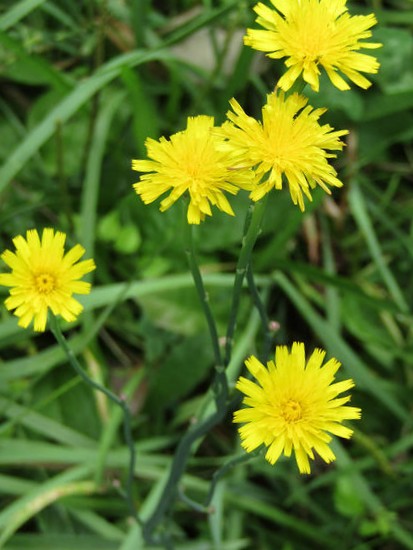
Catsear
Hypochaeris radicata L.
Important botanical synonyms and historical names include:
Achyrophorus radicatus (L.) Scop.
Porcellites radicata (L.) Cass.
Leontodon pavonii Boiss.
Hypochoeris radicata is a widespread historical and orthographic spelling found in veterinary, agricultural, and weed-management literature. The accepted genus spelling is Hypochaeris.
Accepted infraspecific taxa include Hypochaeris radicata subsp. radicata, subsp. ericetorum, subsp. heterocarpa, and subsp. rocinensis.
Asteraceae Bercht. & J.Presl — Aster, Daisy, or Sunflower Family
Historical family name: Compositae Giseke
Catsear belongs to the tribe Cichorieae, a group characterized by flower heads composed of strap-shaped ray florets and tissues that commonly produce milky latex.
Catsear, Cat’s Ear, Common Catsear, Common Cat’s-Ear, Hairy Catsear, Hairy Cat’s Ear, Rough Catsear, Rough Cat’s-Ear, Flatweed, Flat Weed, False Dandelion, Summer Dandelion, Spotted Catsear, Gosmore, Longroot, Hawkbit, Hypochaeris radicata, Hypochoeris radicata, Achyrophorus radicatus
“False Dandelion” is also used for other yellow-flowered members of Asteraceae and is not a species-specific name. “Hawkbit” may refer to species of Leontodon and related genera.
“Frogbit” has occasionally been applied regionally to Catsear but more commonly refers to unrelated aquatic plants such as Hydrocharis morsus-ranae and should not be relied upon for identification.
An Unidentified Plant-Associated Neurotoxin
The toxic principle associated with Catsear has not been identified. No specific alkaloid, glycoside, amino acid, sesquiterpene lactone, mycotoxin, or other compound has been confirmed as the sole cause of pasture-associated Australian stringhalt.
The disease is best described as an acquired neurologic disorder strongly associated with sustained grazing of Hypochaeris radicata under particular pasture and environmental conditions. The absence of an identified molecule does not make the clinical association weak. It means that the precise toxic agent, its concentration within the plant, and the complete mechanism of nerve injury remain unresolved.
Catsear should therefore be treated as a genuine equine poisoning hazard without claiming that every plant contains an identical toxin concentration or that every exposed horse will develop disease.
Evidence Supporting a Causal Association
Outbreaks repeatedly occur among horses grazing paddocks heavily infested with Catsear, especially during drought or other periods when desirable forage is scarce. Multiple horses may be affected within the same field, and removal from the implicated pasture is commonly followed by gradual improvement.
A Brazilian investigation reported two outbreaks involving seven horses on two farms. Researchers then fed fresh Hypochaeris radicata collected from an implicated pasture to one colt. The colt received the plant for 50 days at an average daily intake of approximately 9.8 kilograms and developed clinical Australian stringhalt.
Signs initially appeared while plants from the affected pasture were being fed, improved when plants from an unaffected property were substituted, and returned when feeding of plants from the original pasture resumed. The colt appeared to recover within approximately 15 days after plant administration ended.
This single-horse experiment provides unusually direct evidence that Catsear from an implicated pasture can cause the syndrome. It does not establish a universal dose, prove that all Catsear populations are equally toxic, or identify the responsible chemical.
Experimental Cytotoxicity of Catsear Exudates
Researchers have tested exudates released from stressed and unstressed Hypochaeris radicata plants against cultured neuronal cells and fibroblasts.
The exudates produced significant dose-dependent cellular injury. Material from experimentally stressed plants was especially cytotoxic, supporting the possibility that drought, chemical stress, or other adverse growing conditions can increase production or release of a biologically active substance.
The cellular changes resembled those produced by repin, a sesquiterpene-lactone neurotoxin used as an experimental comparison. That resemblance does not prove that Catsear contains repin or that a sesquiterpene lactone is the natural stringhalt toxin.
The experiment establishes biologic plausibility for one or more stress-associated plant toxins. It does not reproduce digestion, absorption, metabolism, dose accumulation, or nerve injury in a living horse.
The Toxin May Vary Between Plants and Pastures
The Brazilian feeding experiment showed differing clinical effects when Catsear was collected from separate properties. This suggests that plant origin, growing conditions, genetics, soil, drought stress, plant age, microbial associations, or another environmental factor may influence toxicity.
The plant may be an essential exposure source in many outbreaks while requiring particular environmental conditions before clinically important toxic activity develops.
No field test can currently distinguish a dangerous Catsear plant from one that will not produce disease. Visible health, flower color, plant size, and ordinary pasture appearance cannot be used to declare a plant safe.
Distal Axonopathy in Long Peripheral Nerves
The classic lesion is a distal axonopathy. Degeneration is most severe in the farthest portions of long, large, myelinated peripheral nerve fibers.
The superficial and deep peroneal nerves, distal tibial nerve, plantar and digital nerves, and recurrent laryngeal nerves have been among the prominently affected nerves in pathologic investigations.
Loss of functional axons disrupts normal communication between the spinal cord and the muscles controlling the lower hind limb. Muscle activation becomes poorly timed and exaggerated, producing the characteristic sudden upward flexion and delayed replacement of the hoof.
The selective vulnerability of long axons also helps explain why the hind limbs and recurrent laryngeal nerves may be affected within the same horse.
Neurogenic Muscle Atrophy
Muscles deprived of normal nerve input undergo denervation atrophy. Pathologic studies have documented especially severe changes in the long and lateral digital extensor muscles, cranial tibial muscle, lateral deep digital flexor, dorsal cricoarytenoid muscle, and other muscles supplied by affected nerves.
The muscle damage is secondary to loss of nerve function rather than evidence that Catsear acts primarily as a muscle toxin.
Chronic horses may develop visible wasting, reduced strength, poor limb control, difficulty rising, and prolonged functional impairment. Regenerating nerve fibers have also been observed, supporting the possibility of gradual recovery after exposure stops.
Spinal-Cord Lesions in Severe Cases
Older detailed investigations found the most important lesions in peripheral nerves and muscles, and routine examination did not identify a consistent central nervous system lesion.
A 2024 investigation of 13 horses affected during severe drought in Uruguay expanded that understanding. Two severely affected horses had neuronal chromatolysis and axonal spheroids within the ventral gray horns of the lumbar and sacral spinal cord, as well as degeneration in ventral nerve roots and long peripheral nerves.
These findings indicate that spinal motor neurons and their axons may be involved in at least some severe cases. Australian stringhalt should therefore not be described as an exclusively peripheral nerve disorder.
The Uruguayan findings do not prove that every affected horse develops spinal-cord lesions. The central changes were documented in two severely affected animals and require confirmation in additional outbreaks.
Recurrent Laryngeal-Nerve Involvement
The recurrent laryngeal nerves are among the longest peripheral nerves in the horse and may undergo the same distal degenerative process.
Damage can impair movement of the arytenoid cartilages and vocal folds, producing roaring, whistling, altered vocalization, reduced exercise tolerance, coughing while eating, dysphagia, or aspiration risk.
Laryngeal involvement demonstrates that pasture-associated stringhalt is broader than a mechanical spasm of the hind-limb tendons.
Why the Hind Limb Flexes Excessively
Normal gait requires precisely timed contraction and relaxation of flexor and extensor muscles. Peripheral nerve injury and abnormal motor-unit activity disrupt that timing.
The hoof may snap sharply toward the abdomen, remain elevated longer than normal, or return forcefully to the ground. Both hind limbs are commonly affected in pasture-associated disease, although one side may appear worse initially.
Backing, turning, starting movement, walking downhill, excitement, cold, and stress can make the abnormal motor pattern more conspicuous without representing a new toxin exposure.
Cumulative Pasture Exposure
Catsear-associated disease ordinarily follows sustained or repeated grazing rather than one brief mouthful. Horses may consume the plant over days or weeks when it forms a substantial portion of the available vegetation.
No reliable toxic plant weight, daily intake, pasture percentage, exposure duration, or body-weight-adjusted dose applies to every horse.
Risk probably varies with the plant’s chemical state, environmental stress, duration of grazing, individual susceptibility, body size, concurrent nutritional status, and possible environmental cofactors.
Drought, Overgrazing, and Plant Stress
Outbreaks occur most often during or after hot, dry conditions. Desirable grasses decline while Catsear persists as a drought-tolerant basal rosette close to the soil surface.
Horses may then graze Catsear repeatedly while cropping sparse pasture closely. Overgrazing, bare soil, compaction, poor fertility, inadequate pasture rotation, and failure to provide supplemental forage increase this exposure pattern.
Experimental cytotoxicity of stressed plant exudates supports the possibility that plant stress alters toxic activity, but the exact relationship between drought and toxin production has not been defined.
Other Environmental Cofactors Remain Possible
Plant-associated fungi, microorganisms, soil characteristics, chemical stress, neighboring weeds, nutritional deficiencies, and unidentified pasture variables have been proposed as cofactors.
No fungal toxin or soil-derived chemical has been confirmed consistently as the cause of Catsear-associated stringhalt.
The strongest practical evidence remains the repeated association with heavily grazed Hypochaeris radicata, experimental reproduction with implicated plant material, and improvement after removal from the affected pasture.
Fresh Plants, Dried Plants, and Hay
Most documented outbreaks involve horses grazing living Catsear in infested paddocks.
Stringhalt has also been reported in association with forage containing dried plant material, but the stability of the unidentified toxin after cutting and drying has not been established sufficiently to define a safe curing or storage period.
Hay containing substantial Catsear should not be fed merely because the plant is dry. Exposed and recovering horses should receive uncontaminated forage from another source.
Species Susceptibility
Horses are the principal species in which the characteristic disease has been documented. Ponies, donkeys, and mules should be managed as susceptible equids even though the published case record is smaller.
Catsear is not recognized as a cause of stringhalt in dogs or cats. No convincing evidence establishes a severe systemic companion-animal toxin after ordinary ingestion.
A dog or cat that eats fibrous plant material may develop transient nausea, vomiting, loose stool, or reduced appetite. Persistent neurologic illness, seizures, paralysis, severe weakness, or major gastrointestinal disease should prompt investigation for another exposure.
No Established Safe or Toxic Dose
No validated safe plant count, rosette count, fresh weight, dried weight, percentage of pasture, daily intake, or exposure duration has been established.
The single Brazilian experimental horse consumed an unusually large quantity of fresh plant over an extended period. That study proves causation from one implicated plant source but cannot be converted into a minimum toxic dose or a safe lower limit.
Any horse developing compatible hyperflexion while grazing a Catsear-infested field should be removed immediately rather than left in the pasture until a dose estimate can be made.
Exaggerated Hind-Limb Flexion
The defining sign is involuntary, exaggerated upward flexion of one or both hind limbs. The hoof may lift only slightly higher than normal in a mild case or snap sharply toward the abdomen before being placed forcefully back on the ground.
Pasture-associated Australian stringhalt commonly affects both hind limbs, although one side may initially appear worse. The gait is usually most obvious at the walk and may become less apparent at the trot or disappear at the canter.
Backing, Turning, and Starting Movement
Clinical signs often become more dramatic when the horse backs, turns sharply, walks downhill, moves through a narrow doorway, transitions between gaits, or takes its first steps after standing.
Excitement, anxiety, cold weather, hard exercise, or sudden handling may intensify the hyperflexion. A horse that appears nearly normal while moving freely in a straight line may show marked abnormality when asked to back or pivot.
Hopping, Stamping, and Loss of Coordination
Severely affected horses may develop a hopping or goose-stepping gait because both hind limbs flex abnormally. The hoof may strike the abdomen or be driven forcefully into the ground, creating repeated concussion and secondary injury.
Some horses drag a hind toe between episodes of hyperflexion, stumble, cross the hind limbs, or have difficulty coordinating placement. Severe cases may be unable to negotiate slopes, trailers, gates, stalls, or uneven ground safely.
Muscle Atrophy and Chronic Neuropathy
Persistent denervation can cause visible wasting of the muscles supplied by affected nerves. Atrophy may involve the lateral digital extensor, cranial tibial, lateral tibial, and other distal hind-limb muscles.
Chronic horses may lose strength, have difficulty rising, fatigue rapidly, or remain recumbent because they cannot coordinate the hind limbs. Muscle wasting reflects nerve dysfunction and disuse rather than a primary muscle toxin.
Forelimb, Neck, and Laryngeal Involvement
Although the hind limbs dominate the clinical picture, acquired stringhalt can occasionally involve forelimb or neck movement. Affected horses may show generalized peripheral nerve dysfunction rather than an isolated hock abnormality.
Recurrent laryngeal-nerve damage can produce roaring, whistling, altered vocalization, exercise intolerance, or abnormal upper-airway movement. Difficulty swallowing, coughing while eating, feed material at the nostrils, or marked respiratory noise requires prompt examination.
Pain and Awareness
Stringhalt itself is generally considered a nonpainful movement disorder. The horse remains aware of its surroundings and may attempt to move normally despite the abnormal limb action.
Secondary pain can nevertheless develop from repeated hoof impact, falls, muscle strain, joint concussion, skin injury, prolonged recumbency, or an unrelated orthopedic lesion. Pain should not be assumed to be part of the neurologic disorder without examination.
Severity and Functional Debilitation
Mild cases may show intermittent hyperflexion without major loss of function. Moderate cases have consistent bilateral gait abnormalities and difficulty turning or backing. Severe horses may hop, fall, become unable to walk safely, or require assistance to rise.
A horse that cannot reach feed or water, remain standing, avoid falling, or rise without repeated injury has a serious welfare problem even when breathing and awareness remain normal.
Signs in Dogs and Cats
Stringhalt-like poisoning from Catsear has not been documented convincingly in dogs or cats. A pet that eats the plant may show no signs or develop nonspecific nausea, vomiting, diarrhea, or temporary appetite reduction from ingesting fibrous vegetation.
Persistent neurologic signs, tremors, marked weakness, seizures, paralysis, or severe gastrointestinal illness should not be attributed automatically to Catsear. Another plant, pesticide, mushroom, medication, foreign body, or unrelated disease should be investigated.
Expected Course and Warning Signs
Some horses begin improving within days after removal from the implicated pasture, but meaningful nerve recovery commonly takes weeks or months. Severely affected horses may require one to three years to recover, and some retain permanent gait or laryngeal abnormalities.
Urgent warning signs include repeated falling, inability to rise, inability to reach water, severe muscle wasting, traumatic injury, difficulty swallowing, feed or saliva at the nostrils, marked respiratory noise, respiratory distress, or rapidly progressive involvement of additional limbs.
Plant Identity
Catsear is a perennial herb that forms a low basal rosette around a deep taproot. The leaves are oblong to lance-shaped, irregularly lobed or wavy, and covered with short coarse hairs that give them a rough texture.
One or more upright flower stalks arise from the rosette. Unlike the single unbranched stem of a true dandelion flower, Catsear stems are commonly solid, sparsely hairy, and branched, with several yellow flower heads on one stalk.
The flower heads consist entirely of yellow strap-shaped florets. Mature seed heads produce numerous small fruits attached to pale bristles that allow wind dispersal. Broken leaves and stems may release milky latex.
Catsear Versus True Dandelion
Catsear is frequently mistaken for Common Dandelion, Taraxacum officinale. Both plants form basal rosettes, produce yellow composite flowers, contain milky sap, and develop round wind-dispersed seed heads.
Catsear leaves are generally hairier and more softly lobed. Its flowering stalks may branch and carry several flower heads. True dandelion leaves are usually smooth and sharply toothed, and each hollow unbranched flower stalk normally supports one head.
True dandelion has occasionally been present in pastures associated with Australian stringhalt, but Catsear is the plant most consistently implicated. Visual similarity should not be used to dismiss a horse-pasture concern.
Native Range and Introduced Distribution
Hypochaeris radicata is native from Europe through the Caucasus and across parts of northern Africa. It has been introduced widely into North America, South America, Australia, New Zealand, southern Africa, parts of Asia, and oceanic islands.
The plant is now among the most widespread lawn and pasture weeds in many temperate regions. Its presence outside Australia explains why “Australian stringhalt” has been reported in North America, South America, Europe, New Zealand, Japan, and other locations.
Where Horses Encounter It
Catsear thrives in lawns, roadsides, waste areas, dry lots, field margins, compacted soil, golf courses, disturbed ground, and thin or neglected pastures. Its low rosette can survive close grazing and mowing better than many desirable forage grasses.
Risk rises where horses depend heavily on pasture, especially during drought or late summer when grass growth declines. Overgrazed paddocks may contain thousands of Catsear plants while offering little alternative forage.
Association Versus Proven Mechanism
Veterinary references have traditionally stated that Catsear is associated with but not conclusively proven to be the sole cause of Australian stringhalt. That caution remains appropriate because the toxic compound has not been isolated and outbreaks may depend on weather, plant stress, soil, fungi, or other pasture factors.
The association is nevertheless substantial. Numerous outbreaks have centered on heavily infested pastures, and horses commonly improve after removal. Experimental reproduction in one colt fed Catsear from an implicated Brazilian paddock further supports a causal role.
The evidence therefore supports treating abundant Catsear as a genuine equine health hazard without claiming that every plant contains the same toxin concentration or that every exposed horse will develop stringhalt.
Brazilian Feeding Trial
Araújo and colleagues reported two outbreaks involving seven horses on two farms in southern Brazil. Fresh Hypochaeris radicata collected from the suspect paddocks was then fed to one colt for 50 days at an average daily intake of approximately 9.8 kilograms.
The experimental colt developed clinical signs consistent with Australian stringhalt. This finding demonstrates that plant material from an implicated pasture could reproduce the disease under sustained exposure.
The study does not establish a generally applicable toxic dose. It involved one experimental horse, unusually large controlled daily intake, and plants from specific outbreak paddocks. It also did not identify the responsible chemical compound.
Peripheral-Nerve Pathology
Pathologic studies of affected horses have identified degeneration in distal portions of the peroneal, tibial, and recurrent laryngeal nerves. Lesions are concentrated in long peripheral axons and their associated muscles rather than in the joints or tendons alone.
Regenerating fibers have also been observed, supporting the possibility of gradual neurologic recovery after exposure stops. Because peripheral nerves regenerate slowly, apparent lack of rapid improvement does not necessarily mean recovery is impossible.
Diagnosis
Stringhalt is diagnosed primarily from the characteristic gait. The horse should be observed walking in a straight line, turning sharply in both directions, backing, starting after standing, moving downhill when safe, and transitioning between gaits.
Electromyography can document abnormal motor-unit activity and peripheral denervation. Nerve-conduction studies may support peripheral neuropathy, while laryngeal endoscopy can assess abnormal respiratory noise or suspected recurrent laryngeal involvement.
Radiographs, ultrasound, hoof examination, diagnostic analgesia, blood testing, muscle testing, and neurologic evaluation may be required to exclude painful foot disease, hock injury, upward fixation of the patella, shivers, fibrotic myopathy, trauma, equine protozoal myeloencephalitis, cervical disease, polysaccharide storage myopathy, and other gait disorders.
Pasture Management and Prevention
Removing the horse from the affected paddock is more important than simply mowing the visible flowers. Catsear readily resprouts from its taproot, and mowing may leave the low leaf rosette available for continued grazing.
Provide uncontaminated hay whenever pasture forage is inadequate. Rotate grazing areas, prevent severe overgrazing, protect wet or compacted soil from hoof damage, reseed bare areas, correct fertility according to soil testing, and maintain enough desirable grass to compete with broadleaf weeds.
Individual plants can be removed by digging out the taproot. Large infestations may require a pasture-safe selective herbicide used according to the product label and local agricultural guidance. Horses must remain off treated fields for the period specified on the herbicide label and until dead or dying suspect plant material has been managed appropriately.
Immediate Steps for a Horse Exposed to Catsear
- Remove the horse from the implicated pasture: Transfer the horse to a clean dry lot, stall, or paddock containing no Catsear and provide uncontaminated hay and fresh water. Continued grazing can prolong exposure while neurologic injury progresses.
- Remove other equids from the same field: Australian stringhalt frequently occurs as a pasture outbreak. Examine every horse, pony, donkey, and mule that shared the paddock, even when only one animal currently has an abnormal gait.
- Arrange an equine veterinary examination: Exaggerated hind-limb flexion has neurologic, orthopedic, traumatic, and painful causes. Early examination helps distinguish pasture-associated stringhalt from shivers, foot pain, hock injury, upward fixation of the patella, fibrotic myopathy, trauma, and other disorders.
- Minimize stress and unsafe movement: Excitement, cold, tight turns, backing, slopes, sudden gait changes, and repeated testing may intensify hyperflexion. Keep the horse in a level area with secure footing and adequate bedding.
- Place feed and water within easy reach: A severely affected horse may be unable to turn, back, pass through a narrow doorway, or walk safely. Position resources so the horse does not need to cross slippery or uneven ground.
- Preserve plant and forage samples: Collect complete Catsear plants with roots, rosette leaves, flowering stems, and seed heads. Photograph the field and retain representative hay or forage samples when contamination is possible.
- Record the clinical course: Video the horse walking, turning, and backing only when this can be done safely. Record when signs began, whether one or both hind limbs are involved, recent drought or pasture changes, and how long the horse grazed the area.
Dogs and Cats After Ordinary Plant Ingestion
Catsear is not recognized as a serious systemic poison for dogs or cats. After a one-time ingestion, remove accessible plant material and observe for nausea, vomiting, diarrhea, appetite loss, oral irritation, or an unrelated allergic reaction.
An alert pet that swallows normally and is not vomiting repeatedly may have access to fresh water. Do not force liquid into the mouth.
Persistent vomiting, inability to retain water, bloody stool, marked lethargy, weakness, swelling, tremors, seizures, or other neurologic abnormalities requires veterinary examination because those findings are not expected from uncomplicated Catsear ingestion.
Routine emesis, activated charcoal, gastric lavage, anti-diarrheal medication, sucralfate, or acid suppression is not warranted solely because a dog or cat chewed Catsear. Treatment should follow the animal’s actual signs and investigation of other plants, pesticides, fertilizers, mushrooms, or foreign material.
Do Not Attempt Unsupervised Equine Treatment
- Do not continue grazing while waiting for improvement: Complete removal from the implicated pasture is the primary intervention.
- Do not force repeated backing, turning, or exercise: These movements can exaggerate the gait and increase the risks of falling, hoof impact, muscle strain, and handler injury.
- Do not administer phenytoin or other neurologic medication yourself: Phenytoin, tranquilizers, muscle relaxants, anticonvulsants, and compounded drugs require professional selection, interaction review, monitoring, and assessment of whether temporary improvement justifies adverse-effect risk.
- Do not give vitamins, magnesium, herbs, or “nerve support” products as an antidote: No supplement has been shown to neutralize the unidentified toxin or reverse established axonal degeneration.
- Do not arrange tendon surgery solely from an online description: Pasture-associated stringhalt, idiopathic stringhalt, traumatic stringhalt, shivers, and painful pseudostringhalt do not have identical causes or treatment plans.
- Do not rely on mowing alone: Catsear’s low rosette and deep taproot usually survive ordinary mowing and remain available for grazing.
When Urgent Veterinary Assistance Is Needed
- Mobility is unsafe: Repeated falling, severe hopping, inability to turn, inability to rise, or inability to reach feed and water creates immediate risks of trauma, exhaustion, dehydration, and prolonged recumbency.
- Swallowing is abnormal: Coughing while eating, feed or saliva at the nostrils, repeated choking, abnormal swallowing, or unexplained weight loss may indicate broader peripheral-nerve involvement.
- Laryngeal or respiratory signs develop: New roaring, whistling, altered vocalization, marked exercise intolerance, or difficult breathing may reflect recurrent laryngeal neuropathy.
- Neurologic involvement is progressing: Forelimb abnormalities, neck weakness, severe muscle wasting, recumbency, or rapid deterioration requires complete neurologic reassessment.
- Secondary injury occurs: Lacerations, hoof trauma, joint swelling, severe muscle pain, pressure injury, or prolonged inability to stand requires immediate supportive treatment.
Veterinary Examination and Diagnostic Priorities
The veterinarian will evaluate the gait at the walk, during safe turns and backing, and through appropriate gait transitions. Both hind limbs should be compared, and the horse should be assessed for pain, weakness, proprioceptive deficits, muscle atrophy, cranial-nerve abnormalities, dysphagia, and respiratory noise.
No blood test confirms Catsear poisoning, and the unidentified toxin cannot be measured routinely. Diagnostic testing is directed toward documenting neurologic dysfunction and excluding other causes.
Neurologic and Gait Evaluation
Repeated observation, a complete neurologic examination, hoof placement, tail and muscle tone, spinal assessment, gait recording, and evaluation under different safe movement conditions help distinguish stringhalt from generalized ataxia, weakness, and orthopedic pain.
The horse should not be forced through repeated hazardous maneuvers merely to demonstrate the gait.
Electrodiagnostic Testing
Electromyography may identify increased insertional activity, fibrillation potentials, positive sharp waves, abnormal motor-unit activity, and other evidence of denervation.
Nerve-conduction testing and muscle or nerve biopsy may be considered in selected cases, particularly when the diagnosis remains uncertain or severe generalized neuropathy is suspected.
Orthopedic Assessment
Hoof testing, diagnostic analgesia, radiography, ultrasound, and examination of the hock, stifle, tendons, muscles, and supporting structures may identify painful pseudostringhalt, traumatic disease, or another mechanical cause.
Pain and stringhalt can coexist. Secondary injury from repeated forceful hoof placement or falls should not be overlooked merely because a neurologic gait is present.
Laryngeal and Swallowing Evaluation
Upper-airway endoscopy is appropriate when roaring, altered vocalization, exercise intolerance, coughing, or abnormal swallowing suggests recurrent laryngeal-nerve involvement.
A horse with feed or saliva at the nostrils, repeated coughing while eating, fever, abnormal lung sounds, or weight loss may also require evaluation for aspiration and pneumonia.
Laboratory Investigation
Blood count, serum chemistry, electrolytes, muscle enzymes, vitamin status, inflammatory markers, and infectious-disease testing may be selected to exclude metabolic, muscular, nutritional, inflammatory, and infectious disorders.
Laboratory abnormalities are not expected to prove Catsear poisoning directly.
Removal from Pasture and Nutritional Support
Immediate and complete removal from the suspect pasture is the most important treatment. The horse should receive clean hay and a balanced ration appropriate for its body condition, age, workload, and concurrent disease.
Correcting forage shortage prevents additional weed consumption and supports recovery, but nutritional supplementation does not directly regenerate damaged axons.
Thiamine, vitamin E, magnesium, antioxidants, or other supplements may be used when a deficiency or separate clinical indication exists. None is a proven Catsear antidote.
Body weight, appetite, hydration, manure production, muscle condition, and ability to reach feed and water should be monitored. Severely affected horses may require modified feeders, nonslip footing, deep bedding, assistance rising, or referral-level nursing care.
Phenytoin and Symptomatic Medical Management
Phenytoin has been studied as symptomatic treatment in five horses with Australian stringhalt. The medication produced a significant overall improvement in graded gait abnormalities during treatment.
When the horses were reassessed two weeks after treatment ended, significant improvement remained at the trot and while backing. Persistent improvement was not demonstrated at the walk or while turning.
Surface electromyography of the long digital extensor muscle also moved toward a more normal pattern during treatment.
Response varied among horses, and plasma drug concentrations varied substantially despite similar administration. Mild tranquilization occurred in the study, supporting the need for clinical observation and blood-level monitoring when treatment is prolonged.
Phenytoin does not remove the plant toxin or regenerate damaged nerves. Its role is to reduce abnormal motor activity while environmental removal and neurologic recovery proceed.
Acepromazine, other tranquilizers, muscle relaxants, or anticonvulsant medications may lessen spasmodic movement in selected horses. Sedation can also impair balance and increase fall risk, so medication must be individualized.
Botulinum Toxin
A preliminary study evaluated electromyography-guided botulinum toxin type A injections in six healthy ponies and two horses with stringhalt.
In the two affected horses, activity decreased in the injected extensor and thigh muscles, and gait analysis documented reductions in the frequency and amplitude of hyperflexing or hyperabducting strides. The observed effect persisted for approximately 12 weeks.
This was promising pilot evidence, not a controlled treatment trial involving a large group of naturally affected horses. Botulinum toxin should be regarded as a specialized temporary option requiring precise muscle selection, injection guidance, and professional monitoring.
The treatment does not remove the pasture toxin or reverse the underlying nerve and spinal lesions.
Lateral Digital Extensor Surgery
Lateral digital extensor tenectomy or myotenectomy removes a section of tendon and sometimes adjacent muscle involved in the visible limb movement.
Published surgical outcomes are variable. Much of the surgical literature concerns idiopathic, traumatic, or otherwise selected stringhalt cases rather than untreated pasture-associated outbreaks expected to recover after exposure ends.
Some horses improve substantially, while others show partial, delayed, temporary, or no meaningful response. Surgery changes the mechanical expression of the gait but does not regenerate affected nerves or treat laryngeal and spinal involvement.
Because many pasture-associated cases improve spontaneously over time, surgery is generally reserved for severe, persistent cases after diagnostic confirmation and an adequate period of environmental and medical management.
Laryngeal Dysfunction and Swallowing Support
Roaring or altered vocalization may require resting and exercising upper-airway endoscopy. Treatment depends on the severity of arytenoid dysfunction, aspiration risk, intended use, and whether nerve function improves as the broader neuropathy recovers.
A horse with dysphagia may require modified feed consistency, repositioned feeders, close observation while eating, treatment of aspiration pneumonia, or temporary nutritional support.
Feed, water, mineral oil, medication, or other material should not be forced into a horse that cannot swallow safely.
Rehabilitation and Movement Management
Rehabilitation should protect the horse from falls while avoiding unnecessary loss of strength. Early management may require confinement to a level pen or stall with deep bedding and short, carefully supervised movement.
Exercise should be introduced according to neurologic stability, footing, limb control, and veterinary guidance.
Forcing extensive backing, sharp turns, hill work, or fatigued exercise merely to test the gait can cause injury without accelerating nerve regeneration.
Hoof care may need modification when abnormal limb placement produces excessive toe wear, concussion, or imbalance. Controlled straight-line exercise and gradual turnout may be useful as coordination improves.
Pasture Investigation and Control
Inspect the complete pasture rather than only the area where the horse was last seen. Catsear rosettes may remain hidden beneath grass, particularly before flowering.
Reduce grazing pressure, provide hay, rotate fields, correct soil fertility according to testing, aerate or renovate compacted areas, reseed bare ground, and maintain enough desirable forage to compete with broadleaf weeds.
Hand removal must include the taproot because the crown can regrow. Mowing may reduce flower and seed production but usually does not eliminate established plants.
A pasture-labeled selective broadleaf herbicide may be appropriate for extensive infestations. Product selection, application timing, environmental precautions, grazing restrictions, and management of dying plant material must follow the label and local agricultural guidance.
Recovery and Prognosis
The prognosis for pasture-associated stringhalt is variable but often more favorable than for persistent idiopathic stringhalt.
Many horses improve after removal from the implicated field. In a French longitudinal study, half of the studied horses recovered spontaneously within approximately eight months, while the most severely affected horses were less likely to recover fully.
Early improvement may occur within days or weeks, but meaningful axonal regeneration commonly requires months. Some horses take one to three years to recover, and others retain residual hyperflexion, muscle atrophy, performance limitations, or laryngeal dysfunction.
Improvement should include lower hind-limb elevation, easier turning and backing, fewer falls, increasing muscle mass, safer access to feed and water, and reduced respiratory noise.
Temporary variation does not necessarily mean renewed exposure because signs may fluctuate with cold, excitement, stress, exercise, and fatigue.
The prognosis becomes guarded when the horse cannot stand or walk safely, develops severe generalized neurologic disease, sustains repeated traumatic injury, cannot swallow without aspiration, has significant laryngeal dysfunction, or remains profoundly debilitated despite prolonged care.
Euthanasia may be necessary when safe mobility, nutrition, breathing, and an acceptable quality of life cannot be restored.
Frequently Asked Questions About Catsear and Australian Stringhalt
Is Catsear poisonous to horses?
Yes. Repeated grazing exposure is strongly associated with Australian or pasture-associated stringhalt, a peripheral neuropathy that causes exaggerated involuntary flexion of one or both hind legs.
Is Catsear poisonous to dogs and cats?
Catsear is not recognized as a serious systemic poison for dogs or cats. A one-time ingestion may cause no signs or mild digestive upset. Persistent or neurologic illness should prompt investigation for another exposure.
Is Catsear proven to cause Australian stringhalt?
The exact toxin remains unidentified, and environmental cofactors may contribute. However, the epidemiologic association is strong, horses often improve after removal, and one Brazilian feeding trial reproduced stringhalt in a colt fed Catsear from an implicated pasture.
Is Catsear the same as dandelion?
No. Catsear is Hypochaeris radicata, while Common Dandelion is Taraxacum officinale. Catsear has coarse hairy leaves and commonly branched solid flower stalks bearing several heads; dandelion typically has smooth leaves and one flower on each hollow unbranched stalk.
How much Catsear must a horse eat?
No reliable toxic amount has been established. Disease usually follows repeated grazing where Catsear forms a substantial part of limited pasture forage rather than one casual bite.
Why are outbreaks more common during drought?
Desirable grasses decline while Catsear persists in dry, compacted, and overgrazed soil. Horses grazing close to the ground may consume the weed repeatedly. Drought stress may also affect plant chemistry, although the exact toxin remains unknown.
What does stringhalt look like?
The hind hoof lifts suddenly and excessively toward the abdomen before returning to the ground. Signs are usually most obvious at the walk, while backing, turning sharply, starting after standing, or moving downhill.
Can Catsear stringhalt affect breathing?
Yes. The same peripheral neuropathy may affect recurrent laryngeal nerves, producing roaring, altered vocalization, exercise intolerance, swallowing problems, or abnormal upper-airway movement.
Will a horse recover after removal from the pasture?
Many horses improve after exposure ends, but recovery may take weeks, months, or years because damaged peripheral nerves regenerate slowly. Some horses retain permanent gait or laryngeal abnormalities.
Does phenytoin cure Australian stringhalt?
No. Phenytoin may temporarily reduce abnormal gait in some horses, but it does not remove the toxin or regenerate damaged nerves. Response varies, and monitored veterinary management is required.
Does tendon surgery cure stringhalt?
Lateral digital extensor tenectomy or myotenectomy may improve limb movement in selected persistent cases, but results are variable. Surgery does not reverse the underlying neuropathy or treat laryngeal involvement.
Can Catsear in hay cause stringhalt?
Living pasture plants are implicated most consistently, but the safety of dried Catsear has not been established. Hay containing substantial Catsear should not be fed to exposed or recovering horses.
Will mowing remove the danger?
Not by itself. Catsear’s low rosette and taproot survive ordinary mowing. Mowing may reduce seed production, but effective control usually requires improved pasture competition, taproot removal, reseeding, or appropriately labeled broadleaf herbicide treatment.
What is the prognosis?
The prognosis is often fair to good when the horse is removed early and can remain safely mobile during recovery. It becomes guarded when the horse cannot stand, walk, swallow, or breathe safely or remains severely debilitated despite prolonged care.