PAWS Pet Poison Plant Guide
Is Corn Stalk Plant Poisonous to Dogs, Cats, Horses, and Livestock?
Yes—Corn Stalk Plant, Dracaena fragrans, is poisonous to dogs and cats and should also be treated as potentially poisonous to horses, livestock, birds, rabbits, and other animals that chew it. Exact-species chemical research confirms multiple spirostane-type steroidal saponins in its bark, roots, and leaves. Expected signs include excessive salivation, nausea, vomiting, appetite loss, depression, abdominal discomfort, diarrhea, and weakness. Dilated pupils and incoordination are especially associated with feline Dracaena exposure, although their mechanism and exact frequency after authenticated D. fragrans ingestion have not been established.
Most limited household exposures are expected to remain gastrointestinal and recover with appropriate supportive care. Repeated vomiting, bloody vomit, inability to retain water, prolonged food refusal, marked weakness, abnormal coordination, collapse, or breathing or swallowing difficulty requires veterinary assessment. Direct horse and livestock case evidence for this exact species is sparse, so substantial exposure to discarded plants or landscaping material should be evaluated rather than assumed harmless.
About this guide: This page provides general pet-poisoning information and cannot diagnose or treat an individual animal. For any suspected exposure, contact a veterinarian or animal poison-control service immediately. Do not induce vomiting, give medication, or attempt home decontamination unless directed by a veterinary professional.
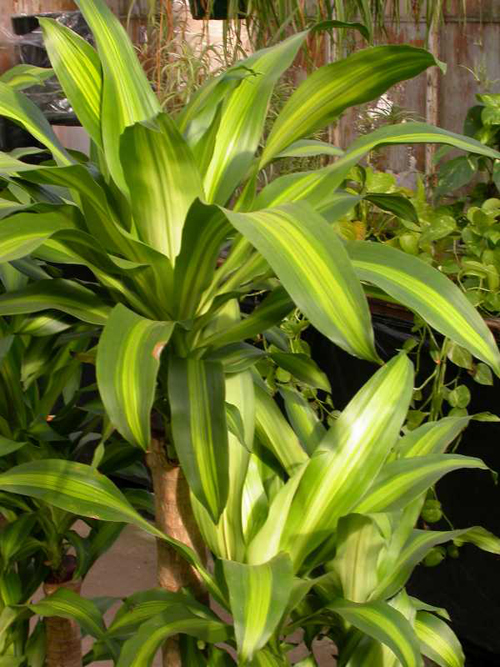
Corn Stalk Plant
Dracaena fragrans (L.) Ker Gawl.
The familiar striped corn plant or mass cane is commonly sold as Dracaena fragrans ‘Massangeana’.
Important botanical synonyms include Aletris fragrans L., Cordyline fragrans (L.) Planch., Dracaena deremensis Engl., Dracaena fragrans var. massangeana (Rodigas) É.Morren, Dracaena massangeana Rodigas, Pleomele fragrans (L.) Salisb., and Sansevieria fragrans (L.) Jacq.
Asparagaceae
Agavaceae, Dracaenaceae, and Ruscaceae may appear in older horticultural, botanical, and veterinary references.
Corn Plant, Cornstalk Plant, Corn Stalk Plant, Cornstalk Dracaena, Fragrant Dracaena, Mass Cane, Mass Cane Plant, Happy Plant, Fortune Plant, Dracaena, Dragon Tree, Ribbon Plant
Common cultivated names and forms include ‘Massangeana,’ ‘Mass Cane,’ ‘Janet Craig,’ ‘Compacta,’ ‘Lemon Lime,’ ‘Limelight,’ ‘Hawaiian Sunshine,’ ‘Dorado,’ ‘Warneckii,’ ‘White Jewel,’ ‘Bausei,’ ‘Lindenii,’ and ‘Victoria.’
Historical botanical search names include Dracaena deremensis, Dracaena massangeana, Dracaena fragrans var. massangeana, Cordyline fragrans, and Pleomele fragrans.
“Corn plant” is ambiguous. This page covers the tropical houseplant Dracaena fragrans, not maize or edible corn, Zea mays. The two plants are unrelated despite the resemblance of their broad, arching leaves.
“Dragon tree” is also applied to several other Dracaena species, including Dracaena draco, Dracaena reflexa var. angustifolia, and Dracaena cinnabari. A nursery label or clear photograph is useful for exact identification.
Confirmed Steroidal Saponins
The confirmed toxic constituents of Corn Stalk Plant are steroidal saponins. These compounds consist of one or more sugar chains attached to a steroidal non-sugar portion known as an aglycone or sapogenin. Their amphipathic structure allows them to interact with water and membrane lipids, producing the foam for which saponins are named and contributing to their biological activity at contacted tissues.
Exact-species research on Dracaena fragrans ‘Yellow Coast’ isolated four spirostane-type steroidal glycosides. Three were recovered from bark, while a fourth was isolated from both roots and leaves. Structural identification relied on one- and two-dimensional nuclear magnetic resonance spectroscopy, mass spectrometry, and comparison with previously characterized compounds.
The bark compounds were identified as 3β-hydroxyspirost-5,25(27)-dien-1β-yl 4-O-sulfo-α-L-arabinopyranoside; 3β-hydroxyspirost-5,25(27)-dien-1β-yl O-α-L-rhamnopyranosyl-(1→2)-4-O-sulfo-α-L-arabinopyranoside; and (25R)-3β-hydroxyspirost-5-en-1β-yl O-α-L-rhamnopyranosyl-(1→2)-4-O-sulfo-α-L-arabinopyranoside. The compound isolated from roots and leaves was (25R)-spirost-5-en-3β-yl O-α-L-rhamnopyranosyl-(1→2)-β-D-glucopyranoside.
A later investigation isolated another spirostane glycoside from Dracaena fragrans leaves and characterized it as spirosta-5,25(27)-diene-1β,3β-diol-1-O-α-L-rhamnopyranosyl-(1→2)-[β-D-xylopyranosyl-(1→3)]-α-L-arabinopyranoside. This finding expands the exact-species chemical record beyond the four compounds reported from ‘Yellow Coast’.
These studies prove that Dracaena fragrans contains defined steroidal saponins. They do not establish which compound causes each veterinary sign, how much is present in an ordinary household leaf or cane, whether all cultivars contain identical profiles, or what oral dose produces illness in an animal.
Cultivar and Plant-Part Differences
The best-characterized 2015 material was the cultivated form ‘Yellow Coast,’ not the familiar mass-cane cultivar ‘Massangeana.’ The 2023 leaf study confirms additional exact-species saponin chemistry but does not eliminate the possibility of variation among cultivars, tissues, ages, seasons, growing conditions, or extraction methods.
Bark, roots, and leaves have direct chemical evidence. Canes include bark and internal stem tissue and should therefore remain inaccessible. Flowers, berries, seeds, new shoots, sap, and propagation pieces have not all received equivalent quantitative analysis, but no part has been established as safe for animal consumption.
Leaves create the most common household exposure because they arch within reach, fall beneath the plant, and attract cats and puppies. Roots become accessible during repotting or digging, while cane sections and newly emerging shoots may be chewed because they resemble sticks or other fibrous objects.
A compact piece of cane or root may allow an animal to consume more plant mass than one exploratory leaf bite. That practical dose difference does not prove that the cane or root always contains the highest saponin concentration.
Gastrointestinal Irritation
Steroidal saponins can interact with cholesterol and other membrane components. At the gastrointestinal surface, this can alter membrane permeability and contribute to irritation, nausea, salivation, vomiting, abdominal discomfort, appetite loss, and diarrhea.
Many saponins are absorbed incompletely after ordinary oral exposure, and their sugar chains, aglycones, metabolism, and membrane affinity differ substantially. This helps explain why spontaneous Dracaena exposure is generally dominated by gastrointestinal illness rather than a uniform systemic syndrome.
Plant fiber may add mechanical bulk and contribute to vomiting, but the exact-species isolation of multiple steroidal glycosides means the illness should not be dismissed as nothing more than poor digestion of leaves.
In-Vitro Hemolysis Does Not Prove Hemolytic Anemia
Some saponins can disrupt red-blood-cell membranes when concentrated compounds are placed directly in contact with blood under laboratory conditions. This is an important chemical property but does not establish that chewing Corn Stalk Plant routinely produces clinically important hemolysis.
The gastrointestinal tract, poor absorption of many intact glycosides, metabolism, dose, and protein binding separate an oral plant exposure from an in-vitro red-cell assay. Pale gums, jaundice, dark urine, falling red-cell values, or laboratory evidence of hemolysis requires investigation for another toxin, immune-mediated disease, infection, oxidative injury, or another medical cause rather than automatic attribution to Corn Stalk Plant.
Mydriasis and Neurologic-Appearing Signs
Dilated pupils are repeatedly reported in cats after Dracaena exposure, and weakness or incoordination may occur in more symptomatic animals. The biochemical mechanism has not been established. No exact Dracaena fragrans saponin has been shown to act as an atropine-like compound or to produce a defined autonomic receptor syndrome.
Mydriasis may also result from fear, pain, low ambient light, hypertension, eye disease, medications, or neurologic illness. Normal pupil size does not exclude plant exposure, while enlarged pupils alone do not confirm Dracaena poisoning.
Weakness or an unsteady gait may reflect nausea, reduced intake, dehydration, electrolyte abnormalities, hypoglycemia, or another simultaneously ingested substance. Progressive ataxia, tremors, disorientation, abnormal eye movements, seizures, or inability to stand is more severe than the expected uncomplicated gastrointestinal syndrome and requires broader investigation.
Exact-Species Evidence Versus Other Dracaena Species
Veterinary descriptions frequently group several ornamental Dracaena species together. Poison-center reports and published reviews commonly discuss Dracaena marginata, unidentified Dracaena exposures, and the genus as a whole. Those records support a recognizable clinical pattern but are not controlled feeding trials involving authenticated Dracaena fragrans.
Dracaena marginata has its own directly characterized steroidal-saponin profile. Its exact compounds, tissue distribution, and concentrations must not be presented automatically as exact D. fragrans findings. Conversely, the five glycosides documented in D. fragrans should not be assumed to occur at identical concentrations in every other Dracaena.
The most defensible conclusion is that exact-species chemistry confirms a steroidal-saponin hazard, while the expected veterinary syndrome is supported by a combination of genus-level poison surveillance, broader Dracaena clinical experience, and the known irritant behavior of saponins.
Fresh, Wilted, and Dried Material
Drying does not establish that steroidal saponins have been destroyed. Unlike a readily evaporating volatile chemical, these glycosides may remain in fallen leaves, dried foliage, old canes, root pieces, propagation material, plant powders, and discarded specimens.
Wilted or dry plant material may be less succulent but can still be chewed or shredded. Birds, rabbits, rodents, and dogs may ingest dried material that a cat would ignore.
Extracts and purified compounds are not equivalent to casual plant chewing. Laboratory extraction can concentrate selected glycosides far beyond their proportion in intact plant tissue, so experimental cytotoxicity or membrane activity must not be converted into predictions about one household leaf bite.
No Established Safe, Toxic, or Lethal Dose
No dependable leaf count, cane length, root weight, plant mass, total-saponin dose, gram-per-kilogram threshold, or lethal dose has been established for dogs, cats, horses, livestock, birds, rabbits, guinea pigs, or other animals.
Risk depends on the animal’s species, body size, age, health, amount swallowed, tissue involved, degree of chewing, cultivar chemistry, stomach contents, repeated access, and whether fertilizer, pesticide, leaf-shine product, potting material, or another plant was consumed simultaneously.
A brief taste may produce no signs or one vomiting episode. Repeated chewing or ingestion of a larger quantity can produce continuing vomiting, dehydration, food refusal, weakness, or secondary complications. Absence of illness after one exposure does not establish a safe dose.
Evidence Behind the Expected Syndrome
The most consistently recognized signs after Dracaena ingestion are vomiting, excessive salivation, appetite loss, depression, and gastrointestinal discomfort. Weakness and incoordination may occur, while noticeably dilated pupils are reported particularly in cats.
These clinical observations come largely from veterinary poison-control records, reviews, and experience with several Dracaena species rather than from a controlled series of botanically authenticated Dracaena fragrans cases. The exact-species chemical evidence confirms steroidal saponins and provides a plausible gastrointestinal mechanism, but the frequency of every individual sign after Corn Stalk Plant ingestion remains undefined.
Salivation and Nausea
Early signs may include lip licking, repeated swallowing, foamy saliva, drooling, restlessness, turning away from food, or other nausea-like behavior. The animal may approach water or food but decline it after sniffing.
Salivation may reflect an unpleasant taste, nausea, or irritation of the mouth and upper gastrointestinal tract. Severe mouth pain, major tongue swelling, choking, or rapidly progressive throat swelling is not the defining Corn Stalk Plant syndrome and should raise concern for another plant, a caustic product, a foreign object, or an allergic reaction.
Vomiting
Vomiting is the best-recognized clinical effect. It may occur once or repeatedly and may contain chewed leaf fibers, pieces of cane, foam, food, or bile. No exact onset interval applies to every exposure, but gastrointestinal signs may develop within the first several hours.
One vomiting episode in an otherwise bright animal is different from repeated retching, inability to retain water, progressive weakness, or continuing illness. Persistent vomiting can cause dehydration, sodium and potassium abnormalities, esophageal inflammation, aspiration, poor circulation, and worsening depression.
Vomit may occasionally contain a small streak of blood after forceful retching. Repeated blood, coffee-ground material, pale gums, black stool, severe abdominal pain, or continuing vomiting requires examination for substantial gastrointestinal injury, a foreign body, medication, another plant, or unrelated disease.
Appetite Loss and Depression
An affected animal may refuse food, eat less than normal, hide, sleep more, avoid activity, or appear subdued. These findings can reflect nausea, abdominal discomfort, dehydration, or an aversion created by the unpleasant exposure.
Prolonged food refusal deserves particular attention in cats, rabbits, guinea pigs, birds, very small animals, and patients with existing metabolic disease. Cats can develop secondary hepatic lipidosis after sustained severe calorie restriction, while rabbits and guinea pigs are vulnerable to gastrointestinal stasis.
An animal that eats virtually nothing, becomes progressively lethargic, or fails to resume normal intake as the vomiting subsides should be assessed rather than monitored indefinitely.
Diarrhea and Abdominal Discomfort
Soft stool or diarrhea may occur when irritating plant material reaches the intestinal tract. Abdominal discomfort may appear as restlessness, repeated stretching, a hunched posture, guarding of the abdomen, flank watching, or reluctance to move.
Profuse diarrhea, fresh blood, black stool, continuing straining, severe pain, abdominal enlargement, or reduced stool production is not expected after a trivial leaf taste. These findings require evaluation for more substantial gastrointestinal injury, obstruction, infection, pancreatitis, another toxin, or a swallowed foreign object.
Feline Mydriasis
Cats may develop visibly dilated pupils. The pupils may remain enlarged under lighting that would normally produce constriction, but the finding is not present in every case and does not measure the amount consumed.
The mechanism remains unknown. No individual Dracaena fragrans saponin has been demonstrated to cause a defined atropine-like or sympathomimetic effect. Fear, pain, darkness, hypertension, retinal disease, glaucoma, medications, and neurologic disorders can also produce mydriasis.
Unequal pupils, blindness, eye pain, abnormal eye movements, persistent dilation after gastrointestinal recovery, or pupil changes accompanied by disorientation or collapse requires a complete ocular and neurologic examination.
Weakness and Incoordination
Mild weakness may accompany nausea, reduced food intake, vomiting, diarrhea, or dehydration. An animal may move slowly, sleep more, or hesitate before jumping or climbing.
Incoordination has been reported in broader Dracaena poisoning descriptions, particularly involving cats, but it has not been linked to one confirmed D. fragrans compound. True staggering, falling, head tilt, circling, abnormal eye movements, tremors, disorientation, or inability to stand requires assessment for low blood glucose, electrolyte disturbance, medication, cannabis, pesticide, vestibular disease, or another toxin.
Dehydration and Circulatory Effects
Repeated vomiting, diarrhea, drooling, and refusal of water can produce dry or tacky gums, reduced urination, sunken eyes, worsening lethargy, weak pulses, prolonged capillary refill, or cool extremities.
Puppies, kittens, small animals, elderly patients, and animals with kidney, cardiac, endocrine, or gastrointestinal disease may become clinically dehydrated more quickly than a healthy adult animal.
Collapse, pale or gray gums, very weak pulses, reduced responsiveness, or inability to stand indicates a circulatory emergency regardless of whether the initial plant exposure was expected to be mild.
Aspiration and Respiratory Complications
Primary respiratory paralysis is not an established Corn Stalk Plant syndrome. Breathing complications are more likely to result from aspiration of vomit, forced liquids, charcoal, food, or plant material.
Coughing during or after vomiting, nasal discharge, fever, abnormal lung sounds, increasing respiratory rate, labored breathing, blue-gray gums, or worsening lethargy raises concern for aspiration or another respiratory disorder.
Difficulty breathing, inability to manage saliva, or marked throat swelling is atypical and requires immediate investigation for a different plant, caustic exposure, allergic reaction, foreign body, or simultaneous toxin.
Dogs
Dogs most commonly develop vomiting, drooling, reduced appetite, abdominal discomfort, diarrhea, depression, or weakness. Puppies may chew canes, roots, or new shoots rather than limiting exposure to leaf tips.
Persistent dry heaving, abdominal enlargement, reduced stool production, or recurrent vomiting after apparent improvement may indicate a retained piece of cane, root, pot material, or another foreign object rather than continuing saponin irritation alone.
Cats
Cats may chew the broad leaves repeatedly, reach fallen leaves beneath the pot, or return to the same damaged plant over several days. Expected signs include vomiting, salivation, appetite loss, hiding, depression, weakness, and possible pupil dilation or incoordination.
Repeated vomiting and complete food refusal create greater secondary concern than one brief episode. Persistent mydriasis, abnormal gait, blindness, severe weakness, or continuing anorexia should not be dismissed as an ordinary self-limiting plant reaction.
Horses and Livestock
Detailed exact-species horse and livestock cases involving authenticated Dracaena fragrans are sparse. A substantial exposure should nevertheless be treated cautiously because the plant contains steroidal saponins and because large animals may consume discarded canes, roots, or mixed ornamental clippings in greater quantities.
Possible findings include salivation, feed refusal, abdominal discomfort, diarrhea, depression, weakness, reduced rumen activity, or colic-like behavior. Horses cannot vomit, so gastrointestinal irritation will not produce the characteristic vomiting seen in dogs and cats.
Several animals becoming ill together should prompt examination of the complete clipping pile, feed, water, fertilizer, pesticides, floral preservatives, and every plant present. Severe group illness is not well explained by a small amount of Corn Stalk Plant alone.
Birds, Rabbits, and Other Small Animals
Species-specific evidence is limited. Birds may shred leaves and canes repeatedly and ingest a meaningful amount relative to body weight. Regurgitation, reduced appetite, altered droppings, weakness, fluffed posture, or abnormal coordination warrants avian veterinary advice.
Rabbits and guinea pigs cannot vomit. Food refusal, tooth grinding, abdominal discomfort, diarrhea, reduced fecal production, weakness, or a distended abdomen requires prompt examination because gastrointestinal stasis or another digestive emergency can develop.
A fatal rabbit outcome has appeared in broader European Dracaena poison-surveillance reporting, but the plant was not established as authenticated Dracaena fragrans and the circumstances were not sufficient to define a lethal Corn Stalk Plant dose.
Signs That Require Another Explanation
Primary kidney failure, liver failure, severe hemolytic anemia, seizures, prolonged coma, persistent paralysis, major cardiac arrhythmias, or widespread bleeding is not established as the expected result of an uncomplicated Corn Stalk Plant exposure.
These findings require investigation for pesticides, fertilizer, medication, another poisonous plant, toxic mushrooms, contaminated potting material, a foreign body, infection, metabolic disease, or an unrelated medical emergency.
Expected Course and Emergency Warning Signs
Many limited dog and cat exposures produce mild gastrointestinal signs that improve within several hours and resolve over approximately one or two days. Recovery may take longer when vomiting is repeated, hydration is impaired, appetite remains poor, or aspiration occurs.
Emergency warning signs include repeated or bloody vomiting, inability to retain water, black stool, severe abdominal pain, pronounced weakness, collapse, abnormal breathing, difficulty swallowing, true loss of coordination, tremors, seizures, unequal pupils, blindness, or reduced responsiveness.
Veterinary reassessment is also warranted when vomiting has stopped but normal appetite, hydration, activity, pupil response, or coordination does not return as expected.
Corn Stalk Plant Is Dracaena Fragrans
Corn Stalk Plant is the tropical African species Dracaena fragrans. Its broad arching leaves and segmented cane-like stems resemble a young maize plant, which explains the common name. It is not related to edible corn or maize, Zea mays, and it does not produce ears of grain.
The familiar mass-cane form is usually sold as Dracaena fragrans ‘Massangeana.’ Commercial growers root cut sections of mature cane and allow leafy shoots to emerge near the upper nodes, often placing several canes of different heights in one container.
Accepted Name and Historical Taxonomy
The accepted botanical name is Dracaena fragrans (L.) Ker Gawl. Older labels and publications may use Aletris fragrans, Cordyline fragrans, Pleomele fragrans, Sansevieria fragrans, Dracaena deremensis, Dracaena massangeana, or Dracaena fragrans var. massangeana.
The species is currently placed in Asparagaceae. Agavaceae, Dracaenaceae, and Ruscaceae appear in older botanical, horticultural, chemical, and veterinary literature because family boundaries and the placement of Dracaena have changed.
Those historical names remain important when searching poison records or identifying an inherited plant. They do not indicate that the plant has acquired or lost its saponins because a botanical classification changed.
Native and Introduced Range
Dracaena fragrans is native across a broad area of tropical Africa. In natural vegetation it may develop into a large shrub or small tree rather than remaining the compact tiered houseplant familiar in homes and offices.
The species has been introduced and cultivated widely in tropical and subtropical regions. Outside frost-free climates, exposure occurs mainly through houseplants, offices, shopping centers, hotels, greenhouses, floral installations, seasonal patio containers, and other interiorscapes.
In warm climates it may be planted outdoors as a specimen, hedge, screen, or container plant. Outdoor pruning and landscape removal can make larger quantities accessible to dogs, horses, goats, or livestock.
How to Recognize the Mass-Cane Form
The plant develops upright tan, gray-brown, or brownish canes marked by horizontal rings and leaf scars. Cut cane tops are often sealed, and one or more leafy shoots emerge from dormant buds beneath the cut surface.
Leaves are broad, glossy, strap-shaped, and arranged in rosettes around the shoot. They arch outward and downward as they lengthen. ‘Massangeana’ usually has a broad yellowish or lime-green central stripe bordered by darker green tissue.
Plain-green forms and numerous differently striped cultivars also belong to the accepted species. Leaf color, width, variegation, or compact growth does not establish that one cultivar lacks steroidal saponins.
Janet Craig, Compacta, Warneckii, and Other Forms
Plants historically sold under Dracaena deremensis are now generally treated within Dracaena fragrans. Janet Craig has broad dark-green foliage, while Compacta develops short, densely arranged leaves and compact growth.
Lemon Lime, Warneckii, Hawaiian Sunshine, Limelight, Dorado, White Jewel, Bausei, Lindenii, Victoria, and related horticultural selections differ in striping, leaf width, color, and growth habit. Nursery naming is not always consistent, and the same plant may be sold under an older species name or a trademarked commercial label.
These forms should all be treated as potentially saponin-containing. No cultivar has been established as safe for dogs, cats, horses, livestock, birds, or small mammals to chew.
Flowers and Fruit
Mature plants may produce long, branching inflorescences carrying numerous small pale flowers. The flowers can be strongly fragrant, especially during the evening or night, which is reflected in the species name fragrans.
Indoor flowering is uncommon and usually occurs only on mature established plants. Rounded orange or red berries may follow successful pollination but are rarely seen on ordinary household specimens.
Flowers, fruit, and seeds have not received the same exact-species toxicological study as bark, roots, and leaves. They should not be treated as edible merely because household exposures usually involve foliage.
Exact-Species Chemical Evidence
The 2015 investigation of Dracaena fragrans ‘Yellow Coast’ isolated four spirostane steroidal glycosides: three from bark and one from roots and leaves. The work established defined exact-species saponins rather than an unidentified irritant or speculative alkaloid.
A 2023 investigation added another structurally characterized spirostane glycoside from the leaves. Together, these studies demonstrate that D. fragrans has a more complex steroidal-saponin profile than a one-compound description would suggest.
Neither investigation measured the total saponin concentration of an ordinary fresh ‘Massangeana’ leaf, compared every tissue quantitatively, or administered raw plant material to companion animals. Chemical isolation supports the mechanism but does not provide a pet toxic dose.
Why Clinical Evidence Must Be Labeled Carefully
Veterinary poison references commonly group ornamental Dracaena species because they produce a similar practical syndrome involving vomiting, salivation, appetite loss, depression, weakness, incoordination, and feline mydriasis.
Much of the detailed published clinical and poison-center discussion concerns Dracaena marginata or unidentified Dracaena plants rather than authenticated Dracaena fragrans. These records are useful for anticipating signs but do not establish identical compound concentrations or dose relationships across the genus.
Severe illness should therefore be evaluated on its own findings rather than attributed automatically to Corn Stalk Plant. An owner’s identification may be wrong, the pot may contain pesticides or fertilizer, or another plant or foreign object may have been swallowed.
Common Household Exposure
Cats may chew the broad leaf margins, reach leaves hanging from an elevated container, or consume fallen foliage beneath the pot. Long leaves may remain accessible even when the container appears to be placed safely above floor level.
Dogs and puppies may pull over the pot, chew the cane, dig into exposed roots, or carry fresh propagation sections. The woody appearance of a cane does not make it nontoxic or indigestible enough to prevent ingestion.
Repotting, pruning, propagation, moving, and disposal increase exposure because roots, canes, shoots, and cut leaves are temporarily placed at floor level. Every cutting should be collected before an animal enters the work area.
Potting Products and Mixed Exposures
Illness after access to a Corn Stalk Plant container may involve more than the plant. Fertilizer granules, systemic insecticides, foliar pesticide sprays, fungicides, leaf-shine products, moldy soil, water-retaining crystals, decorative stones, support stakes, plant ties, foil, and broken pot material can alter the clinical picture.
Persistent dry heaving, abdominal enlargement, reduced stool production, or recurrent vomiting after temporary improvement may indicate a swallowed cane segment, stone, plastic piece, or ceramic fragment.
Seizures, major cardiovascular abnormalities, kidney injury, jaundice, prolonged coma, or severe group illness should prompt investigation of all products and plants in the exposure area.
Horses and Livestock
Corn Stalk Plant is not ordinary forage. Large-animal exposure is most likely when greenhouse waste, event decorations, office plants, landscape removals, or mixed ornamental clippings are discarded into a paddock, pen, barn aisle, compost pile, or feed area.
Goats and other browsing animals may investigate leaves and canes more readily than grazing animals. No part of the plant should be intentionally offered to horses, cattle, sheep, goats, poultry, rabbits, or other livestock.
Direct exact-species livestock case reports are limited. This uncertainty supports prevention and prompt evaluation after a substantial exposure; it does not justify inventing a lethal dose or claiming a fully characterized livestock syndrome.
Birds, Rabbits, and Other Small Animals
Parrots and other birds may repeatedly shred leaves and fibrous canes, creating a larger exposure relative to body weight than one quick bite by a dog. Any regurgitation, food refusal, altered droppings, weakness, or loss of coordination requires species-appropriate veterinary advice.
Rabbits and guinea pigs cannot vomit. Food refusal, abdominal pain, diarrhea, reduced fecal output, or lethargy may progress into gastrointestinal stasis and should not be managed as though the animal will simply vomit the plant material.
Small mammals and birds may also ingest potting products or chew painted, treated, or sealed cane surfaces. The complete exposure should be identified.
Diagnosis
No routine clinical assay confirms Dracaena fragrans ingestion or identifies its individual steroidal glycosides in a veterinary patient. Diagnosis depends on credible exposure, correct plant identification, compatible signs, and exclusion of other causes when illness is severe or prolonged.
Useful photographs should show the complete plant, cane structure, leaf stripe, pot, label, chewed area, and any treatment products used on the foliage or soil. Save a representative leaf or cane section and any vomited plant material.
Repeated vomiting, blood, dehydration, weakness, abnormal coordination, prolonged food refusal, or unexpected systemic abnormalities may justify blood chemistry, electrolytes, glucose, complete blood count, urinalysis, blood-pressure measurement, abdominal imaging, neurologic examination, or testing directed at another suspected toxin.
Prognosis
The prognosis is generally good after a limited dog or cat exposure producing short-lived vomiting, drooling, appetite loss, or depression. Many uncomplicated cases improve within several hours and recover over approximately one or two days.
The outlook becomes more guarded when vomiting is persistent or bloody, dehydration is substantial, aspiration occurs, food refusal continues, coordination worsens, or another chemical, plant, or foreign object was involved.
A severe or prolonged course is not proof that Corn Stalk Plant contains an undiscovered fatal dose. It is a reason to reassess the plant identification, complete exposure, complications, and alternative diagnoses.
Prevention
Keep Corn Stalk Plant in a room or secure plant enclosure inaccessible to animals. A high stand alone may not protect against climbing cats, falling leaves, or long foliage arching within reach.
Collect fallen leaves and every cane, root, or shoot cutting after pruning or propagation. Prevent animals from drinking water used to root canes or reaching trays containing fertilizer or pesticide residue.
Place discarded plants directly into a closed container. Do not leave canes, roots, or foliage in an open compost pile, paddock, livestock pen, poultry run, rabbit enclosure, or landscaping-waste heap.
Label the plant with Dracaena fragrans and the cultivar name when known. Retaining historical names such as Dracaena deremensis, Dracaena massangeana, or Mass Cane on the label can help connect an older nursery name with veterinary poison information.
Immediate Steps After Ingestion
- Prevent further access. Move the animal away from the plant and collect fallen leaves, chewed canes, exposed roots, shoots, and propagation cuttings before another animal reaches them.
- Remove loose plant material safely. If the animal is alert and cooperative, clear visible pieces from the lips and front of the mouth. Do not reach deeply into the throat or risk being bitten.
- Gently clear residue when swallowing is normal. Wipe the lips and front of the mouth with a damp cloth. An alert animal may have access to clean water, but nothing should be forced.
- Preserve identification evidence. Photograph the whole plant, cane structure, central leaf stripe, cultivar label, pot, and chewed area. Save a representative plant piece securely.
- Check for chemical treatments. Determine whether fertilizer, pesticide, systemic insecticide, fungicide, or leaf-shine product was recently applied.
- Contact a veterinarian or animal poison-control service. Report the animal’s species, weight, amount eaten, time of exposure, vomiting, drooling, pupil size, appetite, coordination, and existing health conditions.
Do Not Attempt Unsupervised Home Treatment
- Do not induce vomiting. Hydrogen peroxide, salt, mustard, syrup of ipecac, and manual gagging can cause stomach injury, prolonged vomiting, or aspiration. Cats should never receive hydrogen peroxide as a home emetic.
- Do not administer activated charcoal automatically. Its benefit for a predominantly gastrointestinal saponin exposure is uncertain, and it may be aspirated by an animal that is vomiting, weak, uncoordinated, or swallowing poorly.
- Do not force food or fluids. Large amounts of water, milk, oil, broth, or food may trigger additional vomiting or enter the lungs.
- Do not give antidiarrheal or stomach medication without direction. Kaopectate, Kapectolin, bismuth products, loperamide, sucralfate, antacids, and antiemetics are not universal antidotes.
- Do not give human pain medication. Ibuprofen, naproxen, acetaminophen, aspirin, and other human products can cause a separate and more dangerous poisoning.
- Do not drench horses or livestock. Forced oral treatment may be aspirated, particularly by an animal that is weak, salivating, coughing, or swallowing abnormally.
When Emergency Examination Is Especially Important
- Vomiting is repeated or contains blood. Continuing vomiting can cause dehydration, electrolyte abnormalities, esophageal irritation, and aspiration.
- The animal cannot retain water. Repeated vomiting after drinking increases the need for professional fluid therapy.
- Weakness or depression is pronounced. Inability to stand, collapse, pale gums, abnormal temperature, or reduced responsiveness requires immediate assessment.
- Coordination is abnormal. Staggering, falling, tremors, disorientation, or abnormal eye movements may indicate a complicated exposure or a different toxin.
- Breathing or swallowing is abnormal. Coughing, choking, noisy breathing, nasal reflux, or inability to handle saliva requires urgent care.
- A small animal stops eating. Food refusal in rabbits, guinea pigs, birds, or other small pets can rapidly lead to secondary complications.
- Several animals are affected. Group illness raises concern for chemically treated plants, mixed ornamental clippings, contaminated feed, or another shared exposure.
Veterinary Treatment
The veterinarian will assess hydration, abdominal comfort, swallowing, heart rate, pupil size, coordination, and the frequency and character of vomiting or diarrhea. Treatment is based on clinical severity rather than a fixed amount of plant material.
Supportive care may include veterinarian-selected antiemetic medication, intravenous or subcutaneous fluids, electrolyte correction, gastrointestinal protection, and nutritional support. Persistent weakness or incoordination may require blood-glucose measurement, neurologic examination, blood testing, and investigation for additional toxins.
Veterinarian-induced vomiting may be considered after a recent substantial ingestion only when the animal is alert, stable, and able to protect its airway. Activated charcoal is a case-specific veterinary decision rather than routine treatment, particularly once spontaneous vomiting has begun.
Recovery and Prognosis
Most dogs and cats with limited exposure recover fully. Mild vomiting, drooling, appetite loss, or depression often improves within several hours and resolves within approximately one or two days.
Repeated vomiting, blood loss, dehydration, aspiration, progressive weakness, or incoordination extends recovery and may indicate another exposure or medical condition. Follow-up is appropriate when appetite, activity, stool, pupil size, or coordination does not return to normal.
Frequently Asked Questions About Corn Stalk Plant Poisoning
Is Corn Stalk Plant poisonous to dogs and cats?
Yes. Dracaena fragrans contains directly confirmed steroidal saponins. Expected signs include vomiting, excessive salivation, appetite loss, depression, abdominal discomfort, diarrhea, and weakness. Cats may also develop dilated pupils or incoordination, although the mechanism and exact frequency of those signs after authenticated Corn Stalk Plant ingestion remain uncertain.
Is Corn Stalk Plant the same as edible corn?
No. Corn Stalk Plant is Dracaena fragrans, a tropical evergreen in Asparagaceae. Edible corn or maize is Zea mays, an annual grass. The houseplant receives its common name because its cane-like stem and broad arching leaves resemble a young cornstalk.
Is Mass Cane the same plant as Corn Stalk Plant?
Mass Cane usually refers to Dracaena fragrans ‘Massangeana,’ the familiar cultivated form with broad leaves marked by a yellowish or lime-green central stripe. Several rooted canes of different heights are commonly planted together to create the tiered indoor specimen sold as Mass Cane or Massangeana Cane.
What toxins have been isolated directly from Dracaena fragrans?
A 2015 investigation isolated four spirostane-type steroidal glycosides from Dracaena fragrans ‘Yellow Coast’: three from bark and one from roots and leaves. A 2023 investigation isolated another spirostane glycoside from the leaves. These studies establish exact-species steroidal-saponin chemistry but do not identify one compound as the sole cause of every veterinary sign.
Does the Yellow Coast study prove that Massangeana has the same chemistry?
No. ‘Yellow Coast’ and ‘Massangeana’ are different cultivars, and their exact saponin mixtures and concentrations may vary. The study confirms steroidal saponins within the accepted species, while the later leaf study adds another exact-species glycoside. Neither establishes a cultivar-specific toxic dose for Mass Cane.
Is the plant truly toxic, or do pets vomit only because the leaves are fibrous?
It is genuinely toxic. Fibrous plant material may add mechanical irritation, but exact-species research confirms multiple biologically active steroidal glycosides. Saponin interaction with gastrointestinal membranes provides a specific explanation for salivation, nausea, vomiting, abdominal discomfort, appetite loss, and diarrhea.
Are all reported Dracaena symptoms proven specifically for Dracaena fragrans?
No. The exact-species chemistry is well supported, but much of the veterinary symptom record comes from poison-center reports involving unidentified Dracaena plants or other species, especially Dracaena marginata. Vomiting, salivation, appetite loss, depression, weakness, incoordination, and feline mydriasis are clinically useful expectations, but exact frequencies and dose relationships for authenticated Corn Stalk Plant have not been established.
Why do cats sometimes develop dilated pupils?
The mechanism is unknown. Mydriasis is reported often enough in feline Dracaena exposures to remain clinically relevant, but no individual Dracaena fragrans saponin has been shown to cause a defined atropine-like effect. Fear, pain, low light, hypertension, medication, eye disease, and neurologic disorders can also dilate the pupils.
Can Corn Stalk Plant cause hemolytic anemia?
Routine hemolytic anemia is not an established consequence of ordinary plant chewing. Some saponins can disrupt red-blood-cell membranes under direct laboratory conditions, but an in-vitro hemolysis result is not equivalent to oral ingestion of intact plant tissue. Pale gums, jaundice, dark urine, or falling red-cell values requires investigation for another toxin or disease.
Which parts of Corn Stalk Plant are poisonous?
Leaves, stems, canes, bark, roots, sap, new shoots, flowers, berries, seeds, and propagation cuttings should all remain inaccessible. Exact chemical studies have directly confirmed steroidal glycosides in bark, roots, and leaves. No other plant part has been established as animal-safe.
Are dried or fallen leaves safe?
No. Drying does not prove that steroidal saponins have been destroyed. Fallen foliage, dry cane pieces, roots, propagation material, and discarded plants should continue to be treated as potentially poisonous.
Are Janet Craig, Compacta, Lemon Lime, and Warneckii also toxic?
They should all be treated as toxic. These cultivated forms are generally included within Dracaena fragrans, although older labels may place them under Dracaena deremensis. Differences in leaf width, color, striping, or compactness do not establish that one cultivar lacks saponins.
How much Corn Stalk Plant is dangerous?
No validated safe, toxic, or lethal dose has been established. Risk depends on the animal’s species, body size, health, plant part, amount swallowed, degree of chewing, cultivar chemistry, and whether exposure occurred repeatedly. A small bite may cause no signs, but that does not establish a safe leaf count.
Is Corn Stalk Plant poisonous to horses and livestock?
It should be treated as potentially poisonous and should never be offered as forage. Exact-species horse and livestock cases are limited, but the plant contains steroidal saponins and substantial ingestion may cause salivation, feed refusal, abdominal discomfort, diarrhea, depression, weakness, reduced rumen activity, or colic-like signs. Horses cannot vomit.
Is Corn Stalk Plant poisonous to rabbits and guinea pigs?
Species-specific evidence is limited, but exposure should be treated seriously. Rabbits and guinea pigs cannot vomit, so possible signs include food refusal, tooth grinding, abdominal discomfort, diarrhea, lethargy, or reduced fecal output. Prolonged appetite loss can lead to gastrointestinal stasis independently of the original plant irritation.
Should I make my dog or cat vomit?
Do not induce vomiting at home. Hydrogen peroxide, salt, mustard, ipecac, and manual gagging can cause gastric injury, prolonged vomiting, aspiration, or another poisoning. Cats must never receive hydrogen peroxide as a home emetic. Professional emesis is a veterinarian-selected option only in an appropriate recent exposure involving a stable animal with a protected airway.
Does activated charcoal help?
Activated charcoal is not automatically indicated. Its clinical benefit for Corn Stalk Plant saponins has not been established, and it can be aspirated by an animal that is vomiting, weak, uncoordinated, sedated, or swallowing abnormally. It should be used only after a veterinarian evaluates the complete exposure and airway risk.
Can potting products make the exposure more dangerous?
Yes. Fertilizer, systemic insecticide, pesticide spray, fungicide, leaf-shine product, moldy soil, water-retaining crystals, decorative stones, plant ties, stakes, foil, and broken container material may produce signs not explained by the plant alone. Preserve every product label and report all possible exposures to the veterinarian.
What signs require prompt veterinary examination?
Repeated or bloody vomiting, inability to retain water, black stool, severe abdominal pain, pronounced weakness, collapse, true staggering, tremors, abnormal eye movements, unequal pupils, blindness, breathing difficulty, swallowing problems, prolonged food refusal, or reduced responsiveness requires professional assessment.
What is the usual prognosis?
The prognosis is generally good after a limited exposure. Mild drooling, vomiting, appetite loss, or depression often improves within several hours and resolves over approximately one or two days. Persistent vomiting, dehydration, aspiration, progressive incoordination, continued food refusal, or exposure to another plant or chemical makes the case more serious.