European Bittersweet Poisoning, Glycoalkaloids, and Neurologic Risk
Is European Bittersweet Poisonous to Dogs, Cats, Horses, and Livestock?
Yes, European Bittersweet, Solanum dulcamara, is poisonous to dogs, cats, horses, livestock, and other animals that eat it. Its chemically variable steroidal glycoalkaloids and related steroidal glycosides most commonly cause drooling, nausea, vomiting, diarrhea, abdominal pain, appetite loss, lethargy, and depression. Larger exposures can cause weakness, loss of coordination, muscle tremors, respiratory depression, low blood pressure, abnormal heart rate, collapse, convulsions, or coma. Unripe berries deserve particular concern, but ripe berries, leaves, stems, roots, and dried plant material should not be treated as safe.
About this guide: This page provides general pet-poisoning information and cannot diagnose or treat an individual animal. For any suspected exposure, contact a veterinarian or animal poison-control service immediately. Do not induce vomiting, give medication, or attempt home decontamination unless directed by a veterinary professional.
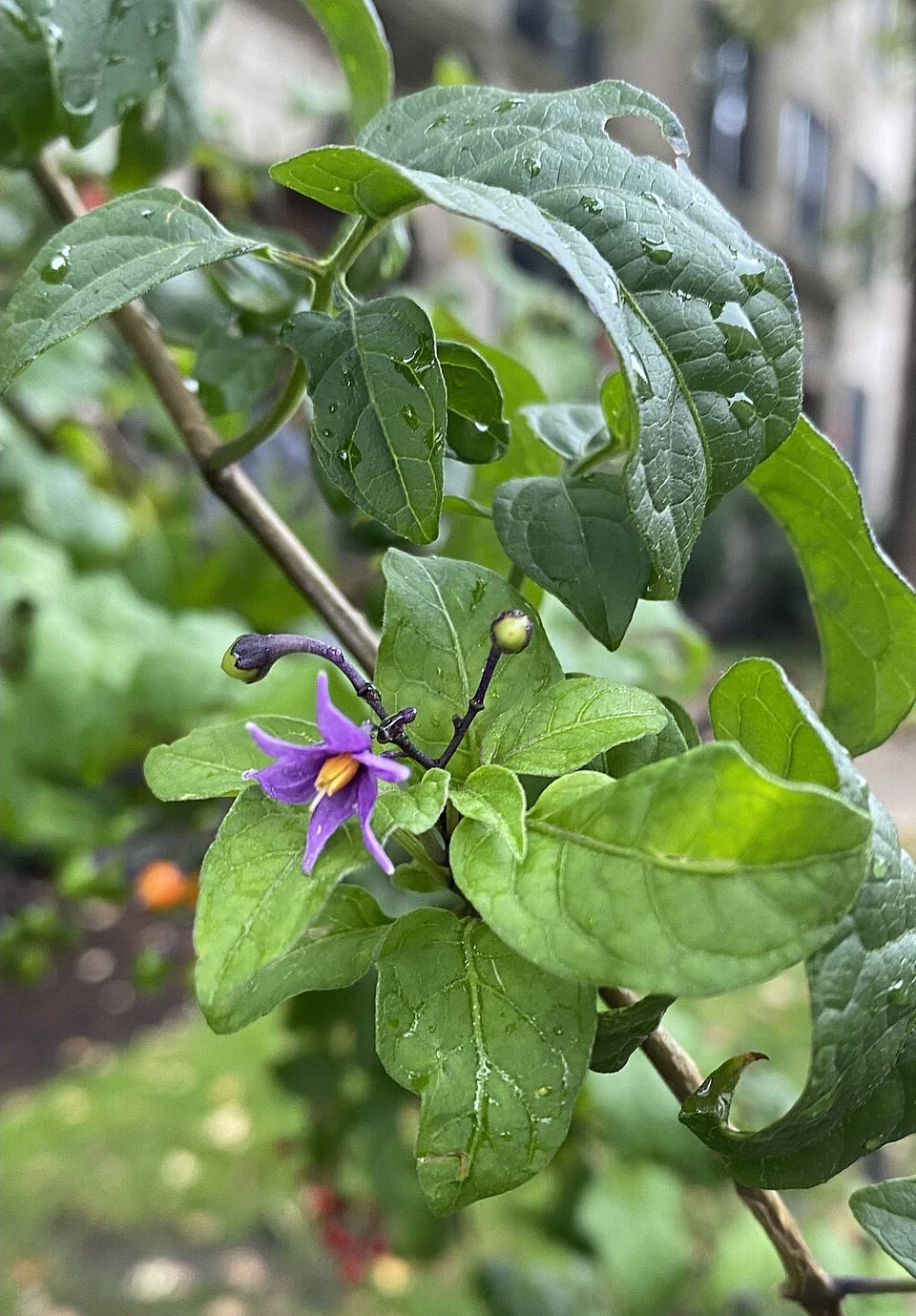
European Bittersweet
Solanum dulcamara L. Important botanical synonyms and former names include: Dulcamara flexuosa Moench Lycopersicon dulcamara (L.) Medik. Solanum ruderale Salisb. Solanum scandens Neck. Dulcamara lignosa Gilib. Solanum assimile Friv. Solanum asiae-mediae Pojark. Many additional historical forms and varieties have been published because European Bittersweet varies in leaf shape, hairiness, growth habit, and flower color. Solanum dulcamara remains the accepted species name.
Solanaceae Juss. — Nightshade Family
Order: Solanales
European Bittersweet, Bittersweet Nightshade, Woody Nightshade, Climbing Nightshade, Creeping Nightshade, Trailing Nightshade, Bitter Nightshade, European Nightshade, Blue Nightshade, Blue Bindweed, Blue Blindweed, Amara Dulcis, Dulcamara, Fellenwort, Felonwood, Felonwort, Poisonberry, Poison Berry, Poison Flower, Scarlet Berry, Snakeberry, Trailing Bittersweet, Violet Bloom, Devil’s Apple, Solanum dulcamara, Dulcamara flexuosa, Lycopersicon dulcamara
“Deadly Nightshade” and “Deadly Nightshade Vine” are sometimes applied loosely to European Bittersweet, but true Deadly Nightshade is Atropa belladonna, a different plant containing tropane alkaloids.
American Bittersweet, Celastrus scandens, and Oriental Bittersweet, Celastrus orbiculatus, are separate woody vines in Celastraceae and are not botanical synonyms for European Bittersweet.
A Chemically Variable Mixture of Steroidal Glycosides
European Bittersweet contains a chemically diverse mixture of steroidal glycoalkaloids and related steroidal glycosides. Older veterinary and botanical sources often identify “solanine” as the plant’s single toxic principle, but direct modern research demonstrates substantially greater chemical complexity.
Identified steroidal aglycones include solasodine, soladulcidine, tomatidine, tomatidenol, and related structures. Their attached sugars form numerous glycosides whose biological activity, absorption, membrane effects, and distribution differ.
Directly isolated compounds include soladulcine A, soladulcine B, soladulcoside A, soladulcoside B, tigogenin glycosides, degalactotigonin, and additional steroidal-glycoside structures. Some compounds are nitrogen-containing glycoalkaloids, while others are non-alkaloidal steroidal glycosides or saponins. They should not all be flattened into one interchangeable chemical called solanine.
Chemotypes, Plant Parts, and Developmental Stage
Different European Bittersweet plants can have genetically determined glycoalkaloid chemotypes. Research involving geographically distinct plants found substantial differences in the identity and concentration of their steroidal glycosides.
Leaves, fruits, stems, primary roots, and adventitious roots do not necessarily contain the same compounds or concentrations. Direct root profiling identified dozens of steroidal-glycoside-type structures and showed qualitative and quantitative differences between root systems on the same species.
Plant development also matters. Mass-spectrometry imaging has demonstrated that the location of solasodine-, soladulcidine-, tomatidine-, and tomatidenol-related compounds changes among tissues and with fruit ripeness and developmental stage.
This chemical variability helps explain why published poisoning reports and dose estimates are inconsistent. Appearance, berry color, season, leaf count, or one animal’s lack of illness cannot be used to establish a safe amount for another exposure.
Unripe and Ripe Berries
Unripe green berries deserve particular concern. In an experimental mouse study using preparations of lyophilized European Bittersweet fruit, unripe berries collected early in the season produced gastrointestinal tissue changes compatible with glycoalkaloid toxicity. Unripe fruit collected later produced behavioral abnormalities, while ripe fruit did not produce detectable behavioral or histologic toxicity under the tested conditions.
That experiment supports a meaningful ripeness difference, but it does not prove that every ripe red berry is harmless. The animals received controlled experimental preparations, individual plants differ chemically, and no corresponding safe berry count has been established for dogs, cats, horses, livestock, or small pets.
A ripe red berry should therefore be regarded as potentially less hazardous than an immature green berry, not as edible pet food. A cluster may also contain green, yellow, orange, and red fruit at the same time.
Gastrointestinal and Cellular Effects
Steroidal glycoalkaloids can interact with sterols in cell membranes and disturb membrane integrity. These effects contribute to irritation and injury of the stomach and intestinal lining, producing nausea, drooling, vomiting, abdominal pain, diarrhea, and occasionally blood in vomit or stool.
Direct plant material and poorly digestible stems, seeds, and berry tissue add mechanical irritation. Repeated vomiting and diarrhea can become medically important through dehydration, electrolyte loss, acid-base abnormalities, poor circulation, and aspiration even when the absorbed toxin dose is not independently fatal.
Neurologic, Respiratory, and Cardiovascular Effects
Solanum glycoalkaloids can affect nerve, muscle, and autonomic function through more than one proposed mechanism. Cholinesterase inhibition, membrane disruption, altered ion movement, mitochondrial injury, and individual glycoside activity may all contribute, but the exact contribution of each pathway during naturally occurring European Bittersweet poisoning has not been established fully.
Substantial exposure may produce depression, weakness, ataxia, muscle tremors, abnormal behavior, respiratory depression, hypotension, or changes in heart rate. Published human cases have occasionally resembled anticholinergic poisoning, while veterinary and experimental descriptions include depressed neurologic and respiratory function.
The variability means that treatment must be directed by the animal’s actual neurologic examination, breathing, ECG rhythm, blood pressure, temperature, glucose, and electrolyte results rather than by assuming one universal cholinergic or anticholinergic syndrome.
European Bittersweet Is Not Deadly Nightshade
European Bittersweet is Solanum dulcamara. True Deadly Nightshade is Atropa belladonna. Both belong to Solanaceae and both are poisonous, but their defining chemical profiles differ.
Atropa belladonna is associated with atropine, hyoscyamine, and scopolamine. European Bittersweet is characterized instead by its variable mixture of steroidal glycoalkaloids and steroidal glycosides.
European Bittersweet should therefore not be described as though it predictably contains a pharmaceutical atropine dose or produces the classic atropine syndrome after every exposure.
Fresh, Wilted, and Dried Material
Leaves, stems, roots, flowers, unripe fruit, ripe fruit, cut vines, and dried fragments should all be treated as unsafe. Drying does not provide a dependable method of detoxification.
Dried or wilted material may be consumed more readily when mixed into hay, brush piles, garden waste, or landscape clippings because the animal cannot identify and avoid the intact bitter vine.
The documented canine case involved plant material identified as European Bittersweet after vomiting, and descriptions of the recovered material included stems and immature berries. This illustrates why both fruit and vegetative material must be considered during an exposure investigation.
No Established Safe Dose
No dependable berry count, leaf amount, vine length, hay percentage, or gram-per-kilogram threshold has been established for dogs, cats, horses, cattle, sheep, goats, pigs, rabbits, birds, or other animals.
Risk depends on plant chemotype, plant part, fruit ripeness, amount swallowed, rate of intake, animal size, age, health, preexisting disease, and how quickly treatment begins.
A small taste may cause no signs or limited gastrointestinal illness. An uncertain amount, multiple berries, immature fruit, contaminated forage, a young or very small animal, or any developing neurologic or respiratory abnormality warrants prompt veterinary assessment.
Early Gastrointestinal Signs
Vomiting and diarrhea are the most consistently recognized signs. An exposed animal may first develop drooling, lip licking, repeated swallowing, nausea, appetite loss, abdominal discomfort, restlessness, depression, or lethargy.
Signs may begin within several hours, but timing depends on the amount eaten, plant part, berry ripeness, stomach contents, and individual susceptibility. Plant fragments, berry skins, seeds, or stems may appear in vomit.
Diarrhea can become profuse and may contain mucus or blood after substantial mucosal irritation. One isolated vomiting episode is less concerning than repeated vomiting, bloody diarrhea, or inability to retain water.
Dehydration and Circulatory Complications
Continuing vomiting and diarrhea can cause dry or tacky gums, reduced urination, sunken eyes, weakness, cool extremities, poor skin elasticity, weak pulses, delayed capillary refill, and collapse.
Fluid and electrolyte loss can worsen hypotension, neurologic depression, kidney perfusion, acid-base balance, and cardiac stability. Puppies, kittens, small animals, older patients, and animals with heart, kidney, endocrine, or gastrointestinal disease may deteriorate more rapidly.
Blood in vomit or stool, black tarry stool, severe abdominal pain, progressive abdominal distention, or repeated unproductive retching requires examination for severe irritation, obstruction, foreign material, another toxin, or unrelated disease.
Weakness, Ataxia, and Tremors
A larger absorbed exposure may cause generalized weakness, reluctance to stand, swaying, stumbling, knuckling, loss of coordination, muscle twitching, or generalized tremors.
Weakness may be most visible in the hind limbs, but apparent rear-leg paralysis should not be assumed to represent permanent spinal injury. Glycoalkaloid effects, low blood pressure, dehydration, glucose abnormalities, electrolyte changes, sedation, or another neurologic disease can produce similar findings.
Progressive ataxia, inability to stand, continuous tremors, abnormal awareness, or convulsions requires immediate emergency treatment.
Depression and Altered Behavior
Affected animals may become unusually sleepy, withdrawn, confused, poorly responsive, or profoundly depressed. In less common cases, restlessness, agitation, unusual vocalization, or altered behavior may occur.
Pupil size and autonomic signs may vary. Mydriasis, abnormal salivation, changes in intestinal movement, and altered heart rate are not sufficiently specific to diagnose European Bittersweet poisoning without a reliable plant history.
Marked delirium, extreme agitation, persistent hallucination-like behavior, or a classic dry anticholinergic syndrome should prompt investigation for true Deadly Nightshade, medication, recreational substances, pesticides, or another mixed exposure.
Respiratory Depression and Aspiration
Severe poisoning may produce slow, shallow, or ineffective breathing. Respiratory and central nervous system depression were documented in the published Labrador puppy case.
Labored breathing may also result from aspiration of vomit, weakness of respiratory muscles, seizures, shock, or another substance in contaminated clippings or forage.
Slow respiration, weak breathing effort, blue-gray gums, falling oxygen levels, inability to protect the airway, gasping, or collapse is a life-threatening emergency.
Coughing, nasal discharge, fever, abnormal lung sounds, or worsening respiratory effort after vomiting raises concern for aspiration pneumonitis or pneumonia.
Cardiovascular Signs
Low blood pressure, weak pulses, pale mucous membranes, cold extremities, and collapse can accompany severe poisoning or major gastrointestinal fluid loss.
The heart rate may be slow, rapid, or irregular depending on autonomic effects, pain, stress, dehydration, temperature, blood pressure, and the stage of illness.
A temporarily normal pulse does not exclude toxicity. Fainting, persistent rhythm abnormalities, poor perfusion, or hypotension requires ECG and blood-pressure monitoring.
Dogs and Cats
Dogs are more likely to eat accessible berries or chew vines during outdoor exploration. Puppies are at particular risk because they investigate vegetation and may swallow immature berries, stems, or roots before the bitter taste limits intake.
The best-documented canine case involved a ten-week-old Labrador Retriever that developed weakness, ataxia, generalized muscle tremors, respiratory and central nervous system depression, mild fever, and vomiting of identifiable plant material. The puppy recovered after intensive supportive treatment.
Published feline case detail is limited. A cat with a credible ingestion should still be monitored for vomiting, diarrhea, appetite loss, weakness, abnormal coordination, tremors, breathing changes, or depression. Prolonged appetite loss is especially important in cats because it creates additional metabolic risk.
Horses and Livestock
Horses cannot vomit. Equine signs may include salivation, feed refusal, abdominal discomfort, colic, diarrhea, depression, weakness, tremors, incoordination, abnormal pulse, breathing difficulty, or collapse.
Cattle, sheep, goats, and pigs may develop gastrointestinal illness, weakness, neurologic abnormalities, or respiratory signs after substantial ingestion. Poisoning remains relatively uncommon because the living plant is bitter and poorly palatable.
Risk increases when desirable forage is scarce, pastures are overgrazed, animals are confined with the vine, or cut and dried material is mixed into hay or dumped as landscape waste.
Expected Course
Animals with limited gastrointestinal signs and no cardiovascular, respiratory, or neurologic abnormality may improve within several hours to approximately one day after the source is removed and hydration is maintained.
Recovery may take longer after repeated vomiting, bloody diarrhea, dehydration, hypotension, tremors, respiratory depression, aspiration, or a substantial immature-berry exposure.
The prognosis becomes guarded with persistent seizures, inability to stand, severe respiratory depression, refractory hypotension, aspiration pneumonia, coma, or delayed treatment. The published canine case confirms that recovery remains possible after substantial neurologic and respiratory signs when intensive supportive care is provided.
Plant Identity
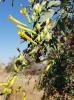
European Bittersweet is a perennial, semi-woody climbing or scrambling nightshade. Its flexible stems may trail across the ground, climb through fences and shrubs, or lean over surrounding vegetation.
The leaves are alternate and variable. Lower leaves may be oval, egg-shaped, or heart-shaped, while upper leaves commonly develop one or two small basal lobes. Leaf variation can make identification difficult when flowers and fruit are absent.
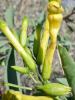
The flowers are usually violet or purple and occur in loose clusters. Five narrow petals bend backward from a prominent central cone of bright yellow anthers, creating the characteristic appearance of a Solanum flower.
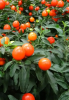
The fruits begin green, then pass through yellow and orange stages before becoming glossy red. Different berries in one cluster often mature at different rates, allowing several colors to appear simultaneously.
European Bittersweet Is a Nightshade, Not a Celastrus Bittersweet
European Bittersweet is Solanum dulcamara in the Nightshade Family, Solanaceae. American Bittersweet, Celastrus scandens, and Oriental Bittersweet, Celastrus orbiculatus, are woody vines in Celastraceae.
The Celastrus bittersweets have capsules that split open to reveal brightly colored seed coverings. European Bittersweet instead produces tomato-like berry clusters and purple reflexed flowers with yellow anther cones.
All three plants should be identified correctly rather than grouped under the common name “bittersweet,” because their chemistry, exposure patterns, and expected clinical syndromes differ.
European Bittersweet Is Not True Deadly Nightshade
True Deadly Nightshade is Atropa belladonna. It usually has solitary bell-shaped brown-purple flowers and glossy dark purple to black fruit surrounded by a persistent green calyx.
European Bittersweet has clustered purple star-shaped flowers and berries that ripen to red. Its defining chemistry is a variable steroidal-glycoside mixture rather than the atropine-, hyoscyamine-, and scopolamine-dominated profile of Atropa belladonna.
The informal name “Deadly Nightshade Vine” is therefore potentially misleading and should never replace a scientific identification.
Berry Ripeness and Chemical Variation
Unripe European Bittersweet berries generally deserve greater concern than fully ripe red fruit. Experimental research in mice found gastrointestinal or behavioral evidence of toxicity after unripe-fruit preparations but not after ripe-fruit preparations under the tested conditions.
Modern chemical research supports this developmental distinction by showing that steroidal alkaloids and glycosides are distributed differently as tissues and fruits mature.
The result is not a safe-ripe-berry rule. No study has established how many red berries a dog, cat, horse, or livestock animal can eat safely, and individual vines may belong to different chemical strains or chemotypes.
Where Animals Encounter the Vine
European Bittersweet commonly grows along woodland edges, hedgerows, fences, ditches, streambanks, pond margins, wetlands, roadsides, disturbed ground, and damp thickets. It frequently climbs through shrubs or fences used around homes, kennels, trails, paddocks, and livestock areas.
Dogs may eat fallen berries, pull vines during play, dig into roots, or encounter the plant while hunting, hiking, or exploring wet ground. Cats may chew accessible foliage or play with hanging berry clusters.
Landscape removal creates concentrated piles of leaves, stems, roots, and fruit. Cut material should not be left in dog yards, paddocks, livestock pens, rabbit enclosures, poultry runs, or open compost areas.
Hay, Forage, and Livestock Exposure
The living vine is bitter and has an unpleasant odor when crushed, so well-fed livestock often avoid large quantities. Avoidance is less dependable during drought, overgrazing, forage shortages, confinement, or access to recently cut vegetation.
Wilted or dried vines mixed into hay may be more difficult to recognize and sort from desirable forage. Fresh and dried material should both be treated as unsafe.
Several animals developing diarrhea, weakness, tremors, abnormal behavior, or respiratory signs after one hay lot or clipping pile requires immediate removal of the source and examination of the complete plant mixture.
The Documented Labrador Puppy Case
A published veterinary case involved a ten-week-old intact male Labrador Retriever presented after the acute onset of weakness, ataxia, and generalized muscle tremors.
The puppy developed respiratory and central nervous system depression, mild fever, and vomiting. Plant material in the vomit and corresponding plants from the property were identified as Solanum dulcamara.
The patient required airway management, oxygen, anesthesia, attempted gastric lavage, continuous ECG, pulse-oximetry and blood-pressure monitoring, intravenous crystalloid support, temperature management, and treatment of severe tremors. Respiratory acidosis and hypercapnia were monitored with serial blood-gas testing.
The puppy continued breathing spontaneously, improved with supportive treatment, and was discharged successfully. The report confirms that clinically important European Bittersweet poisoning can occur in dogs while also showing that severe signs are not inevitably fatal.
Medicinal and Concentrated Products
European Bittersweet has a history of medicinal use under names such as Dulcamara and Amara Dulcis. Stems and extracts have been used historically in preparations for skin, respiratory, or rheumatic complaints.
Historical medicinal use demonstrates biological activity, not animal safety. Raw plant material, homemade tinctures, extracts, concentrated herbal preparations, and unidentified homeopathic or topical products should not be administered to pets.
A processed product may also contain alcohol, solvents, essential oils, sweeteners, preservatives, or additional medicinal ingredients. Bring the complete label to the veterinarian after any product exposure.
Diagnosis
No routine veterinary test confirms European Bittersweet exposure or measures the plant’s complete steroidal-glycoside mixture.
Diagnosis depends on reliable plant identification, access history, missing berries or foliage, plant material in vomit or gastrointestinal contents, and compatible gastrointestinal, neurologic, respiratory, or cardiovascular signs.
Preserve the complete plant when possible, including flowers, leaves, berries at different ripeness stages, stems, and roots. Clear photographs should show the growth habit, flower clusters, yellow anther cones, leaf shape, and fruit color.
Testing in a symptomatic animal may include a complete blood count, serum chemistry, glucose, electrolytes, kidney and liver values, blood gases, acid-base status, urinalysis, ECG, blood pressure, pulse oximetry, chest imaging after suspected aspiration, and abdominal imaging when foreign material or obstruction is possible.
Prevention
Remove fruiting vines from kennels, dog yards, fence lines, paddocks, play areas, and paths used by plant-chewing animals. Remove roots and rooted stem fragments where practical because the plant can regrow.
Collect green, yellow, orange, and red berry clusters rather than leaving them on the ground. Wear gloves during removal and prevent animals from entering the work area until all material has been secured.
Do not throw cut vines into pastures, pens, open compost piles, brush heaps, or feed areas. Prevent the plant from entering hay fields and inspect questionable forage before feeding it.
Maintain adequate safe forage for grazing animals. A persistent plant-chewing dog or cat may require environmental changes, safer enrichment, dietary assessment, or veterinary evaluation for nausea or another condition encouraging plant ingestion.
Immediate Steps After European Bittersweet Exposure
- Stop further ingestion. Remove the animal from vines, berries, roots, clippings, contaminated hay, garden waste, vomit containing plant fragments, and any product made from the plant.
- Identify the plant. Look for purple reflexed flowers with a yellow anther cone, alternate variably lobed leaves, and clusters of fruit ripening from green through yellow and orange to red.
- Determine what was eaten. Record whether the exposure involved green berries, ripe berries, leaves, stems, roots, dried material, hay, or a concentrated herbal product.
- Remove only loose visible material. If the animal is calm, alert, breathing normally, and swallowing normally, lift away berries or plant fragments resting at the lips or front of the mouth. Do not probe the throat.
- Allow voluntary water only when safe. An alert animal that swallows normally and is not gagging or vomiting repeatedly may drink fresh water on its own. Do not syringe, pour, or force liquid.
- Preserve evidence. Save photographs, a flowering or fruiting vine sample, berry clusters, nursery or product labels, hay fragments, and securely contained material recovered from vomit.
- Contact veterinary help promptly. Call a veterinarian, emergency clinic, livestock veterinarian, or animal poison-control service when berries were swallowed, the amount is uncertain, forage was contaminated, or any clinical sign develops.
Do Not Attempt Unsupervised Home Treatment
- Do not give hydrogen peroxide. Home peroxide can cause severe gastric irritation, ulceration, aspiration, and dangerous treatment delay, particularly in cats and neurologically abnormal animals.
- Do not use salt, mustard, syrup of ipecac, or manual gagging. These methods can cause sodium poisoning, airway injury, aspiration, or additional gastrointestinal damage.
- Do not induce vomiting after signs begin. Weakness, depression, ataxia, tremors, respiratory abnormalities, repeated spontaneous vomiting, collapse, convulsions, or impaired swallowing makes emesis unsafe.
- Do not administer activated charcoal yourself. A weak, vomiting, tremoring, sedated, or poorly coordinated animal can inhale charcoal into the lungs.
- Do not force food, milk, oil, butter, electrolyte drinks, or herbal remedies. These do not neutralize steroidal glycoalkaloids and may worsen vomiting or aspiration risk.
- Do not give antidiarrheal or stomach medication automatically. Bismuth products, loperamide, kaolin-pectin products, sucralfate, antacids, and acid suppressants require case-specific veterinary selection.
- Do not give human pain relievers or leftover prescriptions. Ibuprofen, naproxen, acetaminophen, aspirin, sedatives, anti-seizure medication, or cardiac drugs can create additional poisoning or interfere with evaluation.
When Emergency Examination Is Required
- Persistent gastrointestinal illness: Repeated vomiting, inability to retain water, profuse or bloody diarrhea, black stool, severe abdominal pain, or continued appetite refusal requires examination.
- Neurologic abnormalities: Weakness, staggering, knuckling, inability to stand, generalized tremors, confusion, severe depression, convulsions, or coma requires immediate care.
- Respiratory abnormalities: Slow or shallow breathing, labored breathing, blue-gray gums, weak respiratory effort, coughing after vomiting, or collapse requires emergency stabilization.
- Cardiovascular abnormalities: Pale gums, cold extremities, weak pulses, a very slow, rapid, or irregular heartbeat, fainting, low blood pressure, or collapse requires monitoring and treatment.
- Dehydration: Dry gums, reduced urination, sunken eyes, profound lethargy, or poor circulation after vomiting or diarrhea warrants fluid and electrolyte assessment.
- Hay or herd exposure: Illness affecting several animals or discovery of European Bittersweet in forage requires immediate removal of the entire feed source and assessment of all exposed animals.
Veterinary Examination and Monitoring
The veterinarian will assess airway protection, breathing, oxygenation, mental status, coordination, tremors, heart rate and rhythm, blood pressure, pulse quality, temperature, hydration, abdominal pain, and the amount and form of plant material involved.
Testing may include glucose, electrolytes, kidney and liver values, blood gases, acid-base status, lactate, a complete blood count, urinalysis, ECG, blood-pressure monitoring, pulse oximetry, chest imaging after suspected aspiration, and abdominal imaging when retained plant material or obstruction is possible.
Serial examination is important because gastrointestinal signs may precede neurologic, respiratory, or circulatory deterioration.
Professional Gastrointestinal Decontamination
A veterinarian may consider induced vomiting after a very recent ingestion when a dog or cat remains completely alert, neurologically normal, cardiovascularly stable, breathing normally, and able to protect the airway.
Emesis is contraindicated in an animal that is already vomiting repeatedly, weak, depressed, ataxic, tremoring, convulsing, collapsed, dysphagic, or experiencing respiratory abnormalities.
Activated charcoal may be administered after airway, hydration, sodium, and gastrointestinal-motility assessment. It is not automatic after every exposure, and additional doses require individual toxicologic judgment because vomiting, dehydration, ileus, neurologic depression, and aspiration can make charcoal dangerous.
Gastric lavage is reserved for an exceptional substantial and recent ingestion when emesis is unsafe or unsuccessful and the patient can be anesthetized and intubated with a protected airway.
Tremor, Convulsion, and Neurologic Treatment
Clinically important tremors may require methocarbamol or another veterinarian-selected muscle relaxant. Convulsions may require benzodiazepines and additional anticonvulsant medication.
Temperature must be monitored because continuous muscle activity can cause hyperthermia, while shock, anesthesia, or prolonged depression can cause hypothermia.
Quiet handling, padded confinement, protection from falls, glucose and electrolyte correction, and repeated neurologic assessment are important during recovery.
Physostigmine is not a routine European Bittersweet antidote. Its use has been described in a human anticholinergic presentation, but veterinary consideration would require a clearly documented syndrome and specialist toxicologic judgment because inappropriate administration can cause serious cholinergic and cardiac complications.
Respiratory Support
An animal with respiratory depression may require supplemental oxygen, airway suction, endotracheal intubation, continuous oxygen and carbon-dioxide monitoring, and positive-pressure ventilation when spontaneous breathing is inadequate.
Blood-gas testing can document carbon-dioxide retention, respiratory acidosis, and the response to treatment.
Coughing, fever, nasal discharge, abnormal lung sounds, or worsening oxygenation after vomiting may indicate aspiration. Thoracic imaging and respiratory support may be needed, with antimicrobial treatment when bacterial aspiration pneumonia is established or strongly suspected.
Cardiovascular and Fluid Support
Intravenous balanced crystalloids may correct dehydration, replace vomiting and diarrhea losses, and support circulation and blood pressure.
Fluid volume must be individualized according to body weight, dehydration, perfusion, urine production, heart function, electrolyte results, and continuing losses.
Persistent hypotension requires reassessment of volume status, temperature, rhythm, acid-base balance, and other causes of shock. A veterinarian-selected vasopressor may be required when blood pressure remains inadequate after appropriate fluid replacement.
Slow, rapid, or irregular rhythms should be identified with ECG before treatment. Medication must match the documented rhythm and its effect on blood pressure and perfusion.
Vomiting, Diarrhea, and Gastrointestinal Injury
Persistent nausea or vomiting may be treated with a veterinarian-selected antiemetic such as maropitant or ondansetron after decontamination decisions are complete and obstruction has been considered.
Sucralfate or acid suppression may be considered when hematemesis, melena, esophagitis, or documented erosive injury is present. These medications do not neutralize European Bittersweet toxins and are unnecessary after every exposure.
Food may be reintroduced gradually when vomiting has stopped, swallowing is normal, hydration is improving, and the animal shows voluntary interest.
Horses and Livestock
Remove the entire group from contaminated forage, vines, clippings, or hay. Preserve representative plant and feed samples and document which animals had access.
Horses cannot vomit. Assessment may include oral examination, nasogastric evaluation, gastrointestinal-motility monitoring, hydration and manure assessment, ECG, blood pressure when available, neurologic examination, and respiratory monitoring.
Cattle, sheep, goats, and other ruminants should be evaluated for rumen motility, abdominal distention, manure production, hydration, neurologic function, pulse, breathing, and the amount of contaminated material that may remain in the rumen.
Activated charcoal, rumen evacuation, or another decontamination procedure may be considered professionally after a substantial recent ingestion when airway protection and patient stability permit it.
Prognosis and Recovery
The prognosis is generally favorable when signs remain limited to mild gastrointestinal irritation and treatment begins before severe dehydration, neurologic depression, respiratory compromise, or hypotension develops.
The prognosis becomes guarded with bloody diarrhea, inability to stand, continuous tremors, convulsions, respiratory depression, refractory hypotension, aspiration, coma, or delayed treatment.
Recovery is possible after substantial poisoning. The documented Labrador puppy recovered despite weakness, ataxia, generalized tremors, respiratory depression, and central nervous system depression after receiving intensive supportive care.
Recovered animals should remain permanently separated from the implicated vine, hay, or clipping source.
Frequently Asked Questions About Eur
Frequently Asked Questions About European Bittersweet and Animal Poisoning
Is European Bittersweet poisonous to dogs and cats?
Yes. European Bittersweet contains variable steroidal glycoalkaloids and related steroidal glycosides. Vomiting, diarrhea, abdominal pain, drooling, appetite loss, lethargy, and depression are the most likely effects. Larger exposures can cause weakness, ataxia, tremors, respiratory depression, hypotension, collapse, convulsions, or coma.
Is European Bittersweet poisonous to horses and livestock?
Yes. Horses, cattle, sheep, goats, pigs, and other grazing animals should not eat the vine. Risk increases when it is mixed into hay or landscape clippings, pastures are overgrazed, or safe forage is scarce. Horses cannot vomit and may instead show salivation, colic, diarrhea, weakness, tremors, incoordination, respiratory abnormalities, or collapse.
Which parts of European Bittersweet are most dangerous?
Unripe green berries deserve particular concern, and experimental research found greater toxicity from unripe than ripe fruit. Leaves, stems, roots, flowers, ripe berries, dried vines, and contaminated forage should still be treated as unsafe because the plant’s chemical profile varies substantially.
Are ripe red European Bittersweet berries safe?
No safe ripe-berry amount has been established for pets. Ripe fruit produced no detectable toxicity in one controlled mouse experiment, but that result does not prove that every red berry or every plant chemotype is harmless to a dog, cat, horse, or other animal.
What toxins are in European Bittersweet?
The plant contains a complex mixture of steroidal glycoalkaloids and steroidal glycosides rather than one uniform toxin. Identified compounds or aglycones include solasodine-, soladulcidine-, tomatidine-, tomatidenol-, tigogenin-, soladulcine-, and soladulcoside-related structures. Their presence and concentration vary by plant, organ, developmental stage, and fruit ripeness.
Is European Bittersweet the same as true Deadly Nightshade?
No. European Bittersweet is Solanum dulcamara. True Deadly Nightshade is Atropa belladonna and contains atropine, hyoscyamine, and scopolamine. Both are poisonous, but their identifying features, chemistry, and typical poisoning patterns differ.
Is European Bittersweet the same as American or Oriental Bittersweet?
No. American Bittersweet is Celastrus scandens, and Oriental Bittersweet is Celastrus orbiculatus. Those plants belong to Celastraceae. European Bittersweet is a nightshade with purple reflexed flowers, yellow anther cones, and red berries.
Can European Bittersweet cause neurologic or breathing problems?
Yes, after a substantial exposure. A documented Labrador puppy developed weakness, ataxia, generalized muscle tremors, respiratory depression, and central nervous system depression. These severe effects are less common than vomiting and diarrhea but require immediate emergency treatment.
Should I make my dog vomit after it eats European Bittersweet?
Do not attempt home vomiting. Hydrogen peroxide, salt, mustard, ipecac, and manual gagging can cause additional injury or aspiration. Vomiting is especially dangerous after weakness, depression, tremors, ataxia, breathing changes, repeated spontaneous vomiting, collapse, or impaired swallowing develops.
Does activated charcoal help with European Bittersweet poisoning?
A veterinarian may administer activated charcoal after a meaningful recent ingestion when the animal can protect its airway and hydration and gastrointestinal movement have been assessed. It should not be given at home, and repeated doses are not automatic because vomiting, dehydration, neurologic depression, ileus, and aspiration can make charcoal dangerous.
Can dried European Bittersweet in hay still cause poisoning?
Yes. Drying should not be assumed to destroy the plant’s steroidal glycosides. Dried vines may be harder for livestock to identify and avoid when mixed with desirable hay. Stop feeding suspect forage immediately and preserve representative plant fragments for identification.
What is the prognosis after European Bittersweet poisoning?
Animals with limited gastrointestinal signs and no neurologic, cardiovascular, or respiratory involvement often recover with timely supportive care. Prognosis becomes guarded with bloody diarrhea, severe dehydration, inability to stand, continuous tremors, convulsions, respiratory depression, hypotension, aspiration, or coma. Recovery remains possible even after substantial signs when intensive treatment begins promptly.
opean Bittersweet and Pets
Is European Bittersweet poisonous to dogs?
Yes. European Bittersweet is toxic to dogs. Vomiting, diarrhea, abdominal pain, drooling, lethargy, and depression are the most likely signs. Larger ingestions can cause weakness, tremors, loss of coordination, low blood pressure, abnormal heart rate, respiratory depression, collapse, seizures, or coma.
Is European Bittersweet toxic to cats?
Yes. Cats should not be allowed to chew the vine or play with its berries. Expected signs include drooling, vomiting, diarrhea, reduced appetite, abdominal discomfort, lethargy, and depression. Weakness, tremors, breathing changes, or loss of coordination require immediate veterinary care.
What is the scientific name for European Bittersweet?
The scientific name for European Bittersweet is Solanum dulcamara. It belongs to the Nightshade family, Solanaceae.
Is European Bittersweet the same as American Bittersweet?
No. European Bittersweet is Solanum dulcamara, a poisonous nightshade with purple flowers and red berries. American Bittersweet is Celastrus scandens, a woody vine in the family Celastraceae. Oriental Bittersweet, Celastrus orbiculatus, is another different plant.
Is European Bittersweet the same as Deadly Nightshade?
No. European Bittersweet is Solanum dulcamara and contains steroidal glycoalkaloids. Deadly Nightshade is Atropa belladonna and contains potent tropane alkaloids such as atropine, hyoscyamine, and scopolamine. Both are poisonous, but Deadly Nightshade generally has a more potent anticholinergic toxin profile.
Which parts of European Bittersweet are most poisonous?
All parts should be considered poisonous. Young leaves and unripe green berries are generally considered more toxic than ripe red berries, but ripe berries can still cause poisoning and should never be treated as safe.
How can I identify European Bittersweet?
Look for a climbing or scrambling vine with alternate leaves, purple star-shaped flowers whose petals bend backward, a prominent yellow cone of anthers, and berry clusters that ripen from green through yellow and orange to glossy red.
What symptoms should I watch for?
Watch for drooling, vomiting, abdominal pain, reduced appetite, diarrhea, bloody diarrhea, lethargy, depression, weakness, dilated pupils, tremors, staggering, rear-leg weakness, low blood pressure, abnormal heart rate, breathing difficulty, collapse, seizures, or coma.
How dangerous is European Bittersweet?
European Bittersweet has moderate, dose-dependent toxicity. Most reported pet exposures are expected to cause gastrointestinal illness, while serious neurologic, cardiovascular, or respiratory poisoning is uncommon. Risk increases with larger ingestion, unripe berries, young animals, contaminated forage, or delayed treatment.
What should I do after suspected ingestion?
Prevent further ingestion, remove visible plant material from the mouth when it is safe, rinse the mouth gently, save a photograph or plant sample, and contact a veterinarian or animal poison-control professional. Do not induce vomiting in a weak, drowsy, uncoordinated, trembling, collapsed, or breathing-impaired animal. Use the complete First Aid section above for the full plant-specific response, decontamination, treatment, prevention, prognosis, and recovery information.