Feather Geranium Toxicity and Aromatic-Oil Exposure
Is Feather Geranium Poisonous to Dogs, Cats, Horses, and Livestock?
Yes—Feather Geranium, Dysphania botrys, should be treated as poisonous to dogs, cats, horses, livestock, and other animals, although the exact veterinary toxin and natural toxic dose have not been established. The sticky aromatic tissues contain a geographically variable essential oil rich in oxygenated sesquiterpenes and, in some populations, monoterpenes and iso-ascaridole. Secondary veterinary sources associate ingestion with vomiting, reduced appetite, depression, and other gastrointestinal signs, but severe natural poisoning has not been characterized in a published species-specific veterinary case series.
A small exploratory nibble is more likely to cause no illness or transient digestive upset than catastrophic poisoning. Concentrated essential oil, herbal extracts, repeated consumption, a large mass of plant material, or weed-contaminated forage creates a different exposure and warrants greater caution.
About this guide: This page provides general pet-poisoning information and cannot diagnose or treat an individual animal. For any suspected exposure, contact a veterinarian or animal poison-control service immediately. Do not induce vomiting, give medication, or attempt home decontamination unless directed by a veterinary professional.
Feather Geranium
Dysphania botrys (L.) Mosyakin & Clemants
Basionym and principal historical name:
Chenopodium botrys L.
Relevant botanical synonyms and historical combinations include:
Atriplex botrys (L.) Crantz
Botrydium aromaticum Spach
Botrydium botrys (L.) Small
Botrys aromaticus (Spach) Nieuwl.
Neobotrydium botrys (L.) Moldenke
Teloxys botrys (L.) W.A.Weber
Vulvaria botrys (L.) Bubani
Ambrina botrys Moq.
Ambrina foetida Moq.
Chenopodium aromaticum Anon.
Chenopodium botrydium St.-Lag.
Chenopodium nepalense Moq.
Roubieva botrys Fuss
Amaranthaceae; formerly classified in Chenopodiaceae
Feather Geranium; Feathered Geranium; Feather-Geranium; Jerusalem Oak; Jerusalem Oak Goosefoot; Jerusalem-Oak Goosefoot; Sticky Goosefoot; Sticky-Gland Goosefoot; Glandular Goosefoot; Aromatic Goosefoot; Botrys Goosefoot; Goosefoot; Ambrosia Mexicana; Ambrosia mexicana hort.; Dysphania botrys; Chenopodium botrys; Teloxys botrys; Botrydium botrys; Neobotrydium botrys; Atriplex botrys; Vulvaria botrys; Ambrina botrys; Botrys aromaticus
“Ambrosia mexicana” is a historical horticultural misapplication rather than the accepted scientific name. Feather Geranium is not a true ragweed in the genus Ambrosia.
Feather Geranium is not a true geranium. True geraniums and cultivated Pelargonium belong to Geraniaceae, while Dysphania botrys belongs to Amaranthaceae.
“Jerusalem Oak” does not identify an oak tree. Dysphania botrys is a soft-stemmed annual herb.
Feather Geranium is not the same species as Epazote, Mexican Tea, or American Wormseed, Dysphania ambrosioides. The two plants are related and aromatic but have different essential-oil profiles and should not be assigned identical toxin concentrations or clinical effects.
A Chemically Variable Aromatic Plant
Feather Geranium contains a complex essential oil produced by glandular hairs covering its leaves, stems, flowers, and developing fruits. Crushing the plant releases the strong resinous, medicinal, camphor-like, or seasoning-like odor for which the species is known.
The oil is not chemically uniform. Studies from North America, Greece, Iran, Saudi Arabia, Bulgaria, Macedonia, and Turkey have reported markedly different dominant constituents. Climate, genetics, soil, developmental stage, collection location, drying, storage, and distillation method can all alter the measured composition.
This variability prevents one compound list from representing every Feather Geranium population. It also prevents a concentration measured in distilled oil from being converted directly into a toxic amount of fresh foliage for a dog, cat, horse, or grazing animal.
Oxygenated Sesquiterpenes Confirmed in the Exact Species
A North American analysis found that approximately 90% of the essential oil consisted of oxygenated sesquiterpenoids. Major constituents included α- and β-chenopodiol, eudesma-3,11-dien-6α-ol, botrydiol, elemol, elemol acetate, γ-eudesmol, and α- and β-eudesmol. The investigators also characterized two previously undescribed sesquiterpene alcohols.
Greek and Bulgarian samples were likewise rich in oxygenated sesquiterpenes, including elemol acetate, elemol, botrydiol, α-chenopodiol, α-eudesmol, juniper camphor, and related alcohols and acetates. Earlier extraction research isolated additional polyoxygenated sesquiterpenes of the eudesmane and guaiane structural groups.
These are principally sesquiterpenes, sesquiterpene alcohols, diols, ketones, and acetates. The direct studies do not justify converting that chemistry into a blanket statement that “sesquiterpene lactones are the principal toxin.” A sesquiterpene is not automatically a sesquiterpene lactone, and the terms should not be used interchangeably.
Monoterpene-Rich Chemotypes and Iso-Ascaridole
Some Feather Geranium populations have produced substantially different oils. An Iranian study found γ-terpineol and p-cymene as the dominant constituents and identified iso-ascaridole as a smaller but significant component. Other samples have contained high proportions of 1,8-cineole, camphor, camphene, α-pinene, or myrcene.
Ascaridole and iso-ascaridole are reactive monoterpene endoperoxides best known from concentrated oils of related Dysphania species. Their presence in some Dysphania botrys samples supports caution with distilled oil, extracts, and homemade medicinal preparations. It does not establish that every Feather Geranium plant contains the same amount or that one fresh leaf causes ascaridole poisoning.
Epazote or American Wormseed, Dysphania ambrosioides, has a much stronger historical association with ascaridole-rich anthelmintic oil and severe concentrated-oil poisoning. Those reports cannot be copied directly to Feather Geranium without confirming the species, product, and chemical composition.
Flavonoids, Polyphenols, and Other Confirmed Constituents
Exact-species studies have identified quercetin and kaempferol glycosides, isorhamnetin derivatives, hispidulin and jaceosidine glycosides, pectolinarigenin, demethylnobiletin, isosinensetin, and several methoxylated flavones. Earlier investigations also isolated chrysoeriol, salvigenin, sinensetin, jaceosidin, and related flavonoids.
These compounds demonstrate additional biological complexity but are not proven causes of the routine veterinary signs attributed to the plant. Antioxidant, anti-inflammatory, enzyme-inhibiting, or antimicrobial activity in a laboratory assay does not establish a pet-toxic dose or natural clinical syndrome.
What Laboratory Bioactivity Does—and Does Not—Prove
Concentrated Feather Geranium essential oil has inhibited bacteria and fungi and has shown fumigant toxicity to insects. In cultured human cervical-cancer cells, an oil dominated by α-eudesmol, elemol acetate, elemol, and α-chenopodiol acetate reduced cell viability, altered cell-cycle progression, and promoted apoptosis-related pathways.
These findings confirm that the oil is pharmacologically active and that a concentrated extract should not be regarded as harmless. They do not show that an animal chewing a small amount of fresh plant receives the same concentration, route, tissue exposure, or biological effect.
A topical rat wound study also used prepared Feather Geranium essential oil experimentally. A formulated research application to a controlled wound does not demonstrate that raw foliage, undiluted oil, or oral administration is safe for an animal.
The Veterinary Toxin and Toxic Dose Remain Unresolved
No exact-species controlled feeding study has established which compound causes vomiting, anorexia, or depression in dogs, cats, or horses. Published botanically confirmed veterinary case reports are also lacking. The clinical listing should therefore be treated as a cautionary classification rather than a fully characterized toxicosis.
The most plausible concern after ordinary plant ingestion is local gastrointestinal irritation from aromatic oils, bitter terpenoids, and indigestible plant material. A concentrated oil or extract may present a much greater dose of volatile compounds than the intact plant and could plausibly cause more substantial gastrointestinal, hepatic, neurologic, or respiratory effects, but a species-specific dose-response relationship has not been established.
No dependable leaf count, seed count, plant weight, oil volume, forage percentage, or gram-per-kilogram dose exists for dogs, cats, horses, cattle, sheep, goats, rabbits, or birds.
Nitrate, Oxalate, and Cyanide Claims Require Separate Evidence
Some goosefoots, pigweeds, and related Amaranthaceae can accumulate nitrate or soluble oxalate under particular growing conditions. That broader family history does not prove that every stand of Feather Geranium contains a clinically important concentration.
No exact-species quantitative study used for this page established toxic nitrate accumulation, methemoglobinemia, soluble-oxalate hypocalcemia, or oxalate nephrosis caused by Dysphania botrys. Those syndromes should not be described as routine Feather Geranium poisoning merely because the species was formerly placed in Chenopodium.
Similarly, cyanogenic glycosides are not established as the defining toxin of this species. Severe oxygen-deprivation signs require testing of the actual plants, forage, fertilizer, water, and blood and investigation for mixed weeds or another toxicant.
Fresh Plants, Dried Weeds, Hay, and Concentrated Products
Drying can reduce or alter volatile-oil content, but it does not prove that all active constituents have disappeared. Seed-bearing plants, dried weeds, hay, bedding, herbal products, and stored plant material should not be assumed safe without identification and, when livestock exposure is substantial, appropriate feed analysis.
Essential oil, tincture, resin, concentrated extract, and powdered herbal preparations create a fundamentally different dose from a fresh foliage nibble. Products may also contain another Dysphania species, solvents, alcohol, pesticides, preservatives, or inaccurate labeling.
Expected Companion-Animal Presentation
The limited veterinary classification available for Feather Geranium associates ingestion with vomiting, appetite loss, and depression. Nausea may appear as lip licking, repeated swallowing, drooling, turning away from food, restlessness, or attempts to eat grass.
Vomiting may be isolated or repeated. Abdominal discomfort may cause a hunched posture, stretching, whining, guarding of the abdomen, or reluctance to settle. Soft stool or diarrhea is biologically plausible after ingestion of aromatic or indigestible plant material, although a detailed species-specific clinical series has not established its frequency.
Lethargy may result from nausea, abdominal pain, reduced intake, dehydration, or a more substantial exposure. Mild signs should begin improving after access is stopped rather than progressing steadily over many hours.
Large Plant-Material and Concentrated-Oil Exposure
A large mass of stems, leaves, roots, or seed-bearing material may produce more persistent vomiting, diarrhea, abdominal pain, or reduced appetite. Fibrous plant material can also contribute to choking, gagging, constipation, ileus, or gastrointestinal obstruction independently of its chemistry.
Concentrated essential oil or an herbal extract may expose an animal to a much larger amount of volatile terpenoids than chewing the living plant. Possible signs include repeated vomiting, marked depression, weakness, hypersalivation, tremors, respiratory irritation, or abnormal mentation. These effects remain extrapolations from chemical and laboratory evidence rather than a defined natural Feather Geranium syndrome.
Oil on the fur or paws may be swallowed during grooming. Volatile oil can also irritate the eyes, nose, or respiratory tract, especially in a small enclosure or after a spill.
When Severe Signs Suggest Another or Additional Hazard
Rapid or labored breathing, blue-gray or brown mucous membranes, chocolate-colored blood, collapse, or sudden death is not the established presentation of an ordinary Feather Geranium nibble. These findings require immediate investigation for nitrate or nitrite exposure from fertilizer, contaminated water, another forage plant, medication, or chemical source.
Muscle tremors, marked incoordination, seizures, paralysis, profound coma, major arrhythmias, or severe liver or kidney injury also require confirmation of the plant identity and investigation for pesticides, toxic mushrooms, medications, concentrated essential oil, Epazote or Wormseed oil, hemlock, another poisonous weed, or primary disease.
A plant identified only as “goosefoot,” “Ambrosia Mexicana,” or “Jerusalem Oak” may have been misidentified. Severe illness should never be forced into the expected low-severity profile simply because one weed in the area resembles Feather Geranium.
Horses and Grazing Animals
Direct equine and livestock case descriptions are lacking. A horse or grazing animal consuming a small amount may show feed refusal, mild colic, depression, diarrhea, or no illness. Horses cannot vomit and may express gastrointestinal discomfort through pawing, flank watching, stretching, sweating, rolling, or reduced manure production.
Greater concern arises when the plant forms a substantial portion of overgrazed pasture, green chop, hay, bedding, or crop residue. In that situation, the veterinarian must evaluate the complete forage rather than assuming that Feather Geranium alone caused the illness.
Illness affecting several animals suggests shared feed, water, fertilizer, pesticide, mold, or mixed-plant exposure. Representative samples should be preserved before the field, hay, trough, or feed lot is altered.
Dehydration and Secondary Complications
Repeated vomiting or diarrhea can cause tacky gums, sunken eyes, weakness, reduced urination, poor skin elasticity, electrolyte abnormalities, and circulatory compromise. Young, small, elderly, or chronically ill animals tolerate fluid loss less effectively.
A cat that refuses food beyond a brief period requires particular attention because prolonged anorexia can produce serious metabolic complications even when the original plant exposure was not highly toxic.
Aspiration is possible when a weak or repeatedly vomiting animal inhales saliva, food, water, charcoal, or a home remedy. Coughing, fever, rapid breathing, nasal discharge, or worsening lethargy after vomiting requires veterinary evaluation.
Expected Course and Prognosis
A healthy dog or cat with one small foliage exposure and no signs has a favorable outlook. Limited gastrointestinal signs should generally respond to removal of the source and appropriate supportive care.
The prognosis becomes more guarded when vomiting is persistent, dehydration develops, concentrated oil was swallowed, a foreign body is possible, the amount is large or unknown, several animals are affected, or severe neurologic, respiratory, or cardiovascular abnormalities appear.
Because no controlled species-specific clinical course has been established, fixed promises such as “recovery within 24 hours” are not justified. Duration depends on the actual exposure and any complication or alternate diagnosis.
Plant Identity and Accepted Taxonomy
Feather Geranium, Dysphania botrys, is a strongly aromatic annual in Amaranthaceae. It was formerly classified as Chenopodium botrys in Chenopodiaceae, and nearly all older chemical and medicinal research remains indexed under that name.
The accepted species is native from eastern-central and southern Europe through western and central Asia to Mongolia and the central Himalayas. It has been introduced widely in Canada, the United States, Mexico, and other temperate regions.
Historical literature may identify the same species as Teloxys botrys, Botrydium botrys, Neobotrydium botrys, Ambrina botrys, or another older combination. These names are useful when researching herbarium records, toxic-plant lists, essential-oil chemistry, and herbal products.
It Is Neither a Geranium Nor an Oak
True geraniums and cultivated Pelargonium belong to Geraniaceae. Feather Geranium belongs to Amaranthaceae and received its common name from its irregular, decorative foliage rather than botanical relationship.
Jerusalem Oak is likewise a figurative common name. The plant is an annual herb with soft green stems, not a woody oak or shrub.
The historical label Ambrosia Mexicana does not make it a ragweed. True ragweeds belong to the genus Ambrosia in Asteraceae.
How to Recognize Feather Geranium
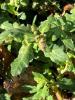
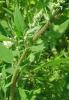
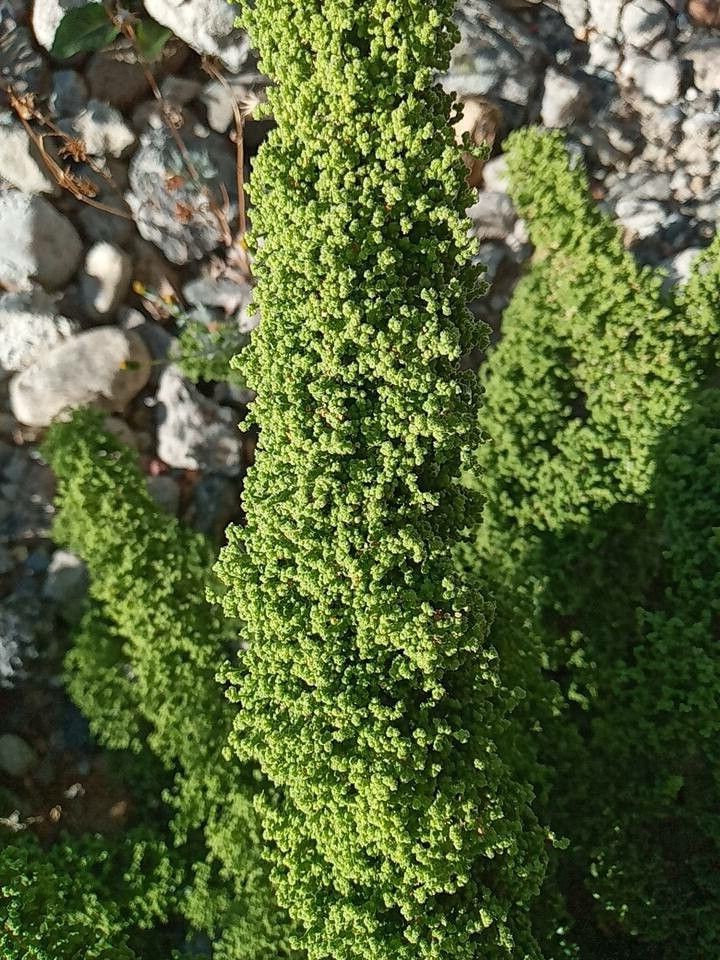
The plant commonly grows from approximately six inches to two feet tall, although favorable conditions may produce larger individuals. Stems are erect or ascending, freely branched, green to reddish, and often sticky to the touch.
Leaves are alternate. Lower leaves are generally oval to oblong or wedge-shaped and irregularly lobed, toothed, or pinnatifid. Upper leaves become progressively smaller, narrower, and less deeply divided.
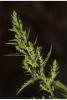
Short gland-tipped hairs cover much of the aboveground plant. These glands produce the aromatic oil and give the foliage and stems a tacky or resinous surface that can collect dust and grit.
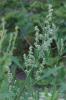
The tiny green or yellow-green flowers lack showy petals and are arranged in many loose, branching clusters. The clustered appearance contributed to the epithet botrys, referring to a bunch of grapes.
Small dry fruits mature later in the season and contain flattened dark seeds. Mature plants can produce numerous seeds and return repeatedly where disturbed soil remains open.
Odor and Glandular Oil
Crushed Feather Geranium produces a strong odor variously described as camphoraceous, resinous, medicinal, herbal, citrus-like, or similar to concentrated soup seasoning. Odor is useful supporting evidence but should not be used alone to taste-test or identify a plant.
Different populations can smell different because their essential-oil chemotypes differ. A monoterpene-rich population may smell sharper or more camphoraceous, while a sesquiterpene-rich population may smell heavier, woody, or resinous.
Where Animals Encounter It
Feather Geranium favors disturbed ground, dry roadsides, gravel, railway corridors, waste areas, construction sites, cultivated fields, vacant lots, river terraces, gardens, and open sunny soil. It may also occur around livestock facilities, hay fields, manure-rich areas, and recently disturbed paddocks.
Dogs may chew pulled weeds, investigate aromatic foliage, dig up roots, or encounter plants in yards and along walks. Cats may chew foliage or contact plant material brought indoors on clothing, tools, or garden waste.
Horses and livestock are more likely to consume it when safe forage is limited, a dense stand is cut into hay or green chop, or uprooted weeds and garden debris are thrown into an enclosure.
Feather Geranium Versus Epazote
Epazote, Mexican Tea, and American Wormseed generally refer to Dysphania ambrosioides, a separate species native to the Americas. Both species are glandular, aromatic, and historically classified in Chenopodium.
Epazote is usually taller and has more lance-shaped, irregularly toothed leaves. Feather Geranium often has more deeply lobed lower leaves, a sticky glandular covering, and looser grape-like flower clusters.
The distinction is toxicologically important because concentrated Wormseed oil has a much stronger historical association with ascaridole poisoning. A bottle or herbal product labeled only “Chenopodium oil,” “wormseed,” or “Mexican tea” should not be assumed to contain Feather Geranium.
Feather Geranium Versus Lamb’s Quarters and Other Goosefoots
Lamb’s Quarters, Chenopodium album, generally has a mealy or powdery surface rather than the densely sticky glandular surface and strong odor of Feather Geranium. Its leaves are commonly triangular, diamond-shaped, or goosefoot-shaped.
Related goosefoots and pigweeds differ in nitrate, oxalate, saponin, essential-oil, and nutritional chemistry. Identification to family or old genus is not enough to assign one species’ poisoning mechanism to another.
Traditional Food and Medicinal Use
Feather Geranium has been used regionally as a spice or flavoring and in traditional preparations for respiratory, gastrointestinal, urinary, parasitic, inflammatory, and wound-related complaints. These uses involved selected plant material, preparation methods, and culturally specific dosing.
Traditional use does not establish that unrestricted raw plant consumption is safe for pets. It also does not justify administering essential oil, tinctures, decoctions, powdered seed, or homemade extracts to an animal.
Experimental antimicrobial, cytotoxic, and wound-healing research demonstrates biological activity under controlled conditions. It does not provide a veterinary dose or an owner-usable treatment.
Concentrated Essential Oil and Herbal Products
Distillation concentrates volatile constituents from a much larger mass of plant material. A small bottle of essential oil therefore cannot be assessed like one chewed leaf.
Commercial or homemade products may contain alcohol, carrier oils, another Dysphania species, variable ascaridole-related peroxides, pesticides, contaminants, or inaccurate labeling. Preserve the bottle and ingredient panel after exposure.
Do not diffuse Feather Geranium oil around birds or animals with respiratory disease. Do not apply undiluted oil to fur, skin, wounds, ears, or the mouth.
Dried Material, Hay, and Forage
Volatile compounds may decrease or change during drying, but dried plant material is not automatically harmless. Seeds, nonvolatile constituents, and residual oil remain, and animals may consume a larger amount when the weed is mixed through hay.
A visible Feather Geranium plant in hay does not prove that it caused illness. The same forage may contain high-nitrate weeds, soluble-oxalate plants, mold, mycotoxins, pesticides, blister beetles, or another poisonous species.
Representative samples should include material from several bales or field locations because contamination and plant chemistry may be unevenly distributed.
Diagnosis
There is no routine veterinary blood test that confirms Feather Geranium poisoning. Diagnosis depends on plant identification, the amount and form consumed, the clinical course, and exclusion of more serious alternatives.
Useful evidence includes an entire plant with roots, lower and upper leaves, glandular stems, flowers or fruits, photographs of the growing site, hay and feed samples, product labels, essential-oil bottles, fertilizer packaging, pesticide records, and water samples when relevant.
Routine testing may include a complete blood count, serum chemistry, glucose, electrolytes, kidney and liver-associated values, urinalysis, hydration assessment, abdominal imaging, and tests selected for the animal’s actual signs.
When mucous membranes or blood are unusually brown, methemoglobin measurement and nitrate or nitrite testing of forage, water, fertilizer, and blood may be indicated. Those results diagnose a nitrate or nitrite exposure; they do not prove that Feather Geranium was the source without testing the plant itself.
Suspected soluble-oxalate disease requires blood calcium, kidney values, urinalysis, and quantitative testing of the actual forage. Family membership or visual identification alone is not sufficient.
Prognosis and Prevention
The prognosis is favorable after most small companion-animal exposures. Concentrated oil, persistent vomiting, dehydration, obstruction, mixed-forage exposure, or severe systemic signs creates a more guarded situation.
Remove plants before they produce seed in pet yards and animal enclosures. Collect pulled weeds rather than leaving them in piles accessible to animals, and never throw aromatic garden waste into paddocks, rabbit runs, poultry yards, or kennels.
Maintain adequate forage and test questionable hay or green chop when stressed weeds form a substantial portion of the material. Secure fertilizers, herbicides, pesticides, essential oils, and herbal preparations separately from the living plant.
Immediate Steps After Feather Geranium Exposure
- Stop further ingestion. Remove the animal from fresh plants, pulled weeds, roots, seeds, hay, bedding, green chop, herbal preparations, or spilled essential oil.
- Identify the exposure form. Distinguish one foliage nibble from a large plant ingestion, repeated forage access, or contact with distilled oil, tincture, powder, or another concentrate.
- Confirm the plant when possible. Preserve the root, sticky stems, lower and upper leaves, flowers, fruits, photographs, and growing-location information.
- Remove only loose visible material. If the animal is calm, alert, breathing normally, and swallowing normally, lift plant pieces resting at the lips or front of the mouth. Do not reach blindly toward the throat.
- Prevent grooming after oil or sap exposure. Keep the animal from licking contaminated paws, fur, or skin until the material has been washed away.
- Preserve related evidence. Save forage, feed, water, fertilizer packaging, pesticide records, product bottles, and vomited plant material when a more complex exposure is possible.
- Contact a veterinarian after a meaningful exposure. Large or unknown ingestion, essential-oil exposure, persistent symptoms, livestock forage exposure, or severe respiratory, neurologic, or cardiovascular signs requires professional assessment.
Do Not Attempt Unsupervised Home Treatment
- Do not induce vomiting. Do not use hydrogen peroxide, salt, mustard, syrup of ipecac, dish soap, detergent, manual gagging, or fingers in the throat.
- Do not force water or food. A nauseated, weak, trembling, seizuring, or poorly swallowing animal may aspirate material into the lungs.
- Do not administer activated charcoal yourself. Charcoal may be aspirated and is not routinely justified after a small, low-severity foliage exposure.
- Do not give milk, yogurt, oil, bread, laxatives, or another improvised antidote. None has been shown to neutralize Feather Geranium constituents.
- Do not give calcium, methylene blue, cyanide antidotes, heart medication, anticonvulsants, antihistamines, corticosteroids, or leftover prescriptions. These treatments address specific diagnoses and may cause harm when the suspected mechanism is wrong.
- Do not apply or diffuse concentrated essential oil. Do not place it on the mouth, skin, wounds, ears, paws, or fur.
Skin, Fur, and Essential-Oil Decontamination
Wear gloves and prevent grooming. Wash contaminated skin, paws, and fur with mild liquid soap and generous lukewarm water. Rinse thoroughly and repeat if an oily odor or residue remains.
Do not use solvents, alcohol, peroxide, bleach, essential oils, or harsh degreasers. Remove contaminated collars, harnesses, bedding, or towels until they have been cleaned.
Persistent redness, pain, swelling, coughing, respiratory irritation, tremors, vomiting, or abnormal behavior after concentrated-oil contact requires veterinary care.
Eye Exposure
Flush the eye immediately with sterile saline or clean lukewarm water for at least 15–20 minutes. Allow runoff to flow away from the opposite eye and mouth.
Do not use soap, oil, milk, contact-lens solution, human eye drops, or leftover ophthalmic medication. Prevent rubbing when this can be done safely.
Continued squinting, tearing, redness, cloudiness, discharge, eyelid swelling, or apparent visual difficulty requires prompt veterinary examination.
When Emergency Examination Is Required
- Vomiting or diarrhea is persistent. Repeated fluid loss, blood, severe abdominal pain, inability to retain water, or progressive weakness warrants examination.
- Breathing is abnormal. Rapid, labored, shallow, noisy, or open-mouth breathing may indicate aspiration, respiratory irritation, methemoglobinemia, another toxin, or severe systemic illness.
- Mucous membranes are discolored. Blue-gray, slate, muddy brown, or chocolate-colored gums require immediate evaluation and blood testing.
- Neurologic signs develop. Tremors, staggering, disorientation, seizures, paralysis, collapse, or coma is not the expected response to one small nibble.
- A concentrated product was swallowed. Essential oil, tincture, extract, or unidentified herbal medicine may deliver a much greater and less predictable dose.
- A foreign body is possible. Repeated unproductive retching, abdominal enlargement, persistent vomiting, severe pain, or reduced fecal output may indicate obstruction.
- Several animals are affected. Remove the entire group from the shared forage, water, fertilizer, bedding, or pasture and preserve representative samples.
Veterinary Examination and Diagnostic Priorities
The veterinarian will assess hydration, abdominal pain, temperature, heart rate and rhythm, pulse quality, blood pressure, respiratory function, mucous-membrane color, mental status, gait, and evidence of another toxicant.
Testing may include a complete blood count, serum chemistry, glucose, sodium, potassium, chloride, calcium, magnesium, kidney and liver-associated values, acid-base assessment, urinalysis, blood pressure, electrocardiography, and abdominal imaging when obstruction or another gastrointestinal disorder is possible.
Essential-oil exposure may justify closer neurologic, respiratory, hepatic, and renal monitoring than an ordinary foliage nibble. The oil’s composition cannot be predicted reliably from the common name alone.
Professional Gastrointestinal Decontamination
A veterinarian may consider clinic-induced vomiting after a recent substantial ingestion in an appropriate dog or cat that is fully alert, neurologically normal, breathing normally, not already vomiting, and able to protect the airway.
Emesis is inappropriate after weakness, tremors, seizures, respiratory abnormality, collapse, repeated vomiting, impaired swallowing, or concentrated-oil aspiration risk develops. Horses, rabbits, guinea pigs, and other species incapable of vomiting should never receive an emetic.
Activated charcoal may be considered professionally after a large or concentrated recent ingestion when the likely benefit exceeds aspiration, dehydration, sodium, constipation, and ileus risks. There is no exact-species evidence supporting routine or repeated charcoal treatment.
Gastric lavage is reserved for exceptional recent exposures in an anesthetized and intubated patient. It is not justified after an ordinary plant nibble.
Vomiting, Diarrhea, and Hydration Support
Persistent vomiting may be treated with a veterinarian-selected antiemetic after useful decontamination has been completed and obstruction or retained plant material has been considered.
Intravenous fluids may be needed when vomiting or diarrhea causes dehydration, electrolyte abnormalities, reduced urination, weakness, or poor perfusion. Fluid planning should account for body weight, losses, blood pressure, kidney function, urine output, and cardiac status.
Gastrointestinal protectants may be considered when repeated vomiting, hematemesis, melena, esophagitis, or erosive gastric injury is documented or strongly suspected. They are not plant antidotes and should not be administered automatically at home.
Food can be reintroduced gradually once vomiting is controlled, swallowing is normal, circulation is stable, and the animal shows voluntary interest. Prolonged appetite loss in a cat requires prompt veterinary management.
Suspected Nitrate or Nitrite Exposure
Blue-gray or chocolate-colored mucous membranes, chocolate-brown blood, rapid breathing, severe weakness, collapse, or sudden group illness requires immediate testing for methemoglobinemia and nitrate or nitrite in forage, water, fertilizer, and blood.
Remove suspect feed and water and keep affected animals quiet because exercise increases tissue oxygen demand. Supplemental oxygen may be used, but oxygen alone cannot restore hemoglobin that has been converted to methemoglobin.
Veterinary methylene blue may be used when nitrate or nitrite poisoning is confirmed or strongly supported. It is not a routine Feather Geranium treatment and must not be administered without diagnosis, species-specific judgment, and consideration of food-animal regulations.
Traditional cyanide-antidote components that intentionally create methemoglobin can worsen nitrate poisoning. The two syndromes should not be treated interchangeably.
Suspected Soluble-Oxalate Exposure
Weakness, muscle tremors, abnormal gait, recumbency, reduced urination, hypocalcemia, or kidney abnormalities in animals consuming mixed goosefoot or pigweed forage requires quantitative feed testing and a broader diagnostic investigation.
Veterinary calcium may be required in confirmed severe hypocalcemia, but calcium administration requires controlled monitoring and is not an owner-administered Feather Geranium antidote.
Kidney function, hydration, urine output, electrolytes, and cardiac rhythm may require repeated assessment. The diagnosis should not be based solely on the former placement of the plant in Chenopodium.
Horses and Livestock
Remove affected animals from the pasture, hay, green chop, weed pile, water source, and fertilizer area. Horses cannot vomit and must not receive a home emetic.
Large-animal evaluation may include gastrointestinal-motility assessment, manure production, hydration, neurologic examination, methemoglobin testing, blood chemistry, rumen or gastric evaluation, and analysis of representative plants, hay, water, and feed.
Collect samples from several bales or field locations. Removing one visible weed does not establish that the remaining forage is safe or identify the actual cause of group illness.
Prognosis and Recovery
The prognosis is good after most small foliage exposures when signs are absent or limited to mild gastrointestinal upset.
Recovery may take longer when vomiting or diarrhea causes dehydration, a large mass of plant material was swallowed, or appetite remains reduced. Essential-oil exposure carries greater uncertainty because the product may be concentrated, chemically variable, or mislabeled.
Severe respiratory distress, methemoglobinemia, persistent seizures, coma, aspiration, obstruction, liver injury, kidney injury, or sudden group deaths indicate a substantially different and more guarded emergency than an ordinary Feather Geranium nibble.
Frequently Asked Questions About Feather Geranium and Animal Poisoning
Why do poison-plant lists call the toxin a sesquiterpene lactone when chemical studies report sesquiterpene alcohols?
The secondary toxic-plant label does not match the precision of the direct chemistry. Exact-species studies have identified many oxygenated sesquiterpenes, especially alcohols, diols, ketones, and acetates such as chenopodiol, botrydiol, elemol, and eudesmol derivatives. Some broader sesquiterpene research includes lactone structures, but no study has established one sesquiterpene lactone as the principal cause of natural Feather Geranium poisoning in pets. The public page should therefore describe the confirmed aromatic-oil mixture rather than treating an imprecise class label as a proven toxin.
Does Feather Geranium contain the same ascaridole concentration as Epazote or Wormseed?
No. Iso-ascaridole has been identified in at least one exact-species Feather Geranium oil, but other populations were dominated by oxygenated sesquiterpenes or different monoterpenes. Epazote and American Wormseed refer primarily to Dysphania ambrosioides, whose concentrated oil has a stronger historical association with ascaridole poisoning. One species’ concentration, dose, and prognosis cannot be assigned automatically to the other.
Why does the essential-oil composition vary so dramatically between studies?
Feather Geranium has multiple geographic and environmental chemotypes. Genetics, soil, temperature, water stress, development, flowering stage, harvest timing, drying, storage, and distillation technique can alter both the oil yield and the relative abundance of individual compounds. One population may be rich in chenopodiol and other oxygenated sesquiterpenes, while another contains more γ-terpineol, p-cymene, cineole, camphor, or iso-ascaridole. A published percentage therefore describes the tested sample, not every plant worldwide.
Is concentrated Feather Geranium essential oil more dangerous than chewing the plant?
Potentially, yes. Distillation concentrates volatile compounds from a large mass of plant tissue into a small volume. Laboratory studies demonstrate that the oil can be antimicrobial, insecticidal, cytotoxic, and capable of altering cultured-cell survival pathways. Those findings do not establish a pet dose, but they support treating undiluted oil, extracts, and tinctures as materially different exposures from one fresh leaf. Oil exposure warrants prompt veterinary consultation and preservation of the product container.
What direct evidence proves that Feather Geranium poisons dogs, cats, or horses?
Direct evidence is limited. Secondary veterinary databases classify the plant as toxic and list vomiting, anorexia, and depression, but published botanically confirmed case reports and controlled feeding studies in dogs, cats, and horses were not located in the literature reviewed for this page. That does not prove safety. It means the page must distinguish a precautionary toxic classification from a fully characterized toxicosis and avoid inventing a toxic dose, fatal amount, or guaranteed clinical course.
Does Feather Geranium always accumulate dangerous nitrate?
No exact-species evidence establishes that it routinely reaches poisonous forage concentrations. Other Amaranthaceae and former Chenopodium species can accumulate nitrate, particularly under heavy nitrogen exposure or interrupted growth, but that family-level fact cannot be transferred automatically. Nitrate risk must be determined by testing the actual plants, hay, water, or fertilizer source. Severe methemoglobinemia should trigger a complete forage investigation rather than automatic attribution to Feather Geranium.
Can its former Chenopodium classification prove that it causes soluble-oxalate poisoning?
No. Taxonomic history is not a chemical assay. Several goosefoots, pigweeds, and related plants contain clinically important soluble oxalates, but no quantitative exact-species study used for this page established dangerous soluble-oxalate concentrations in Dysphania botrys. Hypocalcemia or kidney injury in animals eating mixed weed forage requires testing of the actual material and investigation of other plants.
Does traditional culinary or medicinal use mean the raw plant is safe for animals?
No. Traditional use may involve a particular population, plant part, dose, preparation, boiling, infusion, or short treatment period. It also reflects human cultural practice rather than controlled dog, cat, horse, or livestock safety testing. The same plant can be used medicinally and still cause adverse effects when eaten raw, consumed in excess, distilled into oil, or given to another species.
Can laboratory testing identify Feather Geranium oil in an animal?
There is no routine clinical assay that confirms Feather Geranium ingestion. Gas chromatography and mass spectrometry can characterize an essential-oil or plant sample, but the highly variable chemotypes make one universal marker difficult. Diagnosis usually depends on botanical identification, exposure history, product analysis when available, the animal’s clinical findings, and exclusion of more serious alternatives.
Why should severe neurologic or oxygen-deprivation signs lead to a broader investigation?
Seizures, paralysis, chocolate-brown blood, cyanosis, profound respiratory distress, and sudden collapse are not established as the routine response to a small Feather Geranium exposure. They may indicate nitrate or nitrite from fertilizer or another plant, concentrated Wormseed oil, pesticides, toxic mushrooms, medications, hemlock, cyanide, metabolic disease, or another emergency. Treating those signs as simple Feather Geranium gastroenteritis can delay lifesaving diagnosis.
Can dried Feather Geranium in hay still matter?
Yes, but the risk cannot be predicted from appearance alone. Drying may reduce or alter volatile oil while leaving seeds, residual terpenoids, polyphenols, and indigestible plant material. Hay may also contain multiple weed species or another contaminant. A substantial infestation or group illness warrants representative sampling from several bales and analysis for nitrate, oxalate, mold, pesticides, and botanical composition as clinically appropriate.