Scarlet Leatherflower Protoanemonin Irritation, Fresh Clematis Sap Injury, Oral Burning, Eye Exposure, and Livestock-Clipping Risk
Is Scarlet Leatherflower Poisonous to Dogs, Cats, Horses, and Livestock?
Yes—Scarlet Leatherflower, Clematis texensis Buckley, is poisonous to dogs, cats, horses, livestock, rabbits, guinea pigs, birds, reptiles, and other animals when fresh plant tissue is chewed, crushed, or swallowed. Fresh leaves, petioles, stems, flowers, buds, immature fruit, roots, sap, cuttings, and crushed plant residue contain ranunculin-related compounds that can release the irritant protoanemonin after tissue damage. Exposure can cause immediate burning pain in the mouth, excessive drooling, pawing or rubbing at the face, gagging, painful swallowing, appetite refusal, vomiting in animals capable of vomiting, abdominal pain, intestinal cramping, diarrhea, skin irritation, and serious eye injury.
Most small exposures remain localized because the sudden acrid burning often causes the animal to stop chewing, but that self-limiting taste is not a safety guarantee. Larger fresh exposures, clipping piles, chopped plant material, vase debris, contaminated hay, sap on the coat, or eye contact can create more serious illness. Repeated vomiting or diarrhea can lead to dehydration and electrolyte abnormalities, while painful swallowing can create aspiration risk or feed refusal. Scarlet Leatherflower is not a cardiac-glycoside plant, not Hellebore, not False Hellebore, and not Larkspur; severe heart block, paralysis, seizures, coma, or primary kidney failure should trigger investigation for another toxin, dehydration, a mixed exposure, or a different disease.
About this guide: This page provides general pet-poisoning information and cannot diagnose or treat an individual animal. For any suspected exposure, contact a veterinarian or animal poison-control service immediately. Do not induce vomiting, give medication, or attempt home decontamination unless directed by a veterinary professional.
Scarlet Leatherflower
Clematis texensis Buckley
- Coriflora texensis (Buckley) W.A.Weber — homotypic historical combination
- Clematis coccinea Engelm. ex A.Gray — historical synonym
- Clematis coccinea var. major Bean — historical variety name
- Clematis coccinea var. parviflora Beissn. — historical variety name
- Clematis coccinea var. segreziensis Beissn. — historical variety name
- Clematis texensis var. major (Bean) Rehder — historical variety name
- Clematis texensis f. major (Bean) Rehder — historical form name
- Clematis viorna subsp. coccinea (Engelm. ex A.Gray) Kuntze — historical synonym
- Viorna coccinea (Engelm. ex A.Gray) Small — historical combination
- Clematis virginiana L. — Virgin’s Bower; separate North American Clematis species, not a synonym of Scarlet Leatherflower
- Helleborus spp. — true Hellebores; separate Ranunculaceae plants with additional toxin concerns, not Scarlet Leatherflower
- Veratrum spp. — False Hellebores; separate Melanthiaceae plants with steroidal alkaloids, not Clematis
- Delphinium spp. — Larkspurs; separate Ranunculaceae plants with neuromuscular-blocking alkaloids, not Clematis
Ranunculaceae — Buttercup Family
Scarlet Leatherflower; Scarlet Leather Flower; Scarlet Clematis; Texas Clematis; Texas Leatherflower; Red Leatherflower; Leatherflower; Clematis; Red Clematis; Urn-Flowered Clematis; Bell-Flowered Clematis; Tulip-Flowered Clematis; Texensis Clematis.
Historical and taxonomic search variations include Clematis texensis Buckley, Coriflora texensis (Buckley) W.A.Weber, Clematis coccinea Engelm. ex A.Gray, Clematis coccinea var. major Bean, Clematis coccinea var. parviflora Beissn., Clematis coccinea var. segreziensis Beissn., Clematis texensis var. major (Bean) Rehder, Clematis texensis f. major (Bean) Rehder, Clematis viorna subsp. coccinea (Engelm. ex A.Gray) Kuntze, and Viorna coccinea (Engelm. ex A.Gray) Small.
“Leatherflower” is broad and may refer to several nodding, thick-sepaled Clematis species. “Virgin’s Bower” is also broad and is especially associated in North America with Clematis virginiana, not Clematis texensis. “Princess Diana,” “Duchess of Albany,” “Gravetye Beauty,” and similar nursery names usually refer to Texensis Group Clematis cultivars or hybrids with Clematis texensis ancestry rather than the exact wild species. “Hellebore,” “False Hellebore,” and “Larkspur” are not synonyms and should not be used for Scarlet Leatherflower because those names point to different plants with different toxin systems.
Ranunculin, Ranunculosides, and Protoanemonin Formation
Scarlet Leatherflower contains ranunculin and related ranunculosides that can produce the irritant protoanemonin when fresh plant tissue is damaged. Ranunculin is the stored glycosidic precursor. Protoanemonin is the unstable, reactive lactone released after leaves, petioles, stems, flowers, buds, roots, sap, or other tissues are chewed, crushed, cut, torn, macerated, or bruised. This explains why a standing vine viewed from a distance is less dangerous than a fresh clipping pile, chewed stem, crushed leaf, or sap-wet pruning debris.
Damage brings the plant’s precursor compounds and enzymes into contact. Ranunculin is hydrolyzed, glucose is separated, and protoanemonin is formed. The reaction is part of the plant’s chemical defense system because the newly released compound produces rapid pain and inflammation in tissues that contact the damaged plant. The practical owner translation is simple: fresh Clematis tissue becomes irritating when an animal breaks it open.
Direct protoanemonin measurements in several Clematis taxa show that the compound can vary among species and tissues, with leaves carrying higher concentrations than stems and roots in the tested plants. That evidence supports broad Clematis caution while also requiring evidence-boundary language. It does not establish a precise toxic dose for Clematis texensis, and it does not prove that every Scarlet Leatherflower leaf, stem, flower, root, or hybrid cultivar contains the same concentration.
Protoanemonin as a Vesicant and Mucous-Membrane Irritant
Protoanemonin is a vesicant and mucous-membrane irritant. It can cause burning, redness, swelling, blister formation, erosions, and ulceration. In the mouth it affects the lips, gums, tongue, palate, inner cheeks, throat, and sometimes the esophagus. Continued chewing and swallowing can carry the irritant into the stomach and intestines, where it may cause nausea, vomiting in species capable of vomiting, abdominal pain, cramping, mucus, diarrhea, and occasionally fresh blood after a larger exposure.
The immediate oral pain commonly causes an animal to stop eating, shake its head, spit out the plant, paw at the mouth, or retreat. This self-limiting response explains why most Clematis exposures produce localized irritation or gastrointestinal upset rather than fatal systemic poisoning. It does not guarantee safety when an animal consumes multiple stems, shreds an entire vine, eats fresh clippings, has pica, receives chopped plant material mixed into feed, or has access to a concentrated pile of recently cut vines.
Fresh Tissue, Wilted Tissue, and Drying
Protoanemonin is unstable after plant tissue dies and dries. It can dimerize to anemonin and continue changing into compounds with substantially less irritant activity. Thoroughly dried Clematis material is therefore generally less hazardous than freshly damaged tissue. That point should be kept because it explains why living or freshly cut material causes the strongest immediate burn, while old dry material may be less reactive.
Drying is gradual and variable. Wilted vines, fresh cuttings, partially dried leaves, sap-coated stems, recently mowed material, vase debris, contaminated hay pockets, or mixed pruning waste must not be treated as harmless. The owner or livestock caretaker usually cannot prove how long the plant has been drying, whether sap remains, whether fresh tissue is mixed into the pile, or whether another poisonous plant is present. The safest public guidance is that fresh and recently cut material is highest risk, fully dry material may be less irritating, and no Clematis waste should be deliberately fed or offered as bedding, browse, toys, or enrichment.
Skin, Eye, Coat, and Tool Contamination
Protoanemonin can irritate intact or damaged skin. Sap trapped beneath a collar, against thin skin, between the toes, under a harness, within contaminated fur, or on irritated skin may produce redness, burning, swelling, itching, dermatitis, or small blisters. Repeated handling can also cause dermatitis in people cutting, pulling, training, or removing the vine. Gloves are not excessive for this plant; they are practical prevention.
Eye exposure can be more serious than ordinary skin exposure. Sap and fresh crushed tissue can cause intense pain, tearing, eyelid spasm, conjunctival inflammation, corneal abrasion, corneal ulceration, and persistent rubbing. Plant fibers trapped beneath an eyelid may continue damaging the corneal surface until they are removed. Eye exposure should be irrigated promptly, and continued squinting, cloudiness, discharge, swelling, or reluctance to open the eye requires veterinary examination and corneal staining.
Not a Cardiac-Glycoside, Hellebore, False-Hellebore, or Larkspur Syndrome
Scarlet Leatherflower is not a cardiac-glycoside plant. Helleborin, hellebrin, helleborein, oleandrin, digoxin-like cardenolides, and bufadienolides are not established as the principal toxins of Clematis texensis. Digitalis-like heart block, idioventricular rhythms, ventricular fibrillation, and asystole are not the expected syndrome after an uncomplicated Scarlet Leatherflower ingestion.
Scarlet Leatherflower is also not true Hellebore, False Hellebore, or Larkspur. True Hellebores belong to Helleborus and may contain bufadienolides, saponins, and ranunculin-related irritants. False Hellebores belong to Veratrum and contain steroidal alkaloids such as protoveratrine and related sodium-channel toxins. Larkspurs belong to Delphinium and contain norditerpenoid alkaloids that can block neuromuscular transmission and cause respiratory-muscle paralysis. Family membership or a shared common-name fragment does not establish identical toxicology.
Plant Parts That Should Be Treated as Poisonous
All accessible fresh tissues should be treated as irritating, including leaves, petioles, stems, flowers, flower buds, immature fruit, roots, sap, fresh cuttings, and crushed plant residue. Leaves and sap are the best-documented practical hazards, but flowers and other fresh tissues should not be assumed free of ranunculin-related irritants. Fresh flowers can fall into pet water bowls, bedding, feed tubs, cage trays, patios, and indoor floors, where animals may investigate them after the main vine appears out of reach.
Mature dry seed heads may contain less immediate protoanemonin hazard than fresh crushed green tissue, but they should not be offered as toys or allowed to accumulate in pet-accessible areas. Seed heads can still carry plant fibers, mixed fresh debris, mold, dust, pesticides, or fragments from other toxic plants. Roots and root crowns should also be treated as potentially irritating, especially after pulling, transplanting, dividing, or disposing of the plant.
No Reliable Toxic Dose
No dependable toxic dose has been established for dogs, cats, horses, cattle, sheep, goats, pigs, rabbits, guinea pigs, birds, reptiles, or other animals. Severity depends on the amount chewed, freshness of the tissue, degree of crushing, duration of mouth or skin contact, amount swallowed, animal size, species, swallowing ability, vomiting or diarrhea, eye exposure, and whether the material was mixed with feed, hay, vase water, floral preservatives, fertilizer, pesticides, or another plant.
The absence of many severe veterinary case reports should not be misread as proof of harmlessness. The rapid burning sensation, acrid taste, and oral inflammation usually stop animals before they consume much, and minor cases may resolve before a veterinarian ever confirms the plant. Concentrated clippings, unusual eating behavior, small body size, severe vomiting, eye contact, livestock waste disposal, and mixed plant exposure can still produce cases that require treatment.
Immediate Oral Onset and Early Progression
Signs commonly begin immediately or within minutes of chewing fresh Scarlet Leatherflower because protoanemonin is generated and released as the tissue is crushed. The animal may abruptly stop biting, shake its head, spit out the plant, paw at its mouth, rub its face, lick its lips repeatedly, cry out, gag, retch, or act frightened by the sudden burning sensation. This fast onset is a key diagnostic clue because the irritant is acting directly on exposed tissue rather than waiting for delayed systemic absorption.
Oral findings may include redness, pain, excessive drooling, foamy saliva, swelling of the lips or tongue, tenderness of the gums, visible blisters, erosions, or ulcers. The animal may resist examination, refuse food, avoid drinking, hold the mouth partly open, repeatedly swallow, or approach a water bowl and then pull away because movement and swallowing increase discomfort. Gagging, retching, repeated swallowing, coughing, or apparent choking can occur when sap or chewed plant material irritates the back of the mouth, pharynx, and throat.
Most minor exposures begin improving after fresh plant material is removed and the mouth is cleaned. Drooling and discomfort may decline over several hours, while oral sensitivity, appetite reduction, dermatitis, or gastrointestinal upset can persist into the following day. Continued pain, vomiting, diarrhea, food refusal, lethargy, or any breathing concern requires veterinary reassessment rather than assuming the initial burning has fully resolved.
Mouth, Throat, and Esophageal Injury
Visible oral redness or ulcers may remain after the initial burning has diminished. The lips, gums, tongue, palate, inner cheeks, throat, and upper esophagus can all be affected. Swallowing plant fragments can irritate deeper tissues, producing gagging, repeated swallowing, regurgitation, appetite refusal, blood-streaked saliva, or pain when drinking. Persistent drooling that does not improve, repeated choking, coughing during drinking, or fluid returning from the mouth or nostrils requires examination for retained plant material, deeper injury, or aspiration risk.
Severe throat swelling is not the usual outcome, but inability to swallow saliva, rapidly increasing tongue or throat swelling, noisy breathing, neck extension, open-mouth breathing, blue-gray mucous membranes, panic, collapse, or increasing respiratory effort requires immediate emergency care. Airway compromise can deteriorate faster than oral medication can help. An animal with possible airway swelling should not be forced to swallow water, milk, honey, syrup, charcoal, tablets, or food.
Vomiting, Diarrhea, and Dehydration
Swallowed plant material can cause nausea, vomiting, abdominal pain, intestinal cramping, and diarrhea. Stool may contain mucus, and severe intestinal irritation can occasionally produce streaks of fresh blood. Persistent or substantial gastrointestinal bleeding is not expected after an ordinary small exposure and warrants urgent examination. Vomiting may also re-expose the mouth and esophagus to irritating plant fragments and stomach contents.
Repeated vomiting and diarrhea can lead to dehydration, electrolyte abnormalities, lethargy, weakness, reduced urine production, and collapse. These are generally complications of severe gastrointestinal loss rather than evidence that Scarlet Leatherflower routinely produces primary kidney or cardiac poisoning. Kidney values can become abnormal secondarily when dehydration or poor circulation becomes severe, but that is different from a primary renal toxin.
Skin and Coat Signs
Skin exposure may produce localized redness, burning, itching, swelling, rash, or blistering. Thin skin, damaged skin, paw pads, skin beneath collars or harnesses, and areas where sap is trapped against the body are more vulnerable. An animal may lick, scratch, chew, or rub the affected area, spreading sap to the mouth or eyes and increasing tissue injury.
Sap on fur, paws, feathers, tools, carriers, grooming tables, clothing, or human hands can be transferred later. Cats may groom contaminated fur. Dogs may lick paws. Birds may preen feathers or rub the face. Washing external contamination is therefore part of exposure control, not merely cosmetic cleanup.
Eye Exposure
Eye exposure can cause immediate tearing, squinting, redness, swollen eyelids, light sensitivity, cloudiness, discharge, and persistent rubbing. Corneal abrasion or ulceration is possible when sap or plant fibers remain against the eye. A painful animal may worsen the injury by rubbing the eye against paws, carpet, furniture, bedding, cage bars, or the ground.
The eye should be flushed immediately with sterile saline or clean lukewarm water for at least 15 to 20 minutes. Continued squinting, redness, cloudiness, discharge, swelling, rubbing, or inability to open the eye requires prompt veterinary examination and corneal staining. Human redness drops, numbing drops, leftover steroid drops, ointments, or herbal eye treatments should not be used without veterinary direction.
Dogs
Dogs may chew hanging stems, pull a vine from a trellis, carry freshly cut pieces, eat fallen flowers, dig around the root crown, or investigate compost and pruning piles. One pulled stem can bring multiple fresh leaves and flowers within reach. Immediate head shaking, drooling, pawing, gagging, grass eating, floor licking, pacing, vomiting, or apparent nausea after chewing the plant is consistent with contact irritation.
Continued gagging, repeated vomiting, abdominal swelling, blood in vomit or stool, profound lethargy, inability to retain water, weakness, collapse, or breathing difficulty requires veterinary care. Puppies and dogs with pica may continue chewing despite pain or may ingest plant material along with mulch, floral wire, fertilizer, potting soil, or another plant from a mixed container or brush pile.
Cats
Cats may bat at flowers and feathery seed heads, nibble leaflets, climb through the vine, or collect sap on the feet and coat. Grooming can transfer the irritant to the mouth and eyes. A cat may respond to oral pain by hiding, refusing food, drooling, licking continuously, crouching, or sitting with the mouth partly open. Because cats often conceal pain, a quiet cat after plant access should not be assumed recovered.
Open-mouth breathing is not a normal sign to monitor at home and requires immediate care. Continued food refusal is also important because cats can develop dehydration and secondary hepatic lipidosis after prolonged anorexia, even when the original plant injury is localized to the mouth and gastrointestinal tract. Persistent vomiting, jaundice, severe lethargy, or abnormal bloodwork should prompt diagnostic reassessment rather than automatic attribution to Clematis alone.
Horses, Ponies, and Donkeys
Horses can develop mouth pain, salivation, feed refusal, repeated swallowing, oral ulceration, colic-like discomfort, and diarrhea after eating fresh Clematis. Severe exposure is uncommon because the acrid taste often limits intake, but fresh garden clippings thrown into a paddock can create a more concentrated exposure than a standing vine. Horses cannot vomit, so painful swallowing, esophageal irritation, reduced feed intake, colic, dehydration, and choke-like signs may become more prominent than emesis.
A horse with impaired swallowing should not be drenched or offered loose feed until evaluated. Aspiration and esophageal obstruction can become more dangerous than the original plant irritation. Nasal discharge containing feed or water, repeated attempts to swallow, coughing while drinking, refusal to eat, severe colic, or dehydration after exposure requires large-animal veterinary assessment.
Cattle, Sheep, Goats, Camelids, and Pigs
Ruminants generally avoid large quantities of fresh Clematis when adequate forage is available, but hungry livestock may eat cut vines, hay contamination, plants growing through a fence, or fresh material mixed with palatable clippings. Salivation, oral lesions, feed refusal, tongue pain, repeated swallowing, abdominal pain, diarrhea, reduced rumination, and reduced feed intake may occur. Goats and pigs may investigate unusual plant material more readily than horses.
Weak or severely affected livestock should not be drenched by mouth. Oral fluids, oils, charcoal, or medication can be aspirated when swallowing is painful or impaired. Livestock exposures should also be treated as mixed-plant events until the entire clipping pile, hay lot, fence line, or brush dump is identified. Hellebore, False Hellebore, Larkspur, Aconite, Lily, Yew, Oleander, and other plants can create very different syndromes.
Rabbits, Guinea Pigs, and Other Small Herbivores
Small herbivorous pets may consume more vegetation relative to body weight than a dog or cat. Fresh Clematis should not be offered as forage, bedding, enrichment, nesting material, or chew material. Rabbits and guinea pigs cannot vomit. Oral pain and appetite refusal can become serious quickly because interruption of normal feeding may contribute to gastrointestinal stasis.
Warning signs include drooling, wet chin, tooth grinding, mouth rubbing, food refusal, reduced fecal production, soft stool or diarrhea, abdominal discomfort, hunched posture, weakness, quiet behavior, or collapse. A rabbit or guinea pig that stops eating after a plant exposure needs prompt veterinary guidance even if the original plant is considered only a contact irritant.
Birds
Pet birds may shred leaves, stems, flowers, or dried seed heads rather than swallowing the plant in one piece. Fresh sap can contact the beak, tongue, eyes, feet, and skin. Drooling is difficult to recognize in birds, so beak wiping, repeated swallowing, food refusal, open-mouth breathing, eye closure, facial rubbing, regurgitation, abnormal quietness, weakness, or poor perching should be taken seriously.
Birds can expose themselves through play with dangling vines, cut flowers, fallen sepals, seed fluff, or plant material pulled through cage bars. A bird with eye closure, respiratory effort, or food refusal after contact with fresh Clematis should receive avian veterinary advice rather than home treatment with food, oils, syrups, or forced fluids.
Atypical Signs and Evidence Boundaries
Dizziness, confusion, fainting, and convulsions have been reported in severe human or general Ranunculaceae exposures, but they are not the expected hallmark of routine Clematis poisoning in dogs and cats. Tremors, seizures, marked disorientation, coma, collapse, severe cardiovascular abnormalities, or primary kidney failure should prompt investigation for severe dehydration, electrolyte disturbance, airway deprivation, another toxin, a mixed plant exposure, medication ingestion, pesticide exposure, metabolic disease, or another cause.
A digitalis-like cardiac syndrome is not expected from uncomplicated Scarlet Leatherflower ingestion. Significant bradycardia, heart block, ventricular arrhythmia, asystole, paralysis, or profound respiratory-muscle weakness fits other plant groups better than Clematis. The correct evidence-boundary language is that Scarlet Leatherflower can be very painful and medically important, but it is primarily a protoanemonin contact-irritant and gastroenteritis plant rather than a predictable organ-failure or arrhythmia plant.
Duration, Complications, and Prognosis
Mild drooling, oral burning, and gastrointestinal upset may improve within several hours once the animal stops chewing, visible plant material is removed, and irritation is not progressing. Mouth ulcers, esophageal irritation, dermatitis, eye injury, vomiting, diarrhea, dehydration, or appetite refusal can require longer treatment and monitoring. Continued pain, food refusal, blood-streaked saliva, gagging, painful swallowing, or lethargy deserves reassessment.
The prognosis is good to excellent for most small exposures. The outlook becomes more guarded with severe oral or esophageal ulceration, repeated bloody vomiting or diarrhea, substantial dehydration, aspiration, corneal ulceration, inability to eat, gastrointestinal stasis, or an unidentified mixed exposure. A progressive renal, cardiac, neurologic, or paralytic syndrome does not fit ordinary Scarlet Leatherflower exposure and should trigger diagnostic reassessment.
Plant Identity
Scarlet Leatherflower, Clematis texensis, is a deciduous perennial climbing vine or subshrub in the buttercup family. It is one of the distinctive bell-flowered Clematis species commonly called leatherflowers because the colored floral parts are thick, firm, and leather-like rather than thin and widely spreading. The accepted scientific name is Clematis texensis Buckley, and older literature may use names such as Clematis coccinea, Viorna coccinea, Coriflora texensis, or Clematis viorna subsp. coccinea.
The species should not be reduced simply to “Clematis” or “Leatherflower” when accurate identification is possible. Both terms cover numerous species and hybrids that vary in appearance, range, and cultivation. The complete name Scarlet Leatherflower is more useful for distinguishing this Texas species from Virgin’s Bower, Purple Leatherflower, Pitcher’s Leatherflower, Alabama Leatherflower, ornamental large-flowered Clematis hybrids, and Texensis Group cultivars.
Native Range and Habitat
Scarlet Leatherflower is endemic to Texas. Its native distribution is centered in the Edwards Plateau and adjoining central Texas areas, especially the southeastern portion of the plateau. Wild plants are associated with oak-juniper woodland, mesic limestone canyons, rocky slopes, cliff areas, streambeds, and sites along perennial waterways. The vine uses shrubs, small trees, rock faces, fences, and neighboring vegetation for support.
Dogs hiking through Texas Hill Country, hunting dogs, outdoor cats, horses near native woodland, goats browsing fence lines, and pets visiting rocky stream corridors may encounter the plant in natural habitat. Garden exposure is more likely elsewhere because cultivated plants and Texensis Group hybrids are grown far beyond the native range. A cultivated plant should still be treated as toxic even when it grows outside Texas.
Growth Form, Leaves, Flowers, and Seed Heads
The plant is perennial and may become somewhat woody near the base while producing new upper growth. Stems commonly climb six to ten feet and may extend farther when support and growing conditions permit. Scarlet Leatherflower does not climb with adhesive roots or separate tendrils. Its leaf stalks twist around nearby stems, fences, trellises, wire, shrubs, or other supports. A pet pulling one section may bring down a much larger mass of foliage, flowers, and sap-wet stems.
Leaves are opposite and compound. They may be pinnate or twice divided, with several smooth-edged, oval to ovate leaflets. Individual leaflets are usually green to gray-green, smooth, and somewhat leathery. Leaf stalks and leaflet stalks may twist around supports and function like tendrils. Dogs may chew these string-like stems, while cats may bat at moving leaves or climb through the vine and collect sap on the coat.
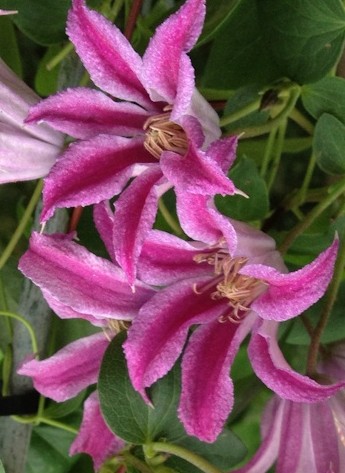
The flowers are pendulous, urn-shaped, bell-shaped, or narrow tulip-shaped. They commonly appear scarlet, red-orange, reddish pink, or deep red on the outside, while the inner surface may be lighter pink, cream, or yellowish. Four thick, petal-like sepals form most of the visible flower. True petals are absent or inconspicuous, and numerous stamens occupy the center. The firm, leather-like sepals are responsible for the common name Leatherflower. Flowers commonly appear during summer and may continue into autumn or until frost in cultivation. Fresh flowers should be treated as irritating and should not be allowed to fall into pet water dishes, bedding, feed, cage trays, or indoor floor areas.
After flowering, the plant forms clusters of small, dry, one-seeded fruits called achenes. Each achene carries a long, silky, feathery tail derived from the persistent style. Mature clusters develop a soft, plume-like appearance. The feathery seed heads can attract curious cats, dogs, birds, and children. Mature dry fruits may contain less active protoanemonin than freshly crushed green tissue, but they should not be offered as toys or allowed to accumulate in pet-accessible areas.
Why the Plant Produces Protoanemonin
Ranunculin remains stored within intact plant tissue until cells are damaged. Chewing, cutting, bruising, crushing, and maceration break cellular barriers and allow the precursor and enzymes to react. The resulting protoanemonin rapidly irritates the mouth, skin, or eye of the animal damaging the plant. This chemical defense discourages continued browsing and explains why fresh crushed leaves and sap are more immediately irritating than an undamaged vine viewed from a distance.
Protoanemonin is not stable indefinitely. As the plant dries, protoanemonin can convert to anemonin and other less irritating products. That chemical change is why thoroughly dried Ranunculaceae material is often less hazardous than fresh tissue. However, the drying process is not instant or uniform. Wilted vines, newly cut stems, sap-coated clippings, partially dried flowers, contaminated hay pockets, and mixed plant piles remain unsafe until the entire exposure is understood.
Protoanemonin Is Not a Cardiac Glycoside
Protoanemonin is an unsaturated lactone and tissue irritant. It does not belong to the cardiac-glycoside group represented by digoxin, oleander toxins, foxglove glycosides, Kalanchoe bufadienolides, or Hellebore bufadienolides. Routine Clematis ingestion is therefore not expected to cause the classic digitalis-like pattern of prolonged cardiac conduction block, idioventricular rhythm, ventricular fibrillation, or asystole.
A pet with those abnormalities should be evaluated for another toxin or medical cause. Possible alternatives include oleander, yellow oleander, foxglove, lily-of-the-valley, Kalanchoe, cardiac medication, electrolyte disease, severe shock, pesticide exposure, or another plant in a mixed bouquet or clipping pile. Correctly narrowing the toxin prevents both underreaction and overreaction.
Scarlet Leatherflower Is Not Hellebore
True Hellebores belong to the genus Helleborus. Some contain bufadienolides, saponins, and ranunculin-related irritants and may produce more prominent cardiac and systemic effects than a routine Clematis exposure. Scarlet Leatherflower belongs to Clematis. Its expected syndrome is immediate contact irritation and gastrointestinal inflammation rather than Hellebore’s more complex cardiac toxicology.
This distinction matters when old common-name lists, family-level summaries, or generic Ranunculaceae warnings are consulted. Being in the buttercup family does not mean every plant in the family has the same toxin profile. Public copy should warn strongly about Scarlet Leatherflower without importing Hellebore-specific heart-drug language into a Clematis page.
Scarlet Leatherflower Is Not False Hellebore
False Hellebores belong to the genus Veratrum in the family Melanthiaceae. They contain steroidal alkaloids such as protoveratrine and related sodium-channel toxins. Veratrum plants generally have broad, strongly pleated leaves that wrap around an upright stem. Scarlet Leatherflower is a twining vine with opposite compound leaves and red urn-shaped flowers.
False Hellebore poisoning may involve vomiting or gastrointestinal signs, but the severe neurologic, cardiovascular, teratogenic, and sodium-channel features are a different toxicology problem. A plant identified only as “hellebore” or “false hellebore” should be photographed and identified before risk is judged.
Scarlet Leatherflower Is Not Larkspur
Larkspurs belong to the genus Delphinium. They contain norditerpenoid alkaloids that block nicotinic acetylcholine receptors and can cause profound weakness, collapse, and respiratory-muscle paralysis, particularly in cattle and other grazing animals. Scarlet Leatherflower is Clematis texensis and primarily causes protoanemonin-mediated contact irritation.
Both plants belong to Ranunculaceae, but family membership does not establish identical toxins. Severe paralysis, respiratory-muscle failure, sudden collapse in cattle, or herd-level neuromuscular weakness should not be attributed casually to Scarlet Leatherflower without excluding Larkspur, Aconite, False Hellebore, and other high-risk plants.
Scarlet Leatherflower and Other Leatherflowers
Leatherflower is applied to several Clematis species with thick, nodding, bell-shaped flowers. Examples include Vasevine or Purple Leatherflower, Pitcher’s Leatherflower, Alabama Leatherflower, Virginia Leatherflower, and other regional species. Their flowers may be purple, blue, lavender, cream, red, or greenish. When species identification is uncertain, fresh Clematis tissue should still be treated as potentially irritating and poisonous to dogs, cats, horses, livestock, rabbits, birds, and other animals.
Species identity still matters. Native range, conservation status, flower shape, bloom timing, leaf structure, and garden origin differ among leatherflowers. For this page, the Texas endemic species with scarlet to red-orange urn-shaped flowers and opposite compound leaves is the target plant.
Scarlet Leatherflower and Virgin’s Bower
Virgin’s Bower is a broad Clematis name and is especially associated in North America with Clematis virginiana, a vigorous vine bearing clusters of small white flowers. It is not the most precise name for Clematis texensis. Both are Clematis. Both are Clematis species and can produce protoanemonin irritation when fresh tissue is damaged, but their flowers and growth presentation are very different.
The name Virgin’s Bower may appear in general toxic-plant lists because those lists treat Clematis at genus level. For a plant-identification page, Scarlet Leatherflower should be separated from Virgin’s Bower so owners do not compare a white-flowered vine with a red, urn-flowered Texas leatherflower and assume they are seeing the wrong toxic plant.
Texensis Group Hybrids
Scarlet Leatherflower has contributed to a group of cultivated Clematis hybrids valued for tulip-shaped red or pink flowers. Nursery plants may be labeled as Texensis Group even when they are not genetically identical to the wild species. Cultivars and hybrids associated with this group include plants sold under names such as ‘Princess Diana,’ ‘Duchess of Albany,’ and ‘Gravetye Beauty.’
These plants should receive the same practical pet-safety precautions applied to other Clematis plants. Their fresh leaves, flowers, stems, sap, and clippings should not be chewed. Hybrid status does not prove absence of ranunculin-related irritants, and a pet owner is unlikely to know the exact chemical profile of a named cultivar.
Dogs and Cats
Dogs may chew hanging stems, pull a vine from a trellis, carry freshly cut pieces, eat fallen flowers, dig around the root crown, or investigate compost and pruning piles. One pulled stem can bring multiple fresh leaves and flowers within reach. Immediate head shaking, drooling, pawing, gagging, or vomiting after chewing the plant is consistent with contact irritation. Continued vomiting, blood, weakness, inability to drink, or abdominal enlargement requires examination.
Cats may bat at flowers and feathery seed heads, nibble leaflets, climb through the vine, or collect sap on the feet and coat. Grooming can then transfer the irritant to the mouth and eyes. A cat may respond to oral pain by hiding, refusing food, drooling, licking repeatedly, or sitting with the mouth partly open. Open-mouth breathing is not a normal sign to monitor at home and requires immediate care.
Horses, Cattle, Sheep, Goats, Camelids, and Pigs
Horses can develop mouth pain, salivation, feed refusal, repeated swallowing, oral ulceration, colic-like discomfort, and diarrhea after eating fresh Clematis. Severe exposure is uncommon because the acrid taste often limits intake, but fresh garden clippings thrown into a paddock can create a more concentrated exposure than a standing vine. Horses cannot vomit, so painful swallowing, esophageal irritation, colic, and dehydration require prompt veterinary attention.
Ruminants generally avoid large quantities of fresh Clematis when adequate forage is available, but hungry livestock may eat cut vines, hay contamination, or plants growing through a fence. Salivation, oral lesions, abdominal pain, diarrhea, and reduced feed intake may occur. Weak or severely affected livestock should not be drenched by mouth. Oral fluids, oils, charcoal, or medication can be aspirated when swallowing is painful or impaired. Goats, pigs, and camelids may also investigate fresh clippings, compost, or nursery waste, so waste disposal is a major prevention issue.
Rabbits, Guinea Pigs, Birds, Reptiles, and Other Small Pets
Small herbivorous pets may consume more vegetation relative to body weight than a dog or cat. Fresh Clematis should not be offered as forage, bedding, enrichment, nesting material, or chew material. Oral pain and appetite refusal can become serious quickly in rabbits and guinea pigs because interruption of normal feeding may contribute to gastrointestinal stasis. Reduced fecal output, tooth grinding, hunched posture, wet chin, and food refusal after exposure require prompt veterinary guidance.
Pet birds may shred leaves, stems, flowers, or dried seed heads rather than swallowing the plant in one piece. Fresh sap can contact the beak, tongue, eyes, feet, and skin. Drooling is difficult to recognize in birds. Beak wiping, repeated swallowing, food refusal, open-mouth breathing, eye closure, regurgitation, or abnormal quietness requires avian veterinary advice. Herbivorous reptiles and tortoises should not be offered fresh Scarlet Leatherflower as browse or enclosure vegetation because species-specific safety data are lacking and irritation is avoidable.
Cut Flowers, Vase Water, Hay, Feed, and Dried Material
Scarlet Leatherflower and its hybrids may be used as cut flowers or decorative vines. Fresh stems, leaves, flowers, sap, and fallen pieces should remain outside pet-accessible rooms. Vase water may contain sap, floral preservatives, fertilizer residue, bacteria, and material from other flowers. Pets should not drink it even though protoanemonin is unstable.
Thorough curing may reduce protoanemonin activity, but Clematis should not be intentionally included in hay or animal feed. A bale containing unidentified vines may also contain fresh pockets, other poisonous species, pesticides, mold, or foreign material. When livestock become ill after eating contaminated hay, retain representative samples from several portions of the lot rather than relying on one dried fragment.
Historical Medicinal Use
Dried Scarlet Leatherflower stems have been reported in historical or ethnobotanical references as ingredients in preparations used for headache or migraine. Related Clematis species have also been used externally as counterirritants because their sap deliberately inflames the skin. Anemonin, a dimerization product related to protoanemonin chemistry, has been isolated from another North American Clematis species historically used as a horse stimulant.
These uses do not establish safety. Fresh plant tea, tincture, poultice, chewed stem, soaked vine water, or concentrated extract can cause painful irritation, and neither people nor animals should be treated with homemade Clematis preparations. Historical medicinal use belongs in the toxicology record because it documents biological activity, but it should never be converted into a pet remedy.
Why Severe Veterinary Reports Are Uncommon
The rapid burning sensation, acrid taste, and oral inflammation usually cause animals to stop eating before they consume a large amount. Minor exposures may also resolve before a veterinary diagnosis is recorded. This lack of extensive published veterinary case series should not be interpreted as proof of harmlessness.
Concentrated clippings, unusual eating behavior, small body size, repeated chewing, mixed plant exposure, eye exposure, contaminated feed, severe vomiting, or inability to eat can still require treatment. A plant does not have to be a frequent killer to deserve strong prevention language when it can cause immediate pain, ulcers, eye injury, dehydration, aspiration, or small-herbivore gastrointestinal stasis.
Diagnosis and Veterinary Evaluation
Diagnosis is usually based on witnessed chewing, plant identification, damaged stems or leaves, sap exposure, and the immediate onset of oral pain, drooling, vomiting, or diarrhea. Plant fragments may be present in the mouth, vomit, stool, fur, feathers, or surrounding area. Photographs should show the entire vine, opposite compound leaves, twining leaf stalks, flower shape, flower color, fruiting seed heads, lower stems, and nursery label. A complete specimen is more useful than a single detached leaflet.
A veterinarian may inspect the lips, gums, tongue, palate, throat, and visible esophagus for retained fibers, erosions, swelling, or ulcers. Eye examination and fluorescein staining may be needed after ocular exposure. Persistent vomiting or diarrhea may require hydration assessment, electrolyte testing, blood glucose, kidney measurements, abdominal imaging, and evaluation for another swallowed plant, chemical, fertilizer, or foreign object.
Differential Diagnosis
Other causes of acute mouth pain and drooling include insoluble calcium oxalate plants, caustic cleaners, electrical burns, caterpillar or insect exposure, hot food, chemical fertilizer, oral foreign objects, dental disease, and other Ranunculaceae plants. Severe cardiac abnormalities, paralysis, seizures, coma, or primary kidney failure do not fit a routine Clematis exposure and require investigation for Hellebore, Larkspur, Aconite, False Hellebore, Lily, medication, pesticide, metabolic disease, or another toxin.
Mixed plant exposures deserve special attention. A pet or livestock animal exposed to pruning waste may have eaten Clematis plus oleander, yew, rhododendron, foxglove, lilies, sago palm, Kalanchoe, daffodil, tulip, autumn crocus, or other ornamentals. Identifying one Scarlet Leatherflower stem does not eliminate the need to inspect the entire debris pile.
Prognosis and Prevention
The prognosis is good to excellent for most small exposures. Once the animal stops chewing, visible material is removed, and gastrointestinal losses are controlled, improvement commonly begins within several hours. The outlook becomes more guarded with severe oral or esophageal ulceration, repeated vomiting, bloody diarrhea, substantial dehydration, aspiration, corneal ulceration, inability to eat, small-herbivore gastrointestinal stasis, or an unidentified mixed exposure.
Keep the vine outside dog runs, cat enclosures, horse paddocks, livestock pens, rabbit exercise areas, aviaries, tortoise enclosures, and small-animal rooms. Remember that hanging stems can be pulled downward and that climbing cats can reach foliage well above floor level. Wear gloves when pruning, collect every fresh cutting, clean sap from tools and surfaces, store nursery plants securely, and dispose of removed vines in closed containers rather than accessible compost, brush piles, open trash, poultry yards, or yard-waste piles.
Immediate Response
Stop further exposure first. Move the animal away from the vine, flowers, seed heads, cuttings, sap, vase water, compost, contaminated hay, brush piles, pruning tools, and contaminated surfaces. Scarlet Leatherflower injury starts at the contact site, so preventing continued chewing, licking, rubbing, and grooming is the first practical treatment step.
- Secure the plant and debris: Remove fresh leaves, stems, flowers, root pieces, sap-coated clippings, vase water, hay contamination, and compost access.
- Identify the plant: Preserve the complete plant, flowers, leaves, stems, roots, fruiting heads, nursery label, and photographs without delaying necessary care.
- Assess breathing: Noisy breathing, open-mouth breathing, neck extension, blue-gray gums, rapidly increasing swelling, panic, or collapse requires immediate emergency transportation.
- Assess swallowing: Continuous drooling, repeated choking, inability to swallow saliva, or coughing whenever the animal drinks requires urgent veterinary examination.
- Contact a veterinarian: Obtain guidance when more than a small taste was swallowed or when oral pain, vomiting, diarrhea, food refusal, eye exposure, or lethargy is more than mild.
Remove Plant Material From the Mouth
- Protect yourself: Wear gloves because fresh sap can irritate human skin and a painful animal may bite unexpectedly.
- Remove visible pieces: Carefully take loose leaves, flowers, or stem fibers from the lips and front of the mouth when this can be done safely.
- Avoid blind sweeps: Do not reach deeply into the throat or push plant material farther toward the airway or esophagus.
- Wipe the mouth: Use a damp cloth to remove sap and plant residue from the lips, gums, tongue, and front of the mouth in a fully alert animal.
- Rinse gently only when safe: A gentle mouth rinse may be used only when the animal is fully alert, breathing normally, swallowing normally, and able to protect the airway.
- Do not force water: Pouring water into the mouth can cause aspiration and may spread irritating material toward the throat.
Do Not Induce Vomiting
Do not induce vomiting after Scarlet Leatherflower exposure. Vomiting can expose the mouth and esophagus to irritating plant material a second time and can increase the risk of aspiration. Hydrogen peroxide, salt, mustard, oil, syrup, fingers in the throat, manual gagging, and other home methods are unsafe.
- Do not give peroxide: Hydrogen peroxide can cause stomach and esophageal injury and may worsen an already irritated mouth and throat.
- Cats must never receive peroxide: Hydrogen peroxide is not a safe feline emetic and can cause severe gastrointestinal injury.
- Do not induce vomiting after signs begin: Never attempt emesis in an animal that is drooling heavily, gagging, vomiting, weak, lethargic, breathing abnormally, collapsed, or swallowing poorly.
- Do not delay airway care: Attempts to produce vomiting can waste critical time when swelling or aspiration is developing.
Activated Charcoal Is Not Routine Treatment
Activated charcoal is not routine first aid for Scarlet Leatherflower. It does not remove protoanemonin already contacting the mouth, skin, eyes, esophagus, stomach lining, or intestinal lining. Forcing charcoal into a drooling, gagging, vomiting, weak, sedated, or poorly swallowing animal can cause aspiration pneumonia.
- Do not give charcoal automatically: The primary injury is contact irritation, not a toxin that charcoal can reliably remove from already burned tissue.
- Do not force oral products: A drooling, gagging, vomiting, weak, or poorly swallowing animal can inhale charcoal into the lungs.
- Reserve decontamination decisions for a veterinarian: A large or mixed ingestion may be handled differently if another poisonous plant, pesticide, medication, or fertilizer is involved.
- Do not use household charcoal: Barbecue charcoal, fireplace ash, burned food, and homemade charcoal are not veterinary activated charcoal.
Oral Pain, Food, Milk, Honey, Syrup, and Medication
Keep the animal calm and reduce handling, excitement, barking, and struggling while the mouth, swallowing, and breathing are assessed. Do not force food. Food can increase pain, become lodged against swollen or ulcerated tissue, or be aspirated when swallowing is impaired. Do not force milk, yogurt, cheese, honey, syrup, glycerin, oil, or homemade demulcents into an animal with mouth pain, vomiting, gagging, or uncertain swallowing ability.
Do not give human pain medication. Ibuprofen, naproxen, acetaminophen, aspirin, and oral numbing products can cause additional poisoning. Do not give antacids, antidiarrheals, gastrointestinal medications, sedatives, antihistamines, antibiotics, steroids, or leftover prescriptions without veterinary direction. Continued drooling, food refusal, blood-streaked saliva, gagging, or painful swallowing requires examination for ulcers, retained plant fibers, esophageal irritation, or swelling.
Airway Emergency
- Recognize respiratory distress: Harsh breathing sounds, gasping, open-mouth breathing, neck extension, blue-gray gums, panic, weakness, or collapse requires immediate critical care.
- Remove neck pressure: Take off tight collars and avoid pulling on a leash around the throat.
- Position for airflow: Keep the neck straight and avoid compressing the chest during transportation.
- Do not place objects in the mouth: Fingers, spoons, tubes, food, tablets, or medication can worsen obstruction or cause bites.
- Call while traveling: Tell the emergency clinic that severe oral irritation and possible throat injury from fresh Clematis are suspected.
Vomiting and Diarrhea
- Track vomiting: Record the number of episodes and whether leaves, stems, flowers, foam, mucus, or blood is present.
- Track diarrhea: Note frequency, amount, mucus, red blood, black stool, and whether normal urination continues.
- Save plant fragments: Place representative material recovered from vomit or stool in a sealed disposable container for identification.
- Offer water carefully: Small amounts of fresh water may be available only when the animal is fully alert, swallowing normally, and not vomiting repeatedly.
- Do not force fluids: Forced water or electrolyte drinks can be aspirated and cannot replace treatment for significant dehydration.
- Report persistent signs: Repeated vomiting, inability to retain water, blood, abdominal swelling, weakness, or worsening lethargy requires veterinary examination.
Eye Exposure
Begin irrigation immediately if sap or plant tissue contacts the eye. Flush the exposed eye with sterile saline or clean lukewarm water for at least 15 to 20 minutes. Irrigation should reach the corners of the eye and beneath the lids without scraping or rubbing the surface. Prevent the animal from scratching the eye against paws, carpet, furniture, bedding, cage bars, or the ground.
Do not apply human redness drops, anesthetic drops, steroid drops, ointments, leftover prescriptions, herbal products, or home eye remedies. Continued squinting, tearing, redness, cloudiness, swelling, discharge, rubbing, or inability to open the eye requires prompt veterinary examination, fluorescein staining, and treatment for possible corneal injury.
Skin and Coat Exposure
- Wear gloves: Protect your skin and avoid transferring sap to your face and eyes.
- Remove plant fragments: Pick visible leaves, stems, flowers, and fibers from the coat without crushing them against the skin.
- Wash the coat: Rinse contaminated fur with lukewarm water and a mild pet-safe shampoo.
- Prevent grooming: Keep the animal from licking contaminated fur until sap and plant debris have been removed.
- Wash exposed human skin: Clean affected skin with soap and water and obtain medical advice for persistent pain, swelling, or blistering.
- Clean tools and surfaces: Wash pruning tools, gloves, floors, tables, carriers, clothing, leashes, and other surfaces contaminated with fresh sap.
Horses and Livestock
Remove fresh plant material immediately from paddocks, stalls, pens, hay, fence lines, compost piles, and brush dumps. Prevent access to vines, fresh clippings, contaminated hay, fence-line growth, and brush piles. Retain representative hay, fresh vines, clippings, and nearby plants when the precise source is uncertain.
Do not drench a symptomatic animal. Oil, water, charcoal, milk, electrolytes, or medication can be aspirated when salivation, painful swallowing, weakness, coughing, or regurgitation is present. A veterinarian may need to examine the tongue, gums, palate, pharynx, and esophagus for ulcers or retained fibers. Mouth pain and gastrointestinal irritation can lead to dehydration, colic, reduced rumen activity, or gastrointestinal stasis.
Veterinary Examination
The veterinarian may examine the lips, gums, tongue, palate, throat, and visible esophagus for retained tissue, swelling, erosions, ulcers, or deeper injury. The oral cavity may be flushed carefully while protecting the airway. Pain control may be needed when mouth or esophageal injury prevents normal eating, drinking, or rest.
Hydration assessment is important because repeated vomiting, diarrhea, drooling, and refusal to drink can produce dehydration requiring fluid treatment. Persistent gagging, regurgitation, painful swallowing, or coughing during drinking may require imaging or endoscopic examination. Eye exposure may require fluorescein staining, eyelid examination, removal of retained material, and treatment of corneal abrasion or ulceration. Heart block, severe arrhythmia, paralysis, seizures, coma, or primary kidney failure requires evaluation for another toxin or mixed exposure.
Veterinary Treatment
Treatment is symptomatic and supportive. Veterinarian-selected analgesia may be needed for painful mouth, throat, esophageal, skin, or eye injury. Anti-nausea treatment may reduce continued gastrointestinal irritation, aspiration risk, and fluid loss when vomiting persists. Subcutaneous or intravenous fluids may be used when drooling, vomiting, diarrhea, or refusal to drink causes dehydration.
Significant oral inflammation, ulcers, retained plant fibers, or secondary infection may require individualized treatment. Corneal ulceration may require pain control, protective ophthalmic medication, and repeated eye examination. Coughing, oxygen impairment, fever, or abnormal lung findings after vomiting or forced liquids may require oxygen, imaging, and treatment for aspiration pneumonia. There is no specific antidote for Scarlet Leatherflower protoanemonin injury; care supports the animal while injured tissues recover and complications are managed.
Rabbits, Guinea Pigs, Birds, Reptiles, and Small Pets
Small herbivores need prompt attention when they stop eating. Rabbits and guinea pigs cannot vomit, and appetite refusal from mouth pain can lead to gastrointestinal stasis. Monitor appetite, fecal output, hydration, posture, abdominal comfort, and activity. Reduced droppings, tooth grinding, hunched posture, or refusal of hay after exposure requires veterinary guidance.
Birds require species-specific care. Beak wiping, repeated swallowing, regurgitation, food refusal, eye closure, open-mouth breathing, weakness, or abnormal quietness after fresh Clematis exposure requires avian veterinary advice. Reptile and tortoise cases should include review of temperature, hydration, enclosure plants, substrate, and whether fresh plant material was deliberately offered as browse.
Prevention, Prognosis, and Recovery
Move the vine out of reach. Hanging foliage remains accessible because cats climb, dogs can pull a long vine down from a trellis, birds fly, and fresh flowers or leaves fall. Remove fresh cuttings immediately after pruning. Collect every leaf, flower, stem, root piece, and sap-covered fragment. Place removed vines directly into closed containers rather than accessible compost piles, open trash, rabbit runs, horse paddocks, livestock pens, poultry yards, aviaries, tortoise enclosures, or brush stacks.
Most small exposures have a good-to-excellent prognosis and improve after plant removal, mouth cleaning, pain control, and supportive care. Mild drooling and gastrointestinal upset may improve within several hours. Ulcers, dehydration, aspiration, eye injury, prolonged food refusal, and severe gastroenteritis may require longer treatment and monitoring. Severe oral or esophageal ulceration, repeated bloody vomiting or diarrhea, aspiration, dehydration, corneal ulceration, inability to eat, or unidentified mixed exposure creates a more complicated outlook.
Frequently Asked Questions About Scarlet Leatherflower and Animal Poisoning
Is Scarlet Leatherflower poisonous to dogs?
Yes. Chewing fresh leaves, stems, flowers, or sap-wet clippings can cause immediate mouth pain, drooling, pawing at the face, gagging, vomiting, abdominal discomfort, and diarrhea. Most dogs stop chewing because the plant burns and tastes acrid, but a puppy, bored dog, or dog with pica may consume more than expected, especially from a clipping pile or pulled-down vine.
Is Scarlet Leatherflower poisonous to cats?
Yes. Cats may develop oral burning, drooling, lip licking, food refusal, vomiting, diarrhea, hiding, or lethargy after chewing the vine or grooming sap from the coat. A cat that stops eating after exposure should not simply be watched for days, because painful oral injury can lead to dehydration and secondary hepatic lipidosis even when the plant itself is not a direct liver toxin.
Is Scarlet Leatherflower poisonous to horses?
Yes. Horses may develop mouth pain, salivation, repeated swallowing, feed refusal, oral ulcers, colic-like discomfort, and diarrhea after eating fresh Clematis. Horses cannot vomit, so painful swallowing, esophageal irritation, choke-like signs, colic, and dehydration are more relevant than emesis. Fresh garden clippings thrown into a paddock are a more realistic risk than a horse grazing a standing vine by choice.
Is Scarlet Leatherflower poisonous to rabbits and guinea pigs?
Fresh Clematis should not be offered to rabbits, guinea pigs, or other small herbivores. Oral pain, gastrointestinal irritation, and food refusal can become serious quickly in animals that depend on continuous normal feeding. Reduced fecal output, wet chin, tooth grinding, hunched posture, quiet behavior, or refusal to eat after exposure should prompt veterinary guidance because gastrointestinal stasis can develop.
What toxin is in Scarlet Leatherflower?
The principal toxic system involves ranunculin, a glycosidic precursor that produces the irritant protoanemonin when fresh plant tissue is crushed, cut, torn, bruised, or chewed. Protoanemonin is the compound responsible for the burning, blistering, and mucous-membrane irritation associated with fresh Clematis exposure. The plant should be handled as a fresh-tissue irritant rather than as a delayed systemic organ poison.
Is protoanemonin a cardiac glycoside?
No. Protoanemonin is an unstable, blistering lactone and contact irritant. It is not a digitalis-like cardiac glycoside. Scarlet Leatherflower is therefore not expected to cause the classic cardiac-glycoside pattern of severe bradycardia, high-grade heart block, ventricular arrhythmias, or asystole after an uncomplicated exposure. Those signs should trigger investigation for another plant, medication, electrolyte problem, or disease.
How does Scarlet Leatherflower cause poisoning?
Chewing damages plant cells and allows ranunculin-related compounds and enzymes to produce protoanemonin. The newly formed irritant damages the mouth, throat, stomach, intestines, skin, and eyes where contact occurs. Because the irritant forms and acts at the contact site, signs can begin immediately or within minutes rather than after a long absorption period.
Which parts of Scarlet Leatherflower are poisonous?
Fresh leaves, petioles, stems, flowers, buds, immature fruit, roots, sap, and cuttings should all be treated as irritating. Leaves and sap are particularly important exposure sources, but fresh flowers and clippings should not be considered harmless. Root crowns, pulled vines, pruning debris, vase material, and recently cut stems should also be kept away from animals.
Are Scarlet Leatherflower flowers poisonous?
Yes. Fresh flowers can contain ranunculin-related irritants and should not be eaten or allowed to fall into pet food, water bowls, bedding, cage trays, hay, feed tubs, or play areas. The thick scarlet sepals may look like harmless fallen petals, but they are still fresh Clematis tissue and should be treated as irritating.
Are Scarlet Leatherflower seeds poisonous?
The greatest immediate protoanemonin risk comes from fresh crushed green tissue and sap. Mature dry seed heads may contain less active irritant than fresh leaves or stems, but they should still be kept away from pets because identification, dryness, contamination, mold, and mixed plant material cannot be guaranteed. Feathery seed heads can also attract cats, dogs, and birds as play objects.
Are Scarlet Leatherflower roots poisonous?
Roots and the root crown should be treated as potentially irritating. An uprooted plant, divided root mass, or discarded root crown can be chewed by dogs, pigs, goats, rabbits, or other animals. Roots may contain less protoanemonin than leaves in some Clematis studies, but that does not make them safe, especially when freshly damaged or sap-wet.
Can one bite of Scarlet Leatherflower hurt a dog or cat?
Yes. One bite may cause immediate burning, drooling, face rubbing, and vomiting even when the animal stops quickly. Severe systemic illness is less likely after a tiny taste, but the actual amount swallowed may be difficult to determine. A dog that pulled down a vine or a cat that chewed repeatedly may have contacted more plant material than the owner first realizes.
How quickly do symptoms begin?
Oral pain and drooling can begin immediately or within minutes because protoanemonin is produced as fresh tissue is crushed. That rapid onset helps distinguish Clematis contact irritation from many delayed systemic toxins. Gastrointestinal signs such as vomiting, abdominal pain, and diarrhea may follow if plant material is swallowed.
What are the first signs of Scarlet Leatherflower poisoning?
Head shaking, pawing at the mouth, lip licking, face rubbing, drooling, gagging, repeated swallowing, food refusal, and vomiting are common early signs. Cats may hide or sit with the mouth partly open. Horses may salivate, refuse feed, or repeatedly swallow. Birds may wipe the beak, regurgitate, close an eye, or become unusually quiet.
Can Scarlet Leatherflower cause mouth ulcers?
Yes. Protoanemonin can cause redness, blisters, erosions, and painful ulcers on the lips, gums, tongue, palate, throat, and other exposed tissue. Mild irritation may improve within hours, but visible ulcers, blood-streaked saliva, persistent drooling, or painful swallowing requires veterinary examination because retained plant fibers or deeper injury may be present.
Can Scarlet Leatherflower cause vomiting and diarrhea?
Yes. Swallowed plant material can irritate the stomach and intestines, producing nausea, vomiting, abdominal cramping, and diarrhea. Repeated vomiting and diarrhea can cause dehydration and electrolyte abnormalities. Blood, mucus, persistent vomiting, inability to retain water, abdominal swelling, or worsening lethargy requires veterinary care.
Can Clematis cause bloody diarrhea?
A large exposure can cause severe intestinal irritation and occasionally mucus or fresh blood. Blood in vomit or stool requires urgent veterinary evaluation because it can also indicate a foreign body, another plant, medication exposure, infection, clotting problem, severe gastroenteritis, or dehydration-related complications. Bloody diarrhea should not be dismissed as routine Clematis irritation.
Can Scarlet Leatherflower cause kidney failure?
Primary kidney failure is not an expected direct effect of ordinary Clematis exposure. Severe dehydration from prolonged vomiting or diarrhea can secondarily reduce kidney function, and another toxin can be present in mixed plant material. Abnormal kidney values should prompt evaluation for dehydration, ethylene glycol, grapes or raisins, medication exposure, urinary disease, soluble-oxalate plants, infection, or preexisting kidney disease.
Can Scarlet Leatherflower cause heart problems?
A digitalis-like cardiac syndrome is not expected. Significant bradycardia, heart block, ventricular arrhythmia, asystole, or collapse should prompt investigation for another plant, medication, chemical, electrolyte disturbance, shock, or medical condition. Scarlet Leatherflower’s established hazard is protoanemonin-mediated irritation, not cardiac-glycoside poisoning.
Can Scarlet Leatherflower cause seizures?
Seizures are not typical signs of routine Clematis poisoning. They require immediate evaluation for severe dehydration, electrolyte disturbance, low blood sugar, medication exposure, pesticide exposure, another plant, metabolic disease, trauma, or a mixed exposure. A seizure after plant access should not be attributed automatically to Scarlet Leatherflower alone.
Can Scarlet Leatherflower kill a dog or cat?
Fatalities are considered rare because the immediate burning and bitter taste usually limit intake. A massive fresh ingestion, severe dehydration, aspiration, airway compromise, corneal complications, prolonged inability to eat, or a mixed poisoning could still become life-threatening. The plant should be treated as medically important even though most small exposures resolve with supportive care.
Does Scarlet Leatherflower sap irritate skin?
Yes. Fresh sap can cause redness, burning, itching, swelling, dermatitis, or blistering, especially on damaged or sensitive skin and areas where sap is trapped. Wash contaminated skin, paws, coat, feathers, tools, and surfaces with water and mild cleanser. People pruning the vine should wear gloves and avoid touching the eyes or face.
What should I do if Clematis sap gets on my pet’s coat?
Wear gloves, remove visible plant fragments, wash the coat with lukewarm water and mild pet-safe shampoo, and prevent grooming until the sap is removed. Cats, birds, and small pets may transfer sap from the coat or feathers into the mouth or eyes during grooming. Persistent redness, swelling, licking, scratching, or discomfort should be evaluated.
What should I do if Scarlet Leatherflower gets in my pet’s eye?
Flush the eye immediately with sterile saline or clean lukewarm water for at least 15 to 20 minutes. Continued squinting, tearing, redness, cloudiness, swelling, discharge, rubbing, or inability to open the eye requires prompt veterinary examination. Do not use leftover eye drops, human redness drops, anesthetic drops, steroid drops, ointments, or herbal eye preparations without veterinary direction.
Is wilted Scarlet Leatherflower still poisonous?
Yes. Wilting does not instantly remove protoanemonin or its precursor. Freshly cut and partially dried clippings should remain inaccessible. Recently pruned vines, sap-wet stems, and wilted flowers can still irritate the mouth, skin, eyes, stomach, and intestines.
Is dried Clematis still poisonous?
Protoanemonin gradually converts into less irritating compounds as material dries, so thoroughly dried tissue is generally less hazardous than fresh crushed tissue. Dried material should still not be offered to animals because incomplete drying, sap residue, contamination, mold, chemical residue, and mixed plants remain possible. Hay or bedding should not intentionally contain Clematis.
Can Scarlet Leatherflower poison hay?
Thorough drying may reduce the protoanemonin hazard, but Clematis should not be intentionally included in hay. Fresh pockets, incomplete curing, other poisonous weeds, mold, pesticides, or foreign material can create additional risks. When livestock become ill after eating contaminated hay, retain representative samples from several portions of the lot rather than relying on one dried fragment.
Are fresh Clematis clippings dangerous?
Yes. Cutting and crushing the vine encourages protoanemonin formation, and a pile of clippings allows an animal to consume more material than it might from a standing plant. Fresh clippings should never be thrown into dog yards, horse paddocks, livestock pens, rabbit areas, aviaries, poultry yards, tortoise enclosures, open compost, or accessible brush piles.
Is Scarlet Leatherflower vase water safe for pets?
No. Vase water may contain fresh sap, plant fragments, floral preservatives, fertilizer residue, bacteria, and material from another poisonous plant. Pets should not drink it. Fallen flowers and cut stems should be kept out of pet-accessible rooms, cages, bedding, food bowls, and water dishes.
Is Scarlet Leatherflower the same as Virgin’s Bower?
No. Virgin’s Bower is a broad Clematis name and is especially used for Clematis virginiana. Both belong to the same genus and can cause protoanemonin irritation, but they are different species with very different flowers. Scarlet Leatherflower is the Texas species with hanging scarlet to red-orange urn-shaped flowers.
Is Scarlet Leatherflower the same as Hellebore?
No. Scarlet Leatherflower is a Clematis. True Hellebores belong to Helleborus and may contain additional toxins capable of more prominent cardiac effects. The expected Scarlet Leatherflower syndrome is immediate contact irritation, oral pain, vomiting, diarrhea, skin irritation, and eye injury rather than Hellebore’s more complex toxicology.
Is Scarlet Leatherflower the same as False Hellebore?
No. False Hellebores are Veratrum species containing steroidal alkaloids. They are unrelated to Clematis despite the shared common word Hellebore. False Hellebore has broad pleated leaves and an upright growth form, while Scarlet Leatherflower is a twining vine with opposite compound leaves and red urn-shaped flowers.
Is Scarlet Leatherflower the same as Larkspur?
No. Larkspur is Delphinium and contains neuromuscular-blocking alkaloids. Scarlet Leatherflower is Clematis texensis and primarily causes protoanemonin-mediated contact irritation. Severe paralysis, respiratory-muscle weakness, sudden cattle collapse, or herd-level neuromuscular signs should trigger investigation for Larkspur or another toxin rather than being attributed to Clematis alone.
Are Princess Diana and other Texensis Clematis poisonous?
Texensis Group cultivars and hybrids should be treated with the same Clematis precautions. Their fresh tissues and sap should not be chewed or handled by pets. Hybrid status does not prove absence of ranunculin-related irritants, and owners rarely know the exact chemical profile of a named cultivar. Fresh clippings, fallen flowers, and vase material should be kept away from animals.
Is there an antidote for Scarlet Leatherflower poisoning?
There is no specific antidote. Treatment removes remaining irritant material, controls pain and vomiting, replaces lost fluids, treats eye or esophageal injury, protects the airway, and manages complications while tissues heal. The most important early decisions are whether the animal can breathe, swallow, drink voluntarily, and avoid aspiration.
Should I make my dog vomit after eating Scarlet Leatherflower?
No. Vomiting can expose the mouth and esophagus to irritating material again and increase aspiration risk. Do not give peroxide or another emetic. Remove loose plant material from the front of the mouth only when safe, gently wipe or rinse the mouth only if the animal can swallow normally, and contact a veterinarian if signs are more than mild.
Is hydrogen peroxide safe after Clematis ingestion?
No. Hydrogen peroxide must never be given to a cat, and it should not be given to a dog after Scarlet Leatherflower ingestion because the plant is irritating and vomiting can worsen tissue exposure. Peroxide can cause stomach irritation, esophageal injury, repeated vomiting, bleeding, and aspiration.
Does activated charcoal help?
Activated charcoal does not remove protoanemonin already contacting tissue and is not routine home treatment. It must never be forced into a drooling, gagging, vomiting, weak, or poorly swallowing animal. A veterinarian may make a different decontamination decision only when a mixed exposure includes another absorbable toxin, medication, fertilizer, or poisonous plant.
Should I give milk, honey, syrup, or an antacid?
Do not force milk, food, honey, syrup, glycerin, oil, or antacids into an animal with mouth pain, vomiting, gagging, or uncertain swallowing ability. These products do not neutralize protoanemonin and may be aspirated. Water should only be available voluntarily to an alert animal that is swallowing normally and not vomiting repeatedly.
How long does Scarlet Leatherflower poisoning last?
Mild drooling and gastrointestinal upset may improve over several hours. Mouth ulcers, persistent vomiting, dehydration, aspiration, dermatitis, or eye injury can require longer treatment. Any animal still painful, not eating, vomiting, weak, coughing, or squinting the next day should be reassessed rather than assumed to be following a normal course.
How can I identify Scarlet Leatherflower?
Look for a twining Texas Clematis with opposite compound leaves, oval to ovate leaflets, twisting leaf stalks, and hanging scarlet to reddish-orange urn-shaped flowers formed by four thick leathery sepals. Fruiting plants develop feathery-tailed seed clusters. Photographs should show the whole vine, flowers, leaves, stems, supports, and label whenever poisoning is suspected.
What should veterinarians rule out when signs are severe or atypical?
Severe cardiac abnormalities, paralysis, seizures, coma, primary kidney failure, or profound collapse do not fit routine Clematis contact irritation. Important differentials include Hellebore, Larkspur, Aconite, False Hellebore, true lilies, insoluble calcium oxalate plants, caustic cleaners, electrical burns, pesticides, medications, ethylene glycol, soluble-oxalate plants, metabolic disease, infection, foreign bodies, and mixed ornamental plant waste.
What evidence supports protoanemonin as the main Clematis irritant?
Modern chemical review literature describes ranunculin as a Ranunculaceae glucoside that converts enzymatically to protoanemonin when plant tissue is damaged. Direct Clematis chemistry also shows protoanemonin occurs in Clematis leaves, stems, and roots, with concentrations varying among taxa and plant parts. That supports fresh Clematis caution while avoiding unsupported claims that Scarlet Leatherflower has a known lethal dose or a predictable organ-failure syndrome.
What research gaps remain for Scarlet Leatherflower poisoning?
The main gaps are exact Clematis texensis tissue testing, species-specific veterinary case reports, toxic-dose information for dogs, cats, horses, rabbits, birds, livestock, and reptiles, cultivar and Texensis Group hybrid comparisons, and better documentation of eye injuries, hay contamination, and prolonged food refusal. Existing evidence supports protoanemonin contact irritation, but it does not provide a precise safe dose or prove that every rare systemic sign is caused directly by this species.
What should I do if my pet eats Scarlet Leatherflower?
Stop further exposure, preserve the plant and label, carefully remove loose material from the front of the mouth, wipe or gently rinse the mouth only when the animal is fully alert and swallowing normally, and contact a veterinarian when pain, drooling, vomiting, diarrhea, or food refusal is more than mild. Do not induce vomiting or give peroxide, charcoal, food, milk, honey, syrup, oil, antacids, pain medication, gastrointestinal medication, or other human medication. Seek immediate care for inability to swallow saliva, severe swelling, repeated vomiting, blood, profound weakness, collapse, breathing difficulty, or persistent eye pain.