Poison Parsnip Cicutoxin, Water-Hemlock Seizures, and Rapid Fatal Poisoning
Is Poison Parsnip Poisonous to Dogs, Cats, Horses, and Livestock?
Yes—Poison Parsnip, Cicuta maculata, is an extremely poisonous water-hemlock species that can kill dogs, cats, horses, cattle, sheep, goats, pigs, and other animals after a small credible ingestion. Its principal toxin is cicutoxin, a highly active C17 polyacetylene that disrupts inhibitory signaling in the central nervous system. The result can be sudden nervousness, salivation, tremors, collapse, violent seizures, respiratory failure, cardiovascular collapse, and death.
The roots, root crown, tuber-like structures, and swollen chambered lower stem are usually the most dangerous parts. A broken root or basal stem may release toxic liquid into mud, shallow water, tools, gloves, footwear, or surrounding plant material. Aboveground portions are not reliably safe, especially young growth and immature green seed heads; documented cattle deaths have occurred after ingestion of immature Cicuta maculata seed heads.
Poison Parsnip is not Wild Parsnip. Wild Parsnip, Pastinaca sativa, is best known for sunlight-activated skin injury from phototoxic sap. Poison Parsnip is also not Poison Hemlock, Conium maculatum, which contains coniine-type alkaloids and more characteristically causes neuromuscular weakness and paralysis. Common names such as cowbane, water hemlock, false parsley, spotted parsley, snakeweed, and parsnip are dangerous unless the scientific plant identity is confirmed.
This plant often grows exactly where animals investigate or graze: wet meadows, marshes, freshwater swamps, pond margins, streambanks, ditches, irrigation channels, floodplains, and saturated pasture. Flooding, erosion, hoof traffic, ditch cleaning, excavation, plowing, mowing, herbicide treatment, rooting by pigs, and dogs digging near water can expose the most toxic underground portions. Hay, chopped forage, or contaminated water may also hide the plant from animals.
Any credible ingestion must be treated as a veterinary emergency before signs appear. A symptom-free interval does not make the exposure safe because water-hemlock poisoning can shift rapidly from apparent normality to repeated seizures. Once tremors, collapse, or convulsions begin, airway protection, oxygenation, seizure control, cardiovascular support, cooling, and treatment of secondary muscle and kidney injury become urgent.
About this guide: This page provides general pet-poisoning information and cannot diagnose or treat an individual animal. For any suspected exposure, contact a veterinarian or animal poison-control service immediately. Do not induce vomiting, give medication, or attempt home decontamination unless directed by a veterinary professional.
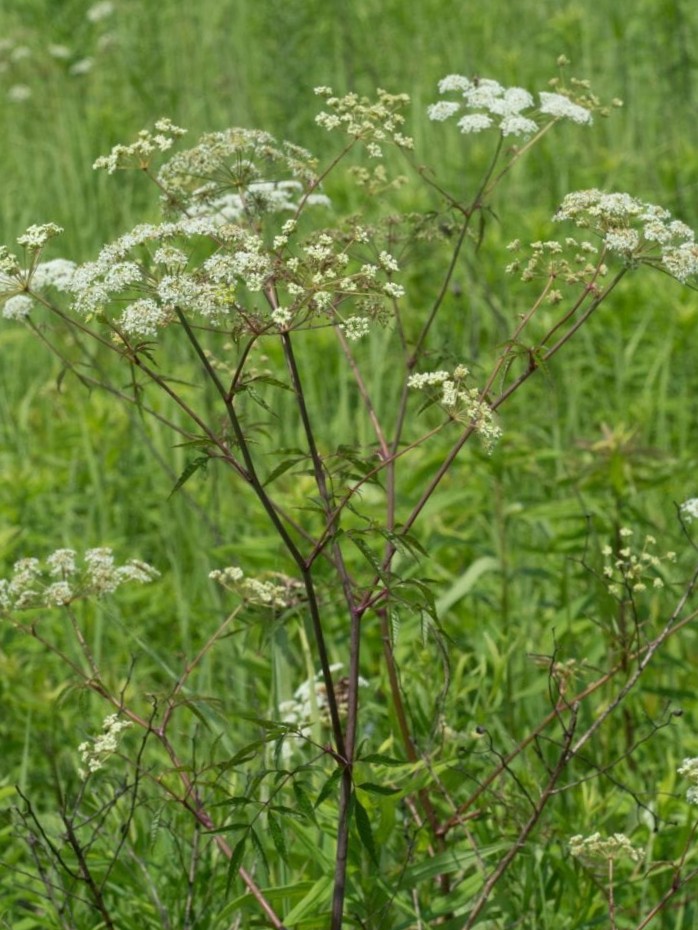
Poison Parsnip
Cicuta maculata L.
- Cicuta virosa var. maculata (L.) J.M.Coult. & Rose — homotypic synonym and historical placement beneath Cicuta virosa
- Cicuta maculata var. angustifolia Hook. — accepted infraspecific taxon
- Cicuta maculata var. bolanderi (S.Watson) G.A.Mulligan — accepted infraspecific taxon
- Cicuta maculata var. maculata — accepted autonymous variety
- Cicuta maculata var. victorinii (Fernald) B.Boivin — accepted infraspecific taxon
- Cicuta douglasii (DC.) J.M.Coult. & Rose — Western Water Hemlock; a separate western North American species with closely related cicutoxin poisoning
- Cicuta bulbifera L. — Bulb-Bearing Water Hemlock; a separate North American species
- Cicuta virosa L. — European Water Hemlock; a separate Eurasian species often used in older cicutoxin research
- Conium maculatum L. — Poison Hemlock; a separate Apiaceae species containing coniine-type alkaloids rather than cicutoxin as its principal toxic mechanism
- Pastinaca sativa L. — Wild Parsnip; a separate Apiaceae species associated primarily with phototoxic sap injury rather than water-hemlock seizure poisoning
- Oenanthe crocata L. — Hemlock Water-Dropwort; a separate Eurasian species associated with oenanthotoxin and related convulsant polyacetylenes
Apiaceae — Carrot, Parsley, or Celery Family
Poison Parsnip; Water Hemlock; Water-hemlock; Spotted Water Hemlock; Spotted Water-hemlock; Common Water Hemlock; Spotted Cowbane; Cowbane; Spotted Hemlock; Beaver Poison; Beaver-poison; Spotted Parsley; False Parsley; Children’s Bane; Death-of-Man; Musquash Root; Musquash Poison; Muskrat Weed; Mock-Eel Root; Snakeweed
Historical and taxonomic search variations include Cicuta maculata var. angustifolia, Cicuta maculata var. bolanderi, Cicuta maculata var. maculata, Cicuta maculata var. victorinii, and Cicuta virosa var. maculata. Older toxicology and livestock literature may also discuss water-hemlock poisoning under related species such as Cicuta douglasii or Cicuta virosa.
“Poison Parsnip” must not be confused with Wild Parsnip, Pastinaca sativa, which is associated primarily with phototoxic skin injury. “Poison Hemlock” normally means Conium maculatum, a separate plant with coniine-type neuromuscular poisoning. “Cowbane,” “water hemlock,” “false parsley,” and “snakeweed” are broad or regional names that can be applied inconsistently, so the complete plant and scientific identity should always be confirmed.
Cicutoxin and Related C17 Polyacetylenes
The principal toxin in Poison Parsnip is cicutoxin, a highly active C17 polyacetylene found in water-hemlock species. It is not a simple stomach irritant and should not be grouped with ordinary digestive upset plants. It is a rapidly acting central-nervous-system convulsant capable of producing violent seizures and death after a small credible ingestion.
Cicutoxin-related compounds, often described as cicutols, cicudiols, or cicutoxin-like polyacetylenes, may also contribute to the toxicity of different plant tissues and related water-hemlock species. Analytical studies of immature *Cicuta maculata* seed heads found cicutoxin, cicutol-like toxins, and other polyacetylene compounds similar to those reported from highly toxic roots and tubers. The plant should therefore not be reduced to a single root-only hazard.
These polyacetylenes are chemically unstable and can degrade after collection, storage, freezing, drying, or laboratory delay. A negative toxicology result does not necessarily exclude water-hemlock poisoning when the exposure history, plant identification, and clinical course are strongly compatible. For practical veterinary triage, credible ingestion and rapid neurologic signs matter more than waiting for a confirmatory assay.
GABA Disruption and Loss of Inhibitory Control
Cicutoxin interferes with gamma-aminobutyric acid, or GABA, signaling in the central nervous system. GABA is one of the brain and spinal cord’s major inhibitory signaling systems; it helps restrain excessive neuronal firing. When cicutoxin disrupts this inhibitory control, neural circuits can become dangerously overactive.
The resulting syndrome is dominated by excitation rather than sedation or weakness alone. Animals may progress from nervousness, hypersensitivity, twitching, trembling, and incoordination to generalized tonic-clonic seizures and status epilepticus. The seizures are not merely a symptom to observe; they are the event that drives many of the fatal complications.
The exact receptor-level details are mostly studied using water-hemlock extracts, related Cicuta species, and isolated polyacetylenes rather than naturally poisoned dogs, cats, horses, and cattle at the moment of exposure. That limitation does not weaken the clinical conclusion that water hemlock is a severe convulsant plant. It does mean that public copy should avoid pretending that every polyacetylene congener has been mapped completely in every *Cicuta maculata* tissue.
Roots, Root Crown, and Chambered Lower Stem
The roots, tuber-like structures, root crown, and swollen lower stem are usually the most dangerous plant parts. The lower stem and root crown may be divided into chambers containing brownish or straw-colored liquid. Breaking, cutting, trampling, or chewing these structures can release a concentrated toxic exposure.
Soft spring soil allows grazing animals to pull up entire plants. Ditch cleaning, plowing, excavation, erosion, pond work, root exposure by pigs, and hoof traffic along wet stream margins can bring underground tissue to the surface. A dog may retrieve or chew an exposed root, while cattle or horses may consume uprooted plants when they would not have dug for them deliberately.
Root size should not be converted into a dependable safe-or-fatal calculation. Warnings such as a “small piece” or “walnut-sized root” killing a large animal are useful danger signals but not precise veterinary dose rules. Toxin concentration varies among species, plant part, location, season, growth stage, and individual plant.
Root liquid, broken crown tissue, contaminated mud, shallow water, tools, gloves, footwear, and vehicle surfaces should all be handled as potentially contaminated. Do not allow pets to lick tools, drink from the disturbed area, or mouth plant fragments removed from a ditch or pond edge. Removed plants must be secured where animals cannot reach them.
Young Shoots, Leaves, Stems, and Seasonal Toxicity
Aboveground growth is not reliably safe. Young shoots, basal growth, early-season foliage, and immature reproductive structures may contain clinically important toxin. Later mature leaves and stems may contain less toxin under some conditions, but that seasonal decline is not dependable enough to justify grazing or feeding the plant.
Smooth hollow stems and compound leaves can be mixed with other wetland vegetation. Animals may consume aboveground material when forage is scarce, when plants are cut or wilted, or when poisonous material is mixed into hay, bedding, or green chop. Processed forage removes an animal’s ability to sort around a dangerous plant.
Sprayed or mechanically damaged plants may become more palatable before they deteriorate completely. Livestock should not be returned to treated or disturbed areas merely because the foliage appears wilted. Roots, lower stems, and seed heads may remain dangerous after leaves collapse.
Immature Green Seed Heads
Immature green seed heads of *Cicuta maculata* are a confirmed livestock hazard. A documented outbreak in northwestern Utah involved nine mature Hereford cows found dead from a herd of eighty-one after exposure to immature water-hemlock seed heads near a stream. Chemical and field investigation identified immature seed as the probable cause.
This case is important because many water-hemlock warnings emphasize roots and tubers so strongly that owners may underestimate late-season aboveground risk. Roots remain the classic high-toxin part, but green seed heads cannot be dismissed. Mature cattle can die from aboveground reproductive material under real pasture conditions.
Seed-head risk also affects hay, mowing, ditch management, and pasture inspection. Plants that were less conspicuous earlier in the season may become obvious only after flowering. Animals should be excluded from water-hemlock patches before seed heads develop and before contaminated vegetation is cut or trampled into forage.
Oenanthotoxin, Coniine, and Common-Name Confusion
Oenanthotoxin should not be listed as the confirmed principal toxin of *Cicuta maculata*. It is a structurally related convulsant polyacetylene associated primarily with Hemlock Water-Dropwort, *Oenanthe crocata*. The similarity helps explain broader Apiaceae convulsant chemistry but does not make *Oenanthe* and *Cicuta* the same plant.
Coniine and gamma-coniceine should likewise not be listed as the principal toxins of Poison Parsnip. They are characteristic piperidine alkaloids of Poison Hemlock, *Conium maculatum*. Poison hemlock poisoning more often centers on nicotinic neuromuscular dysfunction, weakness, paralysis, and respiratory failure rather than the violent central convulsions typical of water hemlock.
Wild Parsnip, *Pastinaca sativa*, is another separate Apiaceae plant and is best known for furanocoumarin-containing sap that can produce severe phototoxic skin injury after sunlight exposure. A pasture, roadside, ditch, or hay field may contain more than one white-umbelled Apiaceae species. Scientific identification is not academic; it changes the expected syndrome and emergency priorities.
Secondary Complications Caused by Seizures
Cicutoxin acts primarily as a central nervous system convulsant, but severe poisoning quickly becomes a whole-body emergency. Repeated intense muscle activity consumes oxygen, generates heat, produces lactic acid, and stresses the cardiovascular system. The animal may develop hyperthermia, metabolic acidosis, hypoxia, shock, and dangerous electrolyte disturbances.
Prolonged convulsions can cause rhabdomyolysis, in which damaged skeletal muscle releases intracellular contents and muscle pigments into the bloodstream. Dark urine, severe muscle pain or stiffness, rising muscle enzymes, hyperkalemia, acidosis, and acute kidney injury may follow. Kidney failure is therefore a recognized complication of severe water-hemlock poisoning, but it is usually secondary to seizures, shock, hypoxia, dehydration, and muscle destruction rather than the first direct effect of the plant.
Aspiration is another major complication. Dogs, cats, pigs, and other animals capable of vomiting may inhale stomach contents during agitation, weakness, or seizures. Horses and ruminants may aspirate saliva, rumen contents, or oral fluids given by an owner. Airway protection and seizure control are central to survival.
Drying, Hay, Silage, and Contaminated Water
Drying, wilting, ensiling, or incorporation into hay should not be used as proof that Poison Parsnip is harmless. Some mature aerial tissues may lose toxicity under certain conditions, but the plant part, growth stage, moisture, toxin concentration, and presence of roots or seed heads are usually unknown. A questionable bale or feed lot should be withdrawn rather than diluted or tested by continued feeding.
Hay and chopped forage are especially dangerous because animals cannot sort around small fragments, roots, lower stems, or seed heads. Once the plant has been cut, dried, baled, chopped, or ground, visual identification becomes difficult. One contaminated area of a bale may expose an animal while another handful appears clean.
Broken roots and lower stems can contaminate shallow water, mud, and stream edges. Livestock should be moved to a clean water source after flooding, erosion, ditch cleaning, excavation, plowing, or heavy trampling exposes water-hemlock roots. Dogs should not retrieve plant fragments from disturbed wet ground.
Toxic-Dose Limitations
No dependable universal toxic dose exists for dogs, cats, horses, cattle, sheep, goats, pigs, rabbits, birds, or other animals. Published dose estimates often involve different *Cicuta* species, different plant parts, experimental preparations, historical field observations, or incomplete exposure histories. A dose from western water-hemlock tubers cannot be applied safely to spotted water-hemlock seed heads or to another animal species.
The dose-response curve is dangerous because signs may appear abruptly near the seizure threshold. An animal can look normal while enough toxin is being absorbed to trigger collapse and seizures shortly afterward. Waiting for symptoms wastes the limited time in which airway-protected decontamination and seizure preparation may still be possible.
Any credible ingestion of root, swollen lower stem, young shoot, basal tissue, immature seed head, contaminated hay, or an unknown amount of water hemlock should be treated as an emergency. The correct practical rule is not to calculate a home dose. It is to remove access, call for emergency veterinary help, and prepare for seizure and airway management.
Rapid Onset and Early Warning Signs
Poison Parsnip poisoning is usually acute and rapidly progressive. Signs may begin within approximately fifteen minutes, although onset can be delayed for several hours depending on the plant part, amount consumed, stomach contents, animal species, and speed of absorption. A normal appearance immediately after ingestion does not provide a safe observation period.
Early signs may include sudden nervousness, restlessness, apprehensive behavior, hypersensitivity to sound or touch, dilated pupils, muscle twitching, trembling, weakness, stumbling, loss of coordination, and abrupt behavioral change. Profuse salivation, frothing, and repeated swallowing are common. Pulse and respiratory rate may increase as agitation and muscle activity intensify.
The earliest visible phase may be brief. Some animals are found dead without observed warning signs because the transition from toxin absorption to seizure, asphyxia, and cardiovascular collapse can be extremely fast. Any wetland exposure plus sudden twitching, salivation, collapse, or seizure should be treated as water-hemlock poisoning until proven otherwise.
Digestive Signs and Aspiration Risk
Dogs, cats, pigs, and other animals capable of vomiting may develop nausea, abdominal pain, vomiting, and diarrhea. Vomiting may remove some plant material, but it cannot be relied on to prevent absorption. Cicutoxin can continue to act while the owner assumes the stomach has been emptied.
A vomiting animal that is confused, weak, trembling, disoriented, or beginning to seize is at high risk of aspiration. Vomit, saliva, plant fragments, mud, or charcoal forced at home can enter the lungs. Coughing, blue-gray gums, rapid breathing, fever, or renewed weakness after vomiting may indicate aspiration.
Horses cannot vomit and may instead show salivation, apparent colic, agitation, repeated attempts to lie down, muscle fasciculations, incoordination, or sudden collapse. Ruminants may froth, grind their teeth, stop eating, stagger, extend the head and neck, or fall before generalized convulsions are recognized. Digestive signs should not be mistaken for a minor stomach upset when water hemlock is possible.
Tremors, Muscle Fasciculations, and Loss of Coordination
Muscle twitching and trembling often signal that the nervous system is becoming dangerously overexcited. The twitching may begin around the face, neck, shoulders, flank, or limbs and then spread. Animals may appear startled, hypersensitive, stiff, weak, or unable to coordinate movement.
Dogs may pace, stare, pant, vocalize, drool, or stumble. Cats may hide, salivate, tremble, dilate the pupils, or collapse suddenly. Horses and cattle may become hard to handle, stagger, fall, or begin paddling before a person can safely intervene.
Forced walking, exercise, trailer loading, restraint, repeated stimulation, or attempts to demonstrate the gait can worsen danger. A large animal entering the convulsive phase can injure itself and anyone nearby. Handler safety becomes part of the emergency response.
Violent Generalized Seizures
The defining severe syndrome is violent tonic-clonic seizure activity. The animal may become rigid, fall, paddle, kick, snap the jaws, arch the neck, vocalize, urinate, defecate, froth heavily, and lose awareness. Seizures may recur without full recovery between events, creating status epilepticus.
During or immediately after a seizure, breathing may stop or become ineffective. The animal may turn blue-gray, fail to regain consciousness, or collapse again as another seizure begins. Repeated convulsions rapidly increase the risk of hyperthermia, acidosis, aspiration, muscle destruction, and cardiovascular collapse.
No one should place hands, sticks, spoons, ropes, syringes, or bite blocks into the animal’s mouth. Animals do not swallow their tongues during seizures, and objects placed between the teeth can break teeth, injure the mouth, obstruct the airway, or seriously injure the person. The safest action is to clear hazards, avoid the head and limbs, time the seizure, observe breathing, and get veterinary seizure control.
Respiratory Failure and Asphyxia
Respiratory impairment develops through several pathways. The animal may stop breathing during convulsions, aspirate saliva or vomit, lose normal airway reflexes, or become too exhausted to ventilate effectively. Severe oxygen deprivation can occur within minutes.
Blue, gray, or very pale mucous membranes; prolonged pauses between breaths; shallow breathing; open-mouth breathing; gasping; severe frothing; and failure to regain consciousness are grave signs. A seizing or recently seized animal should receive nothing by mouth because aspiration can be fatal. Airway support and oxygenation are veterinary priorities.
Horses and cattle may die during convulsions from asphyxia and cardiovascular collapse. Companion animals may require intubation and mechanical ventilation when recurrent seizures, sedating anticonvulsants, or aspiration compromise breathing. Respiratory stabilization must occur alongside seizure control.
Cardiovascular Collapse and Dysrhythmias
Cardiovascular abnormalities may include an extremely rapid pulse, irregular rhythm, weak pulses, pale or blue-gray mucous membranes, low blood pressure, collapse, and cardiac arrest. These changes can result from intense nervous-system stimulation, hypoxia, acidosis, hyperthermia, electrolyte disturbance, and direct stress on skeletal and cardiac muscle. Death may occur during a seizure or shortly after a cluster of seizures.
The heart is not failing in isolation. It is being affected by a whole-body convulsive crisis. Treatment must control seizures, restore oxygenation, correct shock, manage electrolyte abnormalities, and monitor rhythm rather than focusing on one visible sign such as rapid pulse alone.
Large animals found dead near streams or wet ground may show few external clues. Necropsy and plant investigation may be needed to confirm the event and protect the remaining herd. Surviving herd mates require removal from the source immediately even when they appear normal.
Hyperthermia, Acidosis, and Rhabdomyolysis
Prolonged convulsions generate extreme heat and lactic acid. Hyperthermia can worsen brain injury, muscle damage, clotting abnormalities, and organ dysfunction. Severe metabolic acidosis interferes with normal enzyme activity, circulation, and cardiac rhythm.
Rhabdomyolysis occurs when intense muscle activity damages skeletal muscle. The animal may later develop muscle pain, stiffness, weakness, dark urine, rising muscle enzymes, electrolyte disturbance, and acute kidney injury. These changes may emerge after the first seizure crisis and require continued monitoring.
Kidney failure in this setting is usually secondary to muscle pigment release, shock, hypoxia, dehydration, and acidosis rather than a simple direct kidney toxin. Early seizure control and cardiovascular support are the best prevention. Once severe muscle destruction is underway, the prognosis becomes more guarded.
Dogs and Cats
Dogs are at particular risk around ponds, ditches, wet meadows, freshly excavated drainage areas, and streambanks because they dig, retrieve roots, carry plant material, drink near trampled plants, and chew unfamiliar objects. A dog may receive a large dose relative to body weight from a small root fragment. Salivation, vomiting, twitching, tremors, collapse, or a single seizure after wetland plant access is an emergency.
Cats are less likely than dogs to dig up the plant, but outdoor cats, barn cats, and cats presented with pulled vegetation can still be exposed. Early signs may be subtle: drooling, hiding, dilated pupils, tremor, vomiting, agitation, or sudden weakness. The first unmistakable sign may be collapse or seizure.
Positively identified companion-animal case literature is less abundant than livestock and human reports, but that evidence gap does not imply safety. Cicutoxin’s mechanism applies to mammalian nervous systems. Any credible ingestion in a dog or cat should be managed before signs develop.
Horses
Horses may encounter Poison Parsnip along drainage ditches, streambanks, wet pasture, pond margins, irrigated areas, and hay meadows. They cannot vomit, so swallowed material cannot be expelled by spontaneous emesis. Early findings may include salivation, agitation, muscle tremors, apparent colic, repeated attempts to lie down, incoordination, or collapse.
A seizing horse is extremely dangerous to people. Paddling limbs, head trauma, jaw snapping, rolling, and repeated attempts to rise can injure handlers, veterinarians, and the horse itself. Forced trailer loading during active convulsions may be impossible and unsafe, so emergency veterinary care may need to begin at the exposure site.
Horses that survive the initial seizure crisis still require monitoring for aspiration, hyperthermia, muscle injury, kidney dysfunction, acidosis, and dysrhythmias. Recovery depends on rapid control of convulsions and preservation of oxygenation and circulation. A horse that remains recumbent, repeatedly seizes, or cannot breathe effectively has a poor prognosis.
Cattle, Sheep, Goats, and Camelids
Cattle are frequent victims because they graze wet margins, pull plants from soft soil, and may consume exposed roots or immature green seed heads. Sheep, goats, llamas, and alpacas are also susceptible, especially when desirable forage is limited or poisonous material is mixed into cut feed. Selective browsing habits do not reliably protect animals from processed or disturbed plants.
Signs may include sudden salivation, frothing, tooth grinding, trembling, staggering, collapse, paddling, head and neck extension, repeated convulsions, and death. Some animals may simply be found dead near a stream, ditch, pond, or wet pasture because the syndrome progresses too fast for signs to be observed. Surviving herd mates should be removed immediately.
Group exposure requires investigation of the complete site, not just one plant fragment. Immature seed heads, roots exposed by trampling, recently sprayed plants, hay contamination, and shallow water contaminated by broken root material must all be considered. Returning the herd before the source is removed risks additional deaths.
Pigs
Pigs have a particular exposure route because rooting can expose and damage underground root crowns, fleshy roots, and lower stems. Wet soil, ditch margins, pond edges, and garden waste may place the highest-risk plant material within reach. A small amount of root may be a serious exposure.
Pigs capable of vomiting may show salivation, vomiting, abdominal distress, agitation, tremors, collapse, and seizures. Rooting areas should be closed immediately after any suspected exposure, and all animals sharing the area should be moved to clean feed and water. Do not assume that one sick pig represents the only exposed animal.
Rabbits, Guinea Pigs, Birds, and Other Exotics
Poison Parsnip should never be offered as forage, browse, nesting material, enrichment, or enclosure vegetation. Small body size means that a small root, shoot, or seed-head fragment may represent a large dose. Vomiting may not occur in many species, so neurologic signs may appear without a preliminary digestive phase.
Companion birds, rabbits, guinea pigs, tortoises, and other exotics may be exposed through hand-pulled weeds, wetland vegetation, garden cleanup, or mixed forage. Tremor, weakness, collapse, abnormal breathing, seizure, sudden death, or abrupt behavior change requires immediate exotic-animal veterinary care. Species-specific treatment limitations make prevention especially important.
Findings That Require Differential Diagnosis
A seizure disorder without credible wetland exposure or plant evidence should not automatically be attributed to Poison Parsnip. Strychnine, metaldehyde slug bait, tremorgenic mold toxins, organochlorine pesticides, pyrethroids, lead, blue-green algae, salt toxicity, hypoglycemia, heat stroke, head trauma, meningitis, epilepsy, and many other toxins or diseases can produce overlapping signs. Rapid treatment should not wait for perfect identification, but diagnosis still matters.
Poison hemlock can cause nervousness and tremors early, but progressive weakness, flaccid paralysis, and respiratory failure are more typical because of coniine-type nicotinic effects. Wild parsnip contact may cause severe skin injury after sunlight exposure but not the characteristic cicutoxin seizure syndrome. Hemlock water-dropwort can cause severe convulsions through oenanthotoxin and related chemistry but is a separate plant.
Mixed exposures are possible in ditches, wetlands, hay fields, and garden waste. A plant fragment identified as water hemlock does not exclude pesticide, mold, blue-green algae, nitrate plants, hardware, or another poisonous plant. The veterinary workup should follow the complete clinical picture.
Duration and Prognosis
The prognosis is guarded whenever a credible ingestion has occurred and poor once uncontrolled recurrent seizures, respiratory arrest, profound acidosis, hyperthermia, serious dysrhythmias, or cardiovascular collapse develops. Animals that receive rapid airway support and effective seizure control before severe secondary injury may recover. Delayed treatment sharply worsens the outlook.
There is no dependable rule that survival for a specific number of hours guarantees complete recovery. Improvement during the first several hours is encouraging, but aspiration pneumonia, muscle injury, kidney dysfunction, recurrent seizures, hyperthermia, and rhythm abnormalities may appear after the initial crisis. Discharge decisions should be based on neurologic stability, breathing, temperature, laboratory results, hydration, urine production, and absence of delayed complications.
Animals found dead near suspected water hemlock require a herd- or property-level response. Remove surviving animals, identify the plant, secure the water and feed source, and arrange veterinary or agricultural investigation. Prevention of the next exposure may be the only chance to save the rest of the group.
What the Name Poison Parsnip Means
Poison Parsnip is an established common name for *Cicuta maculata*, more commonly called Spotted Water Hemlock or Common Water Hemlock. The name reflects the danger of confusing its thickened roots, parsley-like foliage, and carrot-family appearance with edible members of Apiaceae. It does not mean that the plant is a true parsnip.
Wild Parsnip, *Pastinaca sativa*, is a different plant. Its sap contains phototoxic compounds that can produce severe skin injury after sunlight exposure, but it does not produce the classic cicutoxin convulsant syndrome. Poison Parsnip is an ingestion emergency; wild parsnip is primarily a phototoxic contact hazard.
Poison Hemlock, *Conium maculatum*, is also separate. It contains coniine-type alkaloids that interfere with neuromuscular transmission and often produce progressive weakness and respiratory paralysis. Water hemlock more characteristically produces abrupt, violent seizures through cicutoxin and related polyacetylenes.
These names are easily confused by owners, land managers, search engines, and even older plant lists. Any PAWS page using “poison parsnip” must keep the scientific name close to the common name. The emergency response should follow *Cicuta maculata* only when the plant identity is credible.
Accepted Taxonomy, Varieties, and Related Water Hemlocks
The accepted species name is *Cicuta maculata* L. Kew recognizes one homotypic synonym, *Cicuta virosa* var. *maculata*, reflecting an older placement beneath European Water Hemlock. Four accepted infraspecific taxa are recognized: var. *angustifolia*, var. *bolanderi*, var. *maculata*, and var. *victorinii*.
Related North American water hemlocks include Western Water Hemlock, *Cicuta douglasii*, and Bulb-Bearing Water Hemlock, *Cicuta bulbifera*. European Water Hemlock, *Cicuta virosa*, is a separate Eurasian species used in much older cicutoxin and polyacetylene research. All are dangerous, but exact species identification still matters for distribution, morphology, and evidence boundaries.
Older toxicology sources sometimes discuss “water hemlock” broadly across *Cicuta* species. That genus-level evidence is useful because the toxic mechanism is similar, but exact *Cicuta maculata* findings—especially the immature seed-head cattle outbreak—should be kept visible. Do not silently convert a *Cicuta douglasii* root-dose statement into a universal *Cicuta maculata* animal dose.
Native Range and Wetland Habitat
*Cicuta maculata* is native across much of North America, including Canada, the United States, and parts of northern Mexico. It is a perennial wetland and wet-margin plant rather than an upland pasture weed in the ordinary sense. Its preferred habitats are exactly the places where animals drink, graze, dig, retrieve, or trail along water.
Common sites include wet meadows, marshes, freshwater swamps, sloughs, floodplains, roadside ditches, spring branches, irrigation channels, pond and lake margins, streambanks, saturated pastures, and low areas where the root zone stays wet. Plants may be scattered or occur in patches. A small patch along a ditch can be more dangerous than a large dry-field weed because roots and water are both accessible.
Seasonal water movement changes exposure. Flooding can expose roots, move broken plant material downstream, or deposit fragments in pasture. Drought can concentrate animals near remaining wet margins. Hoof traffic can trample banks and bring chambered roots to the surface.
Growth Habit, Stems, and Leaves
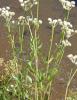
Poison Parsnip is a stout, upright, branching herbaceous perennial that commonly reaches three to six feet and can occasionally grow taller. The stems are smooth, hollow between the nodes, and green to reddish green. Purple streaks, spots, or mottling may occur, especially near the lower stem, but stem color alone is not a safe identification feature.
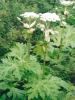
The leaves are alternate and compound. Lower leaves may be divided two or three times, while upper leaves are often less divided. Individual leaflets are narrow to lance-shaped, sharply toothed, and several inches long.
One of the best field characters is the leaflet venation. Side veins commonly run from the midrib toward the V-shaped notches between the marginal teeth rather than directly to the tooth tips. This feature is helpful, but no one character should be used alone when deciding whether animals can safely remain in the area.
The plant’s general carrot-family appearance creates danger. Many Apiaceae have compound leaves and white umbels. Water parsnip, wild carrot, wild celery, poison hemlock, wild parsnip, and water hemlock may be confused by non-specialists, especially before flowers or roots are visible.
Flowers, Umbels, Fruit, and Seed Heads
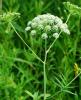
The tiny white flowers have five petals and develop in compound umbrella-shaped clusters. Numerous smaller clusters radiate from central points to form broad umbels. Flowering plants may appear attractive and harmless to people familiar with Queen Anne’s lace or other white-flowered Apiaceae.
Flowers alone are not adequate for safe identification because many harmless and poisonous members of Apiaceae produce white umbels. Habitat, leaf division, leaflet venation, stem features, root crown, and fruit stage all matter. A flowering white umbel in wet ground near animals deserves special caution.
After flowering, green seed heads develop. These cannot be dismissed as harmless mature aerial material. Immature *Cicuta maculata* seed heads caused a documented fatal cattle outbreak, demonstrating that dangerous aboveground exposure can occur later in the season.
Chambered Root Crown and Fleshy Roots
The thickened root crown and lower stem are among the most diagnostically important and most dangerous structures. When cut lengthwise, the lower stem and crown may show horizontal partitions or chambers. These chambers may contain brownish or straw-colored liquid associated with the toxic plant material.
Fleshy roots or tuber-like structures grow below the crown. They may be more palatable than mature foliage and can be pulled from soft wet soil. A root fragment that looks like an edible parsnip, celery root, tuber, or medicinal root may contain a fatal amount of toxin.
Inexperienced people should not cut, crush, smell, taste, or split suspected water-hemlock roots to confirm the chambers. Breaking the plant can contaminate hands, gloves, tools, footwear, mud, shallow water, and vehicles. A safe diagnostic specimen can usually be photographed and collected with gloves into a secure leak-resistant container.
Why Livestock Poisoning Happens So Quickly
Water-hemlock poisoning behaves differently from many pasture-plant intoxications that develop slowly over days or weeks. Cicutoxin can be absorbed rapidly and can bring an animal close to the seizure threshold before anyone recognizes a problem. Once that threshold is crossed, the change from apparent health to salivation, twitching, collapse, convulsions, and death can be abrupt.
USDA has described water hemlock as “the most violently toxic plant” growing in North America. That phrase is appropriate as a danger warning because the plant can cause severe seizures and death after a relatively small ingestion. It should not be converted into a precise numerical dose or a claim that every contact is instantly fatal.
Many livestock cases are discovered after the fact. Animals may simply be found dead near streams, ditches, wet pastures, or trampled water-hemlock patches. Surviving herd mates should be removed first, then the source should be identified and secured.
Roots, Disturbance, and Wet-Site Management
Disturbance greatly increases risk because it exposes the most toxic portions and may make plants easier to eat. Plowing, ditch cleaning, pond excavation, streambank erosion, flooding, hoof traffic, mowing, pulling, grubbing, herbicide treatment, and rooting by pigs can all bring roots and lower stems into animal reach. The plant may be most dangerous immediately after a person or animal has damaged it.
Recently disturbed wet ground should be fenced or otherwise secured before animals return. Removing visible tops is not enough if roots remain exposed or broken. Mud, shallow water, and equipment that contacted the roots should be treated as potentially contaminated.
Dogs should not be allowed to play with uprooted plants, retrieve roots, drink from disturbed ditch water, or mouth vegetation pulled during cleanup. Livestock should be moved to clean water and feed while the area is inspected. Do not use continued grazing as a test of whether the patch is safe.
Dogs and Cats
Published companion-animal cases involving positively identified *Cicuta maculata* are less common than livestock and human reports. That does not imply that dogs and cats are resistant. Cicutoxin affects mammalian central nervous systems, and a small piece of root can represent a substantial dose relative to body weight.
Dogs are at particular risk because they dig, retrieve, carry wetland roots, chew unfamiliar objects, and investigate ditch or pond margins. Landscaping, drainage work, flooding, and erosion may expose the exact plant parts a dog is likely to grab. A dog that mouths a root should receive emergency care before tremors or seizures appear.
Cats are less likely to dig in wetland roots but may be exposed as barn cats, outdoor cats, or pets presented with pulled vegetation. They may show drooling, vomiting, dilated pupils, hiding, tremor, agitation, collapse, or seizure. Any witnessed chewing of a suspected root, lower stem, shoot, or seed head is an emergency.
Horses, Cattle, Sheep, Goats, and Pigs
All common livestock species should be considered susceptible. Cattle are frequent victims because they graze wet margins, pull plants from soft soil, and may consume exposed roots or green seed heads. Sheep and goats are not protected by selective browsing when preferred forage is scarce or water-hemlock material is mixed into cut feed.
Horses may encounter the plant along drainage ditches, pond margins, wet pasture, irrigation channels, and streambanks. Because horses cannot vomit, swallowed material cannot be expelled through spontaneous emesis. The first recognized signs may be salivation, muscle tremors, incoordination, apparent colic, collapse, or generalized seizures.
Pigs may uncover and eat roots while rooting in wet soil. Small ruminants and swine can receive a high effective dose from a small amount of underground tissue. Older lethal-dose percentages should not be used to decide that an exposure is below an emergency threshold.
Animals should not be allowed to graze recently sprayed, mowed, grubbed, trampled, or disturbed water-hemlock patches. Wilted vegetation may become easier to consume, and exposed roots remain dangerous. Follow local agricultural guidance and the herbicide label, but do not return animals merely because foliage has collapsed.
Hay, Cut Plants, and Contaminated Feed
Water hemlock growing in a hay meadow should be removed before harvest through procedures that prevent roots, stems, and seed heads from entering forage. Once the plant has been cut, baled, chopped, or ground, livestock lose the ability to sort around it. A questionable bale should be isolated rather than diluted into clean feed.
Some references report declining toxicity in mature or thoroughly dried aerial material, but that is not a dependable on-farm safety test. The plant part, maturity, moisture, and toxin concentration are usually unknown. Roots, lower stems, young growth, and green seed heads may remain mixed into the forage.
Feed contamination also complicates diagnosis. A herd may show sudden death or seizures without obvious standing plants in the pasture because the exposure occurred in cut hay or green chop. Representative feed samples from multiple bales or feed locations should be preserved.
Contaminated Water and Mud
Trampled or broken roots can contaminate shallow water and mud. An animal may drink or lick water containing root liquid or small plant fragments without visibly eating a whole plant. A dog may retrieve the root, while cattle may consume mud and water around the damaged patch during ordinary drinking.
Suspected exposure should include assessment of the water source as well as the vegetation. Move animals to clean water immediately. Prevent downstream or repeated access until the area has been inspected and plant material removed safely.
Tools, boots, tires, gloves, trough edges, buckets, and excavation equipment may also carry contaminated mud or plant fragments. Cleanup should prevent pets and livestock from licking or chewing these materials. Secure disposal and washing are part of prevention.
Diagnosis and Confirmation
Diagnosis often depends on the combination of sudden severe seizures, compatible wet habitat, and identification of water hemlock at the exposure site or in stomach, rumen, or feed contents. Because death can occur before examination, photographs and specimens from the location may be critical to a herd investigation. The exposure site should be documented before plants are destroyed when that can be done safely.
A suspected plant sample should include photographs of the standing plant, wet habitat, leaves, stems, flowers or fruits, and exposed root area. Wear gloves, avoid crushing the specimen, and place it in a secure leak-resistant container. Do not carry loose roots in the passenger compartment with people or animals.
Specialized laboratories may identify cicutoxin-related polyacetylenes in rumen or stomach contents, plant material, or other samples. These compounds can degrade, so a negative result does not necessarily exclude water-hemlock poisoning. Plant identification, necropsy findings, exposure history, and clinical course remain important.
Severe convulsions may leave evidence of skeletal and cardiac muscle degeneration. Laboratory testing may show marked muscle-enzyme elevation, metabolic acidosis, electrolyte disturbance, pigment in urine, and declining kidney function. These abnormalities support the severity of the convulsive syndrome but are not unique to water hemlock.
Important Differential Diagnoses
Strychnine poisoning can produce violent stimulus-sensitive convulsions while the animal may remain conscious between spasms. Metaldehyde slug bait, tremorgenic mold toxins, organochlorine pesticides, some pyrethroid exposures, blue-green algae, salt toxicity, lead, hypoglycemia, heat stroke, head trauma, epilepsy, and meningitis can also cause tremors or seizures.
Poison hemlock may cause nervousness and tremors early, but progressive weakness, flaccid paralysis, and respiratory failure are more characteristic because its coniine-type alkaloids act at nicotinic receptors. Wild parsnip contact causes a different phototoxic skin syndrome. Hemlock water-dropwort is a separate convulsant Apiaceae species and must not be collapsed into *Cicuta maculata*.
A definitive diagnosis should not delay emergency seizure treatment. The veterinarian may need to stabilize the animal before the plant can be identified or the exposure site examined. Once the animal or herd is stabilized, exact identification helps prevent recurrence.
Prognosis and Prevention
The prognosis is guarded after any credible ingestion and poor once recurrent uncontrolled seizures, respiratory arrest, profound acidosis, hyperthermia, serious dysrhythmias, or cardiovascular collapse develops. Animals that receive rapid airway support and effective seizure control before severe secondary injury may recover. Delay is often fatal.
Inspect streams, ponds, irrigation channels, wet pasture, drainage ditches, flood-prone fields, and hay meadows before animals are turned out. Repeat inspections after flooding, erosion, excavation, ditch cleaning, pond work, herbicide treatment, or heavy trampling because roots may become newly exposed. Green seed heads later in the season deserve special attention.
Remove the entire plant, including roots, using appropriate protective equipment and local weed-control guidance. Do not leave pulled plants where pets, livestock, wildlife, or children can reach them. Secure removed material for lawful disposal, clean contaminated tools and footwear, and keep animals out of the disturbed site until the source has been eliminated.
The safest prevention is not teaching animals to avoid it. It is excluding them from wetland patches, disturbed roots, contaminated hay, suspect water, and cleanup waste. Water hemlock is too fast and too violent for trial-and-error pasture management.
Immediate Emergency Response
- Call for emergency veterinary help immediately: Tell the veterinarian that Poison Parsnip, Spotted Water Hemlock, or Cicuta maculata is suspected so seizure and airway treatment can be prepared.
- Do not wait for symptoms: A normal appearance immediately after ingestion does not create a safe observation period.
- Remove unexposed animals: Move herd mates, pets, and people away from the plant, exposed roots, contaminated forage, mud, and water source.
- Provide clean feed and water elsewhere: Do not allow animals to return to the suspect ditch, stream, pond margin, pasture, hay, or feed source.
- Reduce stimulation: Keep the area quiet because excessive stimulation may worsen danger in an animal approaching the seizure phase.
- Do not risk handler injury: A convulsing horse, cow, goat, pig, or dog can seriously injure people nearby.
Every credible ingestion is an emergency, especially when the plant part may include root, swollen lower stem, basal tissue, young growth, immature green seed head, contaminated hay, or an unknown amount. The goal is to place the animal under veterinary seizure and airway control before the convulsive threshold is crossed.
During a Seizure
- Do not restrain the head or limbs: Restraint can injure the animal and the person attempting it.
- Do not place anything between the teeth: Hands, spoons, sticks, ropes, syringes, and bite blocks can cause severe injury and do not prevent tongue swallowing.
- Clear hazards when safe: Move furniture, buckets, tools, fencing hazards, other animals, and sharp objects away from a seizing small animal when this can be done without reaching near the mouth or limbs.
- Stay clear of large animals: Keep people away from the legs, head, horns, and jaws of a convulsing horse, cow, goat, or pig.
- Time the seizure: Record when it began, how long it lasted, whether consciousness returned, and whether another seizure followed.
- Observe breathing and gum color: Report blue-gray gums, prolonged pauses, shallow breathing, frothing, vomiting, or failure to regain awareness.
Status epilepticus can develop rapidly. Repeated convulsions are not something to “wait out” at home. The animal needs veterinary anticonvulsant therapy, airway assessment, oxygenation, temperature control, and cardiovascular monitoring.
Do Not Attempt Home Vomiting or Oral Decontamination
- Do not induce vomiting: Hydrogen peroxide, salt, mustard, detergent, or fingers in the throat can delay definitive treatment and cause aspiration.
- Do not force activated charcoal: A salivating, vomiting, weak, trembling, confused, or convulsing animal can inhale charcoal into the lungs.
- Do not drench or force water: Pouring or syringing liquid into an abnormal animal can cause fatal aspiration.
- Do not feed the animal: Food does not neutralize cicutoxin and may be aspirated during seizure activity.
- Do not give milk, oil, herbal products, or home remedies: None is an antidote.
- Do not give human or leftover veterinary medication: Anticonvulsants, sedatives, pain medication, sodium bicarbonate, cathartics, and cardiac drugs require professional selection and monitoring.
A veterinarian or poison-control specialist may consider controlled decontamination only when timing, species, airway status, and neurologic condition make it safe. In a completely alert dog presented immediately after ingestion, veterinary-directed emesis may occasionally be considered. Once neurologic signs begin, airway-protected gastric lavage and clinician-administered charcoal may be safer than vomiting.
Transport and Large-Animal Safety
- Call ahead before arrival: The clinic or large-animal veterinarian needs to prepare for seizures, oxygen, intubation, fluids, and emergency drugs.
- Do not force a convulsing large animal into a trailer: Trailer loading during violent seizures may kill the animal or injure handlers.
- Use veterinary direction for recumbent livestock: Positioning, sedation, restraint, and transport decisions must account for handler safety and respiratory function.
- Keep small animals positioned for drainage: Saliva and vomit should be able to leave the mouth without the animal aspirating.
- Do not muzzle a vomiting or respiratory-compromised animal: A muzzle may trap vomit or restrict airflow.
- Limit stimulation during transport: Loud noise, rough handling, and repeated restraint may worsen neurologic instability.
Large-animal treatment may have to begin at the exposure site. The veterinarian may administer species-appropriate anticonvulsants and supportive care while directing handlers on safe positioning, environmental protection, and whether transport is possible. Human safety should never be sacrificed during an uncontrolled seizure.
Collect Evidence Without Delaying Treatment
- Take photographs first: Photograph the whole plant, wet habitat, leaves, stems, flowers, seed heads, exposed root area, and surrounding water or mud.
- Wear gloves: Avoid bare-handed contact with roots, root liquid, and contaminated mud.
- Do not crush the root: Breaking the root crown may release toxic liquid and contaminate people, tools, or vehicles.
- Use a secure container: Place any specimen in a sealed, leak-resistant container or bag away from people and animals.
- Preserve feed and water evidence: Save suspect hay, green chop, rumen/stomach contents when directed, and samples from contaminated water or mud.
- Record the timeline: Note earliest possible access, observed chewing, onset of signs, seizure timing, vomiting, breathing changes, and deaths in the group.
Do not let sample collection delay transport or seizure care. A photograph may be safer and more useful than a poorly contained root in the passenger compartment. The veterinarian, extension agent, toxicologist, or botanist can advise whether a physical specimen is needed.
Emergency Findings
- Credible ingestion: Any chewing or swallowing of suspected root, swollen lower stem, young shoot, basal tissue, seed head, or contaminated forage is an emergency even before signs appear.
- Early neurologic signs: Nervousness, hypersensitivity, staring, dilated pupils, twitching, trembling, weakness, stumbling, or confusion can precede generalized seizures.
- Salivation or digestive signs: Frothing, repeated swallowing, vomiting, diarrhea, or abdominal pain may signal rapid toxin absorption rather than minor stomach upset.
- Any seizure: One seizure can be followed quickly by recurrent convulsions, apnea, hyperthermia, aspiration, and cardiovascular collapse.
- Breathing abnormalities: Blue, gray, or very pale gums, labored breathing, prolonged pauses, shallow respirations, or failure to awaken requires immediate airway support.
- Large-animal collapse: A down horse or cow that is paddling, rigid, frothing, or repeatedly convulsing is both a medical emergency and a serious handler danger.
- Dark urine or extreme muscle pain: These findings may indicate rhabdomyolysis and developing kidney injury after prolonged seizures.
Veterinary Stabilization
There is no specific antidote for cicutoxin. The first veterinary priorities are control of convulsions, protection of the airway, oxygenation, ventilation, intravenous access, temperature control, and stabilization of cardiovascular function. Treatment may need to begin before the plant is definitively identified.
Benzodiazepines are commonly used for initial seizure control. Recurrent or refractory seizures may require additional anticonvulsants, barbiturates, anesthetic protocols, continuous infusions, intubation, and mechanical ventilation. Drug choice differs among companion animals and livestock and must account for respiratory depression from both the poisoning and the treatment.
Airway protection is central because animals may vomit, salivate heavily, aspirate, stop breathing during seizures, or require sedating anticonvulsants. Oxygen, suction, intubation, and assisted ventilation may be necessary. A seizuring animal should not receive forced oral treatment before the airway is safe.
Veterinary Decontamination
Veterinary decontamination is considered only when it can be performed without sacrificing airway and seizure control. In an alert, completely asymptomatic dog presented immediately after a witnessed ingestion, a veterinarian or poison-control specialist may consider induced emesis. Once twitching, agitation, weakness, altered awareness, or seizures appear, vomiting becomes unsafe.
Gastric lavage under a protected airway may be safer than emesis after neurologic abnormalities begin. Activated charcoal may be administered by a controlled route when expected benefit outweighs aspiration risk. Cathartics, repeated charcoal dosing, or lavage decisions require clinician judgment and monitoring.
The rapid action of cicutoxin means decontamination is not a substitute for seizure control. An animal can die while an owner or clinician focuses on removing stomach contents if airway, oxygenation, and convulsions are not controlled first. Stabilization governs the sequence.
Supportive Care and Complication Management
Supportive care may include intravenous fluids, oxygen, active cooling, continuous electrocardiographic monitoring, blood-pressure support, blood-gas testing, electrolyte measurement, glucose testing, and repeated evaluation of kidney function and muscle enzymes. Severe acidosis is corrected according to measured abnormalities rather than by automatic home or field treatment.
Rhabdomyolysis requires aggressive management of hydration, urine production, electrolyte disturbance, hyperthermia, and shock. Dark urine, rising muscle enzymes, hyperkalemia, muscle pain, or reduced urination indicates the need for continued monitoring. Acute kidney injury may develop after the initial seizure crisis.
Dialysis may support an animal that develops severe acute kidney failure, but it should not be described as a reliable method for rapidly clearing cicutoxin from the bloodstream. The practical value of advanced care is supporting organs while the animal survives the neurologic and metabolic crisis.
Horses and Livestock
- Remove the herd from the source: Move animals away from wetland patches, exposed roots, seed heads, contaminated hay, and suspect water.
- Do not force movement during seizures: A convulsing large animal may be safer treated in place under veterinary direction.
- Preserve plant and feed samples: Collect photographs and representative material from the pasture, streambank, hay, or green chop when safe.
- Check all exposed animals: Apparently normal herd mates may still be within the pre-seizure absorption period.
- Secure water sources: Provide clean water and prevent return to contaminated mud, roots, or shallow stream areas.
- Investigate deaths immediately: Sudden deaths near water require plant identification and necropsy planning to protect the rest of the herd.
Dogs, Cats, and Small Animals
- Transport before signs if ingestion is credible: Waiting for tremors or seizures may miss the best chance for controlled decontamination.
- Bring the plant evidence: Photographs and a safely contained sample are useful, but they must not delay emergency care.
- Keep the animal quiet: Reduce stimulation and handling during transport.
- Do not force anything orally: Weakness, drooling, vomiting, trembling, or altered awareness makes aspiration likely.
- Report every sign precisely: Vomiting, twitching, pupil dilation, collapse, seizure timing, gum color, and breathing pattern affect triage.
- Watch after stabilization: Aspiration, recurrent seizures, muscle injury, kidney dysfunction, and dysrhythmias may appear after the first crisis.
Recovery and Prognosis
Survival depends heavily on the absorbed dose, speed of treatment, duration of seizures, and ability to maintain oxygenation and circulation. Early spontaneous vomiting in an animal capable of vomiting may reduce the absorbed dose, but it does not eliminate the need for emergency assessment. A symptom-free animal after credible ingestion is not cleared at home.
An animal whose seizures are rapidly controlled and whose breathing, blood pressure, temperature, kidney function, and heart rhythm remain stable may recover fully. Continued observation is necessary because aspiration pneumonia, muscle injury, kidney dysfunction, recurrent seizures, and dysrhythmias can emerge after the initial crisis.
A poor prognosis is associated with recurrent uncontrolled convulsions, apnea, profound acidosis, extreme hyperthermia, serious dysrhythmias, cardiovascular collapse, severe rhabdomyolysis, or progressive kidney injury. Humane euthanasia may be necessary for large animals with uncontrolled seizures, catastrophic trauma, or irreversible collapse when safe treatment is not possible.
Frequently Asked Questions About Poison Parsnip and Animal Poisoning
Is Poison Parsnip the same plant as Wild Parsnip?
No. This page covers Poison Parsnip, Cicuta maculata, a water-hemlock species containing cicutoxin. Wild Parsnip is Pastinaca sativa, a different plant best known for phototoxic sap that can cause severe sunlight-activated skin injury. The common-name similarity makes scientific identification essential.
Is Water Hemlock the same as Poison Hemlock?
No. Water Hemlock, Cicuta maculata, contains cicutoxin-related polyacetylenes that cause violent central nervous system seizures. Poison Hemlock, Conium maculatum, contains coniine-type alkaloids and more characteristically causes neuromuscular weakness and respiratory paralysis. Both can be fatal, but their toxins and typical syndromes are different.
How poisonous is Poison Parsnip?
It is one of the most acutely dangerous plants animals may encounter in North America. A small amount of high-toxin root or basal tissue can produce severe or fatal poisoning, and signs may begin within minutes. Because toxin concentration varies and the seizure threshold can be crossed abruptly, no credible ingestion should be treated as minor.
Which part is most toxic?
The thickened roots, tuber-like structures, root crown, and swollen chambered lower stem are usually the most dangerous parts. Young shoots, basal growth, and immature green seed heads can also be dangerous. All parts should be kept away from animals because plant part, season, and toxin concentration are rarely known during an emergency.
Can green seed heads kill cattle?
Yes. A documented outbreak linked immature Cicuta maculata seed heads to the deaths of nine mature Hereford cows from a herd of eighty-one. That case shows that roots are not the only dangerous plant part. Pastures, hay meadows, and stream margins should be inspected before seed heads become accessible.
Can Poison Parsnip kill a dog or cat?
Yes. Even though positively identified companion-animal reports are less common than livestock cases, cicutoxin acts on mammalian nervous systems and can be fatal to dogs and cats. A small root fragment may be a large dose for a pet. Any witnessed or strongly suspected ingestion requires emergency veterinary care before signs begin.
Can it kill horses and livestock?
Yes. Cattle are frequent victims, and fatal poisoning has followed ingestion of both roots and immature seed heads. Horses, sheep, goats, pigs, and other livestock are susceptible. Animals may progress from salivation and muscle twitching to collapse, violent seizures, respiratory failure, and death before ordinary help can be arranged.
How quickly do signs begin?
Signs can begin in approximately fifteen minutes, although some exposures take several hours. Timing depends on plant part, dose, species, stomach contents, and toxin concentration. A symptom-free animal should be transported or treated as an emergency rather than watched at home because severe seizures may be the first unmistakable sign.
What do early symptoms look like?
Early signs may include nervousness, restlessness, dilated pupils, excessive salivation, frothing, rapid breathing, muscle twitching, trembling, weakness, stumbling, vomiting in animals capable of vomiting, and abdominal distress. These signs may be brief before the animal falls and develops generalized tonic-clonic seizures.
Why does Poison Parsnip cause seizures?
Cicutoxin disrupts GABA-mediated inhibition in the central nervous system. GABA normally limits excessive electrical activity between neurons. When that inhibitory control is blocked, neuronal firing becomes uncontrolled and the animal may develop tremors, rigidity, repeated generalized convulsions, coma, respiratory failure, and death.
Does Poison Parsnip directly cause kidney failure?
Kidney failure can occur, but it is usually a secondary complication of severe poisoning. Prolonged seizures can cause rhabdomyolysis, hyperthermia, dehydration, acidosis, shock, and release of muscle pigments that damage the kidneys. Early seizure control, circulation support, and monitoring of urine production and kidney values are essential.
Can dried Poison Parsnip in hay still be dangerous?
Yes. Drying does not provide a dependable guarantee of safety. Roots, lower stems, young growth, and seed heads may be incorporated into hay, and chopping or baling prevents livestock from sorting around the plant. Suspect forage should be withdrawn and professionally assessed.
Can animals be poisoned by contaminated water or mud?
Potentially, yes. Broken roots and chambered basal tissue can release toxic material into shallow water and mud. Livestock should be moved to clean water after ditch cleaning, flooding, erosion, excavation, or trampling exposes water-hemlock roots. Dogs should not retrieve or chew roots from disturbed wet ground.
Can touching the plant poison an animal?
Severe veterinary poisoning is primarily associated with ingestion, but contact with broken root tissue or toxic liquid can contaminate fur, paws, tools, feed, water, and anything an animal later licks. Avoid bare-handed handling, prevent licking, and wash contaminated skin or fur only when this can be done safely without delaying emergency care.
How can Poison Parsnip be recognized?
It is usually a tall branching plant in wet ground with compound leaves, sharply toothed lance-shaped leaflets, hollow stems, and broad umbels of tiny white flowers. The side veins of the leaflets characteristically terminate mainly in the notches between teeth. The lower stem and root crown may be chambered, but suspected plants should not be cut open casually because the roots are extremely poisonous.
Should I make my dog vomit after eating Poison Parsnip?
Do not give a home emetic. Hydrogen peroxide can cause aspiration and stomach injury, and the dog may begin trembling or seizing before the vomiting procedure is complete. A veterinarian may consider controlled emesis only in a completely alert, asymptomatic dog presented immediately after exposure. Otherwise, airway protection and controlled decontamination may be safer.
Should I give activated charcoal?
Do not administer charcoal at home. A salivating, vomiting, weak, confused, or convulsing animal can inhale it into the lungs. Veterinary professionals may use activated charcoal after assessing timing and protecting the airway, but seizure control, oxygenation, and cardiovascular stabilization take priority.
Is there an antidote?
No specific antidote is available. Treatment focuses on rapidly stopping seizures, maintaining an open airway, supporting breathing and circulation, controlling hyperthermia and acidosis, preventing aspiration, and treating complications such as rhabdomyolysis, dysrhythmias, shock, and acute kidney injury.
How do veterinarians treat water-hemlock poisoning?
Veterinary care may include benzodiazepines or other anticonvulsants, oxygen, intubation, ventilation, intravenous fluids, active cooling, blood-pressure support, ECG monitoring, blood-gas and electrolyte testing, and monitoring of muscle enzymes and kidney function. Decontamination is considered only when it can be done safely without worsening aspiration or delaying seizure control.
Can an animal survive Poison Parsnip poisoning?
Survival is possible when the absorbed dose is not overwhelming and aggressive treatment begins before prolonged seizures cause severe hypoxia, muscle destruction, acidosis, and cardiovascular collapse. The prognosis becomes poor with recurrent uncontrolled convulsions, apnea, serious dysrhythmias, profound hypotension, extreme hyperthermia, or progressive kidney failure.
What should I do if I find it in a pasture or ditch?
Remove animals from the area immediately and provide clean feed and water elsewhere. Photograph the plant and wet habitat, then arrange safe identification and removal using protective equipment and local weed-control guidance. Do not leave pulled plants, exposed roots, contaminated mud, or treated wilted material where animals can reach them.