Rayless Goldenrod Benzofuran Ketones, Trembles, Milk Sickness, Skeletal Myopathy, and Cardiotoxicity
Is Rayless Goldenrod Poisonous to Dogs, Cats, Horses, and Livestock?
Yes—Rayless Goldenrod, Isocoma pluriflora Greene, formerly and widely known in veterinary literature as Haplopappus heterophyllus, is poisonous to horses, cattle, sheep, goats, pigs, nursing young, and other animals that eat enough plant material. The plant is best known for causing “trembles” in livestock and milk sickness in animals or people that consume contaminated milk from exposed lactating animals. Its toxic material, historically called tremetol, is now understood as a mixture of benzofuran ketones that can damage skeletal muscle and cardiac muscle.
Rayless Goldenrod poisoning is usually a repeated-exposure disease rather than a one-bite oral irritant. Animals may graze contaminated pasture, dry standing plants, frosted material, or hay for days to weeks before obvious tremors appear. Early signs can be subtle: reduced appetite, dullness, stiffness, slower movement, poor exercise tolerance, prolonged recovery after handling, abnormal breathing, fast or irregular heartbeat, and reluctance to walk. More advanced poisoning can cause trembling after movement, weakness, dark urine from muscle breakdown, ketosis, recumbency, congestive heart failure, collapse, and death.
Dogs and cats are not the classic field victims because they rarely graze enough southwestern range plant to reproduce livestock disease, but that exposure pattern is not proof of safety. Ranch dogs, hiking dogs, kennel dogs, barn cats, and pets with access to cut plant material, contaminated hay, dried stems, or plant fragments should be evaluated if a meaningful ingestion is possible or if weakness, trembling, vomiting, rapid breathing, abnormal heartbeat, dark urine, or collapse develops.
About this guide: This page provides general pet-poisoning information and cannot diagnose or treat an individual animal. For any suspected exposure, contact a veterinarian or animal poison-control service immediately. Do not induce vomiting, give medication, or attempt home decontamination unless directed by a veterinary professional.
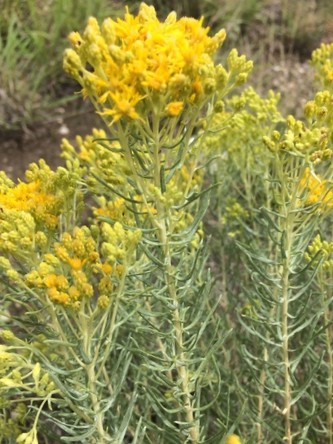
Rayless Goldenrod
Isocoma pluriflora Greene
- Haplopappus heterophyllus (A.Gray) S.F.Blake — very important historical veterinary, range-management, and poison-plant name.
- Bigelowia pluriflora A.Gray — historical synonym.
- Bigelowia wrightii A.Gray — historical synonym.
- Bigelowia wrightii var. hirtella A.Gray — historical varietal synonym.
- Haplopappus pluriflorus (Torr. & A.Gray) H.M.Hall — historical synonym.
- Isocoma wrightii (A.Gray) Rydb. — historical synonym and common database search variant.
- Linosyris pluriflora Torr. & A.Gray and Linosyris wrightii A.Gray — older names encountered in botanical records.
Asteraceae — Aster, Daisy, or Sunflower Family
Rayless Goldenrod; Rayless Golden-rod; Jimmyweed; Jimmy Weed; Southern Jimmyweed; Southern Jimmy Weed; Southern Goldenbush; Southern Golden Bush; Alkali Weed; Alkali Disease Plant; Trembles Plant; Milk Sickness Plant; Rayless Goldenrod Poison Plant; Haplopappus heterophyllus; Isocoma wrightii
Historical and taxonomic search variations include Bigelowia pluriflora A.Gray, Bigelowia wrightii A.Gray, Bigelowia wrightii var. hirtella A.Gray, Haplopappus heterophyllus (A.Gray) S.F.Blake, Haplopappus pluriflorus (Torr. & A.Gray) H.M.Hall, Isocoma wrightii (A.Gray) Rydb., Linosyris pluriflora Torr. & A.Gray, and Linosyris wrightii A.Gray.
“Goldenrod” is a broad common name and often refers to Solidago species, which are different plants. Rayless Goldenrod is Isocoma pluriflora, a southwestern rangeland plant associated with trembles and milk sickness. “Jimmyweed,” “southern goldenbush,” and “alkali weed” may be used loosely in range settings, so identification should be based on the plant’s woody crown, upright stems, narrow sticky leaves, yellow discoid rayless flower heads, and southwestern alkaline, gypsic, drainage, or disturbed rangeland habitat.
Tremetol Is a Historical Group Name, Not One Simple Toxin
The toxic material in Rayless Goldenrod has historically been called tremetol, but that name should be understood as an older collective term rather than a single purified toxin. Modern chemical work shows that Isocoma pluriflora contains a mixture of benzofuran ketones. The most important repeatedly measured compounds include tremetone, dehydrotremetone, and 3-oxyangeloyltremetone, with additional structurally related benzofuran ketones reported from Rayless Goldenrod and related tremetol-type plants.
Tremetone is often named as the major toxin, but the clinical syndrome should not be reduced to tremetone alone. Rayless Goldenrod plant material contains several related benzofuran ketones, and their relative amounts can vary sharply between plant populations, plant parts, seasons, drying methods, storage conditions, and analytical samples. That chemical variation helps explain why some infestations cause serious losses while other stands may be grazed with little obvious effect.
Older references that describe “tremetol poisoning” are still clinically useful, especially when discussing trembles and milk sickness. They should be interpreted through the modern chemical lens: tremetol-type disease is a benzofuran-ketone-associated myotoxic and cardiotoxic syndrome, not a vague stomach upset or a proven single-molecule exposure. This distinction is important for diagnosis, prognosis, milk safety, and field prevention.
Skeletal-Muscle and Cardiac-Muscle Injury
The primary biological target is muscle. Poisoned animals develop degeneration and necrosis of skeletal muscle and cardiac muscle. Skeletal-muscle injury explains the stiffness, weakness, trembling after movement, reluctance to walk, recumbency, high serum muscle-enzyme activity, dark urine from myoglobin, and slow recovery that can follow substantial exposure.
Cardiac muscle injury explains exercise intolerance, fast heart rate, prolonged heart-rate recovery after movement, abnormal rhythm, poor perfusion, congestive signs, collapse, and sudden death in severe cases. Experimental horse work is especially important because horses developed significant myocardial disease, and cardiac troponin I was identified as a useful marker of equine myocardial injury after Rayless Goldenrod exposure. Horses may therefore look like they have a primary performance, fatigue, respiratory, or heart problem before the pasture plant is recognized.
Rayless Goldenrod should not be described as a simple gastrointestinal irritant. Vomiting, colic-like signs, constipation, diarrhea, reduced rumination, or abdominal discomfort may occur in some animals, but the dangerous disease is myotoxic and cardiotoxic. By the time an animal trembles violently after forced movement, the disease is already beyond ordinary stomach upset.
Cumulative Exposure and Why Signs May Be Delayed
Rayless Goldenrod poisoning is commonly described as cumulative because repeated daily ingestion allows muscle and heart damage to build before dramatic clinical signs are recognized. That does not necessarily mean the toxin remains unchanged in the body indefinitely. The practical point is that small daily amounts can still become dangerous when animals repeatedly graze an infested pasture, consume dry standing stems, or receive contaminated hay.
Older range guidance often cites daily intake around 1–1.5% of body weight for a week or more as a danger pattern for green or dried plant material. That figure is useful as a warning, not as a dependable safe-versus-toxic line. Modern benzofuran-ketone measurements show that plant chemistry varies enough that plant weight alone is an imprecise predictor. A high-toxin stand, prolonged low-to-moderate exposure, hay contamination, poor forage availability, frost, drought, and continued access can all make the outcome worse.
Clinical signs may appear only after several days to weeks of exposure, and dramatic tremors may be first noticed after animals are driven, handled, loaded, exercised, or stressed. That pattern can fool owners into blaming the handling event rather than the underlying myopathy. Movement reveals the damage; it is not the root cause.
Green Plants, Dried Plants, Frost, and Hay
The toxin is present in both green and dried plant material. Drying, hay curing, winter dieback, frost, or old standing stems do not reliably eliminate the hazard. Benzofuran ketones can persist in dried Rayless Goldenrod, although some compounds may degrade over time depending on grinding, temperature, storage duration, exposure to air, and the specific chemical measured.
Hay contamination is especially dangerous because animals cannot easily sort around chopped or mixed plant material. A small daily amount in hay can create prolonged exposure during winter, exactly when many poisonings occur. Frost or snow can also remove better forage from reach while leaving woody stems, dried leaves, or less palatable toxic plants accessible to hungry animals.
Suspect hay should be isolated and not blended into clean hay. Feeding a questionable bale “to see what happens” is unsafe when the possible outcome is skeletal-muscle necrosis, cardiomyopathy, recumbency, and contaminated milk. A forage specialist, veterinarian, or range professional should help identify the plant and evaluate the lot.
Milk Transfer and Nursing Young
Lactating animals can secrete toxic compounds or metabolites into milk. Nursing calves, foals, kids, lambs, piglets, or other young may be poisoned from milk even when the dam appears only mildly affected or has not yet developed obvious trembles. Human milk sickness historically resulted from people drinking milk from animals that had eaten tremetol-containing plants.
Rayless Goldenrod has specific experimental support for transmammary toxicity in lactating goats. This matters because the dam’s visible clinical signs may understate the risk to nursing young. Milk from exposed animals should not be consumed by people, sold, pooled, fed to calves or pets, or discarded where scavengers can reach it until a veterinarian determines that it is safe.
Repeated milking may be directed for udder health and herd management, but it should not be presented as a stand-alone detoxification treatment. The animal still needs removal from the plant, rest, diagnostic testing, and supportive care when clinical signs or laboratory abnormalities are present. Milk disposal should prevent accidental use by people and animals.
Species Evidence and Evidence Gaps
Horses, cattle, sheep, goats, and pigs are the main documented domestic-animal victims of Rayless Goldenrod or tremetol-type poisoning. Goats are experimentally susceptible and developed skeletal and cardiac muscle lesions after dosing with measured benzofuran-ketone concentrations. Horses are especially important because cardiac injury can be prominent and may be recognized through exercise intolerance, prolonged heart-rate recovery, increased cardiac troponin I, and myocardial degeneration.
Cattle may show depression, inappetence, tremors, stiff gait, constipation, abnormal breathing, dribbling urine, recumbency, and death. Sheep may show progressive weakness and altered stance. Goats may become reluctant to move, stand stiffly or erectly, and become exercise intolerant. Pigs have been reported as susceptible, although most modern range discussions focus on cattle, horses, sheep, and goats.
Dogs and cats are not the primary species in the Rayless Goldenrod literature because they rarely graze enough range plant material to match livestock exposure. That limits case documentation rather than proving the plant harmless. A ranch dog, hiking dog, kennel dog, or barn cat that eats cut stems, dried plant material, contaminated hay, or plant fragments should be assessed based on plant identification, amount, duration, and signs rather than dismissed because most published cases involve livestock.
No Reliable Safe Dose
There is no reliable safe dose for an individual animal. The risk depends on benzofuran-ketone concentration, plant population, plant part, season, drying and storage conditions, animal species, body weight, repeated intake, forage alternatives, hydration, exercise, lactation, pregnancy, workload, and underlying disease. A single casual nibble is less typical of serious disease than repeated grazing, but no bite count can be used to prove safety.
A contaminated pasture or hay lot can look harmless for days while muscle damage develops quietly. Once tremors, dark urine, prolonged heart-rate recovery, recumbency, or congestive signs appear, the exposure has already done meaningful damage. Prevention and early removal are therefore more reliable than treatment after “the shakes” or “the slows” become obvious.
Onset and Early Progression
Rayless Goldenrod poisoning usually develops after repeated ingestion rather than one casual nibble. Signs may appear after several days to a few weeks of access, depending on the amount eaten, plant benzofuran-ketone concentration, animal species, body condition, age, workload, pregnancy or lactation status, milk transfer, hydration, and availability of alternative forage. An animal may appear normal during a clinically important period while skeletal and cardiac muscle injury is quietly developing.
The earliest signs are often subtle and easy to misread as laziness, weather stress, soreness, age, low-grade colic, poor conditioning, or ordinary reluctance. The animal may become dull, depressed, withdrawn from the group, slower to rise, less willing to graze, reluctant to leave shade or water, unwilling to keep up, or slower to recover after routine movement. Owners may describe the animal as “lazy,” “stiff,” “slow,” “weak behind,” “not wanting to move,” or “not right.” This is the stage historically associated with “the slows.”
Early illness may combine behavior change, reduced appetite, altered manure, reduced rumination, mild stiffness, poor exercise tolerance, and a change in breathing or heart rate. Those early signs may be the only warning before obvious trembles, dark urine, recumbency, cardiac failure, or death. Because exercise can reveal and worsen the disease, animals should not be driven, chased, loaded, or walked simply to test whether tremors appear.
Trembles, Stiffness, and Skeletal-Muscle Injury
Muscle tremors are the classic sign, especially after movement, forced handling, or stress. Trembling may begin around the muzzle, shoulders, flanks, neck, or legs and become more generalized as disease worsens. Affected animals may stand with a hunched or arched posture, carry the head low, place the feet abnormally, walk stiffly, stumble, drag the toes, or become unable to rise.
Species may differ in stance and gait. Cattle, horses, and goats may stand stiffly with the hind feet placed close together, while sheep have been described as standing with the feet held farther apart. The exact stance is less important than the pattern of exercise-triggered tremors, reluctance to move, progressive weakness, and evidence of muscle injury.
Skeletal-muscle necrosis can cause myoglobinuria, making the urine dark brown, red-brown, cola-colored, or tea-colored. This finding is serious because myoglobin released from damaged muscle can contribute to kidney stress, especially when dehydration, shock, electrolyte abnormalities, or prolonged recumbency are also present. Dark urine after exposure is not a minor sign.
Cardiac Signs, Exercise Intolerance, and Collapse
Respiratory and cardiovascular signs are clinically important because Rayless Goldenrod can damage cardiac muscle as well as skeletal muscle. Animals may develop rapid breathing, labored breathing, fast heart rate, prolonged recovery after movement, exercise intolerance, weakness, collapse, abnormal rhythm, edema, or signs compatible with congestive heart failure. These signs reflect cardiac muscle injury, skeletal-muscle damage, metabolic derangement, pain, and poor perfusion rather than simple anxiety.
Horses deserve particular attention because experimental work showed prominent myocardial disease. A horse may first show decreased endurance, reluctance to work, prolonged heart-rate recovery after exercise, depression, reluctance to eat, dehydration, trembling, muscle fatigue, increased CK, AST, ALT, LDH, and increased cardiac troponin I. The horse may look like a performance, respiratory, metabolic, or cardiac case before the plant exposure is recognized.
Forced movement is dangerous. Tremors often become more obvious after walking or handling, but deliberately provoking them can worsen muscle injury and cardiac demand. An animal that appears only mildly abnormal while standing quietly can deteriorate sharply when pushed to move, transported, chased, roped, or exercised.
Digestive, Metabolic, and Urinary Signs
Digestive signs can include reduced appetite, reduced rumination, constipation, abdominal discomfort, colic-like behavior, vomiting in species capable of vomiting, diarrhea, or feces containing mucus or blood. Horses and ruminants should not be expected to vomit. Digestive signs may accompany the myopathy, but they are not the defining danger.
Severe metabolic signs include acidosis, dehydration, ketosis, and an acetone-like odor on the breath. The acetone odor is not a separate toxin; it reflects altered energy metabolism in a sick, anorexic, or metabolically stressed animal. Once marked ketosis, recumbency, dehydration, and trembles are present, the prognosis becomes substantially worse.
Kidney values may worsen when dehydration, poor perfusion, shock, and myoglobin from damaged muscle converge. Reduced urine output, dark urine, severe weakness, sunken eyes, tacky mucous membranes, cold extremities, or collapse indicate advanced disease requiring urgent fluid, perfusion, cardiac, and renal assessment. Treatment must be individualized because aggressive fluids may help myoglobinuric or dehydrated animals but can worsen patients with significant cardiac compromise.
Horses, Cattle, Sheep, Goats, and Pigs
Cattle may show depression, poor appetite, reluctance to move, stiffness, tremors after exercise, constipation or abnormal manure, rapid breathing, dribbling urine, weakness, recumbency, and death. Lactating cows create a second hazard because toxic compounds or metabolites can pass into milk. Calves may be affected through nursing even when pasture exposure is not obvious.
Horses may show lethargy, poor appetite, low head carriage, stiffness, tremors, exercise intolerance, rapid heart rate, prolonged heart-rate recovery, increased breathing, sweating, choking-like signs from pharyngeal weakness, dark urine, weakness, and recumbency. A horse with choke-like signs after exposure may have pharyngeal muscle weakness, but true choke, botulism, neurologic disease, esophageal obstruction, rabies, and aspiration pneumonia may also need consideration.
Goats may appear reluctant to move, stand erect or stiffly, become exercise intolerant, tremble after movement, and develop skeletal and cardiac muscle lesions. Sheep may show progressive weakness, altered stance, poor movement, and tremors. Pigs have also been reported as susceptible, although most modern range discussions focus on cattle, horses, sheep, and goats. Any lactating exposed animal should be managed as a milk-risk animal until a veterinarian says otherwise.
Dogs, Cats, Birds, and Small Animals
Dogs and cats exposed to small amounts may show nonspecific signs such as vomiting, drooling, poor appetite, lethargy, weakness, trembling, abnormal breathing, collapse, or dark urine. Confirmed companion-animal cases are sparse, so severe neurologic, cardiac, or kidney signs in a dog or cat should also prompt investigation for other toxins, medications, pesticides, heat injury, tremorgenic molds, strychnine-like poisons, ionophores, exertional injury, or unrelated disease.
Ranch dogs, hiking dogs, kennel dogs, and barn cats may encounter cut stems, contaminated hay, dried plant fragments, or plant material carried from an infested pasture. A dog that chews hay or range weeds and then develops weakness, trembling, rapid breathing, dark urine, or collapse deserves urgent evaluation. A cat that becomes withdrawn, weak, anorexic, trembly, or dyspneic after credible exposure should not be observed casually.
Birds, rabbits, guinea pigs, rodents, and reptiles have little direct Rayless Goldenrod case documentation, but they should not be given southwestern range weeds, hay fragments, dried “goldenrod” stems, or unidentified browse from alkaline or gypsic range. In small herbivores, reduced eating after any plant exposure can rapidly create secondary gastrointestinal and metabolic complications. Exact species-specific signs should not be invented, but conservative exclusion is appropriate.
Late Signs and Fatal Progression
Late signs include prolonged recumbency, inability to rise, severe trembling with minimal stimulation, cardiac irregularities, congestive heart failure, coma, and death. Death may occur within days after obvious signs appear, but some animals deteriorate more slowly over one to several weeks. An animal that survives the first crisis may still have significant skeletal or cardiac muscle injury.
Body temperature may be normal, high, or low depending on exertion, shock, environmental conditions, and disease stage. Sweating may occur in horses, while severely weakened livestock may become cold during collapse. Hyperthermia after struggling, handling, or transport can further damage muscle and worsen acidosis.
Recumbency creates its own complications: pressure injury, muscle compression, aspiration, bladder dysfunction, dehydration, inability to reach feed or water, fly strike, secondary infection, and worsening myopathy from struggling. Recovery becomes much harder once an animal is down, ketotic, dehydrated, trembling with minimal stimulation, and showing cardiac or renal compromise.
Important Differential Diagnoses
Rayless Goldenrod poisoning can resemble White Snakeroot poisoning, selenium deficiency or excess, ionophore toxicity, nutritional myopathy, exertional rhabdomyolysis, atypical myopathy in horses, cassia or coffeeweed poisoning, gossypol poisoning, tremorgenic mold exposure, nitrate poisoning, lead, organophosphate or carbamate exposure, grass tetany, milk fever, grain overload, colic, infectious myositis, botulism, primary heart disease, and heat injury. Plant identification and laboratory testing are essential when signs are not straightforward.
White Snakeroot produces a very similar tremetol-type syndrome and must be considered where that plant grows. The range and habitat usually help separate the two, but both can cause trembles and milk sickness. In horses, choke-like signs should not automatically be attributed to Rayless Goldenrod because true choke, neurologic disease, esophageal obstruction, botulism, rabies, and aspiration pneumonia can overlap.
Sudden collapse, bloody discharge, or herd-level death should always be handled cautiously. Do not assume Rayless Goldenrod explains every death merely because the plant is present. Infectious, toxic, metabolic, nutritional, and environmental causes may coexist, and some carcass situations require veterinary or animal-health authority guidance before movement or necropsy.
Duration and Prognosis
The prognosis is best when exposure is recognized before tremors, recumbency, marked cardiac changes, dark urine, or severe metabolic abnormalities develop. Animals that ate a small amount once or are removed early may recover with rest, monitoring, and supportive care. However, the plant’s cumulative pattern means that the real exposure may have begun long before the first obvious signs.
The prognosis becomes guarded to poor when trembles are obvious, the animal is reluctant to move, urine becomes dark, cardiac markers are elevated, heart rhythm is abnormal, urine output falls, or congestive signs develop. Once an animal is recumbent, ketotic, dehydrated, and trembling with minimal stimulation, recovery is much less likely.
Recovery is often slow even in survivors. Clinical improvement can occur before muscle has fully repaired. Experimental goat work showed that skeletal-muscle lesions may continue resolving for months after exposure, so returning horses, working animals, breeding stock, or show animals to normal activity should be gradual and veterinary-guided.
Plant Identity and Name Changes
Rayless Goldenrod is the toxic southwestern rangeland plant now accepted botanically as Isocoma pluriflora Greene. Many older veterinary references, range bulletins, and poison-plant manuals still call it Haplopappus heterophyllus, and that older name remains important for searching historical reports, milk-sickness literature, livestock case discussions, and older toxicology sources.
The plant is also known as Jimmyweed, Southern Jimmyweed, Southern Goldenbush, and Alkali Weed. The name “goldenrod” can be misleading because ordinary goldenrods in the genus Solidago are different plants. Rayless Goldenrod belongs to Asteraceae, the Aster, Daisy, or Sunflower Family, but it lacks the showy ray florets that give many familiar goldenrods their plume-like flower clusters.
Rayless Goldenrod should also be distinguished from White Snakeroot, Ageratina altissima. Both plants contain tremetol-type benzofuran ketones and can produce trembles and milk sickness, but their ranges, appearance, habitat, and historical poisoning patterns differ. White Snakeroot is the classic eastern and midwestern wooded-edge plant; Rayless Goldenrod is the classic southwestern alkaline or gypsic rangeland plant.
How to Recognize Rayless Goldenrod
Rayless Goldenrod is a deciduous perennial half-shrub with several upright stems arising from a stout woody root crown. Plants commonly reach 2–4 feet tall, though size varies with moisture, soil, grazing pressure, age, and site conditions. The plant may die back seasonally and regrow from the crown, which makes old dry stems and new green shoots possible in the same infested area.
The stems are upright, bushy, and often sparsely branched. New growth may appear grayish white, smooth, shiny, resinous, or sticky. Older stems carry alternate, narrow, linear leaves that are usually a few inches long and may feel tacky or resinous to the touch. The leaves are simple and narrow rather than broad and leafy, helping separate Rayless Goldenrod from many broader-leaved range weeds.
Leaf margins may be smooth, slightly toothed, or lined with short stiff hairs. The yellow flower heads occur in clusters at the tips of stems from late summer into fall. Each head contains disk flowers but lacks obvious ray flowers, giving the plant its “rayless” common name. The heads may appear as small flat-topped yellow clusters rather than the radiating golden plumes associated with many true goldenrods.
Identification is easiest during flowering, but poisoning often occurs when plants are dry, frosted, fragmented, or mixed in hay. When collecting evidence, photograph the whole plant, woody crown, stems, leaves, flower clusters if present, pasture or drainage habitat, and suspect hay. A hay sample should include intact stems and flower heads when available because chopped fragments can be difficult to identify later.
Range, Habitat, and When Poisoning Happens
The accepted native range centers in the southwestern United States and northern Mexico, especially Arizona, New Mexico, Texas, and northern Mexico. Rayless Goldenrod is most important as a poisonous range plant on southwestern rangelands rather than as a typical houseplant or ornamental garden plant. That said, hay, dried plant material, plant fragments, and contaminated forage can move the exposure away from the original pasture.
Rayless Goldenrod is common on alkaline or gypsic soils, drainage areas, river valleys, dry plains, overgrazed range, and disturbed rangeland. In eastern New Mexico it is especially associated with river valleys and drainage zones. It may remain available when better forage has already been grazed down.
Poisoning is most common from late fall through early spring. Frost, snow, drought, overstocking, poor forage availability, and grazing pressure can make the plant more likely to be eaten. Animals may also be forced onto infested ground when grazing management leaves them few alternatives.
Unlike many acute poisons, Rayless Goldenrod usually becomes dangerous through repeated access. A pasture or hay lot containing the plant can look harmless for days while muscle damage is quietly developing. Dramatic tremors may appear only after animals are driven, handled, exercised, or forced to move.
Tremetol, Benzofuran Ketones, and Milk Sickness
The older term tremetol describes the lipophilic toxic extract historically isolated from Rayless Goldenrod and White Snakeroot. Modern analysis shows that this material contains several benzofuran ketones. In Rayless Goldenrod, tremetone, dehydrotremetone, and 3-oxyangeloyltremetone are especially important measured compounds.
The disease in livestock is called trembles because affected animals develop muscle tremors, weakness, stiffness, exercise intolerance, and reluctance to move. The related syndrome is called milk sickness when toxic compounds or metabolites pass into milk from a lactating animal that has been eating the plant. Nursing young may be exposed even when they do not graze the plant themselves.
Historically, White Snakeroot caused many human milk-sickness deaths in the Midwest. Rayless Goldenrod was recognized later as the cause of a similar southwestern disease that had been mistaken for alkali disease. The mechanism is similar enough that milk from exposed animals must be treated as hazardous even if the dam has not yet become severely ill.
Milk from affected or exposed animals should not be consumed, sold, pooled, or fed to calves, foals, kids, lambs, piglets, dogs, cats, wildlife, or other animals. Disposal should prevent scavenging and accidental human use. Milk safety is a herd-management issue, not only a treatment issue for the visibly sick animal.
Why the Disease Targets Muscle and Heart
Rayless Goldenrod poisoning damages skeletal muscle and cardiac muscle. The exact cellular mechanism remains incompletely defined, but the clinical, biochemical, and pathologic evidence clearly shows degeneration and necrosis of muscle cells. Tremetol-type benzofuran ketones are strongly associated with the syndrome, but the relative contribution of each compound and metabolite remains an active evidence boundary.
Skeletal muscle damage produces weakness, stiffness, trembling, pain, elevated CK and AST activity, dark urine from myoglobin, and inability to rise. Cardiac muscle damage produces poor exercise tolerance, tachycardia, prolonged heart-rate recovery, cardiac troponin I elevation in horses, congestive changes, arrhythmias, and possible sudden death.
Exercise, driving, forced movement, transport, roping, handling, and stress increase the demand placed on already injured skeletal and cardiac muscle. An animal that appears only mildly abnormal while standing quietly can deteriorate sharply when pushed to move. First response should prioritize quiet removal from the source and minimal stress. The goal is not to “walk off” stiffness; it is to prevent additional muscle and heart demand while veterinary care is arranged.
Livestock Species at Risk
Cattle, sheep, goats, horses, and pigs have all been reported with Rayless Goldenrod or tremetol-type poisoning. Goats are experimentally susceptible and developed clear skeletal and cardiac muscle lesions after dosing with measured benzofuran-ketone concentrations. Goat studies are especially useful because they connect known benzofuran-ketone dosing with clinical signs, serum biochemical changes, and tissue lesions.
Horses are especially important because cardiac injury can be prominent. Experimental work found toxicity at higher benzofuran-ketone doses, with decreased exercise tolerance, prolonged heart-rate recovery, depression, reluctance to eat, dehydration, trembling, muscle fatigue, increased muscle enzymes, and increased cardiac troponin I. This supports using cardiac troponin I when equine myocardial injury is suspected after exposure.
Cattle may show depression, inappetence, tremors, stiff gait, constipation, abnormal breathing, dribbling urine, recumbency, and death. Lactating cows can transmit the hazard through milk. Calves may be affected through nursing even when pasture exposure is not obvious. Sheep may show a wider-based stance and progressive weakness. Pigs have also been reported as susceptible, although they are less often the focus of modern range discussions.
Dogs, Cats, Birds, and Other Companion Animals
Dogs and cats are not the primary species in the Rayless Goldenrod literature. Most do not graze enough range plant material to match the exposures seen in livestock. That limits the number of documented companion-animal cases rather than proving that the plant is harmless to them.
A ranch dog, hiking dog, working dog, or kennel dog could chew cut stems, hay contamination, dried material, or plant fragments carried from an infested area. Cats are less likely to eat enough plant material, but barn cats may contact hay or vegetation around livestock facilities and may chew or groom plant fragments from the coat.
Because the disease is myotoxic and cardiotoxic, signs such as weakness, trembling, collapse, dark urine, rapid breathing, exercise intolerance, or abnormal heartbeat after credible exposure should be treated seriously. At the same time, veterinarians should investigate common companion-animal causes of tremors and collapse instead of assuming Rayless Goldenrod from plant presence alone.
Birds, rabbits, guinea pigs, rodents, and reptiles should not receive Rayless Goldenrod as browse, enrichment, cage bedding, dried decoration, or wild-collected greenery. Direct case evidence for these species is sparse, but lack of case reports is not a feeding-safety study. Small herbivores are especially vulnerable to secondary complications after reduced food intake, dehydration, or weakness.
Hay, Dry Plants, Frost, and Winter Feed
Drying does not eliminate the Rayless Goldenrod hazard. Range guidance states that tremetol-type toxin is present in both green and dry plant material, and laboratory work confirms that benzofuran ketones can remain measurable in dried Rayless Goldenrod. Some compounds may degrade during long storage, particularly when plant material is ground and stored under warmer conditions, but that does not create a practical safety rule for contaminated hay.
Hay contamination is dangerous because animals cannot easily sort around chopped or mixed plant material. A small daily amount in hay can create prolonged exposure during winter, exactly when many poisonings occur. Suspect hay should be isolated and not blended into clean hay. Feeding it to lower-value animals or “just a little” to stretch winter feed is not acceptable when the possible outcome is cardiomyopathy, myoglobinuria, recumbency, and contaminated milk.
Frost may make the plant more likely to be eaten or increase exposure by reducing access to more desirable forage. Snow cover can hide safer forage and leave accessible woody stems or dried material exposed. Overgrazing and poor forage availability make poisoning more likely than plant presence alone.
Dose, Cumulative Exposure, and Why Poisoning Is Sporadic
New Mexico range guidance commonly describes poisoning after daily consumption of approximately 1–1.5% of body weight as green or dried plant for a week or more. That figure is useful as a practical warning, but it is not a dependable safe-versus-toxic line. Modern studies show that benzofuran-ketone concentrations differ among plant collections.
A low-toxin stand, a high-toxin stand, a dried plant, a fresh plant, a frosted plant, and hay stored under different conditions may not present equal risk per pound eaten. Poisoning is sporadic because animals must encounter the plant, choose or be forced to eat enough of it, continue exposure long enough for damage to develop, and consume a plant population with sufficient toxic chemical concentration.
Good grazing conditions may allow animals to avoid the plant. Drought, snow, overstocking, hay contamination, transport stress, poor forage availability, and late-season grazing remove that choice. Once clinical signs appear, exposure may have been going on for days or weeks. Removing the plant at that point is still essential, but existing skeletal and cardiac muscle injury may continue to shape the outcome.
Diagnosis and Laboratory Findings
Diagnosis combines exposure history, plant identification, compatible clinical signs, and evidence of skeletal and cardiac muscle injury. A complete plant sample should include stems, leaves, flower heads when available, dry material if that is what was eaten, and photographs of the stand and habitat. Hay samples should include representative portions from multiple bales if a contaminated lot is suspected.
Laboratory testing commonly focuses on skeletal-muscle enzymes, cardiac markers, electrolytes, acid-base status, kidney values, urinalysis, hydration, and evidence of myoglobinuria. CK, AST, LDH, and sometimes ALT may rise after skeletal-muscle injury. Cardiac troponin I is particularly useful when equine myocardial injury is suspected.
Urine may become dark when damaged muscle releases myoglobin. Myoglobinuria is a serious finding because it reflects substantial muscle necrosis and can contribute to renal stress, especially if the animal is dehydrated or in shock. Electrolyte and acid-base abnormalities may worsen weakness, cardiac irritability, and recovery time.
Necropsy may show skeletal and cardiac muscle degeneration, necrosis, fibrosis, mineralization, and signs of congestive heart failure. Gross lesions can be subtle in some cases, so histology is important. Tissue selection should include multiple skeletal muscles and heart regions because lesions may not be uniformly distributed.
Important Differential Diagnoses
White Snakeroot poisoning produces a very similar tremetol-type syndrome and must be considered where that plant grows. The range and habitat usually help separate the two, but both can cause trembles and milk sickness. Chemical testing and plant identification may be needed when hay or mixed forage crosses regions.
Other differentials include ionophore toxicosis, selenium deficiency or excess, nutritional myopathy, exertional rhabdomyolysis, atypical myopathy in horses, cassia or coffeeweed poisoning, gossypol, toxic mold exposure, nitrate poisoning, lead, organophosphates, grass tetany, milk fever, grain overload, clostridial disease, colic, infectious myositis, primary heart disease, and heat injury.
In horses, choke-like signs can result from pharyngeal weakness, but true choke, botulism, neurologic disease, esophageal obstruction, rabies, and aspiration pneumonia may also need consideration. In cattle, sudden death or bloody discharges should be evaluated carefully because anthrax and other reportable diseases may create human and herd risks.
Recovery and Long-Term Effects
Recovery depends on the amount eaten, duration of exposure, severity of skeletal and cardiac damage, hydration, electrolyte balance, urine output, nutritional status, lactation status, and whether the animal can be nursed safely through recumbency and weakness. Removing the plant is necessary, but it does not immediately reverse necrotic muscle injury.
Goat recovery studies showed that clinical signs can improve within a couple of weeks after dosing stops, but microscopic skeletal-muscle lesions may continue resolving for months. Regeneration, inflammation, edema, and fibrosis can persist after the animal looks much better. This matters for return to work, breeding decisions, athletic performance, and long-term herd value.
Cardiac lesions may resolve more quickly after sublethal exposure, but severe cardiomyopathy can be fatal. Performance and working animals may have residual weakness or reduced exercise tolerance even after apparent recovery. Returning a recovering horse, working dog, breeding animal, or valuable livestock animal to exertion too quickly can uncover residual cardiac or skeletal-muscle damage.
Prevention
Prevention is more reliable than treatment. Identify Rayless Goldenrod before late fall and winter grazing, especially on alkaline or gypsic range, drainage areas, river valleys, and overgrazed pastures in the Southwest. Flowering in late summer and fall makes the plant easier to recognize because the small yellow rayless flower heads cluster at the stem tips.
Do not turn hungry animals directly into an infested pasture. Provide adequate safe forage, rotate animals before desirable forage is depleted, and use fencing or pasture management to reduce access to dense stands. Prevent livestock from grazing Rayless Goldenrod after frost or during forage scarcity when other plants are less available.
Inspect hay fields and purchased hay from infested areas. Contaminated hay should not be fed to horses, cattle, goats, sheep, pigs, rabbits, guinea pigs, or other animals. Milk from exposed lactating animals should be discarded safely until veterinary guidance determines that it is no longer hazardous.
Immediate Steps After Exposure
Stop further ingestion immediately. Remove the animal from Rayless Goldenrod, contaminated hay, cut plant material, dry winter stems, suspect bedding, or an infested pasture. Move herd mates to clean forage and water before more animals develop signs, but use calm, low-stress handling because exercise can worsen skeletal-muscle injury and cardiac demand.
- Keep the animal quiet: Prevent exercise, driving, chasing, roping, unnecessary walking, forced loading, and deliberate movement tests.
- Call a veterinarian promptly: Report the species, number of animals exposed, duration of access, hay or pasture source, current signs, lactation status, urine color, breathing, heart rate if known, and ability to stand.
- Preserve plant evidence: Photograph the stand, woody crown, narrow sticky leaves, stems, yellow rayless flower heads, pasture, drainage area, hay, and any cut material.
- Save representative samples: Place plant or hay samples in a secure container away from animals so the veterinarian, extension specialist, or diagnostic laboratory can review them.
- Withhold suspect milk: Do not allow people, nursing young, pets, or other animals to consume milk from exposed lactating animals.
- Provide safe footing and bedding: Place weak or reluctant animals in a quiet, well-bedded area where they can be monitored without repeated handling.
- Protect recumbent animals: Keep them sternal when possible, prevent pressure sores, and avoid dragging or rolling them roughly.
Do not return animals to the same pasture or hay source after signs improve. Continued low-level exposure can restart or worsen the syndrome, and milk from exposed animals can remain a risk until the veterinarian considers it safe.
Do Not Attempt Unsupervised Home Treatment
There is no home antidote for Rayless Goldenrod poisoning. The dangerous process is skeletal and cardiac muscle injury, not a toxin sitting harmlessly in the stomach waiting to be neutralized. Unsupervised oral treatment can add aspiration, dehydration, stress, electrolyte imbalance, and delay.
- Do not induce vomiting: Dogs and cats should not be given hydrogen peroxide, salt, mustard, dish soap, detergent, fingers, or other emetics without direct veterinary instruction.
- Do not attempt vomiting in horses, cattle, sheep, goats, pigs, rabbits, rodents, birds, reptiles, or other non-vomiting species: Household emesis is unsafe, ineffective, or anatomically impossible.
- Do not force water or oral drenches: Weak, trembling, choking, coughing, or poorly swallowing animals can aspirate liquids.
- Do not administer activated charcoal yourself: Rayless Goldenrod poisoning usually follows repeated exposure, and charcoal cannot reverse existing muscle and heart injury.
- Do not give cathartics, mineral oil, laxatives, or enemas: These can worsen dehydration, aspiration risk, and electrolyte imbalance and are not proven antidotes.
- Do not exercise the animal to “see how bad it is”: Tremors often become obvious after movement, but deliberately provoking them can worsen muscle damage and cardiac stress.
- Do not give human pain medication or heart medication: Nonsteroidal anti-inflammatory drugs, acetaminophen, aspirin, sedatives, diuretics, and cardiac drugs can be dangerous without diagnostics and species-specific dosing.
- Do not feed suspect milk to anything: Discard milk from exposed lactating animals in a way that prevents use by people, pets, nursing young, wildlife, or scavengers.
Emergency Findings Requiring Immediate Examination
- Trembling after movement: Muscle tremors in the muzzle, flanks, shoulders, neck, or legs after handling are classic warning signs of trembles.
- Reluctance to move: Depression, stiffness, hunched posture, dragging gait, stumbling, weakness, or inability to rise suggests significant myopathy.
- Cardiorespiratory signs: Rapid breathing, labored breathing, rapid heartbeat, irregular rhythm, prolonged recovery after movement, edema, weakness, or collapse requires urgent care.
- Dark urine: Brown, red-brown, cola-colored, or tea-colored urine may indicate myoglobin release from damaged skeletal muscle.
- Acetone-like breath or severe metabolic signs: Ketotic odor, dehydration, weakness, recumbency, abnormal temperature, or poor appetite indicates advanced disease.
- Choke-like signs in horses: Nasal discharge, coughing, difficulty swallowing, drooling, or feed material from the nose may reflect pharyngeal weakness, true choke, aspiration, or another emergency.
- Lactating animals: Exposed dams require special management because nursing young and people can be poisoned through milk.
- Herd-level exposure: More than one animal affected, contaminated hay, or prolonged access to an infested pasture requires rapid whole-herd assessment.
Safe Handling and Transportation
Handle suspected cases as muscle- and heart-compromised animals. Walking, chasing, loading, or trailering can increase oxygen demand, worsen tremors, and stress damaged myocardium. A veterinarian may advise field examination before transport, especially for recumbent livestock, weak horses, or animals with rapid breathing or abnormal heart rhythm.
- Minimize movement: Bring feed, water, shade, bedding, and care to the animal when possible instead of forcing the animal to walk.
- Separate calmly: Move unaffected herd mates quietly to clean forage and water without pushing the sick animal.
- Use safe footing: Slippery floors, trailers, steep ramps, and crowding increase falls and muscle damage.
- Do not drag recumbent animals roughly: Use appropriate equipment, padding, and veterinary guidance to prevent further injury.
- Call ahead before transport: Report suspected Rayless Goldenrod exposure, tremors, dark urine, recumbency, heart or breathing signs, and milk risk.
Veterinary Treatment
There is no specific antidote for Rayless Goldenrod poisoning. Veterinary care focuses on stopping exposure, reducing exertion, supporting circulation and hydration, correcting metabolic abnormalities, monitoring heart and skeletal muscle injury, protecting kidney function, managing contaminated milk, and preventing complications of recumbency.
Diagnostic testing may include CK, AST, LDH, ALT, cardiac troponin I, electrolytes, kidney values, blood glucose, acid-base status, urinalysis, blood pressure, electrocardiography, hydration assessment, and urine-output monitoring. Dark urine or very high muscle enzymes indicates significant skeletal-muscle injury and raises concern for kidney stress from myoglobin.
Fluid therapy must be individualized. Dehydrated animals and those with myoglobinuria may need fluids to support perfusion and kidney function, but animals with cardiac compromise require careful monitoring so treatment does not worsen edema or heart failure. Electrolyte and acid-base correction can reduce weakness, cardiac irritability, and metabolic stress.
Veterinary treatment may include controlled rest, correction of dehydration and metabolic abnormalities, nutrition support, anti-inflammatory or pain-control medication chosen for the species, management of ketosis, and therapy for congestive heart failure or arrhythmias when present. Vasopressor or cardiac therapy, when needed, depends on the actual perfusion status, rhythm, and response to appropriate fluid management.
Recumbent animals require deep bedding, frequent repositioning when safe, protection from pressure sores, assistance reaching feed and water, bladder and manure monitoring, fly control, physical support when appropriate, and treatment of secondary infections. Rough handling can worsen muscle injury and should be avoided.
Lactating animals should be managed so contaminated milk is not consumed. Repeated milking may be directed by the veterinarian for udder health and to remove milk that cannot be used, but it should not be presented as a stand-alone detoxification treatment. Discarded milk must be kept away from animals and people.
Species-Specific Support
Horses require particular attention to cardiac injury, exercise intolerance, pharyngeal weakness, hydration, dark urine, and safe movement. Cardiac troponin I, electrocardiography, muscle enzymes, kidney values, and urine assessment may be important. Returning a horse to exercise too early can reveal residual myocardial or skeletal-muscle damage.
Cattle, sheep, and goats require herd-level pasture or hay investigation. A single trembling animal may be the visible tip of a longer group exposure. Lactating dams must be managed for milk safety, nursing young should be observed or evaluated, and exposed animals should be moved to clean forage without forced exertion.
Pigs should be considered susceptible when they eat contaminated forage, bedding, hay, or plant waste. Dogs and cats need evaluation for more common causes of tremors, collapse, dark urine, and abnormal breathing while still treating credible Rayless Goldenrod ingestion seriously. Rabbits, guinea pigs, birds, and reptiles require species-appropriate supportive care and should not be force-fed until swallowing, gastrointestinal movement, hydration, and obstruction risk have been assessed.
Recovery and Prognosis
The prognosis is best when exposure is recognized before tremors, recumbency, marked cardiac changes, dark urine, or severe metabolic abnormalities develop. Animals that ate a small amount once or are removed early may recover with rest and monitoring. Once obvious muscle and heart injury are present, recovery is slower and less predictable.
- Monitor movement carefully: Tremors, stiffness, reluctance, and weakness should improve without repeated testing by exercise.
- Monitor urine: Dark urine, reduced volume, or worsening kidney values requires continued veterinary attention.
- Monitor the heart: Heart rate, rhythm, cardiac troponin I when indicated, edema, and recovery after movement matter in horses and severely affected livestock.
- Monitor metabolic status: Ketosis, dehydration, electrolyte abnormalities, acid-base changes, and poor appetite can prolong disease.
- Monitor recumbent animals: Pressure sores, fly strike, aspiration, manure and urine output, and ability to reach feed and water affect survival.
- Monitor milk risk: Milk from exposed lactating animals should remain out of human and animal use until veterinary guidance clears it.
The prognosis becomes guarded to poor when trembles are obvious, the animal is reluctant to move, urine becomes dark, cardiac markers are elevated, urine output falls, congestive signs develop, or the animal becomes recumbent. Clinical improvement can occur before muscle has fully repaired. Goats in recovery studies showed skeletal-muscle lesions still resolving months after exposure, so returning horses, working animals, or breeding stock to normal use should be gradual and veterinary-guided.
Frequently Asked Questions About Rayless Goldenrod and Animal Poisoning
Is Rayless Goldenrod the same as Haplopappus heterophyllus?
Yes. The accepted name is now Isocoma pluriflora, but older veterinary references commonly use Haplopappus heterophyllus. The name change is taxonomic; it does not change the plant’s poisoning history or the need to search both names when reviewing older reports.
Is Rayless Goldenrod the same as ordinary goldenrod?
No. Ordinary goldenrods are usually Solidago species. Rayless Goldenrod is Isocoma pluriflora, a southwestern rangeland plant with narrow sticky leaves and yellow flower heads lacking showy rays. It is the plant associated with trembles and milk sickness in the Southwest.
Is Rayless Goldenrod the same as White Snakeroot?
No. Rayless Goldenrod and White Snakeroot are different plants, but both contain tremetol-type benzofuran ketones and can cause trembles and milk sickness. White Snakeroot is the classic eastern and midwestern plant, while Rayless Goldenrod is a southwestern rangeland plant. Correct identification matters because range, habitat, and prevention differ.
What toxin is in Rayless Goldenrod?
The toxic material historically called tremetol is now understood as a mixture of benzofuran ketones. Important Rayless Goldenrod compounds include tremetone, dehydrotremetone, and 3-oxyangeloyltremetone. These compounds are associated with skeletal and cardiac muscle degeneration.
Does drying Rayless Goldenrod make it safe?
No. Drying does not reliably eliminate the hazard. Benzofuran ketones can persist in dry Rayless Goldenrod, and hay contaminated with the plant can poison livestock through repeated exposure. Old, dry, frosted, or cured plant material should still be treated as potentially toxic.
Which animals are most at risk?
Horses, cattle, sheep, goats, and pigs are the main documented domestic-animal victims. Nursing young can also be poisoned through contaminated milk. Dogs and cats are less commonly exposed and detailed cases are sparse, but they should not be allowed to chew or eat the plant.
Is Rayless Goldenrod toxic to dogs?
It should be considered potentially toxic, but dogs are not the classic field cases because they do not normally graze enough of this range plant. A dog that eats cut plant material, hay contamination, or a meaningful amount of the plant should be assessed by a veterinarian, especially if weakness, tremors, vomiting, rapid breathing, abnormal heartbeat, collapse, or dark urine develops.
Is Rayless Goldenrod toxic to cats?
It should not be considered safe for cats, although confirmed feline cases are not well documented. Cats may be exposed through hay, cut vegetation, or plant fragments around barns. Appetite loss, weakness, trembling, vomiting, dark urine, or abnormal breathing after credible exposure deserves veterinary attention.
Why is the disease called trembles?
Poisoned animals develop muscle tremors because the toxin damages skeletal muscle and sometimes cardiac muscle. Trembling is often most obvious after the animal is forced to move. Affected animals may become stiff, weak, reluctant to walk, recumbent, and unable to rise.
What is milk sickness?
Milk sickness occurs when toxic compounds or metabolites from tremetol-containing plants pass into the milk of a lactating animal. Nursing young or people consuming that milk can become poisoned. Milk from exposed animals should be discarded safely and not fed to any animal until veterinary guidance clears it.
Can nursing calves, foals, kids, or lambs be poisoned through milk?
Yes. Lactating animals can pass toxic compounds or metabolites into milk after eating Rayless Goldenrod. Nursing young may be exposed even if they never grazed the plant directly. Exposed dams require milk-withholding management, and nursing young should be monitored or examined for weakness, poor nursing, trembling, depression, or other signs.
How much Rayless Goldenrod does it take to poison livestock?
Older range guidance states that daily intake around 1–1.5% of body weight as green or dried plant for a week or more commonly produces signs or death. That figure is not a guaranteed threshold because plant benzofuran-ketone concentrations vary widely. Repeated exposure to contaminated pasture or hay is the practical danger.
Can one bite of Rayless Goldenrod kill an animal?
A single casual bite is less typical of serious poisoning than repeated grazing, but no safe bite count exists. Risk depends on plant chemistry, amount eaten, species, body size, health status, and whether exposure continues. Livestock should be removed from the plant rather than allowed to keep sampling it.
When do signs appear after ingestion?
Signs often appear after several days to a few weeks of access because the disease develops through repeated exposure and progressive muscle injury. Early signs may be subtle: poor appetite, dullness, stiffness, reluctance to move, or poor exercise tolerance. Dramatic tremors may not appear until the animal is exercised, driven, or stressed.
What are the first signs in cattle?
Early cattle signs include poor appetite, depression, reluctance to move, stiffness, tremors after exercise, constipation or abnormal manure, dribbling urine, rapid breathing, and weakness. Severe cases progress to recumbency, cardiac problems, metabolic derangement, and death.
What are the signs in horses?
Horses may show lethargy, poor appetite, low head carriage, stiffness, tremors, exercise intolerance, rapid heart rate, prolonged heart-rate recovery, increased breathing, sweating, choking-like signs from pharyngeal weakness, dark urine, weakness, and recumbency. Cardiac injury can be a major concern.
Why does the breath sometimes smell like acetone?
An acetone-like odor reflects ketosis and severe metabolic stress, often after poor intake, muscle damage, and illness. It is a warning that the animal is seriously affected. Once marked ketosis, trembles, weakness, dehydration, and recumbency are present, the prognosis worsens.
Why can urine become dark?
Dark brown, cola-colored, or tea-colored urine can result from myoglobin released by damaged skeletal muscle. Myoglobinuria indicates substantial muscle necrosis and can stress the kidneys, especially when the animal is dehydrated, acidotic, or in shock.
Should affected animals be walked to see if they tremble?
No. Exercise and forced movement can worsen muscle injury and cardiac demand. Tremors often become more obvious after movement, but deliberately provoking them is dangerous. Keep the animal quiet and wait for veterinary direction.
Should I induce vomiting after a dog eats Rayless Goldenrod?
Do not induce vomiting at home. Hydrogen peroxide and other emetics can cause additional injury and aspiration. A veterinarian or poison-control specialist should decide whether decontamination is appropriate based on species, amount, timing, clinical condition, and whether repeated exposure has already occurred.
Will activated charcoal treat Rayless Goldenrod poisoning?
Activated charcoal cannot reverse muscle or heart damage that has already begun, and its value after repeated grazing exposure is uncertain. It should not be administered at home, especially to weak, trembling, poorly swallowing, or respiratory-compromised animals.
How is Rayless Goldenrod poisoning diagnosed?
Diagnosis combines plant identification, exposure history, clinical signs, muscle and cardiac enzyme testing, urinalysis, electrolyte and acid-base evaluation, and sometimes necropsy or histopathology. CK, AST, LDH, cardiac troponin I, dark urine, and compatible pasture or hay history are especially useful clues.
Is there an antidote?
No specific antidote is available. Treatment is supportive and includes stopping exposure, strict rest, fluid and electrolyte management, cardiac monitoring, pain control, nursing care for recumbent animals, and prevention of contaminated milk exposure. Severe cardiac or skeletal-muscle injury can still be fatal.
Can animals recover?
Yes, especially when exposure is stopped before severe trembles, recumbency, dark urine, or cardiac failure develops. Recovery can be slow. Experimental goat work showed that muscle lesions may continue resolving for months even after clinical signs improve.
Can recovered animals have permanent problems?
Possibly. Severe skeletal-muscle necrosis can heal with fibrosis and reduced performance, and serious cardiac injury can affect exercise tolerance or survival. Working horses, breeding animals, and valuable livestock should return to activity only under veterinary guidance.
How can Rayless Goldenrod poisoning be prevented?
Inspect southwestern pastures, drainage areas, alkaline or gypsic soils, and hay fields for Rayless Goldenrod. Avoid overgrazing, do not turn hungry animals into infested areas, fence dense stands, remove animals after frost or forage depletion, and isolate hay containing the plant. Prevention is far more reliable than treatment.