Roman Chamomile Gastrointestinal Irritation, Asteraceae Allergy, Essential-Oil Risk, and Contact Dermatitis
Is Roman Chamomile Poisonous to Dogs, Cats, Horses, and Livestock?
Yes—but Roman Chamomile, Chamaemelum nobile (L.) All., is generally a low-severity poison rather than a plant that commonly causes life-threatening illness from one small bite. Dogs, cats, horses, livestock, rabbits, guinea pigs, birds, and other animals may develop vomiting, diarrhea, appetite loss, abdominal discomfort, lethargy, salivation, or contact dermatitis after eating or contacting enough of the plant. Allergic reactions are possible, especially in an animal already sensitized to plants in the Asteraceae family.
The exposure form matters. A bite of the living plant, a used tea bag, a pile of dried flowers, a concentrated tincture, a calming supplement, a topical salve, and a bottle of essential oil are not equivalent. Essential oil and extracts contain concentrated plant constituents and can create greater gastrointestinal, skin, respiratory, neurologic, aspiration, or formulation-related risk than the intact plant.
Roman Chamomile should not be treated as harmless simply because people drink chamomile tea. It also should not be exaggerated into a predictable organ-failure plant. Routine kidney failure, liver failure, seizures, coma, and death are not expected after an ordinary garden nibble. Severe, delayed, progressive, bleeding, neurologic, respiratory, or collapse signs should trigger reassessment for essential oil, another ingredient, medication interaction, pesticide, fertilizer, another daisy-like plant, or unrelated disease.
About this guide: This page provides general pet-poisoning information and cannot diagnose or treat an individual animal. For any suspected exposure, contact a veterinarian or animal poison-control service immediately. Do not induce vomiting, give medication, or attempt home decontamination unless directed by a veterinary professional.
Roman Chamomile
Chamaemelum nobile (L.) All.
- Anthemis nobilis L. — important historical name still common in veterinary poison databases, herbal references, essential-oil labels, cosmetic ingredient lists, and older pharmacopoeias.
- Chamomilla nobilis (L.) Godr. — botanical synonym encountered in older references.
- Ormenis nobilis (L.) J.Gay ex Coss. & Germ. — botanical synonym.
- Roman Chamomile should not be automatically equated with German Chamomile, usually Matricaria chamomilla L. or Matricaria recutita L., because the two plants differ in growth habit, flower structure, chemistry, and product labeling.
Asteraceae — Aster, Daisy, or Sunflower Family
Compositae is the traditional alternative family name.
Roman Chamomile; Roman Camomile; English Chamomile; English Camomile; Garden Chamomile; Lawn Chamomile; Common Chamomile; Noble Chamomile; Sweet Chamomile; Ground Apple; Ground-Apple; Low Chamomile; Whig Plant; Belgian Chamomile; French Chamomile; Double-Flowered Roman Chamomile; Double Chamomile; Single-Flowered Chamomile; Manzanilla; Manzanilla Romana; Anthemis nobilis; Chamomilla nobilis; Ormenis nobilis
“Common Chamomile,” “True Chamomile,” “Garden Chamomile,” and “Manzanilla” are ambiguous and may also be used for German Chamomile, Matricaria chamomilla or Matricaria recutita. Product labels should be checked for the botanical ingredient name rather than relying on the word chamomile alone.
“Corn Chamomile,” “Corn Feverfew,” “Mayweed,” “Stinking Chamomile,” “Scentless Chamomile,” “Pineapple Weed,” “Dog Fennel,” “Barnyard Daisy,” and “Turkey Weed” may refer to other Asteraceae species and should not be relied upon for botanical identification. Some look-alikes are mainly irritants or allergens, while others may have different toxicologic profiles.
No Single Confirmed Veterinary Toxin Explains Every Reaction
Roman Chamomile does not contain one established veterinary toxin that accounts for every reported reaction. The plant contains a complex mixture of volatile oil constituents, sesquiterpene lactones, flavonoids, coumarins, phenolic acids, tannin-like compounds, polyacetylenes, triterpenes, sterols, polysaccharides, and other secondary metabolites. Their concentrations differ between flowers, foliage, roots, fresh plants, cultivated varieties, dried herb, extracts, teas, tinctures, salves, and essential oils.
Most animal signs are best understood as gastrointestinal intolerance, local irritation, contact dermatitis, individual hypersensitivity, or product-formulation toxicity rather than a predictable progressive organ-failure syndrome. A dog that eats the living plant may vomit or have diarrhea. A cat that grooms essential oil from its coat may receive a much larger and less predictable exposure. A horse or rabbit that stops eating after contact may develop secondary complications even when the original plant is low-severity.
This evidence boundary matters because “chamomile” is widely marketed as calming, soothing, natural, or gentle. Those words do not define veterinary safety. Species, dose, formulation, route of exposure, concentration, repeated dosing, allergy history, pregnancy status, concurrent medications, and the full ingredient list determine risk.
Roman Chamomile Essential Oil Chemistry
The volatile oil of Roman Chamomile is chemically distinct from the better-known blue oil of German Chamomile. Roman Chamomile oil is usually dominated by low-molecular-weight esters formed from angelic, tiglic, isobutyric, methacrylic, propionic, acetic, and related acids. Frequently reported constituents include isobutyl angelate, 2-methylbutyl angelate, isoamyl angelate, isoamyl tiglate, propyl tiglate, isoamyl isobutyrate, isobutyl isobutyrate, and related ester compounds.
These aromatic compounds contribute to the plant’s apple-like fragrance, but concentration changes the risk. A few crushed leaves release a small amount of volatile material. Essential oil concentrates the volatile fraction from a much larger amount of plant material into a small volume. That is why living plant exposure, dried flowers, weak tea, tincture, and undiluted oil cannot be treated as equal exposures.
Essential oils can irritate the mouth and gastrointestinal tract and may be aspirated if vomiting occurs. Oil placed on the coat, paws, bedding, collar, wounds, or skin can be repeatedly swallowed during grooming or inhaled from bedding and air. Cats, birds, rabbits, guinea pigs, very small dogs, reptiles, and medically fragile animals deserve special caution because of small body size, grooming behavior, respiratory sensitivity, and limited species-specific dose data.
Roman Chamomile Is Not German Chamomile
Older pet-poison summaries and some herbal descriptions commonly list chamazulene and bisabolol as principal chamomile constituents. Those compounds are far more characteristic of German Chamomile, Matricaria chamomilla, and its blue distillation product. Roman Chamomile may contain small or variable amounts of related sesquiterpene material, but its essential-oil profile is dominated by ester constituents rather than the same chemistry associated with German Chamomile oil.
This distinction does not mean German Chamomile is automatically safe or Roman Chamomile is automatically dangerous. It means the public page should not copy a German Chamomile chemical explanation into a Roman Chamomile page. A product labeled only “chamomile” may contain Roman Chamomile, German Chamomile, another chamomile-like plant, or a blend, so the exact botanical ingredient name matters.
For veterinary triage, the most important first distinction is not whether the product sounds calming. It is whether the animal contacted the living plant, dried herb, tea, tincture, capsule, salve, essential oil, diffuser residue, or a multi-ingredient product. The more concentrated and complex the product, the less predictable the exposure.
Sesquiterpene Lactones and Allergic Contact Dermatitis
Sesquiterpene lactones, including nobilin and related compounds, are more relevant to Roman Chamomile’s allergic potential than to a simple one-bite stomach upset. These small reactive molecules can bind to skin proteins and trigger delayed hypersensitivity after an individual becomes sensitized. Repeated contact with crushed foliage, flowers, sap, dried herb, poultices, salves, or essential oil may therefore produce redness, itching, swelling, papules, crusting, or more extensive dermatitis.
Allergic contact dermatitis may not appear immediately. A dog that rolls on a chamomile lawn may look normal at first and then develop itchy paws, muzzle redness, belly irritation, or interdigital inflammation hours later. Repeated contact can make the pattern more obvious over time, especially if the same body surfaces touch the plant repeatedly.
Cross-sensitivity within Asteraceae is possible but inconsistent. Ragweed, chrysanthemum, feverfew, tansy, arnica, yarrow, sunflower, mugwort, and other composite plants are relevant allergy-history clues, not guarantees. A pet with atopy or seasonal allergies is not automatically allergic to Roman Chamomile, but recurring rash after contact should be taken seriously.
Coumarins, Bleeding Claims, and Drug-Interaction Caution
Roman Chamomile contains simple coumarins such as scopolin, scopoletin, umbelliferone, and herniarin. The word “coumarin” can lead to the mistaken assumption that Roman Chamomile behaves like the anticoagulant drug warfarin. That is not supported as a predictable veterinary syndrome after ordinary plant exposure.
The simple coumarins detected in Roman Chamomile should not automatically be equated with clinically important anticoagulant activity. A routine garden nibble is not expected to cause spontaneous bruising, nosebleeds, bloody urine, black stool, or uncontrolled bleeding. If those signs appear, the veterinarian should investigate anticoagulant rodenticide, medication exposure, liver disease, platelet disease, trauma, immune-mediated disease, clotting disorders, or another toxic plant rather than assuming Roman Chamomile explains everything.
Regular supplementation still belongs in the medical history. Animals receiving warfarin, clopidogrel, aspirin, nonsteroidal anti-inflammatory drugs, corticosteroids, chemotherapy, seizure medication, sedatives, or other herbal products should not be deliberately given chamomile preparations without veterinary review. Concentrated multi-herb supplements may contain ingredients with stronger interaction potential than Roman Chamomile itself.
Flavonoids, Phenolic Acids, Polyacetylenes, and Other Constituents
Roman Chamomile contains flavonoids such as apigenin, luteolin, quercetin, and their glycosides, along with phenolic acids, polyacetylenes, tannin-like compounds, triterpenes, sterols, and polysaccharides. These constituents are biologically active in pharmacologic and traditional-use discussions, but they are not established as a single primary veterinary poison in accidental animal exposures.
Tannin-like and bitter compounds may contribute to gastrointestinal intolerance after a meaningful ingestion. Polyacetylenes and related Asteraceae chemistry may contribute to irritation or allergy in susceptible individuals. The presence of a biologically active compound does not mean every bite exposes an animal to a dangerous systemic dose.
The most accurate veterinary classification is therefore cautious and moderate: Roman Chamomile is a low-severity gastrointestinal and contact irritant with uncommon but important allergic potential. Serious illness from the intact plant appears unusual, while concentrated products, repeated medicinal dosing, substantial ingestion, very small body size, preexisting disease, pregnancy, lactation, or hypersensitivity can make an exposure medically important.
No Reliable Toxic Dose
No reliable toxic dose has been established for dogs, cats, horses, livestock, rabbits, guinea pigs, birds, reptiles, or other domestic animals. A healthy adult dog that nibbles one flower head may remain normal, while a tiny puppy that chews multiple tea bags or a cat that grooms essential oil from its coat may require care. Dose cannot be separated from formulation.
Commercial calming chews, tinctures, and supplements create additional uncertainty because the label may include melatonin, valerian, hemp-derived ingredients, alcohol, glycerin, xylitol-containing flavor systems, sedatives, antihistamines, sweeteners, or other active substances. Treatment must be based on the complete ingredient list rather than assuming Roman Chamomile is the only concern.
Onset and Early Progression
Many dogs or cats that take one exploratory bite of Roman Chamomile develop no visible illness. When symptoms occur after ingestion of the intact plant, they are usually gastrointestinal and often begin within several hours. Drooling, repeated swallowing, nausea, reduced interest in food, vomiting, soft stool, diarrhea, abdominal discomfort, and lethargy are the most plausible early findings.
The timing depends on the form of exposure, amount swallowed, whether the plant was fresh or dried, whether the product was concentrated, stomach contents, body size, age, health status, allergy history, and whether additional ingredients were involved. A living plant nibble usually produces a milder and more predictable course than a tincture, essential oil, multi-herb supplement, or repeated medicinal dosing.
Early signs should improve rather than escalate. A brief episode of vomiting after eating a small amount of plant material may remain minor, but repeated vomiting, worsening diarrhea, weakness, facial swelling, breathing changes, tremors, abnormal bleeding, or continued food refusal does not fit a trivial garden exposure and should prompt veterinary evaluation.
Gastrointestinal Signs
Vomiting, soft stool, diarrhea, poor appetite, abdominal discomfort, gas, drooling, lip licking, and lethargy are the most common signs expected after ingestion. Some animals may eat grass, swallow repeatedly, or appear restless because of nausea. Others may simply become quiet and refuse a meal.
Vomiting and diarrhea are usually temporary, but repeated episodes can cause dehydration and electrolyte losses. Puppies, kittens, toy-breed dogs, elderly animals, rabbits, guinea pigs, birds, and patients with kidney, heart, endocrine, or gastrointestinal disease can become clinically affected more quickly than a healthy adult. Dry or tacky gums, worsening weakness, reduced urination, sunken eyes, collapse, or inability to retain water means the case is no longer a simple stomach upset.
Dogs may chew the growing plant, dried flowers, used tea bags, or flavored supplements. Cats may chew dried herb, lick spilled tea, groom salve or oil from the coat, or contact plant material through bedding. In either species, the clinical course should be interpreted in light of the exact product and any packaging or foreign-body risk.
Skin, Paw, and Eye Signs
Direct contact can produce localized skin irritation or allergic contact dermatitis. The muzzle, sparsely haired abdomen, paws, skin between the toes, inner thighs, eyelids, and thinly haired areas may become red, itchy, swollen, papular, crusted, or uncomfortable after an animal lies in, rolls through, or repeatedly walks across dense chamomile growth. A delayed rash may develop hours after contact because allergic dermatitis does not always appear immediately.
Skin exposure may become oral exposure when an animal grooms crushed foliage, dried herb, salve, or essential oil from the coat. Cats, rabbits, and birds are especially prone to repeated grooming or preening. This can extend the exposure beyond the original contact event and may make signs persist until the residue is removed.
Eye exposure can cause tearing, squinting, redness, rubbing, swelling, discharge, or light sensitivity, especially when essential oil, salve, dust from dried flowers, or plant particles contact the eye. Persistent eye pain after irrigation should not be blamed on mild plant ingestion. Corneal injury, retained debris, infection, or another irritant may need examination.
Allergic and Hypersensitivity Signs
More generalized hypersensitivity can produce hives, facial or eyelid swelling, intense itching, vomiting, diarrhea, weakness, or respiratory distress. Such reactions appear uncommon, and an allergy to ragweed or another Asteraceae plant does not prove that a particular animal will react to Roman Chamomile. Nevertheless, rapidly increasing facial swelling, noisy breathing, wheezing, pale or blue mucous membranes, weakness, or collapse is an emergency regardless of the amount contacted.
Allergic severity does not correlate reliably with the amount contacted. A sensitized animal may react to a relatively small exposure, while another animal can consume more plant material and develop only mild gastrointestinal signs. Repeated contact with a chamomile lawn, topical salve, herbal rinse, or bedding residue may create a pattern that looks more like environmental allergy than a one-time poisoning event.
Animals with known Asteraceae sensitivity, severe atopy, prior reactions to herbal products, or repeated unexplained rashes after plant contact should be kept away from Roman Chamomile until the pattern is clarified. Recurring dermatitis should be evaluated for fleas, mites, yeast, bacterial infection, food allergy, pollen allergy, contact allergy, and other garden plants.
Essential Oil, Tincture, and Supplement Signs
Concentrated essential oil, tincture, salve, or multi-herb supplement exposure can produce a more pronounced and less predictable syndrome than the growing plant. Depending on the amount and formulation, animals may develop persistent vomiting, marked depression, poor coordination, tremors, sedation, agitation, hypothermia, aspiration-related breathing problems, or irritation of the mouth and throat.
Alcohol-containing tinctures can add ethanol effects, especially in small animals. Combination calming products may include melatonin, valerian, hemp-derived ingredients, antihistamines, sedatives, sweeteners, or other botanicals that change the clinical picture. A pet that seems excessively sedated, wobbly, tremoring, disoriented, or profoundly depressed after a “chamomile” product should be evaluated based on the full label, not on Roman Chamomile alone.
Essential-oil aspiration is a specific concern. If an animal vomits after swallowing oil or grooms oil from the coat, even a small amount reaching the airway can cause coughing, gagging, labored breathing, fever, or chemical pneumonitis. Respiratory signs may appear or worsen after the initial gastrointestinal event.
Dogs and Cats
Dogs are most likely to develop vomiting, diarrhea, poor appetite, abdominal discomfort, lethargy, or contact dermatitis. Puppies may pull up entire plants or chew used tea bags, increasing exposure to both the herb and packaging material. String, staple, paper, sachet material, plastic, or flavoring from tea bags can become a separate hazard.
Cats may develop drooling, vomiting, diarrhea, appetite loss, lethargy, or skin irritation after contact or ingestion. Essential oil creates greater concern because it can be transferred to the coat and repeatedly swallowed during grooming. Cats should not be treated with undiluted oils or herbal salves unless a veterinarian has specifically reviewed the product.
Continued food refusal requires attention even though Roman Chamomile is not established as a direct liver toxin. Prolonged anorexia and dehydration can contribute to secondary hepatic lipidosis, particularly in overweight cats. A cat that refuses food after the initial stomach upset has passed should not simply be watched for days.
Horses and Livestock
Horses may develop feed refusal, salivation, mild colic, loose manure, diarrhea, depression, or skin irritation after a meaningful exposure. Horses cannot vomit. Nasal reflux, repeated swallowing, severe colic, profuse diarrhea, weakness, collapse, or neurologic abnormalities should prompt urgent examination and should not be attributed casually to a low-severity chamomile exposure.
Roman Chamomile is not recognized as a major cause of fatal livestock poisoning. Horses or grazing animals encountering scattered plants are more likely to avoid them or consume only small amounts, although preference varies and hunger can overcome normal selectivity. Meaningful exposure may occur through herb gardens, dried herb, contaminated hay, discarded landscaping material, or deliberate supplementation.
Severe herd illness should prompt investigation for toxic weeds, pesticides, contaminated hay, mold, infectious disease, medication exposure, nitrate or cyanogenic plants, mycotoxins, or another plant mixed with the chamomile. A few chamomile plants in a pasture do not explain every severe pasture outbreak.
Birds, Rabbits, Guinea Pigs, and Other Small Animals
Reliable species-specific toxic-dose data are unavailable. Birds may shred dried flowers, tea bags, or growing plants and can receive a relatively large exposure for body size. Signs may include reduced appetite, regurgitation, droppings changes, weakness, fluffed posture, abnormal breathing, or irritation around the beak and face.
Rabbits and guinea pigs may develop reduced appetite, abdominal discomfort, diarrhea, soft stool, reduced fecal production, or lethargy rather than vomiting. Any sustained appetite reduction in a rabbit or guinea pig is medically important because gastrointestinal hypomotility can become dangerous even when the original plant is only mildly irritating.
Reptiles and other exotics have little direct Roman Chamomile toxicity documentation. They should not be given chamomile as routine browse, bedding, enclosure scent, diffuser exposure, or herbal treatment without species-specific veterinary guidance. Essential oils and aromatic products are especially risky in enclosed or poorly ventilated habitats.
Signs That Do Not Fit an Ordinary Garden Nibble
A predictable bleeding disorder is not an established feature of ordinary Roman Chamomile exposure. Spontaneous bruising, nosebleeds, bloody urine, black stool, pale gums, prolonged bleeding, or uncontrolled hemorrhage requires a broader diagnostic evaluation, particularly when the animal receives an anticoagulant, antiplatelet drug, nonsteroidal anti-inflammatory medication, corticosteroid, chemotherapy, or another herbal supplement.
Kidney failure, liver failure, seizures, coma, severe neurologic depression, profound weakness, and death are not expected after a routine garden nibble. Severe, delayed, or progressive illness should trigger reconsideration of plant identification and investigation for essential oil, pesticide, fertilizer, foreign body, contaminated product, medication, mushroom, toxic look-alike, another ingredient, or unrelated medical condition.
Roman Chamomile can be part of the history without being the whole diagnosis. When the clinical course is more severe than expected, the safest assumption is that something else is contributing until proven otherwise.
Accepted Name and Historical Name
Roman Chamomile is currently accepted as Chamaemelum nobile. The older name Anthemis nobilis remains widespread in veterinary poison databases, herbal-product labels, older pharmacopoeias, cosmetic ingredient lists, essential-oil bottles, and gardening literature. Chamomilla nobilis and Ormenis nobilis are additional botanical synonyms that may appear in older references.
These names refer to the same species. The taxonomic update does not represent a change in toxicity, but retaining the older names in the record is important because an owner may find either one on a nursery tag, supplement label, essential-oil certificate, or ingredient list. A product labeled only “chamomile” still requires more investigation because Roman and German Chamomile are different plants.
Roman Chamomile Is a Creeping Perennial
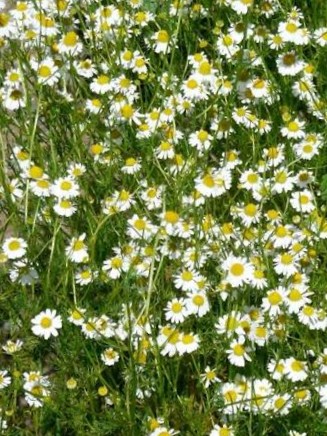
Roman Chamomile is ordinarily a low-growing perennial rather than a bushy annual. Its decumbent or creeping stems spread along the soil surface and may root as they grow, producing a fragrant mat commonly used between paving stones, in herb gardens, in fragrance gardens, or as a lawn substitute. The plant is aromatic when crushed and may attract animal attention because of its scent.
The finely divided leaves are alternate and fernlike, with narrow thread-shaped segments. Crushing the foliage releases a sweet, fruity scent traditionally compared with apples, which explains the common name Ground Apple. Flowering stems rise above the foliage and carry individual daisy-like heads.
Wild and single-flowered plants have a yellow central disk surrounded by white ray florets. Cultivated double or semi-double forms contain many additional white ray-like florets and may have a reduced yellow center. Commercial dried Roman Chamomile flower material often comes from double or semi-double forms, which may look different from the more familiar single daisy-like lawn plant.
Roman Chamomile Versus German Chamomile
Roman Chamomile and German Chamomile are two different plants commonly sold under the same general word “chamomile.” Roman Chamomile is Chamaemelum nobile, a low, spreading perennial. German Chamomile is Matricaria chamomilla, also widely known as Matricaria recutita, an upright annual that commonly grows taller and produces more abundant flowers.
The flower receptacle provides a useful botanical distinction. German Chamomile usually has a hollow, elongated conical center without chaff-like scales between the disk florets. Roman Chamomile has a solid receptacle with small scales or paleae associated with the central florets. These details are difficult to judge from a loose tea bag or crushed dried flowers, which is why product labels matter.
The oils also differ. German Chamomile is especially associated with bisabolol and the blue distillation product chamazulene. Roman Chamomile oil is richer in angelate, tiglate, isobutyrate, and related esters. A product labeled only “chamomile” should therefore not be assumed to contain Roman Chamomile.
Common and True Chamomile Are Ambiguous Names
“Common Chamomile” and “True Chamomile” are used for both Roman and German Chamomile depending on the country, herbal tradition, seller, and product category. “Manzanilla” is similarly broad and can describe chamomile products generally rather than one species. “English Chamomile,” “Garden Chamomile,” and “Noble Chamomile” usually support Roman Chamomile identification but still should be verified when a pet has been exposed.
The botanical ingredient name should be checked whenever a pet reaches tea, dried herb, capsules, tinctures, salves, essential oil, diffuser blends, or calming products. Chamaemelum nobile, Anthemis nobilis, Matricaria chamomilla, and Matricaria recutita are not interchangeable names for one plant. A mixed product may contain more than one chamomile species.
Lawn Chamomile and Nonflowering Cultivars
Roman Chamomile is sometimes planted as a scented ground cover or lawn substitute. The cultivar ‘Treneague’ is commonly selected because it remains low and normally produces few or no flowers, while ‘Flore Pleno’ and other double-flowered selections are grown for ornamental or herbal use. A nonflowering cultivar should not automatically be considered edible or pet-safe.
The foliage still contains volatile constituents and potential contact allergens, and repeated chewing or prolonged skin exposure may cause gastrointestinal or dermatologic signs. Chamomile lawns also concentrate contact exposure because animals walk, lie, roll, and groom after crushing the foliage. A recurring rash on the paws, belly, muzzle, or inner thighs after access to a chamomile lawn is a useful clue.
How Animals Are Exposed
Dogs may nibble Roman Chamomile while grazing a lawn, walking through an herb bed, investigating freshly pulled plants, chewing used tea bags, or getting into dried herb. Puppies may pull up roots and swallow soil, mulch, packaging, string, tea-bag paper, or plant labels along with the herb. That foreign material may become more important than the chamomile itself.
Cats are more likely to encounter dried flowers, tea bags, bouquets, salves, essential oil, herbal rinses, bedding residue, or indoor products than to consume a large amount from an outdoor mat. Skin and coat exposure can become ingestion after grooming, especially when oil or salve is applied directly to fur.
Horses and livestock may encounter the plant in pasture, cut forage, hay, herb gardens, waste piles, landscaping debris, or deliberate herbal supplementation. Meaningful livestock poisoning appears poorly documented, and scattered plants are unlikely to create severe herd disease by themselves. Concentrated dried herb, mixed garden waste, essential oil, or multi-herb supplements present a different exposure.
Birds, rabbits, guinea pigs, reptiles, tortoises, and other exotics may be exposed when owners offer “natural” browse, dried flowers, enclosure scent, herbal bedding, tea, or enrichment. These species have limited safety data, and small body size makes concentrated products especially concerning.
The Intact Plant and Essential Oil Are Not Equivalent
Roman Chamomile essential oil contains a concentrated volatile fraction obtained from a large amount of plant material. A few drops can represent much more exposure than chewing one flower head. The oil is also easier to apply incorrectly because people may place it on bedding, collars, wounds, skin, paws, or fur believing it is soothing.
Essential oils can irritate the mouth and gastrointestinal tract and may be absorbed through skin or inhaled from air and bedding. Oils are especially hazardous when aspirated during vomiting because even a small amount reaching the airways can cause chemical pneumonitis. Respiratory signs after oil ingestion or grooming deserve prompt assessment.
Undiluted oil should not be placed on an animal’s coat, bedding, paws, collar, wounds, food, water, or enclosure without veterinary direction. Cats, birds, rabbits, guinea pigs, reptiles, and small mammals deserve particular caution because of grooming behavior, respiratory sensitivity, small body size, and limited veterinary dose data.
Tea, Tinctures, Capsules, and Calming Products
Most commercially available chamomile tea is made from German Chamomile, Roman Chamomile, or a blend. An unsweetened, weak tea spill is not equivalent to eating concentrated essential oil, but deliberate dosing still should not occur without veterinary guidance. Tea bags may also create a packaging or foreign-body issue if swallowed.
Tinctures commonly contain ethanol or glycerin and may provide a much more concentrated botanical dose. Capsules and powders can hide the plant’s taste and allow an animal to swallow more than it would voluntarily eat from the garden. Sweetened products may include sugar alcohols, flavorings, or other ingredients that change the risk.
Calming chews and supplements may combine chamomile with melatonin, valerian, passionflower, hemp-derived ingredients, tryptophan, antihistamines, sedatives, probiotics, flavor systems, or other active substances. Treatment must be based on the complete ingredient list rather than assuming Roman Chamomile is the only concern.
Contact Dermatitis and Asteraceae Cross-Sensitivity
Sesquiterpene lactones are important allergens in Asteraceae. Repeated skin exposure can sensitize an individual, after which later contact may produce a stronger or faster dermatitis reaction. In Roman Chamomile, nobilin-type compounds and related constituents are relevant to contact-allergy concern, although the exact allergen profile may vary by product and plant part.
Cross-reactions may occur with ragweed, chrysanthemum, feverfew, tansy, arnica, sunflower, yarrow, mugwort, German Chamomile, and other family members. However, cross-reactivity is inconsistent. A dog with seasonal pollen allergies or a horse that reacts to another composite plant is not automatically allergic to Roman Chamomile.
A recurring rash limited to areas that contact a chamomile lawn is a useful diagnostic clue. Washing the paws and coat after exposure and preventing access can help distinguish plant contact from fleas, food allergy, environmental atopy, mites, bacterial dermatitis, yeast dermatitis, or another contact irritant.
Oral and Systemic Allergic Reactions
Allergic responses may involve the skin, lips, eyelids, gastrointestinal tract, or respiratory system. Mild reactions can resemble ordinary plant irritation, while facial swelling, widespread hives, sudden vomiting, weakness, wheezing, or breathing difficulty suggests a more serious hypersensitivity response. Anaphylaxis is uncommon but must be treated as an emergency when it occurs.
Allergic severity does not correlate reliably with the amount contacted. A sensitized animal may react to a relatively small exposure, while another animal can consume more plant material and develop only mild gastrointestinal signs. Repeated topical use of chamomile products may be more sensitizing than a one-time garden nibble.
Does Roman Chamomile Cause Bleeding?
Roman Chamomile contains simple coumarins, but those plant compounds should not be equated automatically with prescription anticoagulants. Current evidence does not establish a predictable bleeding disorder in dogs, cats, horses, or livestock after ordinary exposure to the living plant.
Human research is mixed and does not translate cleanly into veterinary poisoning. One randomized study found no adverse coagulation effect after repeated chamomile tea or powder extract intake, while another acute study found small prothrombin-time changes whose clinical significance was uncertain. Neither study proves a veterinary bleeding syndrome or establishes that every Roman Chamomile preparation is clinically anticoagulant.
Owners should still disclose regular chamomile supplementation before surgery and when an animal receives warfarin, clopidogrel, aspirin, nonsteroidal anti-inflammatory drugs, corticosteroids, chemotherapy, seizure medication, or another herbal supplement. Concentrated multi-herb preparations may contain additional ingredients with stronger interaction potential.
Pregnancy and Lactation
Roman Chamomile has a traditional reputation as an emmenagogue, meaning a substance believed to stimulate menstrual flow, and historical sources have suggested possible uterine effects at high medicinal doses. Controlled veterinary evidence demonstrating abortion after ordinary plant ingestion is lacking.
A single accidental bite should not be described as a proven cause of miscarriage. The reasonable precaution is to avoid deliberate administration of tea, extract, tincture, capsules, salves, or essential oil to pregnant or lactating animals because reproductive safety and milk-transfer safety have not been established.
Dogs
Dogs are most likely to develop vomiting, diarrhea, poor appetite, abdominal discomfort, lethargy, or contact dermatitis. Puppies may pull up entire plants, chew used tea bags, or swallow packaging, increasing exposure to both the herb and non-plant material. Dogs with allergic skin disease may show more obvious itching or redness after repeated contact.
Repeated vomiting, blood, marked weakness, facial swelling, respiratory signs, tremors, or prolonged depression are not findings to manage indefinitely at home. Another ingredient or exposure should be considered when the clinical course is more severe than expected from a small amount of intact Roman Chamomile.
Cats
Cats may develop drooling, vomiting, diarrhea, appetite loss, lethargy, or skin irritation after contact or ingestion. Essential oil creates greater concern because it can be transferred to the coat and repeatedly swallowed during grooming. Cats also may be exposed to aromatic residues on bedding, blankets, collars, diffusers, or owner-applied topical products.
Continued food refusal requires attention even though Roman Chamomile is not established as a direct liver toxin. Prolonged anorexia and dehydration can contribute to secondary hepatic lipidosis, particularly in overweight cats. A cat that does not resume eating after the initial upset should be evaluated.
Horses and Livestock
Roman Chamomile is not recognized as a major cause of fatal livestock poisoning. Horses or grazing animals encountering scattered plants are more likely to avoid them or consume only small amounts, although preference varies and hunger can overcome normal selectivity. Possible signs include salivation, reduced appetite, mild colic, diarrhea, depression, or skin irritation.
Severe herd illness should prompt investigation for toxic weeds, pesticides, contaminated hay, mold, infectious disease, mineral imbalance, or another plant mixed with the chamomile. Horses cannot vomit. Nasal reflux, repeated swallowing, severe colic, profuse diarrhea, weakness, or collapse requires urgent examination and should not be attributed casually to a low-severity chamomile exposure.
Birds, Rabbits, Guinea Pigs, and Other Small Herbivores
Reliable species-specific toxic-dose data are unavailable. Birds may shred dried flowers, tea bags, or growing plants and can receive a relatively large dose for body size. Respiratory sensitivity also makes essential-oil diffusion and aromatic residues more concerning for birds than for larger mammals.
Rabbits and guinea pigs may develop reduced appetite, abdominal discomfort, diarrhea, soft stool, or decreased fecal production rather than vomiting. Any sustained appetite reduction in a rabbit or guinea pig is medically important because gastrointestinal hypomotility can become dangerous even when the original plant is only mildly irritating.
Important Look-Alikes
German Chamomile, feverfew, stinking chamomile, scentless chamomile, pineapple weed, yarrow, mayweed, oxeye daisy, and several small daisies can resemble Roman Chamomile. Some have similar irritant or allergenic effects, while others have different toxicologic profiles. A detached white flower head is rarely enough for confident identification.
Stinking Chamomile, Anthemis cotula, is especially associated with an unpleasant odor and contact irritation. “Dog Fennel” more often refers to Eupatorium capillifolium, an unrelated tall plant, and should not be used as a dependable synonym for Roman Chamomile. Useful identification photographs show growth habit, entire flowering stem, finely divided leaves, upper and lower leaf surfaces, flower center, and original label.
Diagnosis
There is no routine blood, urine, or toxin test that confirms Roman Chamomile exposure. Diagnosis usually depends on known access, compatible gastrointestinal or skin signs, and reliable botanical or product identification. The most useful evidence is often the product label, essential-oil bottle, supplement ingredient list, tea packaging, plant photographs, or a sample of the plant itself.
Laboratory testing is often unnecessary after one small exposure with brief signs. Bloodwork, electrolyte measurement, urinalysis, imaging, allergy evaluation, coagulation testing, fecal testing, or dermatologic workup may be appropriate when vomiting or diarrhea is persistent, dehydration develops, bleeding is observed, neurologic signs occur, the product contained several ingredients, or signs do not match a mild chamomile exposure.
Important alternative diagnoses include dietary indiscretion, foreign-body ingestion, pesticides, essential oils, medications, mushrooms, infectious gastroenteritis, pancreatitis, food allergy, environmental dermatitis, contact irritants, toxic look-alikes, and another Asteraceae plant.
Veterinary Treatment and Prognosis
There is no specific antidote. Treatment is directed at vomiting, diarrhea, hydration, abdominal discomfort, dermatitis, eye irritation, respiratory signs, and allergic reactions. Many animals require only removal of access and observation after a minor intact-plant exposure.
Veterinary antiemetic medication and oral, subcutaneous, or intravenous fluids may be used when gastrointestinal signs persist. Dermatitis may require bathing, topical or systemic anti-inflammatory treatment, itch control, and treatment of secondary bacterial or yeast infection. Eye exposure is evaluated for retained plant debris and corneal injury when discomfort continues after irrigation.
Anaphylaxis or significant airway swelling requires immediate oxygen, injectable emergency medication, fluid support, and airway management. Essential-oil ingestion may require respiratory monitoring because vomiting and aspiration can produce delayed lung injury.
The prognosis is good to excellent after most intact-plant exposures. A prolonged, severe, neurologic, hemorrhagic, respiratory, or collapse course suggests hypersensitivity, a concentrated product, another ingredient, mistaken plant identification, or unrelated disease.
Prevention
Prevent habitual grazing and block access when an animal develops a recurring rash after contact with a chamomile lawn. Wash paws and coat after substantial exposure and collect pulled plants, flowers, tea bags, and clippings promptly. Do not leave dried flowers, loose herb, or used tea bags where pets can chew them.
Keep tea bags, loose dried flowers, tinctures, supplements, capsules, salves, and essential oils in closed storage. Do not place chamomile oil in diffusers, on bedding, in enclosures, on collars, on paws, in ears, on wounds, or directly on an animal without veterinary guidance.
Do not deliberately administer Roman Chamomile to pregnant, lactating, anticoagulated, sedated, epileptic, allergic, medically fragile, very young, very old, or very small animals without review of the exact product, dose, route, and purpose by a veterinarian.
Immediate Steps After Exposure
Stop further ingestion or contact. Move the animal away from the plant, chamomile lawn, dried herb, tea bag, tincture, salve, supplement, diffuser, essential-oil bottle, or contaminated bedding. Roman Chamomile exposures are usually low-severity when limited to the intact plant, but the first step is to identify the exact product and prevent continued contact or grooming.
- Identify the exact product: Check whether the label lists Chamaemelum nobile, Anthemis nobilis, German Chamomile, multiple herbs, alcohol, sweeteners, melatonin, hemp-derived ingredients, valerian, or other active ingredients.
- Remove loose material safely: Clear visible flowers, leaves, or tea-bag material from the front of the mouth if the animal is alert and cooperative. Do not reach deeply into the throat.
- Wash skin and coat exposure: Use lukewarm water and a mild animal-safe cleanser when crushed plant material, salve, tincture, or essential oil contacted the coat, paws, feathers, or skin.
- Prevent grooming: Keep the animal from licking oil, salve, or plant residue from the coat until it has been removed.
- Flush exposed eyes: Irrigate with sterile saline or clean lukewarm water for 15 to 20 minutes when this can be done safely.
- Save evidence: Keep the plant, photographs, tea packaging, supplement bottle, ingredient list, essential-oil label, dose information, and any vomited material available for the veterinarian.
For a mild intact-plant nibble with no signs or brief stomach upset, a veterinarian may recommend observation. For concentrated products, essential oils, repeated dosing, medically fragile animals, cats with prolonged food refusal, rabbits or guinea pigs with reduced fecal output, birds with respiratory signs, or any allergic reaction, veterinary advice is more important.
Do Not Attempt Unsupervised Home Treatment
Home treatment can add risk when the exposure is concentrated, mixed with other ingredients, or already causing vomiting, weakness, sedation, or breathing changes. The goal is to remove access, identify the product, protect the airway, wash off residue, and get veterinary guidance when signs are more than mild.
- Do not induce vomiting: Hydrogen peroxide, salt, mustard, dish soap, detergent, and manual gagging can cause additional gastrointestinal injury or aspiration and are particularly inappropriate for cats and nonvomiting species.
- Do not administer activated charcoal automatically: Charcoal is unnecessary for most small plant exposures and can be aspirated by a vomiting, weak, sedated, or poorly coordinated animal.
- Do not force food, milk, oil, broth, or water: These substances do not neutralize Roman Chamomile and may worsen vomiting or enter the lungs.
- Do not give antihistamines without veterinary direction: The correct response to facial swelling or breathing difficulty is emergency assessment, not reliance on an oral medication that may act too slowly or be unsafe for the species.
- Do not give antidiarrheals, sucralfate, antacids, pain medication, sedatives, or leftover prescriptions: These treatments require a diagnosis and species-appropriate dosing and may conceal worsening illness.
- Do not apply additional herbal preparations: Chamomile salve, tea, essential oil, or another botanical product can intensify contact exposure and complicate diagnosis.
- Do not assume “natural” means safe: Essential oils, tinctures, and calming supplements can be concentrated and may contain several active ingredients.
Emergency Findings Requiring Immediate Examination
- Facial swelling or respiratory signs: Hives, swollen lips or eyelids, noisy breathing, wheezing, blue or pale mucous membranes, weakness, or collapse may indicate a serious allergic reaction.
- Repeated gastrointestinal illness: Persistent vomiting or diarrhea, blood, abdominal pain, or inability to retain water can lead to dehydration and electrolyte abnormalities.
- Essential-oil or tincture exposure: Concentrated products and alcohol-containing preparations require assessment based on the amount, formulation, route, and animal’s size.
- Marked depression or neurologic signs: Stumbling, tremors, disorientation, inability to stand, seizures, severe sedation, or profound weakness is not expected from a minor plant nibble.
- Evidence of abnormal bleeding: Bruising, nosebleeds, bloody urine, black stool, pale gums, or uncontrolled bleeding requires evaluation for medication interactions, another toxin, or disease.
- High-risk animal: Very young, elderly, pregnant, lactating, anticoagulated, sedated, epileptic, medically fragile, or very small animals should be evaluated sooner.
- Small herbivore appetite loss: Rabbits, guinea pigs, and chinchillas with reduced eating or fecal output need prompt care.
- Uncertain identification: Treatment may differ when the plant could be feverfew, stinking chamomile, yarrow, dog fennel, pesticide-treated flowers, or another daisy-like species.
Veterinary Treatment
Veterinary evaluation focuses on hydration, gastrointestinal signs, skin and airway involvement, neurologic condition, respiratory status, species risk, and the complete product formulation. A mildly affected animal may require no treatment beyond removal of access and observation.
Persistent vomiting may be treated with veterinarian-selected antiemetic medication, while oral, subcutaneous, or intravenous fluids can correct dehydration and electrolyte losses. Bloodwork may be recommended for substantial exposures, prolonged illness, medically fragile patients, abnormal bleeding, severe depression, or suspected interaction with another product.
Contact dermatitis may require thorough bathing, itch control, anti-inflammatory treatment, and management of secondary bacterial or yeast infection. Eye exposure is evaluated for retained plant debris and corneal injury when discomfort continues after irrigation. Essential-oil exposure may require repeated bathing, respiratory monitoring, and aspiration precautions.
Hives, facial swelling, hypotension, or respiratory distress may require injectable emergency medication, oxygen, intravenous fluids, and airway support. Anaphylaxis can progress rapidly and should not be managed through home observation. Veterinarian-directed decontamination may be considered after a substantial recent ingestion of a concentrated preparation, but emesis and activated charcoal are not routine for an uncomplicated bite of the living plant.
Species-Specific Support
Dogs and cats usually need monitoring for vomiting, diarrhea, itching, swelling, appetite, hydration, and product-related signs. Cats deserve special attention when oil or salve is on the coat because grooming can continue the exposure. Continued anorexia in cats should be addressed before dehydration or hepatic lipidosis becomes a secondary concern.
Horses and livestock should be evaluated based on amount eaten, product type, feed contamination, pasture context, and severity of signs. Severe colic, profuse diarrhea, weakness, collapse, nasal reflux, or neurologic abnormalities should not be attributed casually to Roman Chamomile without checking for other plants, feed contamination, pesticides, mycotoxins, or infectious disease.
Birds, rabbits, guinea pigs, chinchillas, reptiles, and other exotics need species-appropriate handling. Birds with respiratory signs after aromatic or oil exposure require prompt care. Rabbits and guinea pigs with reduced appetite or fecal output should be treated before gastrointestinal hypomotility becomes severe.
Recovery and Prognosis
Most dogs and cats with limited intact-plant exposure recover completely within several hours to one or two days. Mild dermatitis may take longer to resolve, especially when exposure continues through a lawn, contaminated bedding, or residue on the coat.
- Monitor vomiting and stool: Signs should decrease rather than become repeated, bloody, or dehydrating.
- Monitor appetite: Cats, rabbits, guinea pigs, birds, and very small animals should not go long without eating.
- Monitor skin: Redness, itching, swelling, hives, or spreading dermatitis may require treatment and access prevention.
- Monitor breathing: Coughing, wheezing, labored breathing, or fever after oil exposure may indicate aspiration or allergic reaction.
- Monitor bleeding signs: Bruising, black stool, nosebleeds, bloody urine, or pale gums should trigger a broader workup.
- Monitor product effects: Sedation, tremors, incoordination, or depression may come from another ingredient in a calming product.
Animals with an allergic reaction generally have a favorable prognosis when airway and circulatory abnormalities are recognized and treated promptly. Repeated exposure should be prevented because later reactions can be less predictable. Long-term organ damage or a chronic bleeding disorder is not expected after an uncomplicated garden exposure. Continuing illness should prompt reassessment for a concentrated formulation, medication interaction, another plant, or unrelated disease.
Frequently Asked Questions About Roman Chamomile and Animal Poisoning
What is the accepted scientific name for Roman Chamomile?
The accepted name is Chamaemelum nobile. The older name Anthemis nobilis remains common in veterinary poison databases, herbal references, pharmacopoeias, cosmetic ingredient lists, and product labeling, so owners may encounter either name. They refer to the same Roman Chamomile species rather than two plants with different toxic effects.
Is Roman Chamomile the same as German Chamomile?
No. Roman Chamomile is the low-growing perennial Chamaemelum nobile, while German Chamomile is the taller annual Matricaria chamomilla, also known as Matricaria recutita. Their flower structures and essential-oil profiles differ: Roman Chamomile oil is rich in angelate, tiglate, and related esters, whereas German Chamomile is more strongly associated with bisabolol and chamazulene. Products labeled only “chamomile” may contain either species or a blend.
How poisonous is the living Roman Chamomile plant?
Roman Chamomile is generally a low-severity poison. One small bite may cause no symptoms, while a larger amount can produce vomiting, diarrhea, poor appetite, abdominal discomfort, or lethargy. Contact dermatitis and allergic reactions are also possible. Severe organ failure or death is not the expected outcome of an ordinary garden nibble, but concentrated products and individual hypersensitivity can create greater risk.
Which chemicals are responsible for Roman Chamomile reactions?
No single compound explains every reaction. The volatile oil contains numerous angelate, tiglate, isobutyrate, and related esters that may irritate the gastrointestinal tract or skin when concentrated. Sesquiterpene lactones contribute to allergic contact dermatitis, while tannin-like substances and other plant chemicals may add to gastrointestinal intolerance. Chamazulene and bisabolol are much more characteristic of German Chamomile and should not be treated as Roman Chamomile’s only or principal toxins.
Is Roman Chamomile essential oil more dangerous than the plant?
Yes, it can be. Essential oil concentrates the volatile fraction from a large amount of plant material into a small volume. Swallowing, inhaling, or grooming oil from the coat can cause more pronounced irritation and creates an aspiration risk if vomiting occurs. Undiluted oil should not be placed on an animal’s coat, paws, wounds, bedding, collar, food, water, or enclosure without veterinary direction.
Can Roman Chamomile cause an allergic reaction?
Yes. Sesquiterpene lactones and fragrance constituents can cause contact dermatitis or other hypersensitivity reactions in susceptible animals. Mild reactions may involve itchy red skin, while more serious reactions can include hives, facial swelling, vomiting, weakness, or breathing difficulty. Prior sensitivity to ragweed, chrysanthemums, feverfew, arnica, yarrow, or another Asteraceae plant may increase concern but does not make a reaction inevitable.
Does Roman Chamomile cause bleeding or need to be stopped before surgery?
A predictable veterinary bleeding disorder has not been demonstrated after ordinary Roman Chamomile exposure. The plant contains simple coumarins, but these are not automatically equivalent to warfarin. A minor accidental nibble does not establish a reason to delay surgery automatically, but regular supplements, tinctures, extracts, or multi-herb products should be disclosed to the veterinarian, especially when the animal receives medication that affects clotting.
Can Roman Chamomile cause miscarriage in a pregnant animal?
There is no reliable evidence that one accidental bite causes miscarriage in pets or livestock. Historical herbal sources describe possible uterine effects at high medicinal doses, but controlled veterinary data are absent. Because reproductive and milk-transfer safety have not been established, deliberate administration of Roman Chamomile tea, extract, tincture, capsules, salves, or essential oil should be avoided during pregnancy and lactation unless a veterinarian specifically approves the product.
Are chamomile tea and dried flowers safe for pets?
Dried flowers retain biologically active and allergenic constituents, and tea may be made from Roman Chamomile, German Chamomile, or a mixture. A small accidental lick of weak, unsweetened tea is different from consuming loose herb, multiple tea bags, or concentrated extract. Tea products may also contain caffeine-containing plants, sweeteners, flavorings, or other herbs, so the complete ingredient list must be checked before risk is assessed.
Is lawn chamomile safe if a dog walks or rolls on it?
Most animals can contact a chamomile lawn without becoming ill, but repeated exposure may irritate or sensitize the skin. A dog that develops recurring redness or itching on the paws, abdomen, muzzle, or between the toes after using the area should be kept away while the cause is investigated. Grooming crushed foliage from the coat can also convert a skin exposure into repeated oral ingestion.
What symptoms require veterinary care after a dog or cat eats Roman Chamomile?
Veterinary advice is appropriate for repeated vomiting or diarrhea, inability to retain water, pronounced lethargy, abdominal pain, continued food refusal, dehydration, or symptoms lasting longer than a brief gastrointestinal upset. Facial swelling, hives, noisy breathing, weakness, collapse, tremors, or any essential-oil exposure requires more urgent assessment because those findings suggest hypersensitivity, aspiration risk, another ingredient, or a more significant exposure.
Is Roman Chamomile a serious pasture poison for horses or livestock?
Roman Chamomile is not recognized as a major cause of fatal herd poisoning. Meaningful ingestion may cause salivation, reduced appetite, mild colic, diarrhea, depression, or contact irritation, but detailed livestock case evidence is sparse. Severe illness in several animals should trigger a full pasture and feed investigation because another poisonous plant, pesticide, mold, infectious disease, or contaminated forage may be responsible.
Can birds, rabbits, or guinea pigs eat Roman Chamomile?
Reliable species-specific safety data are limited, so Roman Chamomile should not be offered casually as browse or enrichment. Birds may receive a large relative exposure by shredding dried flowers or tea bags, and rabbits or guinea pigs may develop reduced appetite, soft stool, diarrhea, or decreased fecal production. Any sustained food refusal in small herbivores deserves prompt veterinary attention, regardless of the plant’s low-severity reputation.
Should vomiting be induced after Roman Chamomile ingestion?
Vomiting should not be induced at home. Hydrogen peroxide can cause prolonged vomiting, stomach and esophageal injury, and aspiration and is inappropriate for cats and nonvomiting species. Most minor plant exposures do not require decontamination. A veterinarian may consider professional treatment after a substantial ingestion of a concentrated product, but the decision depends on the formulation, time elapsed, current symptoms, and ability to protect the airway.
Will activated charcoal help after Roman Chamomile exposure?
Activated charcoal is usually unnecessary for a small bite of the living plant. It may be considered only after a meaningful recent ingestion of a concentrated preparation or mixed product, and only when the animal can safely swallow and protect the airway. Charcoal can be dangerous in vomiting, weak, sedated, neurologically abnormal, or poorly coordinated animals because aspiration can injure the lungs.
Why is product formulation more important than the plant name alone?
Roman Chamomile may be present as a fresh plant, dried flower, tea, tincture, glycerite, capsule, powder, calming chew, salve, essential oil, diffuser blend, or multi-herb product. Each form changes concentration and route of exposure. Alcohol, melatonin, valerian, hemp-derived ingredients, sweeteners, preservatives, or other botanicals can drive the clinical picture more than chamomile itself.
When is laboratory testing useful after Roman Chamomile exposure?
Routine labwork is usually unnecessary after a mild, clearly identified plant nibble with brief signs. Testing becomes more useful when vomiting or diarrhea is persistent, dehydration develops, abnormal bleeding is reported, the animal is very young or medically fragile, the product was concentrated, or signs are neurologic, respiratory, severe, delayed, or inconsistent with a low-severity plant exposure. Coagulation testing may be appropriate when bleeding signs or interacting medications are present.
What findings suggest another diagnosis besides Roman Chamomile?
Seizures, coma, severe liver or kidney abnormalities, profound weakness, collapse, persistent bloody diarrhea, uncontrolled bleeding, severe respiratory distress, or a rapidly worsening herd problem does not fit an ordinary Roman Chamomile garden exposure. Possible alternatives include essential oil aspiration, pesticide, fertilizer, medication, toxic mushrooms, infectious disease, foreign body, pancreatitis, toxic look-alikes, contaminated feed, or a multi-ingredient product.
How can Roman Chamomile be distinguished from German Chamomile?
Roman Chamomile is a creeping perennial with a solid receptacle and small scales or paleae associated with the central florets. German Chamomile is an upright annual with a hollow, elongated conical receptacle and usually lacks chaff-like scales between disk florets. In practice, product labels and whole-plant photographs are often more useful than trying to identify loose dried flower fragments.
What evidence supports Roman Chamomile’s allergy concern?
Roman Chamomile belongs to Asteraceae, a plant family well known for sesquiterpene-lactone contact allergy. Regulatory and dermatology literature recognizes documented allergic reactions and cross-sensitivity concerns for Roman Chamomile and related composite plants. The exact risk for an individual animal is unpredictable, which is why recurring dermatitis after contact matters more than the plant’s general reputation as gentle.
What is the evidence limit for Roman Chamomile in animals?
Detailed veterinary toxic-dose studies for Roman Chamomile are limited. Most practical animal guidance relies on poison-control experience, known plant chemistry, human allergy and pharmacology literature, formulation risk, and the clinical pattern of gastrointestinal upset or dermatitis. That supports cautious first aid and product-specific triage, but it does not justify inventing severe organ-failure claims for ordinary plant exposure.
What is the usual prognosis after exposure?
The prognosis is good to excellent after most exposures to the living plant. Mild vomiting, diarrhea, or appetite loss generally resolves within several hours to one or two days, while contact dermatitis may take longer. A prolonged, severe, respiratory, neurologic, hemorrhagic, or collapse course is not typical and should prompt investigation for an allergic reaction, concentrated oil or extract, another product ingredient, mistaken plant identification, or unrelated illness.