Tobacco Nicotine Poisoning, Plant Neurotoxin Defense, Processed Nicotine Products, Contaminated Hay, Respiratory Paralysis, and Livestock Pregnancy Risk
Is Tobacco Poisonous to Dogs, Cats, Horses, and Livestock?
Yes—Tobacco, Nicotiana tabacum L., is highly poisonous to dogs, cats, horses, cattle, sheep, goats, pigs, poultry, birds, rabbits, guinea pigs, reptiles, and other animals. Its principal toxin is nicotine, accompanied by smaller quantities of nornicotine, anatabine, anabasine, and related tobacco alkaloids. Nicotine is not a mild stomach irritant. It is a potent nicotinic-acetylcholine-receptor agonist that can rapidly disrupt the gastrointestinal tract, autonomic nervous system, central nervous system, skeletal neuromuscular junctions, cardiovascular system, and respiratory muscles.
Poisoning can progress from drooling, vomiting, diarrhea, abdominal cramping, agitation, tremors, rapid breathing, rapid heart rate, and high blood pressure to profound weakness, incoordination, slow heart rate, low blood pressure, seizures, respiratory-muscle paralysis, cardiac arrest, and death. Fresh plants, dried leaves, cured tobacco, tobacco-processing waste, barn drippings, contaminated hay, cigarettes, cigarette butts, cigars, pipe tobacco, chewing tobacco, snuff, nicotine pouches, nicotine gum, lozenges, patches, refill solutions, and e-liquids all require strict control. Products advertised as tobacco-free may still contain nicotine, and some pouches or gums may contain xylitol, creating a second emergency risk for dogs.
About this guide: This page provides general pet-poisoning information and cannot diagnose or treat an individual animal. For any suspected exposure, contact a veterinarian or animal poison-control service immediately. Do not induce vomiting, give medication, or attempt home decontamination unless directed by a veterinary professional.
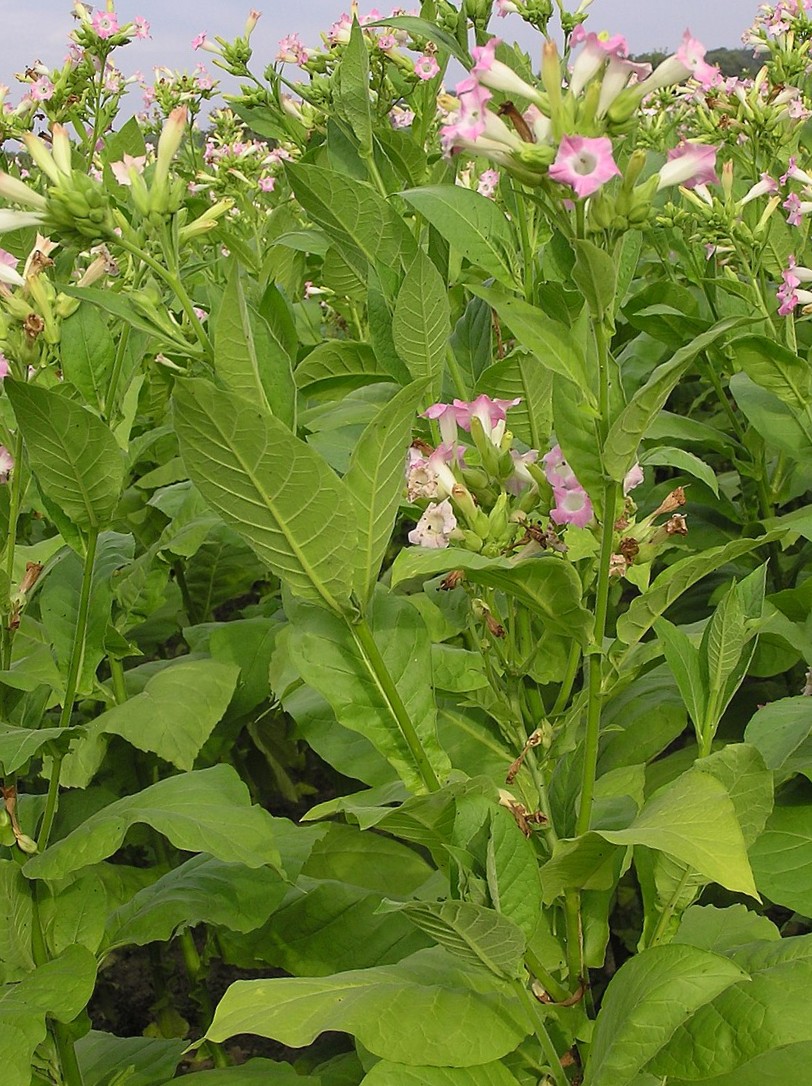
Tobacco
Nicotiana tabacum L.
Important historical botanical synonyms include:
- Nicotiana latissima Mill.
- Nicotiana macrophylla Spreng.
- Nicotiana havanensis Lehm.
- Nicotiana lancifolia Willd. ex Lehm.
- Nicotiana fruticosa L.
- Nicotiana chinensis Fisch. ex Lehm.
- Tabacum nicotianum Bercht. & Opiz
Important cultivated, agricultural, and processing names include:
- Burley Tobacco
- Flue-Cured Tobacco
- Brightleaf Tobacco
- Virginia Tobacco
- Oriental Tobacco
- Cigar Tobacco
- Dark-Fired Tobacco
- Air-Cured Tobacco
- Maryland Tobacco
- Fire-Cured Tobacco
- Sun-Cured Tobacco
Important non-synonym confusion names:
- Nicotiana glauca Graham — Tree Tobacco, Mustard Tree, Brazilian Tree Tobacco, or Tobacco Tree; separate woody shrub usually dominated by anabasine rather than nicotine
- Nicotiana rustica L. — Aztec Tobacco, Wild Tobacco, or Mapacho; separate nicotine-rich cultivated species
- Nicotiana alata Link & Otto — Flowering Tobacco or Jasmine Tobacco; separate ornamental species
- Nicotiana sylvestris Speg. & Comes — Woodland Tobacco or Flowering Tobacco; separate ornamental species
- Nicotiana × sanderae W.Watson — ornamental hybrid flowering tobacco, not cultivated field tobacco
- Nicotiana benthamiana Domin — research and biotechnology tobacco relative, not ordinary commercial tobacco
- Conium maculatum L. — Poison Hemlock; unrelated piperidine-alkaloid plant that may also cause weakness, tremors, fetal deformities, and respiratory paralysis
- Lupinus spp. — lupines; unrelated quinolizidine-alkaloid plants that can cause fetal contracture syndromes in livestock
- Neonicotinoid insecticides — synthetic nicotine-like pesticides, not botanical synonyms for tobacco plants
Solanaceae
Commonly called the Nightshade Family.
Tobacco; Common Tobacco; Cultivated Tobacco; Smoking Tobacco; Commercial Tobacco; Broadleaf Tobacco; Virginia Tobacco; Virginia Leaf Tobacco; Java Tobacco; Leaf Tobacco; Burley Tobacco; Flue-Cured Tobacco; Brightleaf Tobacco; Oriental Tobacco; Cigar Tobacco; Dark-Fired Tobacco; Maryland Tobacco; Air-Cured Tobacco; Fire-Cured Tobacco; Sun-Cured Tobacco.
Scientific and historical search names include Nicotiana tabacum L., Nicotiana latissima Mill., Nicotiana macrophylla Spreng., Nicotiana havanensis Lehm., Nicotiana lancifolia Willd. ex Lehm., Nicotiana fruticosa L., Nicotiana chinensis Fisch. ex Lehm., and Tabacum nicotianum Bercht. & Opiz.
“Nicotania” is a common misspelling of Nicotiana. Tree Tobacco, Mustard Tree, Brazilian Tree Tobacco, and Tobacco Tree ordinarily refer to Nicotiana glauca, a separate woody species whose principal toxic alkaloid is usually anabasine. Aztec Tobacco and Wild Tobacco commonly refer to Nicotiana rustica, another nicotine-rich species. Flowering Tobacco may refer to ornamental species and hybrids such as Nicotiana alata, Nicotiana sylvestris, or Nicotiana × sanderae. Processed product terms such as cigarette, cigar, pipe tobacco, chewing tobacco, snuff, nicotine pouch, nicotine gum, nicotine lozenge, patch, vape liquid, e-liquid, and synthetic nicotine are exposure terms rather than botanical synonyms, but they belong on this page because they can deliver the same dangerous receptor poison in a more concentrated or rapidly absorbed form.
Nicotine Is the Dominant Cultivated-Tobacco Alkaloid
The principal toxic alkaloid in cultivated tobacco, Nicotiana tabacum, is nicotine. The plant synthesizes much of its nicotine in the roots and transports it through the vascular system into stems, leaves, and flowering tissues. Nicotine functions as a powerful chemical defense against insects and other herbivores, which is why the tobacco plant itself belongs in a pet-poisoning guide rather than being treated only as a source of human tobacco products. Concentrations vary considerably with cultivar, plant age, leaf position, soil nitrogen, moisture stress, topping, wounding, pest injury, harvest stage, curing method, and other environmental or agricultural conditions.
Nicotine commonly makes up most of the total alkaloid pool in commercial tobacco cultivars. Nornicotine, anatabine, anabasine, and additional related alkaloids account for much of the smaller remaining fraction. These minor alkaloids are not toxicologically meaningless, but nicotine is ordinarily the dominant cause of acute poisoning from cultivated tobacco and nicotine products. The exact alkaloid balance matters most when distinguishing N. tabacum from Tree Tobacco, N. glauca, where anabasine usually dominates.
Nicotine Is a Plant Neurotoxin, Not a Mild Irritant
Nicotine is a small, highly active alkaloid that binds nicotinic acetylcholine receptors. These receptors occur in autonomic ganglia, the adrenal medulla, the central nervous system, and the neuromuscular junctions that connect nerves to skeletal muscles. The same receptor family explains both the plant’s insecticidal value and the animal-poisoning syndrome. In insects, nicotine can disrupt nervous-system signaling so effectively that tobacco extracts became one of the historically important botanical insecticides.
That insecticidal history is useful for owners because it reframes the risk. Tobacco did not become dangerous only after humans made cigarettes or vape liquids. The plant already contains a neuroactive defensive alkaloid capable of poisoning animals. Manufactured products often make the risk worse by concentrating nicotine, improving absorption, adding sweet flavors, or hiding dose behind a small object such as a pouch, gum piece, cigarette butt, or patch.
Stimulation Followed by Receptor Blockade
Nicotine and anabasine act as agonists at nicotinic acetylcholine receptors. Early receptor stimulation promotes neurotransmitter release and produces gastrointestinal secretion, increased intestinal movement, autonomic excitation, catecholamine release, muscle twitching, tremors, agitation, rapid heart rate, increased blood pressure, and increased respiratory rate. This early phase can look like panic, severe nausea, stimulant intoxication, pesticide poisoning, or a neurologic disorder.
A sufficiently large or sustained exposure produces a second and more dangerous phase. Persistent receptor activation causes desensitization, depolarizing blockade, and failure of normal nerve transmission. The animal may shift from excited, tremoring, and hypertensive to depressed, weak, uncoordinated, slow-hearted, hypotensive, recumbent, and paralyzed. This transition is not improvement; it is progression from receptor stimulation to receptor failure.
Respiratory-Muscle Paralysis Is the Direct Fatal Mechanism
The terminal respiratory effect is primarily neuromuscular. Nicotinic blockade prevents the diaphragm and intercostal muscles from contracting effectively. The lungs may initially remain structurally capable of gas exchange, but the animal cannot move enough air. Central nervous-system depression, seizures, aspiration of vomit, pulmonary edema, shock, and cardiac dysrhythmias can further compromise oxygenation.
This is why advanced nicotine poisoning can require oxygen, airway control, manual ventilation, or mechanical ventilation rather than only stomach treatment. A poisoned animal may be potentially recoverable if ventilation is maintained long enough for the alkaloid concentration to fall and receptor function to return. An animal that is quiet, weak, or motionless after an earlier excited phase may be in greater danger than before.
Gastrointestinal and Secretory Effects
The gastrointestinal tract is affected early because nicotine stimulates autonomic ganglia, smooth muscle, and secretory glands. Excessive salivation, increased gastric secretion, vomiting, abdominal cramping, increased peristalsis, diarrhea, and repeated defecation may develop. Vomiting may remove some plant or product material, but it does not reliably protect the animal because absorption may already be occurring.
Horses, cattle, sheep, goats, camelids, rabbits, guinea pigs, and many other species cannot vomit, so the same gastrointestinal stimulation may appear as salivation, colic-like discomfort, increased gut sounds, diarrhea, repeated defecation, sweating, agitation, feed refusal, or weakness rather than emesis. Owner-induced vomiting is especially dangerous once salivation, tremors, weakness, incoordination, depression, seizures, or abnormal breathing has begun.
Plant Parts and Agricultural Waste
Nearly all actively growing plant tissues should be regarded as toxic. Leaves contain the greatest practical concentration and create most agricultural exposures, but stems, roots, flowers, sap, crop waste, and liquids draining from stored tobacco can also contain nicotine. Mature seeds generally contain much less nicotine than vegetative tissues, but they should not be presented as unrestricted animal food because they may retain plant debris, seed treatments, pesticide residues, or contamination from surrounding tissues.
Freshness does not determine safety. Dried and cured tobacco still contains nicotine. Tobacco stalks, barn sweepings, tobacco dust, processing waste, curing drippings, contaminated hay, contaminated bedding, and feed stored beneath curing tobacco can retain enough alkaloid to poison animals. The mule poisoning described later on this page demonstrates that a lethal exposure can occur through contaminated feed even when no visible tobacco leaves remain in the animal enclosure.
Processed Nicotine Products Can Outrank the Plant in Practical Danger
Raw leaves are only one exposure route. Cigarettes, cigarette butts, cigars, pipe tobacco, chewing tobacco, snuff, nicotine gum, lozenges, pouches, patches, concentrated solutions, and e-liquids can produce severe poisoning. A small product can represent a large dose, especially for a toy-breed dog, cat, bird, rabbit, puppy, kitten, or other small animal. Used patches may still contain substantial residual nicotine. Cigarette butts can retain meaningful nicotine after smoking. Concentrated refill liquids can deliver a dangerous dose from a small volume.
Products described as tobacco-free are not necessarily nicotine-free. Synthetic nicotine and purified nicotine act at the same receptor systems as plant-derived nicotine. Pouches, gums, and lozenges may also contain xylitol, flavorings, solvents, caffeine-like stimulants, or other ingredients requiring separate evaluation. A dog exposed to a xylitol-containing nicotine product may face both nicotinic neurologic and cardiovascular poisoning and xylitol-associated hypoglycemia or liver injury.
Nicotine as an Insecticide and the Neonicotinoid Connection
Nicotine’s agricultural insecticide history is directly relevant to animal safety. Tobacco-water extracts and later nicotine sulfate products were used because nicotine can poison insects through nicotinic acetylcholine receptors. Commercial products such as nicotine sulfate solutions became familiar garden and agricultural insecticides. Black Leaf 40 was one of the best-known examples, marketed as a concentrated nicotine sulfate insecticide for pests such as aphids, thrips, leafhoppers, mites, and lice.
That history also explains why nicotine was eventually abandoned as a mainstream pesticide: it is broad, acutely dangerous, readily absorbed, and poorly selective for the animals people are trying to protect. Modern neonicotinoid insecticides were developed from the same receptor idea, using nicotine-like chemistry to target insect nicotinic receptors more selectively than nicotine itself. Neonicotinoids are not the same as tobacco, and they differ in mammalian toxicity, environmental persistence, and regulation, but the family resemblance is not marketing trivia. It shows how powerful the tobacco plant’s natural neurotoxin really is.
Potency Comparisons: Nicotine “Drop for Drop” vs. Rattlesnake venom
Toxicologists commonly compare acute poisons with a measurement called LD50, or lethal dose 50 percent. LD50 estimates the amount of a substance, usually expressed as milligrams per kilogram of body weight, required to kill half of a test population under defined conditions. The lower the LD50, the less material it takes to kill. A lower number means a more potent poison.
By that measurement, pure nicotine belongs in the extreme-potency category. Older comparative toxicology references commonly place nicotine in a range low enough to compare with, and in some side-by-side comparisons exceed, the acute potency of major North American rattlesnake venoms. The simple point is not that nicotine poisoning behaves like a snakebite. The point is that, by weight, pure nicotine can require a smaller amount to reach a fatal experimental dose than the venom of some large rattlesnakes.
That fact gives owners the right frame of reference. Tobacco is not a harmless leaf that becomes dangerous only when humans turn it into cigarettes. Nicotine is the tobacco plant’s natural neurotoxic defense chemical. It attacks nicotinic acetylcholine receptors, the same nerve-signaling system that made nicotine useful for killing insects and dangerous enough that concentrated nicotine insecticides were eventually removed from mainstream pesticide use.
For animals, the practical danger is even more direct. A few drops of concentrated nicotine liquid, a chewed pouch, a patch, cigarette butts, cured tobacco waste, or contaminated hay can deliver a life-threatening dose before home treatment has any chance of helping. The animal does not need to swallow a large pile of leaves. Nicotine is potent enough that small, concentrated exposures must be treated as emergencies.
No Safe Dose for Pets or Livestock
Older veterinary references commonly cite a canine lethal dose near 9 milligrams per kilogram, with lower doses capable of causing clinical poisoning. Such values are not safe thresholds. They originate from particular preparations, routes, and experimental conditions and cannot account for differences in absorption, vomiting, body size, health, product concentration, plant chemistry, age, pregnancy, species, simultaneous xylitol, or other ingredients.
No number of leaves, cigarette butts, pouches, drops, milliliters, or patches should be treated as safe across animals. Risk assessment must consider the animal’s species, weight, health, age, pregnancy status, amount missing, formulation, nicotine concentration, time since exposure, vomiting, tremors, weakness, heart rate, blood pressure, respiratory effort, and whether other products or plants were involved.
Onset and Early Progression
Clinical signs may begin within minutes, especially after exposure to concentrated nicotine liquids, chewed patches, nicotine pouches, oral nicotine products, crushed leaves, tobacco juice, or tobacco held against moist oral tissue. Signs after intact plant ingestion may be delayed for an hour or occasionally longer while plant tissue softens and alkaloids are released. The onset is too variable to justify waiting for symptoms before calling a veterinarian or poison-control service.
The classic clinical pattern is biphasic. Early receptor stimulation produces secretory, gastrointestinal, neurologic, autonomic, and cardiovascular signs. Later receptor desensitization and blockade produce depression, weakness, slow pulse, low blood pressure, recumbency, paralysis, and respiratory failure. A change from agitation to quiet weakness may indicate worsening poisoning rather than recovery.
Gastrointestinal and Secretory Signs
Gastrointestinal and secretory signs are commonly noticed first. A dog or cat may salivate heavily, lick the lips, swallow repeatedly, vomit, retch, develop abdominal cramping, or pass soft stool or diarrhea. Vomiting can be frequent and forceful. Some animals vomit before owners realize a tobacco product is missing.
Horses, cattle, sheep, goats, camelids, rabbits, guinea pigs, and many other species cannot vomit. In those animals, early signs may include salivation, colic-like discomfort, increased intestinal sounds, repeated defecation, diarrhea, sweating, feed refusal, pawing, flank-watching, restlessness, or depression. A non-vomiting species can still be severely poisoned.
Neurologic Stimulation: Agitation, Tremors, and Seizures
The early neurologic phase reflects nicotinic-receptor stimulation. The animal may become restless, anxious, hyperalert, unusually reactive to sound or touch, unable to settle, or visibly uncomfortable. Muscle fasciculations, fine tremors, head shaking, a stiff or high-stepping gait, pacing, dilated pupils, dizziness-like behavior, loss of coordination, rapid breathing, and clonic or tonic convulsions may develop as the exposure worsens.
Seizures, severe tremors, and constant muscle activity increase body temperature, oxygen demand, lactic acid production, and aspiration risk. They also increase the likelihood that owner-administered oral treatments will enter the lungs. A trembling or seizing animal needs emergency stabilization, not home vomiting, charcoal, milk, or forced water.
Autonomic and Cardiovascular Signs
Autonomic stimulation may produce rapid heart rate, high blood pressure, forceful heartbeat, sweating in horses and livestock, panting in dogs, dilated pupils, increased respiratory rate, and abnormal sensitivity to handling. The heartbeat may become irregular. Cats with open-mouth breathing should be treated as emergency patients, not as animals that are merely anxious.
As receptor blockade and systemic deterioration progress, cardiovascular signs may reverse. The pulse may slow, blood pressure may fall, pulses may become weak, body temperature may decrease, and the animal may collapse. Nicotine can therefore produce both tachycardia and bradycardia, hypertension and hypotension, depending on dose, timing, species, and stage. This is why atropine, beta blockers, vasodilators, vasopressors, sedatives, and antiarrhythmics must not be improvised by owners.
Depressive and Paralytic Phase
The syndrome may reverse as nicotinic receptors become desensitized and blocked. Hyperexcitability gives way to depression, lethargy, mental dullness, profound muscular weakness, staggering, inability to stand, urinary incontinence, recumbency, collapse, or reduced consciousness. A horse may drop the head, sweat, stagger, become recumbent, or breathe shallowly. A dog or cat may stop trembling and appear limp or dull.
This phase can be misread as the animal “calming down.” It is actually the stage when neuromuscular and autonomic transmission may be failing. The animal may be too weak to move air, swallow normally, clear vomit, maintain blood pressure, or keep the airway protected.
Respiratory-Muscle Paralysis
Progressive neuromuscular blockade can involve the limbs, neck, diaphragm, and chest-wall muscles. The animal may become unable to hold up the head, rise, walk, or breathe effectively. Shallow respirations, weak chest movement, blue or gray mucous membranes, gasping, cyanosis, respiratory silence, or collapse indicate life-threatening respiratory-muscle paralysis.
The lungs may still be capable of gas exchange, but the animal cannot ventilate. Oxygen alone may not be enough if the diaphragm and intercostal muscles are paralyzed. Manual or mechanical ventilation may be required until receptor function returns and the alkaloid concentration declines.
Seizures, Shock, Coma, and Death
Severe poisoning may produce recurrent seizures, dangerous tachyarrhythmias or bradyarrhythmias, profound hypotension, shock, coma, asystole, and death. Fatal deterioration may occur quickly after the paralytic phase begins. There is no dependable rule that survival for four hours guarantees recovery, particularly when exposure amount, formulation, species, aspiration, and treatment differ.
Complications can outlast the peak nicotine concentration. Aspiration pneumonia, pulmonary edema, prolonged oxygen deprivation, shock injury, seizures, acid-base abnormalities, or cardiac arrest can worsen the outcome even after the receptor poison is being cleared.
Nicotine-Rich Tobacco Versus Anabasine-Rich Tree Tobacco
The timing and intensity of signs may differ between nicotine and anabasine exposures. Nicotine-rich products can produce very rapid gastrointestinal, cardiovascular, and central nervous-system effects. Anabasine frequently produces prominent peripheral nicotinic and neuromuscular effects and can cause severe weakness, paralysis, and respiratory failure with comparatively less central stimulation in some cases.
The syndromes overlap too substantially for clinical signs alone to identify the exact alkaloid or plant species. Cultivated tobacco, Tree Tobacco, Aztec Tobacco, ornamental Nicotiana, nicotine products, neonicotinoid pesticides, organophosphates, carbamates, and other neurologic poisons can all produce confusing overlaps. Plant material, packaging, feed samples, and photographs are essential.
Pregnancy and Congenital Deformities
Pregnant livestock can develop a separate reproductive syndrome after repeated Nicotiana exposure. Persistent nicotinic neuromuscular effects may reduce fetal movement during a critical stage of development. Offspring may be born with arthrogryposis, fixed limb contractures, spinal curvature, torticollis, or cleft palate.
The pregnant animal does not necessarily show dramatic acute intoxication before fetal damage occurs. This makes prevention especially important for pregnant pigs, cattle, sheep, goats, horses, and other livestock. Repeated sublethal access can be dangerous even when the dam appears to tolerate the plant or contaminated feed.
Dogs and Cats
Dogs are commonly exposed through cigarettes, cigarette butts, cigars, chewing tobacco, nicotine pouches, gum, lozenges, patches, and e-liquid rather than through a growing plant. Cats may chew foliage, but they can also contact nicotine liquids, patches, tobacco debris, or contaminated packaging. Expected signs include salivation, vomiting, diarrhea, agitation, tremors, abnormal pupils, rapid heart rate, incoordination, weakness, collapse, seizures, and respiratory compromise.
Small dogs, puppies, kittens, senior animals, animals with heart or respiratory disease, and animals exposed to concentrated nicotine products deserve special concern. A nicotine pouch or gum product that also contains xylitol can create a second dog emergency involving low blood sugar and possible liver injury.
Horses, Cattle, Sheep, Goats, Camelids, Pigs, and Poultry
Grazing animals often avoid bitter tobacco when adequate forage is available, but hunger, drought, overgrazing, transport, unfamiliar feed, contaminated hay, crop waste, or improper disposal can overcome normal avoidance. Horses cannot vomit, so early equine signs may include salivation, increased intestinal activity, diarrhea, sweating, agitation, tremors, incoordination, rapid heart rate, and rapid breathing. Depression, weakness, slow pulse, recumbency, convulsions, and respiratory paralysis may follow.
Cattle, sheep, goats, camelids, pigs, and poultry may be exposed through crop residues, curing waste, contaminated hay, barn drippings, feed stored beneath tobacco, bedding contamination, or discarded plants. Sudden group illness or deaths require immediate removal of all suspect feed and investigation for tobacco, Tree Tobacco, pesticides, botulism, nitrate, mold, water contamination, and other shared hazards.
Birds, Rabbits, Guinea Pigs, Reptiles, and Other Small Animals
Birds and small animals may develop regurgitation, salivation, tremors, hyperexcitability, seizures, weakness, abnormal heart rate, respiratory distress, and sudden death. Their small body size means that a cigarette butt, pouch, or a few drops of concentrated liquid may represent a large dose. Parrots may shred cigarette material, chew dried leaves, or investigate nicotine packaging.
Rabbits and guinea pigs cannot vomit, so weakness, diarrhea, tremors, food refusal, reduced fecal output, abnormal breathing, or collapse may be the first obvious signs. Reptiles and tortoises should not be offered tobacco leaves, wild Nicotiana, nicotine-contaminated greens, cigarette waste, or ornamental tobacco as browse or enclosure material. Species-specific safe doses are not established, and small exposures can be serious.
Expected Course and Prognosis
Animals treated before respiratory paralysis, severe hypotension, prolonged seizures, aspiration, or cardiac arrest may improve substantially as nicotine is metabolized. Mild cases may recover within several hours. More serious cases require hospitalization and may remain weak, uncoordinated, or at aspiration risk for a day or longer.
The prognosis becomes guarded when respiratory-muscle paralysis, prolonged seizures, pulmonary edema, aspiration pneumonia, profound hypotension, shock, repeated dysrhythmias, cardiac arrest, or prolonged oxygen deprivation has developed. Mechanical ventilation can be lifesaving when paralysis is reversible and oxygenation is maintained long enough for the toxin concentration to decline.
This Page Covers Cultivated Tobacco
The scientific species covered by this page is Nicotiana tabacum, the broad-leaved tobacco cultivated for cigarettes, cigars, pipe tobacco, chewing tobacco, snuff, and related products. It is generally grown as an annual agricultural crop but can persist longer in warm climates. The common name tobacco is also applied to other Nicotiana species, some commercial, some ornamental, and some wild shrubs or range plants.
Their alkaloids and clinical effects overlap, but their dominant toxic compounds and realistic exposure scenarios can differ considerably. Cultivated tobacco is normally nicotine-dominant. Tree Tobacco, Nicotiana glauca, is usually anabasine-dominant. Aztec Tobacco, Nicotiana rustica, may be very nicotine-rich. Ornamental flowering tobaccos may contain nicotine, anabasine, nornicotine, anatabine, or a different mixture. Exact plant identity remains important even when emergency first aid is similar.
Accepted Taxonomy, Origin, and Growth Form
Nicotiana tabacum L. remains the accepted botanical name in Solanaceae, the Nightshade Family. Current botanical treatment records Bolivia as its native range, although the crop has a long history of human selection, movement, hybridization, cultivation, and trade throughout tropical, subtropical, and temperate regions.
The species is an allotetraploid derived from ancestral Nicotiana lineages. Modern agricultural varieties have been selected for leaf size, nicotine concentration, curing properties, aroma, disease resistance, climate adaptation, and intended product type. Burley, brightleaf, flue-cured, cigar, Oriental, Maryland, air-cured, fire-cured, and dark-fired tobaccos are crop classes or cultivated forms rather than distinct wild species.
How to Identify Nicotiana tabacum
Cultivated tobacco is a robust annual or short-lived perennial that commonly reaches approximately 3 to 6 feet and may become taller under favorable conditions. Its upright green stem is thick, only moderately branched below the flower cluster, and often sticky because of glandular hairs.
The alternate leaves are large, broad, oval to lance-shaped, and usually have smooth or gently wavy margins. Lower leaves may narrow into short stalks. Upper leaves often partly clasp the stem or extend slightly down it. The surface may feel tacky or softly hairy. The flowers develop in a terminal branching cluster. Each flower has a long narrow tube that widens into five shallow lobes and may be pink, rose, red, cream, or nearly white. The fruit is a dry capsule containing many tiny brown seeds.
Cultivated Tobacco and Tree Tobacco Are Not the Same Plant
Tree Tobacco, Nicotiana glauca, is a woody shrub or small tree with smooth blue-green leaves and clusters of yellow tubular flowers. It commonly grows on roadsides, disturbed slopes, washes, abandoned land, and riparian areas in warm climates. Mustard Tree, Brazilian Tree Tobacco, and Tobacco Tree properly belong with N. glauca, not N. tabacum.
Tree Tobacco is predominantly anabasine-producing, while nicotine ordinarily accounts for most of the alkaloid content of cultivated tobacco. Both species can produce fatal nicotinic neuromuscular poisoning. Correct identification remains important because their ranges, growth forms, alkaloid profiles, livestock exposure patterns, reproductive effects, and analytical testing targets are not identical.
Nicotine Distribution and Variation Within the Plant
Nicotine is synthesized principally in tobacco roots and transported into the shoots. Leaves normally contain the largest practical share of the mature plant’s total nicotine, followed by stems, roots, and flowering tissues. Older references have estimated that approximately 60 to 65 percent of the mature plant’s nicotine may be in the leaves, roughly 18 percent in the stem, about 13 percent in the roots, and a smaller portion in flowers. These proportions are general estimates rather than fixed values for every cultivar.
Published leaf concentrations vary widely. Some traditional references report approximately 2 to 8 percent nicotine in dry leaf material, while commercial crop analyses often find lower ranges depending on type and curing method. Burley, cigar, flue-cured, Oriental, dark-fired, and low-nicotine cultivars can differ substantially. The apparent concentration also changes depending on whether it is expressed on a fresh-weight or dry-weight basis. Plant age, leaf position, soil fertility, topping, removal of axillary shoots, drought, pest injury, wounding, and curing practices can alter nicotine production and accumulation. A visual estimate of plant size or the number of leaves eaten cannot reliably predict dose.
Nicotine as Tobacco’s Natural Plant Weapon
Nicotine is an evolutionary defense compound. Tobacco plants do not produce it for human recreation; they produce it because it helps defend living tissue from insects and other herbivores. Wounding and herbivore attack can alter nicotine production and movement, and the compound targets the same receptor family that controls fast nerve signaling. This is why a tobacco leaf can be a plant, an agricultural product, a human drug source, an insecticide source, and an animal poison at the same time.
That natural-defense function is more than a botanical curiosity. It explains why a dog chewing discarded leaves, a mule eating contaminated hay, a goat browsing crop waste, or a parrot shredding dried tobacco may encounter a true neurotoxin. It also explains why nicotine served as a chemical model for later insecticides. The same receptor activity that made tobacco useful against pests makes it dangerous to pets, livestock, handlers, and wildlife when dose and exposure are uncontrolled.
Nicotine’s Insecticide History and Black Leaf 40
Tobacco extracts have been used as pest-killing sprays for centuries, and nicotine sulfate became a major twentieth-century insecticide. Commercial products such as Black Leaf 40 contained concentrated nicotine sulfate and were used against soft-bodied insects and related pests. These products were dangerous because nicotine acts by contact, ingestion, and in some formulations by vapor or fumigant activity, and because it does not distinguish cleanly between an insect pest, a beneficial insect, a pet, a livestock animal, or a human handler.
Nicotine insecticides were phased out because safer and more selective options became available and because concentrated nicotine creates unacceptable acute-poisoning risk. EPA records show that the final U.S. nicotine pesticide cancellation became effective in 2014. The regulatory history belongs in this page because it gives owners a blunt frame of reference: the same compound present in tobacco plants and nicotine products was once sold as a powerful insecticide and then removed from mainstream pesticide use because it was too broadly hazardous.
Neonicotinoids Are the Synthetic Descendants of Nicotine Chemistry
Modern neonicotinoid insecticides were built from the same biological idea: attack nicotinic acetylcholine receptors. Their molecules are not identical to nicotine, and individual neonicotinoids differ in mammalian toxicity, environmental behavior, persistence, and legal status. They were designed to bind insect nicotinic receptors more selectively than nicotine itself, which is why they became far more practical as crop-protection chemicals.
This distinction matters for differential diagnosis. Neonicotinoid pesticide exposure can overlap with nicotine poisoning because both involve nicotinic receptors, but product formulation, dose, receptor selectivity, species, solvents, and co-ingredients differ. Tobacco, Black Leaf 40-type nicotine sulfate, e-liquid, and imidacloprid-type products should not be merged into one generic “nicotine” exposure. They belong in the same receptor-family discussion, not in the same exact toxicology bucket.
How Nicotine Produces Stimulation and Then Paralysis
Nicotinic acetylcholine receptors transmit signals through autonomic ganglia and skeletal neuromuscular junctions. A toxic exposure initially overstimulates these receptors, producing salivation, vomiting, intestinal hyperactivity, agitation, tremors, rapid heart rate, high blood pressure, and increased respiratory rate. Continued receptor activation prevents normal recovery and communication. Receptor desensitization and depolarizing blockade then interrupt autonomic and motor transmission.
The animal becomes depressed, weak, slow-hearted, hypotensive, uncoordinated, recumbent, and eventually paralyzed. This biphasic pattern explains why a quiet or motionless animal may be more severely poisoned than it appeared during the earlier excited stage. The most immediate fatal threat is failure of the diaphragm and chest muscles, often compounded by aspiration, seizures, shock, pulmonary edema, or cardiac dysrhythmia.
Full Veterinary Description of Nicotine Toxicology
The following passage was supplied from the 1994 veterinary report “Lethal Nicotine Intoxication in a Group of Mules” and is preserved in full because it remains directly relevant to the toxic mechanism and clinical progression:
”The pharmacological and toxicological effects of nicotine occur primarily in the central nervous system (CNS), cardiovascular system, skeletal muscles, and gastrointestinal tract. CNS signs depend upon the dose and vary from mild stimulatory effects, such as tremors, hyperexcitability, and auditory and visceral disturbances, to severe excitatory signs, such as marked incoordination and clonic and tonic convulsions. Nicotine transiently stimulates and then severely depresses the CNS. Cardiovascular signs, such as tachycardia and hypertension, are a result of stimulation of sympathetic ganglia and the adrenal medulla along with sympathomimetic activation of chemoreceptors of the aortic and carotid bodies. In skeletal muscles, nicotine initially stimulates nicotinic receptors of the motor end-plate and in large doses it blocks the receptors. Death is from respiratory paralysis of the diaphragm and chest muscles, resulting from descending paralysis and depolarization block of the neuromuscular junction.
“In the gastrointestinal tract, nicotine activates the smooth muscles and secretory glands, resulting in excessive salivation, increased gastric secretion, vomiting, and increased peristalsis and defecation. The respiratory response to nicotine overdose is tachypnea. The findings presented here and elsewhere indicate that diagnosis is possible by residue analysis of nicotine or its major metabolites in body fluids, tissues, or stomach contents.”
—Robin Sanecki, Ramesh C. Gupta, and Wade L. Kadel, “Lethal Nicotine Intoxication in a Group of Mules,” Journal of Veterinary Diagnostic Investigation, 6:503–504, 1994.
The 1994 Lethal Mule Intoxication
The Sanecki, Gupta, and Kadel report involved six mules on one farm that died during a 24-hour period. Five were found dead. The sixth developed ataxia and tremors before death. None had shown clinical abnormalities the preceding evening.
The animals had free access to water, hay, a corn supplement, and a small pasture. No poisonous pasture plant or debris was identified. The same barn had previously been used to hang cultivated tobacco leaves for drying, although no tobacco leaves remained hanging when the deaths occurred. Two mules submitted for examination were in good physical condition. Their lungs were severely edematous and released blood-tinged fluid when cut. Their stomachs contained watery hay material with a strong tobacco odor. Microscopic lesions included severe diffuse swelling of renal proximal tubular epithelial cells, mild fatty change in centrilobular hepatocytes, pulmonary proteinaceous fluid, and mild swelling of myocardial cells.
Nicotine was confirmed at 4 ppm and 3.5 ppm in the stomach contents of the two mules. The corn supplement contained no nicotine, but the hay contained 35 ppm. The investigation concluded that liquid dripping from tobacco plants hung over the hay during the previous season had contaminated the stored feed. The sixth mule was treated after it had already entered the advanced paralytic phase, and the attempted treatment was unsuccessful. The case demonstrates that livestock do not need to graze a living tobacco plant. Drippings, curing waste, contaminated hay, tobacco stalks, barn sweepings, and crop residues can expose an entire group.
Acute Nicotine Exposure and Pregnancy Are Different Syndromes
Acute intoxication develops when an animal receives enough nicotine or anabasine to disturb autonomic, central nervous-system, cardiovascular, and neuromuscular function. Clinical illness may progress over minutes or hours and culminate in respiratory paralysis. Reproductive toxicosis usually follows repeated maternal exposure during a sensitive stage of gestation.
The alkaloids interfere with fetal movement for an extended period. When the fetus cannot move normally while joints, muscles, palate, and skeleton are developing, fixed contractures and structural abnormalities can result. M. W. Crowe and T. W. Swerczek documented congenital arthrogryposis in offspring of sows fed Nicotiana tabacum. Related work established that anabasine-rich Nicotiana glauca can cause multiple congenital contractures and cleft palate in pigs and other susceptible livestock. The dam may survive and show little dramatic acute illness while the fetuses sustain permanent developmental damage.
Dogs and Cats
Household dogs are often exposed through cigarettes, cigarette butts, cigars, chewing tobacco, nicotine pouches, gum, patches, and e-liquid rather than through a growing plant. Cats may chew foliage but can also encounter nicotine liquid, patches, or tobacco debris. The bitter taste and emetic effect of tobacco may limit some plant ingestions, but neither is dependable protection.
Vomiting can begin after enough nicotine has already entered the body, and processed products may deliver a concentrated dose before the animal can reject them. Nicotine gum or pouches may contain sweeteners. When xylitol is present, a dog can develop nicotine-associated neurologic and cardiovascular poisoning together with xylitol-induced hypoglycemia and possible liver injury. Every product ingredient must therefore be reviewed rather than treating the exposure as nicotine alone.
Horses and Livestock
Grazing animals commonly avoid bitter tobacco when adequate forage is available, but hunger, drought, overgrazing, contaminated hay, unfamiliar feed, crop waste, or improper disposal can overcome normal avoidance. Tobacco should not be allowed to grow within or immediately beside animal enclosures. Fresh plants are not the only threat. Dried leaves, stalks, tobacco dust, barn drippings, sweepings, processing waste, contaminated bedding, and feed stored beneath curing tobacco can retain enough nicotine to cause illness or death.
Horses cannot vomit. Early signs may include salivation, increased intestinal activity, diarrhea, sweating, agitation, tremors, incoordination, rapid heart rate, and rapid breathing. Depression, weakness, slow pulse, recumbency, convulsions, and respiratory paralysis may follow. Pregnant pigs, cattle, sheep, goats, and horses should be protected from all Nicotiana material because repeated sublethal exposure may damage fetal development even when the dam survives.
Birds, Rabbits, Reptiles, and Other Small Animals
Birds, rabbits, guinea pigs, reptiles, and other small animals should be protected from both plants and products. A parrot shredding dried tobacco, a rabbit chewing a discarded cigarette, a tortoise offered unidentified greens, or a guinea pig exposed to contaminated bedding may receive a serious dose relative to body weight. Rabbits and guinea pigs cannot vomit, so weakness, tremors, diarrhea, food refusal, reduced fecal output, or collapse may be the first obvious signs.
Birds may develop regurgitation, beak wiping, salivation, tremors, hyperexcitability, weakness, seizures, abnormal heart rate, poor perching, respiratory distress, or sudden death. Reptiles and tortoises should not be offered tobacco, wild Nicotiana, or nicotine-contaminated greens as browse. Species-specific safe doses are not established, and nicotine-containing plant or product material should be treated as dangerous.
Processed Nicotine Products May Be More Dangerous Than the Plant
Cured tobacco and manufactured nicotine products often release nicotine more readily than an intact leaf. A chewed cigarette butt can retain meaningful nicotine. Used transdermal patches may still contain substantial residual drug. E-liquids and refill solutions can deliver a dangerous dose from only a few drops.
A product described as tobacco-free is not necessarily nicotine-free. Synthetic or purified nicotine acts at the same receptors as plant-derived nicotine. Pouches, lozenges, gums, and vaping products may also contain flavorings, sweeteners, solvents, or other chemicals requiring separate evaluation. Bring the package, nicotine concentration, remaining liquid, number of missing items, and any ingredient list to the veterinary facility. Do not estimate the risk solely from the size of the chewed object.
Diagnosis and Residue Analysis
Diagnosis begins with exposure history, plant or product identification, amount missing, formulation, and time since contact. The progression from gastrointestinal and stimulatory signs to muscular weakness and paralysis is strongly suggestive but is not unique to nicotine. The veterinarian will assess mentation, pupil size, salivation, muscle fasciculations, coordination, respiratory effort, oxygenation, heart rate and rhythm, blood pressure, body temperature, hydration, blood glucose, and acid-base status. Continuous electrocardiography and respiratory monitoring may be needed in severe cases.
Nicotine, cotinine, anabasine, and related alkaloids can be identified in blood, urine, stomach contents, tissues, feed, or plant material through specialized analytical testing. The mule investigation used gas chromatography and mass spectrometry to confirm nicotine in stomach contents and hay. Emergency treatment should never be delayed while waiting for laboratory confirmation.
Important Differential Diagnoses
Organophosphate and carbamate insecticides can cause salivation, vomiting, diarrhea, tremors, weakness, and respiratory compromise. Neonicotinoid pesticides also act at nicotinic receptors but differ in receptor selectivity and clinical behavior. Metaldehyde, strychnine, caffeine, amphetamines, decongestants, tremorgenic mycotoxins, poisonous mushrooms, cannabis products, and numerous medications can cause overlapping agitation, tremors, seizures, cardiovascular changes, or collapse.
Botulism, tick paralysis, snake envenomation, hypoglycemia, electrolyte disorders, severe gastrointestinal disease, primary heart disease, and neurologic disorders may resemble the later paralytic phase. Finding tobacco material does not exclude a second exposure such as pesticide, xylitol, plastic, contaminated feed, poisonous plant material, or a medication.
Veterinary Treatment and Prognosis
No single antidote reverses all phases of nicotine or anabasine poisoning. Treatment focuses on limiting additional absorption, controlling excessive receptor stimulation, maintaining cardiovascular function, and supporting ventilation until the alkaloid concentration falls. Veterinary decontamination may include carefully selected emesis when the ingestion was recent and the animal remains alert, coordinated, asymptomatic, and capable of protecting its airway. Activated charcoal may be considered after assessment of aspiration risk. Gastric lavage is reserved for selected severe exposures under anesthesia with a protected airway.
Symptomatic animals may require oxygen, endotracheal intubation, mechanical ventilation, intravenous fluids, temperature control, electrocardiographic and blood-pressure monitoring, and medication for agitation, tremors, seizures, bradycardia, hypotension, hypertension, or dysrhythmias. Atropine may be used for selected clinically important signs but is not a universal nicotine antidote and does not reverse paralysis of the respiratory muscles. The prognosis can be favorable when a limited exposure is recognized early and respiratory failure, prolonged seizures, severe hypotension, or cardiac arrest has not developed. Nicotine is cleared comparatively rapidly, allowing successfully stabilized patients to improve over several hours. Aspiration pneumonia, pulmonary edema, prolonged hypoxia, shock, and advanced neuromuscular paralysis make the prognosis more guarded.
Prevention
Keep growing tobacco, harvested leaves, stalks, curing waste, cigarettes, butts, cigars, chewing tobacco, pouches, gum, lozenges, patches, and e-liquids inaccessible to animals. Lock concentrated nicotine products in a secure cabinet and place discarded products in a closed waste container. Do not hang or store curing tobacco over hay, grain, bedding, water troughs, or animal housing. Do not feed crop residues or discard tobacco stalks where horses, cattle, sheep, goats, pigs, poultry, pets, or wildlife can reach them.
Inspect pastures and disturbed ground for Nicotiana plants, especially where forage is limited. Pregnant livestock require particular protection from repeated access because reproductive injury may occur without a dramatic acute poisoning episode. Do not rely on bitter taste, vomiting, or animal avoidance as a prevention plan. Nicotine’s history as a plant defense and former insecticide is exactly why tobacco belongs behind locked doors, closed waste containers, and strict feed-storage controls.
Immediate Steps After Exposure
Stop further exposure immediately. Remove the animal from the plant, tobacco product, contaminated hay, curing waste, patch, pouch, gum, cigarette, e-liquid, nicotine concentrate, or suspected feed. Secure the source so no other animal can reach it. Contact a veterinarian, emergency veterinary hospital, or animal poison-control service while arranging transport. Do not wait for vomiting, tremors, weakness, or breathing changes.
- Keep the animal quiet: Minimize walking, excitement, noise, restraint, and unnecessary handling. Activity increases oxygen demand and may worsen tremors, overheating, cardiovascular instability, or respiratory fatigue.
- Preserve the evidence: Bring the plant, product package, labeled nicotine concentration, remaining contents, ingredient list, photographs, vomited material, hay sample, bedding sample, and estimated exposure time to the veterinary facility.
- Remove contaminated feed from every animal: When hay, grain, water, bedding, or crop waste may be involved, isolate the entire batch and retain representative samples for plant identification and toxicologic analysis.
- Record exposure details: Note the greatest amount that could be missing, product strength, number of missing pouches or cigarettes, patch count, liquid concentration, time since access, vomiting, tremors, weakness, pregnancy status, and whether several animals were exposed.
- Prevent grooming after liquid exposure: Wear gloves and stop the animal from licking nicotine liquid, wet tobacco, or plant sap from its coat or paws.
Skin and Eye Exposure
Protect yourself from nicotine absorption. Wear impermeable gloves when handling wet tobacco leaves, concentrated liquid, contaminated fur, vomit, damaged patches, pouches, e-liquid containers, or tobacco-processing waste. Wash contaminated skin and fur promptly with lukewarm water and a mild degreasing cleanser, then rinse thoroughly. Avoid vigorous scrubbing or hot water, which may increase skin blood flow and absorption.
Flush exposed eyes gently with sterile saline or clean lukewarm water. Persistent redness, squinting, pain, cloudiness, or visual difficulty requires veterinary examination. Do not delay transport for extensive bathing when tremors, weakness, abnormal breathing, collapse, seizures, or other systemic signs are already present. Emergency stabilization takes priority over perfect decontamination.
Do Not Attempt Unsupervised Home Treatment
- Do not induce vomiting: Do not give hydrogen peroxide, salt, mustard, syrup of ipecac, or use manual gagging. Tremors, weakness, depression, seizures, or paralysis can make aspiration of vomit fatal. Cats should never receive hydrogen peroxide as a home emetic.
- Do not administer activated charcoal yourself: Charcoal may be useful in selected patients, but it can be inhaled into the lungs by an animal that is vomiting, trembling, weak, sedated, seizing, or swallowing abnormally.
- Do not repeat vomiting after charcoal: Reinducing vomiting after charcoal creates a serious aspiration risk and is not an appropriate treatment sequence.
- Do not give antacids or alkaline solutions: Increasing stomach pH can increase the proportion of nicotine available for absorption.
- Do not give tannic acid or potassium permanganate: These older lavage recommendations are not safe owner treatments and should not be improvised outside a veterinary facility.
- Do not give milk, oil, alcohol, food, or forced water: These substances do not neutralize nicotine and may provoke vomiting or enter the lungs.
- Do not administer atropine, phentolamine, propranolol, sedatives, seizure medication, vasopressors, or leftover veterinary drugs: Nicotine can cause opposite cardiovascular states at different stages, and the wrong medication may worsen the patient.
- Do not drench horses or livestock: Forced oral treatment may be aspirated by an animal that is salivating, tremoring, weak, recumbent, bloated, or unable to swallow normally.
When Emergency Examination Is Especially Important
- The product was concentrated: E-liquid, refill solution, nicotine concentrate, patches, gum, lozenges, or pouches can deliver a dangerous dose from a small amount.
- The quantity is unknown: Missing cigarettes, butts, leaves, pouches, patches, or liquid should be treated seriously when the amount cannot be reconstructed reliably.
- Vomiting or diarrhea is repeated: Continuing gastrointestinal signs increase dehydration and aspiration risks and may indicate a substantial absorbed dose.
- Tremors or agitation develop: Muscle fasciculations, hyperexcitability, pacing, seizures, or extreme sensitivity to sound can precede paralysis.
- Weakness or loss of coordination appears: Staggering, inability to stand, dropping the head, recumbency, or reduced responsiveness may indicate receptor blockade.
- The heart rate or pulse is abnormal: A very fast, slow, weak, or irregular pulse can reflect dangerous autonomic or cardiac involvement.
- Breathing becomes abnormal: Rapid breathing may occur during stimulation, while shallow respirations, gasping, blue-gray gums, or weak respiratory effort can indicate respiratory-muscle paralysis.
- The exposed animal is pregnant: Repeated Nicotiana exposure may threaten fetal development even when the dam does not appear acutely ill.
- Several animals share the exposure: Group illness or sudden deaths require immediate removal of suspect feed and investigation for tobacco contamination, pesticides, botulism, nitrate, mold, water contamination, or another shared toxicant.
Veterinary Decontamination
The veterinarian will first assess neurologic status, swallowing ability, airway protection, breathing, heart rate, blood pressure, body temperature, hydration, tremors, seizures, and the likelihood that useful plant or product material remains in the stomach. Decontamination must not take priority over respiratory or cardiovascular stabilization.
Veterinary induction of vomiting may be considered when ingestion was recent and the animal remains alert, asymptomatic, coordinated, and able to protect its airway. Once salivation, repeated vomiting, agitation, tremors, weakness, incoordination, depression, seizures, or abnormal breathing develops, emesis may create more danger than benefit.
Activated charcoal may be administered in selected cases to reduce continued gastrointestinal absorption. Its use depends on the formulation, timing, clinical signs, hydration, and aspiration risk. Gastric lavage is reserved for exceptional exposures and requires anesthesia, endotracheal intubation, and airway protection.
Respiratory, Neurologic, and Cardiovascular Support
Respiratory assessment is central because paralysis of the diaphragm and chest muscles is a major cause of death. Oxygen supplementation, endotracheal intubation, manual ventilation, or mechanical ventilation may be necessary until neuromuscular transmission recovers and the alkaloids are cleared. A patient that cannot breathe effectively may still be salvageable if ventilation can be maintained long enough.
Tremors, severe agitation, and seizures are controlled with veterinarian-selected medication while body temperature, oxygenation, blood glucose, electrolytes, and acid-base status are monitored. The treatment must calm pathologic muscle activity without producing excessive respiratory depression. Continuous electrocardiography and repeated blood-pressure measurement may be required because nicotine can produce tachycardia, bradycardia, hypertension, hypotension, and dysrhythmias at different stages.
Atropine may be appropriate for selected patients with clinically important bradycardia or excessive secretions, but it does not reverse respiratory-muscle paralysis and is not appropriate automatically. Intravenous fluids may support circulation and correct dehydration, but the type and rate must be based on cardiovascular findings. Refractory hypotension may require veterinary vasopressor treatment. Hyperthermia from tremors and seizures or hypothermia during the depressive phase must also be corrected carefully.
Dogs and Cats
Dogs should be monitored for vomiting, diarrhea, drooling, tremors, agitation, weakness, pupil changes, heart rate, gum color, breathing, collapse, and possible xylitol co-exposure. Bring the entire product package, even when only one pouch, gum piece, patch, cigarette butt, or small amount of liquid is missing. A dog exposed to nicotine plus xylitol may need blood-glucose monitoring and liver-risk assessment in addition to nicotine treatment.
Cats should be monitored for salivation, vomiting, hiding, dilated pupils, tremors, weakness, rapid breathing, open-mouth breathing, collapse, and abnormal mentation. Cats should never receive hydrogen peroxide as a home emetic. Because cats are small and may deteriorate quickly after concentrated exposures, product packaging and timing are especially important.
Horses and Livestock
Horses, cattle, sheep, goats, camelids, pigs, poultry, and other livestock should be moved away from growing tobacco, Nicotiana weeds, crop waste, curing barns, contaminated hay, tobacco dust, stalks, barn sweepings, discarded cigarettes, and processing residue. Provide safe forage and clean water while suspect feed is isolated. Save hay, feed, bedding, and water samples because feed contamination may be the only visible clue after the tobacco leaves are gone.
Do not drench affected livestock. Oil, water, milk, charcoal, electrolyte mixtures, or medication can be aspirated when an animal is salivating, tremoring, weak, recumbent, bloated, coughing, choking, or swallowing abnormally. Horses cannot vomit, so salivation, sweating, colic-like behavior, tremors, weakness, incoordination, recumbency, and abnormal breathing may replace the vomiting seen in dogs and cats. Pregnant animals require strict protection from repeated access even when the dam appears stable.
Birds, Rabbits, Guinea Pigs, Reptiles, and Small Pets
Birds with regurgitation, salivation, tremors, hyperexcitability, weakness, altered droppings, abnormal heart rate, poor perching, seizures, or breathing changes after tobacco or nicotine exposure need avian veterinary care. A cigarette butt, pouch, or small amount of concentrated liquid may be a major dose for a small bird. Prevent access to ashtrays, trash cans, vape liquid, tobacco leaves, and nicotine-contaminated packaging.
Rabbits and guinea pigs cannot vomit. Weakness, diarrhea, tremors, food refusal, reduced fecal output, abdominal discomfort, abnormal breathing, or collapse after exposure requires prompt veterinary guidance. Reptiles and tortoises should not be offered tobacco, wild Nicotiana, nicotine-contaminated greens, or cigarette waste. Species-specific safe doses are not established.
Recovery and Prognosis
Animals stabilized before severe respiratory paralysis, prolonged seizures, profound hypotension, aspiration, or cardiac arrest often recover as nicotine is metabolized and receptor function returns. Clinical improvement may occur over several hours, but monitoring must continue because a stimulated patient can progress into the depressive and paralytic phase.
Severe respiratory failure may remain reversible when ventilation is maintained long enough for the toxin concentration to decline. Mechanical ventilation can therefore be lifesaving even when the animal is profoundly weak or unable to breathe independently. Aspiration pneumonia, pulmonary edema, prolonged oxygen deprivation, shock, repeated cardiac dysrhythmias, or cardiac arrest substantially worsens the prognosis. Survival through an arbitrary four-hour period does not guarantee recovery; discharge should depend on stable breathing, normal cardiovascular function, coordinated movement, normal mentation, hydration, and absence of recurring signs.
Prevention After the Incident
Remove every tobacco and nicotine source from animal access. Lock e-liquids, refill bottles, pouches, gum, lozenges, patches, cigarettes, cigars, smokeless tobacco, and synthetic nicotine products in secure cabinets. Dispose of cigarette butts, used patches, empty cartridges, and chewed packaging in closed containers animals cannot open.
Do not hang or store curing tobacco over hay, grain, bedding, water troughs, stalls, trailers, or animal housing. Do not feed crop residues or dump tobacco stalks, dust, or barn sweepings where animals can reach them. Inspect disturbed areas for Nicotiana plants, especially where forage is sparse, and protect pregnant livestock from repeated access.
Frequently Asked Questions About Tobacco Poisoning
Is cultivated Tobacco the same plant as Tree Tobacco?
No. Cultivated tobacco is Nicotiana tabacum, a broad-leaved agricultural plant whose alkaloid profile is dominated by nicotine. Tree Tobacco or Mustard Tree is Nicotiana glauca, a woody shrub with smooth blue-green leaves and yellow tubular flowers. Its principal toxic alkaloid is usually anabasine. Both species can produce fatal nicotinic neuromuscular poisoning, but their identification, alkaloid profile, exposure setting, and reproductive evidence differ.
What toxins occur in Nicotiana tabacum?
Nicotine is the dominant alkaloid and commonly represents most of the total alkaloid content in commercial cultivars. Smaller quantities of nornicotine, anatabine, anabasine, and related compounds also occur. Concentrations vary with cultivar, leaf position, maturity, nitrogen supply, drought, injury, harvest stage, topping, curing method, and processing.
Why does the tobacco plant make nicotine?
Nicotine is a natural plant defense. Tobacco synthesizes it largely in roots and moves it into aboveground tissues where it helps protect the plant against insects and other herbivores. That defensive role is why nicotine works as a neurotoxin in pests and why raw plant material, crop waste, and nicotine products can poison animals.
Was nicotine really used as an insecticide?
Yes. Tobacco extracts and nicotine sulfate products were used as insecticides because nicotine acts on nicotinic acetylcholine receptors. Black Leaf 40 was one well-known nicotine sulfate insecticide. Nicotine pesticides were eventually phased out because they were broadly hazardous and insufficiently selective for safe routine use around people, pets, livestock, and beneficial insects.
Are neonicotinoid insecticides the same thing as tobacco?
No. Neonicotinoids are synthetic nicotine-like insecticides that also target nicotinic acetylcholine receptors, especially in insects. They were designed to be more selective than nicotine itself. They are not tobacco plants and are not botanical synonyms, but they belong in the same receptor-family discussion because their development grew from the same nicotine-like toxicologic idea.
Is nicotine more toxic than rattlesnake venom?
Yes, drop for drop, pure nicotine is a highly potent neurotoxin that is considered more toxic than the venom of a diamondback rattlesnake and can be lethal in extremely small amounts.Pure nicotine is a highly potent acute neurotoxin, by LD50 comparison, pure nicotine ranks at or below reported lethal-dose values for major North American rattlesnake venoms. Lower LD50 means less material is needed to kill half of a test population, so the lower number represents the more potent poison. Nicotine products may be swallowed, chewed, inhaled, or absorbed through skin. The practical message is that concentrated nicotine liquids, pouches, patches, and contaminated feed can kill animals from small exposures and should be treated as emergencies.
Which parts of a Tobacco plant are poisonous?
Leaves create the greatest practical risk, but stems, roots, flowers, sap, harvested material, curing waste, stalks, tobacco dust, barn sweepings, and liquids draining from stored plants can also contain nicotine. Mature seeds generally contain far less nicotine than vegetative tissues, but contaminated or treated seeds should not be considered unrestricted animal food.
Why does nicotine first cause excitement and then paralysis?
Nicotine initially stimulates nicotinic acetylcholine receptors in the brain, autonomic ganglia, adrenal medulla, and neuromuscular junctions. Continued stimulation then desensitizes and blocks those receptors. The animal can progress from salivation, vomiting, agitation, tremors, tachycardia, and hypertension to depression, weakness, bradycardia, hypotension, paralysis, and respiratory arrest.
What happened in the documented mule poisoning?
Six mules died during a 24-hour period after eating hay contaminated by liquid that had dripped from tobacco plants previously hung above the feed. Five were found dead, and one showed ataxia and tremors before death. Laboratory testing found 35 ppm nicotine in the hay and confirmed nicotine in the stomach contents of two mules. The case proves that tobacco can poison animals even when no living plant is being grazed.
Can Tobacco poison animals after the leaves are removed?
Yes. Nicotine can persist in dried leaves, stalks, barn sweepings, crop waste, contaminated hay, bedding, and liquids that drain from stored or curing plants. Ordinary-looking hay or bedding can become dangerous when contaminated by tobacco drippings or residues. Animals should not be housed, fed, or watered beneath curing tobacco or near tobacco-processing waste.
How quickly can Tobacco poisoning begin?
Signs may begin within minutes after concentrated nicotine, e-liquid, patches, pouches, gum, or crushed tobacco held against moist tissue. Intact plant material may produce a slower onset, sometimes an hour or longer, but this is inconsistent. Waiting for symptoms is unsafe because deterioration can accelerate after enough alkaloid has entered the body.
Are cigarettes, pouches, patches, and e-liquids more dangerous than a living plant?
They can be. Processed tobacco and purified nicotine products may release the drug more readily than intact leaves. Cigarette butts retain nicotine, used patches may still hold substantial drug, and concentrated e-liquid may deliver a dangerous dose in only a few drops. Tobacco-free does not mean nicotine-free.
Can nicotine gum or pouches create more than one poisoning risk?
Yes. In addition to nicotine, some products contain xylitol. Dogs exposed to such a product may develop nicotine-associated neurologic and cardiovascular signs together with xylitol-induced hypoglycemia and possible liver injury. The complete ingredient list must be reviewed rather than treating the exposure as nicotine alone.
Does spontaneous vomiting mean the danger has passed?
No. Vomiting may remove some plant or product material, but nicotine absorption can occur before and during vomiting. The animal may later progress from gastrointestinal and stimulatory signs into weakness and paralysis. Repeated vomiting also increases dehydration and aspiration risk.
Can Tobacco cause birth defects in livestock?
Yes. Tobacco consumed during a sensitive stage of pregnancy can reduce fetal movement through nicotinic neuromuscular effects. Experimental work documented congenital arthrogryposis in piglets whose mothers consumed Nicotiana tabacum. Related anabasine-rich Nicotiana exposure can cause multiple limb contractures, spinal deformity, and cleft palate. The dam may not show dramatic acute poisoning while fetal development is affected.
How is nicotine poisoning diagnosed?
Diagnosis relies on exposure history, identification of the plant or product, the progression of gastrointestinal, neurologic, cardiovascular, and respiratory signs, and exclusion of similar poisons. Specialized laboratories can detect nicotine, cotinine, anabasine, or related alkaloids in blood, urine, stomach contents, tissues, feed, or plant material, but treatment should begin before confirmation is available.
Should an owner induce vomiting after Tobacco ingestion?
No. Contact a veterinarian or animal poison-control service immediately. Hydrogen peroxide, salt, mustard, ipecac, and manual gagging can cause injury or aspiration. Veterinary emesis may be considered only after a recent exposure in an alert, asymptomatic, coordinated animal that can protect its airway. Cats should never receive hydrogen peroxide as a home emetic.
Is activated charcoal an antidote for nicotine?
No. Activated charcoal may reduce continued absorption in selected cases, but it does not reverse nicotine already acting at receptors. It can be aspirated by an animal that is vomiting, trembling, weak, depressed, seizing, or swallowing abnormally, so its use is a veterinary decision.
Is atropine an antidote for nicotine poisoning?
No. A veterinarian may use atropine for selected patients with clinically important bradycardia or excessive secretions, but it does not reverse all nicotinic effects and cannot restore breathing when the diaphragm and chest muscles are paralyzed. Cardiovascular treatment must match the patient’s measured heart rate, rhythm, blood pressure, perfusion, secretions, and stage of poisoning.
Why might mechanical ventilation be necessary?
Large nicotine or anabasine exposures can block neuromuscular transmission to the diaphragm and intercostal muscles. The animal may be conscious or potentially recoverable but physically unable to breathe. Assisted or mechanical ventilation can maintain oxygenation until the toxin concentration falls and normal neuromuscular function returns.
Is Tobacco poisonous to dogs?
Yes. Dogs may be poisoned by tobacco plants, cigarettes, cigarette butts, cigars, chewing tobacco, pouches, gum, lozenges, patches, e-liquids, or contaminated feed. Signs may include drooling, vomiting, diarrhea, agitation, tremors, rapid heart rate, weakness, incoordination, seizures, abnormal breathing, collapse, and respiratory paralysis. Small dogs and puppies are at special risk because a small product can represent a large dose.
Is Tobacco poisonous to cats?
Yes. Cats may chew plants, lick nicotine liquid, contact patches, or ingest tobacco debris. Drooling, vomiting, tremors, dilated pupils, weakness, hiding, open-mouth breathing, collapse, or seizures requires immediate veterinary care. Cats should never be given hydrogen peroxide as a home emetic after nicotine exposure.
Is Tobacco poisonous to horses?
Yes. Horses may be exposed through contaminated hay, curing waste, dried leaves, stalks, barn drippings, tobacco dust, or crop residues. Horses cannot vomit, so signs may include salivation, sweating, colic-like discomfort, diarrhea, tremors, rapid heart rate, incoordination, depression, recumbency, convulsions, and respiratory paralysis. Do not drench an affected horse.
Is Tobacco poisonous to cattle, sheep, goats, pigs, and poultry?
Yes. Tobacco plants, waste, contaminated feed, and nicotine products should be kept away from all livestock and poultry. Group illness or sudden deaths require immediate isolation of hay, feed, bedding, water, and crop waste for investigation. Pregnant animals need particular protection because repeated sublethal Nicotiana exposure can threaten fetal development.
Is Tobacco dangerous to birds, rabbits, guinea pigs, or reptiles?
Yes. Small animals can receive a dangerous dose from very little material. Birds may develop regurgitation, tremors, weakness, seizures, abnormal heart rate, or respiratory distress. Rabbits and guinea pigs cannot vomit and may show weakness, diarrhea, food refusal, reduced fecal output, tremors, or collapse. Reptiles and tortoises should not be offered tobacco or Nicotiana plants as browse.
Can skin contact with nicotine be dangerous?
Yes. Nicotine can be absorbed through skin, especially from wet tobacco, concentrated liquid, damaged patches, contaminated fur, or spill exposure. Wear gloves, wash contaminated skin and fur with lukewarm water and a mild cleanser, and prevent grooming. Do not delay emergency transport for bathing when tremors, weakness, abnormal breathing, seizures, or collapse is already present.
What signs do not fit a simple mild exposure?
Seizures, collapse, paralysis, shallow breathing, blue-gray gums, coma, severe arrhythmia, profound weakness, persistent hypotension, pulmonary edema, aspiration pneumonia, or sudden death is not mild poisoning. These signs require emergency care and may require airway control, ventilation, seizure treatment, cardiovascular monitoring, blood-pressure support, and investigation for additional toxins.
What is the prognosis after Tobacco poisoning?
The prognosis may be good when exposure is recognized early and respiratory paralysis, prolonged seizures, severe hypotension, aspiration, or cardiac arrest has not occurred. Successfully stabilized animals may improve over several hours as nicotine is metabolized. Advanced respiratory failure, prolonged oxygen deprivation, pulmonary edema, aspiration pneumonia, shock, and repeated cardiac dysrhythmias make the prognosis considerably more guarded.
How can Tobacco poisoning be prevented?
Keep growing tobacco, harvested leaves, stalks, curing waste, cigarettes, butts, cigars, chewing tobacco, pouches, gum, lozenges, patches, e-liquids, and nicotine concentrates inaccessible to animals. Lock products in secure cabinets, use closed trash containers, and do not store curing tobacco above hay, grain, bedding, water, or animal housing. Do not feed tobacco crop residues or discard tobacco waste where pets, livestock, poultry, wildlife, or small animals can reach it.