Yarrow Volatile Oils, Sesquiterpene Lactones, Contact Dermatitis, Essential-Oil Risk, and Mild Gastrointestinal Irritation
Is Yarrow Poisonous to Dogs, Cats, Horses, and Livestock?
Yes—Yarrow, Achillea millefolium, is considered mildly toxic to dogs, cats, horses, and some grazing animals when enough plant material is eaten. Most ordinary garden or pasture exposures are not expected to cause severe organ failure, but the plant is not a safe edible treat. Yarrow contains a chemically variable mixture of monoterpenes, sesquiterpene lactones, nitrogenous bases, tannins, flavonoids, coumarins, polyacetylenes, and volatile oils. Eating fresh or dried plant material can cause drooling, nausea, vomiting, diarrhea, abdominal discomfort, appetite loss, depression, colic in horses, and contact dermatitis.
Serious poisoning from one small nibble is unusual, but the risk changes when the exposure involves a large amount, repeated grazing, hay or dried herb contamination, powdered herb mixed into food, tea, tincture, capsule, salve, concentrated extract, or essential oil. Essential oil is a very different exposure from chewing a leaf because the volatile fraction is concentrated and chemically variable. Severe neurologic signs, collapse, jaundice, kidney failure, severe anemia, coma, or death are not established features of uncomplicated yarrow ingestion and should prompt investigation for essential oil, another plant, pesticide, medication, contaminated herbal product, mistaken identification, or unrelated disease.
About this guide: This page provides general pet-poisoning information and cannot diagnose or treat an individual animal. For any suspected exposure, contact a veterinarian or animal poison-control service immediately. Do not induce vomiting, give medication, or attempt home decontamination unless directed by a veterinary professional.
Yarrow
Achillea millefolium L.
Accepted infraspecific taxa recognized by current POWO treatment include:
- Achillea millefolium subsp. alpestris (Wimm., Günther & Grab.) Gremli
- Achillea millefolium subsp. chitralensis Hub.-Mor.
- Achillea millefolium subsp. elbursensis Hub.-Mor.
- Achillea millefolium subsp. millefolium
Important botanical synonyms listed under the accepted species include:
- Achillea dentifera DC.
- Achillea tanacetifolia var. dentifera W.D.J.Koch
- Achillea tenuifolia Salisb.
- Alitubus millefolium (L.) Dulac
- Chamaemelum millefolium (L.) E.H.L.Krause
- Santolina millefolium (L.) Baill.
Important taxonomy and non-synonym confusion notes:
- The name Achillea millefolium has historically been used broadly for a variable yarrow complex with native, introduced, diploid, polyploid, Eurasian, and North American populations.
- Achillea borealis, Achillea gracilis, and related names may be used by some modern North American treatments for populations formerly included in a broad Achillea millefolium concept. They should not be treated automatically as exact universal synonyms in every botanical system.
- Achillea lanulosa is an important historical name associated with woolly or western North American yarrow material but should not be applied automatically to every plant sold or identified as Achillea millefolium.
- Achillea filipendulina, Achillea ptarmica, ornamental hybrid yarrows, and brightly colored garden cultivars are related but not necessarily exact A. millefolium material.
- White-flowered Apiaceae plants such as poison hemlock, water hemlock, Queen Anne’s lace, and wild parsnip are not yarrow and can require completely different emergency handling.
Asteraceae — Aster, Daisy, or Sunflower Family
Compositae is the traditional alternative family name.
Yarrow; Common Yarrow; Milfoil; Common Milfoil; Thousand-Leaf; Thousandleaf; Thousand-Seal; Thousand Weed; Soldier’s Woundwort; Soldier’s Wound Wort; Woundwort; Wound Wort; Bloodwort; Staunchweed; Nosebleed; Nosebleed Plant; Old Man’s Pepper; Devil’s Nettle; Devil’s Plaything; Dog Daisy; Carpenter’s Weed; Carpenter’s Herb; Green Arrow; Little Feather; Noble Yarrow; Plumajillo; Milenrama; Milefolio; Millefeuille; Achillée; Achillée Millefeuille; Herbe aux Charpentiers; Herbe à la Coupure; Herbe Militaire; Gemeine Schafgarbe; Schafgarbe; Civanperçemi; Gandana; Biranjasif; Birangasifa; Rajmari; Achillea millefolium.
Prepared-product and pharmacopoeial names include Millefolii Herba and Millefolii Flos. These names usually refer to prepared yarrow herb or flowers rather than ordinary common names for the living plant. Herbal-product labels may also use “yarrow herb,” “yarrow flower,” “yarrow aerial parts,” “yarrow extract,” “yarrow tincture,” or “yarrow essential oil,” and those forms are not equivalent to a pet chewing one fresh leaf.
Naming caution: “Dog Fennel” is unreliable as a yarrow name and more commonly refers to Eupatorium capillifolium or other unrelated plants. “Achillée Boréale” and Achillea borealis refer to a related North American taxon in some treatments rather than an exact universal synonym for every Achillea millefolium plant. “Sneezeweed” can also refer to Helenium species, which are separate Asteraceae plants. Treatment decisions should be based on the scientific name, product label, or a clear plant specimen rather than a regional common name alone.
A Chemically Variable Irritant Plant, Not One Single-Toxin Poison
Yarrow does not contain one clearly established veterinary toxin that explains every reported sign. Instead, the plant contains a variable mixture of nitrogenous bases, monoterpenes, sesquiterpene lactones, tannins, flavonoids, phenolic acids, coumarins, polyacetylenes, and volatile oils. The amount and proportion of these constituents differ with genetics, chromosome number, geography, climate, soil, growth stage, plant part, drying, storage, and the method used to prepare an extract.
This is why the page should avoid treating yarrow as either harmless pasture filler or as a highly lethal organ-failure plant. The intact plant is best considered a low-severity gastrointestinal and contact irritant for most accidental exposures. Risk rises when exposure becomes concentrated, repeated, medicinal, topical, or oil-based.
Achilleine, Achillin, and Achillicin Are Not the Same Thing
Older poison references sometimes identify “glycoalkaloids such as achillein” as the toxic principle. Modern phytochemical language requires more precision. Achilleine is generally discussed among yarrow’s nitrogenous bases or alkaloid-like constituents. Achillin and achillicin are different names associated with sesquiterpene lactone or proazulene chemistry. These names should not be combined as though they describe one interchangeable proven veterinary toxin.
For pet-poisoning purposes, the most accurate wording is that yarrow contains several classes of biologically active constituents that can contribute to gastrointestinal irritation, bitterness, contact dermatitis, and product-specific risk. No single named compound has been proven to cause every ordinary dog, cat, horse, or livestock sign after whole-plant ingestion.
Volatile Oils and Monoterpenes
Yarrow’s strong aroma comes partly from volatile oil constituents. Reported oil components include alpha-pinene, beta-pinene, sabinene, 1,8-cineole, camphor, borneol, linalool, artemisia ketone, caryophyllene, caryophyllene oxide, germacrene D, beta-bisabolol, chamazulene, and other terpenes. These compounds can contribute to salivation, nausea, vomiting, abdominal discomfort, diarrhea, and mucous-membrane irritation when enough plant or extract is consumed.
Essential-oil composition is highly variable. Some populations or products are richer in 1,8-cineole, beta-pinene, borneol, chamazulene, thujone, camphor, or sesquiterpenes than others. That variability is central to safe wording: an animal chewing a few fresh leaves is not receiving the same exposure as an animal swallowing a bottle of essential oil, licking undiluted oil from skin, or eating a concentrated herbal extract.
Thujone Should Be Mentioned Without Overstating It
Thujone is frequently mentioned in discussions of yarrow toxicity, but its importance should not be exaggerated for ordinary whole-plant exposure. Some yarrow oils contain little or no thujone, while certain regional oils or products may contain higher alpha-thujone or beta-thujone concentrations. A plant’s flower color, garden label, or common name does not reliably predict its thujone content.
Concentrated yarrow essential oil deserves immediate professional assessment because its composition, dose, route, and potential neurologic effects cannot be predicted from the intact plant. Tremors, disorientation, weakness, collapse, or seizure-like signs after an essential-oil exposure should be handled as a concentrated-product poisoning, not as a routine garden nibble.
Sesquiterpene Lactones and Contact Dermatitis
Yarrow contains sesquiterpene lactones, including achillin-related and other sensitizing compounds. These defensive chemicals can irritate tissue and act as contact allergens. Repeated handling or contact with sap, leaves, flowers, dried herb, hay, salves, or yarrow-containing topical products can produce redness, itching, swelling, vesicles, or dermatitis in a sensitized individual.
Cross-reaction with other Asteraceae plants is possible because sesquiterpene lactones are common sensitizers in this family. Chrysanthemums, feverfew, tansy, chamomile, arnica, ragweed, and related plants may be relevant in a sensitized animal or person. A known seasonal allergy does not prove yarrow allergy, but recurring skin inflammation after direct contact should be taken seriously.
Tannins and Bitter Astringent Compounds
Tannins contribute to the bitter, astringent taste of yarrow and may help limit voluntary consumption. The same bitterness does not guarantee avoidance. Puppies, plant-chewing cats, curious dogs, hungry grazing animals, rabbits, goats, and animals fed powdered herb mixed into food may still ingest a clinically meaningful amount.
Tannins and other astringent compounds can contribute to nausea, reduced appetite, abdominal discomfort, vomiting, diarrhea, or altered manure when enough plant material is eaten. In most cases this is an irritant digestive syndrome, not a deep corrosive injury or a predictable organ-failure syndrome.
Fresh Plant, Dried Herb, Tea, Tincture, Salve, and Essential Oil Are Different Exposures
Fresh and dried yarrow retain bitter tannins, sesquiterpene lactones, and volatile constituents, although drying and storage can change their concentrations. Dried herb in hay, potpourri, wreaths, arrangements, or supplements should not be considered chemically inactive.
Teas extract mainly water-soluble constituents. Alcohol tinctures, glycerites, capsules, powders, concentrated extracts, wound washes, salves, and essential oils can deliver different chemical fractions and much greater amounts per unit volume. Herbal products may also contain alcohol, carrier oils, preservatives, fragrance, other herbs, or contaminants. A product exposure should therefore be reported as a product exposure, not merely “the pet ate yarrow.”
Pregnancy, Reproductive Claims, and Lactation
Yarrow has a traditional reputation as an emmenagogue, uterine stimulant, or abortifacient, but veterinary evidence showing that ordinary pasture or garden ingestion causes abortion is lacking. A rat study using a concentrated preparation at a very high multiple of a human dose found reduced fetal weight and increased placental weight, without increased pre- or post-implantation loss and without external or internal malformation differences. That finding supports avoiding intentional medicinal dosing during pregnancy but does not prove that one accidental nibble causes miscarriage.
Pregnant animals should not be deliberately given yarrow teas, tinctures, extracts, powders, capsules, or essential oil unless a veterinarian with appropriate expertise has evaluated the exact product and purpose. Lactating animals should also not receive concentrated herbal products without guidance. There is no sound basis for declaring milk dangerous after a minor yarrow nibble, but a clinically ill nursing animal needs veterinary assessment.
Blood Clotting and Bleeding Claims
Yarrow’s wound-related names arose from historical use on cuts, nosebleeds, and bleeding wounds. Laboratory work has produced mixed coagulation findings: some preparations shortened clotting measurements, while pressed juice prolonged them. That mixed evidence does not establish yarrow as a predictable anticoagulant poison or a reliable clotting medicine for animals.
Ordinary accidental ingestion is not known to cause spontaneous hemorrhage or require automatic cancellation of surgery. A veterinarian should still be told about deliberate use of yarrow supplements, tinctures, extracts, powders, teas, or multi-herb products before anesthesia, surgery, pregnancy management, anticoagulant use, liver disease treatment, or bleeding-disorder evaluation.
No Dependable Veterinary Toxic Dose
No dependable toxic dose has been established for dogs, cats, horses, cattle, sheep, goats, pigs, rabbits, guinea pigs, birds, reptiles, or other animals. The intact plant is best considered a low-severity gastrointestinal and contact irritant whose effects become more important with large or repeated ingestion. Body size, species, plant part, product form, oil concentration, age, health status, hydration, and co-exposures all matter.
The safest clinical boundary is practical: a small nibble may only require observation after professional triage, but repeated ingestion, persistent signs, concentrated oils, tinctures, supplements, salves, or uncertain plant identification require a more cautious response.
Typical Whole-Plant Signs
Many animals that take one small bite of yarrow develop no visible illness. When signs occur after ordinary plant ingestion, they are usually mild to moderate and begin within several hours. Drooling, lip licking, nausea, reduced appetite, vomiting, diarrhea, abdominal discomfort, depression, and unusual quietness are the most consistent concerns reported for dogs and cats.
Vomiting and diarrhea can occur more than once when a larger quantity has been swallowed. Continued gastrointestinal losses may lead to dehydration, especially in puppies, kittens, toy-breed dogs, small mammals, elderly patients, and animals with kidney, heart, endocrine, liver, or gastrointestinal disease. Dry gums, weakness, reduced urination, inability to retain water, sunken eyes, or progressive lethargy indicates that the problem is no longer a minor dietary upset.
Dogs
A dog that nibbles a small amount may show no signs. Larger ingestion can produce salivation, lip licking, nausea, vomiting, diarrhea, abdominal discomfort, appetite loss, and lethargy. Puppies that pull up and shred whole plants may swallow more foliage, roots, soil, mulch, fertilizer, or pesticide residue than an adult dog taking one exploratory bite.
Repeated vomiting or abdominal pain should not automatically be blamed on yarrow simply because the plant grows nearby. Grass awns, mushrooms, compost, fertilizer, pesticides, spoiled food, cannabis, nicotine, medications, swallowed foreign material, toxic Apiaceae plants, and other garden weeds may be present in the same environment. Severe, persistent, bloody, neurologic, or collapse-type signs require broader investigation.
Cats
Cats may chew fresh stems, cut flowers, dried arrangements, potted herbs, or herbal products. Expected signs include drooling, lip licking, vomiting, diarrhea, poor appetite, hiding, depression, and possible skin irritation after contact. Some cats may show only brief nausea or one episode of vomiting.
Prolonged appetite loss is more concerning in cats than the initial low-grade plant irritation. A cat that refuses food for an extended period can become dehydrated and may develop secondary hepatic lipidosis even though yarrow is not itself established as a direct liver toxin. Persistent food refusal, repeated vomiting, or essential-oil exposure should be handled promptly.
Horses, Ponies, and Donkeys
Horses and other equids may develop hypersalivation, feed refusal, depression, loose manure, diarrhea, abdominal discomfort, or colic after eating enough yarrow. Horses cannot vomit, so nausea-like gastrointestinal distress appears as pawing, flank watching, stretching, repeated lying down, rolling, reduced appetite, sweating, abnormal manure, or decreased performance.
Despite yarrow’s widespread occurrence in pastures and meadows, serious equine poisoning is rarely documented because the plant is generally unpalatable and is often eaten only in limited amounts when better forage is available. Severe colic, abdominal distention, reduced manure output, persistent diarrhea, weakness, dehydration, or several affected horses should trigger a full pasture and feed investigation rather than assuming ordinary yarrow irritation.
Cattle, Sheep, Goats, Pigs, and Other Livestock
Yarrow may occur in pasture, hay, roadside cuttings, restoration seedings, and disturbed fields. Cattle, sheep, goats, pigs, alpacas, llamas, and other livestock may show feed refusal, salivation, reduced intake, mild abdominal discomfort, loose manure, diarrhea, or depression after meaningful ingestion. Goats and sheep may investigate the plant more readily than cattle, especially when forage is limited.
Heavy livestock illness is poorly documented for yarrow compared with more dangerous range plants. If a herd or flock develops severe diarrhea, neurologic signs, sudden death, jaundice, photosensitization, bloat, respiratory signs, or marked weakness, the veterinarian should investigate other toxic plants, mold, mycotoxins, ionophores, nitrate, blister beetles, infectious disease, spoiled feed, mineral errors, or pesticide exposure.
Rabbits, Guinea Pigs, Birds, Reptiles, and Other Small Animals
Yarrow should not be offered as routine browse, hay, cage greenery, poultry greens, tortoise forage, reptile décor, or enrichment. Species-specific safe doses are not established. Rabbits and guinea pigs may develop reduced appetite, soft stool, diarrhea, abdominal discomfort, reduced fecal output, dehydration, or secondary gut slowing after irritating plant exposure.
Birds may shred dried arrangements, herbal products, or fresh stems and may show reduced appetite, regurgitation, diarrhea, weakness, poor perching, or irritation if concentrated oil or contaminated dried material is involved. Reptiles and tortoises may show reduced appetite, inactivity, abnormal stool, dehydration, or weakness rather than obvious vomiting. Small body size makes concentrated products more concerning than a scattered pasture plant.
Contact Dermatitis
Skin exposure can cause localized redness, itching, swelling, rash, or vesicular dermatitis, especially after repeated contact or in an animal already sensitized to yarrow or related Asteraceae plants. Sap, crushed leaves, flowers, dried dust, salves, and essential-oil products may remain on the paws, muzzle, coat, skin folds, abdomen, feathers, scales, or bedding.
Allergic contact dermatitis may appear later than gastrointestinal signs and can persist until exposure ends. Continued licking, scratching, chewing, or rubbing can create abrasions, hair loss, hot-spot-like lesions, or secondary infection. Persistent, spreading, painful, moist, crusted, blistering, or infected skin requires veterinary evaluation.
Eye and Respiratory Signs
Eye exposure may cause tearing, blinking, squinting, redness, or conjunctival irritation. Severe ocular injury is not a characteristic yarrow syndrome, but retained plant fragments, dust, essential oil, pesticide contamination, or another plant can cause more significant eye pain. Continued squinting, cloudiness, rubbing, swelling, or discharge after rinsing requires examination.
Breathing difficulty is not expected after a minor yarrow nibble. Coughing, choking, noisy breathing, facial swelling, blue mucous membranes, or inability to swallow saliva raises concern for aspiration, allergy, essential-oil exposure, another plant, oral injury, or unrelated disease and should be treated urgently.
Essential Oil, Tincture, and Concentrated Extract Signs
Concentrated yarrow essential oil, tincture, or extract should be assessed separately from the intact plant. Depending on formulation, amount, route, and patient size, concentrated products may produce more pronounced vomiting, drooling, weakness, depression, disorientation, tremors, ataxia, or other neurologic signs. Skin application can also create chemical irritation, licking exposure, and aspiration risk if oil is placed near the face.
These more severe effects are not expected from every garden-plant exposure and should not be used to make ordinary yarrow sound routinely life-threatening. They do, however, justify immediate professional assessment whenever an animal swallows essential oil, chews a leaking bottle, receives undiluted oil on the skin, or ingests a concentrated herbal preparation.
Signs That Point Beyond Uncomplicated Yarrow Exposure
Increased urination, kidney failure, liver failure, severe anemia, coma, uncontrolled bleeding, and death are not established features of uncomplicated yarrow ingestion. Seizures, collapse, jaundice, bloody urine, extreme weakness, persistent neurologic abnormalities, severe abdominal distention, bloody vomiting, bloody diarrhea, or a rapidly worsening course require investigation for another plant, medication, pesticide, essential-oil ingredient, contaminated herbal preparation, mushroom, foreign body, infectious disease, or unrelated medical problem.
Most limited whole-plant exposures improve within several hours to one or two days. Dermatitis can last longer if residue remains on the coat or if the animal has become sensitized. Prolonged, severe, or worsening illness should not be attributed indefinitely to routine yarrow irritation without reassessing the plant identification and exposure scene.
Yarrow Is a Chemically Variable Plant Complex
Common yarrow is widely identified as Achillea millefolium, but that name has historically covered a large and variable group of plants across the Northern Hemisphere. Different populations can have different chromosome numbers, growth forms, hairiness, leaf dimensions, flower colors, and chemical profiles. That variation matters because yarrow essential-oil composition and sesquiterpene-lactone content cannot be assumed to be identical in every plant.
Modern botanical systems may separate some North American populations into Achillea borealis, Achillea gracilis, and other related taxa, while older western references frequently used Achillea lanulosa. These taxonomic differences help explain why two sources may describe “yarrow” differently. For pet-poisoning purposes, the practical category is the common aromatic yarrow group with finely divided leaves and flat clusters of small flower heads, but exact identification still matters when the plant, product, or region is uncertain.
Accepted Name, Family, and Range
The accepted scientific name used on this page is Achillea millefolium L. It belongs to Asteraceae, the Aster, Daisy, or Sunflower family; Compositae is the traditional alternative family name. The species was published by Linnaeus in 1753 and is treated by current major botanical references as a perennial plant of temperate and subarctic regions.
POWO treats the strict accepted species as native to Greenland and subarctic and temperate Eurasia, with introduction and naturalization across many other regions. North American yarrow taxonomy is complicated because native and introduced lineages, ploidy levels, and regional treatments overlap. That complexity should be explained without renaming the PAWS plant-name field or pretending every North American yarrow specimen is taxonomically identical.
How to Recognize Common Yarrow
Yarrow is a rhizomatous herbaceous perennial that commonly grows about one to three feet tall. One or several upright flowering stems arise from a spreading underground system that can form patches in lawns, pastures, roadsides, trail edges, disturbed ground, meadows, and restoration plantings. The plant tolerates drought, mowing, poor soil, and moderate foot traffic.
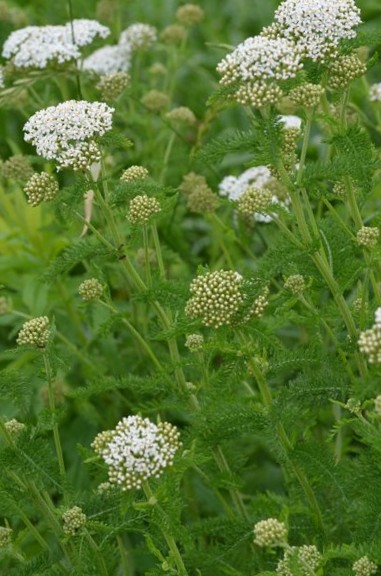
The leaves are alternate and deeply divided into many narrow segments, creating a soft, feathery, fernlike, or lace-like appearance. Crushing the foliage releases a strong aromatic, medicinal, resinous, or spicy odor. The finely divided leaves explain names such as milfoil, thousand-leaf, and little feather.
The flowering stems end in dense, broad, flat-topped clusters. Each apparent “flower” is actually a small composite head containing central disk flowers and a few short ray flowers. Wild-type plants are commonly white or pale pink, while cultivated selections may be rose, red, yellow, orange, peach, cream, lavender, or mixed colors. Flower color alone does not establish toxicity or safety.
Yarrow Is Not an Apiaceae Umbel
The flat flower cluster can look superficially like an umbel, but yarrow belongs to Asteraceae rather than Apiaceae. It has many tiny daisy-like heads grouped together, not a single true umbel of individual flowers arising from one point. Its strongly aromatic finely dissected leaves are also important.
This distinction matters because some white-flowered Apiaceae plants are much more dangerous. Poison hemlock, water hemlock, wild parsnip, giant hogweed, and other carrot-family plants can cause severe neurologic poisoning, photosensitization, burns, or other syndromes. Never taste a white-flowered plant to identify it, and do not assume a flat-topped white cluster is yarrow without checking the leaves, stems, odor, and flower-head structure.
Where Animals Encounter Yarrow
Yarrow occurs in lawns, gardens, meadows, pastures, open woodland, prairie, roadsides, trails, vacant land, restoration seedings, pollinator plantings, cut-flower beds, dried arrangements, and disturbed soil. It spreads by rhizomes and seeds and can persist in areas where other plants struggle.
Dogs may chew it while walking through lawns or trails. Cats may investigate cut flowers, dried arrangements, or herbal products brought indoors. Horses and livestock encounter it as a scattered pasture forb or, less commonly, as dried contamination in hay. Rabbits, poultry, tortoises, and other small animals may be exposed if owners collect mixed weeds or dried herbs for enrichment without identifying each plant.
How Toxic Is Yarrow in Real Life?
Yarrow is not comparable to oleander, castor bean, sago palm, autumn crocus, foxglove, yew, or a true lily eaten by a cat. Those plants can produce severe organ injury after relatively limited exposure. Ordinary yarrow ingestion more commonly causes no illness or temporary gastrointestinal upset.
The designation “toxic” remains appropriate because dogs, cats, and horses can develop vomiting, diarrhea, colic, drooling, appetite loss, depression, or dermatitis. The designation should not be interpreted to mean that one leaf is likely to kill an animal. Risk rises when an animal consumes a large amount, repeatedly grazes the plant, receives powdered herb mixed into food, or reaches a concentrated extract or essential-oil product.
Dogs
A dog that nibbles a small amount of yarrow may show no signs. A larger ingestion can produce salivation, vomiting, diarrhea, abdominal discomfort, appetite loss, and lethargy. Puppies, plant-chewing dogs, and dogs that shred entire garden clumps may swallow more plant material than an owner expects.
Repeated vomiting or abdominal pain should not automatically be blamed on yarrow simply because the plant grows nearby. Grass awns, mushrooms, pesticides, compost, fertilizer, spoiled food, swallowed foreign material, nicotine, cannabis, medications, and other toxic plants may be present in the same environment. The full exposure scene should be checked.
Cats
Cats may chew fresh stems, cut flowers, dried arrangements, or herbal products. Expected signs include drooling, vomiting, diarrhea, poor appetite, depression, hiding, and possible skin irritation after contact. Sap or plant dust on the paws may be swallowed later during grooming.
Prolonged appetite loss is more concerning in cats than the initial low-grade plant toxicity. A cat that refuses food for an extended period can develop dehydration and secondary hepatic lipidosis even though yarrow is not itself established as a direct liver toxin. Concentrated essential oils are especially concerning in cats and should not be applied to the skin or offered by mouth without veterinary direction.
Horses and Livestock
Yarrow may provide poor to fair forage for cattle and somewhat better forage for sheep in some range contexts, but it is generally not a preferred plant. Scattered yarrow in a pasture rarely creates the type of mass poisoning associated with highly toxic range plants. Heavy grazing becomes more plausible when desirable forage has been depleted, animals are turned out hungry, or cut and dried plant material is mixed through hay.
Signs would be expected to center on feed refusal, salivation, colic, diarrhea, depression, and reduced performance rather than sudden catastrophic organ failure. Because yarrow poisoning in livestock is poorly documented, severe herd illness should trigger a broader pasture investigation. Other plants, mold, ionophores, blister beetles, nitrate, spoiled feed, toxic weeds, mineral imbalance, and infectious or gastrointestinal diseases may be more likely explanations.
Fresh Plant, Dried Herb, and Essential Oil Are Different Exposures
Fresh and dried yarrow retain bitter tannins, sesquiterpene lactones, and volatile constituents, although drying and storage can change their concentrations. Dried herb in hay, flower arrangements, wreaths, potpourri, bedding, or supplements should not be considered chemically inactive.
Teas extract mainly water-soluble constituents, while alcohol tinctures and concentrated extracts can contain a different spectrum and a much greater amount per milliliter. Supplements may combine yarrow with other herbs whose veterinary safety is unrelated. Essential oil is the most concentrated form of the volatile fraction. Its composition can vary dramatically, and labels may not disclose every constituent accurately.
Contact Dermatitis and Asteraceae Sensitivity
Yarrow contains sesquiterpene lactones capable of causing allergic contact dermatitis. Repeated exposure may sensitize an individual, after which smaller contacts can produce redness, itching, swelling, rash, vesicles, or small blister-like lesions.
Cross-reaction can occur among plants in Asteraceae, including chrysanthemums, feverfew, tansy, chamomile, arnica, ragweed, and related species. This possibility does not mean every animal with seasonal environmental allergies will react to yarrow, but a recurring rash after contact should be taken seriously. Wash the coat and paws after significant exposure and prevent grooming until plant residue has been removed.
Pregnancy and Reproductive Claims
Yarrow has a traditional reputation as an emmenagogue or uterine stimulant, but veterinary evidence showing that ordinary pasture or garden ingestion causes abortion is lacking. A rat study using a concentrated preparation at a very high dose found reduced fetal weight and increased placental weight rather than a clearly demonstrated wave of abortions or congenital malformations.
The reasonable precaution is to avoid deliberately administering yarrow teas, tinctures, powders, extracts, capsules, or essential oil to pregnant animals unless a veterinarian with specific herbal expertise has evaluated the product and purpose. A single accidental nibble should not be represented as a proven cause of miscarriage. Nursing animals should also not be dosed with concentrated products without professional guidance.
Does Yarrow Cause Abnormal Bleeding?
Yarrow’s historical wound-related names arose from its use on cuts, bleeding wounds, and nosebleeds. Laboratory studies have produced mixed coagulation effects: some flowering-herb preparations shortened clotting measurements, while pressed juice prolonged them.
That mixed evidence does not establish yarrow as a predictable anticoagulant poison. Ordinary accidental ingestion is not known to cause spontaneous hemorrhage or require an automatic two-week postponement of surgery. A veterinarian should still be told about deliberate use of a yarrow supplement, tincture, extract, capsule, powder, tea, or multi-herb product before anesthesia or surgery because the dose, preparation, and combination ingredients may be uncertain.
Important Look-Alikes
Yarrow is sometimes mistaken for Queen Anne’s lace, poison hemlock, water hemlock, wild parsnip, giant hogweed, and other white-flowered plants. Those species belong to Apiaceae and can cause very different and sometimes fatal syndromes. Yarrow has finely dissected aromatic leaves distributed along the stem and flat clusters composed of many tiny daisy-like heads.
Poison hemlock has smooth hollow stems often marked with purple blotches and larger parsley-like leaves. Water hemlock often grows in wet sites and has chambered root structures containing a violent convulsant toxin. Wild parsnip and giant hogweed can cause light-activated skin injury. Treatment decisions should be based on an identified specimen rather than a casual common name.
Diagnosis
Diagnosis is usually based on witnessed ingestion, compatible gastrointestinal or skin signs, and confident plant identification. Bring photographs showing the whole plant, leaves, stems, flower clusters, habitat, and any product packaging. If the exposure involved a tincture, capsule, salve, tea, supplement, or essential oil, preserve the label and ingredient list.
There is no routine veterinary test that confirms yarrow exposure. Mild cases may not require laboratory work, while persistent vomiting, dehydration, weakness, significant essential-oil exposure, or signs inconsistent with uncomplicated yarrow irritation may justify blood chemistry, electrolyte testing, urinalysis, abdominal imaging, neurologic assessment, or additional diagnostics.
Treatment and Prognosis
No specific antidote is required or available for ordinary yarrow exposure. Most intact-plant cases are managed by stopping ingestion and treating nausea, vomiting, diarrhea, dehydration, abdominal discomfort, or dermatitis when necessary. Veterinary antiemetics and oral, subcutaneous, or intravenous fluids may be used according to severity.
Skin exposure may require bathing, anti-inflammatory medication, itch control, and treatment of secondary infection. Essential-oil cases require individualized assessment of the product, route, amount, neurologic condition, and aspiration risk. The prognosis is good to excellent for ordinary plant ingestion. A prolonged, severe, or worsening course suggests concentrated product exposure, mixed exposure, mistaken plant identification, or an unrelated medical problem rather than routine yarrow irritation alone.
Prevention
Prevent dogs and cats from grazing dense garden patches, and collect cut stems or dried flower debris before pets investigate them. Yarrow used as a lawn alternative or pollinator plant may not create illness merely through normal contact, but animals that repeatedly eat vegetation should not have unrestricted access.
Maintain adequate safe forage in pastures and inspect hay when dense yarrow stands were cut. Store dried herb, tinctures, supplements, salves, teas, and essential oils in closed cabinets. Do not apply yarrow essential oil or concentrated herbal products to an animal’s coat, wounds, mouth, ears, paws, bedding, or food without veterinary direction. Historical medicinal use does not establish veterinary dose, effectiveness, or safety.
Immediate Steps After Exposure
Stop further ingestion. Remove the animal from the plant and collect cut stems, dried flowers, spilled herb, hay fragments, supplements, capsules, tinctures, salves, wound washes, or essential-oil containers. Prevent other animals from reaching the same plant or product.
- Remove loose pieces safely: Clear visible plant material from the front of the mouth if the animal is alert, cooperative, breathing normally, and swallowing normally. Do not reach deeply into the throat or risk being bitten.
- Offer fresh water voluntarily: An alert animal that is swallowing normally may drink on its own. Do not force water into an animal that is vomiting, weak, coughing, choking, or poorly coordinated.
- Wash skin and coat exposure: Use lukewarm water and a mild animal-safe cleanser, especially when sap, crushed leaves, dried herb dust, salve, tincture, or essential oil contacted the animal.
- Prevent grooming until residue is removed: Plant residue or topical products on the coat, paws, feathers, or skin can become an oral exposure during grooming.
- Flush exposed eyes: Irrigate with sterile saline or clean lukewarm water when safe. Continued squinting, redness, rubbing, cloudiness, swelling, or discharge requires examination.
- Identify the form involved: Report whether the animal ate a fresh plant, dried herb, hay, tea, tincture, capsule, powder, salve, wound wash, or essential oil. Save the label and ingredient list.
Do Not Attempt Unsupervised Home Treatment
- Do not induce vomiting: Hydrogen peroxide, salt, mustard, dish soap, and manual gagging can cause additional gastrointestinal injury or aspiration and are particularly inappropriate for cats and nonvomiting species.
- Do not administer activated charcoal automatically: Charcoal is unnecessary in most mild plant exposures and can be aspirated by a vomiting, depressed, weak, or poorly coordinated animal.
- Do not force food, milk, oil, broth, or water: These do not neutralize yarrow constituents and may worsen vomiting or enter the lungs.
- Do not give antihistamines or corticosteroids without direction: Contact dermatitis and allergic reactions require assessment of severity, airway involvement, species, dose, formulation, and other medications.
- Do not use human antidiarrheals or pain medication: Loperamide, bismuth products, ibuprofen, acetaminophen, aspirin, and leftover prescriptions may be inappropriate or toxic.
- Do not apply more herbal product to irritated skin: Additional yarrow salve, tincture, essential oil, or wound wash can intensify exposure and make the reaction harder to evaluate.
- Do not assume a white-flowered look-alike is yarrow: Poison hemlock, water hemlock, wild parsnip, and other plants require different emergency handling.
When Emergency Examination Is Especially Important
- Gastrointestinal signs are repeated or severe: Continued vomiting or diarrhea, blood, severe abdominal pain, bloating, or inability to retain water can cause clinically important dehydration.
- Marked depression or weakness develops: Difficulty standing, collapse, severe lethargy, or abnormal coordination is not typical of a minor nibble.
- Neurologic signs appear: Tremors, seizures, disorientation, extreme agitation, ataxia, or stupor is especially concerning after essential-oil or concentrated-extract exposure.
- Breathing or swallowing difficulty develops: Facial swelling, noisy breathing, coughing, choking, blue mucous membranes, or inability to swallow saliva requires immediate care.
- Dermatitis is widespread or severe: Rapidly spreading redness, swelling, blisters, severe itching, facial involvement, open skin lesions, or secondary infection may indicate a significant hypersensitivity reaction.
- The patient is high risk: Puppies, kittens, small herbivores, birds, reptiles, elderly animals, pregnant animals, and patients with kidney, liver, heart, endocrine, or gastrointestinal disease should be assessed sooner.
- The plant identification is uncertain: A white-flowered plant that may be poison hemlock, water hemlock, wild parsnip, or another dangerous look-alike requires immediate professional advice.
- The exposure involved essential oil: Swallowed essential oil, chewed bottles, undiluted topical application, or oil near the face warrants prompt veterinary guidance.
Veterinary Treatment
Veterinary assessment focuses on hydration, abdominal comfort, vomiting and diarrhea frequency, neurologic status, skin exposure, eye exposure, and the exact product involved. A mildly affected animal may need only observation after access ends. Persistent vomiting may be controlled with veterinarian-selected antiemetic medication, while oral, subcutaneous, or intravenous fluids may correct dehydration and electrolyte loss.
Recent ingestion of a concentrated product may prompt veterinarian-directed decontamination. The decision depends on formulation, amount, time elapsed, clinical condition, species, neurologic status, and aspiration risk. Essential-oil exposure is managed more cautiously than an ordinary plant nibble because concentrated oils can irritate the mouth, throat, stomach, skin, respiratory tract, and nervous system.
Skin and Eye Treatment
Contact dermatitis may be treated with bathing, anti-inflammatory medication, itch control, and management of secondary bacterial or yeast infection when present. The veterinarian may also recommend an Elizabethan collar or other barrier to prevent licking and scratching while the skin heals.
Eye exposure requires irrigation, eyelid examination, and corneal testing if discomfort persists. Do not apply human eye drops, leftover ointment, essential oils, salves, or herbal washes unless a veterinarian has examined the eye and directed that exact treatment.
Dogs and Cats
Dogs and cats with a small fresh-plant exposure and brief mild signs may only need professional triage, plant removal, and monitoring. Veterinary care becomes more important when vomiting repeats, diarrhea is significant, appetite loss persists, the animal cannot retain water, the animal is very small or medically fragile, or the exposure involved tincture, capsules, salve, oil, dried herb, or another product.
Cats deserve special caution after essential-oil or prolonged anorexia exposure. They should not be made to vomit at home, and concentrated products should not be applied to their skin. A cat that continues refusing food after the initial exposure needs assessment before dehydration or secondary metabolic complications develop.
Horses and Livestock
Horses, ponies, donkeys, cattle, sheep, goats, pigs, alpacas, llamas, poultry, and other livestock should be removed from the source and provided safe alternative feed and clean water. Do not drench a horse or ruminant unless directed by a veterinarian. Group signs after hay or pasture exposure should be treated as a feed-source investigation rather than one animal with a stomach upset.
Save pasture plants, hay samples, feed labels, and photographs before discarding the material. If illness is severe, persistent, or affects several animals, investigate other plants, mold, mycotoxins, ionophores, nitrate, blister beetles, mineral errors, pesticides, infectious disease, and non-yarrow causes of colic or diarrhea.
Rabbits, Guinea Pigs, Birds, Reptiles, and Small Pets
Small animals should not be fed yarrow as greens, browse, hay, bedding, cage décor, poultry greens, tortoise forage, or enrichment. If exposure occurs, remove the plant and call an appropriate veterinarian when the amount is meaningful or signs develop. Do not force food, water, oil, milk, charcoal, essential oils, or household medication.
Rabbits and guinea pigs that stop eating, develop diarrhea, produce fewer fecal pellets, become weak, or show abdominal discomfort need prompt care. Birds with regurgitation, poor perching, diarrhea, weakness, or suspected essential-oil exposure need avian guidance. Reptiles and tortoises may show reduced appetite, inactivity, abnormal stool, or dehydration rather than the dog-and-cat vomiting pattern.
Recovery and Prognosis
Most animals recover completely within several hours to one or two days after an ordinary plant ingestion. A small nibble may produce no clinical signs at all. Dermatitis can last longer than gastrointestinal upset, particularly when the animal has become sensitized or continues contacting the plant.
The prognosis remains favorable when dehydration and concentrated-product exposure are treated promptly. Severe, delayed, or progressive illness should trigger reconsideration of the plant identification and evaluation for another toxin or disease.
Prevention After the Incident
Prevent dogs and cats from grazing dense yarrow patches, and collect cut stems, dried flowers, spilled herb, and arrangement debris before pets investigate them. Store dried herb, tinctures, supplements, salves, teas, and essential oils in closed cabinets or animal-proof containers.
Do not apply yarrow essential oil or concentrated herbal products to an animal’s coat, wounds, ears, paws, mouth, or food without veterinary direction. Maintain adequate safe forage in pastures, inspect hay when dense yarrow stands were cut, and do not rely on historical medicinal use as proof of veterinary safety or dose.
Frequently Asked Questions About Yarrow and Animal Poisoning
How poisonous is yarrow in real life?
Yarrow is generally a low-severity poison rather than a plant that commonly causes organ failure or death. Many animals that take one small bite remain normal, while larger ingestions can cause drooling, vomiting, diarrhea, colic, appetite loss, depression, or dermatitis. Concentrated essential oil, tinctures, extracts, and repeated ingestion deserve more concern because they deliver a different dose from ordinary garden exposure.
Is yarrow poisonous to dogs?
Yes. A small dog exposure may cause no signs or only brief stomach upset, but larger ingestion can cause drooling, vomiting, diarrhea, abdominal discomfort, appetite loss, and lethargy. Veterinary care is more important when vomiting repeats, the dog cannot retain water, weakness develops, signs persist, or the exposure involved dried herb, tincture, supplement, salve, or essential oil.
Is yarrow poisonous to cats?
Yes. Cats may develop drooling, vomiting, diarrhea, hiding, appetite loss, or depression after chewing yarrow. Prolonged food refusal is especially concerning in cats because dehydration and secondary hepatic lipidosis can develop even when the original plant is only mildly irritating. Cats should not be made to vomit at home, and yarrow essential oil should not be applied to their skin.
Is yarrow poisonous to horses?
Yarrow is considered toxic to horses, but ordinary pasture exposure is usually a mild concern rather than a classic fatal range-plant syndrome. A horse eating enough may develop salivation, feed refusal, colic, loose manure, diarrhea, depression, or reduced performance. Severe or persistent colic requires a full equine examination and investigation for other causes.
Is yarrow poisonous to cattle, sheep, goats, and other livestock?
Yarrow can irritate grazing animals when enough is eaten, but serious livestock poisoning is poorly documented compared with more dangerous range plants. Possible signs include feed refusal, salivation, loose manure, diarrhea, abdominal discomfort, depression, or reduced performance. Severe herd illness should prompt investigation for mold, toxic weeds, nitrate, ionophores, blister beetles, pesticides, infectious disease, or spoiled feed.
Is yarrow safe for rabbits, guinea pigs, birds, or reptiles?
Yarrow should not be offered as routine browse, hay, cage greenery, poultry greens, tortoise forage, reptile décor, or enrichment. Species-specific safe doses are not established. Small herbivores may develop appetite loss, diarrhea, reduced fecal output, dehydration, or gut slowing, while birds and reptiles may show reduced appetite, weakness, abnormal stool, or inactivity.
What compounds in yarrow cause illness?
No single veterinary toxin has been proved responsible for every sign. Yarrow contains nitrogenous bases such as achilleine, monoterpenes, sesquiterpene lactones such as achillin-related compounds, tannins, flavonoids, coumarins, polyacetylenes, and a chemically variable volatile oil. Gastrointestinal illness and contact dermatitis probably reflect combined irritant and allergenic effects rather than one dominant lethal poison.
Are achilleine, achillin, and achillicin the same chemical?
No. These names are easily confused but should not be treated as interchangeable. Achilleine is generally discussed as a nitrogenous base or alkaloid-like constituent, while achillin and achillicin belong to different sesquiterpene-lactone or proazulene chemistry discussions. The safer toxicology wording is that yarrow contains several active constituent classes rather than one proven toxin.
Is yarrow essential oil more dangerous than the plant?
Potentially, yes. Essential oil is a concentrated volatile fraction and may contain camphor, cineole, pinenes, borneol, thujone, linalool, and other terpenes in proportions that vary between products. Swallowing essential oil, chewing a bottle, or having a substantial amount applied to the skin can cause more severe gastrointestinal, skin, respiratory, or neurologic effects than chewing a few leaves.
Does yarrow contain thujone?
Some yarrow oils contain alpha-thujone or beta-thujone, while others contain little or none. Thujone should not be presented as the guaranteed main toxin in every yarrow plant. It matters most when the exposure involves concentrated essential oil or a high-thujone chemotype, not when an animal takes a small bite of the whole plant.
What signs should I expect in a dog or cat?
The most likely signs are drooling, nausea, vomiting, diarrhea, abdominal discomfort, appetite loss, depression, and unusual quietness. Skin contact may produce redness or itching. Persistent vomiting, dehydration, weakness, tremors, collapse, breathing difficulty, or neurologic signs are not routine mild reactions and require veterinary assessment.
Can dried yarrow in hay still cause problems?
Drying does not remove every tannin, lactone, or volatile constituent, so dried yarrow is not chemically inert. Small scattered amounts in hay are unlikely to cause catastrophic poisoning, but dense contamination can create repeated exposure and make avoidance difficult. Suspect hay should be assessed when animals develop colic, feed refusal, diarrhea, or unexplained depression.
Can yarrow cause an allergic skin reaction?
Yes. Sesquiterpene lactones in yarrow are recognized contact allergens and can cause redness, itching, swelling, rash, or blister-like lesions after direct or repeated exposure. Cross-sensitivity with other Asteraceae plants is possible, but an allergy to ragweed, chrysanthemum, or chamomile does not guarantee that an animal will react to yarrow.
Can yarrow hurt an animal’s eyes?
Yarrow can irritate the eyes if sap, dust, plant fragments, salve, or essential oil gets into them. Tearing, blinking, redness, or squinting may occur. Persistent squinting, cloudiness, swelling, discharge, rubbing, or apparent vision trouble requires veterinary examination because retained plant debris, corneal abrasion, pesticide residue, or a look-alike plant may be involved.
Can yarrow cause miscarriage in a pregnant animal?
Ordinary accidental ingestion has not been established as a cause of abortion in pets or livestock. A high-dose rat study using a concentrated preparation found reduced fetal weight and increased placental weight, which supports avoiding deliberate medicinal administration during pregnancy. It does not prove that one garden nibble will cause pregnancy loss.
Does yarrow thin the blood or increase surgical bleeding?
Yarrow is not a proven clinical anticoagulant poison. Laboratory tests have produced mixed effects, with some preparations shortening clotting time and another prolonging it. A minor accidental ingestion does not automatically require surgery to be postponed for two weeks, but concentrated supplements, tinctures, extracts, and multi-herb products should be disclosed to the veterinarian before anesthesia.
Are ornamental pink, red, or yellow yarrows safer than white yarrow?
Flower color does not establish safety. Many garden yarrows are cultivars of Achillea millefolium or hybrids involving related species, and they can retain aromatic oils, tannins, and sesquiterpene lactones. Exact concentrations may differ, but no ornamental cultivar should be treated as a pet-safe edible plant merely because its flowers are a different color.
How can yarrow be distinguished from poison hemlock or water hemlock?
Yarrow has strongly aromatic, finely divided fernlike leaves and flat clusters made from many tiny daisy-like flower heads. Poison hemlock and water hemlock belong to the carrot family and produce true umbels. Poison hemlock often has smooth hollow stems with purple blotches, while water hemlock commonly grows in wet ground and has dangerously toxic chambered roots. Never taste a white-flowered plant to identify it.
Is “dog fennel” another name for yarrow?
“Dog fennel” is unreliable as a yarrow name. It more commonly refers to Eupatorium capillifolium, a different Asteraceae plant with threadlike foliage and a different chemical profile. Regional common names should not be used for treatment decisions when a pet or livestock exposure is involved.
Should I induce vomiting after my pet eats yarrow?
No home emesis should be attempted. Hydrogen peroxide can cause severe stomach irritation, prolonged vomiting, and aspiration, and it is particularly unsuitable for cats. Most small plant exposures need only removal of access and observation, while a veterinarian should determine whether decontamination is appropriate after a large or concentrated-product exposure.
Should activated charcoal be given?
Not automatically. Activated charcoal is unnecessary for most mild whole-plant yarrow exposures and can be aspirated by a vomiting, weak, depressed, or poorly coordinated animal. A veterinarian may consider decontamination only after evaluating the species, product, amount, timing, symptoms, and aspiration risk.
When does an animal need veterinary treatment?
Seek care for repeated vomiting or diarrhea, inability to retain water, pronounced abdominal pain, worsening depression, weakness, tremors, collapse, extensive dermatitis, breathing difficulty, eye pain, or exposure to yarrow essential oil or a concentrated extract. Very young, elderly, pregnant, or medically fragile animals should be assessed sooner because dehydration and complications can develop more quickly.
How do veterinarians diagnose yarrow poisoning?
Diagnosis is usually based on a known exposure, compatible gastrointestinal or skin signs, and accurate plant or product identification. There is no routine test that confirms yarrow exposure. Persistent vomiting, dehydration, weakness, essential-oil exposure, or signs inconsistent with mild plant irritation may justify bloodwork, electrolyte testing, urinalysis, imaging, eye examination, or investigation for another toxin.
What differentials matter most?
Important differentials include poison hemlock, water hemlock, wild parsnip, giant hogweed, mushrooms, pesticides, compost, fertilizer, cannabis, nicotine, medications, essential oils, gastrointestinal obstruction, pancreatitis, infection, metabolic disease, toxic Asteraceae look-alikes, and contaminated herbal preparations. Severe signs should not be blamed on yarrow without checking the whole exposure.
What is the prognosis after yarrow ingestion?
The prognosis is good to excellent after most intact-plant exposures. Mild gastrointestinal signs generally resolve within several hours to one or two days once further ingestion stops and hydration is maintained. A severe or prolonged course suggests concentrated product exposure, another toxin, an incorrectly identified plant, or an unrelated medical problem.