Yellow Oleander Cardenolides, Thevetin, Peruvoside, Seed Kernels, Hyperkalemia, Arrhythmias, Digoxin-Fab Antidote, and Livestock Feed Hazards
Is Yellow Oleander Poisonous to Dogs, Cats, Horses, and Livestock?
Yes—Yellow Oleander, Cascabela thevetia, formerly and still widely known as Thevetia peruviana, is highly poisonous to dogs, cats, horses, livestock, birds, small mammals, reptiles, and people. This is a true emergency cardiac-glycoside plant. Every part contains cardenolide cardiac glycosides that inhibit sodium-potassium ATPase and can cause severe vomiting, diarrhea, drooling, abdominal pain, hyperkalemia, abnormally slow heart rhythm, irregular rhythm, atrioventricular block, ventricular arrhythmias, weakness, cold extremities, collapse, tremors, seizures, coma, and death. The hard seeds and kernels are especially dangerous, but leaves, flowers, fruit, bark, sap, roots, twigs, hedge clippings, dried material, compost, hay, silage, and contaminated feed must also be treated as poisonous.
Yellow Oleander poisoning can look deceptively gastrointestinal at first. Vomiting, diarrhea, salivation, colic, or feed refusal may appear before the heart rhythm becomes obviously abnormal, and early vomiting does not prove that the toxin has been removed. Dogs may chew fallen fruit or branches, cats may contact sap or plant fragments while grooming, horses and livestock may receive clippings or contaminated hay, goats may browse discarded ornamental material, and pigs or other animals may eat seed or fruit waste mixed into feed. A credible seed, crushed kernel, clipping, hay, or feed exposure should be treated as urgent even if the animal still appears normal.
About this guide: This page provides general pet-poisoning information and cannot diagnose or treat an individual animal. For any suspected exposure, contact a veterinarian or animal poison-control service immediately. Do not induce vomiting, give medication, or attempt home decontamination unless directed by a veterinary professional.
Yellow Oleander
Cascabela thevetia (L.) Lippold
Major botanical synonyms and former scientific names include:
- Cerbera thevetia L.
- Thevetia peruviana (Pers.) K.Schum.
- Cascabela peruviana (Pers.) Raf.
- Cerbera peruviana Pers.
- Cerbera linearifolia Stokes
- Thevetia longifolia Vahl
- Thevetia linearis Raf.
- Thevetia neriifolia Juss. ex A.DC.
- Thevetia neriifolia var. hirsuta Müll.Arg.
- Thevetia neriifolia var. leucantha Müll.Arg.
- Thevetia neriifolia var. pubescens Müll.Arg.
- Thevetia peruviana f. aurantiaca H.St.John
Important taxonomy and non-synonym confusion notes:
- Thevetia peruviana remains widely used in veterinary toxicology, human clinical toxicology, poison-control databases, horticulture, and older scientific literature. It should remain visible on this page for search and safety reasons.
- Nerium oleander L. is Common Oleander, Pink Oleander, or Rosebay Oleander. It is a separate Apocynaceae species with overlapping cardiac-glycoside toxicity but different major glycosides and plant appearance.
- Cerbera odollam Gaertn. is another poisonous Apocynaceae tree and is also commonly called Suicide Tree in some regions. It is not a synonym of Yellow Oleander.
- Plumeria, Allamanda, Tabernaemontana, Adenium, and other Apocynaceae ornamentals may contain milky sap or cardiac-active chemistry in some species, but they are not botanical synonyms for Yellow Oleander.
Apocynaceae
Commonly called the Dogbane family.
Yellow Oleander; Lucky Nut; Lucky-Nut Tree; Lucky Bean; Be-Still Tree; Be Still Tree; Exile Tree; Yellow Trumpet Tree; Yellow Trumpet Flower; Trumpet Bush; Milk Bush; Milk Tree; Captain Cook Tree; Cook Tree; Mexican Oleander; Peruvian Thevetia; Thevetia; Campanilla; Cascabela; Ahouai; Ahovai; Kaneru; Pila Kaner; Pila Kaner Tree; Yellow Kaner; Cascabel; Cabalonga; Cabalongo; Codo de Fraile; Cascabela thevetia; Thevetia peruviana; Thevetia neriifolia; Cerbera thevetia.
Scientific and historical search names include Cascabela thevetia, Thevetia peruviana, Cerbera thevetia, Cascabela peruviana, Cerbera peruviana, Thevetia longifolia, Thevetia linearis, Thevetia neriifolia, and Thevetia peruviana f. aurantiaca.
Naming caution: “Lucky Nut” and “Lucky Bean” should never be interpreted as evidence that the seed is edible; the hard seed kernels are among the most dangerous plant parts. “Suicide Tree” is applied to Yellow Oleander in some regions because its seeds have been used for intentional self-poisoning, but that name is also strongly associated with Cerbera odollam, a separate Apocynaceae tree. “Common Oleander,” “Pink Oleander,” and “Rosebay” generally refer to Nerium oleander, a different but similarly dangerous cardiac-glycoside plant.
Cardenolide Cardiac Glycosides Are the Main Danger
Yellow Oleander contains a complex mixture of cardenolide cardiac glycosides rather than one isolated poison. The principal compounds reported from the species include thevetin A, thevetin B, peruvoside, neriifolin, thevetoxin, ruvoside, thevebioside, cerberin-related cardenolides, digitoxigenin-related glycosides, and other cardioactive molecules. Exact concentrations vary with plant part, maturity, genetics, climate, growing conditions, and preparation.
The seeds and kernels are especially concentrated and are the plant part most often associated with severe human poisoning, but the rest of the plant is not safe. Leaves, flowers, fruit, bark, sap, roots, twigs, wood, clippings, dried material, hay, silage, compost, and contaminated feed may all contain cardioactive material. A crushed seed or chewed kernel is more dangerous than a brief lick of a leaf, but no part should be treated as harmless.
Thevetin B Is Not a Cerebroside
Thevetin A and thevetin B are cardenolide glycosides. Thevetin B should not be labeled a cerebroside. Cerebrosides are glycosphingolipids found in membranes and nervous tissue and have an entirely different chemical structure from cardenolide cardiac glycosides.
This correction matters because the toxicology depends on the cardiac-glycoside structure. A cardenolide has a steroid-like aglycone, an unsaturated five-membered lactone ring, and one or more sugar residues. The sugar groups influence absorption, water solubility, tissue distribution, receptor binding, metabolism, elimination, and laboratory cross-reactivity. Yellow Oleander poisoning is therefore caused by a mixture of related sodium-potassium ATPase inhibitors, not by a cerebroside mechanism.
Sodium-Potassium ATPase Inhibition
The principal molecular target is sodium-potassium ATPase, a membrane pump responsible for moving sodium out of cells and potassium into cells. This pump is essential for the electrical gradients that support normal heart rhythm, nerve conduction, muscle contraction, vascular tone, kidney handling, intestinal movement, and many forms of cellular transport.
When Yellow Oleander cardenolides bind the pump, intracellular sodium rises. The sodium-calcium exchanger removes less calcium from cardiac muscle cells, so intracellular calcium increases. This can initially strengthen contraction but also destabilizes electrical impulse formation and conduction. The result may be sinus bradycardia, sinoatrial block, atrioventricular block, ectopic beats, atrial tachycardia with block, ventricular tachycardia, ventricular fibrillation, asystole, or sudden death.
Why Hyperkalemia Is So Important
Potassium normally moves into cells through sodium-potassium ATPase. When the pump is strongly inhibited, serum potassium may rise. Marked hyperkalemia is an important warning sign because it reflects substantial pump inhibition and can worsen bradycardia, conduction block, ventricular rhythm disturbance, muscle weakness, and cardiovascular collapse.
Potassium can change during the course of treatment. Vomiting and diarrhea may eventually lower potassium. Insulin, dextrose, bicarbonate, intravenous fluids, restoration of pump activity, or digoxin-specific antibody fragments can shift potassium back into cells. Serial potassium testing matters more than one isolated measurement, and owners should never give potassium or potassium-containing products as a home treatment.
Not Just the Heart
Sodium-potassium ATPase is present throughout the body, not only in the heart. This explains why Yellow Oleander poisoning is not just an abnormal pulse. The gastrointestinal tract, autonomic nervous system, central nervous system, skeletal muscle, kidneys, vascular tissue, and respiratory system can all be affected directly or indirectly.
Vomiting, diarrhea, salivation, abdominal pain, colic, altered gastrointestinal motility, dehydration, weakness, tremors, neurologic depression, seizures, low blood pressure, poor perfusion, acid-base disturbance, shock, and aspiration can accompany the cardiac effects. A patient may look like a gastrointestinal case before the rhythm disturbance becomes obvious.
Enterohepatic and Enterovascular Recirculation
Some Yellow Oleander glycosides and digoxin-like immunoreactive substances may persist or reappear because toxin can move between the bloodstream, bile, intestinal lumen, and circulation. Toxin that has entered the body can return to the gut and then be reabsorbed. This helps explain delayed or recurrent arrhythmias after an apparent improvement.
This recirculation is one reason activated charcoal may be considered by veterinarians after meaningful exposure. Charcoal is not an owner-administered home remedy. Vomiting, weakness, seizures, ileus, impaired swallowing, respiratory distress, and lack of airway protection can turn charcoal into an aspiration hazard.
Seeds, Kernels, Fruit, and Chewing
The hard angular fruit encloses highly poisonous seed material. A swallowed intact seed may release less toxin than a crushed, chewed, cracked, or ground seed, but no seed should be treated as safe. Dogs may crack fruit while playing or chewing. Goats and cattle may consume clippings with fruit attached. Pigs, poultry, or other animals may receive seed fragments if discarded ornamental material is mixed with feed or compost.
The number of seeds swallowed does not predict toxicity perfectly. Seed size, seed maturity, kernel damage, plant chemotype, gastrointestinal absorption, vomiting, patient body weight, species, hydration, coexisting disease, and treatment delay all matter. A single chewed seed can be a major exposure in a small animal, and multiple seeds or crushed kernels are always an emergency.
Leaves, Flowers, Bark, Roots, Sap, Twigs, and Wood
Leaves, flowers, bark, roots, sap, twigs, and woody clippings also contain cardiac glycosides. Yellow Oleander should not be used as a hedge clipping treat, chew stick, fetch stick, bedding material, enclosure branch, bird perch, reptile décor, rabbit browse, goat browse, or compost accessible to animals.
Milky latex can contaminate the mouth, skin, eyes, tools, feed, water, food-contact surfaces, and human hands. Intact skin contact is less likely than ingestion to cause systemic poisoning, but mucous membranes, wounds, ulcers, inflamed skin, prolonged wet contact, and self-grooming can increase exposure. Leaf-and-bark paste applied repeatedly to damaged human skin has been associated with electrocardiographic effects, supporting caution around wounds and mucous membranes.
Drying, Heating, Hay, Silage, and Compost Do Not Make It Safe
Drying does not reliably destroy Yellow Oleander cardiac glycosides. Dried leaves, seeds, fruit, twigs, clippings, and woody fragments can remain poisonous in hay, silage, bedding, compost, fireplace debris, trash piles, and discarded ornamental material. Animals may be more willing to eat dried material because it is mixed with desirable forage or has lost some fresh odor.
Heating is not a dependable detoxification method. Yellow Oleander wood, skewers, sticks, leaves, flowers, fruit, or plant-contaminated utensils should never be used for cooking, grilling, campfires, smoking food, animal toys, or enclosure furnishings. Cooking, drying, wilting, and burning are not reliable safety barriers for cardiac glycosides.
Burning and Ash
Burning Yellow Oleander should be avoided. The best documented risk remains ingestion of plant material, contaminated food, ash, or partially burned debris rather than proven systemic absorption of intact cardiac glycosides from ordinary smoke. Even so, burning can distribute contaminated ash, partially burned plant fragments, and irritating combustion products.
Animals may inhale smoke, lick ash from paws or coats, chew charred sticks, or eat debris after a burn pile. Yellow Oleander should be securely bagged or disposed of according to local guidance in a way that prevents animal access, not burned in livestock areas, backyards, fireplaces, grills, or campfires.
Common Oleander Comparison
Yellow Oleander and Common Oleander produce similar digoxin-like clinical syndromes because their cardiac glycosides share sodium-potassium ATPase as a major molecular target. The plants are not the same species, and their dominant glycosides differ. Common Oleander is Nerium oleander, often with larger pink, red, white, or salmon flowers and leaves arranged opposite or in whorls. Yellow Oleander is Cascabela thevetia, usually with narrow alternate or spirally arranged leaves, yellow trumpet-shaped flowers, and angular fruit containing hard seeds.
Oleandrin is the best-known cardiac glycoside of Nerium oleander. Thevetin A, thevetin B, peruvoside, and neriifolin are more characteristic of Yellow Oleander. Common-oleander lethal-dose estimates and leaf-count warnings are useful reminders of cardiac-glycoside potency, but they should not be repeated as measured Cascabela thevetia lethal doses.
Environmental Contaminants Are Separate Hazards
Yellow Oleander’s natural cardenolides are dangerous enough on their own. Pesticides, herbicides, fertilizers, mold, ash, industrial contaminants, treated mulch, or other toxic plants may also be present when clippings come from landscaping, roadsides, dump piles, nurseries, or storm debris. These additional hazards should be investigated when signs do not fit the expected cardiac-glycoside syndrome or when multiple animals are affected from the same feed or waste source.
Contaminant investigation should not dilute the core emergency message. A known Yellow Oleander ingestion needs immediate veterinary care even when no pesticide exposure is suspected. A known pesticide or contaminant exposure needs its own treatment plan in addition to plant identification.
Gastrointestinal Signs Often Come First
The earliest and most consistent signs are gastrointestinal. Dogs and cats may drool, lick their lips, appear nauseated, vomit repeatedly, develop abdominal pain, refuse food, or pass watery, mucoid, or bloody diarrhea. Horses cannot vomit and may instead develop hypersalivation, anorexia, depression, colic, diarrhea, reduced gastrointestinal sounds, pawing, flank watching, stretching, repeated lying down, or sweating. Cattle, sheep, goats, pigs, camelids, and other livestock may show salivation, feed refusal, abdominal discomfort, diarrhea, ruminal stasis, reduced production, or sudden weakness.
Gastrointestinal signs can precede obvious cardiac abnormalities by several hours. This creates a dangerous period in which the exposure may appear to be an ordinary stomach illness while absorbed cardenolides are progressively inhibiting sodium-potassium ATPase. Repeated vomiting does not guarantee that the plant has been expelled completely, especially when chewed seeds, fruit, woody fragments, or plant material remain in the stomach or rumen.
Heart Rhythm Disturbances
The cardiac syndrome is highly variable because cardiac glycosides alter both automaticity and conduction. Sinus bradycardia, sinus arrest, sinoatrial block, first-degree atrioventricular block, second-degree atrioventricular block, third-degree atrioventricular block, junctional escape rhythms, atrial tachycardia with block, premature atrial complexes, premature ventricular complexes, ventricular tachycardia, ventricular fibrillation, and asystole can occur.
An animal may alternate between abnormally slow and abnormally rapid rhythms during the same poisoning episode. Pulse quality may become weak, irregular, intermittent, bounding, or difficult to feel. Heart sounds may include dropped beats or a gallop rhythm. Owners may notice collapse, sudden weakness, exercise intolerance, cold ears, cold limbs, pale gums, muddy gums, or a heartbeat that feels too slow, too fast, or uneven.
Shock, Poor Perfusion, and Sudden Death
Poor cardiac output produces pale, congested, gray, cyanotic, or muddy mucous membranes, delayed capillary refill, cold extremities, low body temperature, weakness, severe lethargy, collapse, and shock. Some patients deteriorate suddenly from ventricular fibrillation or asystole without a long period of obvious warning signs.
Death may occur within minutes to hours after severe rhythm deterioration, or it may be delayed for a day or more. Immediate causes include refractory ventricular arrhythmia, asystole, cardiogenic shock, severe hyperkalemia, aspiration after vomiting, prolonged seizures, or multi-organ injury after sustained poor perfusion. Fatal poisoning is not inevitable, but waiting for advanced cardiac signs greatly reduces the opportunity for decontamination and antidotal treatment.
Hyperkalemia and Electrolyte Abnormalities
Hyperkalemia commonly accompanies severe poisoning and is associated with a poorer prognosis. It may contribute to profound weakness, reduced reflexes, bradycardia, conduction block, ventricular rhythm disturbance, and cardiac arrest. Vomiting and diarrhea can simultaneously produce dehydration, acid-base changes, sodium abnormalities, and later hypokalemia, making serial electrolyte testing essential.
Owners cannot safely judge potassium status from outward signs. A weak animal with a slow pulse may be severely hyperkalemic. Another patient may later become hypokalemic after vomiting, diarrhea, fluid therapy, insulin-based therapy, or digoxin-Fab treatment. This is why Yellow Oleander patients require repeated blood testing and electrocardiographic monitoring rather than one quick exam.
Neurologic and Respiratory Signs
Neurologic signs include depression, lethargy, confusion, tremors, dilated pupils, loss of coordination, staggering, muscle weakness, progressive paresis or paralysis, seizures, stupor, and coma. Some of these signs may arise from direct sodium-potassium ATPase inhibition, while others result from low blood pressure, poor cerebral perfusion, hypoxia, electrolyte disturbance, acid-base derangement, or prolonged arrhythmia.
Respiration may become rapid, shallow, labored, noisy, or irregular. Breathing difficulty can reflect pain, shock, pulmonary aspiration after vomiting, poor cardiac output, acid-base disturbance, seizures, or terminal cardiovascular failure. Heavy salivation and vomiting also increase the risk that gastrointestinal material will enter the lungs.
Dogs
Dogs may chew branches, retrieve cut sticks, eat fallen fruit, crack seeds, investigate pruning debris, raid compost, or consume plant material from landscaping waste. A seed or crushed kernel creates a much more concerning exposure than one brief lick of a leaf, but every credible ingestion deserves emergency triage.
Vomiting and diarrhea may be followed by weakness, slow heart rate, rapid heart rate, irregular rhythm, cold extremities, tremors, collapse, seizures, or sudden death. A dog should not be left at home merely because it vomited after exposure. Vomiting may be the first sign of progressive cardiac-glycoside poisoning rather than evidence that the problem has passed.
Cats
Cats may nibble foliage, contact milky sap during pruning, chew dried material, or ingest plant residue while grooming contaminated paws or fur. Their small body size increases the dose per kilogram from a small seed, kernel, leaf fragment, or sap-contaminated grooming exposure.
Possible signs include drooling, vomiting, diarrhea, depression, weakness, bradycardia, tachyarrhythmias, irregular pulse, collapse, tremors, seizures, and coma. Cats should not be made to vomit at home. A cat with a known Yellow Oleander exposure needs professional evaluation before subtle early signs become cardiovascular collapse.
Horses, Ponies, and Donkeys
Horses are commonly exposed when hedge clippings are thrown into a paddock, branches fall across a fence, ornamental debris contaminates hay, or dried material enters bedding or feed. They cannot vomit, so early signs include salivation, anorexia, feed refusal, depression, colic, diarrhea, reduced gastrointestinal sounds, sweating, and abnormal manure.
Weak pulses, slow capillary refill, cold extremities, bradycardia, dropped beats, ventricular ectopy, trembling, weakness, recumbency, collapse, and death may follow. Colic accompanied by an abnormal pulse or ornamental-plant exposure is a medical emergency. Walking a severely arrhythmic horse around the property can increase cardiac workload and risk collapse.
Cattle, Sheep, Goats, Camelids, and Other Ruminants
Ruminants normally avoid the living plant when adequate forage is available, but clipping disposal, storm damage, feed shortage, curiosity, contaminated hay, and landscape waste can create substantial exposure. Plant fragments may remain within the rumen and continue releasing glycosides. Multiple animals may become ill within a short period when one contaminated feed source is involved.
Salivation, diarrhea, ruminal stasis, feed refusal, weakness, reduced milk production, abnormal pulse, cold extremities, recumbency, tremors, and sudden death require immediate removal of the source and veterinary examination of the entire group. A recent goat case confirmed that Yellow Oleander clippings can kill livestock quickly, with peruvoside and neriifolin detected during toxicologic investigation.
Pigs, Poultry, Rabbits, Guinea Pigs, Birds, Reptiles, and Exotics
Pigs may consume fallen fruit, seeds, garden waste, clippings, or contaminated feed rapidly and may not sort out plant material once it is mixed into a ration. Poultry and pet birds may peck seeds, fruit, flowers, leaves, or dried fragments. Rabbits and guinea pigs may chew leaves or stems if clippings are used as browse or bedding. Reptiles and tortoises may encounter leaves or flowers used as enclosure décor or outdoor forage.
Species-specific safe doses are not established. Small animals can receive a high dose per kilogram from what looks like a small fragment. Reduced appetite, vomiting or regurgitation where physiologically possible, diarrhea, weakness, poor perching, inactivity, abnormal pulse, collapse, tremors, seizures, or sudden death after exposure requires prompt species-appropriate veterinary care.
Delayed and Recurrent Signs
Clinical signs commonly begin within one to several hours but can be delayed or recur after apparent improvement. Digoxin-like immunoreactive substances may remain measurable for prolonged periods, and intestinal recirculation can re-expose the patient after initial treatment. Animals with a credible seed, kernel, clipping, or substantial plant exposure therefore require monitoring even when early vital signs appear normal.
The dangerous mistake is assuming that no symptoms in the first hour means the animal is safe. Another dangerous mistake is assuming that one round of vomiting solved the problem. Yellow Oleander toxicity can progress after the stomach looks empty and can recur after a patient appears temporarily better.
Yellow Oleander on This Page Means Cascabela thevetia
The Yellow Oleander covered here is the tropical American shrub or small tree currently accepted as Cascabela thevetia. It remains far better known in medical, veterinary, horticultural, poison-control, and older scientific literature as Thevetia peruviana. Both names must remain visible because an owner, veterinarian, toxicologist, nursery label, case report, or laboratory paper may use either name.
The accepted name is Cascabela thevetia (L.) Lippold. Linnaeus originally described the species as Cerbera thevetia in 1753, and Lippold published the current combination in 1980. Important synonyms include Cascabela peruviana, Cerbera peruviana, Thevetia longifolia, Thevetia neriifolia, and Thevetia peruviana. Some floras and much of the toxicology literature continue to use the older Thevetia treatment.
Family, Range, and Habitat
Yellow Oleander belongs to Apocynaceae, the Dogbane family, a plant family that includes several species with milky latex and potent cardiac-active chemistry. The species is native from Mexico through Central America into tropical South America, including countries and regions such as Belize, Guatemala, Honduras, El Salvador, Nicaragua, Costa Rica, Panama, Colombia, Venezuela, the Guianas, Ecuador, Peru, Bolivia, Paraguay, northeastern Argentina, and parts of Brazil.
It has been planted widely throughout the Caribbean, southern United States, Hawaii, Africa, India, Pakistan, Bangladesh, Nepal, Southeast Asia, China, Taiwan, Pacific islands, and other tropical or subtropical regions. It may escape cultivation and become naturalized in disturbed vegetation, roadsides, scrub, dry forest margins, vacant lots, waterways, abandoned gardens, and waste places. The highest animal risk in temperate regions is often ornamental planting and pruning debris rather than natural pasture invasion.
Growth Form
Yellow Oleander is an evergreen shrub or small tree commonly reaching approximately 6 to 20 feet tall, although mature trees can become larger in favorable tropical conditions. The crown may be dense and rounded, while older limbs arch or spread outward. It is often maintained as a hedge, screen, courtyard plant, street planting, or ornamental accent in warm climates.
The trunk and branches contain white milky latex. Bark is gray to brown, and young growth is green. Pruning can maintain the plant as a compact bush, but unpruned specimens can form small trees. Freshly cut material is dangerous because branches and leaves can look like ordinary yard waste, and the milky sap can contaminate hands, tools, gloves, water buckets, feed pans, and animal hair.
Leaves
The leaves are narrow, glossy, leathery, and willow-like. They are generally arranged alternately or spirally along the stem and may appear clustered near the branch tips. Leaves commonly measure several inches long and are much narrower than the leaves of many other ornamentals. Their edges may roll subtly downward, and the lateral veins are not prominent.
The earlier description of Yellow Oleander leaves as consistently paired or arranged in whorls of three is more characteristic of Common Oleander, Nerium oleander. Yellow Oleander usually has alternate or spirally arranged leaves. This distinction helps separate the two plants visually, although both are dangerous enough that uncertainty should not delay emergency care.
Flowers, Fruit, and Seeds
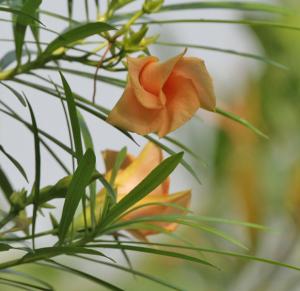
The flowers form near the ends of branches and are usually yellow, although apricot, orange, and white forms occur. Each flower has a long narrow tube that expands into five overlapping lobes, giving it a funnel- or trumpet-shaped appearance. Flowers may be fragrant and can appear during much of the year in warm climates.
The fruit is fleshy, angular, and somewhat triangular or flattened. It begins green and matures through yellowish or reddish tones toward dark brown or black. Inside is a hard woody stone containing highly poisonous kernels or seeds. The fruit may resemble a small green apple, unusual nut, or ornamental pod, which helps explain common names such as Lucky Nut and Lucky Bean. These common names are dangerously misleading because the kernel is one of the most hazardous plant parts.
Every Part of the Plant Is Poisonous
Cardenolides have been identified in seeds, leaves, bark, sap, fruit, and other tissues. No part should be offered as feed, used as a chew stick, placed in an animal enclosure, allowed in bedding, or assumed safe after drying. The highest concentration and greatest practical risk are usually associated with the seed kernels, but plant part alone does not define the full risk.
Amount swallowed, degree of chewing, body weight, species, plant chemistry, time to treatment, vomiting, and absorption determine the clinical dose more accurately than a simple “leaf versus seed” label. A crushed seed in a small dog may be catastrophic. A goat eating clippings may receive leaves, twigs, flowers, fruit, and sap together. A horse eating contaminated hay may receive repeated smaller doses hidden in forage.
Yellow Oleander and Common Oleander Are Separate Plants
Yellow Oleander is Cascabela thevetia. Common, Pink, or Rosebay Oleander is Nerium oleander. Both belong to Apocynaceae and both contain potent cardiac glycosides, but their toxin profiles and appearance differ.
Common Oleander usually has larger pink, red, white, or salmon flowers and leaves arranged opposite one another or in whorls of three. Yellow Oleander usually has narrow alternate or spirally arranged leaves, mostly yellow trumpet-shaped flowers, and angular fruit containing hard seeds. Oleandrin is the best-known cardiac glycoside of Nerium oleander, while thevetin A, thevetin B, peruvoside, and neriifolin are more characteristic of Yellow Oleander.
The “Suicide Tree” Name Is Ambiguous
Yellow Oleander has been called Suicide Tree because its seeds became a major means of intentional self-poisoning in Sri Lanka and parts of South Asia. The name is also strongly associated with Cerbera odollam, another poisonous Apocynaceae tree whose seeds contain cerberin and related cardiac glycosides.
Yellow Oleander and Cerbera odollam should not be treated as botanical synonyms. The shared common name reflects similar histories of deliberate seed ingestion and cardiac-glycoside poisoning rather than one plant species. For veterinary triage, preserve the actual plant, fruit, seed, or photographs rather than relying on “suicide tree” as an identification.
Thevetin A, Thevetin B, Peruvoside, Neriifolin, and Related Glycosides
Thevetin A and thevetin B are among the prominent cardenolides identified in Yellow Oleander. Both possess sugar residues attached to cardioactive aglycones and may cross-react to varying degrees with some laboratory digoxin assays. Peruvoside is another potent cardenolide historically investigated as a therapeutic cardiac glycoside, and neriifolin, thevetoxin, ruvoside, and related glycosides contribute to the plant’s broad digoxin-like activity.
The clinical syndrome cannot be assigned to one compound because animals and people ingest a mixture. Differences in plant part, seed maturity, chemotype, digestion, rumen retention, vomiting, metabolism, and elimination alter the proportion of each glycoside reaching the circulation. This is one reason seed counts and serum digoxin-like values do not perfectly predict outcome.
How Sodium-Potassium ATPase Maintains Cell Function
Sodium-potassium ATPase uses cellular energy to move three sodium ions out of the cell while transporting two potassium ions inward. This maintains the electrical gradient required for nerve conduction, skeletal and cardiac muscle function, vascular tone, kidney handling, intestinal transport, and normal cardiac rhythm.
Cardenolides bind to the pump and reduce its activity. Sodium accumulates inside the cell, potassium transport inward declines, and the sodium-calcium exchanger removes less calcium from cardiac muscle cells. The increase in intracellular calcium can strengthen contraction but also promotes delayed afterdepolarizations, abnormal automaticity, ectopic beats, and tachyarrhythmias. Simultaneous conduction slowing can produce sinus-node dysfunction and atrioventricular block.
Why Both Slow and Fast Arrhythmias Occur
Cardiac glycosides increase vagal influence and directly depress conduction through the atrioventricular node. These effects favor sinus bradycardia, sinoatrial block, and first-, second-, or third-degree atrioventricular block. At the same time, increased intracellular calcium can trigger abnormal impulses in atrial, junctional, or ventricular tissue.
Premature complexes, atrial tachycardia with block, ventricular tachycardia, and ventricular fibrillation may therefore occur alongside or after bradycardia. A rhythm may change rapidly. Treatment appropriate for one electrocardiographic pattern can be dangerous for another, which is why owners must never give unsupervised human heart medication.
Gastrointestinal Injury Is Often the First Warning
Vomiting, abdominal pain, diarrhea, and salivation are often the earliest signs in dogs, cats, and people. Horses develop colic, anorexia, salivation, depression, and diarrhea because they cannot vomit. Ruminants may show salivation, diarrhea, ruminal stasis, feed refusal, weakness, or sudden collapse.
The gastrointestinal signs result from local plant irritation, cardiac-glycoside effects on autonomic and enteric nerves, altered gastrointestinal motility, and sodium-potassium ATPase inhibition in intestinal tissue. Early vomiting may remove some material but does not guarantee safety. Serious rhythm abnormalities can develop after the stomach appears empty.
The Sri Lankan Self-Poisoning Epidemic
Human data from Sri Lanka provide much of the modern Yellow Oleander toxicology framework because the seeds became a major means of intentional self-poisoning. A large 1999 epidemic report documented hundreds of hospital admissions over an 11-month period and frequent serious dysrhythmias. Treatment delays and long transfers contributed to mortality.
Those human self-poisoning data should not be used as a direct numerical prediction for a dog chewing one leaf or a goat eating clippings. They do, however, prove that Yellow Oleander seeds can produce lethal cardiotoxicity, high-grade conduction block, serious arrhythmias, and prolonged management needs. They also support treating credible seed or kernel ingestion as urgent before obvious rhythm collapse occurs.
Anti-Digoxin Fab Evidence
Anti-digoxin Fab fragments are the best-supported antidotal treatment for severe Yellow Oleander cardiac-glycoside poisoning. In a randomized human trial of serious Yellow Oleander cardiotoxicity, antibody-treated patients had much faster rhythm improvement than controls. The treatment binds circulating digoxin-like plant glycosides, reduces the amount available to sodium-potassium ATPase, and can reverse arrhythmias and hyperkalemia.
Veterinary use is extrapolated from the shared mechanism, human Yellow Oleander data, and published animal oleander cases. Successful use has been reported in dogs and cats with severe Nerium oleander toxicosis. Those cases involved Common Oleander rather than Yellow Oleander, but the shared sodium-potassium ATPase target supports early toxicologist consultation for severe veterinary Yellow Oleander exposure.
How Digoxin-Specific Antibody Fragments Work
Digoxin immune Fab consists of antibody fragments developed to bind digoxin. The binding sites also recognize several structurally similar plant cardiac glycosides. Once bound, free active glycoside concentration falls, allowing sodium-potassium ATPase activity to recover. Cardiac conduction and rhythm may improve, and potassium can move back into cells.
The antibody-glycoside complexes remain primarily within the circulation and are eventually eliminated, largely through the kidneys. Renal impairment can prolong complex persistence and requires continued monitoring. Routine total digoxin laboratory results become difficult to interpret after Fab administration because many assays measure both free and antibody-bound immunoreactive material. Rhythm, potassium, perfusion, blood pressure, and free-glycoside testing when available are more meaningful.
Activated Charcoal Evidence Is Mixed
Activated charcoal has been studied extensively in human Yellow Oleander poisoning because some cardiac glycosides can undergo intestinal recirculation. One randomized Yellow Oleander trial reported lower mortality and fewer life-threatening arrhythmias with multiple-dose activated charcoal under the conditions of that study.
A later much larger acute self-poisoning trial found no routine mortality benefit from activated charcoal overall, including within individual poison subgroups. These studies do not mean charcoal is useless, and they do not mean every patient should receive repeated doses. The correct veterinary conclusion is that charcoal is a professional decontamination tool to be considered after timing, dose, airway protection, vomiting, ileus, hydration, sodium, neurologic status, and aspiration risk are assessed.
Atropine, Antiarrhythmics, Pacing, and Fluids
Atropine can improve clinically significant vagally mediated bradycardia and some atrioventricular conduction disturbances, but response is variable because conduction block also results from direct sodium-potassium ATPase inhibition. Atropine does not bind or remove the glycosides. Increasing heart rate can also expose or worsen ectopic activity in an electrically unstable heart.
Lidocaine may be used for selected ventricular arrhythmias, while other rhythm patterns may require different medication. Phenytoin has historical use in digoxin-like poisoning because it can suppress ventricular ectopy without markedly slowing atrioventricular conduction. Procainamide, beta blockers, calcium-channel blockers, potassium chloride, and other agents can worsen hypotension, conduction block, or myocardial instability in the wrong patient. Intravenous fluids are often necessary but must be selected and monitored with potassium, rhythm, kidney function, and perfusion in mind.
Temporary Cardiac Pacing
Temporary pacing was historically central to severe Yellow Oleander management where digoxin immune Fab was unavailable or unaffordable. Pacing may support selected patients with severe bradycardia or high-grade atrioventricular block that does not respond to medical treatment.
Pacing does not remove the glycoside or correct hyperkalemia. Introducing a pacing wire into an electrically irritable heart can provoke ventricular arrhythmias. Digoxin-specific antibodies are preferred when available for severe cardiac-glycoside poisoning, while pacing remains a carefully selected rescue procedure.
Fructose-1,6-Diphosphate
Experimental canine research using Common Oleander found that fructose-1,6-diphosphate improved hemodynamics, restored sodium-potassium ATPase activity under experimental conditions, and reversed dysrhythmias in treated dogs compared with controls. The work is mechanistically important and relevant because Common Oleander and Yellow Oleander share cardiac-glycoside physiology.
It remains experimental or limited-support evidence rather than a standard owner-administered or routine veterinary antidote for Yellow Oleander. It should not be presented as a replacement for digoxin-specific Fab. Any use would require professional judgment, availability, regulatory context, and toxicologist guidance.
Rumenotomy and Livestock Decontamination
In cattle, sheep, and goats, plant material may remain within the rumen and continue releasing glycosides. Veterinarians may consider removal of rumen contents, lavage, activated charcoal, or rumenotomy after a substantial recent ingestion. These decisions depend on how much plant remains, whether it can be removed, and whether the animal is cardiovascularly stable enough to tolerate restraint or surgery.
Rumenotomy is invasive, and gathering or restraining an animal with serious arrhythmia can provoke collapse. The potential benefit must be weighed against shock, hyperkalemia, rhythm instability, and the likelihood that meaningful material remains. The entire group should be removed from the source while individual animals are evaluated.
Goat Clipping Poisoning
A recent veterinary case report involving four goats shows why discarded ornamental clippings are not a theoretical hazard. The goats developed diarrhea after Yellow Oleander clippings were placed in their pen. One goat died suddenly about one hour after eating the plant material. Postmortem and histopathology findings were consistent with cardiac-glycoside intoxication, and toxicologic analysis detected Yellow Oleander glycosides in rumen contents and plant material.
This case is important because it involved accidental livestock access to clippings rather than deliberate human seed ingestion. It supports the page’s practical prevention message: pruning debris, hedge trimmings, fallen branches, fruit, seeds, and ornamental waste must never be thrown into pens, paddocks, pastures, chicken yards, goat runs, compost piles accessible to animals, or feed areas.
Dogs
Dogs may chew branches, retrieve cut sticks, eat fallen fruit, crack seeds, investigate pruning debris, raid compost, or consume plant material from landscaping waste. A seed or crushed kernel creates a much more concerning exposure than one brief lick of a leaf, but a known ingestion of any part should be triaged urgently.
Vomiting and diarrhea may be followed by weakness, slow heart rate, irregular rhythm, tremors, collapse, or seizures. A dog should not be left at home merely because it vomited after exposure. Digoxin immune Fab has been used successfully in canine Common Oleander poisoning and may be considered for severe Yellow Oleander toxicosis because the cardenolides share the same molecular target.
Cats
Cats may nibble foliage, contact milky sap during pruning, chew dried leaves, or ingest plant residue while grooming contaminated paws or fur. Their small body size increases the dose per kilogram from a small seed or fragment. Vomiting, diarrhea, depression, weakness, bradycardia, arrhythmias, collapse, and neurologic signs are possible.
Veterinary literature documents successful digoxin-Fab treatment of a cat with severe Common Oleander poisoning, reinforcing the need for early antidotal consultation in serious Yellow Oleander exposure. Cats should not be treated with owner-induced vomiting, essential oils, home charcoal, or leftover heart medication.
Horses
Horses are commonly exposed when hedge clippings are thrown into a paddock, branches fall across a fence, or dried material contaminates hay. They cannot vomit. Early signs include salivation, anorexia, colic, diarrhea, depression, and decreased gastrointestinal sounds.
Weak pulses, slow capillary refill, cold extremities, bradycardia, dropped beats, ventricular ectopy, weakness, tremors, collapse, and death may follow. Colic accompanied by an abnormal heart rhythm after ornamental-plant exposure is a medical emergency. Horses should not be drenched, chased, or forced to walk continuously when cardiac instability is possible.
Cattle, Sheep, Goats, Pigs, Poultry, and Other Livestock
Cattle, sheep, and goats normally avoid the living plant when adequate forage is available, but clipping disposal, feed shortage, curiosity, storm damage, and hay contamination can create large exposures. Plant fragments can remain within the rumen and continue releasing glycosides. Multiple animals may become ill within a short period when one contaminated feed source is involved.
Pigs, poultry, and other livestock may eat discarded fruit, seeds, meal, compost, or mixed ornamental waste rapidly. Any group event involving salivation, diarrhea, feed refusal, weakness, abnormal pulse, cold extremities, recumbency, tremors, sudden death, or collapse after access to clippings or a new feed source should be treated as an emergency and investigated with the feed material preserved.
Diagnosis
Diagnosis begins with a credible exposure and recognition of gastrointestinal illness followed by cardiac or electrolyte abnormalities. Save the whole plant, seeds, fruit, twigs, leaves, flowers, hay, vomited material, rumen contents when available, and photographs. A recognizable plant sample can shorten time to treatment.
Electrocardiography is essential because pulse counting alone cannot identify the full rhythm. Continuous monitoring may reveal intermittent atrioventricular block, ectopic beats, ventricular runs, or rapid changes between bradycardia and tachycardia. Laboratory evaluation commonly includes serum potassium, sodium, magnesium, calcium, glucose, kidney values, liver enzymes, acid-base status, complete blood count, urinalysis, lactate, blood pressure, and perfusion assessment.
Commercial digoxin immunoassays may detect cross-reacting Yellow Oleander glycosides, but the measured value does not correspond reliably to a digoxin dose or severity. Different assays recognize different plant compounds. A negative or modest value does not exclude poisoning when the exposure and clinical signs fit.
Important Differential Diagnoses
Other cardiac-glycoside plants include Common Oleander, Foxglove, Lily of the Valley, Milkweed, Dogbane, Kalanchoe, Desert Rose, Yellow Oleander relatives, Star of Bethlehem, Cerbera, and other Apocynaceae species. Yew, aconite, ionophore-contaminated feed, blue-green algae, organophosphate or carbamate pesticides, metaldehyde, electrolyte disorders, cyanide plants, nitrate plants, primary cardiac disease, and several medications can also cause gastrointestinal illness with arrhythmias, weakness, or collapse.
Hyperkalemia accompanied by bradycardia also requires consideration of urinary obstruction, kidney failure, Addison’s disease, severe tissue injury, acid-base disturbance, and certain drugs. A plant found nearby may be the cause, but the animal still needs rhythm, electrolyte, perfusion, and differential evaluation.
Veterinary Treatment
There is no safe home treatment. Veterinary management may include carefully selected gastrointestinal decontamination, continuous electrocardiographic monitoring, repeated electrolytes, intravenous fluids, antiemetics, oxygen, temperature support, seizure control, blood-pressure support, rhythm-specific medication, and digoxin-specific antibody fragments.
Professional decontamination is most useful before extensive absorption but must not delay stabilization of a patient with arrhythmia, shock, seizures, respiratory distress, or an unprotected airway. An animal with a substantial seed or plant ingestion may require observation for at least 24 hours and sometimes longer because rhythm abnormalities can recur after apparent improvement.
Prognosis
The prognosis depends on dose, seed damage, plant part, time to treatment, serum potassium, heart rhythm, blood pressure, hydration, species, body size, response to therapy, and access to digoxin immune Fab. Patients presenting early with mild gastrointestinal signs and normal rhythm may recover completely after appropriate decontamination and monitoring.
The outlook becomes guarded to grave with marked hyperkalemia, third-degree atrioventricular block, ventricular tachycardia, ventricular fibrillation, severe hypotension, persistent seizures, aspiration, prolonged shock, or delayed presentation. Claims that treatment is routinely unsuccessful are too pessimistic now that continuous monitoring, modern critical care, and digoxin-specific antibody fragments are available. Delay remains one of the most important predictors of a poor outcome.
Prevention
Do not plant Yellow Oleander where dogs, cats, horses, livestock, poultry, rabbits, tortoises, or children can access foliage, fruit, fallen seeds, clippings, or sap. Wear gloves and eye protection while pruning. Collect every branch, leaf, flower, fruit, and seed immediately and place the material in a secure disposal container.
Never throw clippings into paddocks, pastures, compost accessible to animals, chicken yards, goat pens, tortoise runs, rabbit areas, or open burn piles. Do not use the wood for grilling, campfire cooking, skewers, firewood, bird perches, reptile branches, fetch toys, or chew sticks. Inspect hay and feed for unfamiliar ornamental material and investigate immediately when multiple animals develop gastrointestinal illness, weakness, or cardiac abnormalities after receiving a new ration.
Immediate Steps After Exposure
Treat every credible ingestion as urgent. Seeds, crushed kernels, fruit, leaves, flowers, bark, twigs, sap, dried clippings, hay contamination, silage contamination, compost, ash, and brewed or prepared plant material can all cause poisoning. Remove the source immediately and prevent additional animals from reaching the plant, fallen fruit, seeds, branches, hay, silage, compost, ash, bedding, water, or contaminated feed.
- Contact a veterinarian or animal poison-control service immediately: Report the species, body weight, plant part, estimated quantity, whether seeds or kernels were chewed, time of exposure, vomiting, diarrhea, pulse changes, weakness, collapse, and current neurologic signs.
- Keep the animal quiet: Limit exercise, excitement, running, chasing, and stressful restraint because exertion increases cardiac workload and may precipitate collapse.
- Preserve evidence: Bring the plant, fruit, seed, kernel, branch, leaves, flowers, photographs, hay, feed sample, compost, ash, and recognizable material found in vomit or manure.
- Isolate shared sources: Remove contaminated hay, clippings, feed, bedding, compost, and water from all animals. Do not feed the remainder while waiting to see whether more animals become ill.
- Transport carefully: Keep the animal cool, calm, and supported. Avoid unnecessary exertion, rough handling, or long delays while trying home remedies.
Do Not Attempt Unsupervised Home Treatment
- Do not induce vomiting with hydrogen peroxide: Peroxide can cause severe gastritis, esophageal injury, prolonged vomiting, bleeding, and aspiration.
- Do not use salt, mustard, oil, syrup of ipecac, dish soap, or manual gagging: These methods can create additional poisoning, airway injury, aspiration, and treatment delay.
- Do not force activated charcoal: Charcoal may be valuable in selected cases but can be aspirated by a vomiting, weak, collapsed, seizing, or poorly swallowing animal.
- Do not force food, water, milk, broth, or electrolyte solution: Repeated vomiting, weakness, rhythm disturbance, and neurologic abnormalities increase aspiration risk.
- Do not give potassium: Severe cardiac-glycoside poisoning commonly causes hyperkalemia, and unsupervised potassium can precipitate fatal arrhythmias.
- Do not give calcium products or injections: Calcium therapy requires professional assessment of rhythm, potassium, and cardiovascular status.
- Do not give atropine, lidocaine, procainamide, beta blockers, calcium-channel blockers, diuretics, digoxin-related drugs, or another heart medication yourself: Treatment for one rhythm may worsen another.
- Do not give Kapectolin, Kaopectate, sucralfate, antacids, antihistamines, pain medication, probiotics, or antidiarrheal medication: These products do not neutralize cardiac glycosides or prevent rhythm deterioration.
- Do not burn remaining plant material: Burning can create irritating smoke and contaminated ash, and animals may later lick or chew residues.
When Emergency Examination Is Required
- A seed or kernel may have been chewed: Seed exposure can produce severe poisoning even before symptoms appear.
- Vomiting, diarrhea, drooling, or colic develops: Gastrointestinal signs may be the first stage of a progressive cardiac-glycoside syndrome.
- The heartbeat is slow, rapid, forceful, weak, or irregular: Yellow Oleander can cause multiple life-threatening rhythm disturbances.
- Weakness, cold extremities, poor capillary refill, or collapse occurs: These signs may indicate inadequate cardiac output and shock.
- Tremors, staggering, paralysis, seizures, stupor, or coma develops: Neurologic deterioration may reflect arrhythmia, electrolyte imbalance, poor brain perfusion, or severe poisoning.
- Breathing becomes rapid or difficult: Respiratory distress can accompany shock, aspiration, seizures, acid-base disturbance, or terminal cardiovascular failure.
- Multiple animals are affected: Remove the ration, clippings, hay, compost, or pasture source immediately and preserve representative samples for plant identification and testing.
Veterinary Stabilization and Monitoring
The veterinarian will assess heart rhythm, pulse quality, blood pressure, perfusion, neurologic status, hydration, temperature, mucous membranes, respiratory function, and gastrointestinal signs. Continuous electrocardiographic monitoring is usually required after substantial exposure, seed exposure, weakness, abnormal pulse, collapse, or electrolyte abnormality.
Serum potassium and other electrolytes must be measured repeatedly. Hyperkalemia supports severe sodium-potassium ATPase inhibition and can guide the urgency of digoxin-specific antibody treatment. Oxygen, airway protection, antiemetics, seizure control, temperature support, blood-pressure support, and carefully selected intravenous fluids may be needed. Fluid composition and rate must account for potassium, rhythm, kidney function, urine production, and cardiovascular stability.
Veterinary Decontamination
A veterinarian may induce vomiting after a recent ingestion in an alert dog or cat that has no arrhythmia, neurologic impairment, respiratory distress, repeated vomiting, or loss of normal swallowing. The decision must be made quickly and safely before treatment delay becomes more dangerous than the retained plant material. Vomiting is not appropriate in a collapsed, seizing, severely weak, poorly swallowing, or unstable patient.
Activated charcoal may be administered to bind glycosides remaining in the gastrointestinal tract. Repeated dosing may be considered because plant cardiac glycosides can undergo intestinal recirculation, but the evidence is mixed and hydration, motility, sodium, aspiration risk, neurologic status, and patient cooperation must be considered. Gastric lavage is reserved for selected severe recent exposures under anesthesia with a protected airway.
In ruminants, removal of rumen contents, lavage, activated charcoal, or rumenotomy may be considered when a large amount of plant material remains accessible and cardiovascular status permits the procedure. Restraint, transport, surgery, and handling can be dangerous in arrhythmic animals, so the veterinarian must balance decontamination benefit against collapse risk.
Digoxin-Specific Antibody Fragments
Digoxin immune Fab is the best-supported antidotal treatment for severe Yellow Oleander cardiac-glycoside poisoning. It binds circulating glycosides, reduces the amount available to sodium-potassium ATPase, and can reverse arrhythmias and hyperkalemia. Waiting for a conventional digoxin concentration should not delay treatment in a deteriorating patient when the exposure and clinical syndrome fit.
Veterinary use is based on the clinical syndrome, rhythm, serum potassium, body size, estimated exposure, product availability, cost, renal function, and toxicologist consultation. Potassium can fall rapidly after effective Fab treatment as pump function returns and potassium moves back into cells. Continued electrocardiographic and electrolyte monitoring is therefore essential.
Rhythm-Specific Treatment
Atropine may be used for clinically significant bradycardia or atrioventricular conduction block, but response can be incomplete and continuous monitoring is necessary. Lidocaine or another veterinarian-selected antiarrhythmic may be used for particular ventricular rhythms. No single antiarrhythmic is correct for every Yellow Oleander arrhythmia.
Temporary pacing may be considered for severe refractory bradyarrhythmias but does not remove the toxin and can provoke ventricular ectopy in an irritable heart. Potassium supplementation, calcium administration, beta blockers, calcium-channel blockers, procainamide, and other cardiac drugs require exact rhythm and electrolyte assessment before use.
Fructose-1,6-Diphosphate
Experimental canine research using Common Oleander found that fructose-1,6-diphosphate prevented hyperkalemia, restored sodium-potassium ATPase activity under experimental conditions, improved hemodynamics, and reversed dysrhythmias. This remains experimental or limited-support evidence rather than a standard home or routine veterinary antidote for Yellow Oleander.
It should not be presented to owners as something to request instead of digoxin-specific Fab. Any consideration of fructose-1,6-diphosphate belongs to the veterinarian or toxicologist managing a severe case with appropriate monitoring and product access.
Dogs and Cats
Dogs and cats with credible seed, kernel, fruit, clipping, leaf, twig, or sap ingestion require emergency triage. Small animals may receive a dangerous dose from a small amount of crushed seed or plant material. Do not wait for abnormal pulse, collapse, or seizures before calling.
A veterinarian may use decontamination, antiemetics, ECG monitoring, electrolytes, fluids, rhythm-specific medication, and digoxin-specific Fab depending on severity. Cats should never be treated with home peroxide, forced charcoal, essential oils, or leftover medication.
Horses and Livestock
Horses, ponies, donkeys, cattle, sheep, goats, pigs, alpacas, llamas, poultry, and other livestock should be removed from the source and provided safe feed and clean water. Do not drive, chase, or stress weak, colicky, dyspneic, recumbent, tremoring, or arrhythmic animals unless directed by a veterinarian. Group exposure should be treated as a feed-source or clipping-disposal emergency.
Hay, clippings, fruit, seeds, silage, bedding, compost, and feed samples should be saved before the material is discarded. If Yellow Oleander is suspected in hay or feed, inspect several areas of the bale, stack, feeder, bin, or pen because contamination may be uneven. Several animals exposed to one source may need observation even when only one initially appears sick.
Rabbits, Guinea Pigs, Birds, Reptiles, and Small Pets
Small pets should not be fed Yellow Oleander leaves, flowers, fruit, twigs, dried material, or clippings as greens, browse, cage décor, poultry greens, tortoise forage, perches, bedding, or enrichment. If exposure occurs, remove the plant and contact an appropriate veterinarian immediately. Do not force food, water, oil, milk, charcoal, or household medication.
Birds with poor perching, regurgitation, weakness, abnormal breathing, collapse, or suspected seed exposure need avian guidance. Rabbits and guinea pigs with appetite loss, diarrhea, reduced fecal output, weakness, or collapse need prompt care. Reptiles and tortoises may show reduced appetite, inactivity, abnormal stool, weakness, or respiratory signs rather than the dog-and-cat vomiting pattern.
Recovery and Prognosis
Early treatment before major hyperkalemia, shock, or ventricular arrhythmia offers the best prognosis. Animals with mild gastrointestinal signs, stable electrolytes, and a persistently normal electrocardiogram may recover fully after appropriate decontamination and monitoring.
Monitoring should continue after apparent improvement because recurrent absorption and intestinal recirculation can produce delayed rhythm abnormalities. The prognosis becomes guarded to grave with severe hyperkalemia, high-grade atrioventricular block, ventricular tachycardia or fibrillation, prolonged hypotension, seizures, aspiration, coma, or delayed presentation.
Prevention After the Incident
Remove Yellow Oleander from animal-accessible areas whenever practical. If the plant remains on the property, fence it securely, collect fallen fruit and seeds daily, and never allow animals near pruning debris. Wear gloves and eye protection when pruning, and place all plant material in secure disposal containers.
Never place clippings in paddocks, goat pens, chicken yards, rabbit areas, compost accessible to animals, or burn piles. Do not use branches as fetch sticks, chew toys, bird perches, reptile branches, firewood, skewers, or cooking fuel. Inspect hay, silage, bedding, and feed when ornamental clippings are stored or discarded nearby.
Frequently Asked Questions About Yellow Oleander and Animal Poisoning
Is Thevetia peruviana still the accepted scientific name?
The currently accepted name used here is Cascabela thevetia. Thevetia peruviana is an important botanical synonym and remains widely used in veterinary, medical, toxicological, horticultural, poison-control, and older scientific literature. Both names should stay visible because owners and veterinarians may encounter either one.
Is Yellow Oleander the same plant as Common or Pink Oleander?
No. Yellow Oleander is Cascabela thevetia, while Common, Pink, or Rosebay Oleander is Nerium oleander. Both contain cardiac glycosides and can cause a similar digoxin-like poisoning syndrome, but they are separate plants with different appearances and different dominant glycosides.
Which parts of Yellow Oleander are poisonous?
Seeds, kernels, fruit, leaves, flowers, bark, twigs, roots, sap, dried plant material, clippings, hay contamination, silage contamination, and composted fragments are poisonous. Seeds and crushed kernels are especially dangerous, but no plant part should be considered safe for dogs, cats, horses, livestock, birds, reptiles, rabbits, guinea pigs, or other animals.
What toxins are present in Yellow Oleander?
The principal toxins are cardenolide cardiac glycosides, especially thevetin A and thevetin B. Peruvoside, neriifolin, thevetoxin, ruvoside, thevebioside, and other related glycosides also occur. These compounds inhibit sodium-potassium ATPase and can destabilize heart rhythm, electrolytes, gastrointestinal function, and nervous-system function.
Is thevetin B a cerebroside?
No. Thevetin B is a cardenolide cardiac glycoside. Cerebrosides are structurally unrelated glycosphingolipids found in membranes and nervous tissue. The parenthetical label “cerebroside” is incorrect and should not be used for thevetin B on a veterinary toxicology page.
How do Yellow Oleander cardiac glycosides affect the heart?
They inhibit sodium-potassium ATPase. Intracellular sodium and calcium rise, potassium transport is disrupted, and cardiac conduction and automaticity become unstable. The result may be bradycardia, sinoatrial block, atrioventricular block, premature beats, atrial tachycardia with block, ventricular tachycardia, ventricular fibrillation, or cardiac arrest.
Why does Yellow Oleander cause hyperkalemia?
Sodium-potassium ATPase normally moves potassium into cells. When the pump is strongly inhibited, potassium remains outside cells and the serum concentration may rise. Marked hyperkalemia reflects severe pump inhibition and can worsen muscle weakness, bradycardia, conduction block, ventricular arrhythmias, collapse, and cardiac arrest.
Can only one Yellow Oleander seed poison an animal?
A single chewed seed can represent a serious exposure, especially in a small animal, but toxicity varies with seed size, kernel damage, glycoside concentration, body weight, vomiting, absorption, and time to treatment. No number of seeds should be treated as reliably safe. A known seed or kernel exposure requires immediate veterinary guidance.
Does drying or heating make Yellow Oleander safe?
No. Cardiac glycosides can persist in dried leaves, twigs, fruit, seeds, hay, clippings, and other plant material. Heating is not a dependable detoxification method. Yellow Oleander wood should never be used for cooking, grilling, skewers, firewood, animal chew sticks, bird perches, reptile branches, or bedding.
Is Yellow Oleander really called Suicide Tree?
It is called Suicide Tree in some regions because its seeds have been used for intentional self-poisoning. The same name is also strongly associated with Cerbera odollam, a separate cardiac-glycoside plant. The shared common name reflects similar poisoning history, not botanical identity.
What did the Sri Lankan poisoning studies show?
Yellow Oleander seeds caused a major self-poisoning epidemic in Sri Lanka, with hundreds of hospital admissions, frequent serious arrhythmias, and substantial mortality. Those human data should not be used to predict the exact outcome of one pet exposure, but they prove that the seeds can cause lethal digoxin-like cardiotoxicity.
Is there a specific antidote?
Yes. Digoxin-specific antibody fragments can bind Yellow Oleander cardiac glycosides and reverse severe arrhythmias and hyperkalemia. A randomized human Yellow Oleander trial showed substantially faster rhythm recovery after anti-digoxin Fab treatment. Veterinary use requires toxicologist guidance, patient monitoring, and attention to cost and availability.
Has digoxin immune Fab been used in animals?
Yes. Successful treatment has been reported in dogs and cats poisoned by Common Oleander, Nerium oleander. Those cases involved a different oleander species, but the shared sodium-potassium ATPase mechanism supports professional Fab consideration for severe Yellow Oleander poisoning when rhythm disturbance, hyperkalemia, collapse, or substantial seed exposure is present.
Does multiple-dose activated charcoal work?
The evidence is mixed. One Yellow Oleander trial reported reduced mortality and fewer serious arrhythmias with multiple-dose activated charcoal, while a later much larger acute self-poisoning trial found no routine mortality benefit. A veterinarian must decide whether charcoal is appropriate and safe based on timing, airway protection, vomiting, hydration, gut motility, and clinical stability.
Should vomiting be induced at home?
No. Hydrogen peroxide can cause severe stomach and esophageal injury, prolonged vomiting, bleeding, and aspiration. A veterinarian may induce vomiting after a recent ingestion only when the animal is alert, stable, and able to protect its airway. Owners should not attempt home vomiting for Yellow Oleander exposure.
Can activated charcoal be given at home?
No. Charcoal may be useful in selected professionally managed cases, but it can be aspirated by a vomiting, weak, collapsed, seizing, or poorly swallowing animal. It also does not replace electrocardiographic monitoring, repeated potassium testing, rhythm-specific treatment, or digoxin-Fab therapy when severe poisoning develops.
Can Yellow Oleander poison dogs?
Yes. Dogs may chew branches, eat fallen fruit, crack seeds, retrieve clippings, or raid compost. Vomiting and diarrhea may be followed by weakness, slow heart rate, irregular rhythm, tremors, collapse, seizures, or sudden death. A known seed, fruit, clipping, or branch exposure should be treated as an emergency even if the dog vomits afterward.
Can Yellow Oleander poison cats?
Yes. Cats may nibble foliage, contact sap, chew dried plant material, or swallow residue while grooming. Their small body size makes even a small amount concerning. Vomiting, diarrhea, depression, weakness, abnormal pulse, collapse, tremors, or seizures after exposure requires emergency veterinary care. Cats should not be made to vomit at home.
Can Yellow Oleander poison horses and livestock?
Yes. Horses, cattle, sheep, goats, pigs, camelids, and other livestock can develop salivation, colic or abdominal discomfort, diarrhea, ruminal or gastrointestinal stasis, weak pulse, arrhythmias, cold extremities, tremors, collapse, and death. Clippings, fallen branches, contaminated hay, and ornamental waste are major exposure routes.
Can goats be poisoned by Yellow Oleander clippings?
Yes. A veterinary case report described four goats exposed when Yellow Oleander clippings were placed in their pen; one goat died suddenly about one hour after eating the material. Toxicologic testing detected Yellow Oleander cardiac glycosides. Clippings should never be placed where goats or other livestock can browse them.
Is Yellow Oleander safe for rabbits, guinea pigs, birds, or reptiles?
No. Yellow Oleander should never be used as browse, cage greenery, bedding, bird perch material, poultry greens, tortoise forage, reptile décor, or enrichment. Species-specific safe doses are not established, and small animals may receive a dangerous dose from a tiny seed, leaf fragment, flower, or twig.
How quickly do symptoms begin?
Vomiting, diarrhea, salivation, colic, or abdominal pain may begin within one to several hours. Serious rhythm abnormalities can develop rapidly, appear later, or recur after temporary improvement, especially when seeds were chewed. A normal early appearance does not prove safety after a credible exposure.
Can an animal recover from Yellow Oleander poisoning?
Yes. Early decontamination, electrocardiographic monitoring, repeated electrolyte testing, supportive care, rhythm-specific treatment, and digoxin immune Fab can produce recovery. Severe hyperkalemia, high-grade atrioventricular block, ventricular tachycardia, ventricular fibrillation, prolonged shock, seizures, aspiration, or delayed treatment worsen the prognosis.
How do veterinarians diagnose Yellow Oleander poisoning?
Diagnosis begins with exposure history and plant identification, then focuses on gastrointestinal signs, electrocardiographic abnormalities, potassium and other electrolytes, kidney values, acid-base status, blood pressure, perfusion, and response to treatment. Digoxin immunoassays may cross-react with plant glycosides, but results do not perfectly predict dose or severity.
What differentials matter most?
Important differentials include Common Oleander, Foxglove, Lily of the Valley, Milkweed, Dogbane, Kalanchoe, Desert Rose, Star of Bethlehem, Cerbera, yew, aconite, ionophore-contaminated feed, blue-green algae, organophosphate or carbamate pesticides, metaldehyde, cyanide plants, nitrate plants, urinary obstruction, kidney failure, Addison’s disease, and primary cardiac disease.
How can Yellow Oleander poisoning be prevented?
Keep the plant away from animals, collect fallen seeds and fruit, secure every pruning fragment, and never place clippings in paddocks, compost accessible to animals, goat pens, chicken yards, tortoise runs, or burn piles. Do not burn the plant, cook with its wood, or use its branches as fetch toys, chew sticks, perches, or enclosure décor.