Grooming Dryers • Cabinet Dryers • Box Dryers • Dryer Cages • Heat Safety • High-Volume Grooming • Labor Savings • Monitoring Rules
Cabinet / Box Grooming Dryers: Commercial-Oven Looks, Real Labor Savings, and Zero Room for Complacency
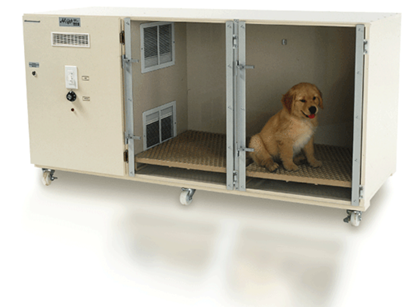
Without doubt, dryer cages, cabinet dryers, and box dryers are some of the most controversial drying equipment available in the grooming industry.
Their appearance does little to calm customer concern because many of them look like commercial cooking ovens for dogs.
In most instances, a box dryer is a single piece of equipment that combines a one- or two-unit grooming kennel with a cage dryer. Many have heating elements, fans, enclosed airflow, timers, temperature controls, and some version of a chamber where the pet remains while drying.
Regardless of how scary they may look, when used intelligently and safely, these dryers can be effective, safe, labor-saving, and profit-increasing equipment.
But this is not casual equipment. This is not “put dog in, press button, go disappear.” This is a machine that can save labor when monitored and become dangerous when lazy people treat it like a magic dog-drying microwave.
⚠️
Operator rule
A cabinet dryer is only as safe as the person monitoring it. Heat, confinement, airflow, breed risk, age, health, stress, visibility, timer settings, and staff attention are not optional details.
🗺️
Use This Page Like a Cabinet Dryer Reality Check
Cabinet dryers can save labor in a busy grooming room, but only when safety rules are treated like operating law.
🔥
Why They Are Controversial
Box dryers look scary, have a history of heat-related concern, and require serious monitoring.
⚖️
Tool vs Operator
The machine does what it is set to do. The person is responsible for whether the pet is safe.
🌡️
Temperature Reality
Lower temperature settings and safety features help, but they do not replace monitoring.
✅
Proper Use
Best used for short-coated dogs or excess moisture removal before proper hand drying.
🚫
Dogs I Would Not Use It On
Brachycephalic, elderly, infirm, compromised, and heat-sensitive dogs need extra caution or exclusion.
✅
Operator Verdict
Useful in high-volume shops when monitored properly. Dangerous when treated like a shortcut.
🖼️
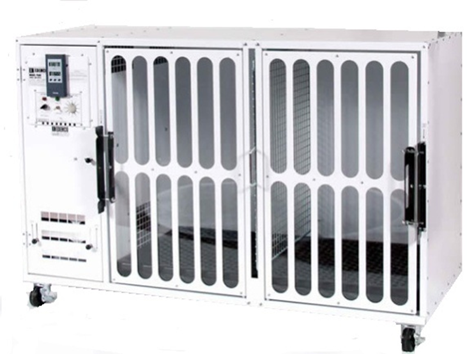
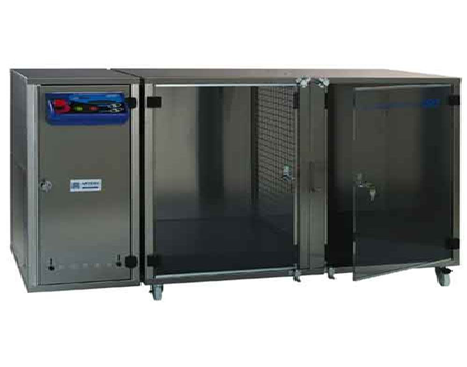
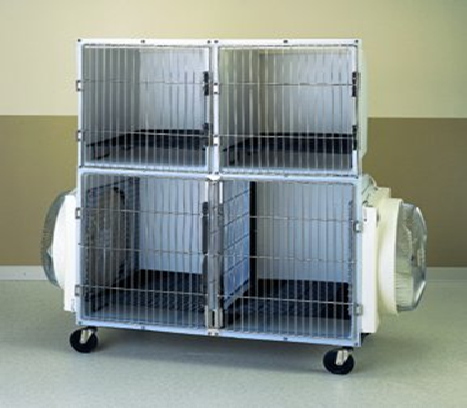
Cabinet / Box Grooming Dryer Examples
These examples show the enclosed cabinet and box-style dryer equipment used to reduce hands-on drying labor in grooming operations.
🏠
What Cabinet / Box Grooming Dryers Are
They combine a confined drying chamber with airflow, heat, timers, and labor-saving intent.
In most instances, a box dryer or cabinet dryer is a single piece of equipment that combines a grooming kennel or drying chamber with a cage dryer system.
Some are one-compartment units. Some are two-compartment units. Some are larger cabinet-style systems. Some are closer to dryer cages. Some look like they belong in a grooming salon. Some look like they belong behind a restaurant kitchen with a warning label.
They normally use fans, controlled airflow, heating elements, timers, vents, filters, and temperature settings to dry or partially dry pets while the groomer works elsewhere.
That is the business appeal. When one pet is safely drying, the groomer or bather can be working on another dog.
This can reduce hands-on drying labor, increase workflow efficiency, and help a busy shop turn out more groomed dogs.
But the same thing that makes them attractive is also what makes them dangerous. The pet is confined while heat and airflow continue.
📌
Main idea
A cabinet dryer is a labor-saving drying chamber. That does not make it bad. It does mean the safety rules have to be stronger than the temptation to walk away.
🔥
Why Cabinet and Box Dryers Are So Controversial
Their appearance is bad enough. Their misuse history is worse.
Their appearance does little to assuage customer concerns because many resemble a commercial cooking oven for dogs.
That alone is enough to make some pet owners uncomfortable. They see a box, a door, heat, airflow, and their dog inside, and their brain goes straight to “absolutely not.”
I understand that reaction.
I would also be remiss if I did not mention the fact that this category has been tied to many reported pet deaths over the years, most commonly involving heat-related illness, confinement, and lack of proper monitoring.
Search the topic and you will find enough stories to make your heart bleed, your stomach turn, and your fists curl in rage.
That does not mean every cabinet dryer is evil equipment. It means the equipment is unforgiving when used by negligent, lazy, inattentive, or poorly trained people.
A tool with the ability to save labor also has the ability to create disaster if the person using it decides convenience is more important than the animal inside.
⚠️
Public perception warning
Even when used safely, box dryers can look alarming to customers. Staff need to understand the equipment, the safety rules, and how to explain the process without sounding like they are defending a dog oven.
⚖️
The Machine Is Not the Brain in the Room
A cabinet dryer does what it is set to do. The person using it is responsible for whether that use is safe.
Professionals and people of common sense have to be honest about where blame usually belongs when a tool under human supervision and control does harm.
Unless the tool is defective, broken, improperly manufactured, or honestly misrepresented, the blame normally does not belong to the object. It belongs to the person who used it wrong, failed to supervise it, ignored the risk, or got lazy while another living thing depended on them.
Does the blame lie on the shiny red sports car, or on the drunk driver who chose to operate it?
Does it lie on the swimming pool, or on the pet owner who failed to supervise the pet around it?
Does it lie on the toaster, or on the person who decided to go on a butter-knife expedition into its depths for that last crumb without unplugging it from the wall?
In the case of dryer cages, box dryers, and cabinet dryers, does the blame lie on the dryer, or on the groomer or staff member responsible for monitoring the health and well-being of the pet placed inside it?
In normal operation, it is not the dryer’s fault that a pet overheated any more than it is the power company’s fault for supplying the electricity that allowed the dryer to run.
The fault belongs to the negligent, lazy, inattentive, or poorly trained person who adopted an attitude of complacency while using it.
This is a machine. Nothing more, nothing less.
It does what it is set to do. If the heat is turned up, it gets hot. If a pet is placed inside and not attended to or monitored while that heat and airflow continue, the pet will also be heated, possibly to the point of illness or death.
That is not complicated. That is responsibility.
⚠️
Responsibility rule
A timer, thermostat, sensor, fan, display, or manufacturer claim does not remove staff responsibility. The dog is still under human care, and the person supervising the dryer owns that duty.
🌡️
Temperature Reality: Safer Controls Help, but They Do Not Replace Monitoring
Lower heat settings and improved safety features are good. Complacency is still dangerous.
To their credit, many companies that manufacture these types of dryers have improved their products over the years and added better pet-safety features.
Some newer systems use lower temperature limits, timers, fan-only modes, displays, overheat protection, airflow controls, and other safety design changes compared with earlier equipment.
Earlier versions of this type of equipment could have temperature settings high enough to exceed a dog’s normal body temperature, which created a very real heat-related illness risk when used without supervision.
Some newer cabinet and box dryers advertise milder temperature control ranges, and that does improve safety compared with older high-heat designs.
Regardless, even at milder temperatures, harm can still occur if pets are not properly monitored and cared for while in use.
I would not leave my dog outside on a hot summer day in 95°F weather without water, shade, and supervision. I am certainly not going to put a dog in a confined heated drying chamber and treat the situation like the machine has replaced judgment.
Temperature control is helpful. Monitoring is mandatory.
📌
Operator translation
Safer equipment is still equipment. Watch the pet, watch the temperature, watch the timer, watch the airflow, and watch the dog’s condition.
🌡️
My External Temperature Monitor Trick
I do not like trusting a vague dial when a cheap digital display can tell me what is actually happening inside the box.
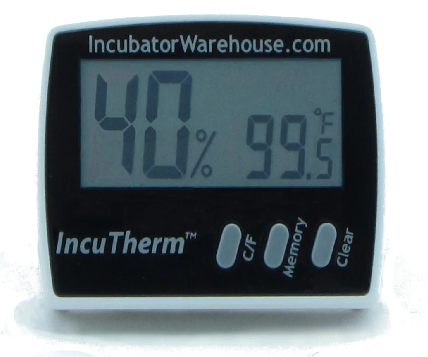
One thing that made me feel better about using a cabinet dryer was adding an independent digital temperature and humidity display to the front of the machine.
A lot of these dryers do not have a nice digital temperature readout. Some have a dial with actual degrees printed on it. Some have low, medium, high, or some equivalent. Some may have a range marked on the dial. Either way, I do not love depending only on a factory knob when there is a living animal inside the box.
What I like is an incubator-style temperature and humidity monitor, the same general type people use for chicken egg incubators.
These are usually simple units with a large LCD display and a probe. Many modern versions plug in with USB or use simple low-voltage power. The display shows the actual temperature, and many also show humidity.
The setup is simple in concept. The display gets attached to the front of the dryer where staff can see it. The probe goes inside the cabinet, usually through a small hole drilled near the top or through a protected route, so the dog cannot chew it, pull it, or destroy it.
Now the staff is not just trusting the dryer dial. They can see the actual temperature inside the drying chamber at that moment.
That matters. If the temperature starts getting up to stupid, you know it before the dog pays for it.
Some of these monitors also have memory functions or high/low recall. That can be useful for checking what the temperature actually reached during a drying cycle, documenting normal operation, or reviewing what happened if there is ever a question later.
This does not turn the dryer into a safe machine by magic. It is simply another layer of information for the operator.
More information is good. Blind trust in a heated box is not.
⚠️
Modification warning
Do not drill into wiring, controls, vents, sensors, structural parts, or anything you do not understand. Route the probe safely, protect it from chewing, and use qualified help when needed. This monitor is an extra safety reference, not permission to stop watching the dog.
✅
How Cabinet Dryers Can Be Used Properly
Used safely, they can aid greatly in a busy grooming shop’s effort to dry multiple dogs efficiently.
On the positive side, when used safely, a cabinet dryer can aid greatly in a busy grooming shop’s quest to dry multiple dogs in a short period of time.
As with cage dryers, I would reserve this tool for two main purposes.
First, short-coated animals. After most of the water has been removed with a force dryer, a cabinet dryer can continue the drying process while the bather or groomer works on another dog.
Second, longer-coated or curly-coated pets. A cabinet dryer may be used to remove some excess moisture before the pet is hand dried with a stand dryer.
That second use is important. For long, curly, delicate, or finish-sensitive coats, the cabinet dryer should not be the full finish solution.
The dog should come out while still somewhat damp and then be properly hand dried, brushed, separated, and straightened with a stand dryer.
Used this way, the cabinet dryer supports the workflow. It does not replace finish grooming.
📌
Proper workflow
Force dryer for bulk water removal. Cabinet dryer only as controlled support. Stand dryer for finish work. That is the difference between a drying system and a shortcut.
🚫
Dogs I Would Not Put in a Cabinet Dryer
Some pets should not be treated like good candidates for confined heated drying.
In my opinion, it is not advisable to use a cabinet dryer on brachycephalic breeds.
That includes pushed-in-nose breeds such as Pugs, Shih Tzus, Bulldogs, and similar dogs that are notorious for respiratory difficulty and reduced ability to dissipate heat through panting.
I would also not advise using a cabinet dryer for severely aged, infirm, or otherwise physically compromised pets.
Confinement inside the dryer while being inundated with a constant stream of moderately forceful air can be stressful.
Heat, stress, respiratory limitations, age, illness, and confinement are not things I want stacked together because the shop is trying to save drying labor.
A dog does not need to be a perfect medical emergency to be a bad candidate. Nervous, panicky, heat-sensitive, seizure-prone, medically fragile, very young, very old, or breathing-compromised dogs deserve a different plan.
⚠️
Exclusion rule
When in doubt, do not put the dog in the box. Choose a slower, safer hand-drying method and move on with life.
🦺
Cabinet / Box Dryer Safety Rules
These are not decorative suggestions. They are the rules that keep labor-saving equipment from becoming dangerous equipment.
- Do not use a cabinet dryer as a set-it-and-forget-it machine.
- Keep the dog visible and checked during the entire drying process.
- Use temperature settings conservatively and understand what the dryer is actually doing inside the chamber.
- Watch the dog’s breathing, posture, stress level, panting, drooling, eyes, balance, and overall condition.
- Do not use on brachycephalic, elderly, infirm, medically compromised, heat-sensitive, or highly stressed dogs unless a qualified professional has a very specific safe reason.
- Do not use cabinet drying as the full drying solution for long, curly, delicate, or finish-sensitive coats.
- Do not rely on timers alone. A timer is not a pet sitter.
- Keep filters, vents, fans, sensors, trays, doors, seals, and temperature controls clean and maintained.
- Train staff on which dogs are allowed, which dogs are excluded, what settings are allowed, and how often checks must happen.
- Put the responsibility on a named person, not “everybody.”
- Remove the dog immediately if stress, heat intolerance, panic, breathing trouble, weakness, collapse, vomiting, disorientation, or abnormal behavior appears.
- Never let labor savings become more important than the animal inside the machine.
- Consider adding an independent digital temperature and humidity monitor so staff can see the actual chamber conditions instead of trusting only the dryer dial.
- Mount any external display where staff can see it immediately during normal work, not hidden on the side or back of the machine.
- Route any temperature probe so the dog cannot chew, pull, or damage it.
💵
Current 2026 Market Snapshot
Cabinet and box dryers still come with a high price tag when you move into professional equipment.
One thing you will learn in the grooming business, and most service businesses in general, is that any tool with the potential to save significant labor or increase production usually comes with a proportionately high price tag.
Cabinet dryers are not the exception.
Current pricing in this category is messy because small consumer pet dryer boxes, cat drying boxes, salon cabin dryers, true commercial cabinet dryers, and larger professional drying chambers all get lumped together by different retailers.
Smaller drying boxes and cabin-style units may show up in the hundreds. Professional cabinet systems and larger commercial drying cabinets can still move into the several-thousand-dollar range.
That means you cannot judge the category by one product photo or one price.
The real buying question is whether the machine saves enough labor, improves enough workflow, fits the right pets, and includes enough safety control to justify the price in a busy shop.
If the grooming shop is busy enough, the cost can be recouped through labor savings and more grooms completed over the course of a year.
If the shop is not busy enough, or if staff cannot be trusted to monitor it properly, the equipment is expensive decoration with a liability problem.
📈
The Labor-Savings Argument
This is the reason busy shops look at cabinet dryers even with all the warnings.
Cabinet dryers exist because drying consumes time, labor, and staff attention.
In a busy shop, a bather or groomer may spend a large chunk of the day drying dogs. Any equipment that reduces that hands-on drying time has the potential to increase output.
That is the business case.
While one short-coated dog is safely finishing in the cabinet, the bather can work on another dog. While one longer-coated dog is losing excess moisture under supervision, the groomer can finish a dog on the table.
Used intelligently, the cabinet dryer becomes a workflow tool that helps the room move.
Used stupidly, it becomes a box someone points to after something goes wrong and says, “I only stepped away for a minute.”
That sentence has buried a lot of bad decisions.
📌
Production signal
A cabinet dryer starts making sense when drying labor is limiting production and the shop has the staff discipline to monitor every dog placed inside it.
⚖️
Cabinet Dryer Use Case Table
Not every dog belongs in the cabinet, and not every shop needs one.
Swipe left/right to see the full table.
| Use Case | Cabinet Dryer Fit | Operator Reason |
|---|---|---|
| Short-coated healthy dog after force drying | Good possible fit. | Cabinet drying can continue moisture removal while staff work elsewhere. |
| Long or curly coat needing finish work | Support only. | Use to remove excess moisture, then finish with stand dryer and brushing. |
| Brachycephalic breed | Avoid in most cases. | Respiratory difficulty and heat dissipation concerns make confinement and heat a bad mix. |
| Elderly, infirm, or compromised pet | Avoid or use extreme caution. | Stress, heat, and confinement can create unnecessary risk. |
| High-volume salon with trained staff | Possible strong fit. | Labor savings can justify the cost when safety systems are serious. |
| Small low-volume shop | Usually not first priority. | Force and stand dryers usually matter more before investing in cabinet drying. |
| Shop with weak monitoring habits | Bad fit. | This equipment punishes complacency. |
✅
Cabinet / Box Dryer Buying Checklist
Before buying, make the equipment survive these questions.
- What temperature range does the dryer allow, and how clearly is that displayed?
- Does it have fan-only or low-heat modes for heat-sensitive pets?
- Does it have timers, overheat protection, alarms, cutoffs, or other safety features?
- Can staff see the pet clearly while it is drying?
- Can the dog stand, sit, turn, lie safely, and remain comfortable inside the chamber?
- How is air circulated, vented, filtered, and exhausted?
- How easy are filters, trays, vents, doors, seals, and chamber surfaces to clean?
- What pets are excluded from use by written shop policy?
- Who is responsible for checking dogs during drying, and how often?
- Does the equipment fit the room without blocking staff movement, visibility, emergency removal, or cage workflow?
- Does the shop have enough volume to justify the purchase?
- Can the staff explain the equipment to customers in a way that builds confidence instead of making the room sound like a pet rotisserie?
- If the dryer only has a dial, can an independent digital temperature and humidity monitor be safely added where staff can see the actual chamber conditions?
🚫
Common Cabinet / Box Dryer Mistakes
Most bad outcomes start when people treat a serious drying machine like a convenience appliance.
Swipe left/right to see the full table.
| Mistake | Why It Hurts | Better Move |
|---|---|---|
| Treating the dryer as set-it-and-forget-it | Heat, confinement, stress, and airflow can create danger fast. | Assign monitoring responsibility and check dogs continuously. |
| Using it on poor candidates | Brachycephalic, elderly, infirm, stressed, or compromised dogs may not tolerate it safely. | Create a written exclusion policy. |
| Using it as the total finish solution for curly coats | Coat may dry curled, tangled, uneven, or not groom-ready. | Remove while damp and finish with stand dryer and brushing. |
| Relying on manufacturer safety features alone | Sensors, timers, and controls can fail or be misused. | Treat safety features as backup, not a replacement for staff. |
| Hiding the dryer from customer view without explaining it | Customers may distrust equipment that looks scary or secretive. | Use clear policies and staff explanations when appropriate. |
| Buying before volume justifies it | Expensive equipment may not pay for itself in a low-volume shop. | Buy force and stand dryer basics first, then evaluate production bottlenecks. |
| Poor maintenance | Dirty filters, blocked vents, bad seals, and neglected parts affect airflow and safety. | Inspect, clean, document, and maintain the machine on schedule. |
✅
My Operator Verdict on Cabinet / Box Grooming Dryers
Effective, expensive, controversial, and absolutely not for lazy use.
My verdict is that cabinet dryers and box dryers can be effective, safe, cost-saving, and profit-increasing equipment when used intelligently.
They can help a busy grooming shop dry more dogs in less hands-on time and reduce labor bottlenecks.
But I do not consider them casual equipment.
Their appearance scares customers. Their misuse history is serious. Heat and confinement are a dangerous combination when staff get complacent.
I would use them primarily for healthy short-coated dogs after force drying or for removing excess moisture from longer-coated dogs before proper stand drying.
I would not use them on brachycephalic breeds, severely aged pets, infirm pets, compromised pets, highly stressed pets, or dogs that cannot safely tolerate heat and confinement.
I also would not use them as the lazy way to avoid proper hand drying on coats that need brushing, separating, straightening, and finish work.
Cabinet dryers can make sense in a shop busy enough to recoup the cost through labor savings and increased production.
But the machine must be treated like serious equipment. Staff must monitor. Dogs must be screened. Temperature must be controlled. Filters and vents must be maintained. The dog inside the box must remain the priority.
This tool can save money. It can also ruin a business and kill a pet if used by someone who thinks the word “timer” means “responsibility has ended.”
⚠️
Final take
A cabinet dryer is not bad equipment. It is unforgiving equipment. Buy it only when the shop has the volume to justify it and the discipline to use it safely.
❓
Cabinet / Box Grooming Dryer FAQ
Straight answers about cabinet dryers, box dryers, dryer cages, safety, temperature, breed risk, labor savings, and professional use.
What is a cabinet or box grooming dryer?
It is an enclosed drying chamber or kennel-style dryer that uses controlled airflow, and often heat, to dry or partially dry a pet while confined inside the unit.
Why are cabinet dryers controversial?
They look alarming to many customers, and misuse of heated confined drying equipment has been tied to serious heat-related injuries and deaths.
Are cabinet dryers safe?
They can be safe when used intelligently, monitored constantly, maintained properly, and limited to appropriate pets. They become dangerous when treated as set-it-and-forget-it equipment.
What dogs should not use cabinet dryers?
I would generally avoid using them on brachycephalic breeds, severely aged pets, infirm pets, medically compromised pets, heat-sensitive pets, highly stressed pets, and dogs that cannot safely tolerate confinement.
Can cabinet dryers fully dry every dog?
No. They may fully dry some short-coated healthy dogs, but long, curly, delicate, or finish-sensitive coats usually still need stand drying, brushing, separation, and finish work.
What is the best use for a cabinet dryer?
A cabinet dryer is best used as a labor-saving support tool in a busy shop: fully drying appropriate short-coated dogs or removing excess moisture before proper hand drying.
Do lower temperature settings make cabinet dryers safe?
Lower temperature settings and safety features help, but they do not replace monitoring. A dog in a heated confined chamber still needs active supervision.
Are cabinet dryers worth the money?
They can be worth the money in a busy shop where labor savings and increased production justify the cost. They are usually not the first dryer purchase for a small or low-volume operation.
What is the biggest mistake with cabinet dryers?
The biggest mistake is using them as a lazy shortcut. Heat, confinement, and lack of monitoring are a dangerous combination.
🐾
Bottom Line: Cabinet Dryers Are Labor-Saving Equipment With Serious Safety Consequences
They can help a busy shop. They can also expose every lazy habit in the room.
Cabinet and box grooming dryers are controversial for good reason.
They look scary, use confined drying, often involve heat, and have a misuse history that no professional should ignore.
But that does not mean they have no place in grooming. Used correctly, they can reduce labor, improve workflow, and help a busy shop dry multiple dogs more efficiently.
The key words are “used correctly.”
Screen the dog. Use conservative settings. Monitor constantly. Maintain the machine. Exclude risky pets. Finish coat properly. Do not rely on timers alone. Do not let the pet disappear from staff attention because the door is closed.
A cabinet dryer can be a profit tool in the right shop.
In the wrong hands, it is a very expensive way to prove that convenience and complacency should never be allowed near a living animal.