Grooming Dryers • Combination Dryers • Start-Up Grooming Equipment • Backup Dryers • Force Dryer • Stand Dryer • Cage Dryer
Combination Grooming Dryers: Start-Up Backup Tools and the Jack-of-All-Trades Problem
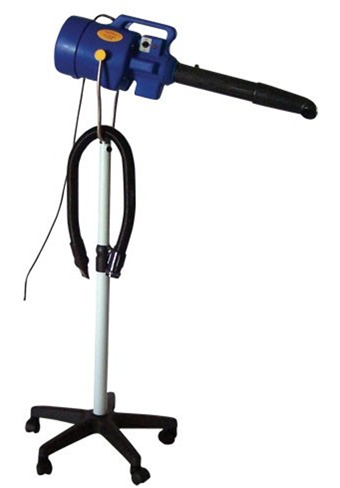
Combination dryers were created to serve many purposes on a limited budget.
Depending on the model, setup, hose, stand, cage attachment, and accessories, a combination dryer may be used as a force dryer, finish dryer, cage dryer, table dryer, or some half-useful mix of all of the above.
I would, however, be hesitant to label these dryers as a necessity for a grooming shop.
I consider them more appropriately classified as a good start-up dryer, a good back-up dryer, a pet-owner dryer, or a stopgap tool for a small grooming operation that needs one machine to cover several jobs until the business can afford purpose-built equipment.
The problem is simple. Combination dryers may perform many tasks well enough, but they typically fail to do any one of those tasks as well as a tool designed specifically for that purpose.
⚠️
Operator rule
A combination dryer is a compromise tool. That is not automatically bad, but you need to know where the compromise shows up before you build the whole drying system around it.
🗺️
Use This Page Like a Combination Dryer Reality Check
These dryers can make sense, but mostly when you understand that “does several things” is not the same as “does every job best.”
🧰
What Combination Dryers Do
These dryers try to cover force drying, finish drying, cage drying, or backup use with one machine and accessories.
💵
Why People Buy Them
The appeal is budget. One dryer that can do several jobs sounds better than buying three separate dryers.
⚖️
The Tradeoff
A combination dryer may do several jobs acceptably, but usually not as well as purpose-built dryers.
🏪
Best Fit
Small start-up shops, one- or two-person operations, pet owners, backup duty, or temporary stopgap use.
🚫
Where They Fall Short
They usually cannot match a K-9 style force dryer, a real stand dryer, or a cage dryer system built for that job.
✅
Operator Verdict
Useful as a start-up or backup dryer. Not my preferred long-term production drying system.
🖼️
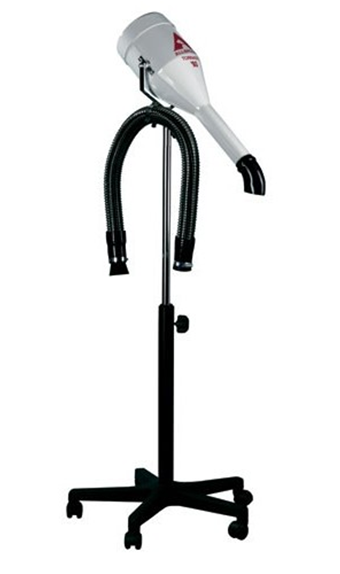
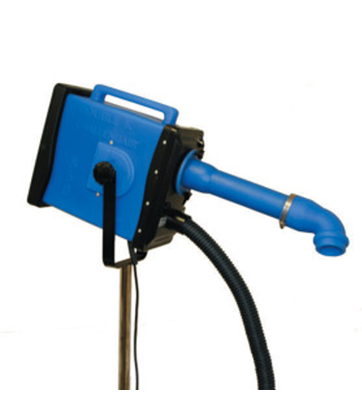
Combination Grooming Dryer Examples
These examples show the kind of multi-purpose dryer setup that tries to cover several grooming drying jobs with one machine.
🧰
What Combination Grooming Dryers Actually Do
They are built to cover more than one drying role when the budget or space does not allow separate tools.
Combination dryers are created to serve many purposes on a limited budget.
Depending on the model, they can be used as a force dryer, finish dryer, cage dryer, or some combination of those jobs.
That sounds attractive because a grooming room needs several types of drying support. A force dryer removes bulk water. A stand dryer finishes and straightens coat. A cage dryer can reduce moisture while a dog waits under supervision.
Buying one machine that can pretend to cover all three jobs is obviously tempting, especially when the business is small, cash is tight, or the owner is still trying to get equipment in place without bleeding money from every drawer.
The key word is pretend.
Some combination dryers genuinely do several jobs well enough. That does not mean they do those jobs as well as purpose-built equipment.
📌
Main idea
A combination dryer is a flexible tool. It is not automatically a replacement for a real force dryer, real stand dryer, and real cage dryer system.
💵
Why People Buy Combination Dryers
The appeal is obvious: one purchase, several possible uses, less startup pain.
The tradeoff that makes combination dryers attractive is cost.
Instead of buying a force dryer, stand dryer, and cage dryer separately, a small shop or pet owner may buy one combination unit that can cover multiple roles well enough to get started.
That makes sense in a small one- or two-person grooming shop where volume is limited, space is tight, and the owner is trying to avoid buying every piece of specialty equipment before the business is generating consistent money.
It also makes sense for a pet owner who grooms and fluffs their own dog and does not need true commercial production speed.
It can also make sense as backup equipment in a busy shop. When a main dryer fails, a combination dryer may keep the room moving until the correct tool is repaired or replaced.
In that role, I have no problem with them.
My issue starts when someone buys a combination dryer and expects it to perform like three separate professional machines built for three separate jobs.
⚠️
Budget warning
Saving money is fine. Pretending one compromise tool will perform like three purpose-built dryers is where the plan starts lying to you.
⚖️
The Main Disadvantage: Jack of All Trades, Master of None
This is the sentence that explains the entire category.
The disadvantage to a combination dryer is that it is a jack of all trades, master of none.
It may serve as a force dryer, but it will not remove water and undercoat like a serious K-9 III style tub-side force dryer built specifically for that job.
It may serve as a finish dryer, but it may not give the same hands-free control, heat consistency, stability, and coat-working usefulness as a real stand dryer.
It may serve as a cage dryer, but then all the cage dryer safety rules still apply: visibility, temperature, monitoring, proper sizing, dog condition, airflow, and no lazy set-it-and-forget-it nonsense.
That is the problem with multi-purpose tools in a production environment.
They can be impressive when judged against having no tool at all. They become less impressive when judged against the correct tool for the job.
A Swiss Army knife is useful. I still would not frame a grooming room, install plumbing, or blast a wet Husky’s undercoat with one.
📌
Operator translation
Combination dryers are useful when the alternative is no dryer or no backup. They are less useful when the shop already needs dedicated production equipment.
🚫
Where Combination Dryers Usually Fall Short
They tend to lose when compared against dedicated dryers doing dedicated work.
As a force dryer, a combination dryer may be useful, but it usually will not accomplish the task nearly as well as a K-9 III style dryer built specifically for brute-force water removal.
The big tub-side force dryer is there to blast water and loose coat out of the dog fast. It is not subtle. It is not polite. It is there to move water and hair like it has somewhere else to be.
A combination dryer may not have the same air power, heat behavior, hose setup, or production speed.
As a finish dryer, it may be helpful, but it may not offer the same positioning and control as a real stand dryer. Finish drying is not just blowing air at a dog. It is applying controlled air to a specific part of the coat while the groomer brushes, separates, straightens, and works the hair.
As a cage dryer, it may reduce moisture while the dog waits, but that use carries the same safety burden as any cage dryer. Heat and confinement are not casual.
This is why combination dryers often end up eventually resigned to a single-use role: usually stand dryer, backup dryer, or “use it when the main one breaks” equipment.
Once a busy shop buys the correct dedicated dryers, the combination unit often stops being the hero and becomes the bench player.
🏪
Best Use Cases for Combination Grooming Dryers
I do not hate these dryers. I just would not build a serious production shop around one as the main plan.
I would consider a combination dryer a good start-up dryer for a small one- or two-person grooming shop.
I would also consider one a good dryer for a pet owner who grooms and fluffs their own dog.
I would consider one a good backup dryer or stopgap dryer for a busy shop in the event another dryer fails.
That is where these machines make the most sense.
They help you get through the day, get started, cover multiple roles, and avoid being completely helpless when a dedicated dryer quits.
They are less convincing as the long-term main drying system for a high-volume professional room where staff need speed, control, reliability, and the right tool available at the right station.
Swipe left/right to see the full table.
| Use Case | Does a Combination Dryer Make Sense? | Operator Reason |
|---|---|---|
| Pet owner grooming one dog | Yes, often. | Limited volume, lower production pressure, and one tool may be enough. |
| One-person start-up grooming shop | Yes, as a practical start. | Budget and space may matter more than perfect specialization. |
| Two-person small grooming shop | Maybe. | It can work, but volume may quickly expose the compromise. |
| Busy multi-groomer shop | Not as the main system. | Dedicated force, stand, and cage drying tools usually make more sense. |
| Backup dryer | Yes. | Flexible backup equipment is useful when a main dryer fails. |
| Primary cage drying plan | Only with caution. | Cage drying carries safety, monitoring, heat, visibility, and sizing rules. |
💵
Current 2026 Market Snapshot
Combination dryer pricing is messy because many products are sold by setup, attachment, and use case instead of one clean category label.
Current pricing for combination-style grooming dryers varies widely because the category overlaps with force dryers, stand dryers, cage dryers, table dryers, conversion kits, hose systems, and accessory packages.
Lower-cost force-style and portable units with stand or conversion options may land in the few-hundred-dollar range.
Professional stand, cage, or convertible systems can move into the mid-hundreds to $1,000+ range depending on brand, attachments, motor power, heat, airflow controls, stand hardware, and parts support.
That means the buying question should not be “is this cheaper than buying three dryers?”
The better question is: does this machine actually perform the specific jobs your grooming room needs, or does it only make the budget feel better until the room gets busy?
A cheaper dryer that slows every groom, fails as a force dryer, annoys as a stand dryer, or tempts staff into unsafe cage drying is not cheap. It is just a payment plan on future frustration.
⚖️
Combination Dryer vs Purpose-Built Dryers
One machine can cover several jobs, but dedicated tools usually win when production matters.
Swipe left/right to see the full table.
| Dryer Role | Combination Dryer | Purpose-Built Tool | My Take |
|---|---|---|---|
| Force drying | May remove water, but usually lacks the brute force of a serious tub-side unit. | Dedicated force dryer near the tub. | Good enough may be fine for low volume. Busy shops need real water removal. |
| Finish drying | May help finish coat if the stand and airflow are usable. | Dedicated stand dryer with stable hands-free positioning. | Finish work needs control, not just air. |
| Cage drying | May support cage drying with attachments or airflow options. | Dedicated cage dryer matched to cage size and safety plan. | Cage drying rules still apply. No shortcuts because the machine is multi-purpose. |
| Backup use | Very useful because it can cover multiple emergency roles. | Backup versions of dedicated dryers. | This is one of the best uses for a combination dryer. |
| Startup budget | Helps a small shop start with fewer purchases. | Higher upfront cost for separate dryers. | A reasonable compromise when volume is low and money is tight. |
| High-volume production | Often becomes the bottleneck or backup. | Dedicated force, stand, and cage systems. | Production exposes compromise quickly. |
🦺
Safety Note: Multi-Purpose Does Not Mean Lower-Risk
The dryer’s safety rules follow the job it is doing.
Combination dryers do not get special safety treatment just because they do more than one thing.
When used as a force dryer, you still need to watch heat, airflow, dog stress, hose control, noise, and electrical draw.
When used as a stand dryer, you still need to watch heat, skin comfort, coat condition, and whether the dryer can stay aimed where the groomer needs it.
When used as a cage dryer, you still need visible temperature monitoring, cage visibility, proper sizing, staff attention, dog condition screening, and no lazy walk-away nonsense.
A combination dryer does not magically become safer because it has accessories.
It just gives you more ways to use the same machine correctly or incorrectly.
⚠️
Safety rule
Judge the dryer by the job it is doing at that moment. Force dryer rules, stand dryer rules, and cage dryer rules still apply.
✅
Combination Dryer Buying Checklist
Before buying, make the dryer survive these questions.
- What jobs is this dryer actually supposed to do: force drying, finish drying, cage drying, table drying, or backup use?
- Does it have enough force to remove bulk water from the dogs you expect to bathe?
- Does it have enough control to use around small dogs, sensitive dogs, and finish coats?
- If used as a stand dryer, does the stand stay stable and aimed where needed?
- If used as a cage dryer, does it meet the cage size, airflow, temperature, visibility, and monitoring requirements?
- Are the hose, stand, cage attachments, nozzles, clamps, filters, and switches easy to replace?
- Does the dryer have useful heat control, or does it only pretend to be adjustable?
- Does it draw more power than the room circuit can safely support?
- Will this dryer become a production bottleneck once the shop gets busy?
- Is this being purchased as a smart start-up compromise or because the owner is trying to avoid buying the right tools?
- What dedicated dryer would this machine eventually be replaced by first?
- When the hose breaks, attachment gets lost, stand gets annoying, or volume increases, what is the backup plan?
🚫
Common Combination Dryer Mistakes
Most mistakes happen when the buyer confuses flexibility with production strength.
Swipe left/right to see the full table.
| Mistake | Why It Hurts | Better Move |
|---|---|---|
| Buying one dryer and expecting it to replace every dryer type | Drying has different stages and different tools solve different problems. | Use combination dryers as startup, backup, or low-volume support. |
| Comparing price only | A cheaper dryer may cost labor every day if it dries slowly or poorly. | Compare drying time, finish quality, safety, control, and replacement parts. |
| Using it as a force dryer when the shop needs brute power | Heavy coats and wet dogs may take too long to process. | Buy a dedicated force dryer when tub-side production demands it. |
| Using it as a finish dryer without stable hands-free positioning | The groomer fights the dryer instead of working the coat. | Make sure the stand, head, hose, and airflow actually support finish work. |
| Using it as a cage dryer without cage dryer discipline | Heat, confinement, and poor monitoring can injure or kill dogs. | Use cage thermometers, visibility, monitoring, sizing, and written rules. |
| Keeping it as the main dryer after volume outgrows it | The dryer becomes a bottleneck and staff waste time waiting or compensating. | Upgrade to dedicated dryers when production exposes the limit. |
✅
My Operator Verdict on Combination Grooming Dryers
Good start-up tool. Good backup tool. Not my favorite long-term production plan.
My verdict is that combination dryers have a place, but I would not call them a necessity for a serious grooming shop.
They are useful because they can serve many purposes on a limited budget.
They are limited because they usually do not excel at any one of the multiple tasks they were designed to perform.
I would consider one a good start-up dryer for a small one- or two-person grooming shop.
I would consider one a good dryer for a pet owner who grooms and fluffs their own dog.
I would consider one a good backup dryer or stopgap for a busy shop if another dryer fails.
But for a productive professional grooming room, I still prefer dedicated tools: a real force dryer near the tub, a real stand dryer for finish work, and cage drying equipment only when used with real safety discipline.
Combination dryers are not bad. They are just honest only when you treat them as compromise equipment.
Once the hose breaks, the shop gets busier, or the owner buys the correct purpose-built dryer, many combination units end up resigned to a single-use role as a stand dryer, backup dryer, or emergency “keep the day moving” machine.
⚠️
Final take
A combination dryer is a useful compromise when money, space, or backup needs matter. It is not a miracle box that turns into a K-9 force dryer, professional stand dryer, and safe cage dryer just because the brochure says it does several things.
❓
Combination Grooming Dryer FAQ
Straight answers about combination dryers, start-up use, backup use, force drying, finish drying, cage drying, and compromise equipment.
What is a combination grooming dryer?
A combination grooming dryer is a multi-purpose dryer that can be used for more than one drying role, such as force drying, finish drying, cage drying, table drying, or backup use depending on the model and attachments.
Are combination dryers necessary for a grooming shop?
I would not call them necessary. I would call them useful start-up, backup, pet-owner, or stopgap dryers.
What is the biggest advantage of a combination dryer?
The biggest advantage is flexibility on a limited budget. One machine may cover several jobs well enough when the shop cannot yet buy separate purpose-built dryers.
What is the biggest disadvantage?
The biggest disadvantage is that combination dryers are usually jack-of-all-trades, master-of-none equipment. They often do several jobs acceptably but do not excel at any one job.
Can a combination dryer replace a force dryer?
In a low-volume setup, maybe temporarily. In a serious grooming room, it usually will not match a dedicated tub-side force dryer built for brute water removal and undercoat blasting.
Can a combination dryer replace a stand dryer?
Sometimes it can help with finish drying, but only if the stand, airflow, heat control, and positioning actually let the groomer brush and work the coat hands-free.
Can a combination dryer be used as a cage dryer?
Some setups can support cage drying, but all cage dryer safety rules still apply: temperature monitoring, visibility, sizing, staff attention, dog screening, and no walk-away drying.
Who should consider buying one?
A small start-up shop, one- or two-person grooming operation, pet owner who grooms at home, or busy shop needing backup equipment may reasonably consider one.
What is my practical recommendation?
Use a combination dryer as a compromise tool, not the ideal long-term production system. As the shop grows, plan to add dedicated force, stand, and properly managed cage drying equipment.
🐾
Bottom Line: Useful Compromise, Not a Production Miracle
Combination dryers make sense when flexibility matters more than specialization.
Combination dryers can be useful, especially when money is tight, the shop is small, or backup equipment is needed.
They can serve several drying roles and help a start-up avoid buying every specialized dryer on day one.
But they usually do not beat purpose-built equipment.
A serious force dryer removes water better. A real stand dryer finishes coat better. A dedicated cage dryer system should be designed around cage size, visibility, temperature monitoring, and workflow.
Combination dryers are not junk. They are compromise tools.
Buy one for the right reason and it can be useful. Buy one because you think it replaces every dryer in a busy grooming room and it will probably end up proving otherwise.