Grooming Table Hardware • LIPSystem • Linked Interval Positioning System • Multi-Point Restraint • No-Sit Equipment • Grooming Arm Review
LIPSystem / Linked Interval Positioning System: Serious Restraint Hardware, But More System Than I Usually Want
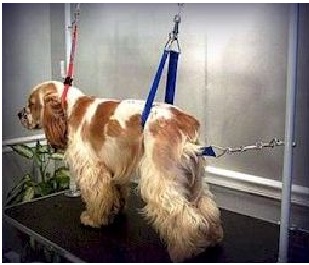
The LIPSystem is a multi-point grooming restraint and positioning system. It is not a mystery gadget, and I am not reviewing it as if it were flimsy junk.
The real question is whether this much restraint structure earns its place in a normal grooming workflow.
For some groomers, especially those regularly dealing with large dogs, weak dogs, elderly dogs, dogs that collapse, or dogs that need serious support, a structured system may have a purpose.
For my day-to-day grooming preference, I want the restraint setup to make the work simpler. I do not want the restraint system to become its own separate job before the grooming even starts.
That is the lens for this page: not “does hardware exist?” but “does this much hardware improve the average groom enough to justify the cost, setup, table space, and training burden?”
⚠️
Operator rule
Judge restraint systems by daily use, not by how impressive they look in a product photo. The best system is the one that safely controls the dog without turning the groom into a hardware project.
🗺️
Use This Page Like a Multi-Point Restraint Reality Check
This page is not a flimsy-hardware complaint. It is a complexity complaint.
🧰
What It Is
A full-length multi-point grooming arm and positioning system using bars, loops, chains, and support points.
🪖
KISS Method
Keep It Simple Stupid. Professional grooming should not require a hardware ceremony for a normal dog.
🔗
What It Includes
Top bar, side bars, flange kit, loop set, QuickLink chains, and multi-point positioning support.
🐕
How It Restrains
Neck support, waist/rear support, lower connections, and possible head-control behavior.
💵
Current 2026 Market
Current LIPSystem pricing is roughly the $299 to $314 range for the standard system.
⏱️
Setup Burden
More attachment points, more adjustment, more training, more cleaning, and more hardware on the table.
🤔
Where It Might Fit
There may be groomers, mobile setups, geriatric dogs, large dogs, or special tasks where the system makes sense.
✅
Operator Verdict
For my workflow, I can usually do the job with a standard arm, three nooses, and less table theater.
🧰
What the LIPSystem Is
It is a full-length grooming arm and multi-point positioning system designed to control the dog from more than one direction.
The LIPSystem stands for Linked Interval Positioning System.
The current product is sold as a full-length grooming arm and support system that uses multiple connection points to help keep the dog positioned on the grooming table.
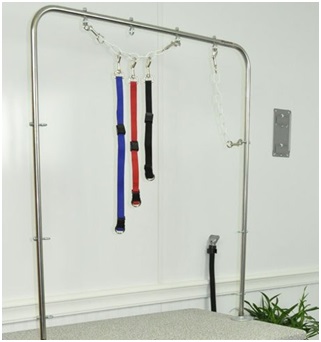
The basic concept is easy enough to understand. Instead of relying on one grooming arm and one loop, the system uses a larger frame, side bars, front and rear support, loops, chains, and attachment points to control the dog’s posture.
That can sound appealing, especially if the groomer is working with large dogs, weak dogs, elderly dogs, dogs that sit, dogs that spin, or dogs that need extra support.
My issue is not that the goal is ridiculous. The goal makes sense. My issue is that the solution looks like a lot of hardware for normal grooming work.
🔗
First Impression: The Chain-Heavy Corner of the Grooming Catalog
This is where the system stops looking like a simple grooming aid and starts looking like a full restraint framework.
I never figured my quest to explore and explain grooming accessories would lead me into the suspiciously chain-heavy corner of the grooming equipment world, but I guess it did.
This is another attempt to build a better mousetrap.
With the proper preparation, enough straps, chains, harnesses, and bars, I reckon I could groom an angry orangutan if I had to.
That line is not just a joke. It is the actual buying problem.
Once a restraint setup starts using several attachment points, multiple loops, lower connections, chains, side supports, and different tension points, the groomer is no longer just restraining the dog. The groomer is managing the system.
That may be worth it in the right case. A difficult dog, weak dog, disabled dog, geriatric dog, or special support situation may justify more structure.
But for a normal dog that just needs a normal groom, this looks like a lot of ceremony before the clippers even touch coat.
⚠️
Main concern
The more parts a restraint system has, the more the groomer has to set, adjust, inspect, clean, explain, and work around. That burden has to be justified by a real improvement in the groom.
🪖
The KISS Method: Keep It Simple Stupid
Simple does not mean careless. It means using the least complicated safe setup that actually gets the job done.
In the Marine Corps, we had the KISS method of doing things, or the “Keep It Simple Stupid” way.
That is exactly how I think about grooming restraint.
KISS does not mean you ignore safety. It does not mean you use too little restraint. It means you do not add complexity just because complexity is available.
A good restraint setup should reduce confusion. It should make the dog easier to work on, make the groomer more efficient, and make the table safer.
A system that requires staff to remember which loop goes where, which chain height to use, which lower connection controls which movement, and how much tension belongs on each point needs to be very worthwhile.
That is especially true in a real shop where multiple people may use the same table. The owner may understand the system. The experienced groomer may understand it. The newer groomer, bather, helper, or weekend fill-in may not.
The more complicated the restraint system becomes, the more training matters. The more training matters, the more misuse becomes possible. And once misuse is possible, the system has to prove that its benefits are worth that extra operational risk.
For me, the default answer is still simple restraint first. Add more hardware only when the dog, the task, or the safety issue actually calls for it.
📌
Practical test
A restraint system should make the groom easier to complete safely. If staff need a full equipment briefing before using it on an ordinary dog, the system may be larger than the problem.
🧩
What the System Actually Includes
The current product is a substantial stainless system, not a flimsy little clamp-on gadget.
Aside from the chains and the restraint setup, I do not really see much unique about this system from a practical grooming standpoint.
It consists largely of a full-length or overhead-style grooming arm structure, quick-release or quick-link positioning hardware, support loops, chains, and multiple attachment points.
Current product details describe the standard LIPSystem as a 38-inch-high, 3/4-inch-wide, 10-pound system made from 304 14-gauge stainless steel, with the length depending on table format.
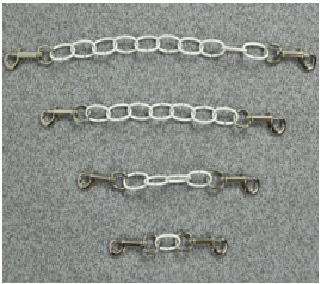
The box is currently described as including a top bar, two side bars, a flange kit with hardware, a three-piece loop set, and two #7 QuickLink chains.
That is real hardware. I will give it that.
But once again, the question is not whether the hardware exists or whether it is strong. The question is whether the system improves the daily groom enough to justify the extra setup and complexity.
Swipe left/right to see the full table.
| Component | What It Does | Operator Take |
|---|---|---|
| Top bar | Creates the upper span for positioning and support. | Similar in concept to overhead/full-length arm control. |
| Side bars | Provide the side structure and support points. | Adds stability, but also adds more table hardware. |
| Flange kit and hardware | Mounts the system to the grooming table. | Table compatibility and underside clearance matter. |
| Loop set | Provides restraint loop options for different dogs. | Useful, but loops are already common grooming equipment. |
| QuickLink chains | Allow linked interval height/positioning adjustments. | Clever, but still another adjustment system to manage. |
| Accessory support | Can work with hammocks, hip supports, and other add-ons. | Potentially useful for special cases, but more system than I need for normal dogs. |
🐕
How It Appears To Restrain the Dog
Front support, rear support, and lower connections all work together to keep the dog positioned.
In examining the images, I can see one strap goes around the neck, another around the waist, and for dogs that sit, another strap goes between the rear legs and connects to the lower grooming arm to keep them standing.
That is the basic function as I see it.
The system is trying to control the dog from more than one point. The dog’s front is controlled. The dog’s rear is controlled. The dog is discouraged from sitting, spinning, backing up, dropping, or moving out of position.
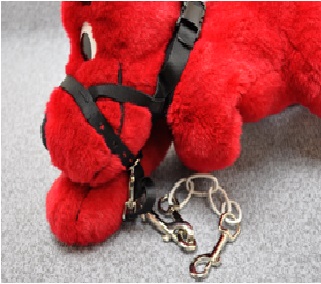
In looking at other images of the product, there appears to be a way to use it somewhat like a Groomer’s Helper by attaching a clasp from an eye bolt or lower portion of the grooming arm to the bottom of the quick release under the head.
Basically, this secures the dog’s head from going either up or down, left or right, in order to prevent it from spinning.
Maybe this works like a charm and truly is the next best thing since real butter.
But to me, it looks complicated and unnecessary to complete the task at hand in most normal grooming situations.
⚠️
Restraint judgment
Multi-point restraint does not eliminate the need for handling judgment. A system can control position, but it does not magically make an unsafe dog safe or make every groom worth continuing.
🛠️
Groomer’s Helper-Style Head Control Comparison
I can see the logic, but I still question whether this much system is needed.
The head-control idea is not ridiculous.
Dogs that spin, duck, swing their head, drop their front end, or constantly change direction can make grooming slower and more dangerous.
A Groomer’s Helper-style setup can be useful because it limits head movement and keeps the dog from spinning around the table like a furry weather vane.
The LIPSystem appears to have ways to create similar control with its lower connection points and quick-link hardware.
That may help some groomers.
My issue is that once you start adding multiple connections for the head, rear, waist, sitting support, and side-to-side control, the system becomes something staff have to learn, inspect, adjust, clean, and use correctly every time.
I am not against control. I am against needless complexity when simpler control will do.
💵
Current 2026 Market Snapshot and Buying Reality
This is not a $12 no-sit loop. This is a multi-part stainless positioning system purchase.
Current LIPSystem pricing is generally in the several-hundred-dollar range.
Hanvey currently lists the standard LIPSystem at $314 for both 36-inch and 42-inch options. Current retailer examples show the standard system around $299.
Current product details describe the standard system as 38 inches high, 3/4 inch wide, 35 inches or 40.5 inches long depending on table format, 10 pounds, and made from 304 14-gauge stainless steel.
Current box contents are described as one top bar, two side bars, a flange kit with hardware, a three-piece loop set, and two #7 QuickLink chains.
There are also related accessories, including QuickLink sets, loops, belly/chest support, hammocks, and geriatric hip supports, which can add to the total system cost if the groomer builds out the larger support ecosystem.
That is the buying reality. This is not a cheap throwaway no-sit accessory. It is a real system with real cost, real mounting considerations, and real workflow implications.
For some groomers, that may be worth it. For me, the price only adds another reason to ask whether I actually need this much hardware.
Swipe left/right to see the full table.
| Current 2026 Item | Current Market Reality | Operator Take |
|---|---|---|
| Standard LIPSystem | Currently around $299 to $314 depending on seller. | Serious money for a restraint system. It needs to solve real problems. |
| Standard size options | Current standard listings show 36-inch and 42-inch options. | Check table size and compatibility before buying. |
| Construction | Current specs describe 304 14-gauge stainless steel and 10-pound system weight. | Strong hardware is a plus. It still has to earn its complexity. |
| Mounting | Uses flange hardware and requires underside clearance for through-bolt mounting. | Not every table is automatically a good fit. |
| Accessories | Loops, QuickLinks, hammocks, hip supports, and other add-ons may be available. | Accessory ecosystem can be useful, but it can also become more cost and more gear. |
⚠️
Price warning
Do not compare this to a simple no-sit strap. This is system money. It needs to save time, improve safety, and fit your workflow enough to justify the cost and setup.
⏱️
Setup Time, Table Clutter, and Training Burden
More hardware means more things to attach, adjust, inspect, explain, clean, and work around.
This is where my practical objection lives.
Every additional restraint point has to be placed correctly. Every chain has to be adjusted correctly. Every loop has to be the right length. Every connection has to be inspected. Every staff member using it has to understand what they are doing.
If the system is used wrong, the fact that it is expensive and stainless does not help much.
More hardware also means more contact points for the dog, more opportunities for tangled loops, more objects for clippers and cords to interact with, and more stuff occupying the table area.
That might be acceptable for a difficult, large, elderly, weak, or special-needs dog. It may be completely unnecessary for the average dog that just needs a normal groom.
I can do everything this item can do for my normal purposes with three nooses and a standard grooming arm. It will not cost me the current several-hundred-dollar price range, and it will not require turning the table into a restraint engineering exhibit.
Swipe left/right to see the full table.
| Burden | Why It Matters | Operator Take |
|---|---|---|
| Attachment points | Each connection has to be set correctly for the dog and task. | More setup before grooming starts. |
| Chains and links | Adjustable hardware can be useful but requires staff understanding. | Useful only when used quickly and correctly. |
| Training | Staff need to understand front support, rear support, and safe positioning. | A system is only as good as the people using it. |
| Cleaning and inspection | More loops, links, bars, and hardware need more checking. | Adds maintenance, even when not used on every dog. |
| Table clutter | Grooming tables already have limited working space. | The system needs to improve the work enough to justify the footprint. |
| Ordinary dogs | Most dogs do not need maximum multi-point control. | Simple setup usually wins. |
🤔
When the LIPSystem Might Actually Make Sense
I can see use cases. They just are not my default grooming workflow.
Fair is fair: this system may make sense for some groomers.
A groomer who regularly handles large dogs, elderly dogs, weak dogs, disabled dogs, dogs that collapse, or dogs that require hip support may get real value from a more structured support system.
A mobile groomer who builds the entire van and table workflow around one standardized setup may also see more value than a shop that has multiple tables, multiple staff members, and different grooming styles.
A groomer who uses hammocks, hip supports, and multi-point positioning every day may not view this as complicated. To that groomer, it may be the normal system.
That is fine.
My verdict is not that nobody should ever use it. My verdict is that I do not see the need for this much equipment for the average professional grooming task.
I would rather start with the simplest setup that safely gets the job done and only add hardware when the dog or task actually requires it.
📌
Fair-use point
This system may be valuable for groomers who regularly need multi-point support. My problem is buying maximum system for minimum problem.
✅
My Operator Verdict on the LIPSystem
Maybe it works like a charm. For me, it is too much system for normal grooming work.
My vote: pass.
The LIPSystem may be strong, well-built, and useful for groomers who want a full multi-point positioning system.
But for me, professional grooming is supposed to be smooth and efficient. It should revolve around using the simplest tools needed for the job.
I look at this system and see an overhead or full-length grooming arm, quick-link chains, loops, front support, rear support, lower connections, and enough restraint options to make a simple dog feel like a project.
Maybe it truly is the next best thing since real butter for groomers who use it every day.
To me, it looks complicated and unnecessary to complete the task at hand most of the time.
I can do everything this item can do for my normal purposes with three nooses and a standard grooming arm, and I can do it without spending the current several-hundred-dollar price range or adding this much table hardware.
Again, some groomers may love it. Some dogs may benefit from it. Some workflows may justify it.
My grooming-room instinct is still KISS: keep it simple, use what works, and do not turn a normal grooming table into a chain-and-loop puzzle unless the dog actually requires it.
⚠️
Final take
Strong system, fair use cases, not my first choice. For my workflow, three nooses and a standard grooming arm usually beat a multi-point restraint system with chains, bars, links, and a several-hundred-dollar price tag.
❓
LIPSystem FAQ for Grooming Rooms
Straight answers about what it is, what it includes, current pricing, restraint function, and why I would usually pass.
What does LIPSystem stand for?
LIPSystem stands for Linked Interval Positioning System.
What is the LIPSystem trying to do?
It is trying to provide multi-point positioning support so the dog stays controlled on the grooming table from both front and rear support points.
Is my complaint that the hardware is weak?
No. My complaint is not that the system appears weak. Current product details describe it as stainless steel, multi-part, and substantial. My complaint is that it looks like too much system for my normal grooming workflow.
What does the current system include?
Current product details describe a top bar, two side bars, flange kit with hardware, three-piece loop set, and two #7 QuickLink chains.
What is the current price range?
Current standard LIPSystem listings are generally around $299 to $314 depending on seller.
What is the KISS method?
KISS means Keep It Simple Stupid. In grooming-room terms, it means using the simplest safe tool setup that gets the job done instead of making every dog require a complicated restraint build.
Could this system help some groomers?
Yes. Groomers who regularly handle large, weak, elderly, disabled, difficult, or support-needing dogs may find value in a multi-point positioning system.
Why would I pass?
For my normal purposes, I can usually accomplish the practical restraint job with a standard grooming arm and three nooses, with less setup, less cost, and less table clutter.
What is the main lesson?
Do not buy maximum restraint system because it looks impressive. Buy it only if your dog mix, grooming workflow, staff training, table setup, and daily use actually justify the cost and complexity.
🐾
Bottom Line: Strong System, Not My First Choice
The LIPSystem may have its fans, but my vote is still pass for normal grooming-room use.
The LIPSystem is a serious multi-point restraint system, and current product details suggest it is built as substantial grooming hardware.
But my grooming philosophy is still KISS: Keep It Simple Stupid.
When a restraint setup involves multiple bars, straps, chains, loops, and attachment points before I can groom a simple dog, I start questioning whether the solution is larger than the problem.
I can see how this system might help with large dogs, elderly dogs, weak dogs, dogs needing hip support, mobile setups, or groomers who already build their workflow around multi-point positioning.
For my normal grooming purposes, I can do what I need with three nooses and a standard grooming arm, with less setup, less cost, and less table hardware.
Maybe it works like a charm for some groomers. To me, it looks complicated and unnecessary to complete the task at hand most of the time.
My vote: pass.