Grooming Table Hardware • No-Sit Devices • Positioning Equipment • Belly Support • Table Clutter • Device Review
The Pet Sitter No-Sit Device: Cute Name, Bad Searchability, and Way Too Much Hardware for a Simple Job
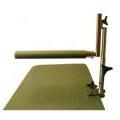
To whoever named this device, I give them both admiration and shame.
I give them admiration because the name is cute and memorable. I give them shame because do you know what happens when you type “Pet Sitter” into Google? You get millions of results for actual pet sitters, none of which have anything to do with this device.
For the life of me, I cannot figure out how I found this device or what combination of words I used to track it down. I only know that it appeared in an image search.
Cute name. Terrible search term.
Once you finally find the thing, my opinion is that it is a very complicated way to complete a simple task. A bit of good old American over-engineering. Interesting, maybe. Necessary, not so much.
⚠️
Operator rule
A device can be clever and still not earn space on the table. If it takes longer to attach, remove, store, explain, and work around than the problem takes to solve, the gadget is probably doing more for the catalog photo than the groomer.
🗺️
Use This Page Like a No-Sit Gadget Reality Check
This page is about the difference between a clever-looking device and a device that actually improves grooming workflow.
🔎
Cute Name Problem
The name is memorable, but searching for it sends you into the pet-sitting swamp.
🪤
Better Mousetrap?
This does not feel like a better mousetrap. It feels like a complicated way to do a simple job.
✂️
Laser Scissors Test
Cool does not mean necessary. Laser-guided scissors make the point perfectly.
🧰
Table Clutter
Another device on a crowded table still has to be attached, removed, stored, and worked around.
🦵
Body-Position Method
Lower the table, use your thigh and bone structure, complete the task, and move on.
🐕
Step-Over Problem
Many dogs will try to step over the support, and this device does not seem to stop that cleanly.
💵
Current Market
No-sit hardware ranges from cheap haunch holders to full professional positioning systems.
❓
FAQ
Name, purpose, over-engineering, step-over problems, belly support, and whether I would use it.
🔎
Cute Name, Terrible Search Term
I admire the name. I also shame the name.
To whoever named this device, I give them both admiration and shame for the name.
I give them admiration because the name is cute and memorable.
I give them shame because do you know what happens when you type “Pet Sitter” in Google? You get millions of results for pet sitters, none of which have anything to do with this device.
That is not a small problem if someone is trying to research the product, compare it, buy it, find replacement parts, or even figure out what the thing is called.
For the life of me, I cannot figure out how I found this device or what combination of words I used to track it down, only that it appeared in an image search.
That is funny, but it is also a useful buying lesson. A product name can be cute and still make the device hard to find later.
📌
Name lesson
A cute name is nice. A searchable name is better when the buyer is trying to find the actual grooming device instead of every person in town who watches dogs for the weekend.
🧰
What The Pet Sitter Is Trying To Do
The basic goal is to support the dog under the belly or rearward weight area so the dog stays standing.
The device appears to be a positioning support used to help prevent a dog from sitting while on the grooming table.
The concept is easy enough to understand. The dog wants to sit. The groomer wants the dog to stand. The device gives the dog something under the belly or rearward support area so the dog is discouraged from dropping down.
That is not a ridiculous goal.
Dogs sit. Dogs slump. Dogs decide their rear legs have resigned from employment at the worst possible time. Anybody who has groomed enough dogs understands why no-sit equipment exists.
My problem is not the goal. My problem is the amount of device being used to accomplish a task that can often be handled faster, cheaper, and cleaner with a belly strap or simple body positioning.
🪤
Better Mousetrap or Over-Engineered Table Gadget?
This does not feel like a better mousetrap to me.
They say, “If you build a better mousetrap, the world will beat a path to your door.”
Well my friend, this is not a better mousetrap.
This is a very complicated way to complete a simple task, or a bit of good old American over-engineering.
That is the main issue. The problem being solved is real enough. The dog wants to sit. The groomer needs the dog standing. Fine.
But the solution has to be judged against the simplest effective solution, not just against the problem itself.
If I can solve the same issue with a belly strap, a towel-padded belly strap, or a quick body-position support method, then a device with extra table hardware has to prove that it is faster, cleaner, safer, easier, and worth storing.
A clever device is not automatically a useful device. A grooming room is full of things that looked useful once and then spent the rest of their lives hiding under a counter like retired circus equipment.
⚠️
Over-engineering warning
If the device solves a rare problem with a complicated setup, the real question is not whether it works. The real question is whether anyone will bother using it after the first week.
✂️
The Laser-Guided Scissors Test
Cool does not mean necessary.
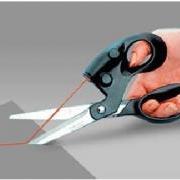
It reminds me of the laser-guided scissors pictured here.
Kinda cool, yes.
Who would not like to say they have laser-guided scissors?
But not really necessary to complete the required task.
That is exactly how I view this device. It may be interesting. It may be clever. It may make somebody say, “Look at this thing.”
But grooming equipment does not get points just for being interesting.
It gets points for making the work easier, safer, cleaner, faster, more comfortable for the dog, easier for the groomer, and worth the space it occupies.
If it fails that test, then it is not a better mousetrap. It is laser scissors for a job regular scissors already handle.
📌
Equipment filter
Before buying a clever grooming gadget, ask whether it does the job better than the simple method or merely makes the simple method look more complicated.
🧰
The Crowded Table and Every-Tenth-Dog Problem
A device used rarely still has to live somewhere, attach somewhere, and be worked around.
As with the no-sit grooming post, the main issue that I have with this item is that once again it is another thing that must be attached to, removed from, accounted for, and worked around on an already crowded grooming table.
When not in use, it needs to be removed.
And not even every tenth dog will need this device.
Which again makes the cost and hassles of using it outweigh any potential benefits you may gain from its use.
That is the real-world grooming-room problem. It is not just the purchase price. The cost is the setup time, removal time, storage space, cleaning, staff training, and whether the device is annoying enough that people stop using it.
A tool that is only needed once in a while has to be extremely easy to use. It cannot require a little ritual every time the dog starts sitting.
If the groomer has to stop, grab the device, attach it, adjust it, keep the dog from stepping over it, finish the task, remove it, clean it, and find somewhere to put it, then the device had better be doing something amazing.
This does not look amazing to me.
Swipe left/right to see the full table.
| Device Burden | Why It Matters | Operator Take |
|---|---|---|
| Attachment | The groomer has to stop and put it in place. | Rare-use equipment has to attach fast or it will not get used. |
| Removal | It has to come off when it is no longer needed. | Another interruption in the groom. |
| Storage | It has to live somewhere when not in use. | Tools with no home become grooming-room clutter. |
| Table space | Grooming tables are already crowded. | Every extra object must earn its square inches. |
| Limited need | Not every dog, or even every tenth dog, needs it. | Limited-use devices must be very useful when they are needed. |
| Staff adoption | Staff will avoid tools that feel like more work than help. | The device has to win in daily use, not just in theory. |
🦵
My Body-Position Equivalent
I can often do the same basic support job in seconds with the table lowered and my thigh under the dog.
Additionally, let me say that while I have not personally used this device nor ever seen it in action, I am pretty astute at how to groom a dog and how dogs react to certain items and positions on the table.
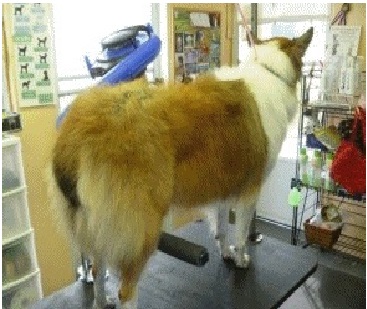
That being said, on occasion if I am working with a large dog or providing assistance to another groomer, I will lower the table and place one foot on it with my knee under the dog so as their belly area rests on my thigh, effectively doing the exact same thing as this device.
I am using my bone structure to support the dog’s rearward weight.
It takes seconds to do. No assembly or disassembly required.
I complete the needed task and then move to the other side and do it once more.
That is the kind of simple, practical answer I like. It uses the groomer’s positioning, the table height, and the dog’s body position instead of requiring another attachment on the table.
I am not saying every groomer should automatically do this with every dog. You still need judgment. You still need to know the dog, the table, the bite risk, your own balance, and whether the task is safe to continue.
But as an operator comparison, this is the point: I can often create temporary belly support faster than I can install a device meant to create temporary belly support.
⚠️
Handling judgment matters
This is experienced-handler work, not a license to wrestle unsafe dogs. If a dog is panicking, biting, thrashing, or unsafe, the answer may be changing the restraint plan, stopping the service, using appropriate safety equipment, rescheduling, referring out, or declining the work.
🐕
The Step-Over Problem
Support under the belly is useful only if the dog does not simply climb over it.
What I have noticed is that many, not all, but many dogs will try to instinctively step up or over my thigh.
That requires me to either place a hand on their hips to hold them down or rest my elbow and tricep on them while I lean over them and work, which again keeps them pressed down on my thigh while keeping them in a standing position.
Not a tiresome task at all and one that is very easy.
The problem with this device, as I see it, is that it does not have any support or way to prevent the dog from simply stepping over or on it.
That is the mechanical criticism.
If the device sits under the dog, many dogs may treat it like an object to step over, climb around, lean on, or test. Dogs are not reading the product brochure. They are reacting to pressure, balance, restraint, and whatever feels weird under them.
With my thigh, I can adjust instantly. I can move. I can add hand pressure. I can shift my elbow or tricep. I can feel the dog’s weight change in real time.
A device cannot make those same little adjustments unless it has some other mechanism holding the dog in the correct relationship to the support.
Swipe left/right to see the full table.
| Support Method | What It Provides | What Happens When the Dog Steps Over | Operator Take |
|---|---|---|---|
| Groomer thigh support | Fast temporary support under the belly/rearward weight area. | Groomer can adjust instantly with body position, hand, elbow, or tricep. | Simple, flexible, and immediate when used by someone experienced. |
| Belly strap | Upward support from the grooming arm. | Can often be moved or adjusted without stopping everything. | Still my normal first answer. |
| The Pet Sitter-style support | Under-body support from a device. | Dog may try to step over, onto, or around it. | The device needs a way to stop that, or it becomes another thing to manage. |
| Back strap or top restraint | Could help stop the dog from stepping over. | Adds another strap across the dog and may create grooming interference. | Now we are back to more hardware and more coat disruption. |
🚧
The Missing Back-Strap Problem
The thing that might stop the dog from stepping over it is also the thing I do not want in my clipper path.
I am not saying that I would like a strap across the back, as I have already relayed my thoughts in regards to Baja-ing off road with my clippers.
But that is basically the only way in which it would work to keep a dog from simply stepping over it.
That is the catch.
If the device only supports from underneath, the dog may step over it. If you add a strap over the top to prevent stepping over it, now you may have another strap across the dog’s body creating the same type of grooming interference I already dislike in the no-sit grooming post.
So the device starts chasing its own problem.
First, it adds hardware to stop sitting. Then it may need more restraint to stop stepping over the hardware. Then that restraint may interfere with clipping, coat lay, table access, or dog comfort.
At some point the simple task has turned into a small engineering committee meeting on the grooming table.
My vote: not needed.
📌
Design problem
If the device needs another restraint to make the first restraint work, the groomer should stop and ask whether a belly strap or simple body support would have solved the problem faster.
💵
Current 2026 Market Snapshot and Buying Reality
The named device is hard to source cleanly, but the broader no-sit and positioning-device category gives useful pricing context.
Current no-sit and positioning-device pricing depends on what you are actually buying.
Basic no-sit haunch holders are still inexpensive. Current ProGuard-style no-sit haunch holders commonly show up around the $12 to $14 range depending on seller and size.
Basic grooming arm kits that include a clamp, arm, loop, and no-sit haunch holder can sit around the $38 to $45 range. Some budget table-arm/no-sit kits may be lower or higher depending on seller, materials, included loops, and table compatibility.
Professional positioning systems are a different category entirely. Larger systems such as Groomer’s Helper professional sets can run roughly $420 to $480 depending on seller and clamp configuration.
That price spread matters, but purchase price is not the only cost.
The real cost of a no-sit device is purchase price plus setup time, removal time, storage, table clutter, staff training, cleaning, whether the dog can step over it, and whether the groomer reaches for it after the first few uses.
A cheap device is still too expensive if it lives in a drawer. A pricey system can be worth it if it solves serious handling problems. The Pet Sitter-style question is simpler: does this device solve enough real grooming problems to justify existing on the table?
For me, the answer is no.
Swipe left/right to see the full table.
| Current 2026 Buying Category | Typical Price Reality | What You Usually Get | Operator Take |
|---|---|---|---|
| Basic no-sit haunch holder | About $12–$14 | Simple loop or haunch holder meant to discourage sitting. | Cheap enough to try, but still has to beat a belly strap. |
| Grooming arm kit with no-sit holder | About $38–$45 for many basic kits | Clamp, table arm, loop/noose, and no-sit holder. | Useful only if the hardware is strong and the setup fits the table. |
| Specialty no-sit support device | Price varies and sourcing may be harder. | More elaborate support hardware meant to solve the sitting problem. | Must justify setup, storage, and whether the dog can step over it. |
| Professional positioning system | About $420–$480 | Multi-part restraint and positioning system. | Judge as a handling system, not as a simple no-sit gadget. |
⚠️
Buying warning
The device price is only part of the cost. The bigger question is whether it saves more time than it consumes and solves more problems than it creates.
🤷
When a Groomer Might Still Like This Device
There may be a narrow use case, but it is not a device I would reach for first.
A groomer might like this device if they repeatedly work with dogs that sit hard, collapse backward, or need temporary under-belly support during a specific task.
A groomer with physical limitations may also prefer a device over using body position, especially if bending, lowering the table, or bracing the dog with a knee or thigh is not comfortable or safe for them.
A shop that wants staff to avoid improvised body support may also prefer a formal device if it can be used safely, consistently, and quickly.
Fine.
But the device still has to pass the daily-use test. It must attach quickly, stay put, not scare the dog, not get stepped over, not create table clutter, not interfere with the task, and not become another object everyone avoids.
That is a lot to ask when the problem may be solved in seconds with a belly strap or experienced body positioning.
✅
My Operator Verdict on The Pet Sitter
Cute name. Interesting idea. Not needed for my workflow.
My verdict is that The Pet Sitter is a cute, memorable, over-engineered answer to a simple grooming problem.
I have not personally used this device or seen it in action, but I have groomed enough dogs and handled enough table situations to understand what it is trying to do and where I think it falls short.
It adds another device to a crowded grooming table. It has to be attached, removed, stored, and worked around. Not even every tenth dog will need it.
The function it appears to provide can often be done quickly by lowering the table and using my thigh under the dog’s belly area to support rearward weight. That takes seconds, requires no assembly, and costs nothing.
Many dogs will try to step over that kind of under-belly support, and when I use my own body positioning I can immediately adjust with a hand, elbow, tricep, or shift in position.
With this device, I do not see an obvious way to stop the dog from stepping over or onto it unless you add some kind of top-side restraint. And I am not eager to add another strap across the dog after already explaining my feelings about Baja-ing over hills and valleys with clippers.
Some groomers may like it. Some dogs may respond to it. Some shops may find a use case.
My vote: not needed.
⚠️
Final take
The Pet Sitter may be clever, but clever does not beat simple unless it improves the work. For me, this is too much device for a problem I can usually solve faster with a belly strap or body positioning.
❓
The Pet Sitter FAQ for Grooming Rooms
Straight answers about the name, purpose, over-engineering, body support, step-over problems, and whether this device earns table space.
What is The Pet Sitter device trying to do?
It appears to provide under-belly or rearward support so the dog does not sit while being groomed.
Why do I criticize the name?
The name is cute and memorable, but searching “Pet Sitter” brings up actual pet sitters instead of the grooming device. Cute name, terrible search term.
What is my main criticism of the device?
I see it as a complicated way to complete a simple task. It adds hardware to a crowded table, needs setup and removal, and will not be needed by most dogs.
Why compare it to laser-guided scissors?
Because laser-guided scissors are kind of cool, but not really necessary to cut paper. This device gives me the same feeling: clever, but not needed for the job.
Have I personally used this device?
No. I have not personally used it or seen it in action. My opinion is based on grooming experience, how dogs react on tables, and what the device appears to require.
What do I usually do instead?
If needed, I lower the table, place one foot on it, and support the dog’s belly area with my thigh while using my bone structure to carry the dog’s rearward weight. I complete the task, move to the other side, and repeat.
What is the step-over problem?
Many dogs instinctively try to step over or onto under-belly support. With my body position, I can adjust instantly. With a device, I do not see an obvious way to prevent that without adding another restraint.
Why not add a strap over the back?
A top strap might help stop stepping over, but then we are adding more hardware and possibly creating the same clipper-interference problems already discussed with other no-sit devices.
What current price range should I expect for no-sit equipment generally?
Basic no-sit haunch holders may be around $12 to $14. Basic grooming arm kits with no-sit holders may sit around $38 to $45. Full professional positioning systems can run several hundred dollars.
What is the main lesson?
Do not buy a device because it looks clever. Buy it only if it solves the problem faster, cleaner, safer, and with less aggravation than the simple method.
🐾
Bottom Line: Interesting Device, Not Needed for Me
It is cute, memorable, and probably clever, but I do not see enough benefit to justify the table clutter.
The Pet Sitter gets points for having a cute and memorable name, even if that name is a search-engine disaster.
It loses points because it looks like a complicated way to do a simple task.
Like other no-sit devices, it adds hardware to an already crowded grooming table. It has to be attached, removed, stored, and worked around, even though not even every tenth dog will need it.
I can often create the same basic under-belly support by lowering the table, placing one foot on it, and supporting the dog’s belly area with my thigh while using my bone structure to carry the dog’s rearward weight.
Many dogs will try to step over that kind of support. With my body, I can adjust instantly. With this device, I do not see an obvious way to stop the dog from stepping over or onto it unless another strap is added.
And if the answer is another strap across the dog, then we are back to more equipment, more interference, and more potential for the clippers to go Baja-ing over terrain I did not want in the first place.
My vote: not needed.